

uraga उरग – Schlange, Schlangendämon
Substantiv Maskulin · Worttyp nicht bestimmt
Wörterbuchquellen
Cappeller 1891 Substantiv Maskulin
Originaltext · Englisch · Substantiv Maskulin
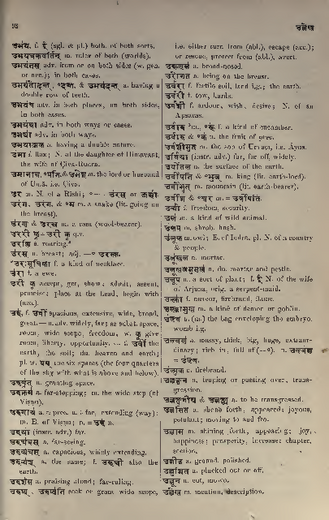
urága ·m. a snake (lit. going on the breast).
Monier-Williams 1872 Substantiv Maskulin
Originaltext · Englisch · Substantiv Maskulin
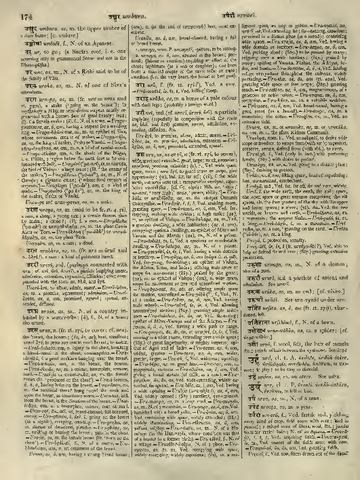
uraga ura-ga, as, m. (fr. ura = uras and rt. gam), a snake (‘going on the breast’); in mythology a Nāga or semi-divine serpent usually re- presented with a human face of great beauty; lead; (ī), f. a female snake; (ā), f., N. of a town.
Petersburger 1855 Substantiv Maskulin · Worttyp nicht bestimmt
Originaltext · Deutsch · Substantiv Maskulin
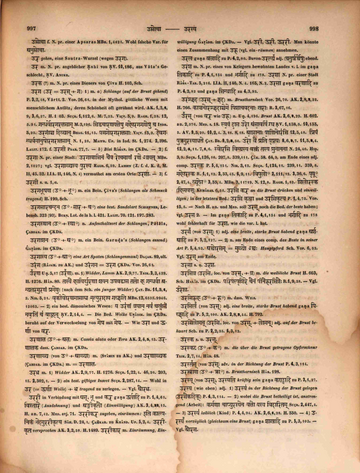
uraga (ura = uras + ga) 1〉 m. a〉 Schlange (auf der Brust gehend) P. 3,2,48, Vārtt. 2. VOP. 26,61. in der Mythol. göttliche Wesen mit menschlichem Antlitz, deren Schönheit oft gerühmt wird. AK. 1,2,1,9. AK. 1,3,6,37. H. 1303. SUŚR. 1,112,6. M. 7,23. VIŚV. 5,9. RAGH. 1,28. RAGH. 12,5. RAGH. 12,91. gandharvoragarakṣasām M. 3,196. siddhacāraṇayakṣeṣu mahoragagaṇeṣu ca INDR. 5,25. uragāṃśca divyān BHAG. 11,15. pannagoragarākṣasāḥ VIŚV. 15,9. devagandharvamānuṣoragarākṣasān N. 1,28. MAITR. UP._in_Ind. St. 1,274. Ind. St. 2,396. LALIT. 172. f. uragī PRAB. 77,7. — b〉 Blei RĀJAN._im_ŚKDR. — 2〉 f. uragā N. pr. einer Stadt: uragāvāsinaṃ caiva rocamāṇaṃ raṇe 'jayat MBH. 2,1027; vgl. uragākhyasya purasya RAGH. 6,59. LASSEN (Z. f. d. K. d. M. II, 45. Z. f. d. K. d. M. II,52. LIA. II, 146, N. 4) vermuthet am ersten Orte uraśā. — 3〉 f. uragī s. u. 1,a.
Originaltext · Deutsch · Worttyp nicht bestimmt
uraga 1〉a〉 VARĀH. BṚH. S. 88,20. VARĀH. BṚH. S. 97,7. die Schlangen sind die Gottheit des Nakṣatra Āśreṣā WEBER, Nax. 2,371. WEBER, Nax. 2,379. Vgl. kṛṣṇoraga, mahoraga. — 2〉 uragā auch die ed. Bomb. des MBH.
Böhtlingk 1879 Substantiv Maskulin
Originaltext · Deutsch · Substantiv Maskulin
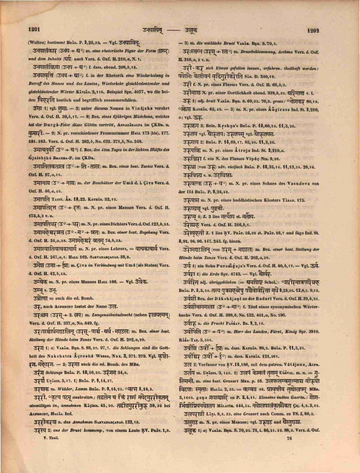
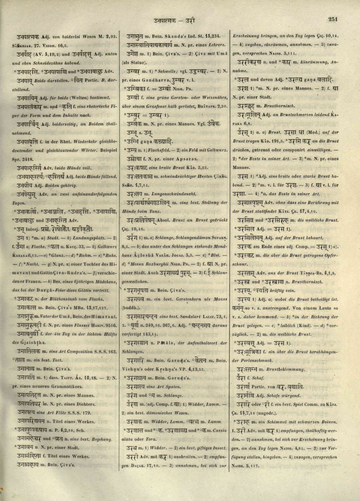
urága — 1〉 m. — a〉 Schlange, Schlangendämon SUPARṆ. 8,5. — b〉 das unter den Schlangen stehende Mondhaus Āśleṣā VARĀH. YOGAY. 5,3. — c〉 *Blei. — d〉 *Mesua roxburghii NIGH. PR. — 2〉 f. ā N. pr. einer Stadt. Auch uragākhyaṃ puram — 3〉 f. ī Schlangenweibchen.
Apte 1890 Substantiv Maskulin
Originaltext · Englisch · Substantiv Maskulin
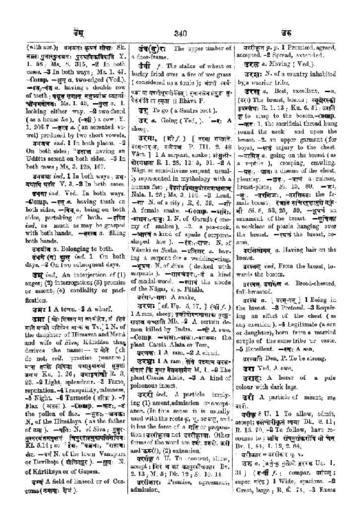
uragaḥ (gī f.) [urasā gacchati, uras-gam-ḍa; salopaśca P. III. 2. 48 Vārt.] 1 A serpent, snake; aṃgulīvoragakṣatā R. 1. 28, R. 12. 5, R. 12. 91. 2 A Nāga or semi-divine serpent usually represented in mythology with a human face; devagaṃdharvamānuṣoragarākṣasān Nala. 1. 28; Ms. 3. 196. 3 Lead. — gā N. of a city; R. 6. 59. — gī A female snake. Comp. — ariḥ, — aśanaḥ, -śatruḥ 1 N. of Garuḍa (enemy of snakes). 2 a pea-cock. — āsyaṃ a kind of spade (serpentshaped hoe). — iṃdraḥ, -rājaḥ N. of Vāsuki or Śeṣa. — pratisara a. having a serpent for a wedding-ring. — bhūṣaṇaḥ N. of Śiva (decked with serpents). — sāracaṃdanaḥ, -naṃ a kind of sandal-wood. — sthānaṃ the abode of the Nāgas, i. e. Pātāla.
Cappeller 1887 Worttyp nicht bestimmt
Originaltext · Deutsch · Worttyp nicht bestimmt
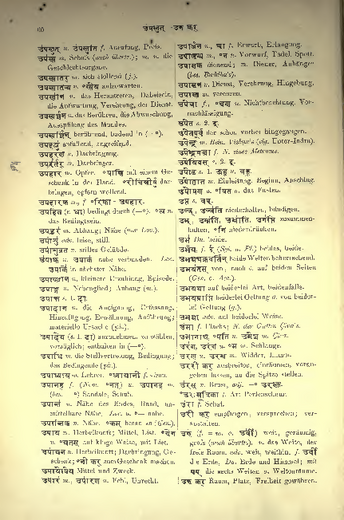
urága, uraṃga u. ˚ma m. Schlange.
Burnouf 1866 Substantiv Maskulin
Originaltext · Französisch · Substantiv Maskulin
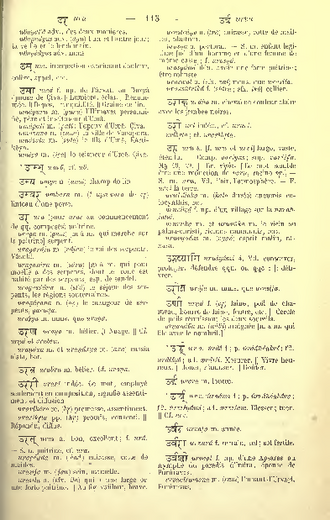
uraga m. (gam) [m à m. qui marche sur la poitrine] serpent.
Quelltextfundstellen (2)
SiSa 2 Fundstellen
Mit AYI Free weitermachen
Bildquelle: AYI Archiv.