

ālambana आलम्बन – taking as support
adjective · substantive feminine · substantive neuter
Dictionary sources
AYI dictionary adjective · substantive neuter
adjective
taking as support
Derived from
substantive neuter
support; supporting object
Cappeller 1891 substantive neuter
Original text · English · substantive neuter
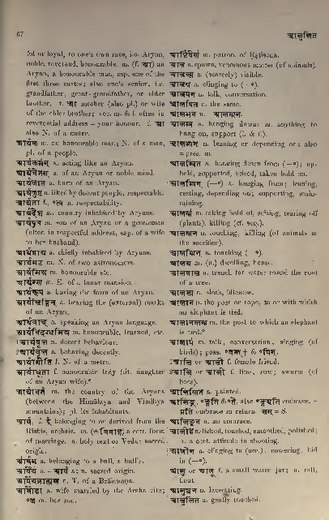
ālambana ·n. leaning or depending on; also = prec. m.
Monier-Williams 1872 substantive neuter
Original text · English · substantive neuter
Ā-lambana, am, n. depending on or resting upon, hanging from; supporting, sustaining; fundament, base; reason, cause; (in rhetoric) the natural and necessary connection of feeling with the cause which excites it; the mental exercise practised by the Yogin in endeavouring to realize the gross form of the eternal; silent repetition of a prayer; (with Bud- dhists) the five attributes of things corresponding to the five senses, viz. form, sound, smell, taste, and touch; also dharma or law corresponding to manas.

Petersburger 1855 substantive feminine · substantive neuter
Original text · German · substantive feminine
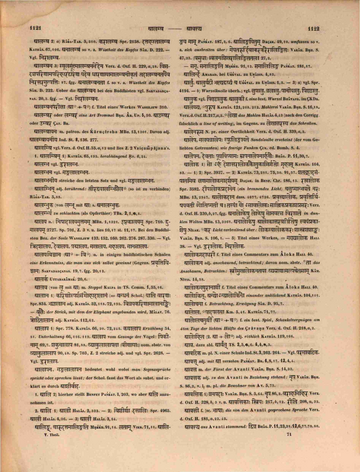
ālambana 3〉 sthūlasūkṣmālambanabhedena Verz. d. Oxf. H. 229,a,28. visadṛśapariṇāmaparihāradvāreṇa yadeva dhāraṇāyāmālambanīkṛtaṃ tadālambanatayaiva nirantaramutpattiḥ Verz. d. Oxf. H. 17. fgg. anālambanatā f. so v. a. Wüstheit des Kopfes SĀH. D. 222. Ueber die ālambana bei den Buddhisten vgl. SARVADARŚANAS. 20,3. fgg. — Vgl. nirālambana.
Original text · German · substantive neuter
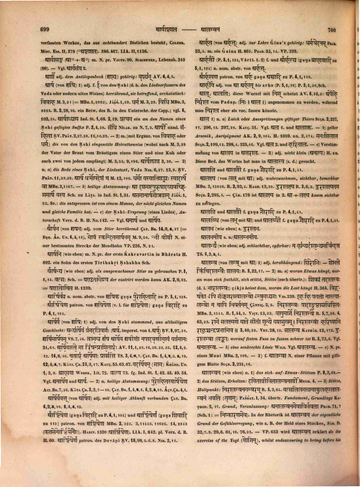
ālambana (wie eben) n. 1〉 das sich — auf — Etwas — Stützen P. 8,3,68. — 2〉 das Stützen, Erhalten: dayitājīvitālambanārthī MEGH. 4. — 3〉 Stütze, Haltpunkt: nirālambanamambaram R. 5,3,64. yatsalilamajjanākulahastālambanaṃ bhavati (tṛṇam) PAÑCAT. I, 34. übertr. Fundament, Grundlage KAṬHOP. 2,17. Grund, Veranlassung: anālambanamevāvirbhavatā PRAB. 71,7 (Sch. 1: = niṣkāraṇameva). In der Rhetorik ist ālambana der eigentliche Grund der Gefühlserregung, wie z. B. der Held eines Stückes, SĀH. D. 32,7. SĀH. D. 32,9. SĀH. D. 29,6. SĀH. D. 61,18. SĀH. D. 76,22. — VP. 653 wird ālambana erklärt als the exercise of the Yogi (yogin), whilst endeavouring to bring before his thoughts the gross from of the eternal; WILS. in der Note: Ālambana is the silent repetition of prayer. — Die Buddhisten nennen ālambana die den fünf Sinnesorganen gegenüberstehenden fünf Attribute der Dinge (Gestalt, Laut, Geruch, Geschmack und die durch das Gefühl wahrgenommenen Eigenschaften der Dinge) und das dem Manas gegenüberstehende Gesetz (dharma) BURN. Intr. 449.
Böhtlingk 1879 substantive neuter
Original text · German · substantive neuter
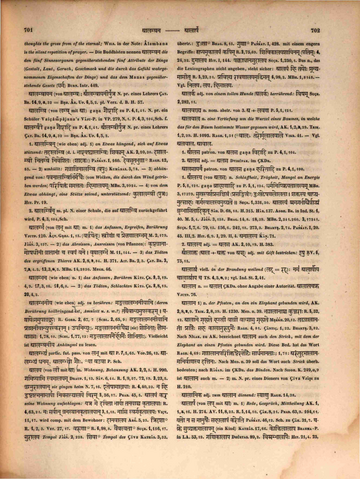
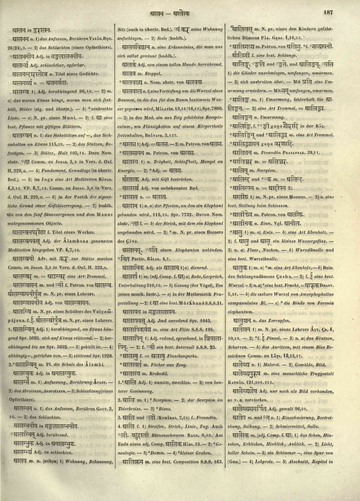
ālambana n. — 1〉 das Sichstützen auf —, das Sichanhalten an Etwas Chr. 115,29. — 2〉 das Stützen, Befestigen. — 3〉 Stütze, Halt Chr. 105,18. Dazu Nom. abstr. ˚tā Comm. zu YOGAS. 3,2. in Verz. d. Oxf. H. 229,a. — 4〉 Fundament, Grundlage (in übertr. Bed.). — 5〉 im Yoga eine Art Meditation BĀDAR. 4,3,15. VP. 6,7,42. Comm. zu YOGAS. 3,6 in Verz. d. Oxf. H. 229,a — 6〉 in der Poetik der eigentliche Grund einer Gefühlserregung. — 7〉 buddh. die von den fünf Sinnesorganen und dem Manas wahrgenommenen Objecte.
Cappeller 1887 substantive neuter
Original text · German · substantive neuter
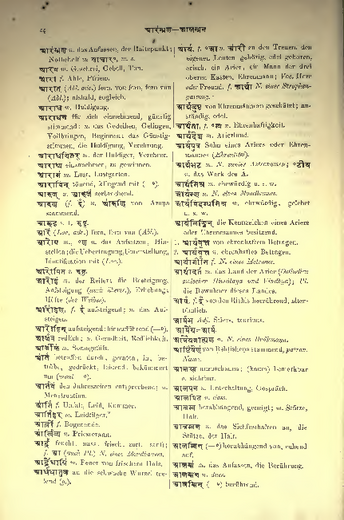
ālambana n. das Sichfesthalten an, die Stütze, der Halt.
Burnouf 1866 substantive neuter
Original text · French · substantive neuter
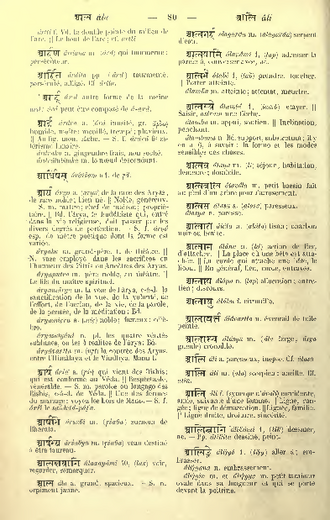
ālambana n. Bd. support, substratum; il y en a 6, à savoir: la forme et les modes sensibles des choses.
Derived words
Occurrences in source texts (5)
GoS 1 occurrence
PYS 4 occurrences
PYS 3.17–20: Extraordinary Knowledge 1 occurrence
Occurrences through derived words
-
PYS 3.20 Segment 4
Continue with AYI Free
Image source: AYI archive.