

bhakta भक्त – divided; separate
adjective · substantive masculine · substantive neuter · Word type unspecified
Dictionary sources
AYI dictionary adjective · substantive masculine
adjective
divided; separate
Derived from
- bhaj भज् verbal root — divide; apportion; choose; prefer; partake; obtain
substantive masculine
devotee; worshipper
Cappeller 1891 adjective
Original text · English · adjective
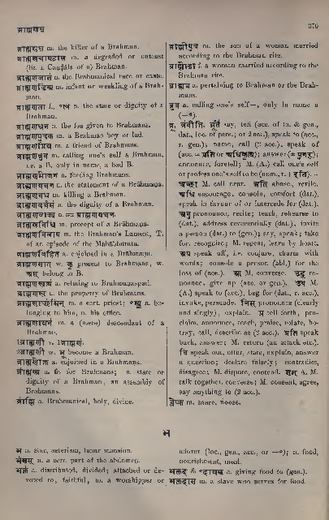
bhaktá ·a. distributed, divided; attached or devoted to, faithful, m. a worshipper or adorer (loc., gen., acc., or --°); n. food, nourishment, meal.
Monier-Williams 1872 adjective · Word type unspecified
Original text · English · adjective
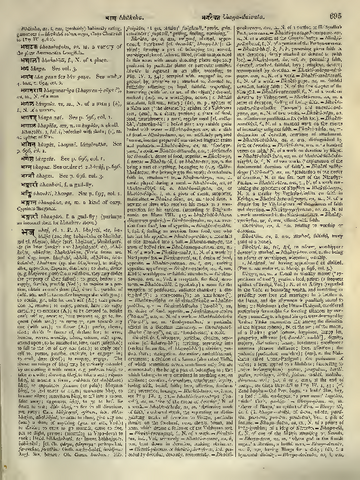
Bhakta, as, ā, am, assigned, allotted, appor- tioned, distributed [cf. deva-bh˚, bhaga-bh˚]; di- vided; forming a part of, belonging to; served, worshipped; loved, beloved, liked, (when compounded in this sense with nouns denoting places especially preferred by particular plants or particular families, bhakta is regarded as an affix, according to Pāṇ. IV. 2, 54); occupied with, engaged in, en- grossed by, attentive to; attached to, devoted to, faithfully adhering to, loyal, faithful, respecting, honouring (with loc. or acc. of the object); dressed, cooked; (as), m. a worshipper, adorer; a faithful attendant, follower, votary; (ās), m. pl. epithet of a Śaiva sect (‘the devoted’); epithet of a Vaiṣṇava sect; (am), n. a share, portion; a share of food, food, nourishment; a meal, regular meal [cf. adho- bh˚, caturtha-bh˚]; boiled rice; any eatable grain boiled with water.
Original text · English · Word type unspecified
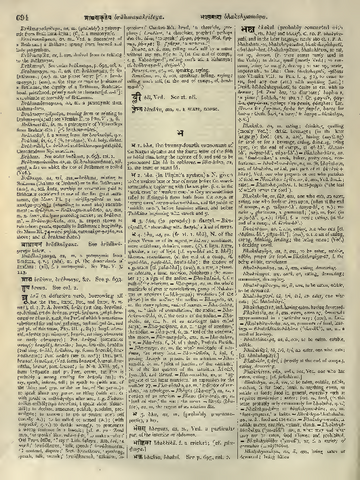
bhakta bhakta, bhakti. See p. 695, col. 2.
Petersburger 1855 adjective · substantive masculine · substantive neuter · Word type unspecified
Original text · German · adjective · substantive masculine · substantive neuter
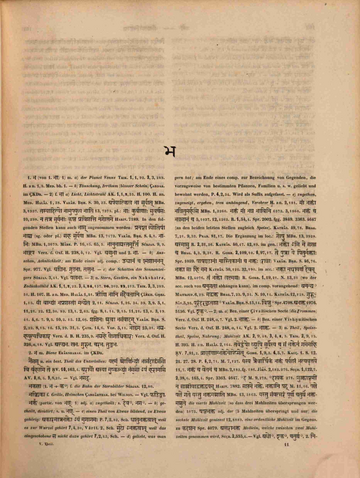
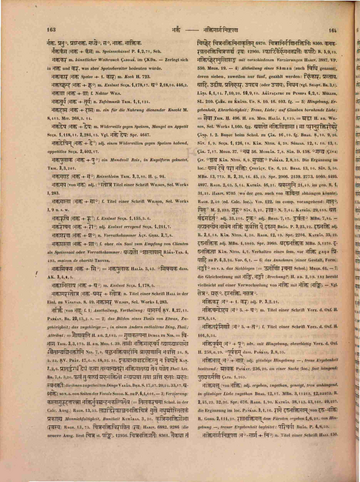
bhaktá (partic. von bhaj) 1〉 adj. a〉 zugetheilt; s. deva˚, bhaga˚. — b〉 getheilt, dividirt; s. u. bhaj. — c〉 einen Theil von Etwas bildend, zu Etwas gehörig: akāramātrabhakto 'yaṃ mugāgamaḥ P. 7,2,82, Sch. dhātubhaktatvāt weil es zur Wurzel gehört P. 7,4,30, Vārtt. 2, Sch. suṭo 'bhaktatvāt weil das eingeschobene sa nicht dazu gehört P. 7,2,43, Sch. — d〉 geliebt, was man gern hat; am Ende eines comp. zur Bezeichnung von Gegenden, die vorzugsweise von bestimmten Pflanzen, Familien u. s. w. geliebt und bewohnt werden, P. 4,2,54. Wird als Suffix aufgefasst. — e〉 zugethan, zugeneigt, ergeben, treu anhängend, Verehrer H. an. 2,181. māṃ bhaktāṃ bhajitumarhasi MBH. 1,3260. bhaktaṃ māṃ bhaja bhāvini MBH. 1,6573. MBH. 3,1860. bhaktaṃ ca bhajamānaṃ ca MBH. 5,1037. MBH. 12,4262. R. 1,54,4. Spr. 2002. fgg. Spr. 3849. Spr. 3363. fgg. Spr. 4647 (an den beiden letzten Stellen zugleich Speise). KATHĀS. 49,78. BHAG. 7,21. BHAG. 9,33. PRAB. 81,17. Die Ergänzung im loc.: goṣu MBH. 13,3928. asmāsu R. 2,31,36. KATHĀS. 40,47. KATHĀS. 42,89. im gen.: bhakto 'si me sakhā ca BHAG. 4,3. BHAG. 9,31. R. GORR. 2,109,10. R. GORR. 6,97,17. te putrā ye piturbhaktāḥ Spr. 1059. pāṣaṇḍānāṃ nāstikānāṃ ca bhaktaḥ (rājā) VARĀH. BṚH. S. 46,76. bhaktā sā hi mama KATHĀS. 50,126. KATHĀS. 32,190. im acc.: bhaktā nārāyaṇaṃ devam MBH. 12,4076. taṃ bhakto lakṣmaṇaḥ R. GORR. 1,19,21. N. 13,31 (wo der acc. auch von anugatā abhängen kann). im comp. vorangehend: ananya˚ MAITRYUP. 6,29. madbhakta BHAG. 7,23. BHAG. 9,34. N. 10,14. KATHĀS. 12,128. guru˚ SĀV. 5,95. puraṃdarahutāśa˚ VARĀH. BṚH. S. 15,14. viṣṇu˚ Spr. 4708. abhakta Spr. 1976. Spr. 5156. Vgl. eka˚. — 2〉 m. a〉 Bez. einer Śivaitischen Secte (die Frommen) Verz. d. Oxf. H. 248,a,7. Vgl. 2. bhākta. — b〉 Bez. einer Viṣṇuitischen Secte Verz. d. Oxf. H. 248,a,14. Vgl. 2. bhākta. — 3〉 n. Theil, Speisetheil, Speise, Nahrung; Mahlzeit AK. 2,9,48. AK. 3,4,1,5. TRIK. 2,9,15. H. 395. H. an. HALĀY. 2,164. tavedùṣo̱ vyuṣi̱ sūryàsya ca̱ saṃ bha̱ktenà gamemahi ṚV. 7,81,2. brāhmaṇānbhaktenopepset GOBH. 1,9,3. GOBH. 4,5,7. KAUŚ. 1. KAUŚ. 8. KAUŚ. 12. KAUŚ. 21. KAUŚ. 27. KAUŚ. 28. P. 6,2,71. M. 7,127. yasya traivārṣikaṃ bhaktaṃ paryāptaṃ bhṛtyavṛttaye M. 11,7. bhaktaṃ ca vetanaṃ ca MBH. 2,182. fg. MBH. 2,186. YĀJÑ. 2,182. YĀJÑ. 2,276. SUŚR. 1,122,7. SUŚR. 2,38,6. SUŚR. 2,165,4. Spr. 3363. Spr. 4647. ˚da M. 9,278. ˚dāyaka M. 271. śuklāṣṭamīṃ na sāśnīyādbhaktadvayam HARIV. 7882. saptame bhakte, bhaktāni ṣaṭ M. 11,16. pakṣe pakṣe gate yastu bhaktamaśnāti MBH. 13,5163. yastu saṃvatsaraṃ pūrṇaṃ caturthaṃ bhaktamaśnute die vierte Mahlzeit (so dass drei Mahlzeiten übersprungen wer- den) MBH. 13,5173. ṣaṣṭhabhakta adj. der (5 Mahlzeiten übersprungt und nur) die sechste Mahlzeit geniesst MBH. 12,8889. eine ordentliche Mahlzeit im Gegens. zu kadaśana Spr. 4079. antarābhakta Medicin, welche zwischen zwei Mahlzeiten genommen wird, SUŚR. 2,555,4. — Vgl. adho˚, eka˚, caturtha˚, 2. nirbhakta, prabhu˚, prājbhakta, madhye˚, sa˚, bhākta, bhāktika.
Original text · German · Word type unspecified
bhakta 3〉 aṣṭama˚ die achte Mahlzeit (so dass sieben übersprungen werden) ŚATR. 14,321.
Böhtlingk 1879 adjective · substantive masculine · substantive neuter
Original text · German · adjective · substantive masculine · substantive neuter
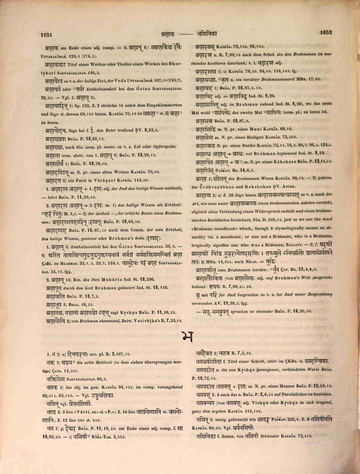
bhaktá — 1〉 Adj. s. u. bhaj. — 2〉 m. Bez. einer Śivaʼitischen und einer Viṣṇuʼitischen Secte. — 3〉 n. — a〉 Speise, Nahrung. — b〉 Mahlzeit, Die so und so vielte Mahlzeit geniessen heisst so v. a. nur diese, mit Uebergehung der vorangehenden, zu sich nehmen. — c〉 Gefäss Ind. St. 13,391.
Apte 1890 adjective · substantive masculine · substantive neuter
Original text · English · adjective · substantive masculine · substantive neuter
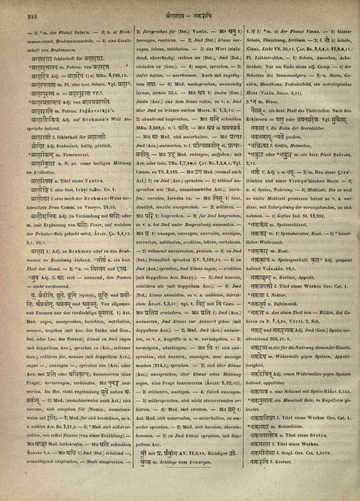
bhakta p. p. [bhaj-kta] 1 Distributed, allotted, assigned. 2 Divided. 3 Served, worshipped. 4 Engaged in, attentive to. 5 Attached or devoted to, loyal, faithful; Bg. 9. 34. 6 Dressed, cooked (as food). 7 Forming a part of, belonging to. 8 Loved, liked (at the end of comp.). — ktaḥ A worshipper, adorer, devotee, votary, faithful attendant; bhaktosi me sakhā ceti Bg. 4. 3; Bg. 9. 31; Bg. 7. 23. — ktaṃ 1 A share, portion. 2 Food; Bh. 3. 74. 3 Boiled rice; U. 4. 1. 4 Any eatable grain boiled with water 5 Adoration, worship. Comp. — abhilāṣaḥ desire of food, appetite. — upasādhakaḥ a cook. — kaṃsaḥ a dish of food. — karaḥ incense prepared from various fragrant resins and perfumes. — kāraḥ a cook. — chaṃdaṃ appetite. — jā nectar. — tūryaṃ a musical instrument played during meals. — da, -dātṛ, -dāyaka a. supporter, maintainer. — dāsaḥ a slave who agrees to serve another for maintenance, or who receives his meals as a return for his services; Ms. 8. 415. — dbeṣaḥ dislike of food, loss of appetite. — pulākaḥ a mouthful of rice kneaded into a lump or ball. — maṃḍaḥ the scum of boiled rice. ([Page 0805-b]) — ruciḥ f. appetite. — rocana a. stimulating appetite. — vatsala a. kind to worshippers or devotees. — (laḥ) N. of Viṣṇu. — śālā 1 an audience chamber (to admit petitioners and hear them). 2 a dining-hall. — sikthaṃ = bhaktamaṃḍa q. v.
Cappeller 1887 Word type unspecified
Original text · German · Word type unspecified
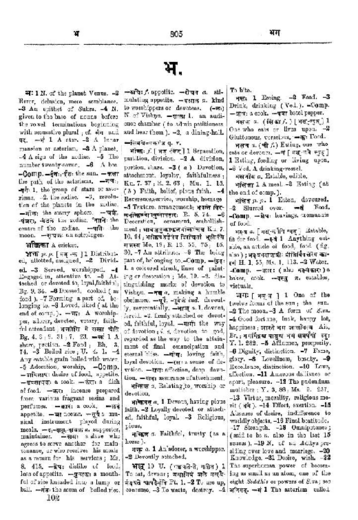
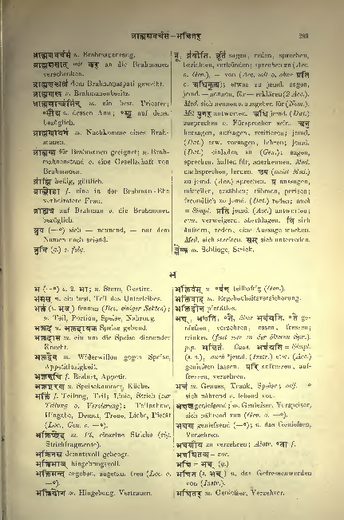
bhaktá (s. bhaj) fromm (Bez. einiger Sekten); n. Teil, Portion, Speise, Nahrung.
Burnouf 1866 Word type unspecified
Original text · French · Word type unspecified
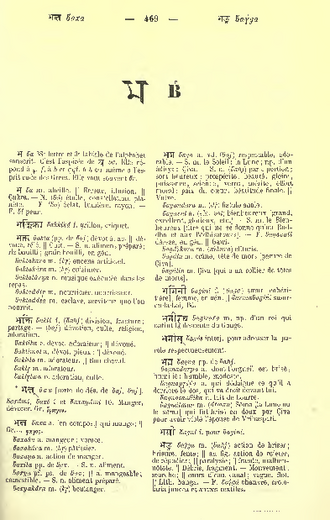
bhakta bhakta (pp. de bhaj) dévot à, ac. dévoué, zélé. Cuit. — S. n. aliment préparé; riz bouilli; grain bouilli, en gén. bhaktakara m. (kṛ) encens artificiel. bhaktakāra m. (kṛ) cuisinier. bhaktatūrya n. musique exécutée dans les repas. bhaktadātṛ m. nourricier, nourrisseur. bhaktadāsa m. esclave, serviteur que l'on nourrit.
Occurrences in source texts (8)
PYS 1 occurrence
SiSa 5 occurrences
Continue with AYI Free
Image source: AYI archive.