

bila बिल – cavity; opening; hole
substantive masculine · substantive neuter · Word type unspecified
Dictionary sources
AYI dictionary substantive neuter
cavity; opening; hole
Cappeller 1891 substantive neuter
Original text · English · substantive neuter
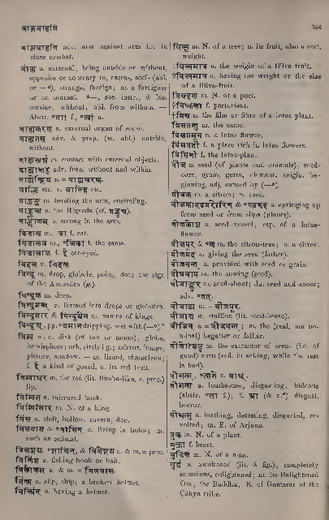
bíla ·n. cleft, hollow, cavern, den.
Monier-Williams 1872 substantive neuter
Original text · English · substantive neuter
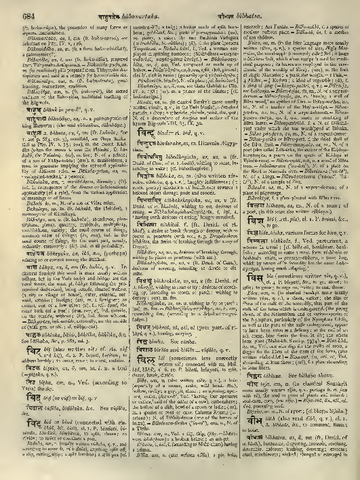
Bila, am, n. (also written vila, q. v.), a hole (especially of a mouse, snake, wild beast, &c.), hollow, cavity; a gap, pit, chasm; an opening, aper- ture, outlet, (catur-b˚, Ved. ‘having four apertures or outlets,’ said of the udder of a cow), embouchure; the hollow of a dish, bowl of a spoon or ladle; (as), m. a species of reed or cane, Calamus Rotang (= vetasa); N. of Uccaiḥ-śravas (one of the horses of Indra).
Petersburger 1855 substantive masculine · substantive neuter
Original text · German · substantive masculine · substantive neuter
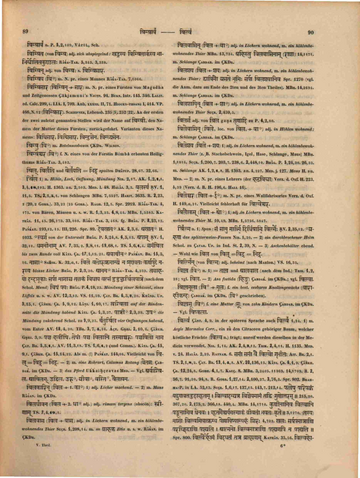
bíla 1〉 n. Höhle, Loch, Oeffnung, Mündung NIR. 2,17. AK. 1,2,1,1. AK. 3,4,18,102. H. 1363. H. an. 2,503. MED. l. 48. HALĀY. 3,2. va̱lasyà ṚV. 1,11,5. TS. 2,1,5,1. von Schlangen MBH. 7,5527. HARIV. 3635. R. 2,23,2 (R. 2,20,2 GORR.). R. 2,33,23 (R. 2,33,25 GORR.). RAGH. 12,5. Spr. 2919. RĀJA-TAR. 4,175. von Bären, Mäusen u. s. w. R. 1,3,25. R. 4,8,44. MBH. 1,5583. KATHĀS. 11,45. KATHĀS. 26,173. KATHĀS. 33,108. RĀJA-TAR. 3,468. fg. BHĀG. P. 8,23,12. PAÑCAT. 193,12. PAÑCAT. 193,15. PAÑCAT. III, 226. Spr. 89. devakhāta˚ AK. 2,3,6. akhāta˚ H. 1033. ˚svarga von der Unterwelt BHĀG. P. 5,24,8. BHĀG. P. 6,5,13. apām ṚV. 4,32,11. dhamanīnām AV. 7,35,2. AV. 9,8,11. AV. 19,68,1. TS. 5,6,1,4. samaṃbila bis zum Rande voll KĀTY. ŚR. 17,1,19. KĀTY. ŚR. 17,1,21. avācīna˚ PAÑCAV. BR. 15,5,16. nāsā˚ SAṂSK. K. 32,a,1. vile vatorukramānye na śṛṇvataḥ karṇapuṭe narasya blosse Löcher BHĀG. P. 2,3,20. ānana˚ RĀJA-TAR. 4,252. tathāhayo dandaśūkāḥ sarpā nāgāśca takṣakaṃ vidhāya vatsaṃ duduhurvilapātre (nach dem Schol. Mund) viṣaṃ payaḥ BHĀG. P. 4,18,22. Mündung einer Schüssel, eines Löffels u. s. w. AV. 12,3,13. VS. 11,59. ŚAT. BR. 6,5,2,20. CHĀND. UP. 3,15,1. ŚĀṄKH. ŚR. 5,9,12. LĀTY. 1,10,17. tvagbilā auf der Rindenseite die Mündung habend KĀTY. ŚR. 1,3,37. pātrī˚ KĀTY. ŚR. 2,3,39. upa˚ die Mündung zukehrend Schol. zu KĀTY. ŚR. 9,9,25. cáturbila vier Oeffnungen habend, vom Euter AV. 18,4,30. TBR. 3,7,4,16. ĀŚV. GṚHY. 2,10,6. ŚĀṄKH. GṚHY. 3,9. pañca havīṃṣi, teṣāṃ pañca bilāni tasmāccaruḥ pañcabilo nāma ŚAT. BR. 5,5,1,1. AV. 11,3,18. TS. 1,6,1,2 (und Comm.). KĀTY. ŚR. 15,9,1. ŚĀṄKH. ŚR. 15,14,22. Als m. (!) PAÑCAT. 144,16. Vielleicht von bil = bid = bhid. — 2〉 m. eine Rohrart, Calamus Rotang (vetasa) ŚABDAC._im_ŚKDR. — 3〉 das Pferd Uccaiḥśravas MED. — Vgl. arvāgbila, ābilam, udbila, uru˚, grīvā˚, vasti˚, bailāyana.
Böhtlingk 1879 substantive masculine · substantive neuter · Word type unspecified
Original text · German · substantive masculine · substantive neuter
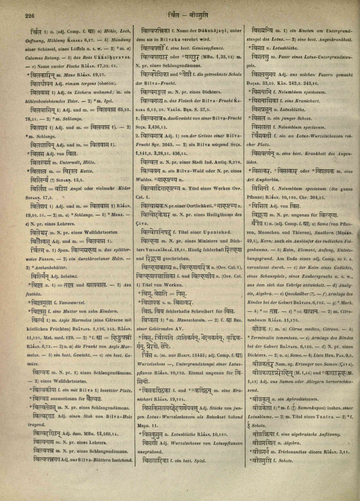
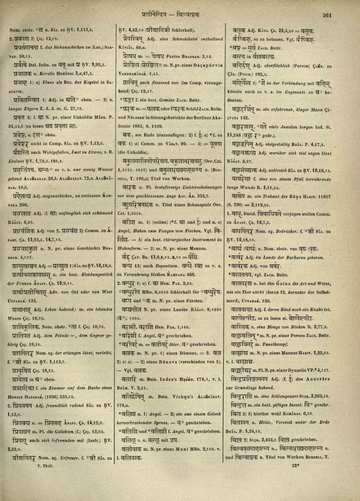
bíla — 1〉 n. (adj. Comp. f. ā) — a〉 Höhle, Loch, Oeffnung, Höhlung CARAKA. 6,27. — b〉 Mündung einer Schüssel, eines Löffels u. s. w. — 2〉 *m. — a〉 Calamus rotang. — b〉 das Ross Uccaiḥśravas. — c〉 Name zweier Fische RĀJAN. 17,52. 61.
Original text · German · Word type unspecified
bila 2〉b〉 hierher wohl KUMĀRAS. 6,39. [Nachtrag, Band 5]
Original text · German · Word type unspecified
bila IV. 5. [Nachtrag, Band 7]

Apte 1890 substantive masculine · substantive neuter
Original text · English · substantive masculine · substantive neuter
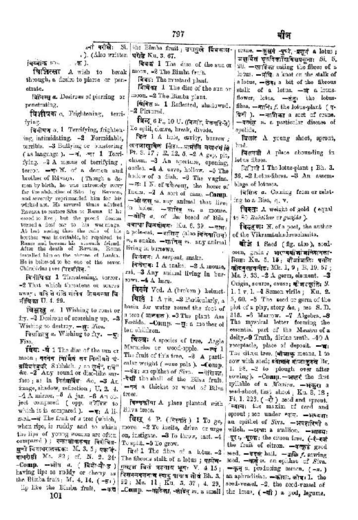
bilaṃ 1 A hole, cavity, burrow; khanannākhubilaṃ siṃhaḥ… prāpnoti nakhabhaṃgaṃ hi Pt. 3. 17; R. 12. 5. 2 A gap, pit, chasm. 3 An aperture, opening, outlet. 4 A cave, hollow. 5 The hollow of a dish. 6 The vagina. — laḥ 1 N. of uccaiḥśravas, the horse of Indra. 2 A sort of cane. Comp. — okas m. any animal that lives in holes. — kārin m. a mouse. — yoni a. of the breed of Bila; yatrāśvā bilayonayaḥ Ku. 6. 39. — vāsaḥ a pole-cat. — vāsin (also bilevāsin) m. a snake. — śāyin m. any animal living in burrows.
Cappeller 1887 substantive neuter
Original text · German · substantive neuter
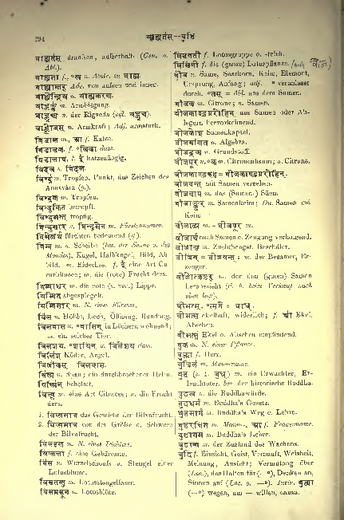
bíla n. Höhle, Loch, Öffnung, Rundung.
Occurrences in source texts (5)
GoS 1 occurrence
HP 2 occurrences
HTK 1 occurrence
HTK 10.14*2–17*1: Śītalī and Antaraṅgaka-kumbha 1 occurrence
Direct occurrences
-
HTK 10.16 Segment 33
SiSa 1 occurrence
Continue with AYI Free
Image source: AYI archive.