

laghu लघु – light
adjective · adverb · particle · substantive feminine · substantive masculine · substantive neuter · Word type unspecified
Dictionary sources
AYI dictionary adjective
light
Cappeller 1891 Word type unspecified
Original text · English · Word type unspecified
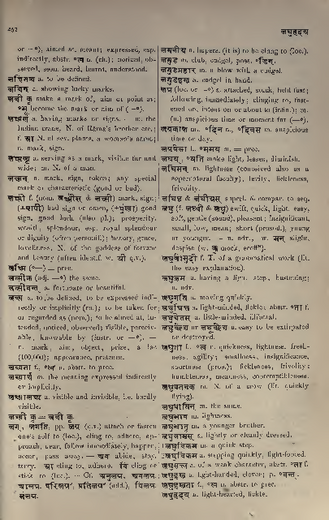
laghú ·(f. laghvī & laghu) swift, quick, light, easy, soft, gentle (sound), pleasant; insignificant, small, low, mean; short (prosod.), young or younger. -- n. adv., w. man slight, despise (w. kṛ mock, scoff*).
Monier-Williams 1872 Word type unspecified
Original text · English · Word type unspecified
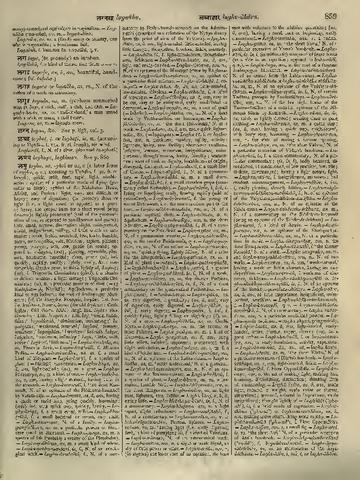
laghu laghu, us, -ghvī or us, u (a later form of raghu, q. v.; according to Uṇādi-s. I. 30. fr. rt. laṅgh), quick, swift, fleet, rapid, light, nimble, active; epithet of a particular mode of flying (pe- culiar to birds); epithet of the Nakṣatras Hasta, Aśvinī, and Puṣya; light, easy, not difficult or heavy; easy of digestion; (in prosody) short or light (i. e. a light vowel as opposed to a guru or heavy, the proper term for a short vowel being hrasva); lightly pronounced (said of the pronunci- ation of va, as opposed to madhyama and guru); little, small, narrow, diminutive, slight, unimportant, trivial, insignificant, trifling, of little worth or esti- mation; weak, feeble, wretched, low, lowly, humble, mean, contemptible, vain, frivolous; sapless, pithless; young, younger; soft, low, gentle (as sound; op- posed to a-laghu, loud); pleasing, agreeable, plea- sant, handsome, beautiful; clean, pure; (u), ind. quickly, rapidly, swiftly; lightly, easily, &c.; con- temptibly, (laghu man, to think lightly of, despise); (us), f. Trigonella Corniculata; (ghvī), f. a slender or delicate woman; a light carriage; Trigonella Cor- niculata; (u), n. a particular measure of time (= 15 Kāṣṭhās = (1/15) Nāḍikā); Agallochum, a particular kind of Agallochum; the root of Andropogon Muri- catus; [cf. Gr. ἐλαχύ-ς, ἐλαφρός, λαγώς: Lat. lev- i-s, levi-ta-s, levare, lepus (for old lephus): Goth. leihts: Old Germ. lîhti: Angl. Sax. lîght: Slav. lig-u-ku: Lith. lengva-s: Hib. lag, ‘weak, feeble, faint;’ lagudhadh, ‘diminution, weakening;’ la- guighthe, ‘weakened, lessened;’ laghad, ‘fewness, weakness;’ lagaighim, ‘I weaken;’ laigidh, laigse, laigsinn, ‘weakness, infirmity;’ lugh, ‘little, swift, active;’ lughad, ‘littleness.]’
Petersburger 1855 adjective · substantive feminine · substantive neuter
Original text · German · adjective · substantive feminine · substantive neuter
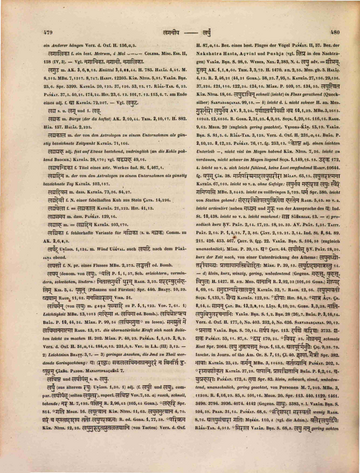
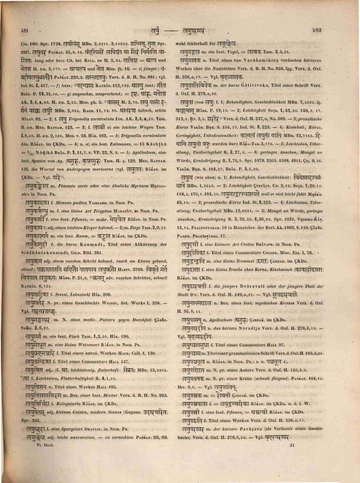
laghú (aus älterem raghu) UṆĀDIS. 1,30. 1〉 adj. (f. laghvī und laghu), compar. laghīyaṃs (selten laghutara), superl. laghiṣṭha VOP. 7,53. a〉 rasch, schnell, behende: nara M. 7,193. pakṣin R. 2,96,45 (R. 2,105,44 GORR.). ˚lahari Spr. 814. ˚gati MEGH. 16. laghūtthāna KĀM. NĪTIS. 11,63. laghusamutthāna KĀM. NĪTIS. 4,70. śaraṃ ca hastādādāya tato laghuparākramaḥ R. ed. GORR. 1,77,38. ˚parikrama KĀM. NĪTIS. 12,25. laghugurudrutaplutalakṣaṇāni (von Tacten) Verz. d. Oxf. H. 87,a,14. Bez. eines best. Fluges der Vögel PAÑCAT. II, 57. Bez. der Nakṣatra Hasta, Aśvinī und Puṣya (vgl. kṣipra in den Nachträgen) VARĀH. BṚH. S. 98,9. WEBER, Nax. 2,385, N. 4. laghu adv. = śīghram, drutam AK. 1,1,1,60. TRIK. 3,3,73. H. 1470. H. an. 2,55. MED. gh. 5. HALĀY. 4,12. R. 2,46,21 (R. 2,44,21 GORR.). R. 58,23. R. 7,95,5. KATHĀS. 27,156. KATHĀS. 29,136. KATHĀS. 37,224. KATHĀS. 121,110. KATHĀS. 122,24. KATHĀS. 124,10. MĀRK. P. 109,57. MĀRK. P. 134,55. laghūtthita KĀM. NĪTIS. 18,66. laghudrāvin schnell (leicht) in Fluss gerathend (Quecksilber) SARVADARŚANAS. 99,18. — b〉 leicht d. i. nicht schwer H. an. MED. gu̱rurbhā̱ro la̱ghurbhàva AV. 9,3,24. pa̱rṇāllaghī̀yasī bhava AV. 10,1,29. MBH. 3,2615. MBH. 3,10943. MBH. 12,6856. R. GORR. 2,31,25. R. GORR. 4,9,95. SUŚR. 1,20,16. SUŚR. 1,116,16. RAGH. 9,62. MEGH. 20 (zugleich gering geachtet). VṚDDHA-CĀṆ. 15,19. VARĀH. BṚH. S. 81,5. VARĀH. BṚH. S. 81,6. RĀJA-TAR. 3,128. Verz. d. Oxf. H. 231,a,44. BHĀG. P. 2,10,23. BHĀG. P. 8,12,23. PAÑCAT. 76,17. fg. PAÑCAT. 253,13. ˚koṣṭha adj. einen leichten Unterleib —, nicht viel im Magen habend KĀM. NĪTIS. 7,36. leicht zu verdauen, nicht schwer im Magen liegend SUŚR. 1,149,16. SUŚR. 1,149,18. udaka SUŚR. 172,4. leicht so v. a. sich leicht fühlend, keine Last empfindend HARIV. 10644. fg. vapus ŚĀK. 38. mārgapariśramādalaghuśarīrā MĀLAV. 65,15. laghvantarātmanā KATHĀS. 67,108. leicht so v. a. ohne Gefolge: laghurbhava mahārāja laghuḥ svairaṃ gamiṣyasi MBH. 3,8449. leicht zu vollbringen MBH. 5,739. dharma Spr. 580. leicht von Statten gehend: saṃhāravikṣepalaghukriyeṇa hastena RAGH. 5,45. so v. a. leicht articulirt (neben madhyama und guru von der Aussprache des va) Ind. St. 10,438. leicht so v. a. leicht machend: sattva SĀṂKHYAK. 13. — c〉 prosodisch kurz ṚV. PRĀT. 2,14. ṚV. PRĀT. 17,22. ṚV. PRĀT. 18,20. ṚV. PRĀT. 18,33. AV. PRĀT. 1,51. TAITT. PRĀT. 2,10. P. 1,4,10. P. 7,3,86. ŚĀNT. 2,19. ŚĀNT. 2,21. ŚĀNT. 3,14. Ind. St. 8,84. Ind. St. 8,89. Ind. St. 8,211. Ind. St. 8,426. Ind. St. 8,453. Ind. St. 8,467. ŚRUT. 9. fgg. ŚRUT. 22. VARĀH. BṚH. S. 104,58 (zugleich unansehnlich). MĀRK. P. 39,15. a˚ ŚRUT. 44. laghīyaṃs ṚV. PRĀT. 18,20. kurz der Zeit nach, von einer Unterdrückung des Athems: laghumadhyottarīyākhyaḥ prāṇāyāmastridhoditaḥ MĀRK. P. 39,13. laghurdvādaśamātrastu MĀRK. P. 14. — d〉 klein, kurz, winzig, gering, unbedeutend (Gegens. mahant, bṛhant, vipula) H. 1427. H. an. MED. yānāni R. 2,92,33 (R. 2,101,36 GORR.) goṣpada R. 6,69,16. samudrānparikhālaghūn KATHĀS. 52,7. RAGH. 12,66. laghvaśmavatī SUŚR. 1,135,7. sainya KATHĀS. 122,95. ˚dvīpāḥ HIT. 84,3. ˚mātra ĀŚV. ŚR. 8,14,4. sāman ŚAT. BR. 12,2,2,10. LĀṬY. 6,10,20. GOBH. 3,3,28. nātilaghuvipularacanābhiḥ VARĀH. BṚH. S. 1,2. BṚH. 28 (26), 7. BHĀG. P. 3,16,14. Verz. d. Oxf. H. 177,b, No. 403. Verz. d. Oxf. H. 252,b, No. 626. SARVADARŚANAS. 90,19. ˚pramāṇa VARĀH. BṚH. S. 70,14. sarṣapa Spr. 113. darpaṇe kariṇaḥ Spr. 3733. śaśaka PAÑCAT. 55,11. PAÑCAT. 87,8. ˚dvāra PAÑCAT. 170,24. ˚vivara PAÑCAT. 25. bhojanam schmale Kost Spr. 2064. laghu bhuktavantam SUŚR. 1,15,6. alaghūrmibhujaiḥ ŚIŚ. 9,38. ŚIŚ. 9,78. Inschr. in Journ. of the Am. Or. S. 7,11, Śl. 40. chāyā, maitrī Spr. 382. bhāvāḥ KATHĀS. 25,42. karman MBH. 3,10485. kartavyāni PAÑCAT. 202,5. ˚rāgavaśīkṛta KATHĀS. 37,28. pāpāni, prāyaścittāni BHĀG. P. 6,2,16. cañcuprahāraḥ PAÑCAT. 172,4. tṛṇa Spr. 82. klein, schwach, elend, unbedeutend, unansehnlich, gering geachtet, von Personen M. 7,209. MBH. 3,11308. R. 6,16,29. R. 6,85,8. R. 6,101,16. MEGH. 20. Spr. 113. Spr. 440. Spr. 1129. Spr. 1461. Spr. 3490. Spr. 3794. Spr. 3936. Spr. 4074. Spr. 4142 (Gegens. sādhu). Spr. 5385, v. l. VARĀH. BṚH. S. 104,58. PRAB. 31,14. PAÑCAT. 68,6. ˚saṃdeśapadā sarasvatī wenig RAGH. 8,76. alaghusaṃcārā gatiḥ MṚCCH. 110,4 (vgl. die Adnn.). balairalaghudvipaiḥ RĀJA-TAR. 4,513. ˚sirāla VARĀH. BṚH. S. 68,8. laghu man gering achten ŚĀK. 160. Spr. 1738. laghīyaṃs MBH. 2,2211. MBH. 3,10622. janmin, tṛṇa Spr. 2927. laghutara PAÑCAT. 55,9. PAÑCAT. 55,16. baṃhīyasīṃ laghiṣṭhāṃ vā giraṃ nirmānti vāgminaḥ lang oder kurz Cit. bei KULL._zu_M. 5,64. laghiṣṭha = alpa und bhelaka H. an. 3,177. = atyalpa und bhela MED. ṭh. 16. — e〉 jünger: bhavadīyalaghubhrātarau PAÑCAT. 220,3. tasmāllaghuḥ Verz. d. B. H. No. 881; vgl. Ind. St. 2,417. — f〉 leise; ˚padanyāsa KATHĀS. 112,152. alaghu laut: gīta BHĀG. P. 10,35,10. — g〉 angenehm, ansprechend; = iṣṭa, cāru, manojña AK. 3,4,4,29. H. an. 2,55. MED. gh. 5. ˚vāsas M. 2,70. laghu yāsāṃ darśanaṃ vākca laghvī MBH. 5,904. RAGH. 11,12. RAGH. 11,80. ābharaṇa hübsch, schön MĀLAV. 82. — 2〉 f. laghu Trigonella corniculata Lin. AK. 2,4,4,21. TRIK. H. an. MED. RATNAM. 123. — 3〉 f. laghvī a〉 ein leichter Wagen TRIK. 2,8,49. H. an. 2,536. MED. v. 23. HĀR. 162. — b〉 Trigonella corniculata Lin. RĀJAN._im_ŚKDR. — 4〉 n. a〉 ein best. Zeitmaass, = 15 Kāṣṭhā = ¹⁄₁₅ Nāḍikā BHĀG. P. 3,11,7. BHĀG. P. 3,11,8. VP. 22, N. 3. — b〉 Agallochum, eine best. Species von Ag. (aguru, kṛṣṇāguru) TRIK. H. ś. 129. MED. RATNAM. 133. die Wurzel von Andropogon muricatus (vgl. laghulaya) RĀJAN._im_ŚKDR. — Vgl. pari˚.
Böhtlingk 1879 adjective · substantive feminine · substantive neuter
Original text · German · adjective · substantive feminine · substantive neuter
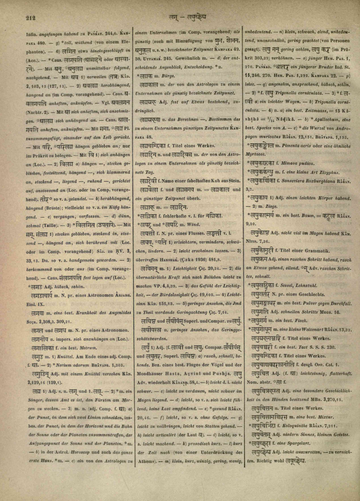
laghú — 1〉 Adj. (f. ladhvī und laghu, Compar. lághīyaṃs und laghutara, Superl. laghiṣṭha) — a〉 rasch, schnell, behende. Bez. eines best. Fluges der Vögel und der Mondhäuser Hasta, Aśvinī und Puṣya. laghu Adv. wiederholt KĀRAṆḌ. 58,4. — b〉 leicht d. i. nicht schwer. — c〉 leicht zu verdauen, nicht schwer im Magen liegend. — d〉 leicht, so v. a. sich leicht fühlend, keine Last empfindend. — e〉 *gesund RĀJAN. 20,46. — f〉 leicht, so v. a. ohne Gefolge. — g〉 leicht zu vollbringen, leicht von Statten gehend. — h〉 leicht articulirt (der Laut va). — i〉 leicht, so v. a. leicht machend. — k〉 prosodisch kurz. — l〉 kurz der Zeit nach (von einer Unterdrückung des Athems). — m〉 klein, kurz, winzig, gering, wenig, [Page5-212-c] unbedeutend. — n〉 klein, schwach, elend, unbedeutend, unansehnlich, gering geachtet (von Personen gesagt). laghu man gering achten, laghu kar (im Prākrit Chr. 303,29) verhöhnen. — o〉 jünger HEM. PAR. 1,270. PAÑCAD. ˚bhrātar ein jüngerer Bruder Ind. St. 15,246. 270. HEM. PAR. 1,292. CAMPAKA. 22. — p〉 leise. — q〉 angenehm, ansprechend, hübsch, schön. — 2〉 *f. laghu Trigonella corniculata. — 3〉 *f. ladhvī — a〉 ein leichter Wagen. — b〉 Trigonella corniculata. — 4〉 n. — a〉 ein best. Zeitmaass, = 15 Kāṣṭhā = ¹⁄₁₅ Nāḍikā. — b〉 *Agallochum, eine best. Species von A. — c〉 *die Wurzel von Andropogon muricatus RĀJAN. 12,151. BHĀVAPR. 1,193.
Apte 1890 adjective · particle · substantive masculine · substantive neuter
Original text · English · adjective · particle · substantive masculine · substantive neuter
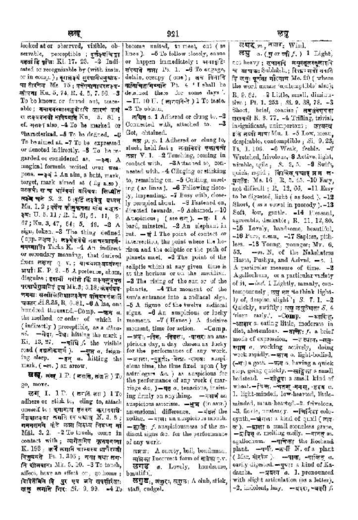
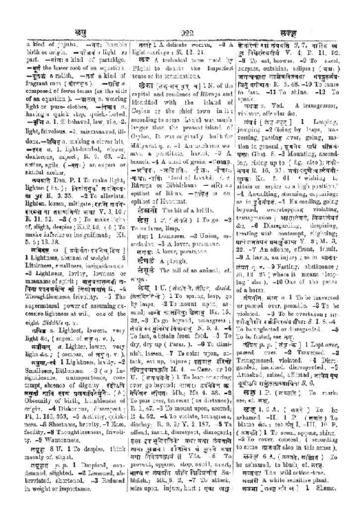
laghu a. (ghu or ghvī f.) 1 Light, not heavy; tṛṇādapi laghustūlastūlādapi ca yācakaḥ Subhāṣ.; riktaḥ sarvo bhavati hi laghuḥ pūrṇatā gauravāya Me. 20 (where the word means ‘contemptible’ also); R. 9. 62. 2 Little, small, diminutive; Pt. 1. 253; Śi. 9. 38, Śi. 9. 78. 3 Short, brief, concise; laghusaṃdeśapadā sarasvatī R. 8. 77. 4 Trifling, trivial, insignificant, unimportant; kāyastha iti laghvī mātrā Mu. 1. 5 Low, mean, despicable, contemptible; Śi. 9. 23; Pt. 1. 106. 6 Weak, feeble. 7 Wretched, frivolous. 8 Active, light, nimble, agile; Ś. 2. 5. 9 Swift, quick, rapid; kiṃcit paścād vraja laghugatiḥ Me. 16; R. 5. 45. 10 Easy, not difficult; R. 12. 66. 11 Easy to be digested, light (as food). 12 Short, (as a vowel in prosody). 13 Soft, low, gentle. 14 Pleasant, agreeable, desirable; R. 11. 12, R. 11. 80. 15 Lovely, handsome, beautiful. 16 Pure, clean. 17 Sapless, pithless. 18 Young, younger; Mv. 6. 53. — m. N. of the Nakṣatras Hasta, Puṣya, and Aśvinī. — n. 1 A particular measure of time. 2 Agallochum, or a particular variety of it. — ind. 1 Lightly, meanly, contemptuously; laghu man ‘to think lightly of, despise, slight’; Ś. 7. 1. 2 Quickly, swiftly; laghu laghutthitā Ś. 4 ‘risen early’. Comp. — āśin, — āhāra a. eating little, moderate in diet, abstemious. — uktiḥ f. a brief mode of expression. — utthāna, — samutthāna a. working actively, doing work rapidly. — kāya a. light-bodied. — (yaḥ) a goat. — krama a. having a quick step, going quickly. — khaṭvikā a small bedstead. — godhūmaḥ a small kind of wheat. — citta, -cetas -manas, -hṛdaya a. 1 light-minded, low-hearted, littleminded, mean-hearted. 2 frivolous. 3 fickle, unsteady. — cirbhiṭā colocynth. — jaṃgalaḥ a kind of quail ( lāvaka). — drākṣā a small stoneless grape. — drāvin a. melting easily. — nāman m. agallochum. — patrikā the Rocanā plant. — parṇī, -karṇī N. of a plant (Mar. moravela). — pāka, -pākin a. easily digested. — puṣpaḥ a kind of Kadamba. — prayatna a. 1 pronounced with slight articulation (as a letter). 2 indolent, lazy. — badaraḥ, -badarī f. ([Page 0922-a]) a kind of jujube. — bhavaḥ humble birth or origin. — bhojanaṃ a light re past. — māṃsaḥ a kind of partridge. — mūlaṃ the lesser root of an equation. — mūlakaṃ a radish. — layaṃ a kind of fragrant root (vīraṇamūla). — rāśi a. composed of fewer terms (as the side of an equation). — vāsas a. wearing light or pure clothes. — vikrama a. having a quick step, quick-footed. — vṛtti a. 1 ill-behaved, low, vile. 2 light, frivolous. 3 mismanaged, illdone. — vedhin a. making a clever hit. — hasta a. 1 light-handed, clever, dexterous, expert; R. 9. 63. 2 active, agile. — (staḥ) an expert or skilful archer.
Cappeller 1887 Word type unspecified
Original text · German · Word type unspecified
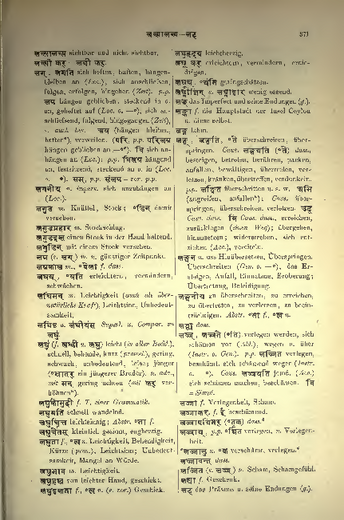
laghú (f. ladhvī u. laghu) leicht (in allen Bedd.), schnell, behende, kurz (prosod.). gering, schwach, unbedeutend, leise; jünger (˚bhrAtar) ein jüngerer Bruder). n. adv., mit man gering achten (mit kar verhöhnen*).
Burnouf 1866 adjective · adverb
Original text · French · adjective
laghu laghu a. [comp. laghīyas; sup. laghiṣṭha] léger; supportable; impondérable; léger, tg. Rapide, leste. Petit. — S. n. minute [1/10 du nādika ou 15 kāṣṭhas]. Bois d'aloës noir; racine d'andropogon muricatum. — F. laghu trigonella corniculata, bot. — F. laghvī petite voiture légère. Femme svelte et délicate. Gr. ἐλαχύς, ὀλίγος; lat. levis; fr. léger; lith. lengwas; angl. light. laghu adv. légèrement; peu. laghukāya m. bouc. laghugarga m. esp. de poisson. laghujaṅgala m. esp. de caille. laghupatraka m. sunda rochanî, bot. laghumāṃsa m. perdrix-francolin. laghulaya n. racine d'andropogon. laghuvṛtti a. impondérable [par l'effet de l'extase ou comme un corps glorieux]; de nature légère, tg. laghusthānatā f. (sthā; sfx. ana; sfx. tā) l'avantage d'une posture facile et non fatigante, Bd. laghuhasta a. qui a la main légère, adroit. laghvāśin a. (aś) qui mange peu.
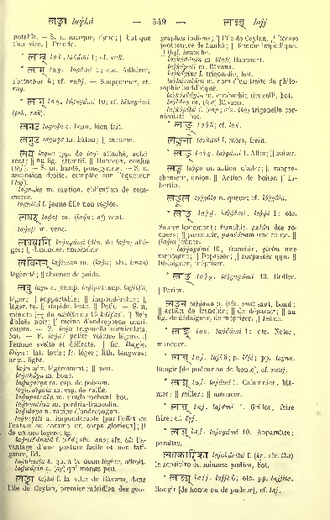
Original text · French · adverb
laghu adv. légèrement; peu.
Occurrences in source texts (5)
DYS 1 occurrence
GoS 1 occurrence
HP 1 occurrence
HTK 1 occurrence
HTK 10.14*2–17*1: Śītalī and Antaraṅgaka-kumbha 1 occurrence
Direct occurrences
-
HTK 10.15 Segment 10
PYS 1 occurrence
PYS 3.41–42: Divine Hearing and Travel through Space 1 occurrence
Direct occurrences
-
PYS 3.42 Segment 5
Continue with AYI Free
Image source: AYI archive.