

mahā महा – mahā. See p. 754, col. I.
adjective · substantive feminine · Word type unspecified
Dictionary sources
Cappeller 1891 Word type unspecified
Original text · English · Word type unspecified
mahā́ ·(only °-- & acc. sgl. mahā́m) = mahánt.
Monier-Williams 1872 Word type unspecified
Original text · English · Word type unspecified
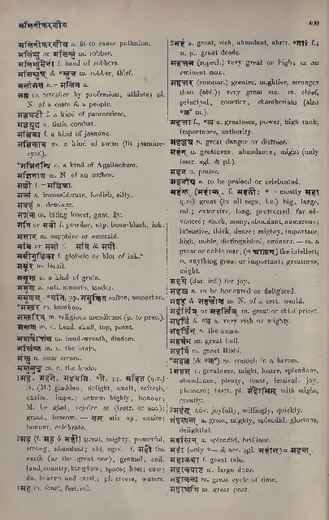
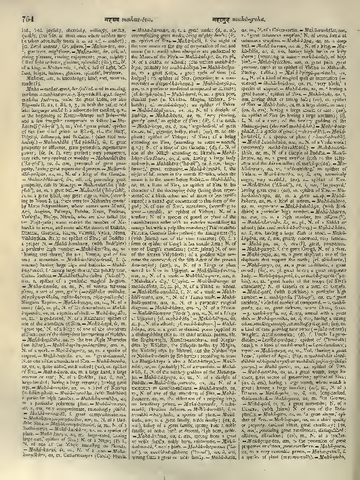
Mahā = mahat, great, &c. (in Ved. used in acc. sing. mahām = mahāntam, e. g. Ṛg-veda III. 49, 1. śaṃsū mahām Indram, praise the great Indra, see also Ṛg-veda II. 22, I, III. 2, 3; in both the earlier and later language mahā is a substitute for mahat, q. v., at the beginning of Karma-dhāraya and Bahu-vrīhi and a few irregular compounds as follow.)
Original text · English · Word type unspecified
mahā mahā. See p. 754, col. I.
Petersburger 1855 adjective
Original text · German · adjective
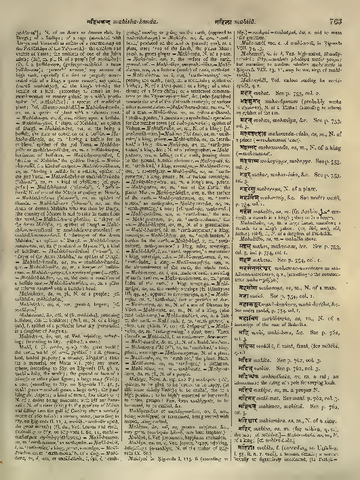
mahā́ adj. so v. a. mahant; von diesem Stamme nur acc. sg. mahā́m ṚV. 2,11,9. ṚV. 2,22,1. ṚV. 3,2,3. śaṃsā̀ ma̱hāmindràm ṚV. 49,1. ṚV. 4,17,8. ṚV. 6,29,1. ā̱hā̱vam ṚV. 6,7,2. adrìm ṚV. 6,17,5. ra̱yim ṚV. 9,40,3. ṚV. 9,65,1. ṚV. 10,80,7. Am Anfange eines comp. erscheint sowohl in der älteren, als auch in der späteren Sprache regelmässig mahā und nicht mahant, wenn das comp. als die Verbindung eines adj. mit seinem subst. oder eines adv. (sehr, in hohem Grade) mit seinem adj. aufzufassen ist, P. 2,1,61. VOP. 6,10. mahāvaira grosse Feindschaft Spr. 1620. mahāgrīva (s. bes.) einem langen Hals habend, mahāghora (s. bes.) sehr furchtbar.
Böhtlingk 1879 adjective · Word type unspecified
Original text · German · adjective
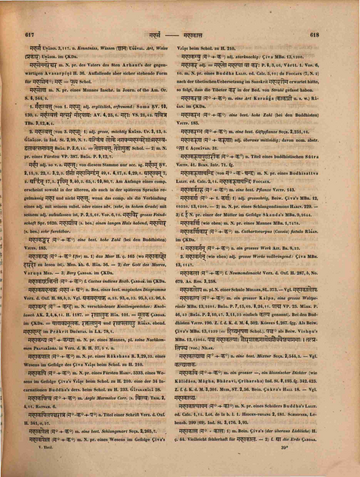
mahā́ Adj. gross. Selbständig nur im Acc. mahaā́m. Am Anfange eines Comp. erscheint sowohl in der älteren, als auch in der späteren Sprache, mit einigen wenigen Ausnahmen, mahā und nicht mahant, wenn das Compositum als die Verbindung eines Adj. mit seinem Subst. oder eines Adv. (sehr, in hohem Grade) mit seinem Adj. aufzufassen ist.
Original text · German · Word type unspecified
mahā V. Nomin. máhā[ḥ] ŚAT. BR. 14,7,2,23. KAṬHOP. 1,24. An der ersten Stelle liest eine gute Hdschr. mahāṃ dhruvaḥ, und so wird wohl auch an der anderen Stelle mahā bhūmau zu lesen sein. [Nachtrag, Band 7]
Apte 1890 substantive feminine
Original text · English · substantive feminine
mahā A cow.
Original text · English · substantive feminine
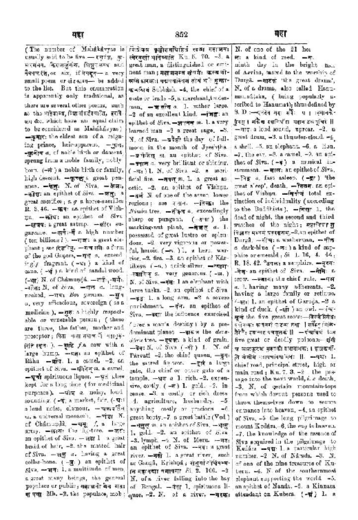
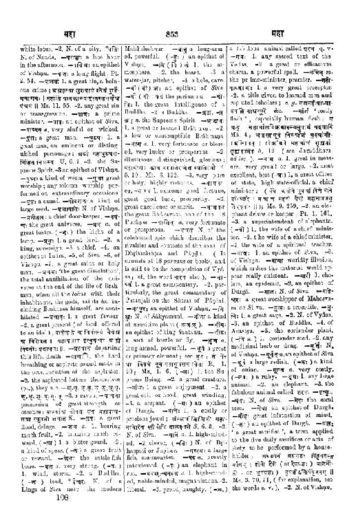
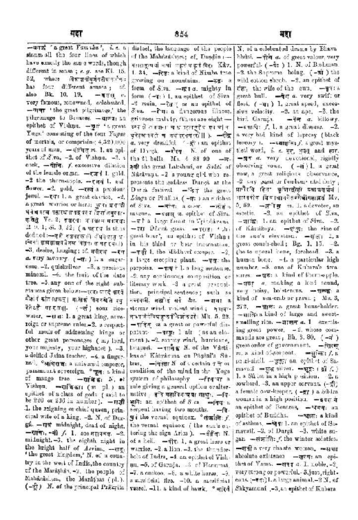
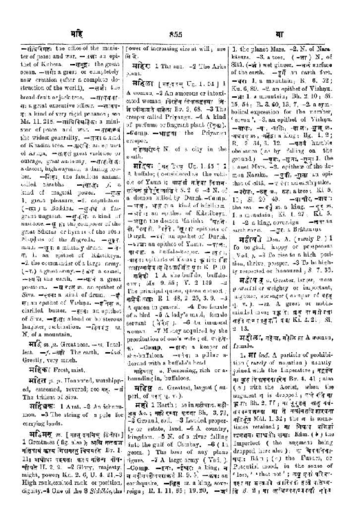
mahā The substitute of mahat at the beginning of Karmadhāraya and Bahuvrīhi compounds, and also at the beginning of some other irregular words. (Note. The ([Page 0850-c]) number of compounds of which mahā is the first member is very large, and may be multiplied ad infinitum. The more important of them, or such as have peculiar significations, are given below). Comp. — akṣaḥ an epithet of Śiva. — aṃga a. huge, bulky. — (gaḥ) 1 a camel. 2 a kind of rat. 3 N. of Śiva. — aṃjanaḥ N. of a mountain. — atyayaḥ a great danger or calamity. — adhvanika a. ‘having gone a long way,’ dead. — adhvaraḥ a great sacrifice. — anasaṃ 1 a heavy carriage. 2 cooking utensils. — (sī) a kitchen-maid. ( — saḥ, saṃ a kitchen. — anumāva a. 1 of great prowess, dignified, noble, glorious, magnanimous, exalted, illustrious; Śi. 1. 17; Ś. 3. 2 virtuous, righteous, just. — (vaḥ) a worthy or respectable person. — aṃtakaḥ 1 death. 2 an epithet of Śiva. — aṃdhakāraḥ 1 thick darkness. 2 gross spiritual) ignorance. — aṃdhrāḥ (pl.). N. of a people and their country. — anvaya, -abhijana a. nobly-born, of noble birth. — (yaḥ, -naḥ) noble birth, high descent. — abhiṣavaḥ the great extraction of Soma. — amātyaḥ the chief or prime minister (of a king). — aṃbukaḥ an epithet of Śiva. — aṃbujaṃ a billion. — amla a. very sour. — (mlaṃ) the fruit of the tamarind tree. — araṇyaṃ a great (dreary) forest, large forest. — argha a. very costly, costing a high price. — (rghaḥ) a kind of quail. — arghya a. valuable, precious. — arcis a. flaming high. — arṇavaḥ 1 the great ocean. 2 N. of Śiva. — artha a. 1 rich. 2 great, noble, dignified. 3 important, weighty. 4 significant. — arbudaṃ one thousand millions. — arha a. 1 very valuable, very costly; Ku. 5. 12. 2 invaluable, inestimable; U. 6. 11. — (rhaṃ) white sandal-wood. — avarohaḥ the fig-tree. — aśanidhvajaḥ a great banner in the form of the thunderbolt; R. 3. 56. — aśana a. voracious, gluttonous. — aśman m. a precious stone, ruby. — aṣṭamī the eighth day in the bright half of Āśvina sacred to Durgā. — asiḥ a large sword. — asurī N. of Durgā. — ahnaḥ the afternoon. — ākāra a. extensive, large, great. — ācāryaḥ 1 a great ([Page 0851-a]) teacher. 2 an epithet of Śiva. — āḍhya a. wealthy, very rich. — (ḍhyaḥ) the Kadamba tree. — ātman a. 1 high-souled, high-minded, magnanimous, noble; ayaṃ durātmā athavā mahātmā kauṭilyaḥ Mu. 7; dviṣaṃti maṃdāścaritaṃ mahātmanāṃ Ku. 5. 75; U. 1. 49. 2 illustrious, distinguished, exalted, eminent. ( — m.) 1 the Supreme Spirit; Ms. 1. 54. 2 the great principle, i. e. intellect of the Sānkhyas. (mahātmavat means the same as mahātman). — ānakaḥ a kind of large drum. — ānaṃdaḥ, -naṃdaḥ 1 great joy or bliss. 2 especially, the great bliss of final beatitude. — (dā) 1 spirituous liquor. 2 a festival on the ninth day in the bright half of Māgha. — āpagā a great river. — āyudhaḥ an epithet of Śiva. — āraṃbha a. undertaking great works, enterprizing. — (bhaḥ) any great enterprize. — ālayaḥ 1 a temple in general. 2 a sanctuary, an asylum. 3 a great dwelling. 4 a place of pilgrimage. 5 the world of Brahman. 6 the Supreme Spirit. 7 a tree &c. sacred to a deity. 8 N. of a particular dark fortnight. — (yā) N. of a particular deity. — āśaya a. high-souled, nobleminded, magnanimous, noble: rājā hiraṇyagarbho mahāśayaḥ H. 4; see mahātman. — (yaḥ) 1 a noble-minded or magnanimous person; mahāśayacakravartī Bv. 1. 70. 2 the ocean. — āspada a. 1 occupying a great position. 2 mighty, powerful. — āhavaḥ a great or tumultuous fight. — iccha a. 1 magnanimous, noble-minded, high-souled, noble; R. 18. 33. 2 having lofty aims or aspirations, ambitious; Pt. 1. 37. — iṃdraḥ 1 ‘the great Indra,’ N. of Indra; Ku. 5. 53; R. 13. 20; Ms. 7. 7. 2 a chief or leader in general. 3 N. of a mountain range; patimarhadreṃsya mahodadheśca R. 6. 54, R. 4. 39, R. 4. 43. ˚cāpaḥ rainbow. ˚nagarī N. of Amarāvatī, the capital of Indra. ˚maṃtrin m. an epithet of Bṛhaspati. — iṣuḥ a great archer; adhirohati gāṃḍivaṃ maheṣau Ki. 13. 16. — iṣvāsaḥ a great archer, a great warrior; Bg. 1. 4. — īśaḥ, — īśānaḥ N. of Śiva. ˚baṃdhuḥ the Bilva tree. — īśānī N. of Pārvatī. — īśvaraḥ 1 a great lord, sovereign; ([Page 0851-b]) Pt. 2. 69. 2 N. of Śiva. 3 of Viṣṇu. 4 a god (opp. prakṛti). — (rī) 1 N. of Durgā. 2 a kind of bell-metal. — ukṣaḥ (for ukṣan) a large bull, a full grown or strong bull; mahokṣatāṃ vatsataraḥ spṛśanniva R. 3. 32, R. 4. 22, R. 6. 72; Śi. 5. 63. — utpalaṃ a large blue lotus. — (laḥ) the Sārasa bird. — utsavaḥ 1 a great festival or occasion of joy. 2 the god of love. — utsāha a. possessed of great energy, energetic, persevering. — (haḥ) 1 perseverance. 2 great pride; Pt. 1. 38. — udadhiḥ 1 the great ocean; R. 3. 17. 2 an epithet of Indra. ˚jaḥ a conch-shell, shell. — udaya a. very prosperous or lucky, very glorious or splendid, of great prosperity. — (yaḥ) 1 (a) great elevation or rise, greatness, prosperity; R. 8. 16. (b) great fortune or good luck. (e) greatness, pre-eminence. 2 final beatitude. 3 a lord, master. 4 N. of the district called Kānyakubja or Kanouja; see App. III. 5 N. of the capital of Kanouja. 6 sour milk mixed with honey. — udara a. big-bellied, corpulent. — (raṃ) 1 a big belly. 2 dropsy. — udāra a. very generous or magnanimous — udyama a. = mahotsāha q. v. — udyoga a. very industrious or diligent, hardworking. — unnata a. exceedingly lofty. — (taḥ) the palmyra tree. — unnatiḥ f. great rise or elevation (fig. also), high rank. — upakāraḥ a great obligation. — upādhyāyaḥ a great preceptor, a learned teacher. — uragaḥ a great serpent; R. 12. 98; N. 1 18. — uraska a. broad-chested. — (skaḥ) an epithet of Śiva. — ulkā 1 a great meteor. 2 a great firebrand. — ṛtvij m. ‘a great priest’, N. of the four chief sacrificial priests. — ṛddhi a. very prosperous, opulent. ( — f.) great prosperity or affluence. — ṛṣabhaḥ a great bull. — ṛṣiḥ 1 a great sage or saint; yasmāṭṭaṣiḥ paratvena mahāṃstasmānmaharṣayaḥ; (the term is applied in Ms. 1. 34 to the ten Prajāpatis or patriarchs of mankind, but it is also used in the general sense of ‘a great sage’). 2 N. of Śiva. 3 of Buddha. — oṣṭha (mahoṣṭha) a. having large lips. — (ṣṭhaḥ) an epithet of Śiva. — ojasa ([Page 0851-c]) a. very mighty or powerful, possessed of great splendour or glory; mahaujaso mānadhanā dhanārcitāḥ Ki. 1. 19. ( — m.) a great hero or warrior, a champion. ( — n.) great vigour. — ojasaṃ the discus of Viṣṇu. — oṣadhiḥ f. 1 a very efficacious medicinal plant, a sovereign drug. 2 the Dūrvā grass. 3 N. of various plants brāhmī, śvetakaṃṭakārī, kaṭukā, ativiṣā &c. ˚gaṇaḥ a collection of great or medicinal herbs: -pṛśnipaṇīṃ śyāmalatā bhṛṃgarājaḥ śatāvarī . guḍūcā sahadevī ca mahaiṣadhigaṇaḥ smṛtaḥ .. — auṣadhaṃ 1 a sovereign remedy, panacea. 2 ginger. 3 garlic. 4 a kind of poison (vatsanābha). — kacchaḥ 1 the sea. 2 N. of Varuṇa. 3 a mountain. — kaṃdaḥ garlic. — kapardaḥ a kind of shell — kapitthaḥ 1 the Bilva tree. 2 red garlic. — kaṃbu a. stark naked. — (buḥ) an epithet of Śiva. — kara a. 1 large-handed. 2 having a large revenue — karṇaḥ an epithet of Śiva. — karman a. doing great works. ( — m.) an epithet of Śiva. — kalā the night of the new moon. — kaviḥ 1 a great poet, a classical poet. such as kālidāsa, bhavabhūti. bāṇa, bhāravi &c. 2 an epithet of Śukra. — kāṃtaḥ an epithet of Śiva. — (tā) the earth. — kāṃya a. big bodied, big, gigantic, bulky. — (yaḥ) 1 an elephant. 2 an epithet of Śiva. 3 of Viṣṇu. 4 of a being attending on Śiva (= naṃdi). — kārtikī the night of fullmoon in the month of Kārtika. — kālaḥ 1 a form of Śiva in his character as the destroyer of the world. 2 N. of a celebrated shrine or temple of Śiva (Mahākāla) (one of the 12 celebrated Jyotirliṅgas) established at Ujjayinī (immortalized by Kālidāsa in his Meghadūta, which gives a very beautiful description of the god, his temple, worship &c., together with a graphic picture of the city; cf. Me. 30-38; also R. 6. 34). 3 an epithet of Viṣṇu. 4 N. of a kind of gourd. 5 N. of Śiva's servant (naṃdi). ˚puraṃ the city of Ujjayinī. — kālī an epithet of Durgā in her terrific form. — kāvyaṃ a great or classical poem; (for a full description of its nature, contents &c., according to Rhetoricians see S. D. 559) ([Page 0852-a]) (The number of Mahākāvyas is usually said to be five: — raghuvaṃśa, kumārasaṃbhava, kirātārjunīya, śiśupālavadha and naiṣadhacarita, or six, if meghadūta -a very small poem or khaṃḍakāvya -be added to the list. But this enumeration is apparently only traditional, as there are several other poems, such as the bhaṭṭikāvya, vikramāṃkadevacarita, haravijaya &c. which have an equal claim to be considered as Mahākāvyas) — kumāraḥ the eldest son of a reigning prince, heir-apparent. — kula, — kulīna a. of noble birth or descent, sprung from a noble family, nobly born. — (laṃ) a noble birth or family, high descent. — kṛcchra a great penance. — ketuḥ N. of Śiva. — keśaḥ, — kośaḥ an epithet of Śiva. — kratuḥ a great sacrifice; e. g. a horse-sacrifice R. 3. 46. — kramaḥ an epithet of Viṣṇu. — krodhaḥ an epithet of Śiva. — kṣatrapaḥ a great satrap. — kṣīraḥ sugarcane. — kharvaḥ -rvaṃ a high number (ten billions ?). — gajaḥ a great elephant; see dikkarin. — gaṇapatiḥ a form of the god Gaṇeśa. — gaṃdha a. exceed ingly fragrant. — (dhaḥ) a kind of cane. — (dhaṃ) a kind of sandal-wood. — (dhā) N. of Cāmuṇḍā. — gartaḥ, -garbhaḥ, — gītaḥ N. of Śiva. — gala a. longnecked. — gavaḥ Bos gavœus. — gubhaḥ a. very efficacious, sovereign (as a medicine). — guruḥ a highly respectable or venerable person; (these are three, the father, mother and preceptor; pritā mātā tathācāryoṃ mahāgururiti smṛtaḥ). — gṛṣṭi f. a cow with a large hump. — grahaḥ an epithet of Rāhu. — grīvaḥ 1 a camel. 2 an epithet of Śiva. — grīvin m. a camel. — ghūrṇā spirituous liquor. — ghṛtaṃ ghee kept for a long time (for medicinal purposes). — ghoṣa a. noisy, loud sounding. — (ṣaṃ) a market, fair. — (ṣaḥ) a loud noise, clamour. — cakravartin m. a universal monarch. — caṃḍā N. of Cāmuṇḍā. — camūḥ f. a large army. — chāyaḥ the fig-tree. — jaṭaḥ an epithet of Śiva. — jaṭā 1 a great braid of hair. 2 the matted hair of Śiva. — jatru a. having a great collar-bone. — (truḥ) an epithet of Śiva. — janaḥ 1 a multitude of men, a great many beings, the general populace or public; mahājano yena gataḥ sa pathāḥ Mb. 2 the populace, mob; ([Page 0852-b]) vila kya vṛddhokṣamadhiṣṭhitaṃ tvayā mahājanaḥ smeramukho bhaviṣyati Ku. 5. 70. 3 a great man, a distinguished or eminent man; mahājanasya saṃsargaḥ kasya nonnatikāraka . padmapatrasthitaṃ toyaṃ dhatte muktāphalaśriyaṃ Subhāṣ. 4 the chief of a caste or trade. 5 a merchant, tradesman. — jātīya a. 1 rather large. 2 of an excellent kind. — jihvaḥ an epithet of Śiva. — jñānin m. 1 a very learned man 2 a great sage. 3 N. of Śiva. — jyaiṣṭhī the day of fullmoon in the month of Jyeṣṭha. — jyotis m. an epithet of Śiva. — jvāla a. very brilliant or shining. — (laḥ) 1 N. of Śiva. 2 a sacrificial fire. — tapas m. 1 a great ascetic. 2 an epithet of Viṣṇu. — talaṃ N. of one of the seven lower regions; see pātāla. — tiktaḥ the Nimba tree. — tīkṣṇa a. exceedingly sharp or pungent. — (kṣṇā) the marking-nut plant. — tejas a. 1 possessed of great lustre or splendour. 2 very vigorous or powerful, heroic. ( — m.) 1 a hero, warrior 2 fire. 3 an epithet of Kārtikeya ( — n.) quick-silver. — tyāgaḥ — tyāgin a. very generous. ( — m.) N. of Śiva. — daṃtaḥ 1 an elephant with large tusks. 2 an epithet of Śiva. — daṃḍaḥ 1 a long arm. 2 a severe punishment. — daṃbhaḥ an epithet of Śiva. — caśā the influence exercised (over a man's destiny) by a predominant planet — dāru n. the devadāru tree. — dūṣakaḥ a kind of grain — devaḥ N. of Śiva. — (vī) 1 N. of Pārvatī. 2 the chief queen. — drumaḥ the sacred fig-tree. — dvāraṃ a large gate, the chief or outer gate of a temple. — dhana a. 1 rich. 2 expensive, costly. — (naṃ) 1 gold. 2 incense. 3 a costly or rich dress 4 agriculture, husbandry. 5 anything costly or precious 6 great booty. 7 a great battle (Ved.) — dhanus m. an epithet of Śiva. — dhātuḥ 1 gold. 2 an epithet of Śiva. 3 lymph. 4 N. of Meru. — naṭaḥ an epithet of Śiva. — nadaḥ a great river. — nadī 1 a great river, such as Gaṅgā, Kṛṣṇā; saṃbhūyāṃbhodhimabhyati mahānadyā nagāpagā Śi. 2. 100. 2 N. of a river falling into the bay of Bengal. — naṃdā 1 spirituous liquor. 2 N. of a river. — narakaḥ ([Page 0852-c]) N. of one of the 21 hells. — nalaḥ a kind of reed. — navamī the ninth day in the bright half of Āśvina, sacred to the worship of Durgā. — nāṭakaṃ ‘the great drama’, R. of a drama, also called Hanumannāṭaka, (being popularly ascribed to Hanumat); thus defined by S. D.:-etadeva yadā sarvaiḥ patākāsthānakairyutam . aṃkaiśca daśabhidhīrā mahāna ṭakamūcire ... — nādaḥ a loud sound, uproar. 2 a great drum. 3 a thunder-cloud. 4 a shell. 5 an elephant. 6 a lion. 7 the ear. 8 a camel. 9 an epithet of Śiva. — (daṃ) a musical instrument. — nāsaḥ an epithet of Śiva. — nidra a. fast asleep. — (drā) ‘the great sleep’, death. — niyamaḥ an epithet of Śiva. — (daṃ) a musical intinction of individuality (according to the Buddhists). — niśā 1 the dead of night, the second and third watches of the night; mahāniśā tu vijñayā madhyamaṃ praharadvayam. 2 an epithet of Durgā. — nīcaḥ a washerman. — nīla a. dark-blue. — (laḥ) a kind of sapphire or emerald; Śi. 1. 16, Śi. 4. 44; R. 18. 42. ˚upalaḥ a sapphire. — nṛtyaḥ — netra an epithet of Śiva. — nemiḥ a crow. — nyāyaḥ the chief rule. — pakṣa a. 1 having many adherents. 2 having a large family or retinue. — (kṣaḥ) 1 an epithet of Garuḍa. 2 a kind of duck. — (kṣī) an owl. — paṃcamūlaṃ the five great roots: — bilvognimaṃthaḥ śyonākaḥ kāśmarī pāṭalā tathā . sarvaistu militairetaiḥ syānmahāpacamūlakaṃ .. — paṃcaviṣaṃ the five great or deadly poisons:-śṛṃgī ca kālakūṭaśca musnako vatsanābhakaḥ . śaṃkhakarṇīti yo goyaṃ mahāpacāvaṣābhidhaḥ .. — pathaḥ 1 chief road, principal street, high or main road; Ku. 7. 3. 2 the passage into the next world, i. e. death. 3 N. of certain mountain tops from which devout persons used to throw themselves down to secure entrance into heaven. 4 an epithet of Śiva. 5 the long pilgrimage to mount Kedāra. 6 the way to heaven. 7 the knowledge of the essence of Śiva acquired in the pilgrimage to Kedāra. — padmaḥ 1 a particular high number. 2 N. of Nārada. 3 N. of one of the nine treasures of Kubera. 4 N. of the southernmost elephant supporting the world. 5 an epithet of Nanda. 6 a Kinnara attendant on Kubera. — (dmaṃ) 1 a ([Page 0853-a]) white lotus. 2 N. of a city. ˚patiḥ N. of Nanda. — parāhṇaḥ a late hour in the afternoon. — pavitraḥ an epithet of Viṣṇu. — pātaḥ a long flight; Pt. 2. 54. — pātakaṃ 1 a great sin, a heinous crime; brahmahatyā surāpānaṃ steyaṃ gurvaṃganāgamaḥ . mahāṃti pātakānyāhustatsaṃsargaśca paṃcamaṃ .. Ms. 11. 55. 2 any great sin or transgression. — pātraḥ a prime minister. — pādaḥ an epithet of Śiva. — pāpman a. very sinful or wicked. — puṃsaḥ a great man. — puruṣaḥ 1 a great man, an eminent or distinguished personage; śabdaṃ mahāpuruṣamaṃvihitaṃ niśamya U. 6. 7. 2 the Supreme Spirit. 3 an epithet of Viṣṇu. — puṣpaḥ a kind of worm — pūjā great worship; any solemn worship performed on extraordinary occasions — pṛṣṭhaḥ a camel. poṭagalaḥ a kind of large reed. — prajāpatiḥ N. of Viṣṇu. — pratīhāraḥ a chief doorkeeper. — prapaṃcaḥ the great universe. — prabha a. of great lustre. — (bhaḥ) the light of a lamp. — prabhuḥ 1 a great lord. 2 a king, sovereign. 3 a chief. 4 an epithet of Indra. 5 of Śiva. 6 of Viṣṇu. 7 a great saint or holy man. — pralayaḥ ‘the great dissolution’, the total annihilation of the universe at the end of the life of Brahman, when all the lokas with their inhabitants, the gods, saints &c. including Brahman himself. are annihilated. — prasādaḥ 1 a great favour 2 a great present (of food offered to an idol); pādodakaṃ ca nirmālyaṃ naivedyaṃ ca viśeṣataḥ . mahāprasāda ityuktvā grāhya viṣṇoḥ prayatnataḥ ... — prasthānaṃ departing this life, death — prāṇaḥ 1 the hard breathing or aspirate sound made in the pronunciation of the aspirates. 2 the aspirated letters themselves (pl.). they are: — kh, gh, ch, jh, ṭh, ḍh, th, dh, ph, bh, ś, ṣ, s, h 3 a raven. — prāṇatā possession of great strength or essence; anyāṃśca jīvata eva mahāprāṇatayā sphurato jagrāha K. — plavaḥ a great flood, deluge. — phala a. 1 bearing much fruit. 2 bringing much reward. — (lā) 1 a bitter-gourd. 2 a kind of spear. — (laṃ) a great fruit or reward. — phatā the cuttle fish bone. — bala a. very strong. — (laḥ) 1 wind, storm. 2 a Buddha — (laṃ) lead. ˚īśvaraḥ N of a Liṅga of Śiva near the modern ([Page 0853-b]) Mahābleshwar. — bāhu a. long-arm ed, powerful. — (huḥ) an epithet of Viṣṇu. — bi(vi)laṃ 1 the atmosphere. 2 the heart. 3 a water-jar, pitcher. 4 a hole, cave. — bī (vī) jaḥ an epithet of Śiva. — bī (vī) jyaṃ the perinæum. — bodhiḥ 1 the great intelligence of a Buddha 2 a Buddha. — brahmaṃ, -bra hman n. the Supreme Spirit. — brāhmaṇaḥ 1 a great or learned Brāhmaṇa 2 a low or contemptible Brāhmaṇa. — bhāga a. 1 very fortunate or blessed, very lucky or prosperous. 2 illustrious, distinguished, glorious; mahābhāgaḥ kāmaṃ narapatirabhinnasthitirasau Ś. 5. 10; Ms. 3. 192. 3 very pure or holy, highly virtuous. — bhāgatātva, -bhagyaṃ 1 extreme good fortune, great good luck, prosperity. 2 great excellence or merit. — bhāgavataṃ the great Bhāgavata, one of the 18 Purāṇas — bhāgin a. very fortunate or prosperous. — bhārataṃ N. of the celebrated epic which describes the rivalries and contests of the sons of Dhṛtarāṣṭra and Pāṇḍu. (It consists of 18 parvans or books, and is said to be the composition of Vyāsa; cf. the word bhārata also). — bhāṣyaṃ 1 a great commentary. 2 particularly, the great commentary of Patañjali on the Sūtras of Pāṇini. — bhāmuraḥ an epithet of Viṣṇu. — bhikṣuḥ N. of Śākyamuni. — bhītā a kind of sensitive plant (lājāḻū). — bhīmaḥ an epithet of king Śantanu. — bhīruḥ a sort of beetle or fly. — bhuja a. long-armed, powerful. — bhūtaṃ a great or primary element; see bhūta; taṃ vedhā vidadhe nūnaṃ mahābhūtasamādhinā R. 1. 29; Ms. 1. 6. — (taḥ) 1 the Supreme Being. 2 a great creature. — bhogaḥ 1 a great enjoyment. 2 a great coil or hood; great winding. 3 a serpent. — (gā) an epithet of Durgā. — maṇiḥ 1 a costly or precious jewel; saṃskārollikhito mahāmaṇiriva kṣīṇopi nālakṣyate Ś. 6. 5. 2 N. of Śiva. — mati a. 1 high-minded. 2 clever. — (tiḥ) N. of Bṛhaspati or Jupiter. — matsyaḥ a large fish, sea monster. — mada a. greatly intoxicated. — (daḥ) an elephant in rut. — manas -manaska a. 1 high-minded, noble-minded, magnanimous. 2 liberal. 3 proud, haughty. ( — m.) ([Page 0853-c]) a fabulous animal called śarabha q. v. — matraḥ 1 any sacred text of the Vedas. 2 a great or efficacious charm, a powerful spell. — maṃtrin m. the prime-minister, premier. — mahopādhyāyaḥ 1 a very great preceptor. 2 a title given to learned men and reputed scholars; e. g. mahāmahopādhyāyamalli nāthasūri &c. — māṃsaṃ ‘costly flesh’, especially human flesh: nakhalu mahāmāṃsavikrayādanyamupāyaṃ paśyāmi Māl. 4; aśastra pūtaṃ nirvyājaṃ puruṣāṃgopakalpitam . vikrīyate mahahāmāṃsaṃ gṛhyatāṃ gṛhyatāmidaṃ Māl. 5. 12. (see Jagaddhara ad loc.). — mātra a. 1 great in measure. very great or large. 2 most excellent, best. — (traḥ) 1 a great officer of state, high state-official, a chief minister; (maṃtre karmaṇi bhūṣāyāṃ vitte māne paricchade . mātrā ca mahatī yeṣāṃ mahāmātrāstu te smṛtāḥ ..); Ms. 9. 259. 2 an elephant-driver or keeper; Pt. 1. 161. 3 a superintendent of elephants. — (trī) 1 the wife of a chief minister. 2 the wife of a chief minister. 2 the wife of a spiritual teacher. — māyaḥ 1 an epithet of Śiva. 2 of Viṣṇu. — māyā worldly illusion, which makes the material world appear really existent. — mārī 1 cholera, an epidemic. 2 an epithet of Durgā. — mālaḥ N. of Śiva. — māheśvaraḥ a great worshipper of Maheśvara or Śiva. — mukhaḥ a crocodile. — muniḥ 1 a great sage. 2 N. of Vyāsa. 3 an epithet of Buddha. 4 of Agastya. 5 the coriander plant. ( — ni n.) 1 coriander seed. 2 any medicinal herb or drug. — mūrtiḥ N. of Viṣṇu. — mūrdhat m. an epithet of Śiva — mūlaṃ a large radish. — (laḥ) a kind of onion. — mūlya a. very costly. — (lyaḥ) a ruby. — mṛgaḥ 1 any large animal. 2 an elephant. 3 the fabulous animal called śarabha. — mṛtyuḥ, — medhaḥ N. of Śiva. — medaḥ the coral tree. — medhā an epithet of Durgā. — mohaḥ great infatuation of mind. — (hā) an epithet of Durgā. — yajñaḥ ‘a great sacrifice’, a term applied to the five daily sacrifices or acts of piety to be performed by a householder; adhyāpanaṃ brahmayajñaḥ pitṛyajñasta tarpaṇam . homo daivo (or devayajñaḥ) balirbhauto (or bhūṭayajñaḥ) nṛyajño'tiyipūjanam .. Ms. 3. 70, Ms. 3. 71, (for explanation, see the words s. v.). 2 N. of Viṣṇu. ([Page 0854-a]) — yamakaṃ ‘a great Yamaka’, i. e. a stanza all the four lines of which have exactly the same words, though different in sense; e. g. see Ki. 15. 52, where vikāśamīyurjagatīśamārgaṇāḥ has four different senses; cf. also Bk. 10. 19. — yaśas a. very famous, renowned, celebrated. — yātrā ‘the great pilgrimage,’ the pilgrimage to Benares. — yāmyaḥ an epithet of Viṣṇu. — yugaṃ ‘a great Yuga,’ consisting of the four Yugas of mortals, or comprising 4,320,000 years of men. — yogin m. 1 an epithet of Śiva. 2 of Viṣṇu. 3 a cock. — yoniḥ f. excessive dilation of the female organ. — rajataṃ 1 gold. 2 the thorn-apple. — rajanaṃ 1 safflower. 2 gold. — ratnaṃ a precious jewel. — rathaḥ 1 a great chariot. 2 a great warrior or hero; kutaḥ prabhāvo dhanaṃjayasya mahārathajayadrathasya vipatimutpādayituṃ Ve. 2; daśarathaḥ praśaśāsa mahārathaḥ R. 9. 1; Śi. 3. 22; (a mahāratha is thus defined: -eko daśasahasra ṇi yodhayedyastu dhanvināṃ śastraśāstrapravīṇaśca vijñeyaḥ sa mahārathaḥ ..) 3 desire, longing; cf. manoratha. — rama a. very savoury. — (saḥ) 1 a sugarcane. 2 quicksilver 3 a precious mineral. 4 the fruit of the date tree. 5 any one of the eight substances given below: — daradaḥ pāradaṃ śasye vaikrāṃtaṃ kāṃtamabhrakam . mākṣikaṃ vimalaśceti syu rete'ṣṭai maharasāḥ ... — (saṃ) sour ricewater. — rājaḥ 1 a great king, sovereign or supreme ruler. 2 a respectful mode of addressing kings or other great personages (my lord, your majesty, your highness). 3 a deified Jaina teacher. 4 a fingernail. ˚adhirājaḥ a universal emperor, paramount sovereign. ˚cūtaḥ a kind of mango tree. — rājikaḥ N. of Viṣṇu. — rājikāḥ (m. pl.) an epithet of a class of gods (said to be 220 or 236 in number). — rājñī 1 the reigning or chief queen, principal wife of a king. 2 N. of Durgā. — rātraṃ midnight, dead of night. — rātriḥ, -trī f. 1 see mahāpralaya. 2 midnight. 3 the eighth night in the bright half of Āśvina. — rāṣṭraḥ ‘the great kingdom,’ N. of a country in the west of India, the country of the Marāṭhās. 2 the people of Mahārāṣṭra, the Marāṭhās (pl.). — (ṣṭrī) N. of the principal Prākṛta ([Page 0854-b]) dialect, the language of the people of the Mahārāṣṭra; cf. Daṇḍin: -mahārāṣṭrāśrayāṃ bhāṣāṃ prakṛṣṭaṃ prakṛtaṃ vidaḥ Kāv. 1. 34. — riṣṭaḥ a kind of Nimba tree growing on mountains. — rudraḥ a form of Śiva. — rūpa a. mighty in form. — (paḥ) 1 an epithet of Śiva. 2 resin. — retas m. an epithet of Śiva. — rogaḥ a dangerous illness, grievous malady; (these are eight: -unmādo rājayakṣmā ca śvāsastvagdoṣa eva ca . madhumehaścāśmarī ca tathodarabhagaṃdarau ..). — raudra a. very dreadful. — (drī) an epithet of Durgā. — rauravaḥ N. of one of the 21 hells; Ms. 4. 88-90. — lakṣmī the great Lakṣmī, or Śakti of Nārāyaṇa. 2 a young girl who represents the goddess Durgā at the Durgā festival. — liṃgaṃ the great Liṅga or Phallus. — (gaḥ) an epithet of Śiva. — lolaḥ a crow. — lohaṃ a magnet. — vakṣas m. epithet of Śiva. — vanaṃ a large forest in Vṛndāvana. — varā Dūrvā grass. — varāhaḥ ‘the great boar’, an epithet of Viṣṇu in his third or boar incarnation. — vallī 1 the Mādhavī creeper. 2 a large creeping plant. — vasaḥ the porpoise. — vākyaṃ 1 a long sentence. 2 any continuous composition or literary work 3 a great proposition, principal sentence; such as tattvamasi, brahmaivedaṃ sarvaṃ &c. — vātaḥ a stormy wind. violent wind; mahāvātadhmātairmahiṣakulanīlairjaladharaiḥ Mk. 5. 22. — vādin m. a great or powerful disputant. — vāyuḥ 1 air (as an element). 2 stormy wind, hurricane, tempest. — vārtikaṃ N. of the Vārtikas of Kātyāyana on Pāṇini's Sūtras. — videhā N. of a certain vṛtti or condition of the mind in the Yoga system of philosophy — vibhāṣā a rule giving a general option or alternative; iti mahāvibhāṣayā sādhuḥ. — vibhūtiḥ an epithet of Śiva — viṣaḥ a serpent having two mouths. — viṣuvaṃ the vernal equinox. ˚saṃkrāṃtiḥ f. the vernal equinox (the sun's entering the sign Aries). — vīciḥ N. of a hell. — vīraḥ 1 a great hero or warrior. 2 a lion. 3 the thunderbolt of Indra. 4 an epithet of Viṣṇu. 5 of Garuḍa. 6 of Hanumat. 7 a cuckoo. 8 a white horse. 9 a sacrificial fire. 10 a sacrificial vessel. 11 a kind of hawk. ˚caritaṃ ([Page 0854-c]) N. of a celebrated drama by Bhava bhūti. — vīrya a. of great valour, very powerful. — (ryaḥ) 1 N. of Brahman 2 the Supreme being. — (ryā) the wild cotton shrub. 2 an epithet of saṃjñā, the wife of the sun. — vṛṣaḥ a great bull. — vega a. very swift or fleet. — (gaḥ) 1 great speed, excessive velocity. 2 an ape. 3 the bird Garuḍa. — vela a. billowy. — vyādhiḥ f. 1 a great disease. 2 a very bad kind of leprosy (black leprosy). — vyāhṛtiḥ f. a great mystical word, i. e. bhūr, bhuvas and svar. — vrata a. very devotional, rigidly observing vows. — (taṃ) 1 a great vow, a great religious observance. 2 any great or fundamental duty; prāṇairapi hitā vṛttigdroho vyājavarjanaṃ . ātmanīva priyādhānametanmaitrīmahāvrataṃ Mv. 5. 59. — vratin m. 1 a devotee, an ascetic. 2 an epithet of Śiva. — śāktiḥ 1 an epithet of Śiva. 2 of Kārtikeya. — śaṃkuḥ the sine of the sun's elevation. — śaṃkhaḥ 1 a great conch-shell; Bg. 1. 15. 2 the temporal bone, forehead. 3 a human bone. 4 a particular high number. 5 one of Kubera's treasures. — śaṭhaḥ a kind of thorn-apple. — śabda a. making a loud sound, very noisy, boisterous. — śalkaḥ a kind of sea-crab or prawn; Ms. 3. 272. — śālaḥ a great householder. — śāliḥ a kind of large and sweetsmelling rice. — śāsana a. 1 exercising great power. 2 whose commands are great; Bh. 3. 80. — (naṃ) great order of government. — śiras m. a kind of serpent — śuktiḥ f. a pear-shell. — śuklā an epithet of Sarasvatī — śubhraṃ silver. — śūdraḥ (drī f.) 1 a Śūdra in a high position. 2 a cowherd. 3 an upper servant. — (drī) a female cow-keeper. — (drā) a Śūdra woman in a high position. — śmaśa naṃ an epithet of Benares. — śramaṇaḥ an epithet of Buddha. — śvāsaḥ a kind of asthma. — śvetā 1 an epithet of Sarasvatī. 2 of Durgā. 3 white sugar. — saṃkrāṃtiḥ f. the winter solstice. — satī a very chaste woman. — sattā absolute existence — satyaḥ an epithet of Yama. — sattva a. 1 noble. 2 very strong or powerful. 3 just, righteous. — (ttvaḥ) 1 a large animal. 2 N. of Śākyamuni. 3 an epithet of Kubera ([Page 0855-a]) — sāṃdhavigrahaḥ the office of the minis ter of peace and war. — sannaḥ an epithet of Kubera. — samudraḥ the great ocean. — sargaḥ a great or completely new creation (after a complete destruction of the world). — sarjaḥ the bread-fruit or jack-tree. — sādhanamāgaḥ a great executive officer. — sāṃtapanaḥ a kind of very rigid penance; see Ms. 11. 218. — sāṃdhivigrahikaḥ a minister of peace and war. — sāmānyaṃ the widest-generality. — sāraḥ a kind of Khadira tree. — sārathiḥ an epithet of Aruṇa. — sāhasaṃ great violence or outrage, great audacity. — sāhasikaḥ a dacoit, highwayman, a daring roober. — siṃhaḥ the fabulous animal called Śarabha. — siddhiḥ f. a kind of magical power. — sukhaṃ 1 great pleasure. 2 copulation — (khaḥ) a Buddha. — sugaṃdhaṃ a fragrant unguent. — sugaṃdhiḥ a kind of antidote. — sūkaḥ the composer of the great Sūktas or hymns of the 10th Maṇḍala of the Ṛgveda. — sūkṣmā sand. — sūtaḥ a military drum. — senaḥ 1 an epithet of Kārtikeya. 2 the commander of a large army. — (nā) a great army. — skaṃdhā a camel. — sthalī the earth. — sthānaṃ a great position. — sragvin m. an epithet of Śiva. — svanaḥ a kind of drum. — haṃsaḥ an epithet of Viṣṇu. — havisa n. clarified butter. — hastaḥ an epithet of Śiva. — hāsaḥ a loud or boisterous laughter, cachinnation. — himavat m. N. of a mountain.
Cappeller 1887 Word type unspecified
Original text · German · Word type unspecified
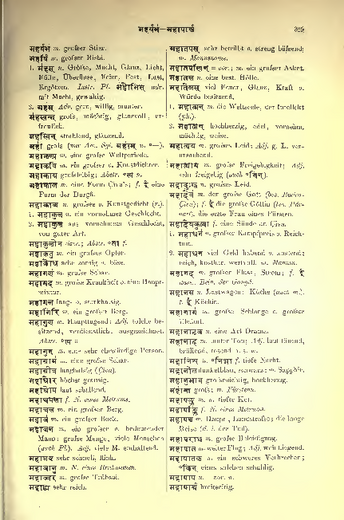
mahā́ groß (nur Acc. Sgl. mahā́m u. ˚—).
Burnouf 1866 Word type unspecified
Original text · French · Word type unspecified
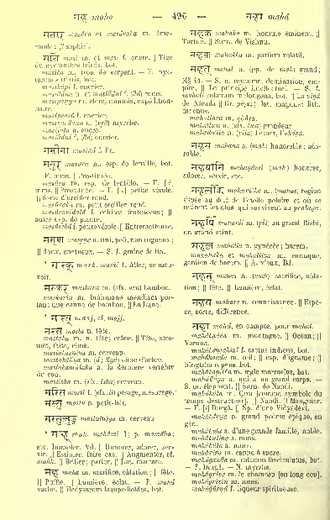
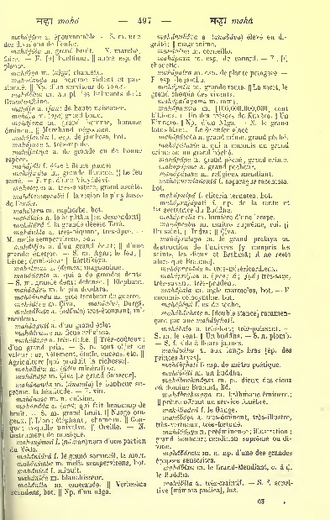
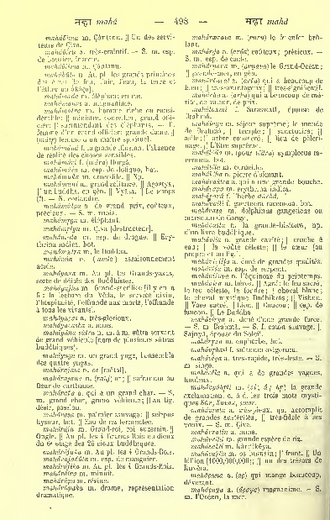
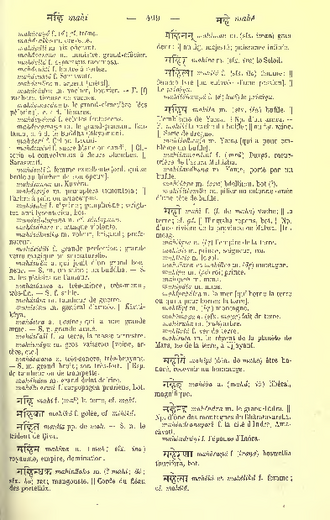
mahā mahā, en compos. pour mahat. mahākaccha m. montagne. Océan; Varuṇa. mahākaṇṭakinī f. cactus indicus, bot. mahākanda m. œil; esp. d'igname; hintsha repens, bot. mahākapittha m. ægle marmelos, bot. mahākhāya a. qui a un grand corps. — S. m. éléphant. Surn. de Nandi. mahākāla m. Śiva [comme symbole du temps destructeur]. Nandi. Manguier. — F. [i] Durgā. Np. d'une Vidyādevī. mahākāvya n. grand poème épique, en gén. mahākula a. d'une grande famille, noble. mahākulīna a. mms. mahākūla a. mms. mahākṣira m. canne à sucre. mahāgandha m. calamus fasciculatus, bot. — F. Durgā. — N. myrrhe. mahāgrīva m. le chameau [au long cou]. mahāgrīvin m. mms. mahāghūrṇā f. liqueur spiritueuse. [Page497-1] mahāghora a. épouvantable. — S. m. une des divisions de l'enfer. mahāghoṣa m. grand bruit. — N. marché, foire. — F. [ā] bdellium; autre esp. de plante. mahāṅga m. (aṅga) chameau. mahācaṇḍa m. homme violent et passionné. Np. d'un serviteur de Yama. mahācīna m. Au pl. les habitants de la Grande-Chine. mahāja a. (jan) de haute naissance. mahāja m. (aja) grand bouc. mahājana m. grand homme, homme éminent. Marchand, négociant. mahājambu f. esp. de jambosa, bot. mahājava a. très-rapide. mahājātīya a. de grande ou de bonne espèce. mahājālī f. ghoṣa à fleurs jaunes. mahājvāla m. grande flamme. Le feu sacré. — F. np. d'une Vidyādevī. mahātapas a. très-austère, grand ascète. mahātamaprabhā f. la région la plus basse de l'enfer. mahātaru m. euphorbe, bot. mahātala n. le 5ᵉ pātāla [en descendant]. mahātārā f. la grande déesse Tārā. mahātikta a. tres-piquant, très-âpre. — M. melia sempervirens, bot. mahātejas a. d'un grand éclat; d'une grande énergie. — S. m. Agni; le feu; héros; demi-dieu; Kārttikeya. mahātman a. (ātman) magnanime. mahādanta a. qui a de grandes dents. — S. m. grande dent; défense. Eléphant. mahādāru m. le pin deodara. mahādundu m. gros tambour de guerre. mahādeva m. Śiva. — mahādevī, Durgā. mahādbhuta a. (adbhuta) très-étonnant, miraculeux. mahādyuti a. d'un grand éclat. mahādruma m. ficus religiosa. mahādhana a. très-riche. Très-coûteux; d'un grand prix. — S. n. tout objet de valeur: or, vêtement, étoffe, encens, etc. Agriculture [qui produit la richesse]. mahādhātu m. (dhātu minéral) or. mahānaṭa m. Śiva [le grand danseur]. mahānanda m. (ānanda) le bonheur suprême, la béatitude. — F. vin. mahānasa m. n. cuisine. mahānāda a. (nad) qui fait beaucoup de bruit. — S. m. grand bruit. Nuage orageux. Lion; éléphant; chameau. Conque; coquille univalve. Oreille. — N. instrument de musique. mahānāmni f. (nāman) nom d'une portion du Veda. mahānidrā f. le grand sommeil, la mort. mahānimba m. melia sempervirens, bot. mahānicā f. minuit. mahānīca m. blanchisseur. mahānīla m. émeraude. Verbesina scandens, bot. Np. d'un nāga. [Page497-2] mahānubhāva a. (anubhāva) levé en dignité; magnanime. mahānemi m. corneille. mahāpakṣa m. esp. de canard. — F. [ī] chouette. mahāpatra m. esp. de plante potagère. — F. esp. de jambu. mahāpatha m. grande route. La mort, le grand chemin des vivants. mahāpathagama m. mms. mahāpadma m. [100,000,000,000] cent billions. Un des trésors de Kuvera. Un Kiṃnara. Np. d'un Nāga. — N. le grand lotus blanc. Le 8ᵉ enfer glacé. mahāpātaka n. grand crime, grand péché. mahāpātakin a. qui a commis un grand crime ou un grand péché. mahāpāpa n. grand péché, grand crime. mahāpāpma a. grand pécheur. mahāpāsaka m. religieux mendiant. mahāpuruṣadantā f. asparagus racemosa. bot. mahāpuṣpā f. clitoria ternatea, bot. mahāprajāpati f. np. de la tante et 1ʳᵉ sectatrice du Buddha. mahāprabha m. lumière d'une lampe. mahāprabhu m. maître suprême, roi. Un saint. Indra; Śiva. mahāpralaya m. le grand pralaya ou destruction de l'univers [y compris les saints, les dieux et Brahmā; il ne reste alors que Brahme]. mahāprasāda a. très-miséricordieux. mahāprājña a. (pra; ā; jṇā) très-sage, très-savant, très-prudent. mahāphala m. ægle marmelos, bot. — F. cucumis colocynthis, bot. mahāpheṇā f. os de sèche. mahābārhata a. [double stance] commençant par une mahābṛhatī. mahābala a. très-fort; très-puissant. — S. m. le vent. Un buddha. — S. n. plomb. — S. f. sida à fleurs jaunes. mahābāhu a. aux longs bras [ép. des princes āryas]. mahābṛhatī f. esp. de mètre poétique. mahābodhi m. un buddha. mahābrahmāṇas m. pl. dieux des cieux où domine Brahmā, Bd. mahābrāhmaṇa m. brâhmane éminent; prêtre offrant un service funèbre. mahābhadrā f. le Gange. mahābhāga a. très-éminent, très-illustre, très-vertueux, tres-fortuné. mahābhāgya n. prééminence; illustration; grand bonheur; condition suprême ou divine. mahābhārata m. n. np. d'une des grandes épopées sanscrites. mahābhikṣu m. le Grand-Mendiant, c-à-d. le Buddha. mahābhīta a. très-craintif. — S. f. sensitive [mimosa pudica], bot. [Page498-1] mahābhīma m. Śāṃtanu. Un des serviteurs de Śiva. mahābhīru a. très-craintif. — S. m. esp. de bousier, insecte. mahābhīṣma m. Śāṃtanu. mahābhūta n. Au pl. les grands principes des êtres [le feu, l'air, l'eau, la terre et l'éther ou ākāśa]. mahāmada m. éléphant en rut. mahāmanas a. magnanime. mahāmātra m. homme riche ou considérable; ministre, conseiller, grand officier; surintendant des éléphants. — F. femme d'un grand officier; grande dame. (mātṛ) femme d'un maître spirituel. mahāmāyā f. la grande illusion, l'absence de réalité des choses sensibles. mahāmārī f. (māra) Durgā. mahāmāṣa m. esp. de dolique, bot. mahāmukha m. crocodile. Np. mahāmuni m. grand solitaire. Agastya; un buddha, en gén. Vyāsa. Le temps (?). — N. coriandre. mahāmūlya a. de grand prix, coûteux, précieux. — S. m. rubis. mahāmṛga m. éléphant. mahāmṛtyu m. Śiva [destructeur]. mahāmeda m. esp. de drogue. Erythrina indica, bot. mahāmaitra m. le Buddha. mahāmla n. (amla) assaisonnement acide. mahāyakṣa m. Au pl. les Grands-yaxas, sorte de déités des Buddhistes. mahāyajña m. Grand-sacrifice [il y en a 5: la lecture du Veda, le service divin, l'hospitalité, l'offrande aux morts, l'offrande à tous les vivants]. mahāyaśas a. très-glorieux. mahāyaśaska a. mms. mahāyāna sūtra n. m à m. sūtra servant de grand véhicule [nom de plusieurs sūtras buddhiques]. mahāyuga m. un grand yuga, l'ensemble des quatre yugas. mahārajata n. or [métal]. mahārajana n. (rañj) or; safranum ou fleur de carthame. mahāratha a. qui a un grand char. — S. m. grand char, grand véhicule; au fig. désir, passion. mahārasa m. palmier sauvage; scirpus kysour, bot. Eau de riz fermentée. mahārāja m. Grand-roi, roi suzerain. Ongle. Au pl. les 4 Grands-Rois ou dieux du 6ᵉ étage des 26 cieux buddhiques. mahārājaka m. Au pl. les 4 Grands-Rois. mahārājacūta m. esp. de manguier. mahārājika m. Au pl. les 4 Grands-Rois. mahārātra m. minuit. mahārūpa m. résine. mahārūpaka m. drame, représentation dramatique. [Page498-2] mahāraurava m. (ruru) le 5ᵉ enfer brûlant. mahārgha a. (argha) coûteux; précieux. — S. m. esp. de caille. mahārṇava m. (arṇava) le Grand-Océan; grande-mer, en gén. mahārthavat a. (artha) qui a beaucoup de bien; très-avantageux; très-significatif. mahārha a. (arha) qui a beaucoup de mérite, de valeur, de prix. mahālakṣmī f. Sarasvatī, épouse de Brahmā. mahālaya m. séjour suprême; le monde de Brahmā, temple; sanctuaire; asile; arbre consacré; lieu de pèlerinage. L'Etre suprême. mahālodha m. (pour lodhra) symplocus racemosa, bot. mahālola m. corneille. mahāloha n. pierre d'aimant. mahāvaktra a. qui a une grande bouche. mahāvapa m. erythrina indica. mahāvarā f. l'herbe dūrbā. mahāvallī f. gærtnera racemosa, bot. mahāvasa m. delphinus gangeticus ou marsouin du Gange. mahāvastu n. la grande-histoire, np. d'un livre buddhique. mahāvila n. grande cavité; cruche à eau; la voûte céleste; le cœur [au propre et au fig.]. mahāviśiṣṭa a. doué de grandes qualités. mahāviṣa m. esp. de serpent. mahāviṣuva n. l'équinoxe du printemps. mahāvīra m. héros. Agni; le feu sacré, le feu céleste, la foudre; cheval blanc; le cheval mystique Dadhikrās; Viṣṇu. Vase sacré. Lion. Coucou; esp. de faucon. Le Buddha. mahāvirya a. doué d'une grande force. — S. m. Brahmā. — S. f. coton sauvage. Saṃjñā, épouse du Soleil. mahāvṛkṣa m. euphorbe, bot. mahāvṛhatī f. solanum ovigerum. mahāvega a. très-rapide, très-leste. — S. m. singe. mahāvela a. qui a de grandes vagues, houleux. mahāvyāhṛti m. (vi; ā; hṛ) la grande exclamation, c-à-d. les trois mots mystiques bhūr, bhuvaḥ, svar. mahāvrata a. très-pieux, qui accomplit de grandes austérités; très-fidèle à ses vœux. — S. m. Śiva. mahāvratin a. mms. mahāvrīhi m. grande espèce de riz. mahācakti m. Kārttikeya. mahācaṅkha m. os humain; front. Un billion [1000,000,000]; un des trésors de Kuvera. mahāśana a. (aś) qui mange beaucoup, dévorant. mahāśaya a. (āśaya) magnanime. — S. m. l'Océan, la mer. [Page499-1] mahāśayā f. (ā; śī) trône. mahāśalka m. crevette. mahāśāli m. riz odorant. mahāśāsana m. ministre, grand-officier. mahāśītā f. asparagus racemosa. mahāśukti f. huître à perles. mahāśuklā f. Sarasvatī. mahāśubhra n. argent [métal]. mahāśūdra m. vacher, bouvier. — F. [ī] vachère, tireuse de vaches. mahāśmaśāna n. le grand-cimetière [des pèlerins], c. à d. Bénares. mahāśyāmā f. echites frutescens. mahāśramaṇa m. le grand-çramana Gautama, c-à-d. le Buddha Śākyamuni. mahāśrī f. Śrī ou Lakṣmī. mahāśvetā f. sucre blanc ou candi. Clitoria et convolvulus à fleurs blanches. Sarasvatī. mahāsatī f. femme excellente [ord. qui se brûle au bûcher de son époux]. mahāsanna m. Kuvera. mahāsarja m. pentaptera tomentosa; l'arbre à pain ou artocarpus. mahāsahā f. glycine; gomphrène; wrightea antidysenterica, bot. mahāsāntapana n. cf. sāntapana. mahāsāhasa n. attaque violente. mahāsāhasika m. voleur, brigand; profanateur. mahāsiddhi f. grande perfection; grande vertu magique ou surnaturelle. mahāsukha a. qui jouit d'un grand bonheur. — S. m. un saint; un buddha. — S. n. les plaisirs de l'amour. mahāsūkṣma a. très-mince, très-menu, très-fin. — S. f. sable. mahāsūta m. tambour de guerre. mahāsena m. général d'armée. Kārttikeya. mahāstra a. (astra) qui a une grande arme. — S. n. grande arme. mahāsthalī f. la terre, la masse terrestre. mahāsnāyu m. gros vaisseau [veine, artère, etc.] mahāsvana a. très-sonore, très-bruyant. — S. m. grand bruit; son très-fort. Esp. de tambour ou de trompette. mahāhāsa m. grand éclat de rire. mahāhrasvā f. carpopogon pruriens, bot.
Occurrences in source texts (2)
Continue with AYI Free
Image source: AYI archive.