

mūrdhan मूर्धन् – head; vertex
adjective · substantive masculine · Word type unspecified
Dictionary sources
AYI dictionary substantive masculine
head; vertex
Cappeller 1891 substantive masculine
Original text · English · substantive masculine
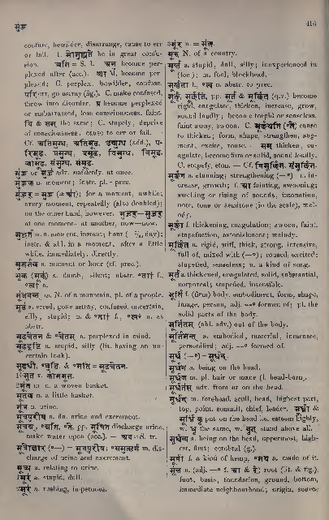
mūrdhán ·m. forehead, scull, head, highest part, top, point, summit, chief, leader. mūrdhnā & mūrdhni kṛ put on the head i.e. esteem highly, w. dhṛ the same, w. vṛt stand above all.
Monier-Williams 1872 substantive masculine
Original text · English · substantive masculine
mūrdhan mūrdhan, ā, m. (in Uṇādi-s. 1. 158. said to be fr. rt. murv, to bind), the forehead, brow, skull; the head in general; a head, chief, leader, superior, (sarveṣām bhūtānām mūrdhā rājā, the king is the head of all creatures); the highest or foremost or most prominent part, surface, top, point, peak, summit, (parvatasya mūrdhā, the top or peak of a mountain); ‘the summit,’ epithet of a particular spiritual condition with Buddhists; (in geometry) the base, (opposed to agra); mūrdhni or mūrdhani, at the head or highest point, at the beginning or commencement, in the front, (atiṣ- ṭhan manujendrāṇām mūrdhni, he stood at the head of the kings of men; saṅgrāma-mūrdhani, in the front of the battle); before, above, over.

Petersburger 1855 adjective · substantive masculine · Word type unspecified
Original text · German · adjective
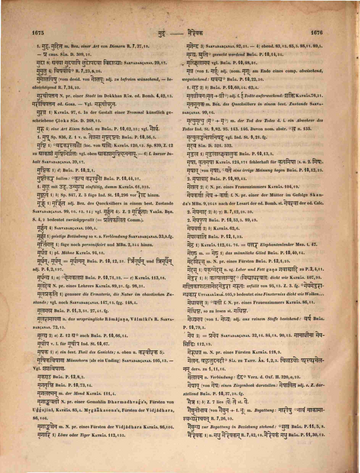
mūrdhan , mūrdhan = mūrdhānam BHĀG. P. 10,12,31. trímūrdhan und trimūrdhán adj. P. 6,2,197.
Original text · German · substantive masculine
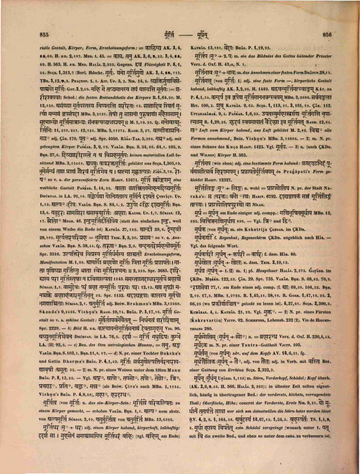
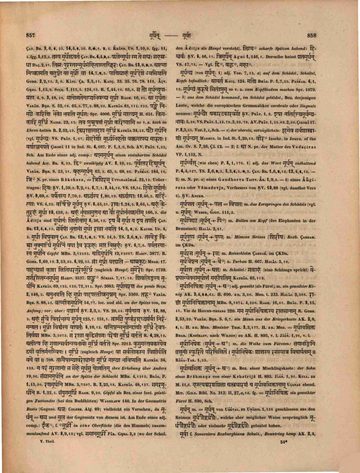
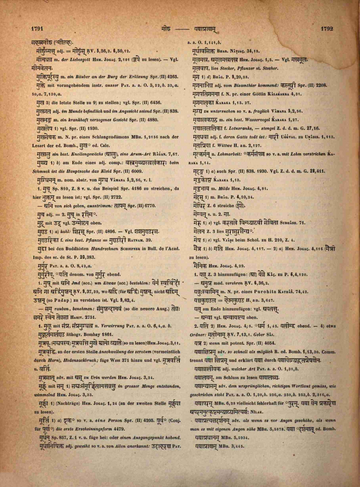
mūrdhán (mū́rdhan UṆĀDIS. 1,158) m. Stirn, Vorderkopf, Schädel; Kopf überh. (AK. 2,6,2,46. H. 566. HALĀY. 2,363); in ältester Zeit selten eigentlich, häufig in übertragener Bed.: der vorderste, höchste, vorragendste Theil; Oberfläche, Höhe; concret der Vorderste, Erste NIR. 9,31. yo mū̱rdhānàṃ ta̱tapàte tvā̱yā wer sich um deinetwillen die Stirn heiss werden lässt ṚV. 4,2,6. ṚV. 1,164,28. a̱rbu̱dasyà ṚV. 10,67,12. ṚV. 1,54,5. bṛha̱spatèḥ TS. 1,1,2,2. mūrdhā hāsya vipatet sein Schädel zerspringt (wonach unter 1. pat mit vi die zweite Bed., und eben so unter dem caus. zu verbessern ist) ŚAT. BR. 3,6,1,23. ŚAT. BR. 14,4,1,26. ŚAT. BR. 14,6,6,1. ŚAT. BR. 14,4,7,4. CHĀND. UP. 1,10,9. fgg. CHĀND. UP. 1,11,4. fgg. CHĀND. UP. 5,12,2. tasya mūrdhodvavarta ŚAT. BR. 4,4,3,4. phalenmūrdhā sma te sadyaḥ sahasradhā DAŚ. 2,21. tisraḥ purastānmūrdhasaṃhitāstacchiraḥ ŚAT. BR. 13,8,3,9. ātmā niṣkrāmati cakṣuṣṭo vā mūrdhno vā ŚAT. BR. 14,7,2,3. pāṇigrāhaṃ mūrdhadeśe 'vasiñcati GOBH. 2,2,14. GOBH. 2,3,6. KĀTY. ŚR. 5,5,11. KAUŚ. 33. KAUŚ. 35. KAUŚ. 76. KAUŚ. 78. KAUŚ. 111. ĀŚV. GṚHY. 1,15,9. SUŚR. 1,111,5. SUŚR. 1,124,13. R. 1,44,10. R. 1,65,8. sa tau mūrdhanyupāghrāya R. 4,9. R. 3,18,28. mānonnatenāpyabhivandya mūrdhnā RAGH. 16,81. ā mūrdhataḥ VARĀH. BṚH. S. 52,10. VARĀH. BṚH. S. 65,5. VARĀH. BṚH. S. 77,2. VARĀH. BṚH. S. 88,20. KATHĀS. 61,114. KATHĀS. 61,132. paṅke nimagne kariṇi bheko bhavati mūrdhagaḥ Spr. 4006. mūrdhni mālyam H. 651. kimakāri mūrdhni NAIṢ. 22,45. tava śuśrūṣaṇaṃ mūrdhnā kariṣyāmi so v. a. hoch in Ehren halten R. 2,52,49. īśvarājñāmādāya mūrdhni KATHĀS. 34,45. ṣaṭau mūrdhani (vgl. mūrdhanya) VS. PRĀT. 1,67. sodīrṇo mūrdhnyabhihato vaktramāpadya mārutaḥ . varṇāñjanayate ŚIKṢĀ 11_in_Ind. St. 4,107. P. 1,1,9, Sch. AV. PRĀT. 1,22, Sch. Am Ende eines adj. comp.: aśmamūrdhan einen steinharten Schädel habend AIT. BR. 8,28. dvi˚ zweiköpfig AV. 8,10,22. pūrvottaradiṅmūrdhan VARĀH. BṚH. S. 53,51. bṛhanmūrdhan VARĀH. BṚH. S. 63,2. VARĀH. BṚH. S. 65,5. VARĀH. BṚH. S. 68,80. PAÑCAT. 184,10. tri˚ N. pr. eines Rākṣasa, = triśiras UTTARARĀMAC. 32,12. Ueber- tragen: di̱vaḥ ṚV. 1,59,2. ṚV. 3,2,14. ṚV. 6,7,1. ṚV. 8,44,16. VS. 18,54. di̱vo mū̱rdhānàḥ ṚV. 9,69,8. parvàtasya ṚV. 7,70,3. adhnyàsya ṚV. 1,80,19. adhnyā̀yāḥ ṚV. 10,46,3. adìtyāḥ VS. 4,22. varṣìṣṭhe mū̱rdhan ṚV. 6,45,31. rāyaḥ ṚV. 1,24,5. ṚV. 8,64,4. a̱haṃ ke̱tura̱haṃ mū̱rdhā ṚV. 10,159,2. a̱haṃ bhū̀yāsamutta̱ma ā vò mū̱rdhānàmakramīm ṚV. 10,166,5. die Āditya sind mū̱rdhānàḥ kṣitī̱nām ṚV. 8,56,13. eṣa vai mūrdhā ya eṣa tapati ŚAT. BR. 13,4,1,13. sarveṣāṃ bhūtānāṃ mūrdhā rājā bhavati ŚAT. BR. 14,5,1,2. KAUṢ. UP. 4,3. mūrdhā viṣuvān ŚAT. BR. 12,1,4,2. VS. 14,9. TS. 2,6,2,2. tasyedu̱ viśvā̱ bhuvanā̱dhì mū̱rdhanì va̱yā ìva ruruhaḥ sa̱pta vi̱sruhàḥ ṚV. 6,7,6. parvatasyāsya mūrdhani Gipfel MBH. 3,12283. adrimūrdhani MBH. 12,12087. HARIV. 3877. R. GORR. 1,69,19. R. GORR. 3,53,35. R. GORR. 6,92,33. tvāṃ mūrdhnā vakṣyati — āmrakūṭaḥ MEGH. 17. pādanyāsaṃ kṛtvā kṣitidharagurormūrdhni (zugleich Haupt) sumeroḥ Spr. 1759. gargarīstambhamūrdhasu HARIV. 3537. śaṅku˚ SŪRYAS. 7,17. SŪRYAS. 7,18. śivaliṅgasya mūrdhani KATHĀS. 69,153. KATHĀS. 69,155. KATHĀS. 71,214. Spr. 3063. mūrdhāvaraṇa des penis SUŚR. 2,148,2. anubhavati hi mūrdhnā pādapastīvramuṣṇam Spr. 5369. taru˚ VARĀH. BṚH. S. 88,45. valmīkamūrdhani VARĀH. BṚH. S. 54,77. loc. und abl. an der Spitze von, im Anfang; vor; über: ya̱jñasyà ṚV. 2,3,2. VS. 20,44. bhuvànasya ṚV. 10,88,3. a̱haṃ sùve pi̱taràmasya mū̱rdhan ṚV. 125,7. ṚV. 151,1. tvāmàgne̱ puṣkàrā̱dadhyathàrvā̱ niràmanthata . mū̱rdhno viśvàsya vā̱ghatàḥ ṚV. 6,16,13. atiṣṭhanmanujendrāṇāṃ mūrdhni devapatiryathā MBH. 3,2073. sa rājā buddhisaṃpannaḥ pareṣāṃ mūrdhni vartate R. 4,28,15. atītya hi guṇānsarvānsvabhāvo mūrdhni vartate Spr. 3213. kusumastavakasyeva dvayī vṛttirmanasvinaḥ . mūrdhni (zugleich Haupt) vā sarvalokasya viśīryati vane vā .. Spr. 708. tasyaiṣānyāvarodhānāṃ mūrdhni mānyā bhaviṣyati KATHĀS. 34,138. na paraṃ muralānāṃ sa sehe mūrdhasu connatim ihre Erhebung über Andere KATHĀS. 19,96. saṃgrāmamūrdhani an der Spitze der Schlacht MBH. 4,1215. BHĀG. P. 1,15,30. raṇamūrdhani MBH. 5,7507. R. 3,25,18. KATHĀS. 48,137. samaramū- rdhani R. 1,22,5. saṃyugamūrdhni RAGH. 9,20. Gipfel als Bez. eines best. geistigen Zustandes (bei den Buddhisten) WASSILJEW 140. In der Geometrie Basis (Gegens. agra) COLEBR. Alg. 89; vielleicht ein Versehen, da mūrdhan = agra und mūla der Gegensatz von diesem ist. Am Ende eines adj. comp.: éka˚, f. ˚mūrdhnī in eine Oberfläche (die des Himmels) zusammenlaufend AV. 8,9,15; vgl. samānamūrdhnī PĀR. GṚHY. 3,3 (wo der Schol. den Āditya als Haupt versteht). tigma˚ scharfe Spitzen habend: di̱dyavàḥ ṚV. 6,46,11. trimūrdhán Agni ṚV. 1,146,1. Derselbe heisst śatamūrdhan VS. 17,71. — Vgl. dvi˚, bahu˚, mahā˚.
Original text · German · Word type unspecified
mūrdhan Sp. 857, Z. 1 v. u. füge bei: oder einen Ausgangspunkt habend.
Böhtlingk 1879 substantive masculine
Original text · German · substantive masculine
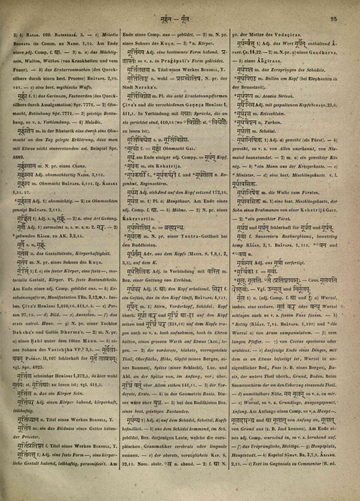
mūrdhán m. — 1〉 Stirn, Vorderkopf, Schädel, Kopf überh. mūrdhnā kar und mūrdhni ā- dā auf den Kopf setzen und mūrdhni dhar (Chr. 251,18) auf dem Kopfe tragen auch so v. a. hoch aufnehmen, hoch in Ehren halten, einen grossen Werth auf Etwas (Acc.) legen. — 2〉 der vorderste, höchste, vorragendste Theil, Oberfläche, Höhe, Gipfel (eines Berges, eines Baumes), Spitze (einer Schlacht.) Loc. und Abl. an der Spitze von, im Anfang, vor, über mūrdhni varta über Allem stehen Chr. 141,11. — 3〉 der Vorderste, Erste. — 4〉 in der Geometrie Basis. Dieses wäre eher budhna — 5〉 bei den Buddhisten Bez. eines best. geistigen Zustandes.
Apte 1890 substantive masculine
Original text · English · substantive masculine
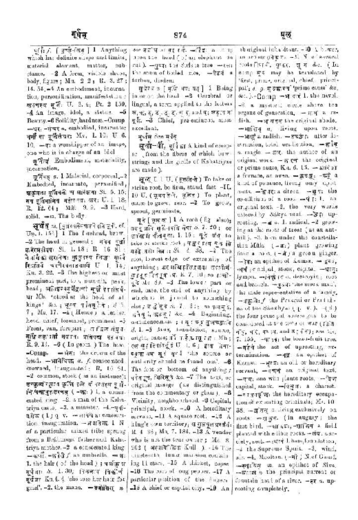
mūrdhan m. [muhyaṃtyasminnāhate iti mūrdhā, cf. Uṇ. 1. 156] 1 The forehead, brow. 2 The head in general; natena mūrdhnā hariragrahīdapaḥ Śi. 1. 18; R. 16. 81; naisargikī surabhiṇaḥ kusumasya siddhā mūrdhni sthitirna caraṇairavatāḍanāni U. 1. 14; Ku. 3. 22. 3 The highest or most prominent part, top, summit, peak, head; atiṣṭhanmanujeṃdrāṇāṃ mūrdhni devapatiryathā Mb. ‘stood at the head of all kings’ &c.; bhūmyāṃ parvatamūrdhani; Ś. 5. 7; Me. 17. 4 (Hence) A leader, head, chief, foremost, prominent. 5 Front, van, forepart; sa kila saṃyugamūrdhni sahāyatāṃ maghavataḥ pratipadya mahārathaḥ R. 9. 19. 6 (In geom.) The base. Comp. — aṃtaḥ the crown of the head. — abhiṣikta a. f. consecrated, crowned, inaugurated; R. 16. 81. 2 common, stock (as an instance); utkṛtyotkṛtya kṛttiṃ iti bībhatsasya mūrdhābhiṣiktamudāharaṇam. — (ktaḥ) 1 a consecrated king. 2 a man of the Kṣatriya caste. 3 a minister. 4 = mūrdhāvasikta (1) q. v. — abhiṣekaḥ censecration, inauguration. — avasiktaḥ 1 N. of a particular mixed tribe sprung from a Brāhmaṇa father and Kṣatriya mother. 2 a consecrated king. — karṇī, -karparī f. an umbrella. — jaḥ 1 the hair (of the head); paryākulā mūrdhajāḥ Ś. 1. 30; vilalāpa vikīrṇamūrdhajā Ku. 4. 4 ‘she tore her hair for grief’. 2 the mane. — jyotis n. ([Page 0874-b]) see brahmaraṃdhra or mudrāmārga. — piṃḍaḥ a lump upon the head (of an elephant in rut). — puṣpaḥ the Śirīṣa tree. — rasaḥ the scum of boiled rice. — veṣṭanaṃ a turban, diadem.
Cappeller 1887 substantive masculine
Original text · German · substantive masculine
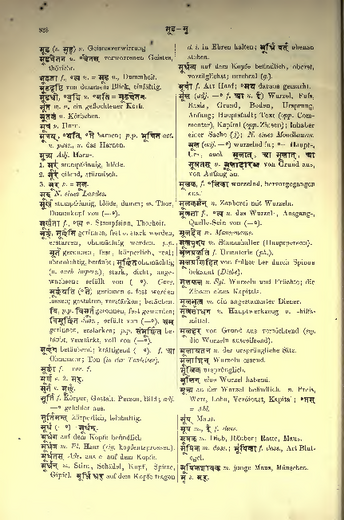
mūrdhán m. Stirn, Schädel, Kopf, Spitze, Gipfel. mūrdhni auf dem Kopfe tragen [Page338-2] d. i. in Ehren halten; mūrdhni vart obenan stehen.
Occurrences in source texts (5)
HP 1 occurrence
PYS 1 occurrence
SiSa 1 occurrence
Continue with AYI Free
Image source: AYI archive.