

rāga राग – attachment; passion
substantive masculine
Dictionary sources
AYI dictionary substantive masculine
Cappeller 1891 substantive masculine
Original text · English · substantive masculine
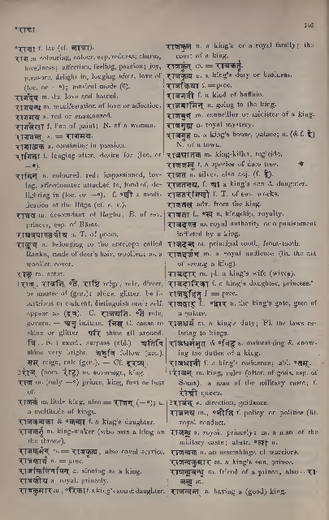
rāga ·m. colouring, colour, esp. redness; charm, loveliness; affection, feeling, passion; joy, pleasure, delight in, longing after, love of (loc. or --°); musical mode (6).
Monier-Williams 1872 substantive masculine
Original text · English · substantive masculine
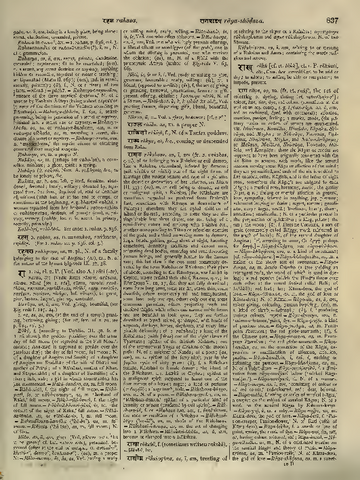
rāga rāga, as, m. (fr. rt. rañj), the act of colouring or dyeing, tinting [cf. mūrdhaja-r˚]; colour, hue, tint, dye, red colour, (sometimes at the end of an adj. comp., e. g. kṛmi-rāga, as, ā, am, red as cochineal, dyed with cochineal); affection, emotion, passion, feeling; a musical mode, (six pri- mary modes or orders of sounds are enumerated, viz. Bhairava, Kauśika, Hindola, Dīpaka, Śrī- rāga, and Megha; or Śrī-rāga, Vasanta, Pañ- cama, Bhairava, Megha, and Nata-nārāyaṇa; or Mālava, Mallāra, Śrī-rāga, Vasanta, Hil- lola, and Karṇāṭa: these six Rāgas or modes are supposed to have been originally connected with the six Ṛtus or seasons, each mode, like the several seasons, moving some Rāga or affection of the mind; they are personified, and each of the six is wedded to five consorts, called Rāgiṇīs, and is the father of eight sons; sometimes six Rāgiṇīs are assigned to each Rāga); a musical note, harmony, music; the quality Rajas, q. v.; feeling or mental affection in general, love, sympathy, interest in anything, joy, pleasure; vehement longing or desire; regret, sorrow; greedi- ness, envy; anger, wrath; loveliness, beauty, charm, attraction; nasalization; N. of a particular process in the preparation of quicksilver; a king, prince; the sun; the moon; (ā), f. Eleusine Coracana, a sort of grain (commonly called Rāggy, much cultivated in the south of India); N. of the second daughter of Aṅgiras; [cf. according to some, Gr. ὀργή, perhaps for ῥογή.]
Petersburger 1855 substantive masculine
Original text · German · substantive masculine
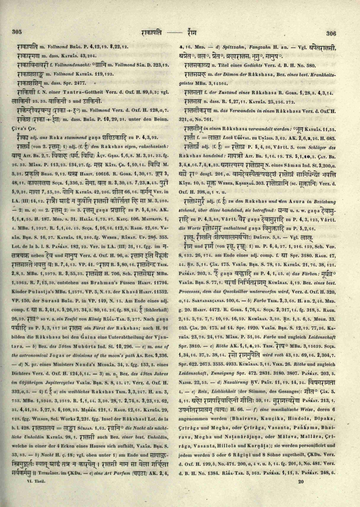
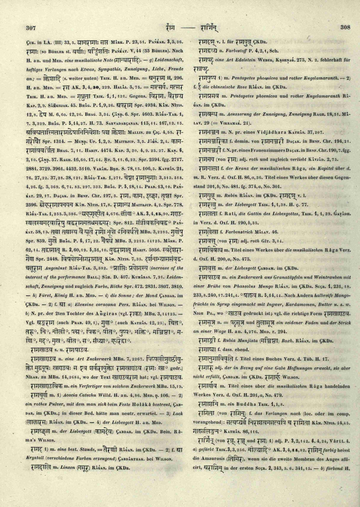
rā́ga und rāgá (von raj, rañj) 1〉 m. P. 6,4,27. P. 6,1,216. P. 6,4,159, Sch. VOP. 8,133. VOP. 26,174. am Ende eines adj. comp. f. ā Spr. 3180. RAGH. 17,44. ṚT. 5,11. ŚĀK. 175. VARĀH. BṚH. S. 78,15. KATHĀS. 21,76. KATHĀS. 38,121. PAÑCAT. 203,5. ī́ gaṇa bahvādi zu P. 4,1,45. a〉 das Färben: mūrdhaja˚ VARĀH. BṚH. S. 77,1. caraṇaṃ nirmitarāgam KUMĀRAS. 4,19. Bez. eines best. Processes, dem das Quecksilber unterworfen wird, Verz. d. Oxf. H. 320,a,14. SARVADARŚANAS. 100,6. — b〉 Farbe TRIK. 3,3,68. H. an. 2,46. MED. g. 20. HARIV. 4472. R. GORR. 1,76,4. SUŚR. 2,317,14. fg. SUŚR. 2,318,5. RAGH. 2,15. RAGH. 5,72. RAGH. 7,7. RAGH. 10,19. RAGH. 16,59. KUMĀRAS. 3,30. ṚT. 1,5. ṚT. 6,5. MEGH. 33. MEGH. 103. ŚĀK. 20. ŚĀK. 175. ŚĀK. ad 14. Spr. 1920. VARĀH. BṚH. S. 12,19. VARĀH. BṚH. S. 77,36. KATHĀS. 23,78. KATHĀS. 24,178. MĀRK. P. 51,36. Farbe und zugleich Leidenschaft Spr. 3810. — c〉 Röthe AK. 1,1,4,25. TRIK. roṣa˚ MBH. 3,15639. SUŚR. 1,34,16. SUŚR. 1,37,2. SUŚR. 1,38,14. raso rāgamupaiti wird roth SUŚR. 43,13. SUŚR. 69,16. SUŚR. 2,304,7. Spr. 622. Spr. 2673. Spr. 3555. Spr. 4933. KUMĀRAS. 5,11. VIKR. 26. Röthe und zugleich Leidenschaft, Zuneigung Spr. 472. Spr. 2831. Spr. 3180. Spr. 3807. PAÑCAT. 203,5. NAIṢ. 22,55. — d〉 Nasalirung ṚV. PRĀT. 11,19. ṚV. PRĀT. 14,24. viṣamarāgatā ṚV. PRĀT. 14,4. — e〉 Reiz, Lieblichkeit (der Stimme, des Gesanges): gīta˚ ŚĀK. 5. ŚĀK. 4,11. aho rāgaparivāhinī gītiḥ ŚĀK. 59,11. surāgasvareṇa PAÑCAT. 213,1. upanītarāgatvam (vācaḥ) H. 66. — f〉 eine musikalische Weise, deren 6 angenommen werden (Bhairava, Kauśika, Hindola, Dīpaka, Śrirāga und Megha, oder Śrīrāga, Vasanta, Pañcama, Bhairava, Megha und Naṭanārāyaṇa, oder Mālava, Mallāra, Śrīrāga, Vasanta, Hillola und Karṇāṭa); sie werden personificirt und jedem werden 5 oder 6 Rāgiṇī und 8 Söhne zugetheilt, ŚKDR. Verz. d. Oxf. H. 199,b, No. 471. fg. Verz. d. Oxf. H. 200,a,4 v. u. b,14. fg. Verz. d. Oxf. H. 201,b, No. 481. Verz. d. B. H. No. 1384. RĀJA-TAR. 5,362. PAÑCAR. 1,11,3. PAÑCAT. 248,6. ŚUK. in LA. (III) 33,5. grāmarāgāḥ sapta MĀRK. P. 23,51. PAÑCAR. 3,5,36. rāgāḥ (so BÜHLER st. varṇāḥ) ṣaḍviśatiḥ PAÑCAT. V, 44 (PAÑCAT. V,55 BÜHLER). nach H. an. und MED. eine musikalische Note (gāndhārādi). — g〉 Leidenschaft, heftiges Verlangen nach Etwas, Sympathie, Zuneigung, Liebe, Freude an; = kleśādi (s. weiter unten) TRIK. H. an. MED. = anurāga H. 296. H. an. MED. = rasa AK. 3,4,30,229. HALĀY. 5,75. = mātsarya, matsara TRIK. H. an. MED. = gṛdhnutā TRIK. 1,1,131. Gegens. virāga, vairāgya KAP. 2,9. SĀṂKHYAK. 45. BHĀG. P. 1,9,26. aparāga Spr. 4934. KĀM. NĪTIS. 12,8. dveṣa M. 6,60. M. 12,26. BHAG. 3,34. ŚĀṆḌ. 6. Spr. 4603. RĀJA-TAR. 1,7. RĀJA-TAR. 3,329. BHĀG. P. 5,14,27. H. 73. SARVADARŚANAS. 115,11. SARVADARŚANAS. 167,13. SARVADARŚANAS. 167,15. avidyatāsmitārāgadveṣābhiniveśāḥ pañca kleśāḥ MALLIN._zu_ŚIŚ. 4,55. rāgaroṣau Spr. 1314. — MUṆḌ. UP. 1,2,9. MAITRYUP. 3,5. YĀJÑ. 2,4. kāmarāgavivarjita BHAG. 7,11. HARIV. 4474. KAP. 3,30. KAP. 4,9. KAP. 4,25. KAP. 4,27. KAṆ. 6,2,10. ŚĀṆḌ. 57. RAGH. 16,60. RAGH. 17,44. ṚT. 5,11. ṚT. 6,23. Spr. 2594. fgg. Spr. 2717. Spr. 2881. fgg. Spr. 3729. Spr. 3961. fgg. Spr. 4452. fgg. Spr. 5110. VARĀH. BṚH. S. 78,15. VARĀH. BṚH. S. 106,5. KATHĀS. 21,76. KATHĀS. 27,22. KATHĀS. 37,28. KATHĀS. 38,121. RĀJA-TAR. 1,271. ceṣṭā rāgānugāḥ RĀJA-TAR. 3,513. RĀJA-TAR. 3,518. RĀJA-TAR. 4,26. fg. RĀJA-TAR. 5,369. RĀJA-TAR. 6,74. RĀJA-TAR. 6,83. RĀJA-TAR. 6,297. RĀJA-TAR. 6,333. BHĀG. P. 5,18,14. PRAB. 13,10. PAÑCAT. 29,17. DAŚAK._in_BENF. Chr. 197,5. rāga, kāma, icchā, tṛṣṇā Spr. 2596. sneharāgāpanayana KĀM. NĪTIS. 17,8. rāgāndha MAITRYUP. 4,2. Spr. 778. RĀJA-TAR. 1,255. RĀJA-TAR. 5,386. ˚grahagṛhīta RĀJA-TAR. 4,676. kṣīṇa˚ AK. 3,4,15,90. gaṇḍasthalasthamadavāriṣu baddharāgamattabhramadbhramaraḥ Spr. 812. saṃjīvakanibaddha˚ PAÑCAT. 58,13. tathā tathāsya vai dyūte rāgo bhūyo 'bhivardhate MBH. 3,2285. guṇeṣu Spr. 859. sukhe BHĀG. P. 6,17,22. naiṣadhe MBH. 3,2213. MBH. 3,14125. MĀRK. P. 62,14. tadrāgāt R. 2,60,19. R. 5,51,10. yuddharāgāt HARIV. 5056. svadeśarāgeṇa Spr. 2448. viṣayopabhogarāgāt KĀM. NĪTIS. 7,35. darśanābhyāsasaṃvṛddhacakṣūrāga Augenlust RĀJA-TAR. 5,382. ˚prāptiḥ prayogasya (increase of the interest of the performance BALL.) SĀH. D. 407. KUMĀRAS. 7,91. Leidenschaft, Zuneigung und zugleich Farbe, Röthe Spr. 472. Spr. 2831. Spr. 3807. Spr. 3810. — h〉 Fürst, König H. an. MED. — i〉 die Sonne; der Mond ŚABDAR._im_ŚKDR. — 2〉 f. ā a〉 Eleusine coracana Pers. RĀJAN._bei_WILSON. — b〉 N. pr. der 2ten Tochter des Aṅgiras (vgl. rākā) MBH. 3,14125. — Vgl. aṅgarāga (auch PRAB. 49,1), guṇa˚ (auch KATHĀS. 12,25), citta˚, taru˚, ni˚, nīlī˚, padma˚, pika˚, pīta˚, puṣpa˚, bhakti˚, mañjiṣṭhā˚, maṇi˚, mada˚, mukha˚, vīta˚, sa˚, saṃdhyā˚, haridrā˚.
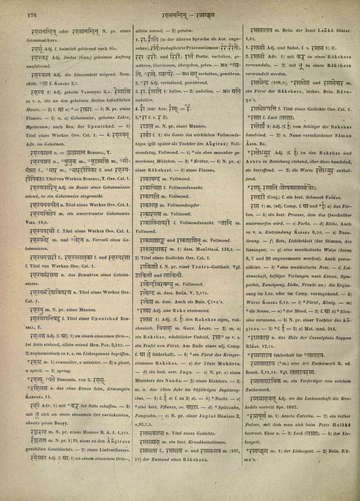
Böhtlingk 1879 substantive masculine
Original text · German · substantive masculine
rāga — 1〉 m. (adj. Comp. f. ā und *ī) — a〉 das Färben. — b〉 ein best. Process, dem das Quecksilber unterworfen wird. — c〉 Farbe. — d〉 Röthe. Auch so v. a. Entzündung CARAKA. 6,30. — e〉 Nasalirung. — f〉 Besitz, Lieblichkeit (der Stimme, des Gesanges). — g〉 eine musikalische Weise (deren 6,7 und 26 angenommen werden). Auch personificirt. — h〉 *eine musikalische Note. — i〉 Leidenschaft, heftiges Verlangen nach Etwas, Sympathie, Zuneigung, Liebe, Freude an die Ergänzung im Loc. oder im Comp. vorangehend. — k〉 Würze CARAKA. 6,12. — l〉 *Fürst, König. — m〉 *die Sonne. — n〉 *der Mond. — 2〉 f. ā — a〉 *Eleusine coracana. — b〉 N. pr. einer Tochter Aṅgiras. — 3〉 *f. ī = 2〉a〉 Mat. med. 314.
Apte 1890 substantive masculine
Original text · English · substantive masculine
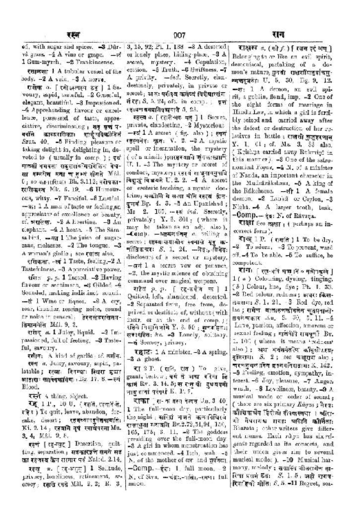
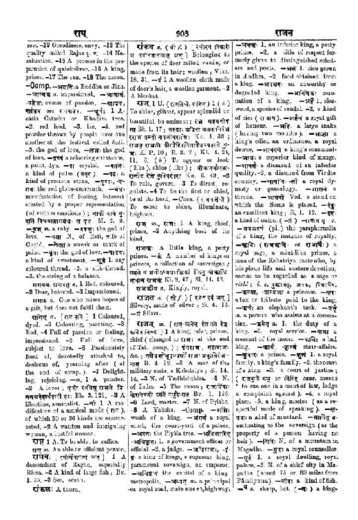
rāgaḥ [raṃj-bhāve ghañ ni˚ nalopakutve] 1 (a) Colouring, dyeing, tinging. (b) Colour, hue, dye; Pt. 1. 33. 2 Red colour, redness; adharaḥ kisalayarāgaḥ Ś. 1. 21. 3 Red dye, red lac; rāgeṇa bālāruṇakomalena cūtapravāloṣṭhamalaṃcakāra Ku. 3. 30, Ku. 5. 11. 4 Love, passion, affection, amorous or sexual feeling; malinepi rāgapūrṇāṃ Bv. 1. 100 (where it means ‘redness’ also); atha bhavaṃtamaṃtareṇa kīdṛśo'syā dṛṣṭirāgaḥ Ś. 2; see cakṣūrāga also; caraṇayugalādiva hṛdayamaviśadrāgaḥ K. 142. 5 Feeling, emotion, sympathy, interest. 6 Joy, pleasure. 7 Anger, wrath. 8 Loveliness, beauty. 9 A musical mode or order of sound; (there are six primary Rāgas; bhairavaḥ kauśikaścaiva hiṃdolo dīpakastathā . śrīrāgo megharāgaśca rāgāḥ ṣaḍiti kīrtitāḥ Bharata; other writers give different names. Each rāga has six rāginīs regarded as its consorts, and their union gives rise to several musical modes). 10 Musical harmony, melody; tavāsmi gītarāgeṇa hāriṇā prasabhaṃ hṛtaḥ Ś. 1. 5; aho rāgaparivāhiṇī gītiḥ Ś. 5. 11 Regret, ([Page 0908-a]) sorrow. 12 Greediness, envy. 13 The quality called Rajas q. v. 14 Nasalization. 15 A process in the preparation of quicksilver. 16 A king, prince. 17 The sun. 18 The moon. Comp. — aśaniḥ a Buddha or Jina. — ātmaka a. impassioned. — āyātaṃ, — udrekaḥ excess of passion. — khāḍava, khāṃḍava see rāgaṣāḍava. — cūrṇaḥ 1 Acasia Catechu or Khadira tree. 2 red lead. 3 lac. 4 red powder thrown by people over one another at the festival called holi. 5 the god of love. — channaḥ the god of love. — dravyaṃ a colouring substance, a paint, dye. — dā crystal. — dāliḥ a kind of pulse (masūra). — paṭṭaḥ a kind of precious stone. — puṣpaḥ, — prasavaḥ the red globe-amaranth. — baṃdhaḥ manifestation of feeling, interest created by a proper representation (of various emotions); bhāvo bhāvaṃ nudati viṣayādrāgabaṃdhaḥ sa eva M. 2. 9. — yuj m. a ruby. — rajjuḥ the god of love. — latā N. of Rati, wife of Cupid. — lekhā a streak or mark of paint. — vṛṃtaḥ the god of love. — ṣāḍavaḥ a kind of sweetmeat. — sūtraṃ 1 any coloured thread. 2 a silk-thread. 3 the string of a balance.
Cappeller 1887 substantive masculine
Original text · German · substantive masculine
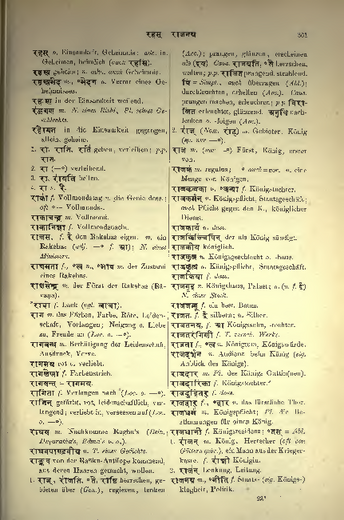
rāga m. das Färben, Farbe, Röte, Leidenschaft, Verlagen; Neigung, o. Liebe zu, Freude an (Loc.) o. —˚).
Burnouf 1866 substantive masculine
Original text · French · substantive masculine
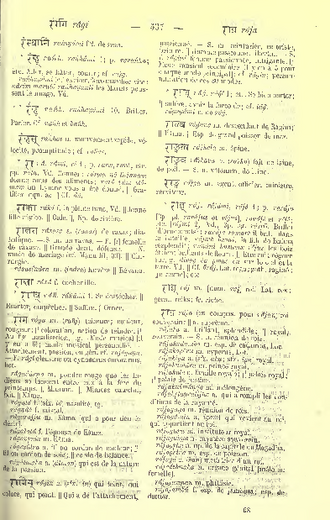
rāga rāga m. (rañj) teinture; couleur, rougeur; coloration, action de teindre. Au fig. nasalisation, tg. Mode musical [il y en a 6]; mode musical personnifié. — Attachement, passion, en gén. cf. rajoguṇa. — F. rāgī eleusine ou cynosurus corocanus, bot. rāgacūrṇa m. poudre rouge que les Indiens se lancent entre eux à la fète du printemps. Minium. Mimosa catechu, bot. Kāma. rāgatā f. (sfx. tā) nasalité, tg. rāgadā f. cristal. rāgarajju m. Kāma [qui a pour lien le désir]. rāgalatā f. l'épouse de Kāma. rāgavṛnta m. Kāma. rāgasūtra n. fil ou cordon de couleur; fil ou cordon de soie; corde de balance. rāgātmaka a. (ātman) qui est de la nature de la passion.
Occurrences in source texts (6)
PYS 3 occurrences
SiSa 1 occurrence
Continue with AYI Free
Image source: AYI archive.