

rājan राजन् – king
substantive · substantive masculine · Word type unspecified
Dictionary sources
AYI dictionary substantive masculine
Cappeller 1891 substantive · substantive masculine
Original text · English · substantive masculine
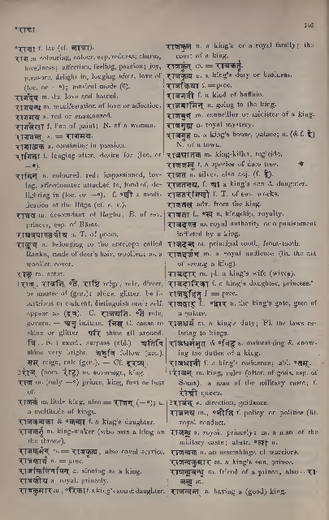
rā́jan1 ·m. king, ruler (often of gods, esp. of Soma), a man of the military caste; f. rā́jñī queen.
Original text · English · substantive
rāján2 ·s. direction, guidance.
Monier-Williams 1872 substantive masculine
Original text · English · substantive masculine
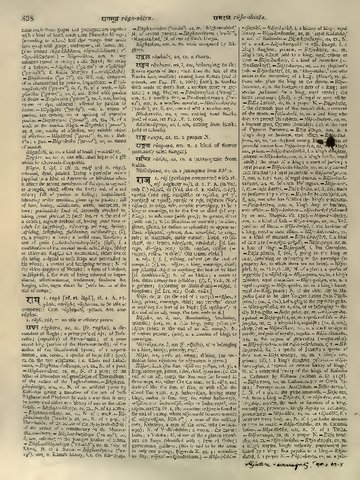
Rājan, ā, m. (for fem. rājñī see p. 840, col. 3), a king, sovereign, prince, ruler, chief, governor, (at the end of an adj. comp. the fem. may be formed in three ways, viz. either like the masc. or fr. rāja, and declined like the fem. of śiva, or with rājñī de- clined like nadī, e. g. bahu-rājan, having many kings, makes its fem. sing. du. either bahu-rājā, rājānau or bahu-rājā, -rāje or bahu-rājñī, -rā- jñyau, see Pāṇ. IV. 1, 28; sometimes rājan is found at the end of a comp. where rāja would be more correct; cf. nāga-rājan, kāśi-r˚); a man of the military caste, Kṣatriya, a man of the royal tribe (= rāja- nya); N. of Yudhi-ṣṭhira; a master; the moon; Indra; a Yakṣa; N. of one of the eighteen attend- ants on Sūrya (identified with a form of Guha); government, guidance, (this is said to be the sense in only one passage, Ṛg-veda X. 49, 4; according to Sāy. rājani = rājanārtham.)
Petersburger 1855 substantive masculine · Word type unspecified
Original text · German · substantive masculine
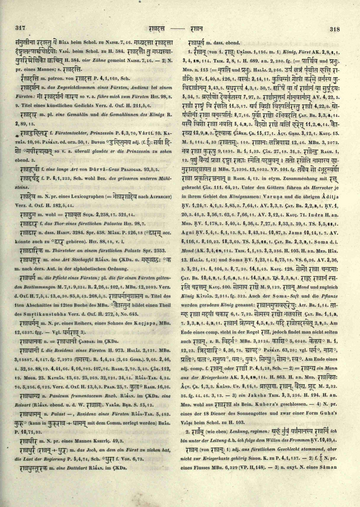
1. rā́jan (von 1. rāj) UṆĀDIS. 1,156. m. 1〉 König, Fürst AK. 2,8,1,1. AK. 3,4,18,114. TRIK. 2,8,1. H. 689. H. an. 2,280. fg. (= pārthiva und prabhu). MED. n. 115 (= nṛpati und prabhu). HALĀY. 2,266. upà kṣa̱traṃ pṛ̀ñcī̱ta hanti̱ rājàbhiḥ ṚV. 1,40,8. ṚV. 1,126,1. vasvàḥ ṚV. 2,14,11. ku̱vinmā̀ go̱pāṃ karàse̱ janàsya ku̱vidrājā̀nam ṚV. 3,43,5. a̱dhva̱rasyà ṚV. 4,3,1. ṚV. 4,50,7. ṛṣìṃ vā̱ yaṃ rājā̀naṃ vā̱ suṣū̀dathaḥ ṚV. 5,54,7. brahmàṇo de̱vakṛ̀tasya ṚV. 7,97,3. rājñā̀mutta̱maṃ mā̀na̱vānā̀m AV. 4,22,5. rājā̀ rā̱ṣṭraṃ vi ràkṣati AV. 11,5,17. ayaṃ vi̱śāṃ vi̱śpatìrastu̱ rājā̀ AV. 4,22,3. oṣàdhīnā̱ṃ rājā̱ vana̱spatìḥ AV. 8,7,16. pūrvo rājño 'bhivadati ŚAT. BR. 3,3,4,14. yasyai viśo rājā bhavati ŚAT. BR. 5,4,2,3. vaiśyo rājñe baliṃ haret ŚAT. BR. 11,2,6,14. kauravya ŚAT. BR. 12,9,3,3. aikṣvāka ŚĀṄKH. ŚR. 15,17,1. ĀŚV. GṚHY. 3,12,1. KAUŚ. 15. M. 1,114. M. 4,33 (rājatas). M. 110. rājānaḥ kṣatriyāśca M. 12,46. MBH. 3,2072. bhava rājā kuruṣu MBH. 9,1891. R. 1,1,33. ŚĀK. 27,18. ŚĀK. 31,3. rājendu RAGH. 1,12. pṛthuṃ vainyaṃ prajā dṛṣṭvā raktāḥ smeti yadabruvan . tato rājeti nāmāsya hyanurāgādajāyata .. MBH. 7,2396. MBH. 12,1032. VP. 101. fg. tathaiva so 'bhūdanvartho rājā prakṛtirañjanāt .. RAGH. 4,12. in etym. Zusammenhang mit rakṣ gebracht ŚĀK. 111. ŚĀK. 64,21. Unter den Göttern führen als Herrscher je in ihrem Gebiet den Königsnamen: Varuṇa und die übrigen Āditya ṚV. 1,24,7. ṚV. 4,1,2. ṚV. 5,85,3. ṚV. 7,64,1. AV. 3,3,3. ŚAT. BR. 2,2,3,1. ṚV. 1,20,5. ṚV. 1,41,3. ṚV. 3,56,7. ṚV. 3,62,6. ṚV. 7,66,11. AV. 3,12,4. KAUŚ. 71. Indra H. an. MED. ṚV. 1,178,2. ṚV. 5,40,4. ṚV. 6,36,4. ṚV. 7,27,3. ṚV. 8,53,3. ṚV. 8,59,1. TS. 5,5,11,1. Agni ṚV. 5,4,1. ṚV. 6,1,13. ṚV. 6,8,5. ṚV. 8,43,24. ṚV. 10,87,3. Yama ṚV. 10,14,1. ṚV. 10,14,7. AV. 6,116,1. AV. 8,10,23. AV. 18,3,69. TS. 5,5,11,1. ŚAT. BR. 2,3,2,1. Soma d. i. Mond ? (AK. 3,4,18,114. TRIK. 1,1,85. TRIK. 3,3,256. H. 105. H. an. MED. HĀR. 13. HALĀY. 1,42) und Soma ṚV. 1,23,14. ṚV. 6,75,18. VS. 6,26. AV. 2,36,3. AV. 5,21,11. AV. 6,104,3. AV. 8,7,20. AV. 14,1,49. KAUŚ. 128. somo rājā candramāḥ ŚAT. BR. 10,4,2,1. ŚAT. BR. 1,6,4,5. ŚAT. BR. 1,6,4,14. ŚAT. BR. 14,5,1,3. TS. 2,3,5,1. rāhū rājānaṃ tsarati carantam KAUŚ. 100. somāya rājñe M. 9,129. rājan Mond und zugleich König KĀVYĀD. 2,311. fg. KĀVYĀD. 2,322. Auch der Soma-Saft und die Pflanze werden geradezu König genannt: rājānamupāvahareyuḥ AIT. BR. 1,14. tānha rājā madayāṃ cakāra AIT. BR. 6,1. AIT. BR. 7,32. somasya rājño bhakṣayanti ŚAT. BR. 1,1,3,7. ŚAT. BR. 3,3,3,1. ŚAT. BR. 3,4,3,11. rājānaṃ kreṣyan ŚAT. BR. 4,5,1,2. yadi rājopadasyet ŚAT. BR. 4,2,2,5. Am Ende eines comp. steht in der Regel rāja, jedoch findet man nicht selten auch rājan, z. B. vidarbha˚ MBH. 3,2124. kāśi˚ MBH. 5,6040. kekaya˚ R. 1,12,23. tridaśāri˚ R. 6,36,78. śvāpada˚ PAÑCAT. 63,20; vgl. dharma˚, nāga˚, prati˚, phala˚, manuṣya˚, yama˚, yuva˚, sindhu˚, soma˚, sva˚. Am Ende eines adj. comp. f. rājan oder rājñī P. 4,1,28, Sch. — 2〉 = rājanya ein Mann aus der Kriegerkaste AK. 3,4,18,114. H. 863. H. an. MED. rājaviśaḥ ĀŚV. ŚR. 1,3,3. CHĀND. UP. 8,14,1. brāhmaṇa, rājan, vaiśya, śūdra M. 2,32. fg. M. 2,36. M. 2,44. fg. M. 2,46. fg. M. 3,13. — 3〉 ein Yakṣa TRIK. 3,3,256. H. 194. H. an. MED. wohl aus rājarāja als Bein. Kuberaʼs geschlossen. — 4〉 N. pr. eines der 18 Diener des Sonnengottes und zwar einer Form Guhaʼs VYĀḌI beim Schol. zu H. 103.
Original text · German · Word type unspecified
2. rāján (wie eben) Lenkung, regimen: a̱haṃ bhùva̱ṃ yajàmānasya rā̱janì ich bin unter der Leitung d. h. ich folge dem Willen des Frommen ṚV. 10,49,4.
Original text · German · Word type unspecified
1. rājan 1〉 die Soma- Pflanze R. ed. Bomb. 1,14,6.
Böhtlingk 1879 substantive masculine · Word type unspecified
Original text · German · substantive masculine
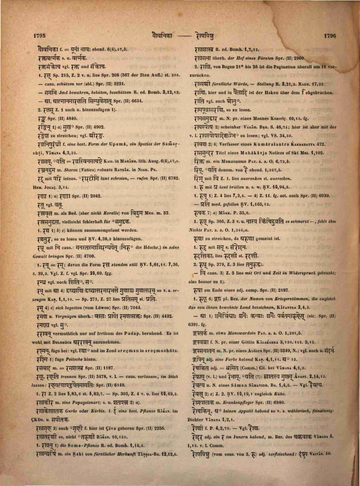
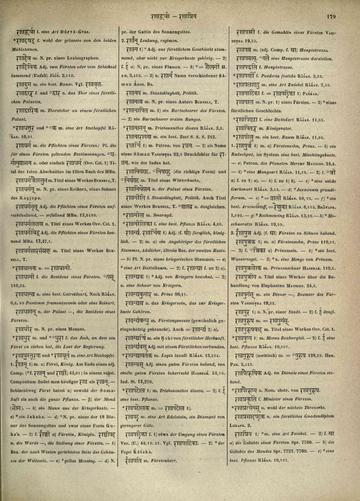
1. *rā́jan — 1〉 m. — a〉 Fürst, König. Am Ende eines adj. Comp. (*f. rājan und rājñī) Chr. 43,31; in einem subst. Compositum findet man häufiger rāja als rājan. — Schlechtweg Fürst heisst — α〉 sowohl der Soma-Saft als auch die ganze Pflanze. — β〉 der Mond (soma). — b〉 ein Mann aus der Kriegerkaste. — c〉 *ein Yakṣa. — d〉 *N. pr. eines der 18 Diener des Sonnengottes und zwar einer Form Guhaʼs. — 2〉 f. rā́jñī — a〉 Fürstin, Königin. rājñīpada n. die Würde —, die Stellung einer Fürstin. — b〉 Bez. der nach Westen gerichteten Seite des Gehäuses der Weltseele. — c〉 *gelbes Messing. — d〉 N. pr. [Page5-179-b] der Gattin des Sonnengottes.
Original text · German · Word type unspecified
2. rāján Lenkung, regimen.
Original text · German · Word type unspecified
1. rājan als Bez. der Zahl sechzehn Verz. d. Oxf. H. 172,b,20. [Nachtrag, Band 5]
Original text · German · Word type unspecified
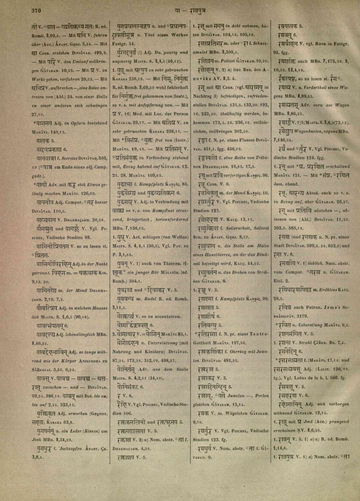
1. rājan V. 5. 1〉a〉α〉 R. ed. Bomb. 1,14,6. [Nachtrag, Band 7]
Apte 1890 substantive masculine
Original text · English · substantive masculine
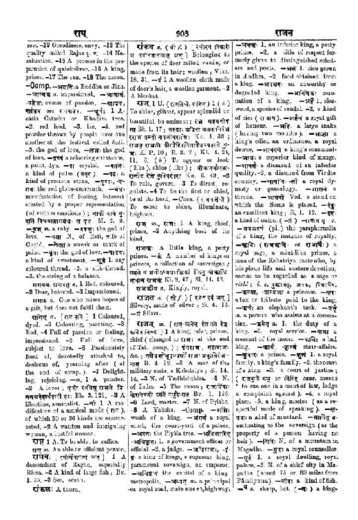
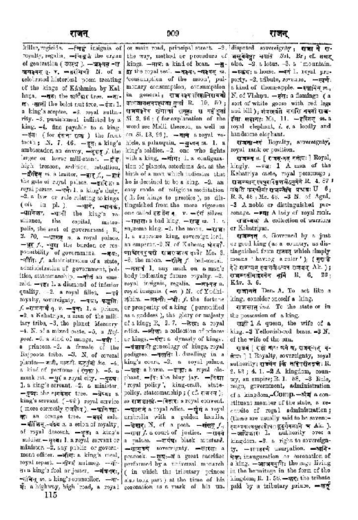
rājan m. [rāj-kanin raṃjayati raṃjkanin ni˚vā] 1 A king, ruler, prince, chief (changed to rājaḥ at the end of Tat. comp.); vaṃgarājaḥ, mahārājaḥ &c.; tathaiva sobhūdanvartho rājā prakṛtiraṃjanāt R. 4. 12. 2 A man of the military caste; a Kṣatriya; Śi. 14. 14. 3 N. of Yudhiṣṭhira. 4 N. of Indra. 5 The moon; rājapriyāḥ kairaviṇyo ramaṃte madhupaiḥsaha Bv. 1. 126. 6 Lord, master. 7 N. of Pṛthu. 8 A Yakṣa. Comp. — agniḥ wrath of a king. — aṃganaṃ a royal court, the court-yard of a palace. — adanaḥ the Piyāla tree. — adhikārin — adhikṛtaḥ 1 a government officer or official. 2 a judge. — adhirājaḥ, — iṃdraḥ a king of kings, a supreme king, paramount sovereign, an emperor. — adhiṣṭhānaṃ the capital of a king metropolis. — adhvan m. a principal or royal road, main street, highway. ([Page 0908-c]) — anakaḥ 1 an inferior king, a petty prince. 2 a title of respect formerly given to distinguished scholars and poets. — annaṃ 1 rice grown in Āndhra. 2 food obtained from a king. — apasadaḥ an unworthy or degraded king. — agiṣekaḥ coronation of a king. — arhaṃ 1 aloewood, a species of sandal. 2 a kind of rice (rājānna). — arhaṇaṃ a royal gift of honour. — ahiḥ a large snake (having two mouths). — ājñā a king's edict, an ordinance, a royal decree. — ābharaṇaṃ a king's ornament. — āmraḥ a superior kind of mange. — āvartaḥ a diamond of an inferior quality. 2 a diamond from Virāṭa country. — āvaliḥ -lī a royal dynasty or genealogy. — āsanaṃ a throne. — āsaṃdī Ved. a stand on which the Soma is placed. — iṃduḥ an excellent king; R. 1. 12. — iṣṭaḥ a kind of onion. — (ṣṭaṃ) = rājānna q. v. — upakaraṇaṃ (pl.) the paraphernalia of a king, the insignia of royalty. — ṛṣiḥ (rājaṛṣiḥ or rājarṣiḥ) a royal sage, a saint-like prince, a man of the Kṣatriya caste who, by his pious life and austere devotion, comes to be regarded as a sage or rishi; i. e. purūravas, janaka, viśvāmitra. — kanyā, -kanyakā a princess. — karaḥ a tax or tribute paid to the king. — karṇaḥ an elephant's tusk. — kartṛ m. a person who assists at a coronation. — karman n. 1 the duty of a king. 2 royal service. — kalā a crescent of the moon. — kaliḥ a bad king. — kāryaṃ, -kṛtyaṃ state-affairs. — kumāraḥ a prince. — kulaṃ 1 a royal family, a king's family. 2 the court of a king. 3 a court of justice; (rājakule kath or nivid caus. means ‘to sue one in a court of law, lodge a complaint against). 4 a royal place. 5 a king, master (as a respectful mode of speaking). — kṣavakaḥ a kind of mustard. — gāmin a. escheating to the sovereign (as the property of a person having no heir). — giriḥ N. of a mountain in Magadha. — guruḥ a royal counsellor. — gṛhaṃ 1 a royal dwelling, royal palace. 2 N. of a chief city in Magadha (about 75 or 80 miles from Pātaliputra). — grīvaḥ a kind of fish. — gha a. sharp, hot. — (ghaḥ) a ([Page 0909-a]) kingkiller, regicide. — cihvaṃ insignia of royalty, regalia. — cihnakaṃ the organ of generation (upastha). — jakṣman = rājayakṣman q. v. — taraṃgiṇī N. of a celebrated historical poem treating of the kings of Kāshmīra by Kalhaṇa. — taruḥ the karṇikāra tree. — tālaḥ, -tālī the betel-nut tree. — daṃḍaḥ 1 a king's sceptre. 2 royal authority. 3 punishment inflicted by a king. 4 fine payable to a king. — daṃtaḥ (for daṃtānāṃ rājā) the front tooth; N. 7. 46. — dūtaḥ a king's ambassador, an envoy. — dṛśaṃd f. the larger or lower mill-stone. — drohaḥ high treason, sedition, rebellion. — drohin m. a traitor. — dvār f., — dvāraṃ the gate of royal palace. — dvārikaḥ a royal porter. — dharmaḥ 1 a king's duty. 2 a law or rule relating to kings (oft. in pl.). — dhānaṃ, -dhānakaṃ, — dhānikā, -dhānī the king's residence, the capital, metropolis, the seat of government; R. 2. 70. — dhāman n. a royal palace. — dhur f., — dhurā the burden or responsibility of government. — nayaḥ, — nītiḥ f. administration of a state, administration of government, politics, statesmanship. — nīlaṃ an emerald. — paṭṭaḥ 1 a diamond of inferior quality. 2 a royal fillet. — padaṃ royalty, sovereignty. — pathaḥ, -paddhatiḥ f. = rājamārga q. v. — putraḥ 1 a prince. 2 a Kṣatriya, a man of the military tribe. 3 the planet Mercury 4 N. of a mixed caste. 5 a Rajpoot. 6 a kind of mango. — patrī 1 a princess. 2 a female of the Rajpoota tribe. 3 N. of several plants:- jātī, mālatī, kaṭutuṃbī &c. 4 a kind of perfume (reṇukā). 5 a musk rat. — puraṃ a royal city. — puruṣaḥ 1 a king's servant. 2 a minister. — puṣpaḥ the nāgakesara tree. — preṣyaḥ a king's servant. — (ṣyaṃ) royal service (more correctly rājapraiṣya). — phaṇijjhakaḥ an orange tree. — badaraṃ salt. — bījin, -vaṃśya a. a scion of royalty, of royal descent. — bhṛtaḥ a king's soldier. — bhṛtyaḥ 1 a royal servant or minister. 2 any public or government officer. — bhogaḥ a king's meal, royal repast. — bhogyaṃ nutmeg. — bhotaḥ a king's fool or jester. — maṃtradharaḥ, — maṃtrin m. a king's counsellor. — mārgaḥ a highway, high road, a royal ([Page 0909-b]) or main road, principal street. 2 the way, method or procedure of kings. — māṣaḥ a kind of bean. — mudrā the royal seal. — yakṣmaḥ, -yakṣman m. ‘consumption of the moon’, pulmonary consumption, consumption in general; rājayakṣmaparihānirāyayau kāmayānasamavasthayā tulāṃ R. 19. 50; rājayakṣmeva rogāṇāṃ samūhaḥ sa mahībhṛtāṃ Śi. 2. 96; (for explanation of the word see Malli. thereon, as well as on Śi. 13. 29). — yānaṃ a royal vehicle, a palanquin. — yudhvan m. 1 a king's soldier. 2 one who fights with a king. — yogaḥ 1 a configuration of planets, asterisms &c. at the birth of a man which indicates that he is destined to be a king. 2 an easy mode of religious meditation (fit for kings to practise), as distinguished from the more rigorous one called haṭhapoga q. v. — raṃgaṃ silver. — rākṣasaḥ a bad king. — rāj m. 1 a supreme king. 2 the moon. — rājaḥ 1 a supreme king, sovereign lord, an emperor. 2 N. of Kubera; aṃtarbāṣpaściramanucaro rājarājasya dadhyau Me. 3. 3 the moon. — rīti f. bell-metal. — lakṣaṇaṃ 1 any mark on a man's body indicating future royalty. 2 royal insignia, regalia. — lakṣman n. royal insignia. ( — m.) N. of Yudhisṭhira. — lakṣmīḥ, -śrīḥ f. the fortune or prosperity of a king (personified as a goddess), the glory or majesty of a king; R. 2. 7. — lekhaḥ a royal edict. — lokaḥ a collection of princes or kings. — vaṃśaḥ a dynasty of kings. — vaṃśāvalī genealogy of kings, royal pedigree. — vasatiḥ 1 dwelling in a king's court. 2 a royal palace. — vāhaḥ a horse. — vāhyaḥ a royal elephant. — viḥ the blue jay. — vidyā ‘royal policy’, king-craft, statepolicy, statesmanship; (cf. rājanaya); so rājaśāstraṃ. — vihāraḥ a royal convent. — śāsanaṃ a royal edict. — śṛṃgaṃ a royal umbrella with a golden handle. — śekharaḥ N. of a poet. — saṃsad f., — samā f. a court of justice. — sadanaṃ a palace. — sarpaṣaḥ black mustard. — sāyujyaṃ sovereignty. — sārasaḥ a peacock. — sūyaḥ -yaṃ a great sacrifice performed by a universal monarch (in which the tributary princes also took part) at the time of his coronation as a mark of his ([Page 0909-c]) undisputed sovereignty; rājā vai rājasūyeneṣṭvāṃ bhavati Śat. Br.; cf. samrād also. 2 a lotus. 3 a mountain. — skaṃdhaḥ a horse. — svaṃ 1 royal property. 2 tribute, revenue. — svarṇaḥ a kind of thorn-apple. — svāmin m., N. of Viṣṇu. — haṃsaḥ a flamingo (a sort of white goose with red legs and bill); saṃpatsyaṃte nabhasi bhavato rājahaṃsāḥ sahāyāḥ Me. 11. — hastin m. a royal elephant, i. e. a lordly and handsome elephant.
Cappeller 1887 substantive masculine · Word type unspecified
Original text · German · substantive masculine
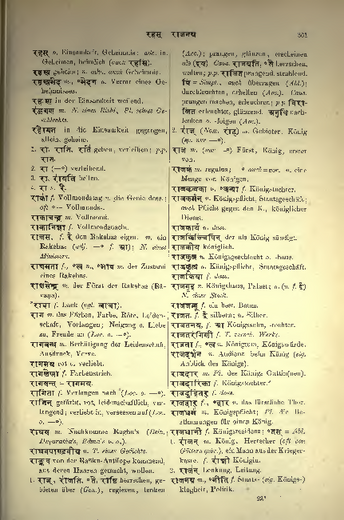
1. rā́jan m. König, Herrscher (oft von Göttern gebr.), ein Mann aus der Kriegerkaste. f. rā́jñī Königin.
Original text · German · Word type unspecified
2. rāján Lenkung, Leitung.
Burnouf 1866 substantive masculine
Original text · French · substantive masculine
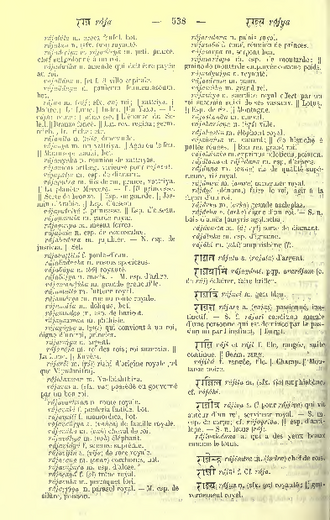
rājan m. (rāj; sfx. an) roi; kṣatriya. Maître. La Lune. Indra. Un Yakṣa. — F. rājñī reine; princesse. L'épouse du Soleil. Bronze foncé. Lat. rex, regina; germ. reich.; fr. riche; etc.
Occurrences in source texts (16)
DYS 4 occurrences
GoS 1 occurrence
HP 6 occurrences
HP 3.103-3.107*2: Conclusion of the Mudrā Teaching 4 occurrences
Direct occurrences
SiSa 5 occurrences
SiSa 5.208-5.222: Rājayoga 3 occurrences
Direct occurrences
-
SiSa 5.208 Segment 9
-
SiSa 5.222 Segment 3
-
SiSa 5.222 Segment 5
Continue with AYI Free
Image source: AYI archive.