

ubhaya उभय – both
adjective · pronoun · Word type unspecified
Dictionary sources
AYI dictionary adjective
Cappeller 1891 Word type unspecified
Original text · English · Word type unspecified
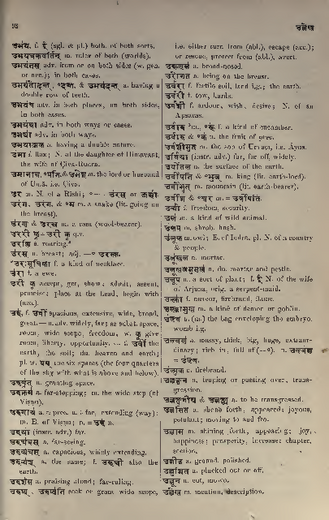
ubháya ·f. ī (sgl. & pl.) both, of both sorts.
Monier-Williams 1872 adjective
Original text · English · adjective
Ubhaya, as, ī, am, (pl. m. f. n. e, ās, āni, only used in sing. and pl., but by some authorities also in dual), both.
Petersburger 1855 adjective · Word type unspecified
Original text · German · adjective
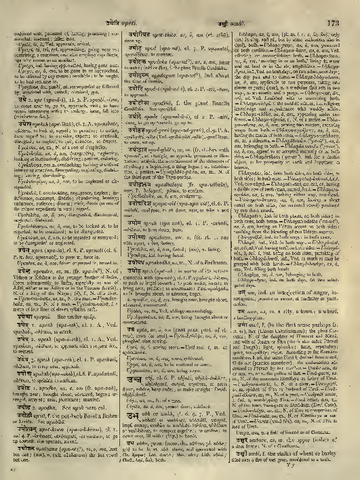
ubháya (von ubha) adj. f. ī P. 5,2,44. gaṇa sarvādi zu P. 1,1,27. VOP. 3,9. nur im sg. und pl. (nach HARADATTA auch du. SIDDH. K. 11,a) beide, beiderseitig: janmo̱bhayā̀ ṚV. 2,7,7. pare 'vàra u̱bhayā̀ a̱mitrā̀ḥ ṚV. 2,12,8. janā̀ u̱bhayè ṚV. 2,24,10. jagàta sthā̱turu̱bhayàsya̱ yo va̱śī ṚV. 4,53,6. u̱bhayàṃ te̱ na kṣī̀yate vasa̱vyàm ṚV. 2,9,5. u̱bhe idàsyo̱bhayàsya rājataḥ ṚV. 10,13,5. ṚV. 10,64,14. mi̱tho yattyā̱gamu̱bhayā̀so̱ agmàn ṚV. 4,24,3. u̱bhayè bhadrapā̱pāḥ AV. 12,1,47. CHĀND. UP. 1,2,1. CHĀND. UP. 8,7,2. ubhayānpāpmana ānandāṃśca paśyati BṚH. ĀR. UP. 4,3,9. u̱bhayā̀ya̱ janmàne ṚV. 10,37,11. u̱bhayèṣām ṚV. 1,26,9. u̱bhayàsya̱ rājā̀ ṚV. 6,47,16. u̱bhayī̀ AV. 8,5,9. TS. 5,1,4,5. TS. 7,5,1,1. TS. 7,5,2,2. ŚAT. BR. 2,4,3,2. ubhayī́ gaṇa gaurādi zu P. 4,1,41. — ŚAT. BR. 2,4,4,5. ŚAT. BR. 3,5,1,21. ŚAT. BR. 3,8,1,16. ŚAT. BR. 5,2,3,5. AIT. BR. 5,28. ubhayyaḥ paridhānīyā bhavanti hotrakāṇām AIT. BR. 6,8. yāṃ ca rātrīmajāyathā yāṃ ca pretāsi tadubhayamantareṇa AIT. BR. 8,15. — duḥkhaṃ sukhaṃ cāpyubhayam MBH. 3,13998. MBH. 13,63. tena śabdena vitrastairākāśaṃ pakṣibhirvṛtam . manuṣyairāvṛtā bhūmirubhayaṃ prababhau tadā R. 2,103,43. R. 5,36,24. M. 2,55. M. 4,224. M. 9,34. M. 10,59. RAGH. 9,9. KUMĀRAS. 7,78. AMAR. 60. ubhayamapyaparitoṣaṃ (vgl. u. api 9) samarthaye ich halte (euch) Beide für unbefriedigt ŚĀK. 97,4. VIKR. 79,13. ubhayo maṇiḥ P. 5,2,44, Sch. ubhayīṃ siddhimubhāvavāpatuḥ RAGH. 8,23. kiṃ tatsādhyaṃ yadubhaye sādhayeyurna saṃgatāḥ RAGH. 17,38. ubhaye devamanuṣyāḥ P. 5,2,44, Sch. H. 1202. ubhayaiḥ ŚĀK. 162. am Anf. eines comp. ubhayapād CHĀND. UP. 4,16,5. ubhayabhāj R. 4,21,36. M. 2,92. M. 10,122. SUŚR. 1,135,19. ŚĀK. 34. ŚĀK. 193. VID. 335.
Original text · German · Word type unspecified
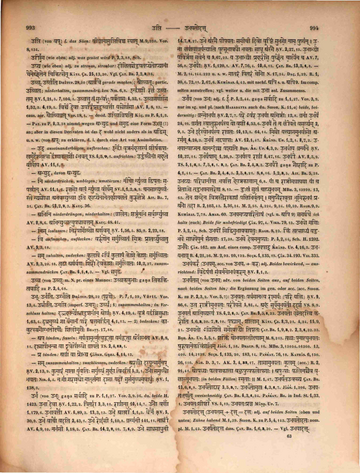
ubhaya pl. BHĀG. P. 10,32,16. BHĀG. P. 10,72,5. anubhaya Keines von Beiden seiend SARVADARŚANAS. 147,14.
Böhtlingk 1879 adjective
Original text · German · adjective
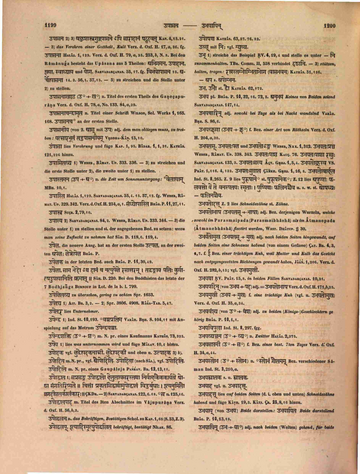
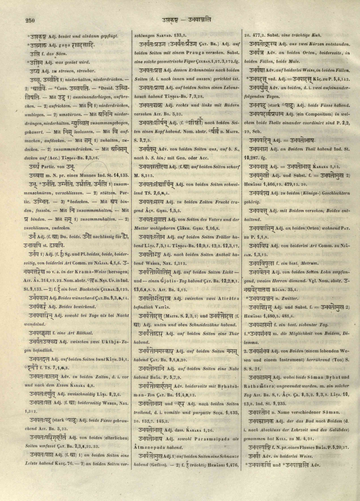
ubháya — 1〉 Adj. (f. ī) Sg. und Pl. beides, beide, beiderseitig, von beiderlei Art Comm. zu NYĀYAS. 4,1,6. ubhayamantareṇa s. v. a. in der Krama-Weise (hersagen) AIT. ĀR. 314,19. 22. Nom. abstr. ˚tva n. NṚS. UP. in Ind. St. 9,133. — 2〉 f. ī ein best. Backstein ŚULBAS. 3,129.
Apte 1890 pronoun
Original text · English · pronoun
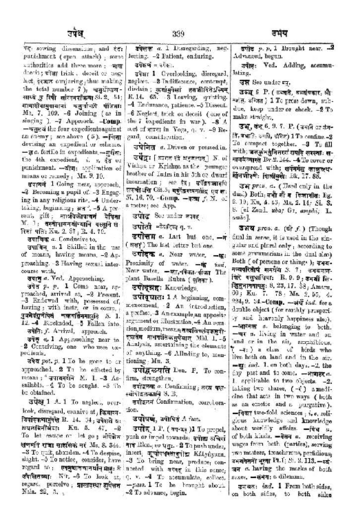
ubhaya pron. a. (yī f.) (Though dual in sense, it is used in the singular and plural only; according to some grammarians in the dual also) Both (of persons or things); ubhayamapyaparitoṣaṃ samarthaye Ś. 7; ubhayamānaśire vasudhādhipāḥ R. 9. 9; ubhayīṃ siddhimubhāvavāpatuḥ R. 8. 23, R. 17. 38; Amaru. 60; Ku. 7. 78; Ms. 2. 55, Ms. 4. 224; Ms. 9. 34. Comp. — arthaṃ ind. for a double object (for earthly prosperity and heavenly happiness also). — ātmaka a. belonging to both. — cara a. living in water and on land or in the air, amphibious. — (raḥ) a class of birds who live both on land and in the air. — dyuḥ ind. 1 on both days. 2 the day past and to come. — bhāgahara a. 1 applicable to two objects. 2 taking two shares. — (raṃ) a medicine that acts in two ways (both as an emetic and a purgative). — vidyā two fold sciences; i. e. religious knowledge and knowledge about worldly affairs. — vidha a. of both kinds. — vetana a. receiving wages from both (parties), serving two masters, treacherous, perfidious; ubhayavetano bhūtvā Pt. 1; Śi. 2. 113. — vyaṃjana a. having the marks of both sexes. — saṃbhavaḥ a dilemma.
Cappeller 1887 Word type unspecified
Original text · German · Word type unspecified
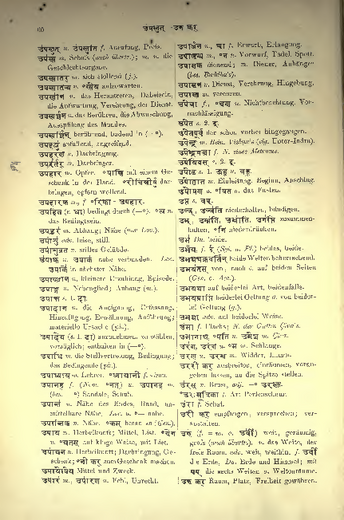
ubhaya f. ī (Sgl. u. Pl.) beides, beide.
Burnouf 1866 adjective
Original text · French · adjective
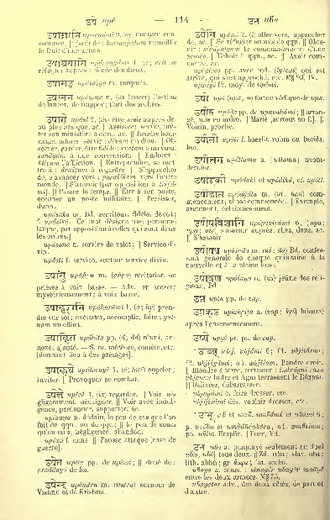
ubhaya a. mms.: senayor ubhayor madhye entre les deux armées. M§ 55.
Derived words
Occurrences in source texts (7)
IVU 2 occurrences
MandUp 2 occurrences
PYS 1 occurrence
SiSa 1 occurrence
VBT 1 occurrence
Continue with AYI Free
Image source: AYI archive.