

śveta श्वेत – weiß; hell
Adjektiv · Substantiv Maskulin · Substantiv Neutrum · Worttyp nicht bestimmt
Wörterbuchquellen
AYI Wörterbuch Adjektiv
weiß; hell
Cappeller 1891 Adjektiv
Originaltext · Englisch · Adjektiv
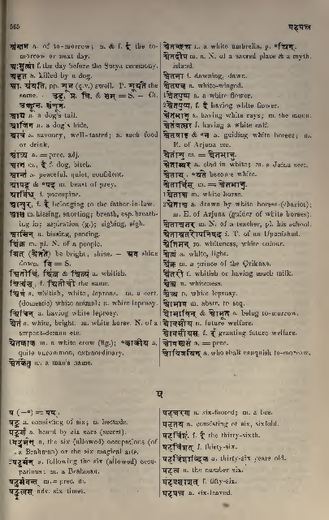
śvetá ·a. white, bright. m. white horse, N. of a serpent-demon etc.
Monier-Williams 1872 Worttyp nicht bestimmt
Originaltext · Englisch · Worttyp nicht bestimmt
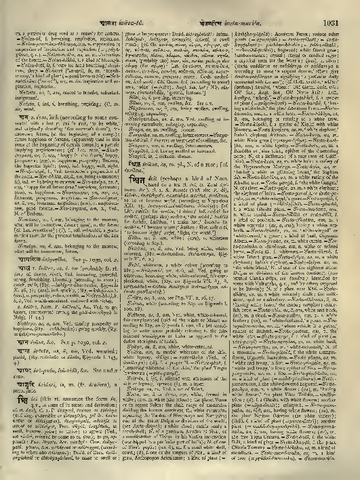
Śveta, as, ā or śvenī, am, white, dressed in white; (as), m. white (the colour); the planet Venus or its regent Śukra; the sixth range of mountains dividing the known continent, the white mountains separating the Varṣas of Hiraṇmaya and Ramyaka; one of the minor Dvīpas or divisions of the world, (see śveta-dvīpa); a white cloud; cumin seed; a conch-shell; N. of a particular Avatāra of Śiva; of a manifestation of Viṣṇu in his Varāha incarnation (worshipped in a particular part of India); N. of one of Śiva's pupils; (as, ā), m. f. a small white shell, cowri; (ā), f. one of the tongues of Fire; a kind of grass, Andropogon Aciculatum; a kind of plant (= kāṣṭha-pāṭalā); Aconitum Ferox; various other plants (= aparājitā; = śveta-vṛhatī; = śveta- kaṇṭakārī; = pāṣāṇa-bhedin; = śilā-valkalā; = chūrikā-pattrī); hogweed; white Dūrvā grass; bamboo-manna; crystal; clayed or candied sugar; a mystical term for the letter s; (am), n. silver; (śveta vaidārva or vaidārvya or vaidarvya is according to some ‘a serpent demon,’ others give śvaita-vaidārava as signifying ‘a particular deity connected with the sun’); [cf. Goth. hveit-s, ‘white;’ (perhaps) hvaitei, ‘wheat:’ Old Germ. huiz, wīz: Old Sax., Angl. Sax., Old Norse hvīt: Lith. kwe†ty-s, ‘wheat.’]
Petersburger 1855 Adjektiv · Substantiv Maskulin · Substantiv Neutrum · Worttyp nicht bestimmt
Originaltext · Deutsch · Adjektiv · Substantiv Maskulin · Substantiv Neutrum
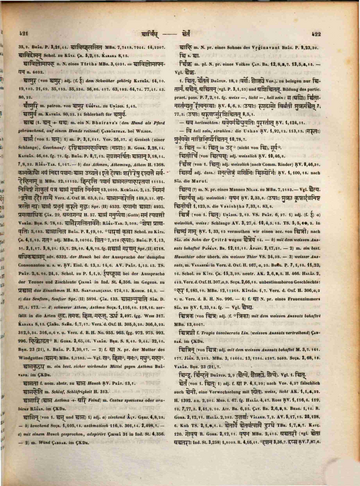
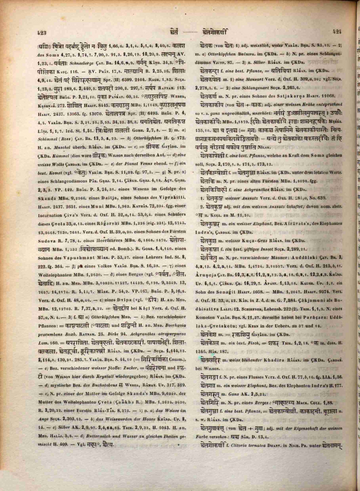
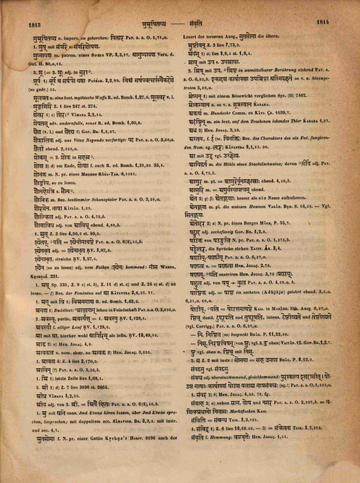
śvetá (von 1. śvit) 1〉 adj. f. ā P. 4,1,39; nach VOP. 4,27 (fälschlich auch śvenī, eine Verwechselung mit śyeta). weiss, licht AK. 1,1,4,22. H. 1392. H. an. 2,204. MED. t. 67. fg. HALĀY. 4,47. Ross ṚV. 1,116,6. ṚV. 1,119,10. ṚV. 7,77,3. ṚV. 8,41,9. ṚV. 8,41,10. AIT. BR. 6,35. ŚAT. BR. 2,6,3,9. BHAG. 1,14. R. GORR. 2,12,11. HALĀY. 2,282. u̱kṣaṇaḥ VĀLAKH. 7,2. AV. 5,17,15. AV. 20,128,6. Kuh TS. 2,1,8,1. TS. 2,1,8,4. śve̱tāyaì śve̱tavàtsāyai du̱gdhe TBR. 1,7,3,7. KAUŚ. 120. govṛṣa R. GORR. 2,12,11. vṛṣabha MBH. 2,415. aśvatarī (vgl. śvetā aśvatarāḥ Ind. St. 3,258) MBH. 1,8008. R. 4,16,41. ˚daśana R. 3,36,7. drapsa ṚV. 7,87,6. (agniḥ) ci̱tro yadabhrā̀ṭ chve̱to na vi̱kṣu ṚV. 1,66,6. ṚV. 3,1,4. ṚV. 5,1,4. ṚV. 8,40,8. kalaśa des Soma ṚV. 4,27,5. ṚV. 9,74,7. ṚV. 7,90,3. ṚV. 7,91,3. ṚV. 8,26,19. ṚV. 10,20,9. lakṣman AV. 1,23,4. parvatāḥ Schneeberge ŚAT. BR. 14,6,8,9. carman KĀṬH. 34,5. ˚pipīlikā KAUŚ. 116. — ṚV. PRĀT. 17,8. mālyāni R. 2,25,26. śilāḥ R. 4,9,44. śvetaṃ padaṃ śiroruhāṇām Spr. (II) 6599. Spr. (II) 2104. RAGH. 1,83. SUŚR. 1,23,3. surā SUŚR. 189,6. SUŚR. 2,440,5. śatapadī SUŚR. 290,3. SUŚR. 297,7. sarṣapa RATNAM. 113. śvetotpala BHĀG. P. 3,21,10. yūkā PAÑCAT. 60,24. ˚taṇḍulapiṣṭa WEBER, KṚṢṆAJ. 272. śoṇita HARIV. 8445. kamaṇḍalu MBH. 1,1149. kuṇḍalabhūṣaṇa HARIV. 2437. fg. HARIV. 13065. fg. HARIV. 13070. śvetātapatra Spr. (II) 6495. BHĀG. P. 4,4,5. VARĀH. BṚH. S. 3,21. VARĀH. BṚH. S. 3,25. VARĀH. BṚH. S. 5,53. VARĀH. BṚH. S. 34,23. VARĀH. BṚH. S. 38,3. anatiśveta, anatikṛṣṇa LĀṬY. 1,1,7. Ind. St. 1,51. triḥśvetā śalalī GOBH. 2,7,8. — 2〉 m. a〉 Schimmel (Ross) ŚAT. BR. 13,5,4,22. — b〉 Otterköpfchen H. ś. 172. H. an. Muschel überh. RĀJAN._im_ŚKDR. — c〉 = jīvaka JAṬĀDH._im_ŚKDR. Kümmel (dies wäre jīraka) WILSON nach derselben Aut. — d〉 eine weisse Wolke ŚABDAR._im_ŚKDR. — e〉 der Planet Venus ebend. — f〉 ein best. Komet (vgl. ˚ketu) VARĀH. BṚH. S. 11,39. fg. VARĀH. BṚH. S. 97,3. — g〉 N. pr. α〉 eines Schlangendämons PĀR. GṚHY. 2,14. ŚĀṄKH. GṚHY. 4,18. ĀŚV. GṚHY. 2,3,3. VP. 149. BHĀG. P. 5,24,31. eines Wesens im Gefolge des Skanda MBH. 9,2566. eines Daitya, eines Sohnes des Vipracitti, HARIV. 2437. HARIV. 2651. eines Muni MBH. 1,962. KATHĀS. 72,334. fgg. einer Incarnation Śivaʼs Verz. d. Oxf. H. 52,a,14. Verz. d. Oxf. H. 53,b,4. eines Schülers dieses Śveta Verz. d. Oxf. H. 52,a,15. eines Rājarṣi MBH. 1,226 (eig. MBH. 231). MBH. 12,5743. MBH. 13,5668. MBH. 13,7130. MBH. 13,7681. Verz. d. Oxf. H. 59,a,20. eines Sohnes des Fürsten Sudeva R. 7,78,4. eines Heerführers MBH. 6,1868. MBH. 6,1870. śvetopākhyāna MBH. 1,333 (viśvopākhyāna ed. Bomb.). R. GORR. 1,4,140. eines Sohnes des Vapuṣmant MĀRK. P. 53,27. eines Lehrers Ind. St. 8,222. fg. Ind. St. 8,364. — β〉 pl. eines Volkes VARĀH. BṚH. S. 16,38. — γ〉 eines Weltelephanten MBH. 1,2630. — δ〉 eines Berges (vgl. ˚parvata, ˚śaila, śvetādri) H. an. MED. MBH. 3,10820. MBH. 3,11527. MBH. 3,14429. MBH. 6,198. MBH. 9,3349. MBH. 13,7657. MBH. 14,1174. R. 5,11,7. MĀRK. P. 54,9. VP. 167. BHĀG. P. 5,16,8. Verz. d. Oxf. H. 48,a,40. — ε〉 eines Dvīpa (vgl. ˚dvīpa) H. an. MED. MBH. 12,12703. R. 7,37,5,22. = śvetadvīpa bei Kāśī Verz. d. Oxf. H. 57,a, N. 4. — 3〉 f. ā a〉 Otterköpfchen MED. — b〉 Bez. verschiedener Pflanzen: = kāṣṭhapāṭalī (˚pāṭalā) und śaṅkhinī H. an. MED. Boerhavia procumbens Roxb. RATNAM. 25. Birke 94. Achyranthes atropurpurea Lam. 160. = aparājitā, śvetabṛhatī, śvetakaṇṭakārī, pāṣāṇabhedī, śilāvalkalā, śvetadūrvā, chūrikāpattrī RĀJAN._im_ŚKDR. — SUŚR. 1,144,13. SUŚR. 2,114,8. SUŚR. 2,130,21. SUŚR. 2,285,7. VARĀH. BṚH. S. 44,10 (= girikarṇikā Comm.). — c〉 Bez. verschiedener weisser Stoffe: Zucker, = vaṃśarocanā und sphaṭī (von WILSON hier durch Krystall wiedergegeben) RĀJAN._im_ŚKDR. — d〉 mystische Bez. des Buchstabens sa WEBER, RĀMAT. UP. 317. WEBER, RĀMAT. UP. 319. — e〉 N. pr. einer der Mütter im Gefolge Skandaʼs MBH. 9,6240. der Mutter des Weltelephanten Śveta (Śaṅkha R.) MBH. 1,2625. MBH. 1,2630. R. 3,20,22. einer Fürstin RĀJA-TAR. 8,375. — 4〉 n. a〉 das Weisse im Auge SUŚR. 2,303,13. — b〉 das Weisswerden der Haare CHĀND. UP. 8,14. — c〉 Silber AK. 2,9,97. AK. 3,4,14,82. TRIK. 2,9,32. H. 1043. H. an. MED. HALĀY. 5,5. — d〉 Buttermilch und Wasser zu gleichen Theilen gemischt H. 409. — Vgl. mahā˚, śvaitya.
Originaltext · Deutsch · Worttyp nicht bestimmt
śveta 2〉g〉β〉 śvetahūṇāḥ besser als ein Name aufzufassen.
Böhtlingk 1879 Adjektiv · Substantiv Maskulin · Substantiv Neutrum
Originaltext · Deutsch · Adjektiv · Substantiv Maskulin · Substantiv Neutrum
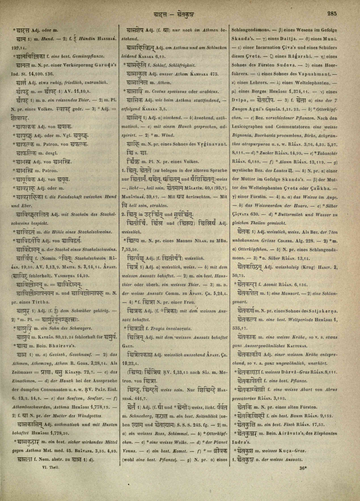
śvetá — 1〉 Adj. (f. ā́ und śvenī!) weiss, licht. párvata m. Schneeberg, kaṭākṣa m. ein best. Seitenblick (neben śyāma und śvetaśyāma) S. S. S. 245. fg. — 2〉 m. — a〉 ein weisses Ross, Schimmel. — b〉 *Otterköpfchen. — c〉 *eine weisse Wolke. — d〉 *der Planet Venus. — e〉 ein best. Komet. — f〉 *= jīvaka (wohl eine best. Pflanze). — g〉 N. pr. — α〉 eines [Page6-285-c] Schlangendämons. — β〉 eines Wesens im Gefolge Skandaʼs. — γ〉 eines Daitya. — δ〉 eines Muni. — ε〉 einer Incarnation Śivaʼs und eines Schülers dieses Śveta. — ζ〉 eines Rājarṣi. — η〉 eines Sohnes des Fürsten Sudeva. — ϑ〉 eines Heerführers. — ι〉 eines Sohnes des Vapuṣmant. — ϰ〉 eines Lehrers. — λ〉 eines Weltelephanten. — μ〉 eines Berges HEMĀDRI 1,374,11. — ν〉 eines Dvīpa, = śvetadvīpa. — 3〉 f. śvetā — a〉 eine der 7 Zungen Agniʼs. GṚHYĀS. 1,21. 23. — b〉 *Otterköpfchen. — c〉 Bez. verschiedener Pflanzen. Nach den Lexicographen und Commentatoren eine weisse Bignonia, Boerhavia procumbens, Birke, Achyranthes atropurpurea u. s. w. RĀJAN. 3,76. 4,33. 5,37. 8,111. — d〉 *Zucker RĀJAN. 14,99. — e〉 *Tabaschir RĀJAN. 6,188. — f〉 *Alaun RĀJAN. 13,119. — g〉 mystische Bez. des Lautes sa. — h〉 N. pr. — α〉 einer der Mütter im Gefolge Skandaʼs. — β〉 der Mutter des Weltelephanten Śveta oder Śaṅkha. — γ〉 einer Fürstin. — 4〉 n. — a〉 das Weisse im Auge. — b〉 das Weisswerden der Haare. — c〉 *Silber ŚĀŚVATA 630. — d〉 *Buttermilch und Wasser zu gleichen Theilen gemischt.
Apte 1890 Adjektiv · Substantiv Maskulin · Substantiv Neutrum
Originaltext · Englisch · Adjektiv · Substantiv Maskulin · Substantiv Neutrum
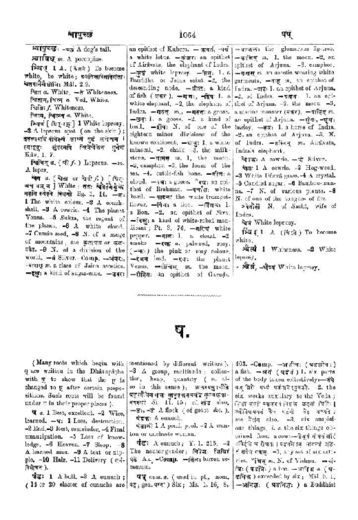
śveta a. (śvetā or śvenī f.) [ śvit-ac ghañ vā] White; tataḥ śvetairhayairyukte mahati syaṃdane sthitau Bg. 1. 14. — taḥ 1 The white colour. 2 A conchshell. 3 A cowrie. 4 The planet Venus. 5 Śukra, the regent of the planet. 6 A white cloud. 7 Cumin seed. 8 N. of a range of mountains; see kulācala or kulaparvata. 9 N. of a division of the world. — taṃ Silver. Comp. — aṃbaraḥ, — vāsas m. a class of Jaina ascetics. — ikṣuḥ a kind of sugar-cane. — udaraḥ ([Page 1064-b]) an epithet of Kubera. — kamalaṃ, -padmaṃ a white lotus. — kuṃjaraḥ an epithet of Airāvata, the elephant of Indra. — kuṣṭhaṃ white leprosy. — ketuḥ 1 a Bauddha or Jaina saint. 2 the descending node. — kolaḥ a kind of fish (śaphara). — gajaḥ, -dvipaḥ 1 a white elephant. 2 the elephant of Indra. — garut m., — garutaḥ a goose. — chadaḥ 1 a goose. 2 a kind of basil. — dvīpaḥ N. of one of the eighteen minor divisions of the known continent. — dhātuḥ 1 a white mineral. 2 chalk. 3 the milkstone. — dhāman m. 1 the moon. 2 camphor. 3 the foam of the sea. 4 cuttle-fish bone. — nīlaḥ a cloud. — patraḥ a goose. ˚rathaḥ an epithet of Brahman. — parṇāśaḥ white basil. — pāṭalā the white trumpetflower. — piṃgaḥ a lion. — piṃgalaḥ 1 a lion. 2 an epithet of Śiva. — bhikṣuḥ a kind of white-robed mendicant; Pt. 3. 76. — maricaṃ white pepper. — mālaḥ 1 a cloud. 2 smoke. — rakta a. pale-red, rosy. — (ktaḥ) the pink or rosy colour. — raṃjanaṃ lead. — rathaḥ the planet Venus. — rocis m. the moon. — rohitaḥ an epithet of Garuḍa. ([Page 1064-c]) — valkalaḥ the glomerous fig-tree. — vājin m. 1 the moon. 2 an epithet of Arjuna. 3 camphor. — vāsas m. an ascetic wearing white garments. — vāh m. an epithet of Indra. — vāhaḥ 1 an epithet of Arjuna. 2 of Indra. — vāhanaḥ 1 an epithet of Arjuna. 2 the moon. 3 a marine monster (makara). — vāhin m. an epithet of Arjuna. — śuṃgaḥ, -śṛṃgaḥ barley. — hayaḥ 1 a horse of Indra. 2 an epithet of Arjuna. 3 N. of Indra. — hastin m. Airāvata, Indra's elephant.
Cappeller 1887 Worttyp nicht bestimmt
Originaltext · Deutsch · Worttyp nicht bestimmt
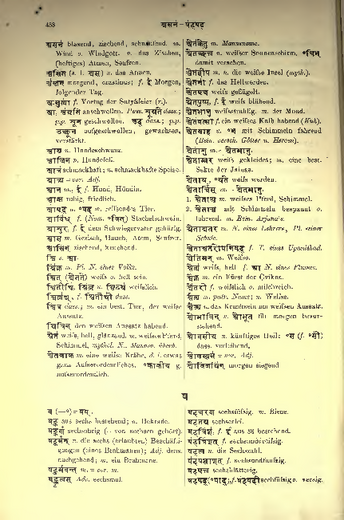
śvetá weiß, hell, glänzend. m. weißes Pferd, Schimmel, mythol. N., Mannsn. überh.
Burnouf 1866 Adjektiv
Originaltext · Französisch · Adjektiv
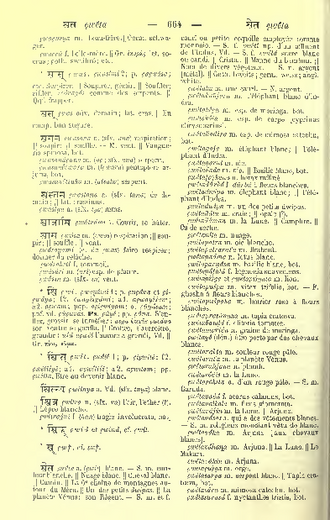
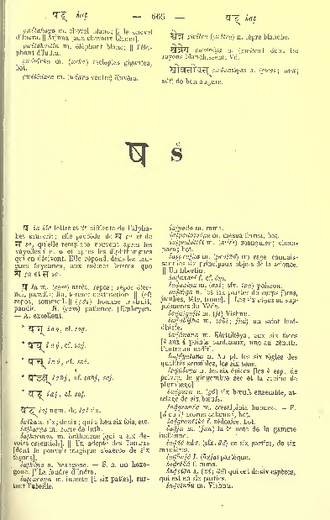
śveta śveta a. (śvit) blanc. — S. m. couleur blanche. Nuage blanc. Cheval blanc. Cumin. La 6ᵉ chaîne de montagnes autour du Meru. Un des petits dvīpas. La planète Vénus; son Régent. — S. m. et f. [Page664-2] caurî ou petite coquille employée comme monnaie. — S. f. śvelī np. d'un affluent de l'Indus. Vd. — S. f. śvetā sucre blanc ou candi. Cristal. Manne du bambou. Nom de divers végétaux. — S. n. argent [métal]. Goth. hweits; germ. weisz; angl. white. śvetaka m. une caurî. — N. argent. śvetakuñjara m. l'éléphant blanc d'Indra. śvetakeśa m. esp. de moringa, bot. śvetakola m. esp. de carpe [cyprinus chrysoparius]. śvetakhadira m. esp. de mimosa catechu, bot. śvetagaja m. éléphant blanc; l'éléphant d'Indra. śvetagarut m. oie. śvetachada m. oie. Basilic blanc, bot. śvetaṭaṅkaṇa n. borax raffiné. śvetadūrbā f. dūrbā à fleurs blanches. śvetadvipa m. éléphant blanc; l'éléphant d'Indra. śvetadvīpa m. un des petits dvīpas. śvetadhātu m. craie; opale (?). śvetadhāman m. la Lune. Camphre. Os de sèche. śvetanīla m. nuage. śvetapatra m. oie blanche. śvetapatraratha m. Brahmā. śvetapadma n. lotus blanc. śvetaparṇāsa m. basilic blanc, bot. śvetapāṭalā f. bignonia suaveolens. śvetapiṅga et śvetapiṅgala m. lion. śvetapuṣpa m. vitex trifolia, bot. — F. ghosha à fleurs blanches. śvetapuṣpaka m. laurier rose à fleurs blanches. śvetaprasūnaka m. tapia cratœva. śvetabhaṇḍā f. clitoria ternatea. śvetamarica n. graine de moringa. śvetaye (dén.) être porté par des chevaux blancs. śvetarakta m. couleur rouge pâle. śvetaratha m. la planète Vénus. śvetarañjana n. plomb. śvetarocis m. la Lune. śvetarohita a. d'un rouge pâle. — S. m. Garuḍa. śvetavacā f. acorus calamus, bot. śvetavalkala m. ficus glomerata. śvetavājin m. la Lune. Arjuna. śvetavāsas a. qui a des vêtements blancs. — S. m. religieux mendiant vêtu de blanc. śvetavāha m. Arjuna [aux chevaux blancs]. śvetavāhana m. Arjuna. La Lune. Le Makara. śvetavāhin m. Arjuna. śvetaśuṅga m. orge. śvetasarpa m. serpent blanc. Tapia cratœva, bot. śvetasāra m. mimosa catechu, bot. śvetasurasā f. nyctanthes tristis, bot. [Page665-1] śvetahaya m. cheval blanc; le cheval d'Indra. Arjuna [aux chevaux blancs]. śvetahastin m. éléphant blanc; l'éléphant d'Indra. śvetārka m. (arka) asclepias gigantea, bot. śvetodara m. (udara ventre) Kuvera.
Quelltextfundstellen (4)
MAN 3 Fundstellen
SiSa 1 Fundstelle
Mit AYI Free weitermachen
Bildquelle: AYI Archiv.