

asthi अस्थि – Knochen.
Substantiv Neutrum · Worttyp nicht bestimmt
Wörterbuchquellen
Cappeller 1891 Substantiv Neutrum
Originaltext · Englisch · Substantiv Neutrum
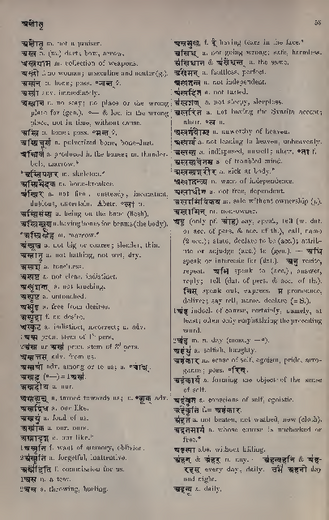
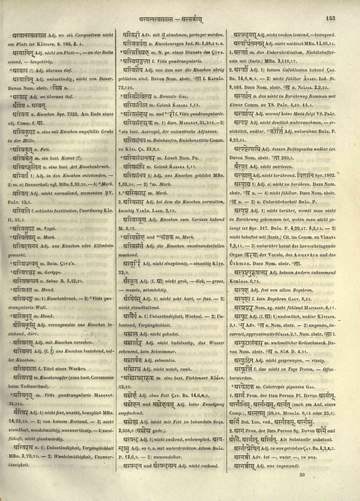
ásthi ·n. bone; poss. asthi°mant.
Monier-Williams 1872 Worttyp nicht bestimmt
Originaltext · Englisch · Worttyp nicht bestimmt
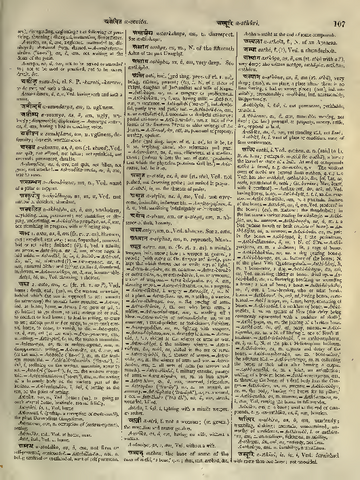
asthi asthi, i, Ved. asthan, a, n. (said to be fr. rt. 2. as; perhaps fr. a-sthā for ā-sthā), a bone; the kernel or stone of a fruit. At end of compounds astha is found, e. g. an-astha, q. v. The weakest cases of asthi are derived from asthan, q. v.; the Veda has also asthāni, asthabhis, &c. [cf. Lat. os, ossis, assimilated fr. ostis; Gr. ὀστέον Slav. kosti, with k prefixed].
Petersburger 1855 Worttyp nicht bestimmt
Originaltext · Deutsch · Worttyp nicht bestimmt
asthi s. asthan.
Böhtlingk 1879 Substantiv Neutrum · Worttyp nicht bestimmt
Originaltext · Deutsch · Substantiv Neutrum
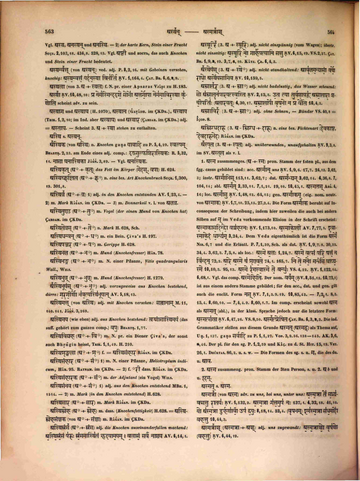
asthán und ásthi n. — 1〉 Knochen. — 2〉 Kern —, Stein einer Frucht.
Originaltext · Deutsch · Worttyp nicht bestimmt
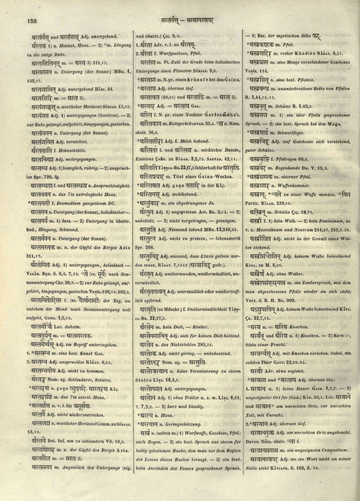
ásthi s. asthan.
Apte 1890 Substantiv Neutrum
Originaltext · Englisch · Substantiv Neutrum
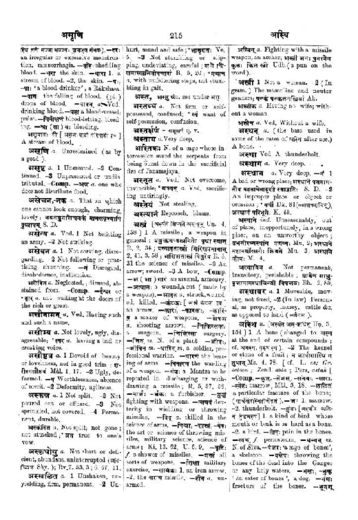
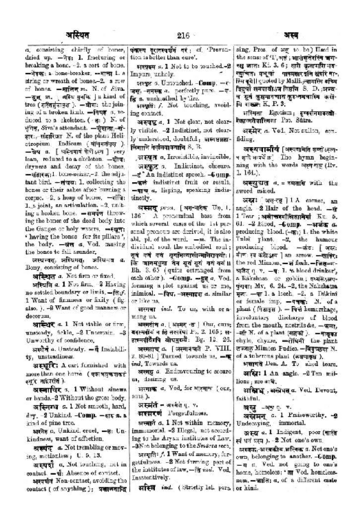
asthi n. [asyate as-kathin Uṇ. 3. 154] 1 A bone (changed to astha at the end of certain compounds; cf. anastha, puruṣāstha). 2 The kernel or stone of a fruit; na kārpāsāsthi na tuṣān Ms. 4. 78. [cf. L. os; Gr. osteon; Zend. asta; Pers. astah] Comp. — kṛt, -tejas, -saṃbhavaḥ, -sāraḥ, — snehaḥ marrow; Māl. 5. 18. — chalitaṃ a particular fracture of the bone; (pārśvayorasthihīnodgataṃ). — jaḥ 1 marrow. 2 thunderbolt. — tuṃḍaḥ [asthīva kaṭhinaṃ tuṃḍamasya] 1 a kind of bird whose mouth or beak is as hard as a bone. 2 a bird. — todaḥ pain in the bones. — tvac f. periosteum. — dhanvan m. N. of Śiva. — paṃjaraḥ ‘a cage of bones’, a skeleton. — prakṣepaḥ throwing the bones of the dead into the Ganges or any holy waters. — bhakṣaḥ, -bhuk ‘an eater of bones’, a dog. — bhaṃgaḥ fracture of the bones. — bhūyas ([Page 0216-a]) a. consisting chiefly of bones, dried up. — bhedaḥ 1 fracturing or breaking a bone. 2 a sort of bone. — bhedakaḥ a bone-breaker. — mālā 1 a string or wreath of bones. 2 a row of bones. — mālin m. N. of Śiva. — yuj m. [asthi yunakti] a kind of tree (hastiśuṃḍāvṛkṣa). — yogaḥ the joining of a broken limb. — vigraha a. reduced to a skeleton. — (haḥ) N. of bhṛṃginṃ, Śiva's attendant. — śṛṃkhalā, — saṃhāraḥ, -saṃhārikā N. of the plant Heliotropium Indicum (graṃthimatīvṛkṣa). — śeṣa a. [asthimātraṃ śeṣo'sya] very lean, reduced to a skeleton. — śoṣaḥ dryness and decay of the bones. — saṃhārakaḥ 1 bone-seizer. 2 the adjutant bird. — saṃcayaḥ 1 collecting the bones or their ashes after burning a corpse. 2 a heap of bones. — saṃdhiḥ 1 a joint, an articulation. 2 uniting a broken bone. — samarpaṇaṃ throwing the bones of the dead body into the Ganges or holy waters. — sthūṇaḥ ‘having the bones for its pillars’, the body. — sraṃsa a. Ved. causing the bones to fall asunder.
Burnouf 1866 Substantiv Neutrum
Originaltext · Französisch · Substantiv Neutrum
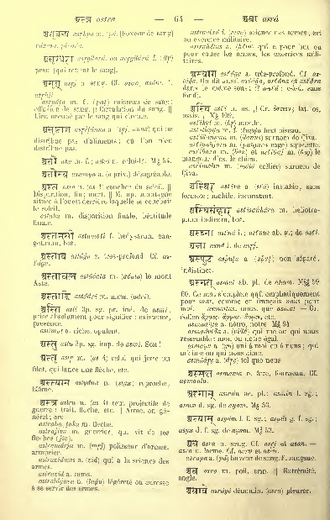
asthi asthi n. os. Gr. ὀστέον; lat. os, ossis. M§ 109. asthikṛt m. (kṛ) moelle. asthituṇḍa m. f. (tuṇḍa bec) oiseau. asthidhanvan m. (dhanus) surnom de Śiva. asthipañjara m. (pañjara cage) squelette. asthibhakṣa m. (bhakṣ) et asthibhuj m. (bhuj) le mangeur d'os, le chien. asthimālin m. (mālā collier) surnom de Śiva.
Quelltextfundstellen (2)
Mit AYI Free weitermachen
Bildquelle: AYI Archiv.