

bhānu भानु – Sonne
Adjektiv · Substantiv Feminin · Substantiv Maskulin · Worttyp nicht bestimmt
Wörterbuchquellen
AYI Wörterbuch Substantiv Maskulin
Sonne
Cappeller 1891 Substantiv Maskulin
Originaltext · Englisch · Substantiv Maskulin
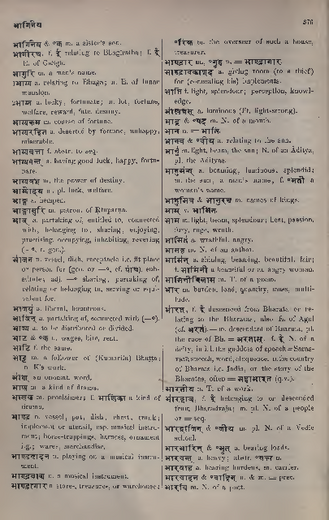
bhānú ·m. light, beam, the sun; N. of an Āditya, pl. the Ādityas.
Monier-Williams 1872 Substantiv Maskulin
Originaltext · Englisch · Substantiv Maskulin
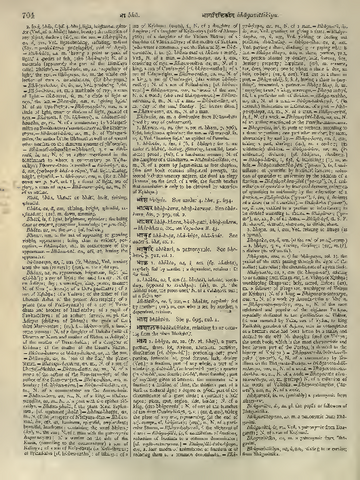
Bhānu, us, m. appearance, brightness, light [cf. ahi-bh˚]; a ray of light; the sun; beauty; N. of an Āditya; day; a sovereign, king, prince, master; N. of Śiva (= hara); of a Deva-gandharva; of a son of Kṛṣṇa; of a Yādava; of the father of the fifteenth Arhat of the present Ava-sarpiṇī; of a prince (son of Prati-vyoma); of a son of Viśva- dhara and brother of Hari-nātha; of a pupil of Śaṅkarācārya; of an author; (avas), m. pl. the Ādityas (children of Bhānu); the gods of the third Manv-antara; (us), f. = bhānu-matī, a hand- some woman; N. of a daughter of Dakṣa (wife of Dharma or Manu and mother of Bhānu or Āditya); of the mother of Devarṣabha; of a daughter of Kṛṣṇa; of the mother of the Dānava Śakuni.
Petersburger 1855 Substantiv Feminin · Substantiv Maskulin · Worttyp nicht bestimmt
Originaltext · Deutsch · Substantiv Feminin · Substantiv Maskulin
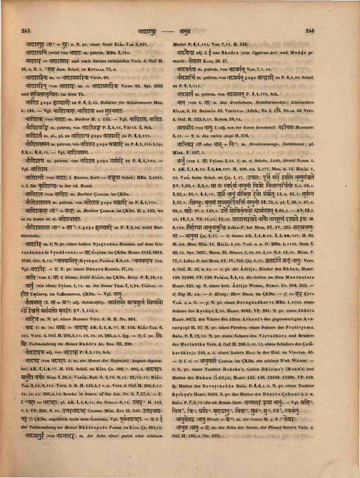
bhānú (von f. bhā) UṆĀDIS. 3,32. 1〉 m. a〉 Schein, Licht, Strahl NAIGH. 1,9. AK. 1,1,2,35. AK. 3,4,18,107. H. 100. H. an. 2,277. MED. n. 14. HALĀY. 1,39. VAIJ. beim Schol. zu ŚIŚ. 1,27. (uṣasaḥ) pūrve̱ ardhe̱ rajàso bhā̱numàñjate ṚV. 1,92,1. ṚV. 2,2,8. ā yaḥ sva1̱̀rṇa bhā̱nunā̀ ci̱tro vi̱bhātya̱rciṣā̀ ṚV. 8,4. ṚV. 16,4. ṚV. 3,21,4. ṚV. 61,7. ṚV. 4,1,17. ū̱rdhvaṃ bhā̱nuṃ sàvitā̱ de̱vo àśret ṚV. 13,2. ṚV. 45,1. sūryasya ṚV. 5,37,1. (sindhuḥ) a̱na̱ntaṃ śuṣmamu̱dìyarti bhā̱nunā̀ ṚV. 10,75,3. pl. ṚV. 1,36,3. ṚV. 1,87,6. ṚV. 1,92,2. agneḥ ṚV. 97,5. ṚV. 143,3. uttè śo̱cirbhā̱navo̱ dyāmàpaptan ṚV. 6,64,2. — AV. 18,3,29. AV. 19,7,2. VS. 11,54. VS. 12,32. jālāntaragate bhānau yatsūkṣmaṃ dṛśyate rajaḥ M. 8,132. nirdagdhā bhānubhānubhiḥ LIṄGA-P._bei_MUIR, ST. IV, 325. sahasrabhānunā — bhānunā ŚIŚ. 1,27. — b〉 Sonne AK. 1,1,2,32. AK. 3,4,18,107. H. 95. H. an. MED. HĀR. 11. HALĀY. 1,36. VAIJ. a. a. O. MBH. 1,1103. SUŚR. 1,20,12. Spr. 2037. MEGH. 35. SŪRYAS. 1,36. SŪRYAS. 1,39. SŪRYAS. 3,48. SŪRYAS. 9,9. SŪRYAS. 12,24. MĀRK. P. 77,1. LIṄGA-P._bei_MUIR, ST. IV, 325. ŚIŚ. 1,27. plakṣadvīpe tvahaṃ bhānuḥ Verz. d. Oxf. H. 33,a,24. — c〉 pl. die Āditya, Kinder des Bhānu, HARIV. 148. HARIV. 12480. VP. 120. PAÑCAR. 3,4,12. die Götter im 3ten Manvantara HARIV. 425. sg. N. eines best. Āditya WEBER, RĀMAT. UP. 304. WEBER, RĀMAT. UP. 313. — d〉 Tag H. an. — e〉 König; Herr DHAR._im_ŚKDR. — f〉 = hara Śiva VAIJ. a. a. O. — g〉 N. pr. eines Devagandharva MBH. 1,2555. eines Sohnes des Kṛṣṇa MBH. 2,56. HARIV. 9183. VP. 591. N. pr. eines Yādava HARIV. 8472. des Vaters des 15ten Arhantʼs der gegenwärtigen Avasarpiṇī H. 37. N. pr. eines Fürsten, eines Sohnes des Prativyoma. BHĀG. P. 9. BHĀG. P. 12,10. N. pr. eines Sohnes des Viśvadhara und Bruders des Harinātha Verz. d. Oxf. H. 206,b,10. Verz. d. Oxf. H. 206,b,12. eines Schulers des Śaṃkarācārya Verz. d. Oxf. H. 248,a,2. eines Autors HALL in der Einl. zu VĀSAVAD. 45. — 2〉 f. a〉 = bhānumatī ŚABDAR._im_ŚKDR. ein schönes Weib WILSON. — b〉 N. pr. einer Tochter Dakṣaʼs. Gattin Dharmaʼs (Manuʼs) und Mutter der Bhānu (Āditya), HARIV. 145. HARIV. 148. HARIV. 12449. HARIV. 12480. VP. 119. fg. Mutter des Devaṛṣabha BHĀG. P. 6,6,4. BHĀG. P. 6,6,5. N. pr. einer Tochter Kṛṣṇaʼs HARIV. 9184. N. pr. der Mutter des Dānava Śakuni u. s. w. BHĀG. P. 7,2,19 (die ed. Bomb. liest: tanmātaraṃ ruṣā bhānuṃ). — Vgl. ahi˚. citra˚, tri˚, prati˚. bṛhadbhānu˚, viśva˚, śubhra˚, su˚, sva˚, svarbhānu.
Originaltext · Deutsch · Worttyp nicht bestimmt
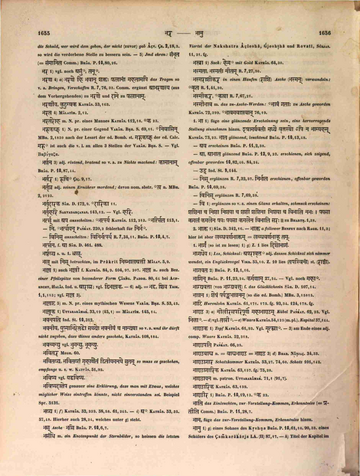
bhānu 1〉g〉 eines Sohnes des Kṛṣṇa BHĀG. P. 10,61,10. BHĀG. P. 10,90,33. eines Schülers des Śaṃkarācārya LA. (II) 87,17. — h〉 Titel der Kapitel im Wörterbuch eines unbekannten Verfassers: bhūmi˚, jala˚, tejo˚, vāyu˚, ākāśa˚ Verz. d. Oxf. H. 194,a,20. fgg.
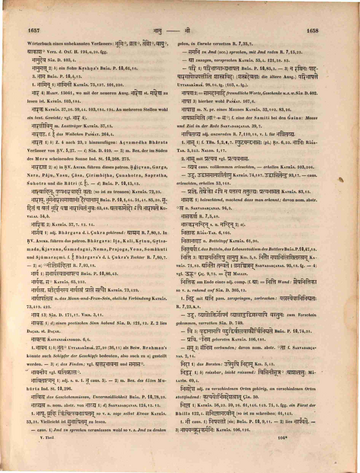
Böhtlingk 1879 Substantiv Feminin · Substantiv Maskulin
Originaltext · Deutsch · Substantiv Feminin · Substantiv Maskulin
bhānú — 1〉 m. — a〉 Schein, Licht, Strahl. — b〉 die Sonne. — c〉 Pl. die Āditya, Kinder des Bhānu. — d〉 *Fürst, König. — e〉 *Herr. — f〉 *Bein. Śivaʼs. — g〉 Bez. der Kapitel in einem best. Wörterbuch. — h〉 N. pr. — α〉 eines Āditya. — β〉 Pl. einer Klasse von Göttern im 3ten Manvantara. — γ〉 eines Devagandharva. — δ〉 eines Sohnes des Kṛṣṇa und verschiedener anderer Männer. — 2〉 f. — a〉 *ein schönes Weib. — b〉 N. pr. — α〉 einer Tochter Dakṣaʼs. — β〉 einer Tochter Kṛṣṇaʼs. — γ〉 der Mutter des Dānava Śakuni u. s. w.
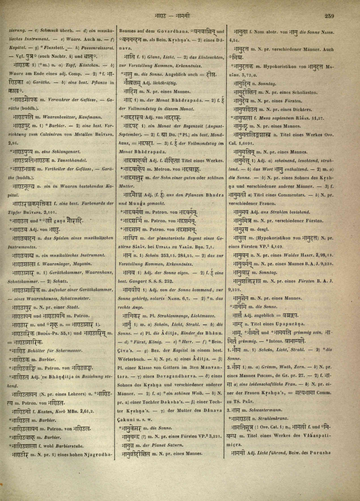
Apte 1890 Substantiv Maskulin
Originaltext · Englisch · Substantiv Maskulin
bhānuḥ [bhā-nu Uṇ. 3. 32] 1 Light, lustre, brightness. 2 A ray of light; maṃḍitākhiladikprāṃtāścaṃḍāṃśoḥ pāṃtu bhānavaḥ Bv. 1. 129; Śi. 2. 53 Ms. 8. 132. 3 The sun; bhānuḥ sakṛdyuktaturaṃga eva Ś. 5. 4; bhīmabhānau nidāghe Bv. 1. 30. 4 Beauty. 5 A day. 6 A king, prince, sovereign. 7 An epithet of Śiva. — f. A handsome woman. Comp. — keśa (sa) raḥ the sun. — jaḥ the planet Saturn. — dinaṃ, — vāraḥ Sunday.
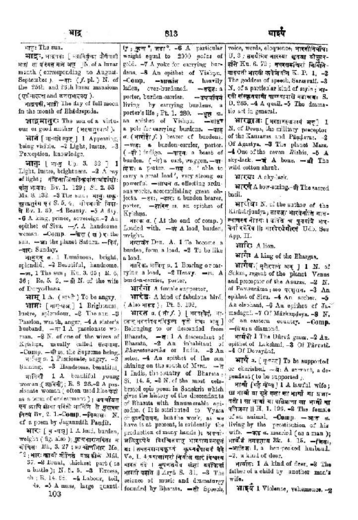
Cappeller 1887 Substantiv Maskulin
Originaltext · Deutsch · Substantiv Maskulin
bhānú m. Glanz, Licht, Sonne; männl. N.
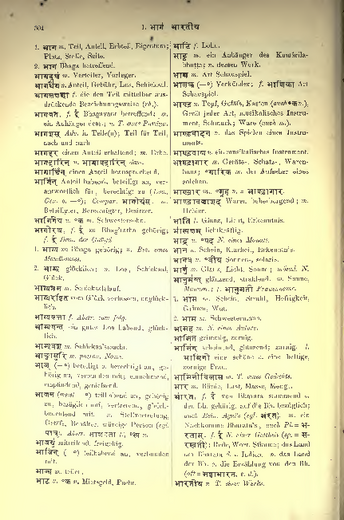
Burnouf 1866 Adjektiv
Originaltext · Französisch · Adjektiv
bhānu bhānu a. (bhā; sfx. nu) brillant. — S. m. lumière, éclat; rayon de lumière; au fig. beauté. Soleil; au fig. roi, prince, maître et seigneur. — F. bhānu belle femme. bhānuphalā f. banane. bhānumat a. (sfx. mat) brillant, lumineux; au fig. beau. — S. m. le Soleil. bhānuvāra m. dimanche.

Quelltextfundstellen (4)
DYS 1 Fundstelle
HP 2 Fundstellen
SiSa 1 Fundstelle
Mit AYI Free weitermachen
Bildquelle: AYI Archiv.