

kadā कदा – wann; jemals; zuweilen
Adverb · Partikel · Worttyp nicht bestimmt
Wörterbuchquellen
AYI Wörterbuch Adverb
wann; jemals; zuweilen
Cappeller 1891 Adverb
Originaltext · Englisch · Adverb
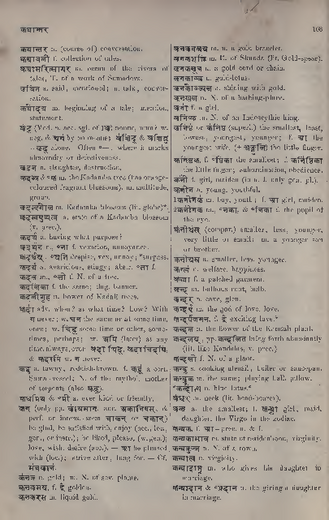
kadā́ ·adv. when? at what time? how? With na never; w. cana the same or at some time, once; w. cid some time or other, sometimes, perhaps; w. api (later) at any time, always, ever. kadā cid, kadā cidapi, & kadāpi w. na never.
Monier-Williams 1872 Partikel
Originaltext · Englisch · Partikel
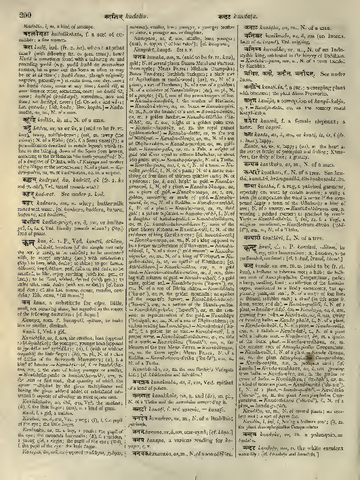
kadā kadā, ind. (fr. 2. ka), when? at what time? (with following fut. or pres. tense); how? Kadā is sometimes found with a following ca and preceding yadā (e. g. yadā kadā ca sunavāma somam, let us press out the Soma as often as may be or at all times); kadā cana, (though originally negative, generally = ) at some time, one day, once; na kadā cana, never at any time; kadā cit, at some time or other, sometimes, once; na kadā cit, never; kadāpi (kadā-api), sometimes, now and then; na kadāpi, never; [cf. Gr. κοτέ and ποτέ Lat. quando; Lith. kadà; Slav. kogda.]
Petersburger 1855 Adverb · Worttyp nicht bestimmt
Originaltext · Deutsch · Adverb
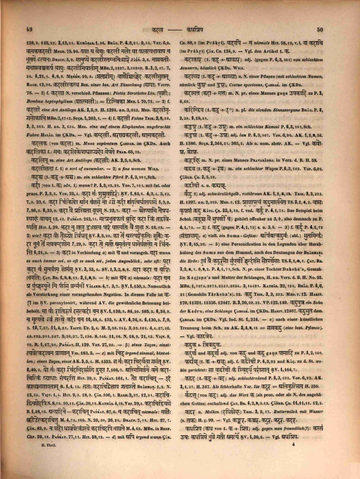
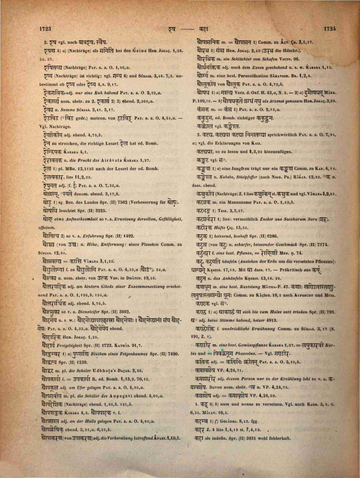
kadā́ (von 1. ka) adv. 1〉 wann? P. 5,3,15. P. 5,3,21. VOP. 7,101. mit fut. oder praes. P. 3,3,5. VOP. 25,4. ka̱dā nàḥ śuśruva̱dgiràḥ ṚV. 1,84,8. ṚV. 4,3,4. ṚV. 4,5,13. ṚV. 4,7,2. ṚV. 4,23,6. ka̱dā cìkitvo a̱bhi càkṣase̱ no 'gne ka̱dām̐ ṛ̀ta̱cidyā̀tayāse ṚV. 5,3,9. ṚV. 7,86,2. ṚV. 8,33,2. kadā vai prasthitā yūyam N. 22,7. kadā — śroṣyāmi naiṣadhasyāhaṃ vācam N. 12,42. PAÑCAT. 242,11. matprabhutvaphalaṃ brūhi kadā kiṃ tadbhaviṣyati HIT. I, 39. kadā nu khalu duḥkhasya pāraṃ yāsyati vai śubhā N. 16,18. — 2〉 wie? ka̱dā vā̀ṃ tau̱gryo vìdhat ṚV. 8,5,22. kā tè a̱styaràṃkṛtiḥ sū̱ktaiḥ ka̱dā nū̱naṃ tè maghavandāśema ṚV. 7,29,3. ka̱dā te̱ martā̀ a̱mṛtàsya̱ dhāmeyàkṣanto̱ na mìnanti ṚV. 6,21,3. — 3〉 kadā in Verbindung a〉 mit ca und vorangeh. yadā wann es auch immer sei, so oft es auch sei, jeden Augenblick, sehr oft: ya̱dā ka̱dā cà su̱navā̀ma̱ somàm ṚV. 3,53,4. SV. I, 3,2,5,6. yadā kadā ca vṛṣṭiḥ (bhavati) ŚAT. BR. 1,8,3,12. ŚAT. BR. 2,1,3,9. — b〉 mit cana α〉 niemals: ka̱dā ca̱na pra yùcchasyu̱bhe ni pā̀si̱ janmànī VĀLAKH. 4,7. VĀLAKH. 3,7. ṚV. 1,150,2. Namentlich als Verstärkung einer vorangehenden Negation. In diesem Falle ist kadā im ṚV. paroxytonirt, während AV. die gewöhnliche Betonung beibehält. mā vā̀ rā̱tirupà dasa̱tkadā̀ ca̱na ṚV. 1,139,5. ṚV. 1,84,20. ṚV. 1,105,3. ṚV. 6,54,9. na mṛ̱tyave 'và tasthe̱ kadā̀ ca̱na ṚV. 10,48,5. ṚV. 10,152,1. AV. 4,34,3. AV. 6,130,3. AV. 7,9,3. AV. 10,7,37. AV. 11,4,21. TAITT. UP. 2,4. M. 2,58. M. 2,144. M. 3,25. M. 3,101. M. 4,4. M. 4,37. M. 4,46. M. 4,48. M. 4,123. M. 4,201. M. 4,207. M. 5,36. M. 5,37. M. 7,198. M. 8,146. M. 11,18. N. 18,9. N. 21,12. VIŚV. 8,19. R. 1,17,28. PAÑCAT. II, 129. VET. 27,20. — β〉 eines Tages, einst: tyajetkadācana prāṇān VID. 183. VID. 5. — c〉 mit cid irgend einmal, bisweilen; eines Tages, einst AK. 3,5,4. H. 1533. sa nàḥ ka̱dā ci̱darvàtā̱ gamàt ṚV. 8,40,2. yo nàḥ ka̱dā cìdabhi̱dāsàti dru̱hā ṚV. 7,104,7. asminnirjane vane kadācitkiṃ vyādhāḥ saṃcaranti HIT. 39,3. PAÑCAT. 161,1. tau kadācit — idaṃ kāvyamagāyatām R. 1,4,13. tataḥ kadācidhbhaikṣāya gatāste BRĀHMAṆ. 1,2. N. 13,34. VIŚV. 1,4. HIT. 9,5. HIT. 18,9. ŚĀK. 106,1. RAGH. 2,37. RAGH. 12,21. kadācidvinaśedapi N. 8,18. N. 10,11. ŚĀK. 30,12. KATHĀS. 4,15. VET. 29,4. kadāciddivase R. 1,48,16. anyadine — kadācit PAÑCAT. 87,6. na kadācit niemals: nākṣaiḥ krīḍetkadācittu M. 4,74. M. 4,169. N. 20,30. N. 26,24. DRAUP. 7,11. HIT. 27,7. ŚĀK. 82,9. na pādau dhāvayetkāṃsye kadācidapi bhājane M. 4,65. MBH._in_BENF. Chr. 39,18. PAÑCAT. 77,11. HIT. 58,12. — d〉 mit api irgend wann ŚĀK. CH. 88,9 (im Prākṛt). kadāpi — na niemals HIT. 58,12, v. l. ṇa kadābi (im Prākṛt) ŚĀK. CH. 124,9. — Vgl. den Artikel 1. ka.
Originaltext · Deutsch · Worttyp nicht bestimmt
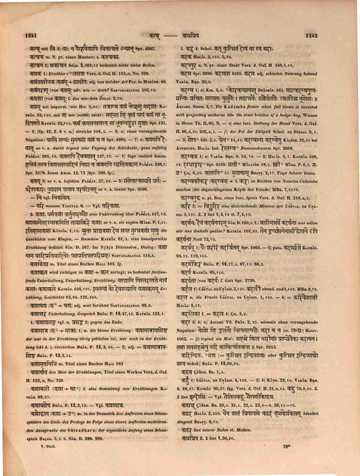
kadā 3〉b〉α〉 Accent VS. PRĀT. 2,23. niemals ohne vorangehende Negation: yogo hi dularbho nityamalpajñaiḥ kadā ca na (sc. labhyaḥ) HARIV. 1002. — β〉 irgend ein Mal: sahasre kila nārīṇāṃ prāpyetaikā kadācana . tathā śatasahasreṣu yadi kācitpativratā .. Spr. 5213.
Originaltext · Deutsch · Worttyp nicht bestimmt
kadā als indefin. Spr. (II) 5931 wohl fehlerhaft.
Böhtlingk 1879 Worttyp nicht bestimmt
Originaltext · Deutsch · Worttyp nicht bestimmt
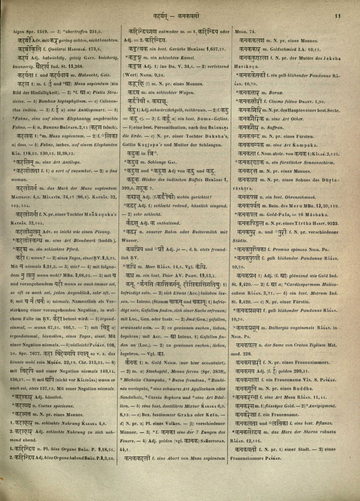
kadā́ — 1〉 wann? — 2〉 eines Tages, einst ṚV. 8,5,22. Mit na niemals ṚV. 6,21,3. — 3〉 wie? — 4〉 mit folgendem nu khalu wann wohl? MBH. 3,68,22. — 5〉 mit ca und vorangehendem yadā́ wann es auch immer sei, so oft es auch sei, jeden Augenblick, sehr oft. — 6〉 mit ca ná (caná) — a〉 niemals. Namentlich als Verstärkung einer vorangehenden Negation, in welchem Falle im ṚV. kádā betont wird. — b〉 irgendeinmal, — wann Chr. 67,31. Chr. 166,7. — 7〉 mit cid — a〉 irgendeinmal, bisweilen, eines Tages, einst. mit Einer Negation niemals. — b〉 vielleicht PAÑCAT. 108,20. Spr. 7677. kadā cidevmapi syāt so v. a. das könnte wohl sein MṚCCH. 52,19. Chr. 315,23. — 8〉 mit cidapi und einer Negation niemals Chr. 149,14. Chr. 150,27. — 9〉 mit api (nicht vor KĀLIDĀSA) wann es auch sei, stets Chr. 157,12. Mit einer Negation niemals.
Apte 1890 Partikel
Originaltext · Englisch · Partikel
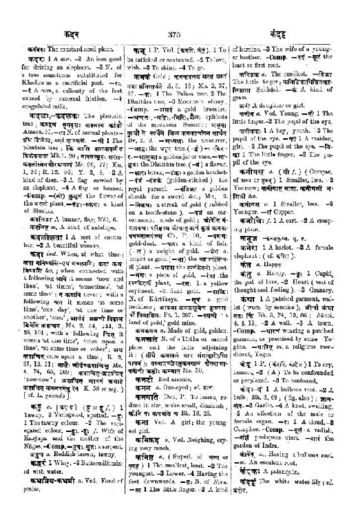
kadā ind. When, at what time; kadā gamiṣyasi-eṣa gacchāmi; kadā kathayiṣyasi &c.; when connected with a following api it means ‘now and then’, ‘at times’, ‘sometimes’, ‘at some time’: na kadāpi never; with a following cana it means ‘at some time’, ‘one day’, ‘at one time or another’, ‘once’; ānaṃdaṃ brahmaṇo vidvānna bibheti kadācana; Ms. 2. 54, Ms. 2. 144, Ms. 3. 25, Ms. 3. 101; with a following cit it means ‘at one time’, ‘once upon a time’, ‘at some time or other’; atha kadācit once upon a time; R. 2. 37, R. 12. 21; nākṣaiḥ krīḍetkadācittu Ms. 4. 74, Ms. 4. 65, Ms. 4. 169; kadācit-kadācit ‘now-now’; kadācit kānanaṃ jagāhe kadācit kamalavaneṣu reme K. 58 et seq. [cf. L. quando].
Cappeller 1887 Worttyp nicht bestimmt
Originaltext · Deutsch · Worttyp nicht bestimmt
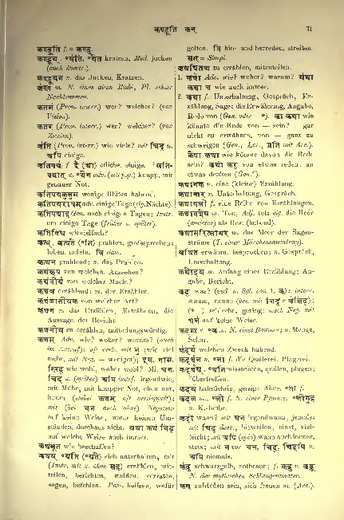
kadā́ wann? mit cana irgendwann, jemals; mit cid dass., bisweilen, einst, vielleicht; mit api (spät) wann auchimmer, stets; mit na vor cana, cid, cidapi u. api niemals.
Burnouf 1866 Adverb
Originaltext · Französisch · Adverb
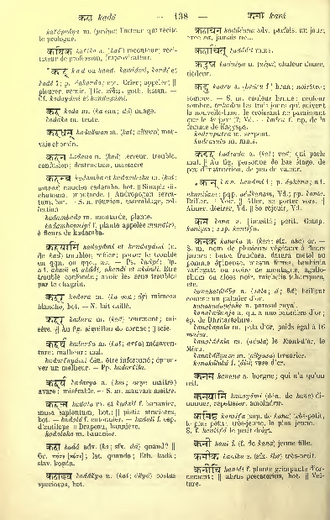
kadā kadā adv. (ka; sfx. dā) quand? Gr. πότε [ϰότε]; lat. quando; lith. kadà; slav. kogda.
Quelltextfundstellen (4)
DYS 2 Fundstellen
SiSa 2 Fundstellen
Mit AYI Free weitermachen
Bildquelle: AYI Archiv.