

pura पुर – Körperstadt; Stadt
Adjektiv · Substantiv Feminin · Substantiv Maskulin · Substantiv Neutrum · Worttyp nicht bestimmt
Wörterbuchquellen
AYI Wörterbuch Substantiv Neutrum
Körperstadt; Stadt
Cappeller 1891 Substantiv Neutrum
Originaltext · Englisch · Substantiv Neutrum
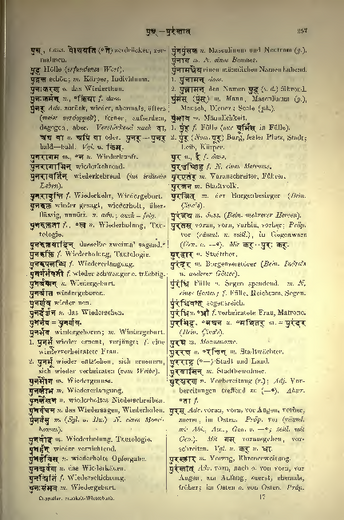
pura ·n. ī f. the same.
Monier-Williams 1872 Substantiv Neutrum
Originaltext · Englisch · Substantiv Neutrum
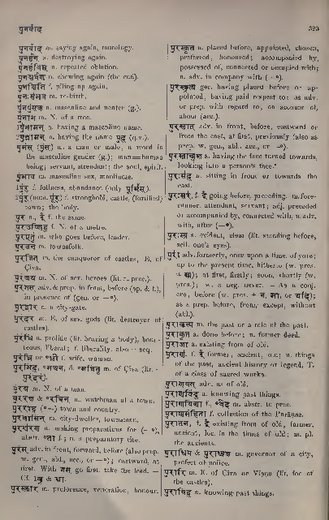
Pura, am, n. a fortress, castle, fortified town; a town, city, a place containing large buildings surrounded by a ditch and extending not less than one Kos in length (if it extends for half that distance it is called a kheṭa, if less than that, a karvaṭa or small market town; any smaller cluster of houses is called a grāma or village); ‘the city’ κατ’ ἐξοχήν, i. e. Pāṭali-putra or Patna; a house, dwelling, abode, residence; an upper story; the female apartments, gynæceum; a store-house, repository; a brothel; the body; the skin; the calyx of a flower or any receptacle or cup formed of leaves; a fragrant grass, a species of Cyperus (= nāgara-mustā); a kind of resin, bdellium; N. of a constellation; N. of the subdivisions of the Vedānta work called Tri-puṭī or Tri-purī; (as), m. a kind of resin, bdellium; yellow Barleria; N. of a demon; N. of a man; (ā), f. a stronghold, castle (at the end of a comp.; cf. jīva-p˚, deva-p˚); a kind of perfume; the east; (ī), f. a fort, stronghold, castle; a town, city; the body; [cf. Gr. πόλι-ς, πολί-χ-νη, πολί-χ-νιο-ν, πολί-τη-ς, πτολί-ε-θρο-ν, perhaps also πύργος;]; per- haps Lat. urbs; perhaps Lith. pil-ī-s, ‘a castle.’]
Petersburger 1855 Adjektiv · Substantiv Maskulin · Substantiv Neutrum
Originaltext · Deutsch · Adjektiv
pura 1〉 sapurā adj. KATHĀS. 81,102. — 11〉 = tripura (als Burg): ˚dāha KATHĀS. 57,2. — 13〉c〉 N. eines der zehn auf Schüler Śaṃkarācāryaʼs zurückgeführten Bettelorden, dessen Mitglieder das Wort purī ihrem Namen beifügen, Verz. d. Oxf. H. 227,b,16. WILSON, Sel. Works 1,202; vgl. ananta˚, anātha˚, mādhavendra˚, yādavendra˚, vaikuṇṭha˚.
Originaltext · Deutsch · Substantiv Maskulin · Substantiv Neutrum
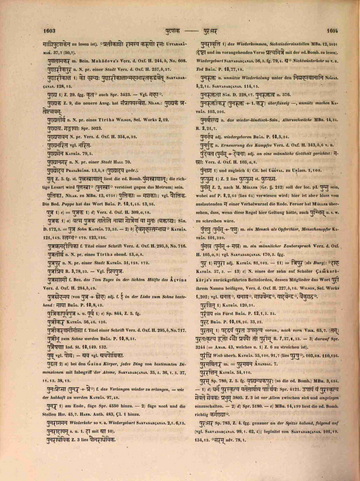
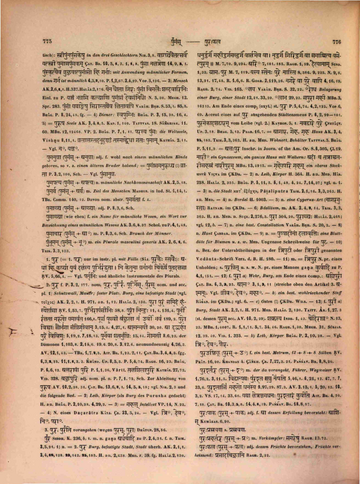
púra SIDDH. K. 236,b,1. m.n. gaṇa ardharcādi zu P. 2,4,31. f.n. TRIK. 3,5,21. 1〉 n. = 2. pur Burg, befestigte Stadt, Stadt überh. AK. 2,1,1. AK. 3,4,18,128. AK. 2,23,142. AK. 2,25,185. H. an. 2,438. MED. r. 59. fg. HALĀY. 2,130. dhanurdurgaṃ mahīdurgamabdurgaṃ vārkṣameva vā . nṛdurgaṃ giridurgaṃ vā samāśritya vasetpuram .. M. 7,70. M. 9,294. ari˚ M. 7,181. M. 7,185. RAGH. 1,59. daityānām SUND. 1,33. grāma, pura M. 7,119. yasya stenaḥ pure nāsti M. 8,386. M. 9,225. N. 9,8. N. 13,21. N. 17,45. R. 1,6,6. R. GORR. 2,119,26. nagare vā pure vāpi R. GORR. 4,16,19. RAGH. 2,74. VID. 165. ˚kṣaya VARĀH. BṚH. S. 32,22. ˚rodha Belagerung einer Burg, einer Stadt VARĀH. BṚH. S. 12,21. VARĀH. BṚH. S. 33,20. ˚lābha VARĀH. BṚH. S. 29,23. sapurā mahī MBH. 3,16215. Am Ende eines comp. (oxyt.) st. pur P. 5,4,74. P. 4,2,122. VOP. 6,69. Accent eines auf pura ausgehenden Städtenamens P. 6,2,99—P. 6,2,101. puramekādaśadvāram vom Leibe (vgl. 2.) KAṬHOP. 5,1. navadvāre pure ŚVETĀŚV. UP. 3,18. BHAG. 5,13. PRAB. 16,7. = āgāra, geha, gṛha Haus AK. 3,4,25,185. TRIK. 3,3,363. H. an. MED. Wohnort, Behälter TATTVAS. 5. BHĀG. P. 5,11,9. = antaḥpura Inschr. in Journ. of the Am. Or. S. 6,505, Śl. 19. nārī˚ ein Gynaeceum, ein ganzes Haus mit Weibern: adāṃ ca tatrāśvatarīsahasraṃ nārīpuram MBH. 13,4915. = gṛhopari gṛham ein oberes Stockwerk VIŚVA_im_ŚKDR. — 2〉 n. Leib, Körper H. 564. H. an. MED. HĀR. 258. HALĀY. 2,355. BHĀG. P. 5,11,5. BHĀG. P. 6,1,48. BHĀG. P. 6,4,24. BHĀG. P. 7,14,37; vgl. u. 1. — 3〉 n. die Stadt ϰατ᾽ ἐξόχην Pāṭaliputra TRIK. 2,1,16. TRIK. 3,3,263. H. an. MED. — 4〉 n. Bordel H. 1003. — 5〉 n. eine Cyperus-Art (nāgaramu stā) RATNAM._im_ŚKDR. — 6〉 Bdellium, m. AK. 2,4,2,14. TRIK. 3,3,363. H. an. MED. n. SUŚR. 2,276,3. purā SUŚR. 504,20. purākhyaḥ HALĀY. 2,465; vgl. HALĀY. 12,b. — 7〉 n. eine best. Constellation VARĀH. BṚH. S. 20,2. — 8〉 n. Haut ŚABDAR._im_ŚKDR. — 9〉 n. = puṣpādīnāṃ dalāvṛttiḥ eine Blattdüte für Blumen u. s. w. MED. Ungenaue Schreibweise für puṭa. — 10〉 n. Bez. der Unterabtheilungen in der tripuṭī oder tripurī genannten Vedānta-Schrift Verz. d. B. H. 180. — 11〉 m. = tripura N. pr. eines Unholden; s. purajit u. s. w. N. pr. eines Mannes gaṇa kurvādi zu P. 4,1,151. — 12〉 f. purā a〉 Wehr, Burg, am Ende eines comp.: agnipurā́ ŚAT. BR. 6,3,3,25. aśma˚ ŚAT. BR. 3,1,3,11 (streiche oben den Artikel 3. aśman). Vgl. jīva˚, deva˚, mahā˚. — b〉 ein best. wohlriechender Stoff RĀJAN._im_ŚKDR.; vgl. 6. — c〉 Osten (!) ŚKDR. WILS. — 13〉 f. purī a〉 Burg, Stadt AK. 2,2,1. H. 971. MED. HALĀY. 2,130. TAITT. ĀR. 1,27,3 (st. dessen puram acc. AV. 10,2,29). śakrasya INDR. 1,42. cedirāja˚ N. 13,23. MBH. 1,4007. R. 1,1,71. R. 1,5,7. R. 1,34,46. RAGH. 1,30. MEGH. 31. SŪRYAS. 12,39. SŪRYAS. 12,40. VID. 1. VID. 325. — b〉 Leib, Körper BHĀG. P. 2,10,28. — Vgl. tri˚, deva˚, paura.
Böhtlingk 1879 Substantiv Feminin · Substantiv Maskulin · Substantiv Neutrum · Worttyp nicht bestimmt
Originaltext · Deutsch · Substantiv Feminin · Substantiv Maskulin · Substantiv Neutrum
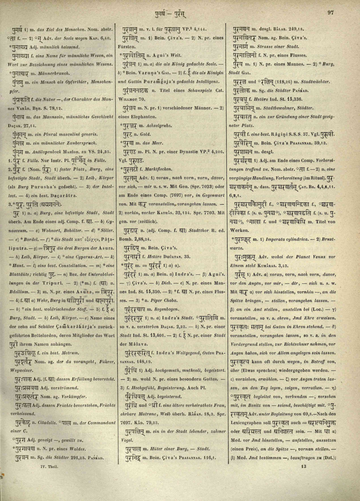
pura — 1〉 n. — a〉 Burg, eine befestigte Stadt, Stadt überh. Am Ende eines adj. Comp. f. ā — b〉 Gynaeceum. — c〉 Wohnort, Behälter. — d〉 *Söller. — e〉 *Bordell. — f〉 *die Stadt ϰατ᾽ εξόχην, Pāṭaliputra. — g〉 = tripura die drei Burgen der Asura. — h〉 Leib, Körper. — i〉 *eine Cyperus-Art. — k〉 *Haut. — l〉 eine best. Constellation. — m〉 *eine Blattdüte; richtig puṭa. — n〉 Bez. der Unterabtheilungen in der Tripurī. — 2〉 (*m.) f. (ā) n. Bdellium. — 3〉 m. N. pr. eines Asura, = tripura — 4〉 f. ā — a〉 Wehr, Burg in agnipurā́ und aśmapurā́. — b〉 *ein best. wohlriechender Stoff. — 5〉 f. ī — a〉 Burg, Stadt. — b〉 Leib, Körper. — c〉 Name eines der zehn auf Schüler Śaṃkarācāryaʼs zurückgeführten Bettelorden, deren Mitglieder das Wort purī ihrem Namen anhängen.
Originaltext · Deutsch · Worttyp nicht bestimmt
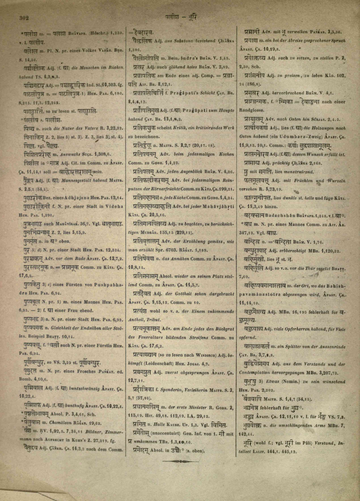
pura 5〉d〉 N. pr. einer Stadt HEM. PAR. 12,334. [Nachtrag, Band 4]
Originaltext · Deutsch · Worttyp nicht bestimmt
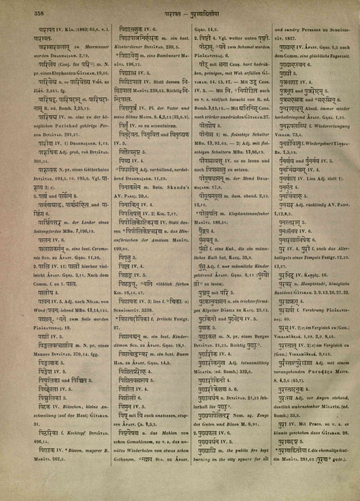
pura IV. 4. purī f. auch das Allerheiligste eines Tempels Festgr. 12,29. 13,37. [Nachtrag, Band 7]
Apte 1890 Adjektiv · Substantiv Neutrum
Originaltext · Englisch · Adjektiv · Substantiv Neutrum
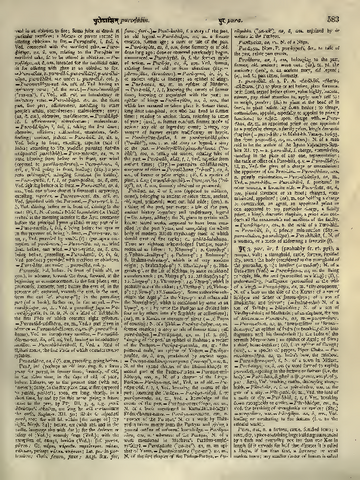
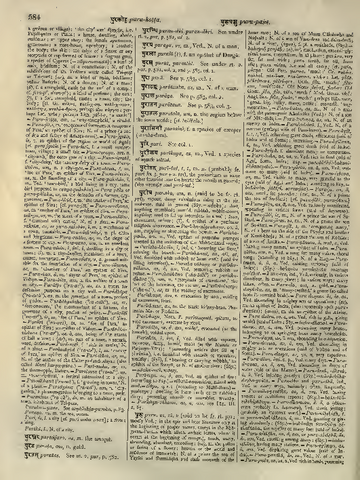
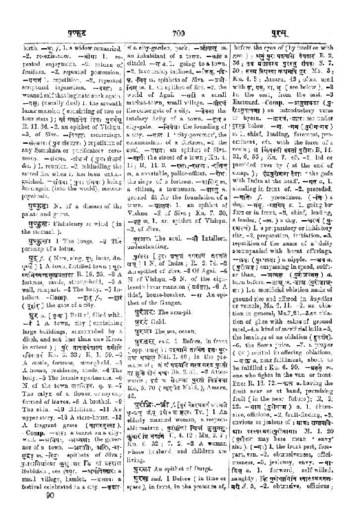
pura a. [pṛ-ka] Full of, filled with. — raṃ 1 A town, city (containing large buildings, surrounded by a ditch, and not less than one Krośa in extent); pure tāvaṃtamevāsya tanoti ravirātapaṃ Ku. 2. 33; R. 1. 59. 2 A castle, fortress, stronghold. 3 A house, residence, abode. 4 The body. 5 The female apartments. 6 N. of the town pāṭaliputra. q. v. 7 The calyx of a flower, or any cup formed of leaves. 8 A brothel. 9 The skin. 10 Bdellium. 11 An upper story. 12 A store-house. 13 A fragrant grass (nāgaramustā). Comp. — aṭṭaḥ a turret on a citywall. — adhipaḥ, -adhyakṣaḥ the governor of a town. — arātiḥ, -ariḥ, — asuhṛd m. — ripuḥ epithets of Śiva; putarātibhrāṃtyā kusumaśara kiṃ māṃ praharāsa Subhāṣ., see tripura. — ardhavistāraḥ a small village, hamlet. — utsavaḥ a festival celebrated in a city. ([Page 0709-b]) — ḍadyāna a city-garden, park. — okas m. an inhabitant of a town. — koṭṭaṃ a citadel. — ga a. 1 going to a town. 2 favourably inclined. — jit, — dviṣ, -bhid m. epithets of Śiva. — jyotis m. 1 an epithet of fire. 2 the world of Agni. — taṭī a small market-town, small village. — toraṇaṃ the outer gate of a city. — devatā the tutelary deity of a town. — dvāraṃ a city-gate. — niveśaḥ the founding of a city. — pālaḥ 1 ‘city-governor’, the commandant of a fortress. 2 the soul. — mathanaḥ an epithet of Śiva. — mārgaḥ the street of a town; Ku. 4. 11; R. 11. 3. — rakṣaḥ, -rakṣakaḥ, -rakṣin m. a constable, police-officer. — rodhaḥ the siege of a fortress. — vāsin m. a citizen, a townsman. — vāstu n. ground fit for the foundation of a town. — śāsanaḥ 1 an epithet of Viṣṇu 2 of Śiva; Ku. 7. 30. — han m. 1 an epithet of Viṣṇu. 2 of Śiva.
Cappeller 1887 Substantiv Neutrum
Originaltext · Deutsch · Substantiv Neutrum
pura n., ī f. dass.
Burnouf 1866 Substantiv Neutrum
Originaltext · Französisch · Substantiv Neutrum
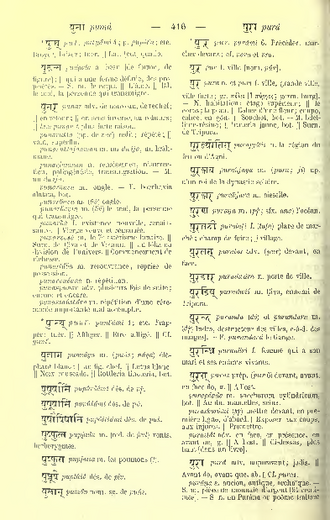
pura pura n. et puri f. ville, grande ville, ville forte; gr. πόλις [? πύργος; germ. burg]. — N. habitation; étage supérieur; le corps; la peau. Calice d'une fleur; coupe, calice, en gén. Souchet, bot. — M. bdellium-résine; barleria jaune, bot. Surn. de Tripura.
Quelltextfundstellen (3)
SVU 1 Fundstelle
Mit AYI Free weitermachen
Bildquelle: AYI Archiv.