

svasti स्वस्ति – wohl; glücklich; zum Wohl
Adverb · Partikel · Substantiv Feminin · Substantiv Neutrum · Worttyp nicht bestimmt
Wörterbuchquellen
AYI Wörterbuch Adverb
wohl; glücklich; zum Wohl
Herkunft
Cappeller 1891 Substantiv Feminin
Originaltext · Englisch · Substantiv Feminin
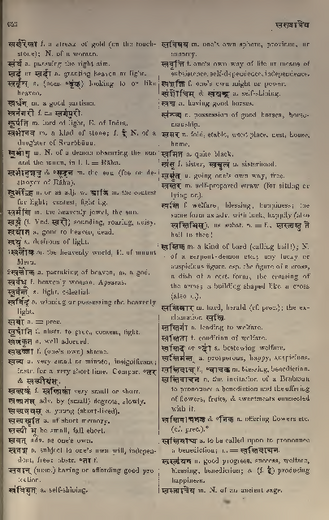
svastí ·f. welfare, blessing, happiness; the same form as adv. with luck, happily (also svastíbhis), as subst. n. = f., svastyastu te hail to thee!
Monier-Williams 1872 Substantiv Feminin · Substantiv Neutrum · Worttyp nicht bestimmt
Originaltext · Englisch · Substantiv Feminin · Substantiv Neutrum
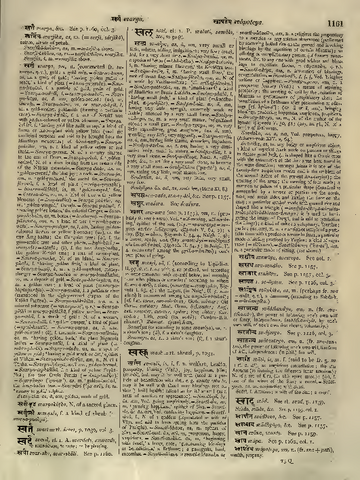
svasti sv-asti, is, i, f. n. welfare, health, prosperity, blessing (Ved.); joy, happiness, bliss; (svasti), ind. may it be well with (used as a par- ticle of benediction with dat., e. g. svasty astu te, may it be well with thee! may blessings rest on thee!) hail! health! adieu! so be it! amen! (as a term of sanction or approbation).
Originaltext · Englisch · Worttyp nicht bestimmt
—Sv-asti, svastika, &c., see s. v.
Petersburger 1855 Adverb · Partikel · Substantiv Feminin
Originaltext · Deutsch · Adverb · Partikel · Substantiv Feminin
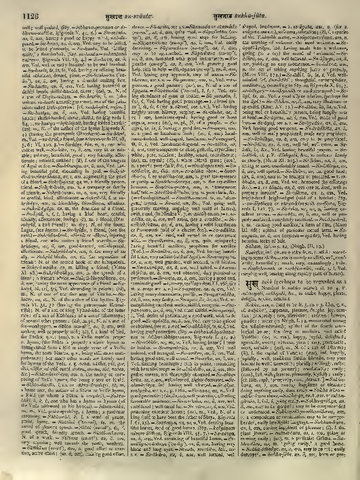
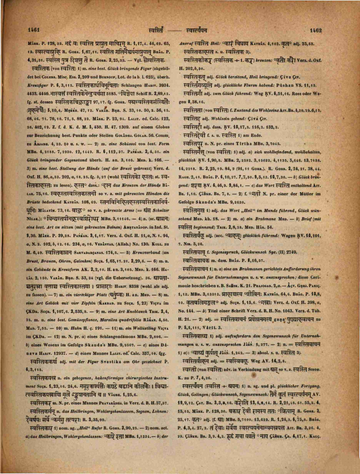
svastí (6. su + 2. asti) UṆĀDIS. 4,180. 1〉 f. instr. svastí, später auch svatsyā́ VS. 13,19. Wohlsein, Glück, Gelingen ṚV. 1,35,1. (ahve) va̱ru̱ṇā̱nīṃ sva̱stayè ṚV. 2,32,8. ṚV. 3,10,8. ṚV. 4,31,11. ābhàjadvī̱tihòtraṃ sva̱stau ṚV. 2,38,1. daivī̀ sva̱stiḥ parì ṇaḥ syātam ṚV. 3,38,9. ŚAT. BR. 1,9,1,27. ṚV. 6,22,10. ṚV. 6,56,6. ṚV. 6,57,6. u̱ruradhvā̀ sva̱stayè ṚV. 8,31,11. pa̱thyā̀ ṚV. 10,59,7. ŚAT. BR. 3,2,3,8. ŚAT. BR. 4,5,1,3. AV. 12,2,11. AV. 18,4,30. VS. 11,69. ŚAT. BR. 1,8,3,21. ŚAT. BR. 6,6,4,1. saṃ nò neṣi̱ gobhi̱ḥ saṃ sū̱ribhi̱ḥ saṃ sva̱sti ṚV. 5,42,4. pṛ̱ṇagrā̱yā sami̱ṣā saṃ sva̱sti ṚV. 6,20,6. svastíbhis als adv. so v. a. glücklich ṚV. 1,189,2. ṚV. 5,53,14. ṚV. 7,1,20. — gaccheyaṃ svastim R. 4,10,33. ātmaviddhuryasvastaye svastirastu me BHĀG. P. 4,24,33. sakalalokasvastaye BHĀG. P. 5,20,40. BHĀG. P. 5,22,3. śāntisvastiparāyaṇā MBH. 1,1334. am Ende eines adj. comp.: hatasvastirakiṃcanā MBH. 14,2016. Personificirt als Göttin ṚV. 4,55,3. ˚devī Verz. d. Oxf. H. 23,b,4. als Kalā WILSON, Sel. Works 1,246. — 2〉 svasti adv. (instr.) gaṇa svarādi zu P. 1,1,37. wohl, glücklich, mit Erfolg: pā̱rayā̀ tu̱rvaśàṃ sva̱sti ṚV. 1,174,9. yaṣṭā̀ de̱vānsva̱sti ṚV. 2,9,6. tami̱daṃ sva̱sti hu̱ve ṚV. 38,9. ṚV. 3,53,20. rayiṃ nàśate sva̱sti ṚV. 5,4,11. AV. 1,30,2. AV. 4,14,5. AV. 13,2,5. VS. 4,33. na haìna̱ṃ te sva̱sti samàśnuvate TBR. 1,2,2,5. sva̱sti ja̱natā̀miyām TS. 2,3,4,2. AIT. BR. 2,7. AIT. BR. 4,14. svasti prabudhyāmahai ŚAT. BR. 3,2,2,22. gaccha MBH. 3,15799. āgamat MBH. 5,711. vrajata MBH. 14,710. svasti prāpnuhi kaunteya kāmyakaṃ punarāśramam MBH. 3,11930. svasti devi tarāmi tvām R. 2,55,19. svasti (so trennen wir) kṛtaṃ hutaṃ ca R. 2,109,34. na svasti yāsyasi BHĀG. P. 3,18,3. kaccitsvastyāste BHĀG. P. 1,14,26. BHĀG. P. 1,14,33. BHĀG. P. 3,1,32. samāsīnaḥ BHĀG. P. 28,8. caranti BHĀG. P. 1,35. — 3〉 hieraus entspringt ein scheinbares indecl. neutrum, das als nom. und acc. gefasst werden kann. Wohlergehen, Heil, Glück AK. 3,4,32 (28), 3. TRIK. 3,4,3. H. an. 7,26. MED. avy. 27. HALĀY. 5,101. mit dat. (gen.) P. 2,3,16. VOP. 5,16. sva̱sti na̱ indràḥ ṚV. 1,89,5. sva̱sti bhū̀me no bhava AV. 12,1,32 (ähnlich aber auch ve̱daḥ sva̱stiḥ AV. 7,28,1. TS. 3,2,4,1). sva̱sti no̱ abhàyaṃ ca naḥ TS. 11,2,31. jyoti̱rabhàyaṃ sva̱sti ṚV. 6,47,8. kaccinmadhuvane svasti R. 5,63,3. syātsvasti kiṃ kopayataḥ BHĀG. P. 4,5,11. kathaṃ syātsvasti dehinām BHĀG. P. 14,9. svasti cāsmāsu daivataḥ so v. a. wir sind wohl auf MṚCCH. 144,15. sva̱sti pi̱tre nò astu bene sit AV. 1,31,4. svasti naḥ pathi syāt ŚĀṄKH. ŚR. 6,13,2. GOBH. 3,8,8. svasti te 'stu KAṬHOP. 1,9. MBH. 5,7232. R. 1,17,31. R. 1,28,13. R. GORR. 1,4,98. R. GORR. 3,51,37. R. GORR. 3,64,4. R. GORR. 7,10,39. RAGH. 5,17. Spr. (II) 7330. VARĀH. BṚH. S. 43,18. KATHĀS. 22,33. BHĀG. P. 3,13,9. BHĀG. P. 5,8,11. BHĀG. P. 5,18,9. svastyastu sarvabhūteṣu MĀRK. P. 118,13. api svasti bhavettāta sarveṣāṃ bhuvi rakṣasām R. 3,41,4. svasti bhūtebhyaḥ MBH. 3,12238. R. 3,41,7. MṚCCH. 65,15. MṚCCH. 144,22. ŚĀK. 28,9. ŚĀK. 64,11, v. l. VIKR. 87,19. VARĀH. BṚH. S. 43,17. BĀLAR. 160,3. RĀJA-TAR. 1,145. RĀJA-TAR. 4,77. BHĀG. P. 6,14,17. svasti kecittathāvadan Glück auf! R. 1,4,21. BHAG. 11,21. svasti svasti Spr. (II) 1631. am Anfange eines Briefes PRAB. 33,4. brāhmaṇānsvasti vācayet AV. PARIŚ._in_Ind. St. 9,19. brāhmaṇānsvastivācya GOBH. 3,9,4. ŚĀṄKH. GṚHY. 1,25. ṢAḌV. BR. 5,10. MBH. 15,51. R. 6,31,25. ācāryaṃ sva˚ ŚĀṄKH. GṚHY. 2,8. ŚĀṄKH. GṚHY. 4,5. dvijātīnvācya puṇyāhaṃ svasti caiva MBH. 5,7100. svastivācita (brāhmaṇa) MBH. 3,13313. sva̱sti pū̱ṣā asùro dadhātu naḥ ṚV. 5,51,12. ṚV. 10,7,1. sva̱sti cā̀smā anamī̱vaṃ cà dhehi ṚV. 10,14,11. sva̱sti sàvi̱tā nàḥ kṛṇotu AV. 6,40,2. AV. 8,2,11. MBH. 3,2519. R. 2,25,8. R. 2,25,9 (R. 2,25,21. fg. R. 2,25,GORR.). MṚCCH. 114,4. MṚCCH. 129,16. MĀRK. P. 128,32. bhadraṃ vaḥ svasti prāpnuta māciram R. 1,17,4. R. 1,44,62. R. 1,65,19. svastyāpnuhi R. GORR. 1,67,11. svasti gatimaiśvaryamāpnuyāt BHĀG. P. 4,31,31. svasti putra diśantu te R. GORR. 2,25,23. — Vgl. sauvastika.
Böhtlingk 1879 Adverb · Substantiv Feminin
Originaltext · Deutsch · Adverb · Substantiv Feminin
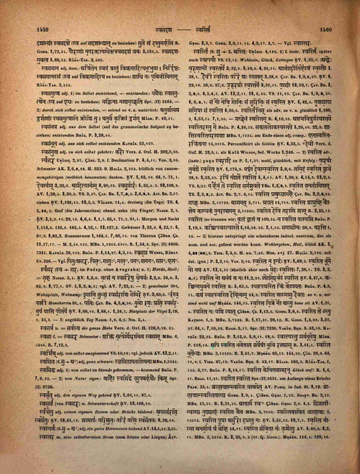
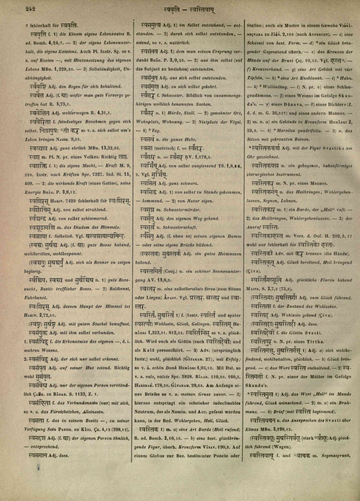
svastí, suāstí — 1〉 f. (Instr. svastí) und später svastyā́ Wohlsein, Glück, Gelingen. svastim HEMĀDRI 1,323,21. 812,22 svastíbhis so v. a. glücklich. Wird auch als Göttin (auch svastidevī) und als Kalā personificirt. — 2〉 Adv. (ursprünglich Instr.) wohl, glücklich (JĀTAKAM. 27), mit Erfolg; so v. a. schön Dank HEMĀDRI 1,95,13. Mit Dat. so v. a. vale, valete Spr. 5828. BĀLAR. 110,20. 160,3. HARṢAC. 178,20. JĀTAKAM. Am Anfange eines Briefes so v. a. meinen Gruss zuvor. — 3〉 hieraus entspringt ein scheinbar indeclinables Neutrum, das als Nomin. und Acc. gefasst werden kann, in der Wohlergehen, Heil, Glück.
Apte 1890 Partikel
Originaltext · Englisch · Partikel
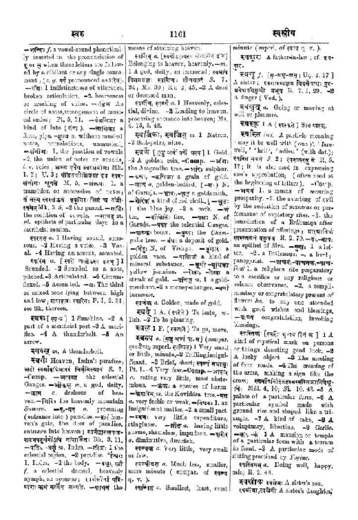
svasti ind. A particle meaning ‘may it be well with (one)’, ‘farewell,’ ‘hail’, ‘adieu’ (with dat.); svasti bhavate Ś. 2; svastyastu te R. 5. 17; it is also used in expressing one's approbation; (often used at the beginning of letters). Comp. — ayanaṃ 1 a means of securing prosperity. 2 the averting of evil by the recitation of mantras or performance of expiatory rites. 3 the benediction of a Brāhmaṇa after presentation of offerings; prāsthānikaṃ svastyayanaṃ prayujya R. 2. 70. — daḥ, -bhāvaḥ an epithet of Śiva. — mukhaḥ 1 a letter. 2 a Brāhmaṇa. -. a bard; panegyrist. — vācanaṃ, -vācanakaṃ, — vācanikaṃ 1 a religious rite preparatory to a sacrifice or any religious or solemn observance. 2 a complimentary or congratulatory present of flowers &c. to any one attended with good wishes and blessings. — vācyaṃ congratulation, invoking blessings.
Cappeller 1887 Substantiv Feminin
Originaltext · Deutsch · Substantiv Feminin
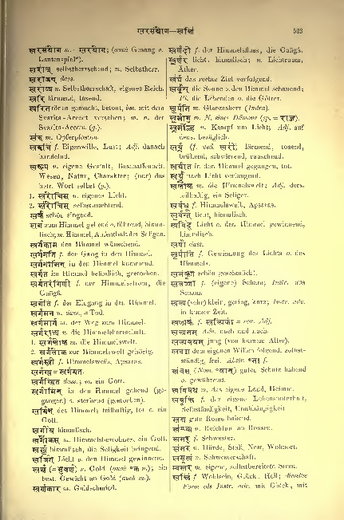
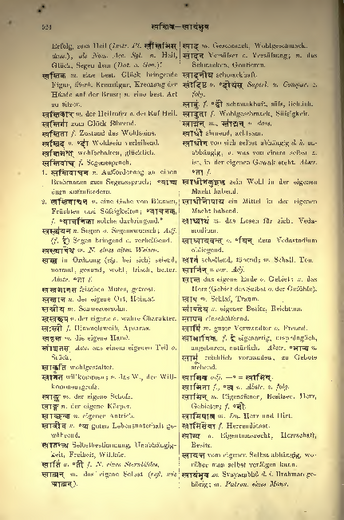
svastí f. Wohlsein, Glück, Heil; dieselbe Form als Instr. adv. mit Glück, mit [Page524-1] Erfolg, zum Heil (Instr. Pl. svastíbhis dass.), als Nom. Acc. Sgl. n. Heil, Glück, Segen dem (Dat. o. Gen.)!
Burnouf 1866 Partikel
Originaltext · Französisch · Partikel
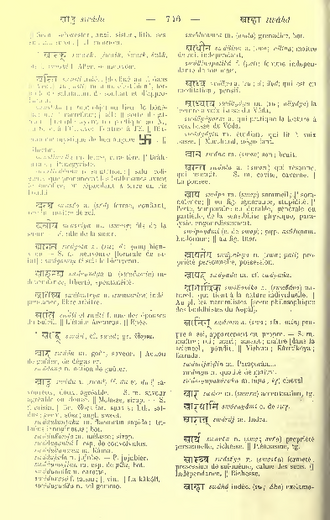
svasti svasti indéc. [décliné au f. dans le Veda] (su; asti) m à m. c'est bien!, formule de salutation, de souhait et d'approbation. svastika m. tout objet ou lieu de bénédiction; carrefour; ail; sorte de gâteau; temple ayant un portique au N., au S. et à l'O., avec l'entrée à l'E. Diagramme mystique de bon augure 卐 Libertin. svastimukha m. lettre, caractère. Brâhmane. Panégyriste. svastivācana n. salutation; salut religieux que prononcent les brâhmanes avant le sacrifice, en répandant à terre du riz bouilli.
Quelltextfundstellen (6)
MAN 5 Fundstellen
Bhadram-Śānti-Mantra 4 Fundstellen
Direkt belegt
-
MAN BS 3.1 Segment 1
-
MAN BS 3.2 Segment 1
-
MAN BS 4.1 Segment 1
-
MAN BS 4.2 Segment 1
SiSa 1 Fundstelle
Mit AYI Free weitermachen
Bildquelle: AYI Archiv.