

tṛp तृप् – sich sättigen; zufrieden sein
Verbalwurzel · Worttyp nicht bestimmt · Verb
Wörterbuchquellen
AYI Wörterbuch Verbalwurzel
sich sättigen; zufrieden sein
Cappeller 1891 Verb
Originaltext · Englisch · Verb
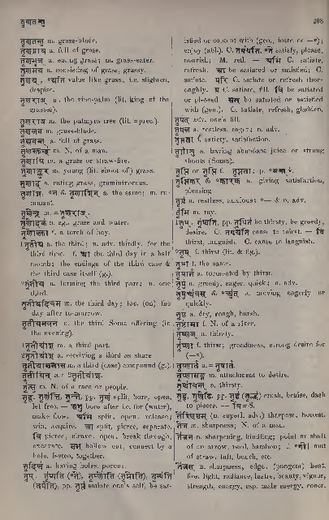
tṛp tṛ́pyati ·v (tṛ́pya°te), tṛpṇóti (tṛpnoti), tṛmpáti (tarpati), pp. taptá satiate one's self, be satisfied or content with (gen., instr. or --°); enjoy (abl.). C. tarpáyati, °te satisfy, please, nourish; M. refl. -- abhi C. satiate, refresh. ā be satiated or satisfied; C. satiate. pari C. satiate or refresh thoroughly. pra C. satiate, fill. vi be satiated or pleased. sam be satiated or satisfied with (gen.). C. satiate, refresh, gladden.
Monier-Williams 1872 Worttyp nicht bestimmt · Verb
Originaltext · Englisch · Worttyp nicht bestimmt
2. tṛp, at the end of a comp. in a-sutṛp and paśu-tṛp.
Originaltext · Englisch · Verb
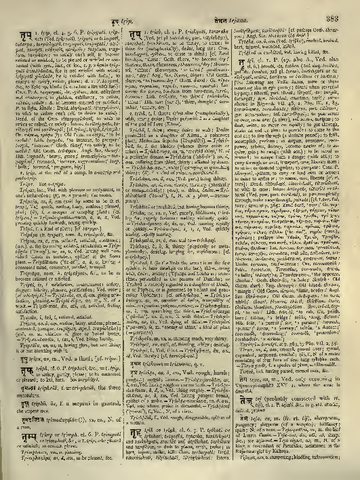
tṛp 1 . tṛp, cl. 4. 5. 6. P. tṛpyati, tṛp- noti (Ved. tṛpṇoti), tṛpati or tṛmpati, tatarpa; tarpiṣyati, tarpsyati, trapsyati; atṛ- pat, atarpīt, atārpsīt, atrāpsīt; tarptum, trap- tum, tarpitum; to satisfy one's self, to become satiated or satisfied, to be pleased or satisfied or con- tented (with gen., inst., or loc., e. g. nāgnis tṛp- yati kāṣṭhānām, fire is not satisfied with wood; tṛpyati phalaiḥ, he is satisfied with fruits); to enjoy; to satisfy, satiate, please; cl. 1. P. tarpati, &c., to light up, kindle (i. e. satiate a fire with fuel): Caus. P. A. tarpayati, -te, -yitum, Aor. atītṛpat and atatarpat, to gladden, exhilarate; to satiate, refresh, satisfy; A. to become satiated or satisfied; P. to light, kindle: Desid. titṛpsati, titarpiṣati, to wish to satiate one's self, to desire to satisfy: Desid. of the Caus. titarpayiṣati, to wish to satiate or refresh or satisfy: Intens. tarītṛpyate, ta- rītarpti and tarītrapti; [cf. tṛmp, tṛph, tṛmph: Gr. τέρτω, τρέφω (?) Old Pruss. en-terpo, ‘to be useful:’ Lith. tarpstu, ‘to increase, to prosper;’ tarpà, ‘increase:’ Goth. tharf, ‘to satisfy, to be useful:’ Old Germ. trôstyan: Angl. Sax. thearf: Hib. tropadh, ‘heavy, grave;’ tromaighim = tar- payāmi; tormach, ‘increase, augmentation;’ torp, ‘bulk;’ tormad, ‘pregnant, big.’]
Petersburger 1855 Worttyp nicht bestimmt
Originaltext · Deutsch · Worttyp nicht bestimmt
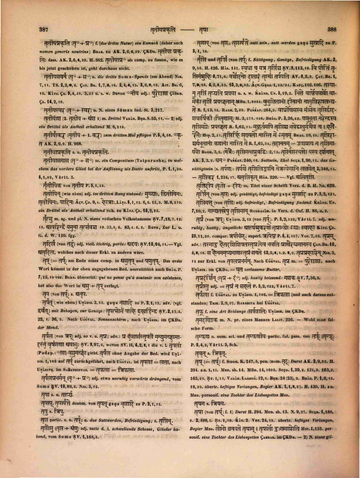
√tṛp (= tarp) am Ende eines comp. in asutṛp und paśutṛp. Das erste Wort kömmt in der oben angegebenen Bed. unersättlich auch BHĀG. P. 7,15,10 vor. BURN. übersetzt: qui ne pense quʼá soutenir son existence, hat also das Wort in asu + tṛp zerlegt.
Originaltext · Deutsch · Worttyp nicht bestimmt
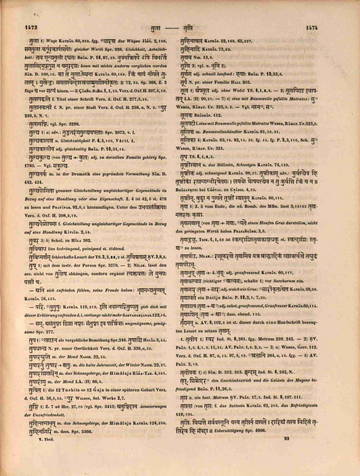
√tṛp , śiśnodara˚ den Geschlechtstrieb und die Gelüste des Magens befriedigend BHĀG. P. 11,26,3.
Böhtlingk 1879 Worttyp nicht bestimmt
Originaltext · Deutsch · Worttyp nicht bestimmt
tṛp in asu˚, paśu˚ und śiśnodara˚.
Whitney Roots 1885 Verbalwurzel
Originaltext · Englisch · Verbalwurzel
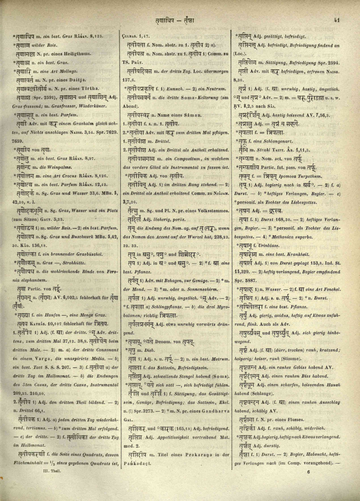
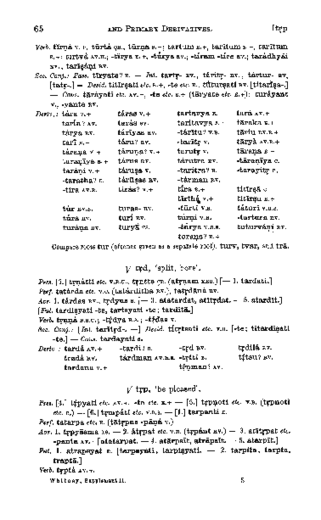
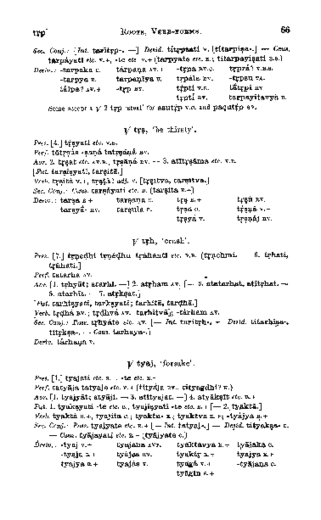
tṛp — be pleased
Apte 1890 Worttyp nicht bestimmt
Originaltext · Englisch · Worttyp nicht bestimmt
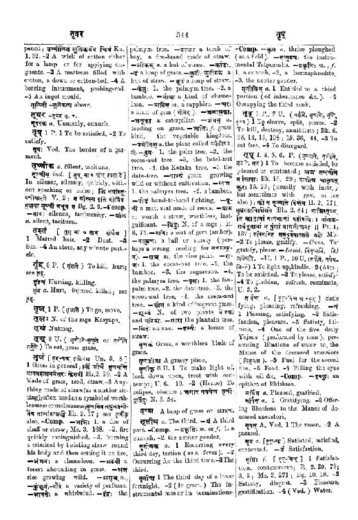
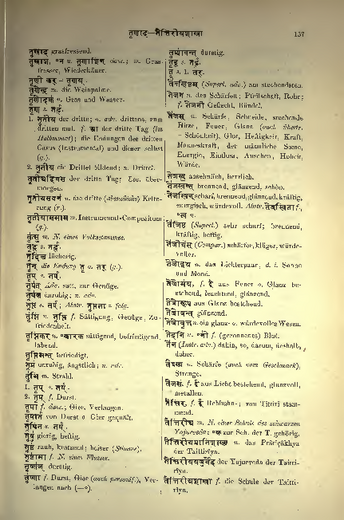
tṛp I. 4 5 6 P. (tṛpyati, tṛpnoti, tṛpati, tṛpta) 1 To become satisfied, be pleased or contented; adya tarpsyaṃti māṃsādāḥ Bk. 16. 29; prāśīnna cātṛpat krūraḥ Bk. 15. 29; (usually with instr.; but sometimes with gen. or loc. also); kona tṛpyati vittena H. 2. 174. tṛptastatpiśitane Bh. 2. 84; nāgniratṛpya, ti kāṣṭānāṃ nāpagānāṃ mahodadhiḥ . nāṃtakasarvabhūtānāṃ na puṃsāṃ vāmalocanā .. Pt. 1. 137; tasminhi tatṛpurdevāstate yajñe Mb. 2 To please, gratify. — Caus. To gratify, please. — Desid. titṛpsati, ti tapiṃṣati. II. 1 P., 10 U. (tarpati, tarpayati-te) 1 To light up, kindle. 2 (Atm.) To be satisfied. 3 To please, satisfy. 4 To gladden, refresh, reanimate, U. 3. 2.
Cappeller 1887 Worttyp nicht bestimmt
Originaltext · Deutsch · Worttyp nicht bestimmt
tṛp s. tarp.
Burnouf 1866 Verbalwurzel
Originaltext · Französisch · Verbalwurzel
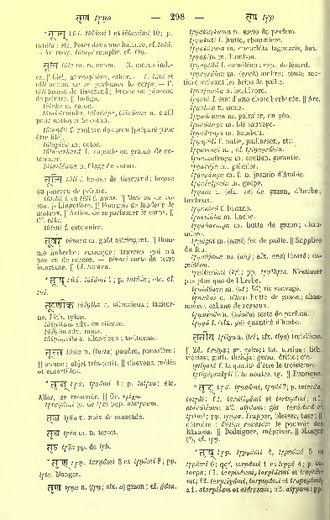
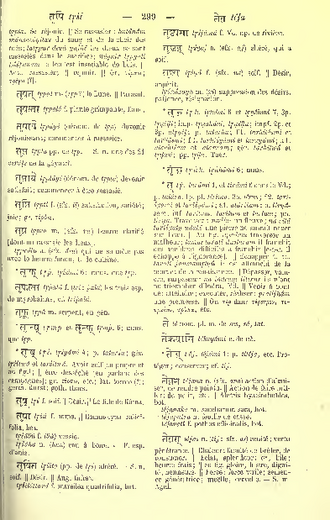
*tṛp tṛp. tṛpyāmi 4, tṛpnomi 5 et tṛpāmi 6; qqf. tarpāmi 1 et trype 4; p. tatarpa; f1. tarpitāsmi, tarptāsmi et traptāsmi; f2. tarpiṣyāmi, tarpsyāmi et trapsyāmi; a1. atarpiṣam et atārpsam; a2. atṛpam; pp. [Page299-1] tṛpta. Se réjouir. Se rassasier: hatānām māṃsaśoṇitais du sang et de la chair des tués; tatṛpur devā yajñe les dieux se sont rassasiés dans le sacrifice; nāgnir tṛpyati kāṣṭhānām le feu est insatiable de bois. Actt. rassasier; réjouir. Gr. τέρπω; τρέφω(?).
Quelltextfundstellen (5)
VBT 5 Fundstellen
Mit AYI Free weitermachen
Bildquelle: AYI Archiv.