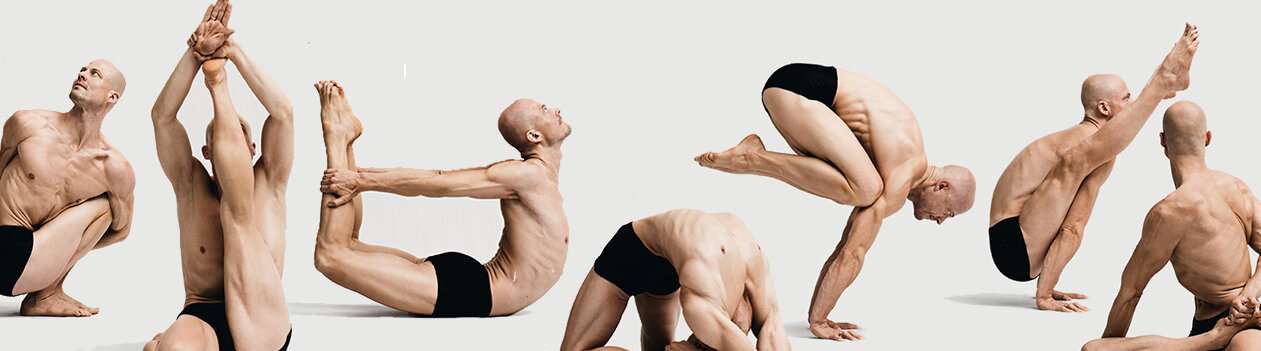
A collage of postures from the Aṣṭāṅga Yoga practice series.

Nāḍi Śodhana: the second series of Aṣṭāṅga Yoga

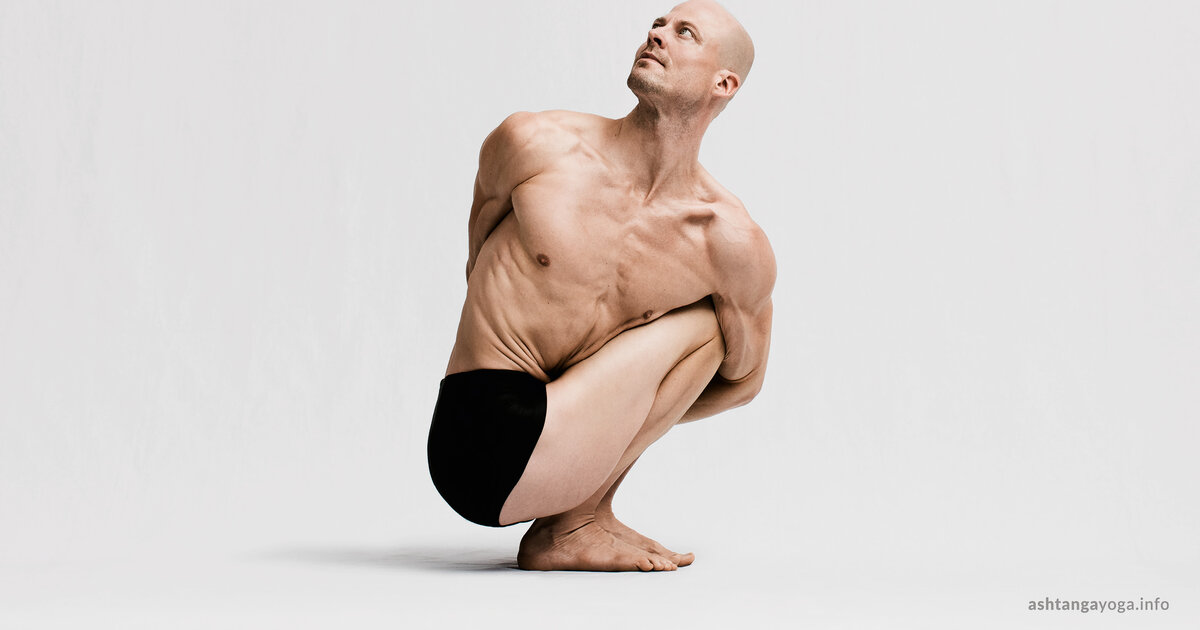
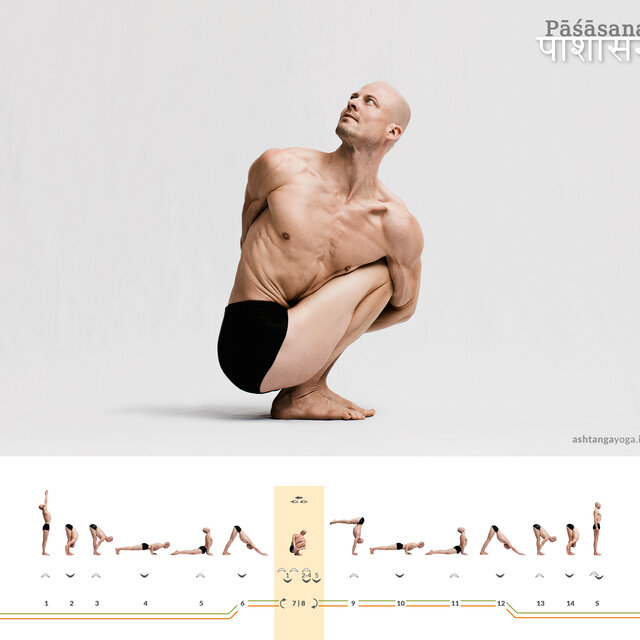
Pāśāsana: noose
Pāśāsana: noose

Pāśāsana: noose

The “noose” is a twist from a narrow and deep squat. The hands clasp behind the back.

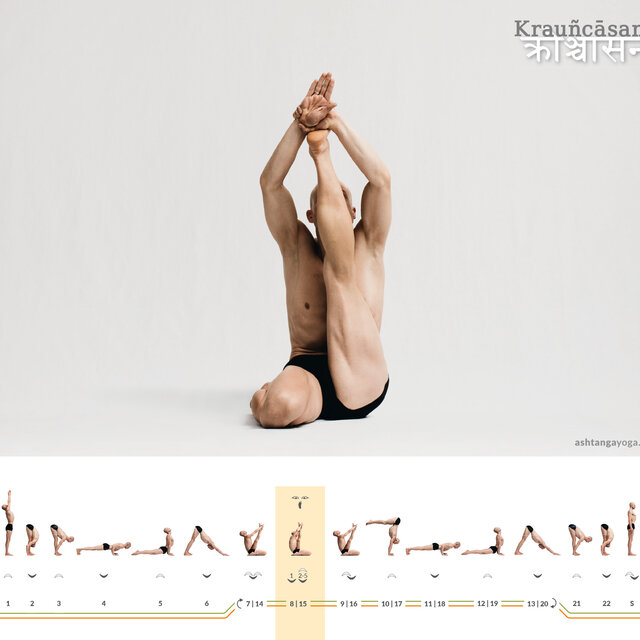
Krauñcāsana: heron
Krauñcāsana: heron

Krauñcāsana: heron

The “heron” is a seated posture. One leg is bent, with the shin on the floor and the foot beside the pelvis. The other leg points almost vertically upward...

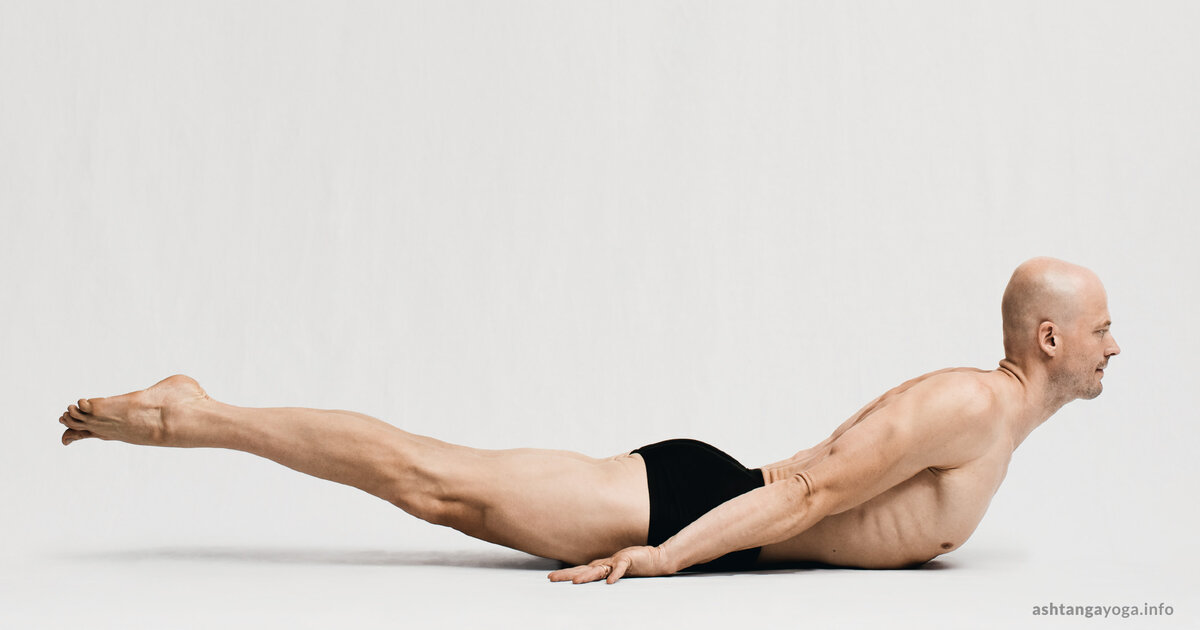
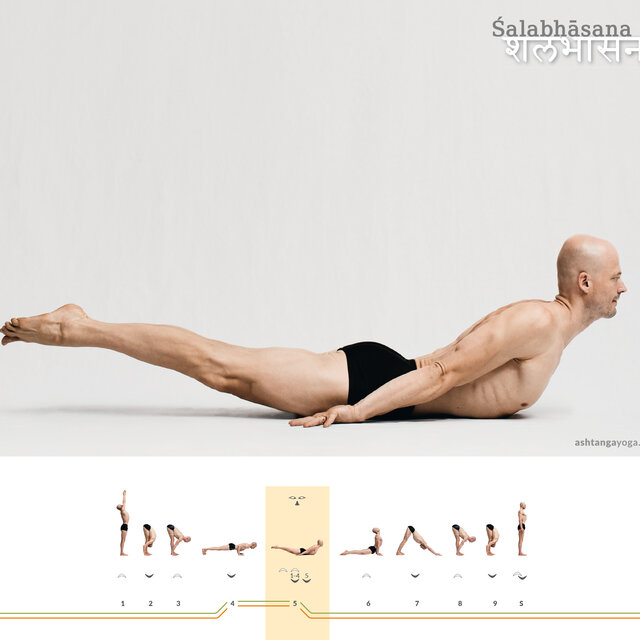
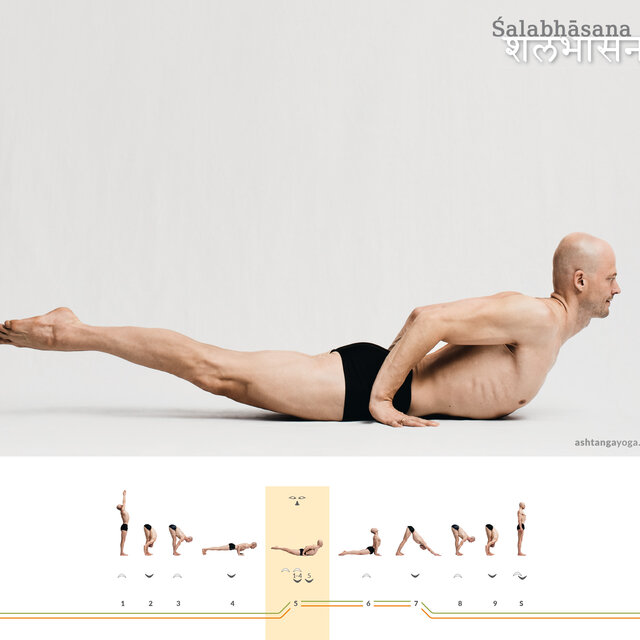
Śalabhāsana A: locust

Śalabhāsana A: locust

The “locust” is a backbend that develops out of prone position. In the first version, the arms are straight, with the backs of the hands on the floor beside...

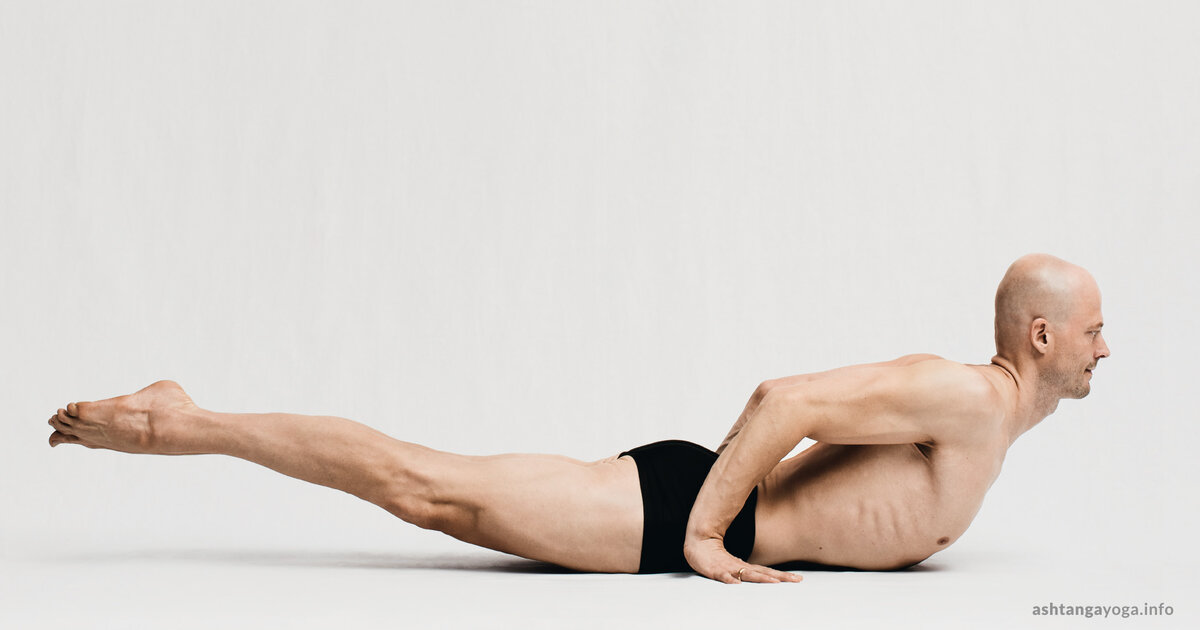
Śalabhāsana B: locust

Śalabhāsana B: locust

The “locust” is a backbend that develops out of prone position. In the second version, the arms are bent, with the palms on the floor beside the pelvis and...

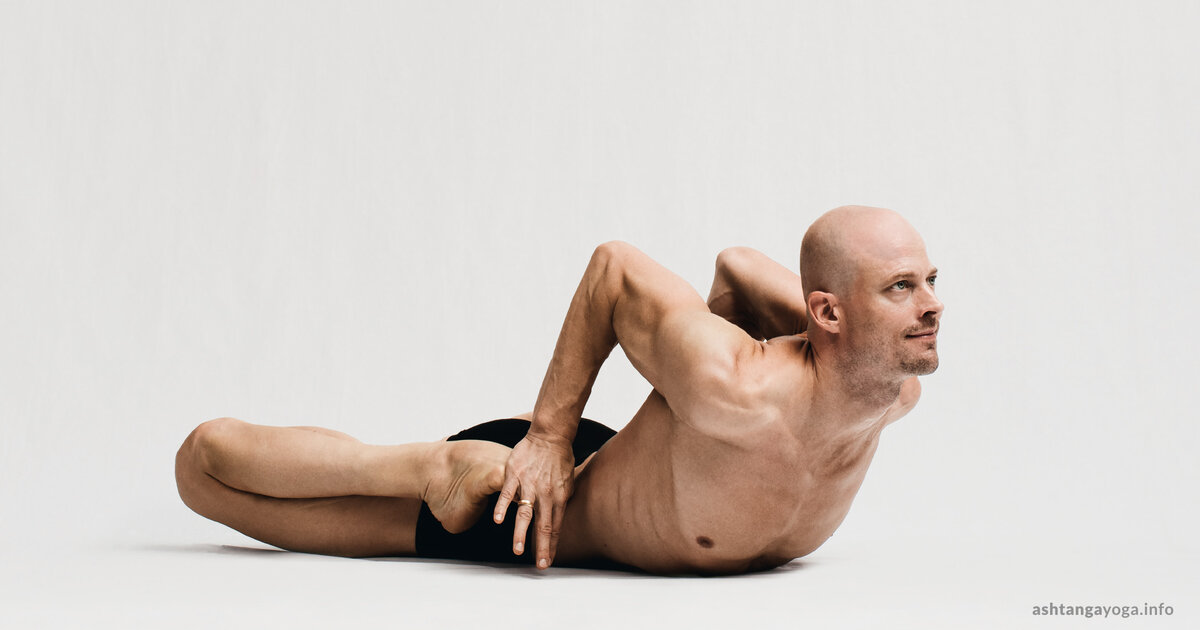
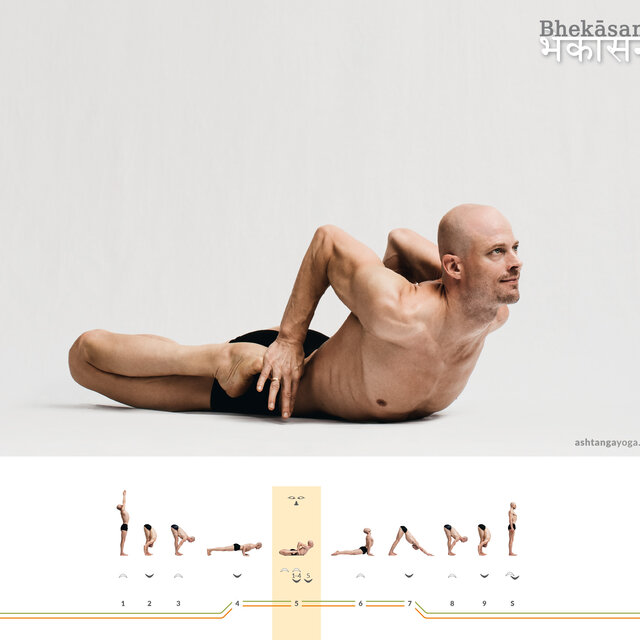
Bhekāsana: frog
Bhekāsana: frog

Bhekāsana: frog

The “frog” is a backbend that develops out of prone position. The knees are bent, the hands hold the feet beside the pelvis, and press them toward the floor.

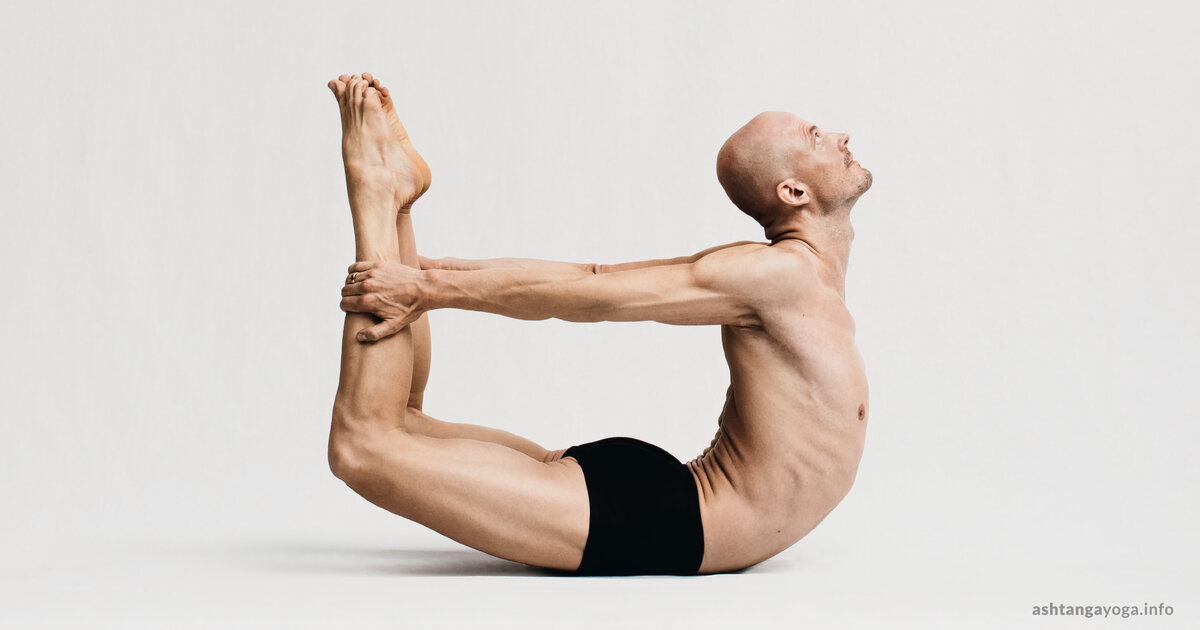
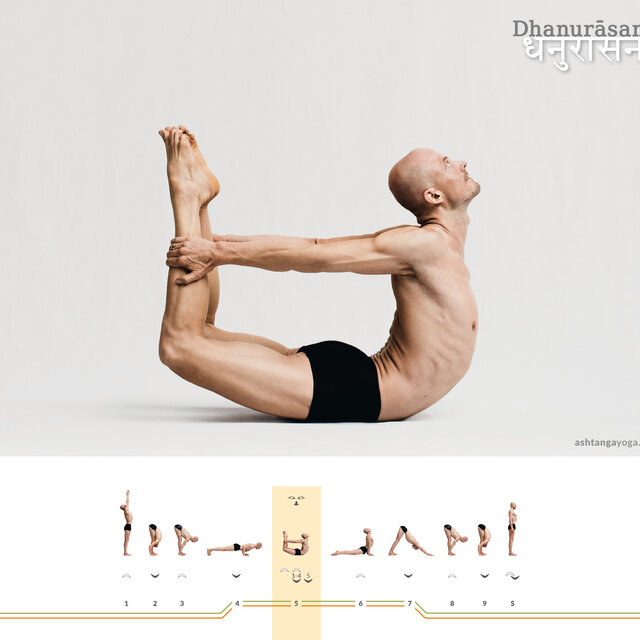
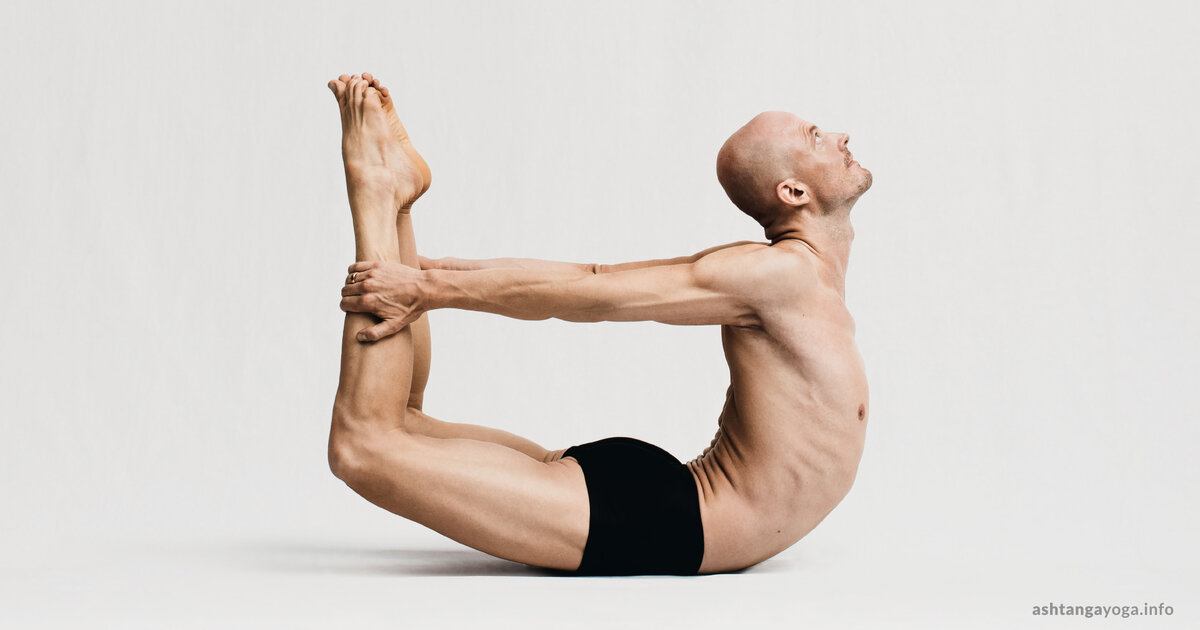
Dhanurāsana: bow
Dhanurāsana: bow

Dhanurāsana: bow

The “bow” is a backbend that develops out of prone position. The hands hold the shins. The arms are tensioned by the body like a bowstring through the bow.

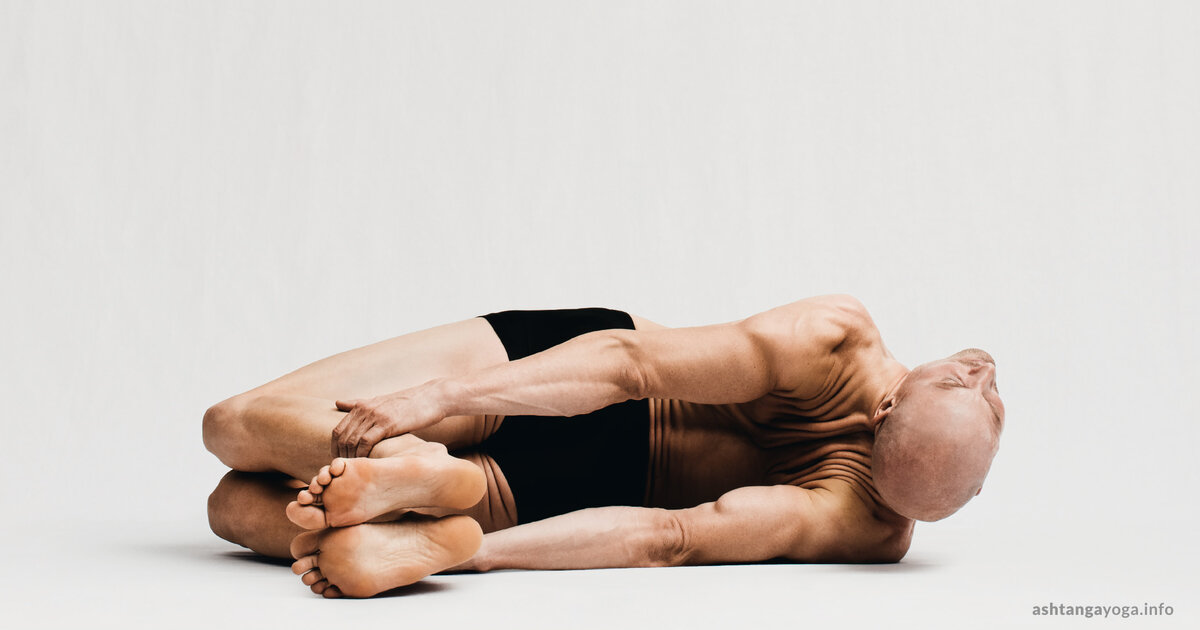
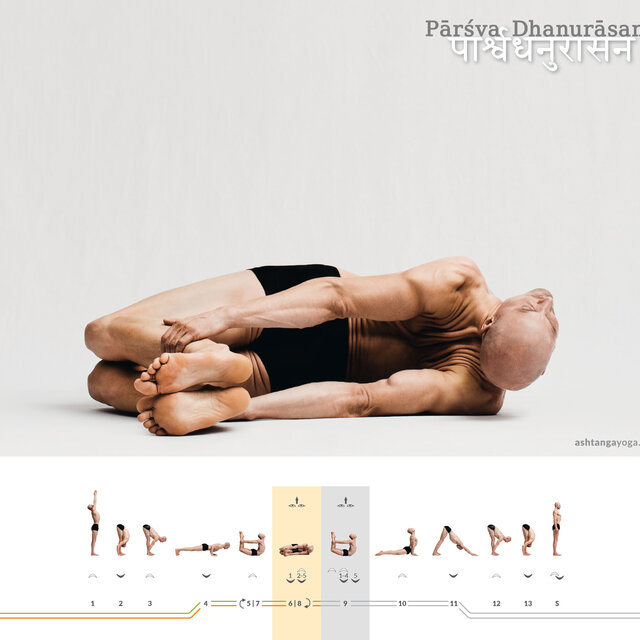
Pārśva Dhanurāsana: side bow - Part 1

Pārśva Dhanurāsana: side bow - Part 1

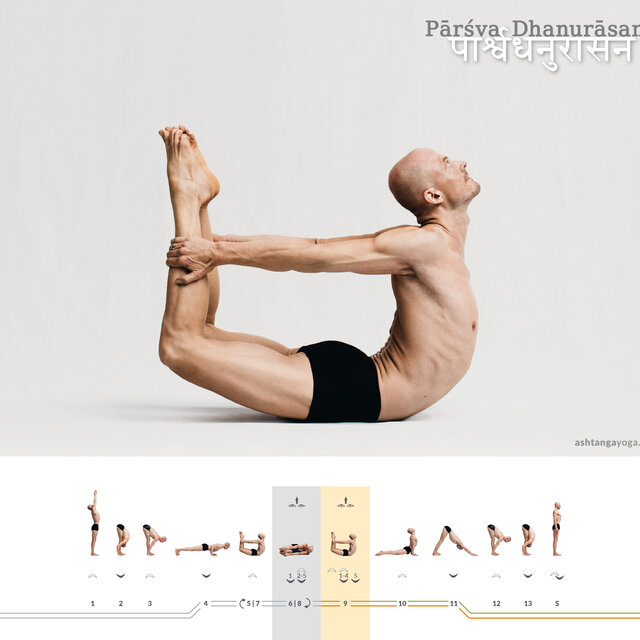
The “side bow” is a backbend that builds on bow pose. The practitioner now lies on the side and looks up toward the ceiling.

Pārśva Dhanurāsana: side bow - Part 2

Pārśva Dhanurāsana: side bow - Part 2

Part 2 of the “side bow” corresponds to the straight bow. Again beginning from prone position, the hands reach behind the back to hold the shins.

Uṣṭrāsana: camel
Uṣṭrāsana: camel

Uṣṭrāsana: camel

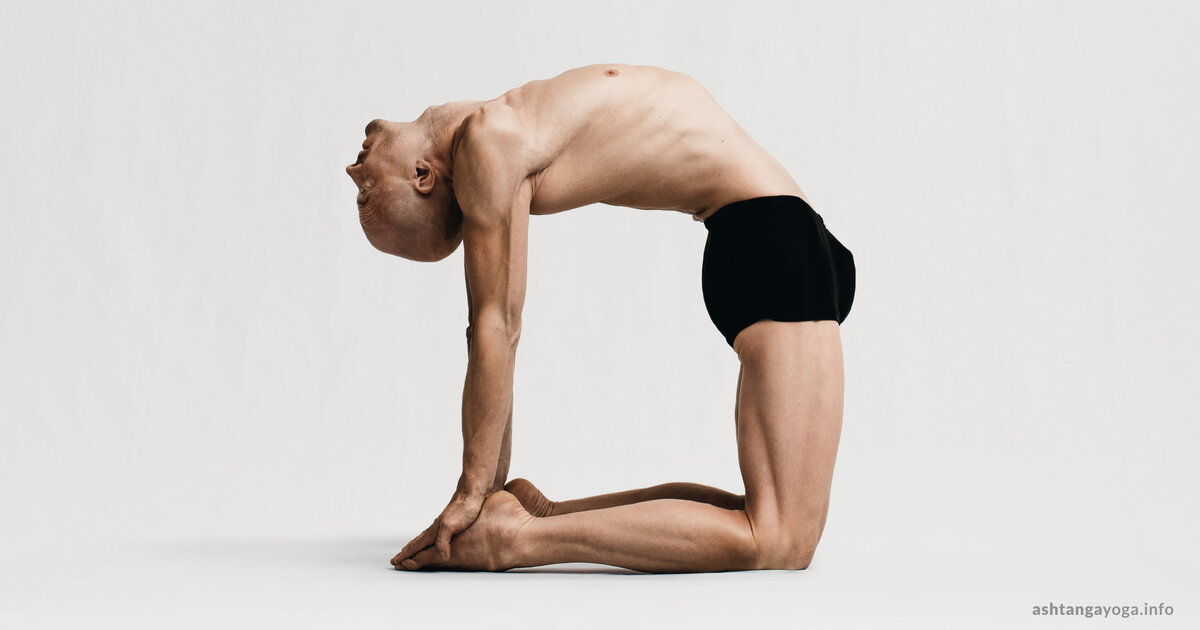
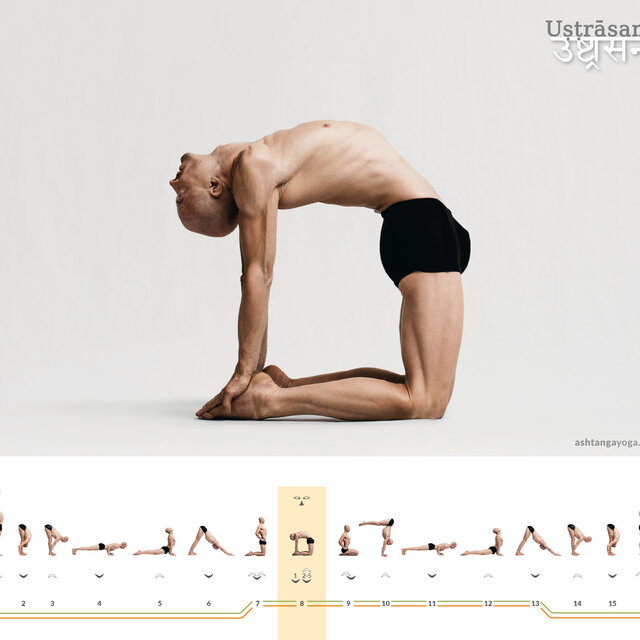
The “camel” is a backbend from high kneeling. The chest arches upward. The arms stretch straight back. The hands hold the soles of the feet.

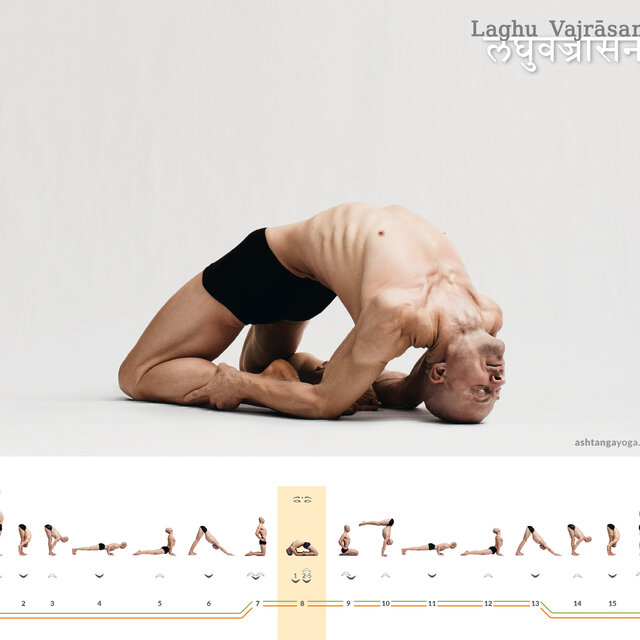
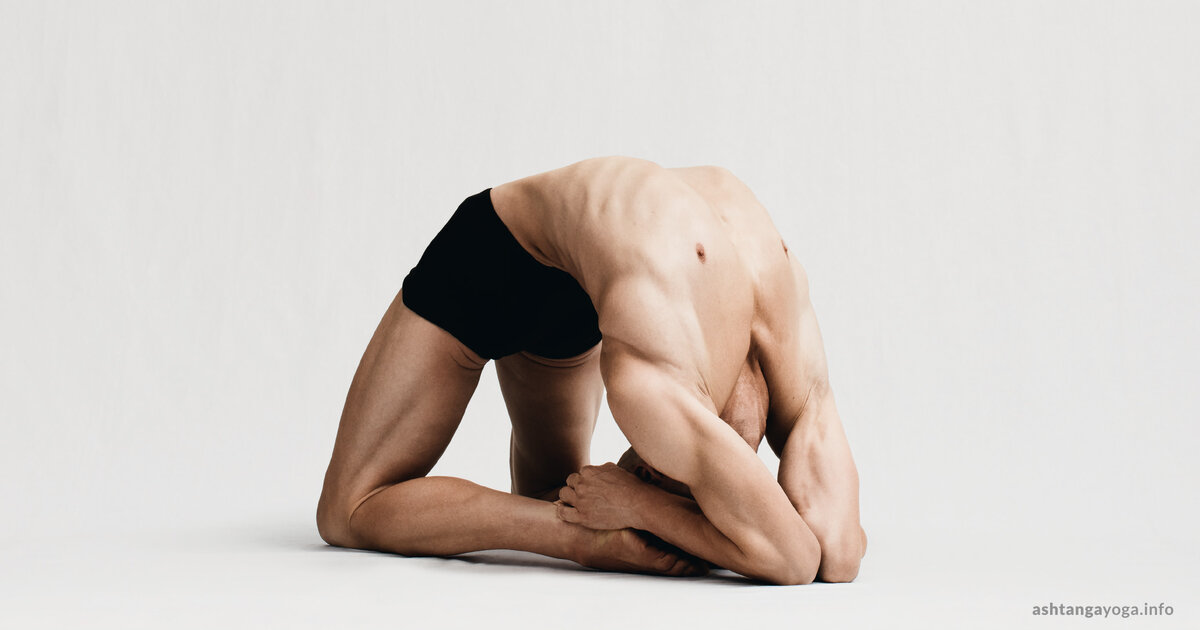
Laghu Vajrāsana: little thunderbolt

Laghu Vajrāsana: little thunderbolt

The “little thunderbolt” is a backbend from high kneeling. The chest arches upward. The hands hold the calves. The elbows support on the floor behind the feet.

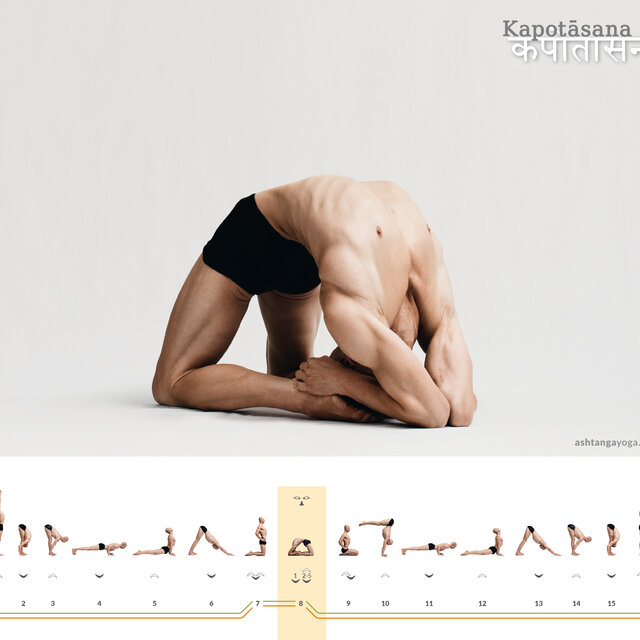
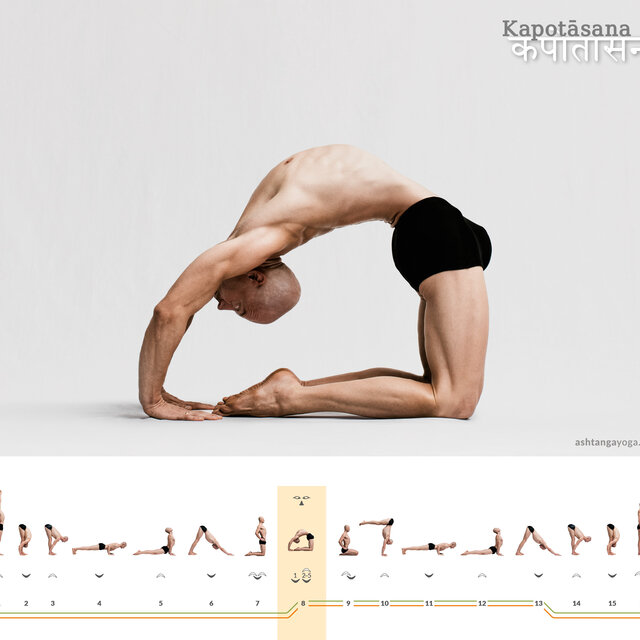
Kapotāsana A: pigeon

Kapotāsana A: pigeon

The “pigeon” is a backbend from high kneeling. The chest arches upward. The hands reach over the head to hold the heels. The elbows support on the floor...

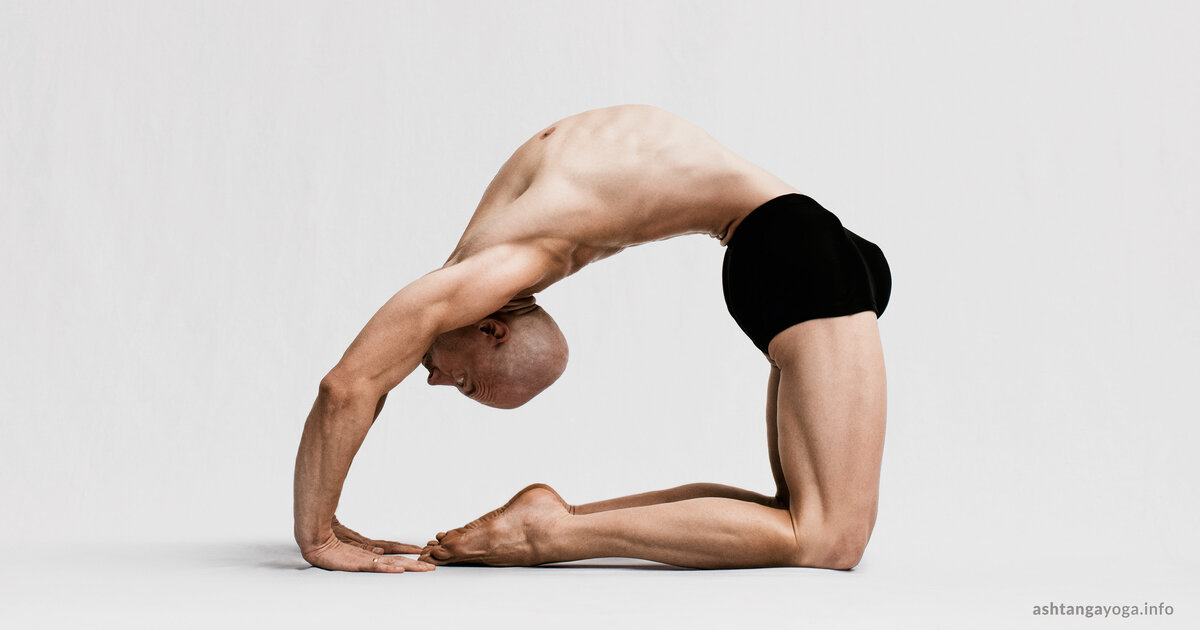
Kapotāsana B: pigeon

Kapotāsana B: pigeon

In the second form of the “pigeon,” the arms brace against the floor. The backbend arches upward from the hands to the high kneeling position.

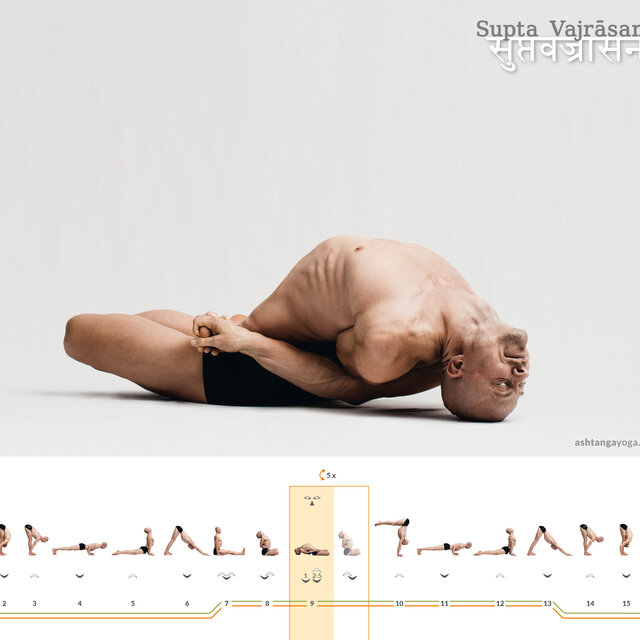
Supta Vajrāsana: reclining thunderbolt

Supta Vajrāsana: reclining thunderbolt

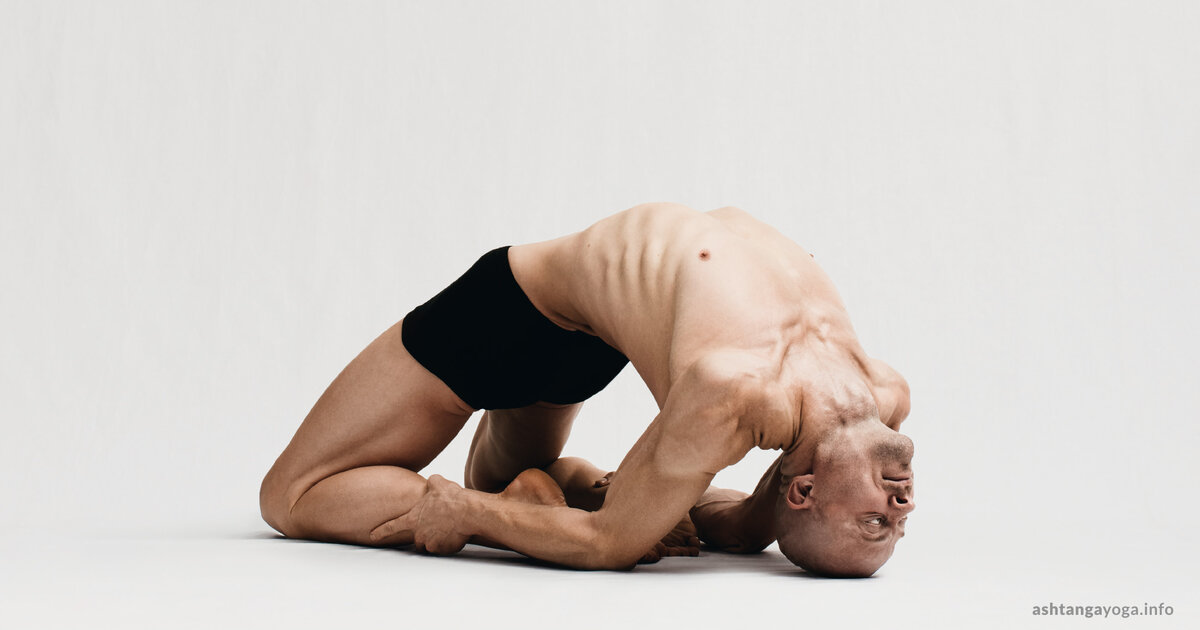
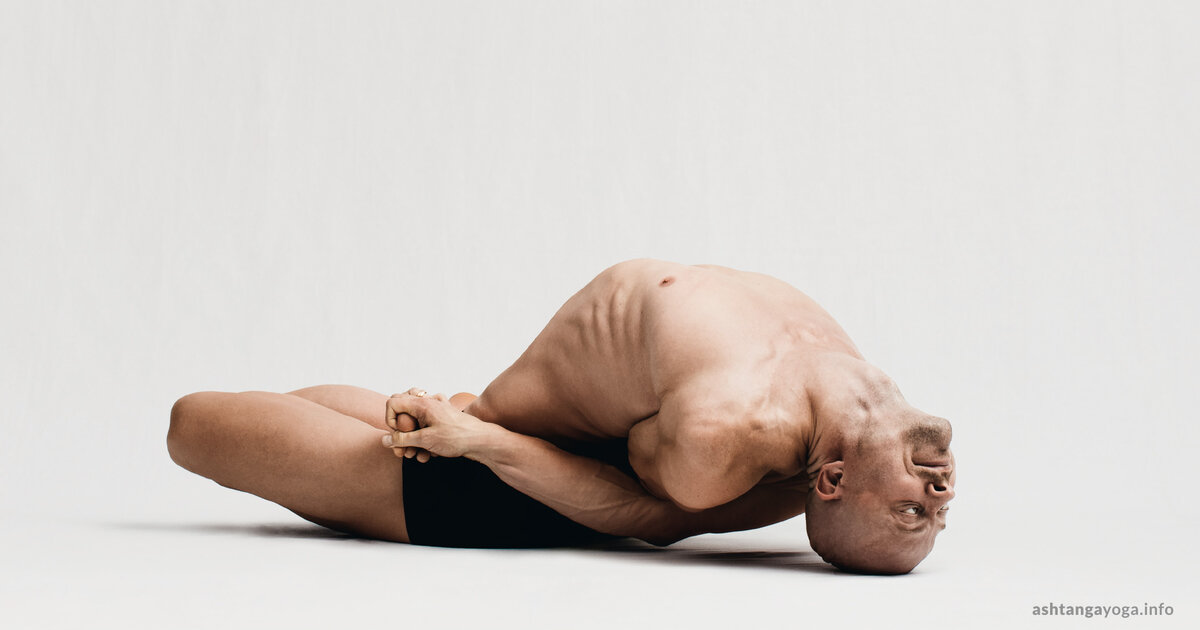
The “reclining thunderbolt” develops out of lotus position. The arms reach behind the back to the feet. The torso arches in a backbend until the head touches...

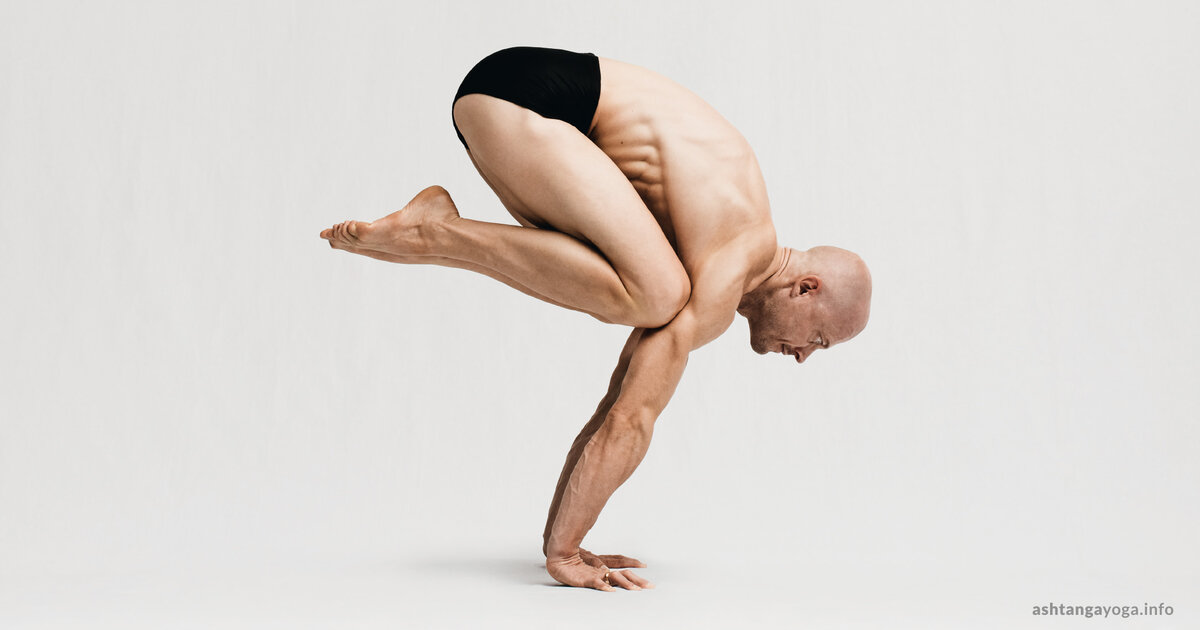
Bakāsana A: crane
Bakāsana A: crane

Bakāsana A: crane

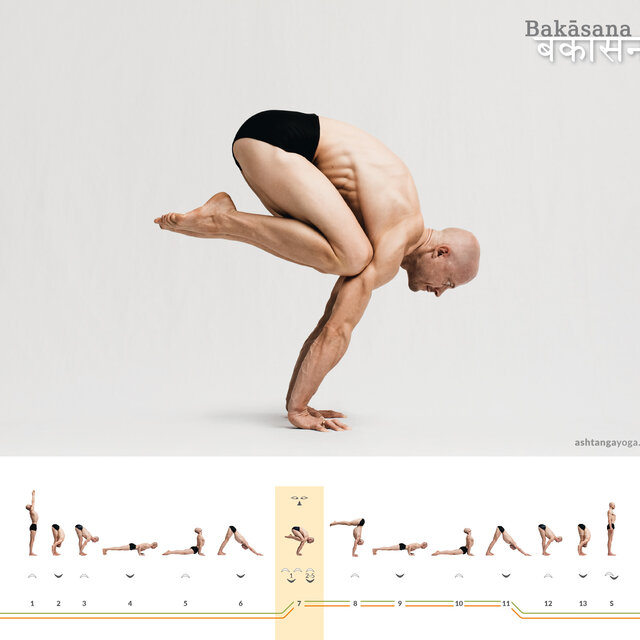
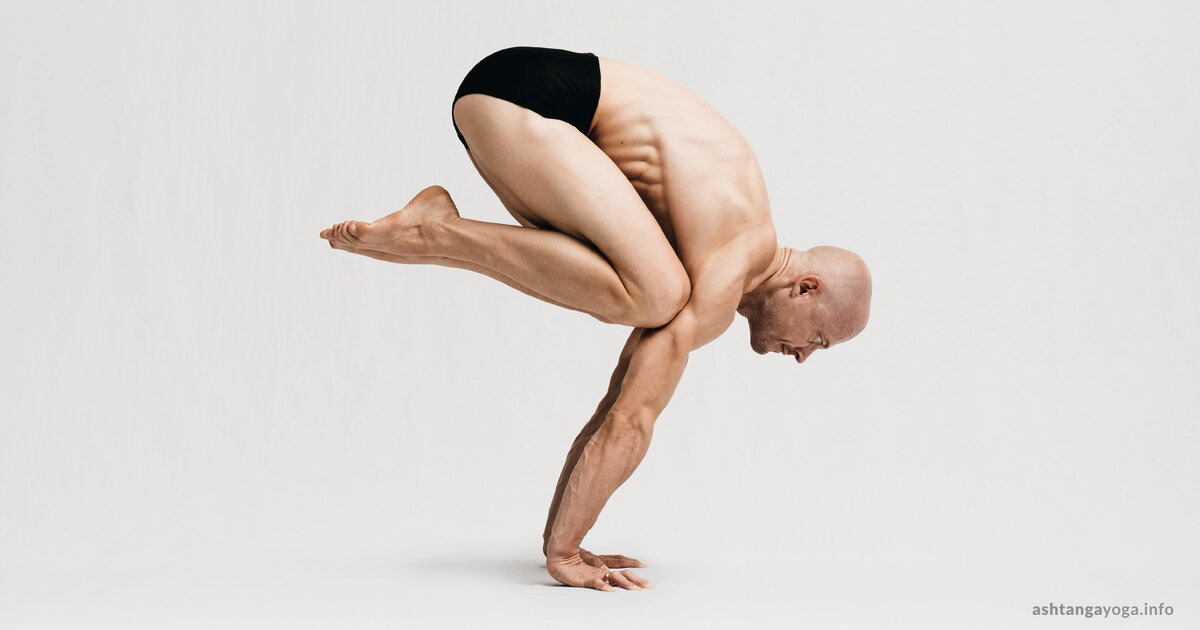
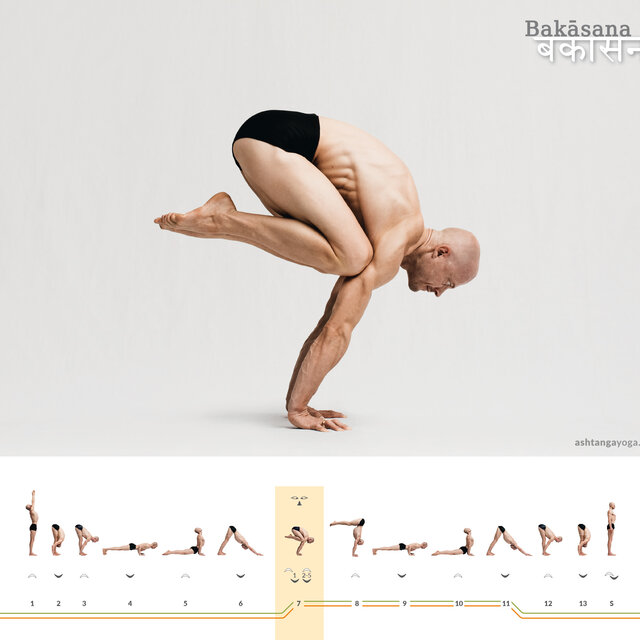
The “crane” is an arm balance on straight arms. The legs are compactly bent. The knees support in the armpits. The toes touch.

Bakāsana B: crane
Bakāsana B: crane

Bakāsana B: crane

In the second version of the “crane,” the practitioner enters the posture from a free arm balance, that is, from above. Again, the thighs are drawn close to...

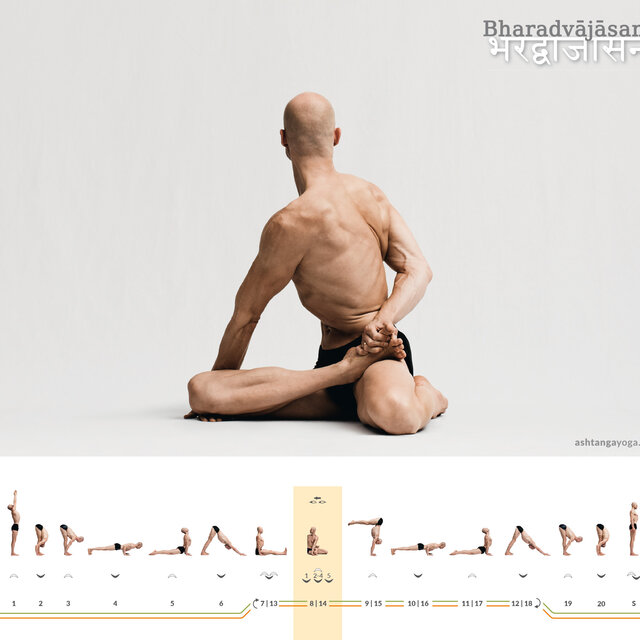
Bharadvājāsana: lark

Bharadvājāsana: lark

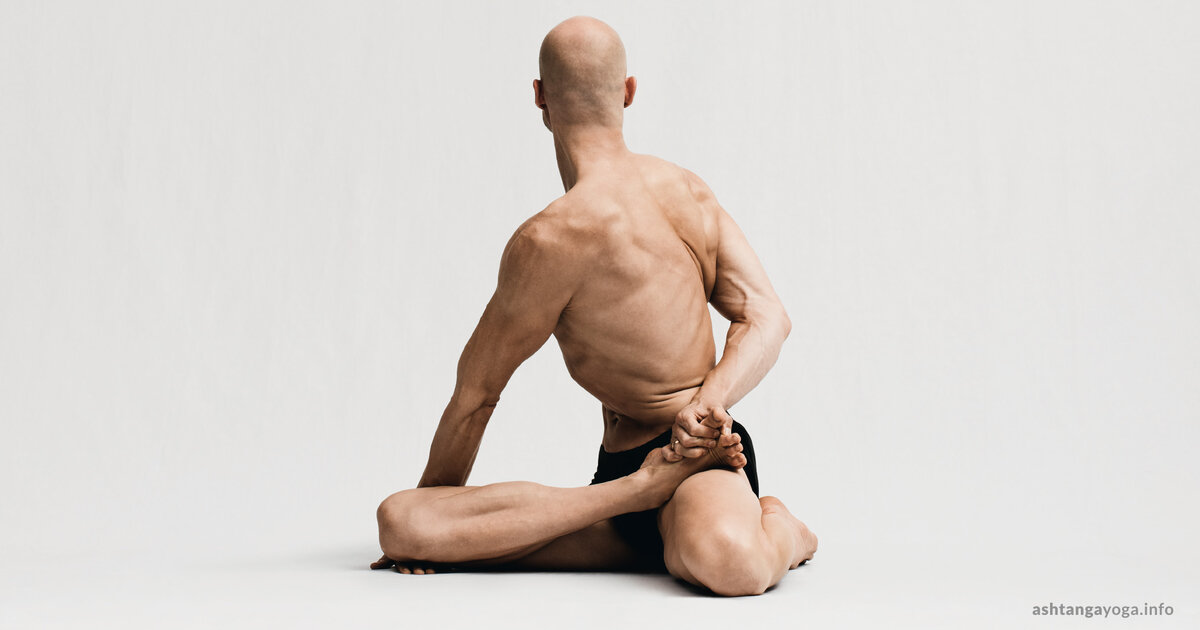
The “lark” is a seated twist. One leg rests on the floor with the foot outside the pelvis. The other foot lies in half lotus on the thigh of that leg. The...

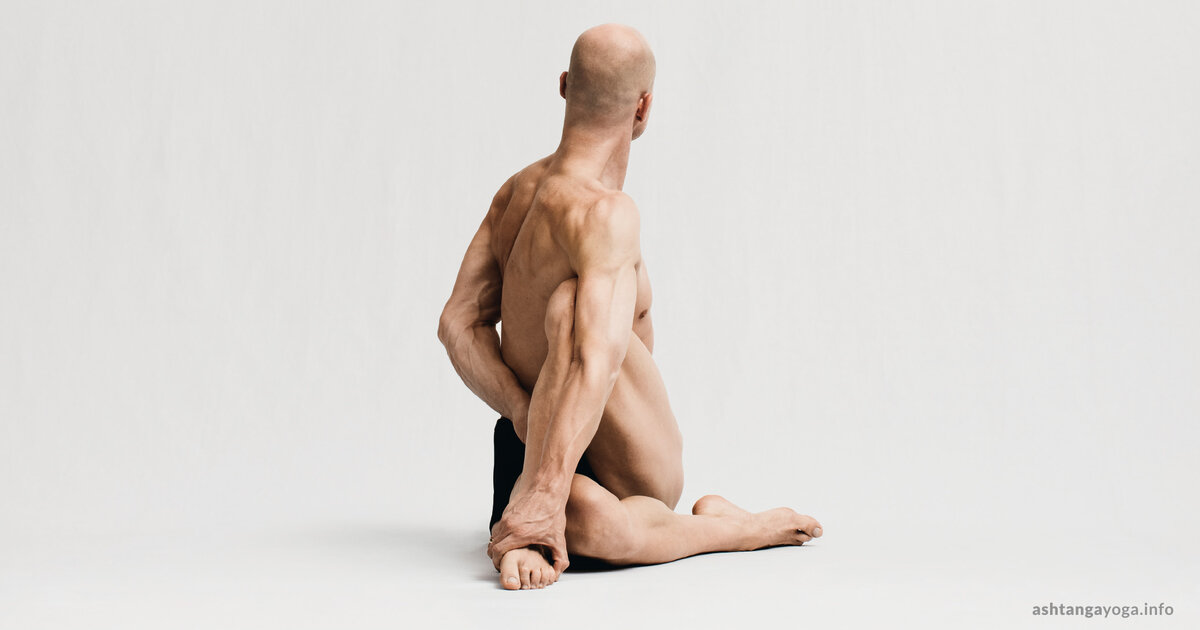
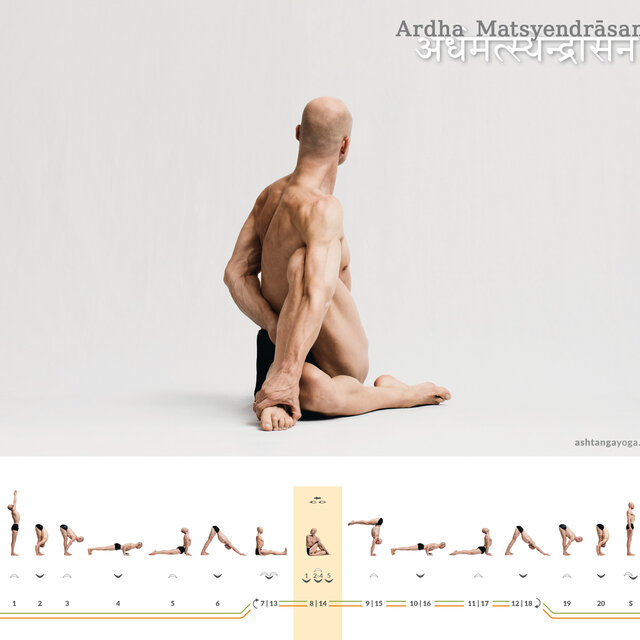
Ardha Matsyendrāsana: spinal twist

Ardha Matsyendrāsana: spinal twist

The “spinal twist” is one of the classical postures already described in old Haṭha Yoga texts. One leg is bent on the floor, the other is placed across it.

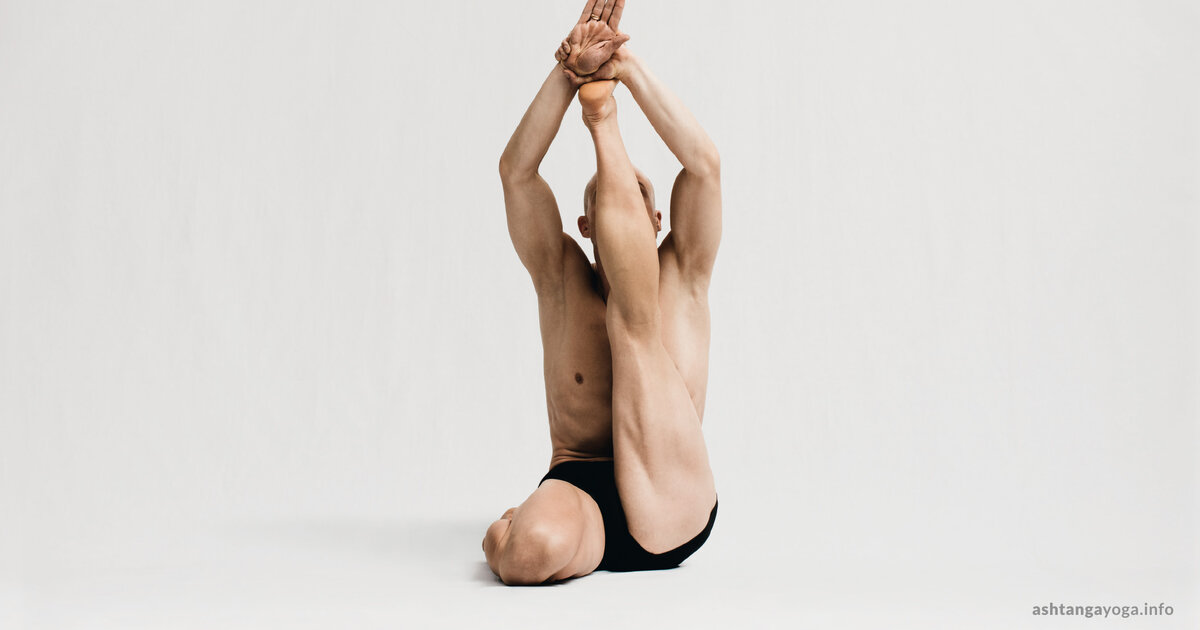
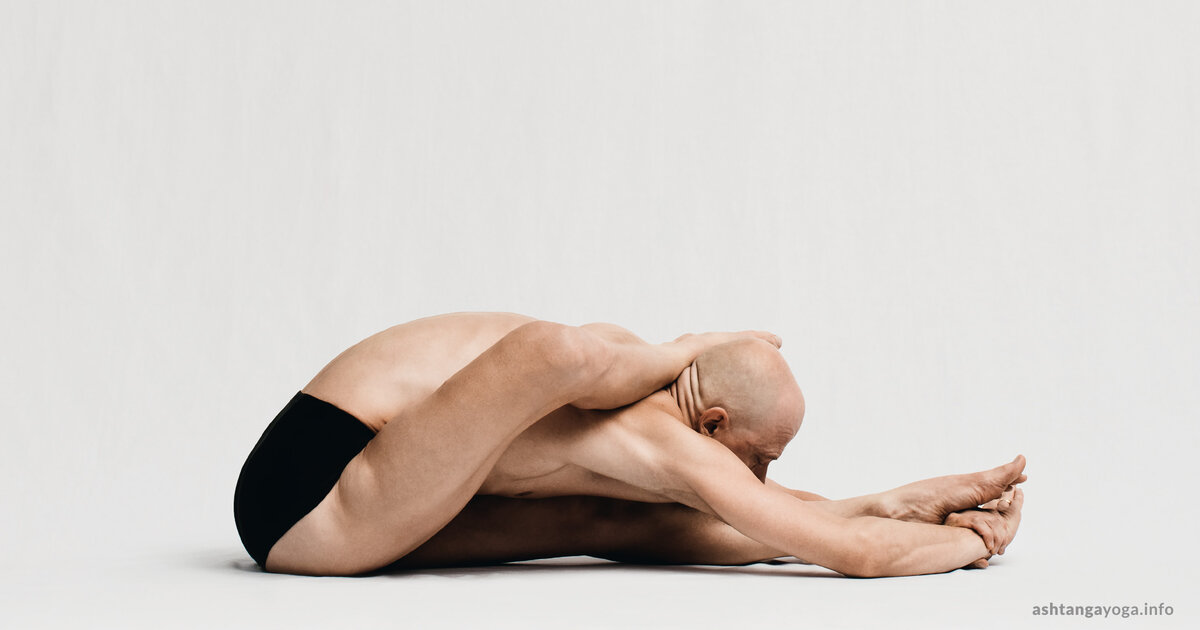
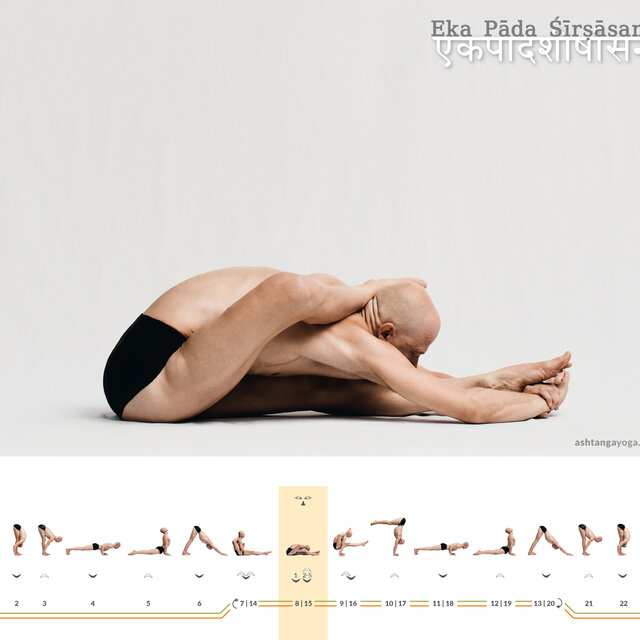
Eka Pāda Śīrṣāsana: one foot behind the head

Eka Pāda Śīrṣāsana: one foot behind the head

The “one foot behind the head” posture is well described by its name. With this foot position, the practitioner folds forward over the other straight leg.

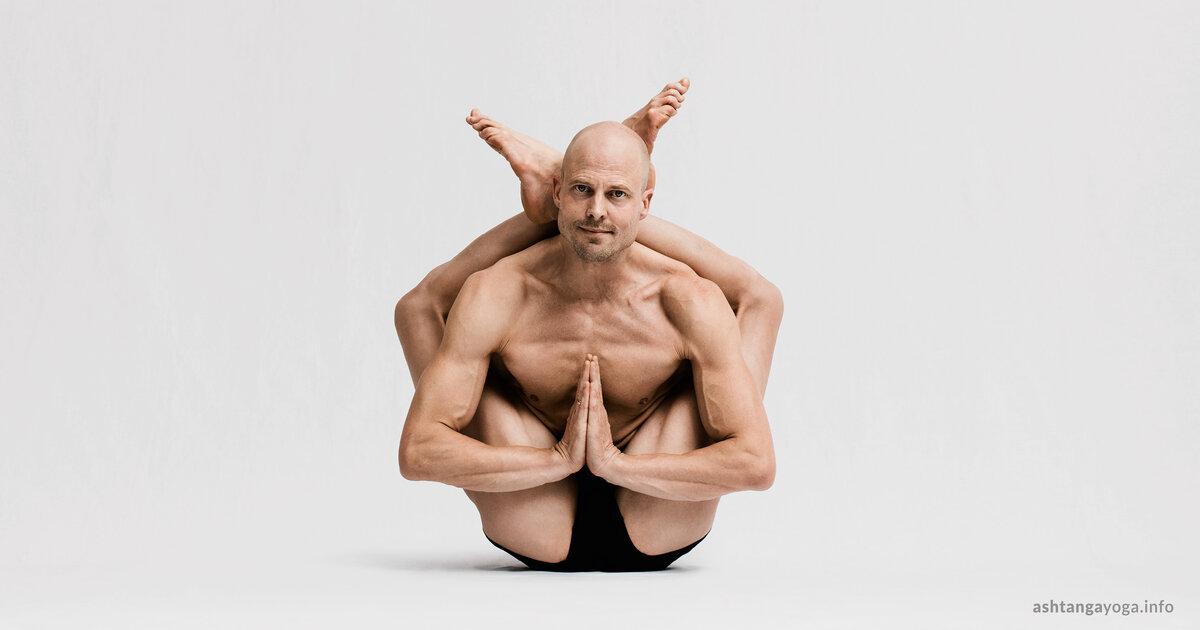
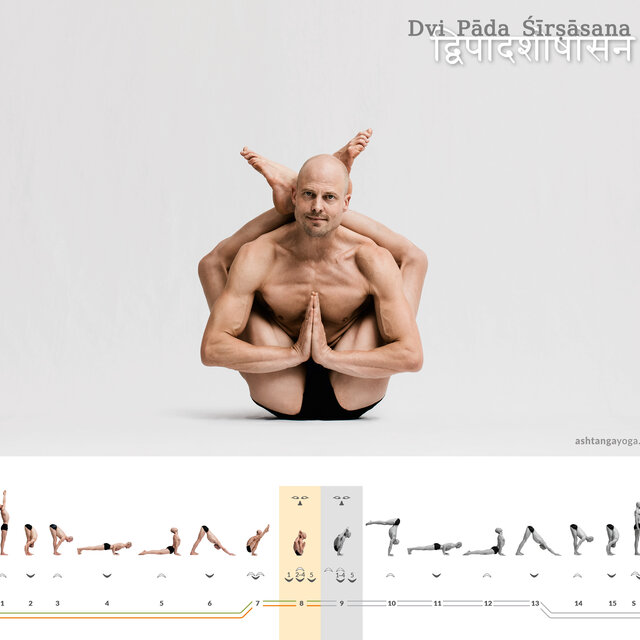
Dvi Pāda Śīrṣāsana: two feet behind the head - Part 1

Dvi Pāda Śīrṣāsana: two feet behind the head - Part 1

The “two feet behind the head” posture is well described by its name. The practitioner balances upright on the pelvis with the hands joined in front of the...

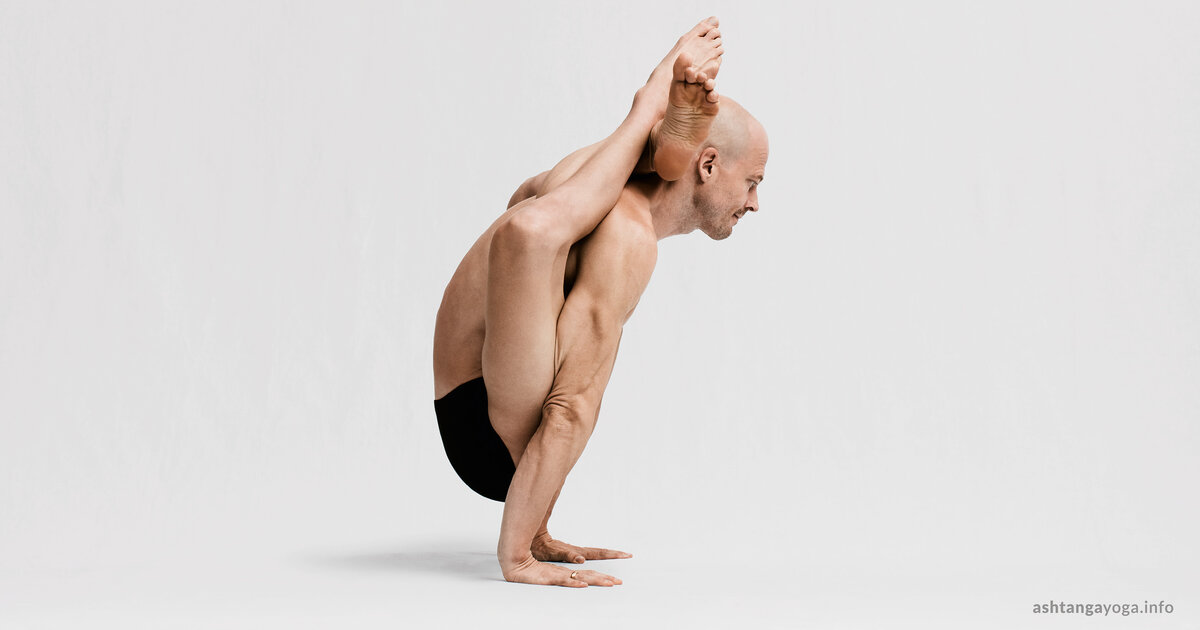
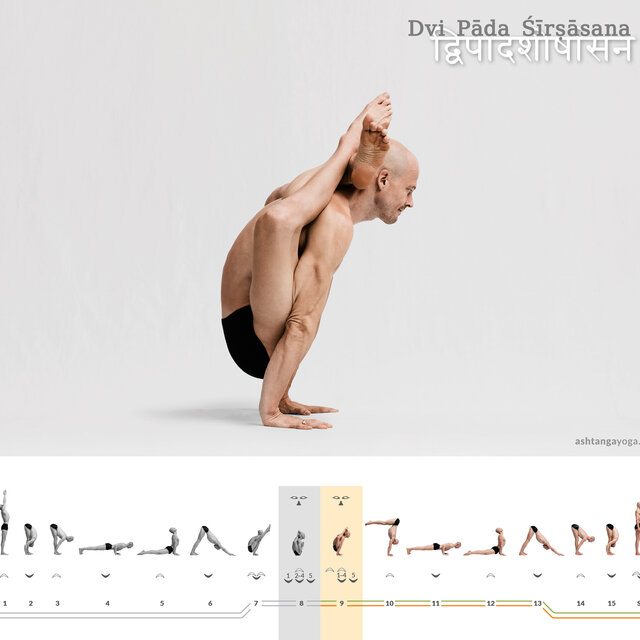
Dvi Pāda Śīrṣāsana: two feet behind the head - Part 2

Dvi Pāda Śīrṣāsana: two feet behind the head - Part 2

In part 2 of the “two feet behind the head” posture, the practitioner places the hands on the floor and lifts the whole body up.