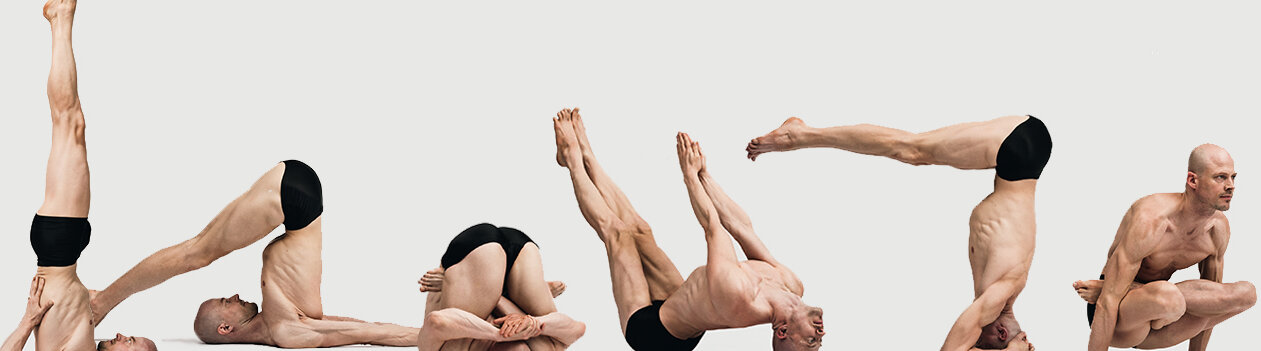
Finishing: quiet postures to conclude Aṣṭāṅga Yoga practice

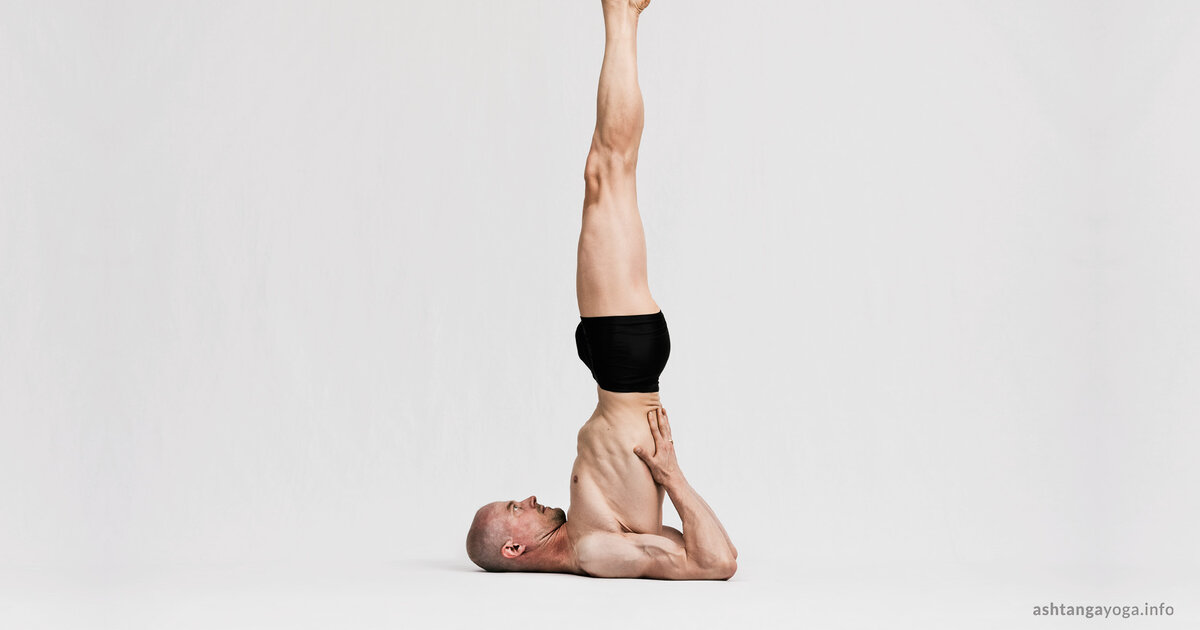
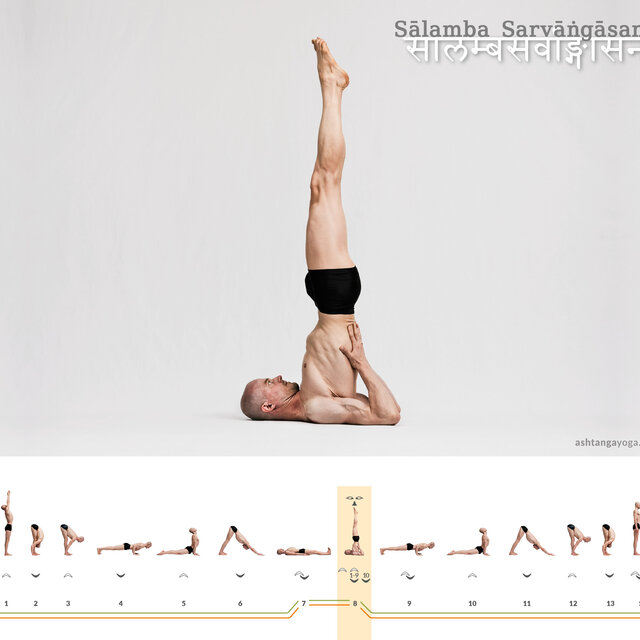
Sālamba Sarvāṅgāsana: shoulder stand

Sālamba Sarvāṅgāsana: shoulder stand

The “shoulder stand” is one of the best-known yoga postures. The whole body rests on the shoulders. Torso and legs point straight upward.

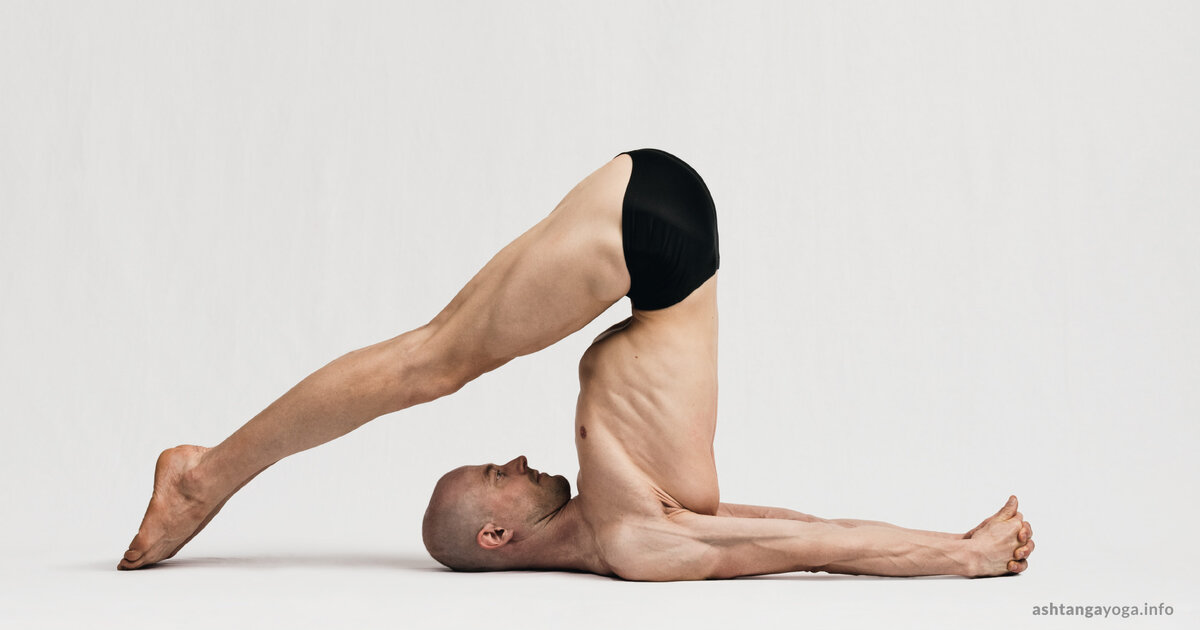
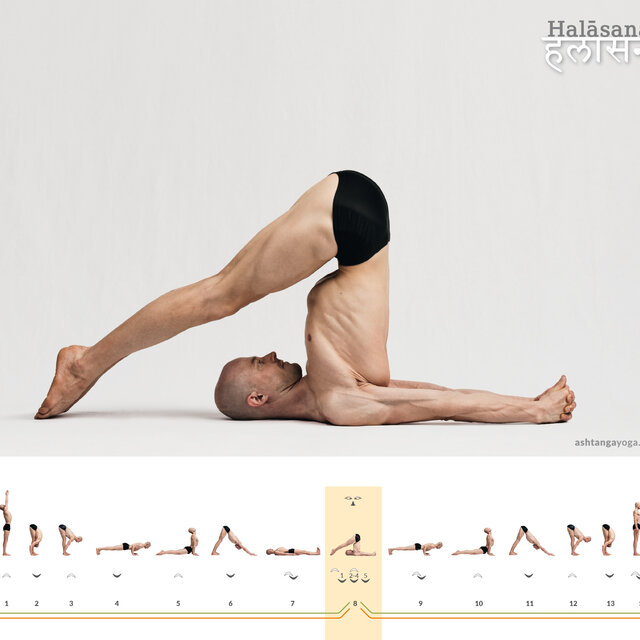
Halāsana: plough
Halāsana: plough

Halāsana: plough

The “plough” builds on the shoulder stand. The practitioner lowers the legs until the tops of the feet touch the floor in front of the head. The hands are...

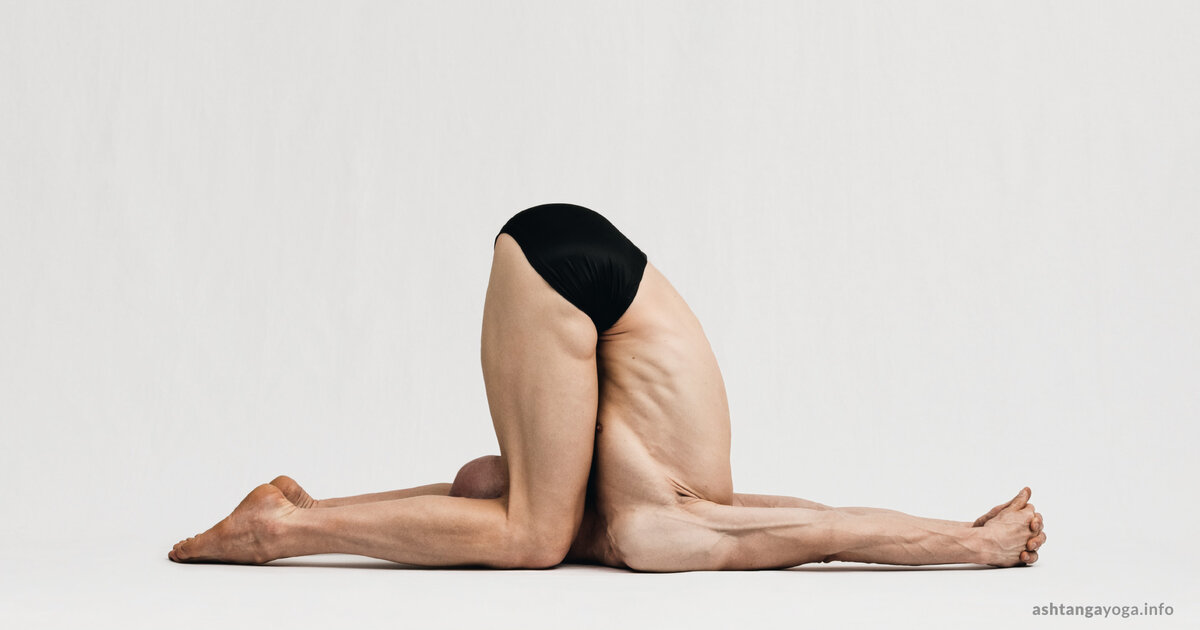
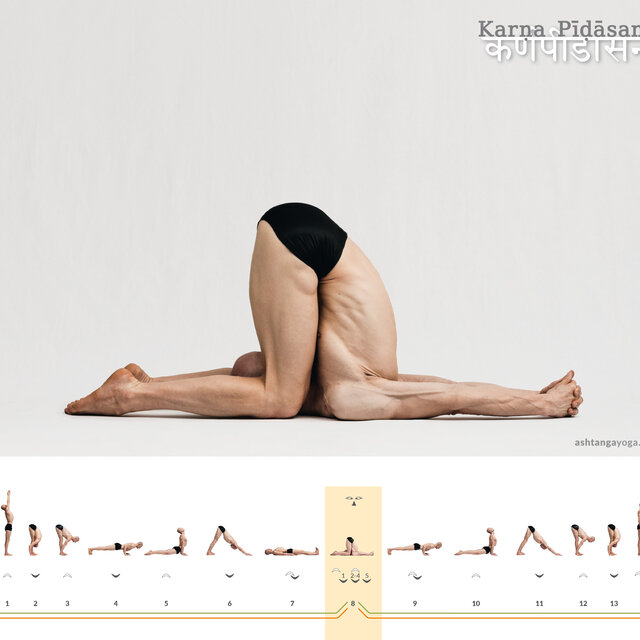
Karṇa Pīḍāsana: ear-pressure pose

Karṇa Pīḍāsana: ear-pressure pose

The “ear-pressure pose” builds on the plough. The practitioner now bends the knees and places them down beside the ears.

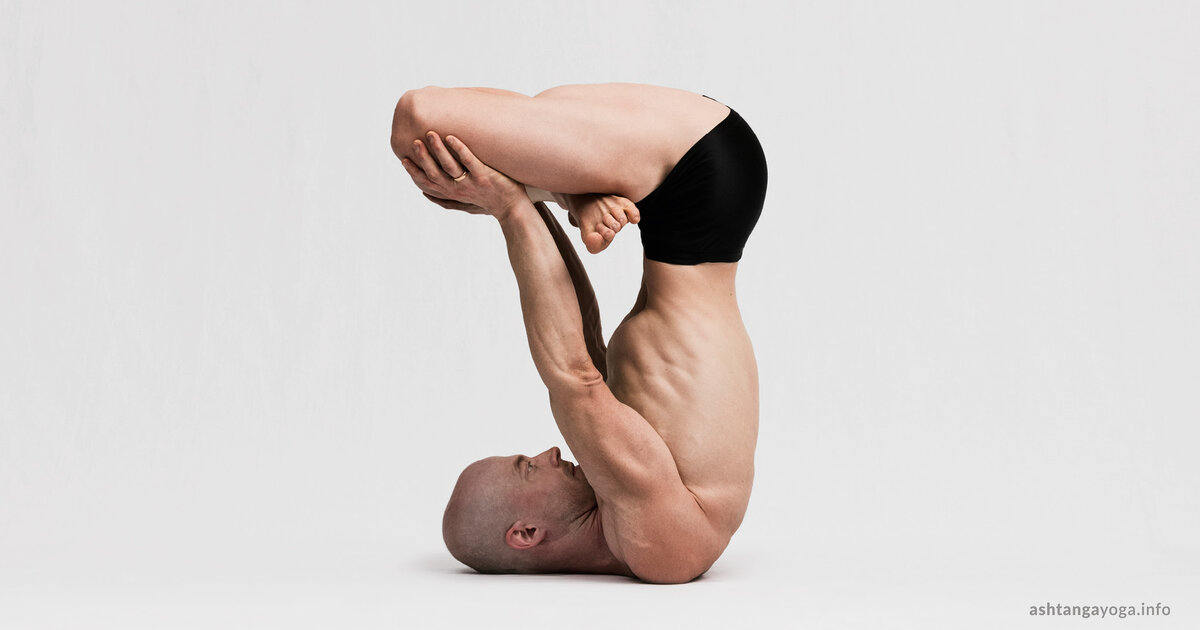
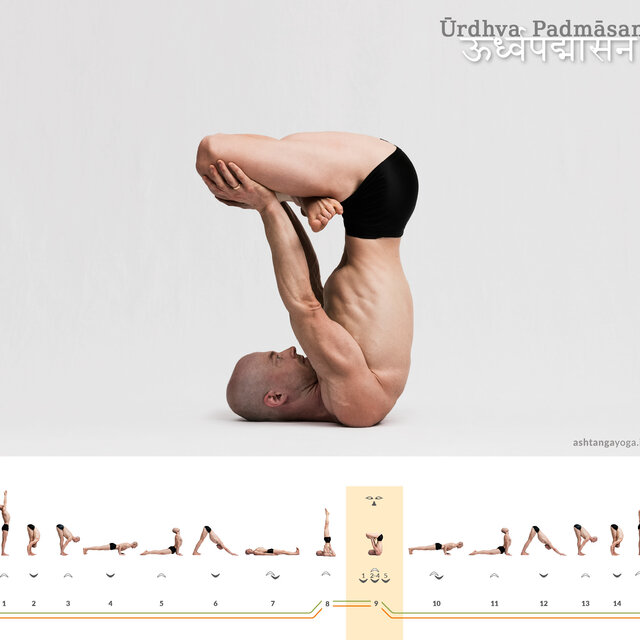
Ūrdhva Padmāsana: upward lotus

Ūrdhva Padmāsana: upward lotus

The “upward lotus” is essentially lotus position balanced on the shoulders. The straight arms help the back to become equally straight.

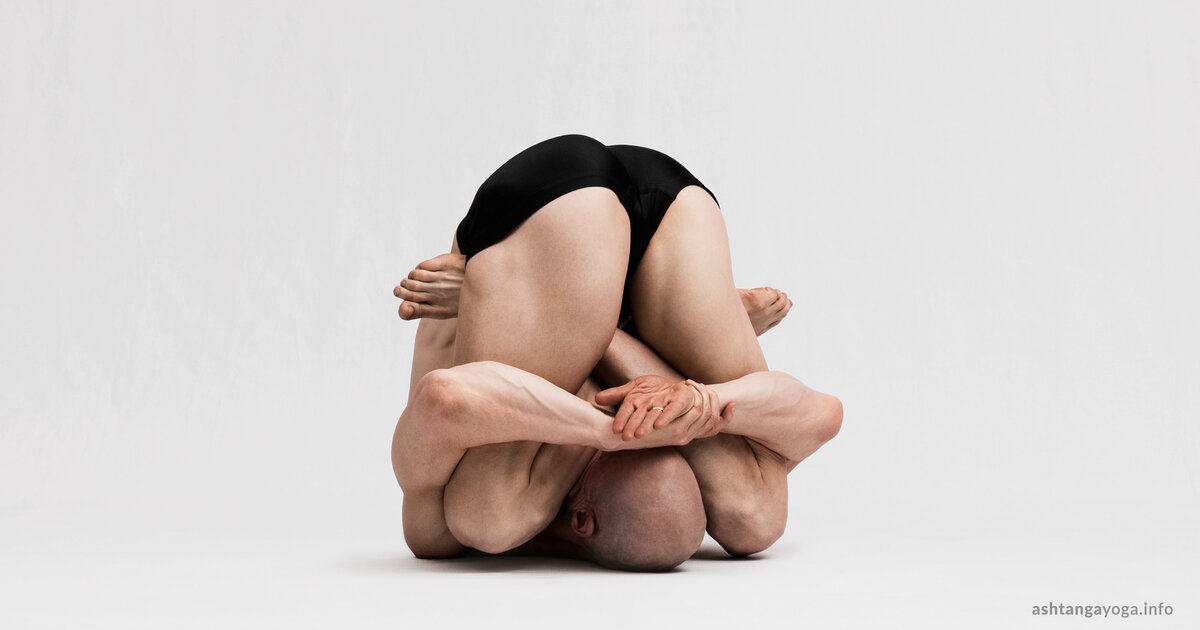
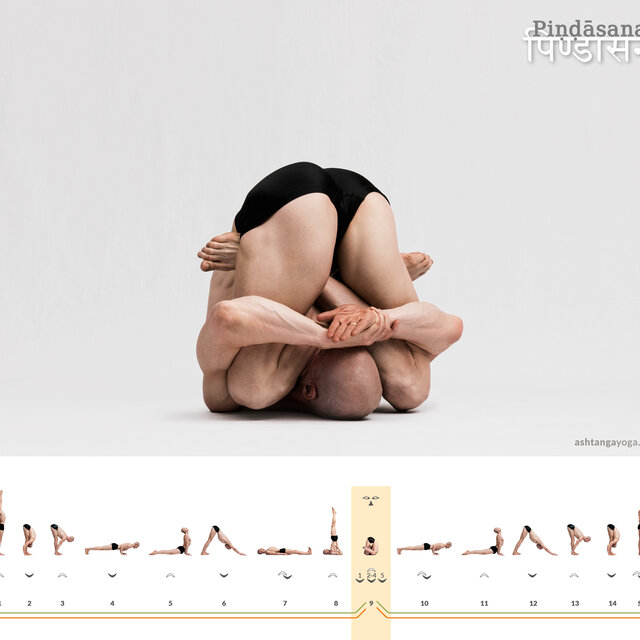
Piṇḍāsana: ball pose

Piṇḍāsana: ball pose

The “ball pose” once again builds on the previous posture, the upward lotus. The practitioner draws the legs folded in lotus in toward the body and wraps the...

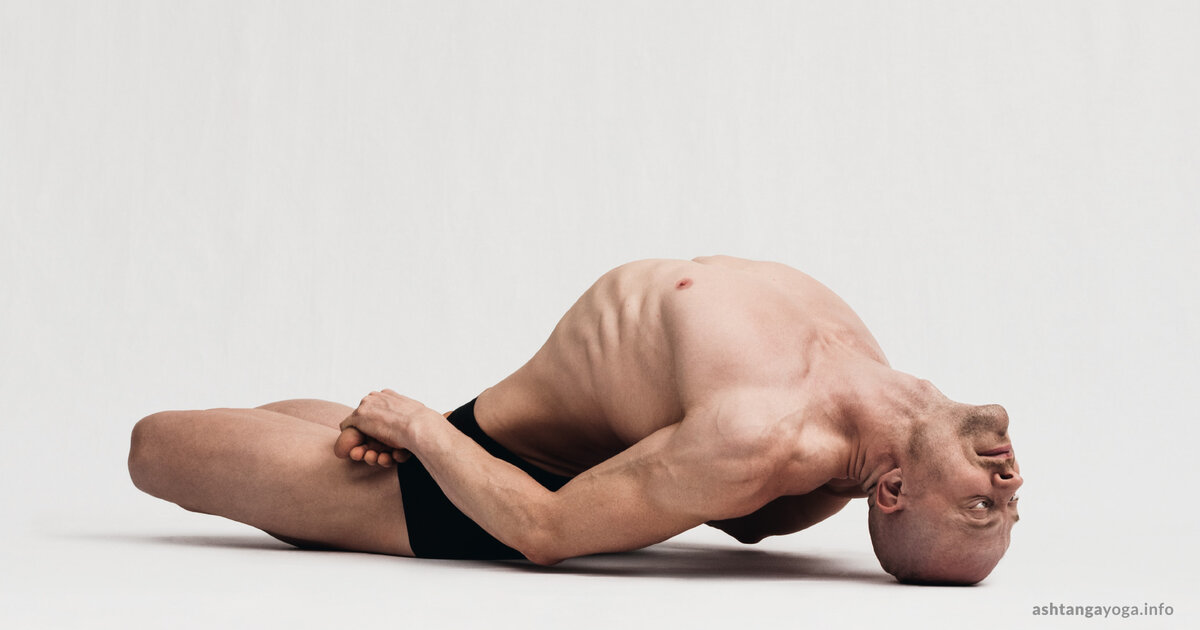
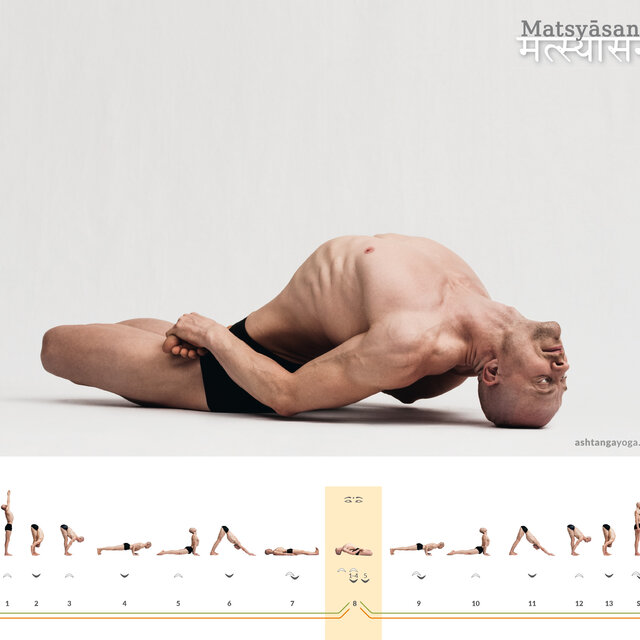
Matsyāsana: fish
Matsyāsana: fish

Matsyāsana: fish

The “fish” is a backbend. The head and pelvis are on the floor while the chest and torso arch upward between them. The legs are folded in lotus.

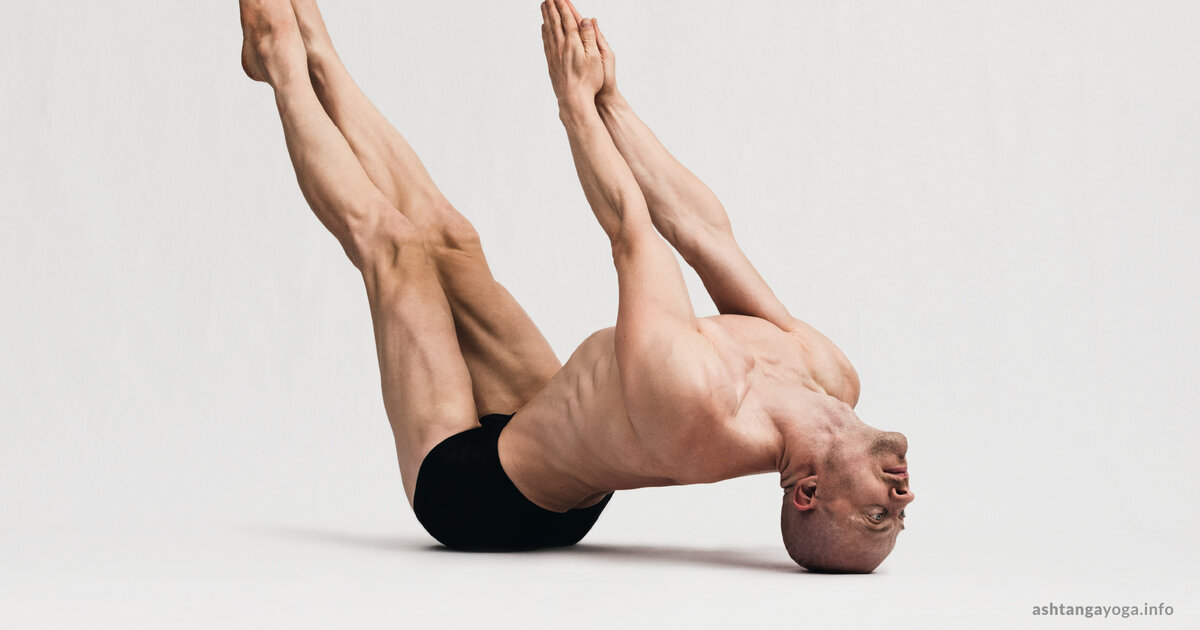
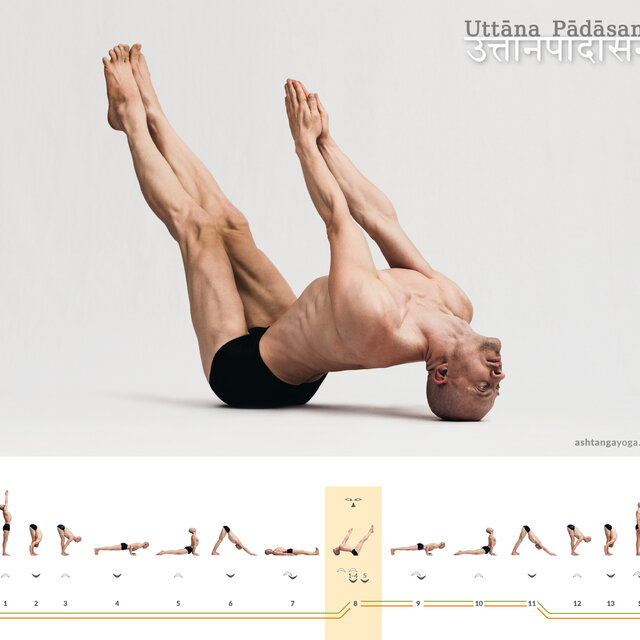
Uttāna Pādāsana: pose with extended feet

Uttāna Pādāsana: pose with extended feet

The “pose with extended feet” builds on fish, Matsyāsana. The practitioner stretches legs and arms upward into the air, parallel to one another.

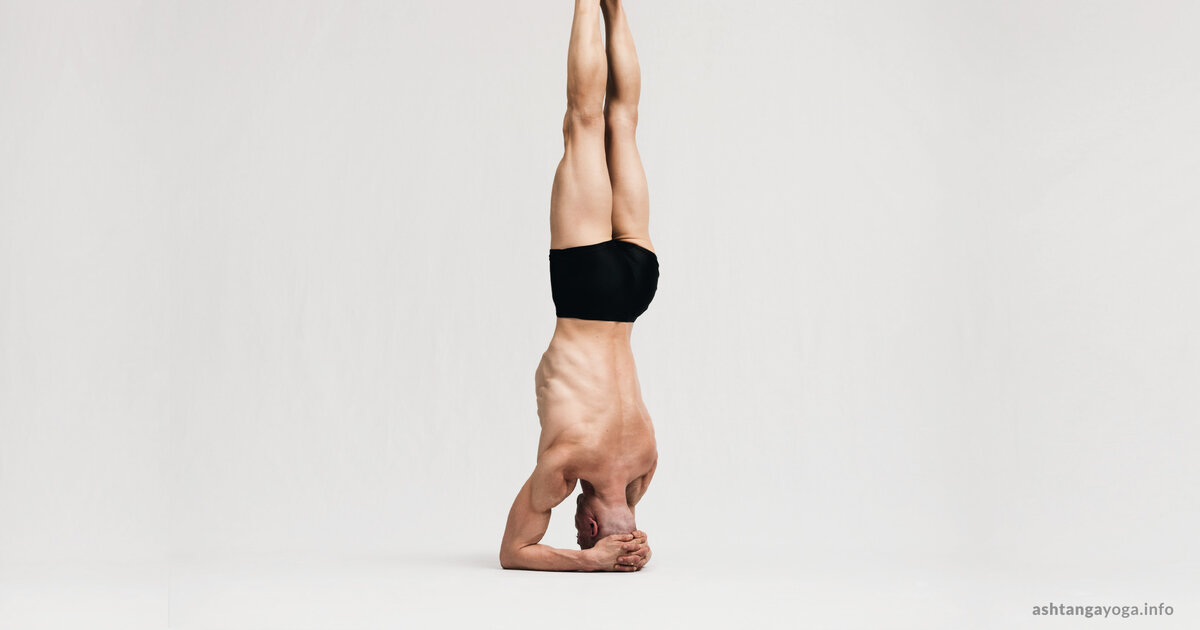
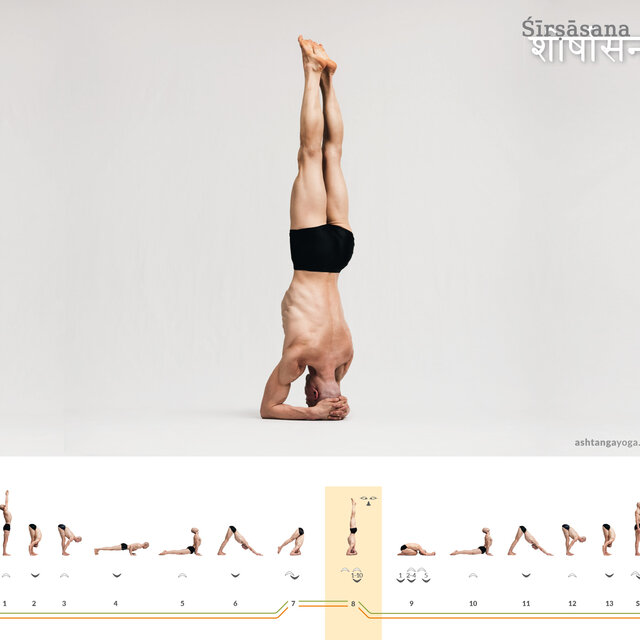
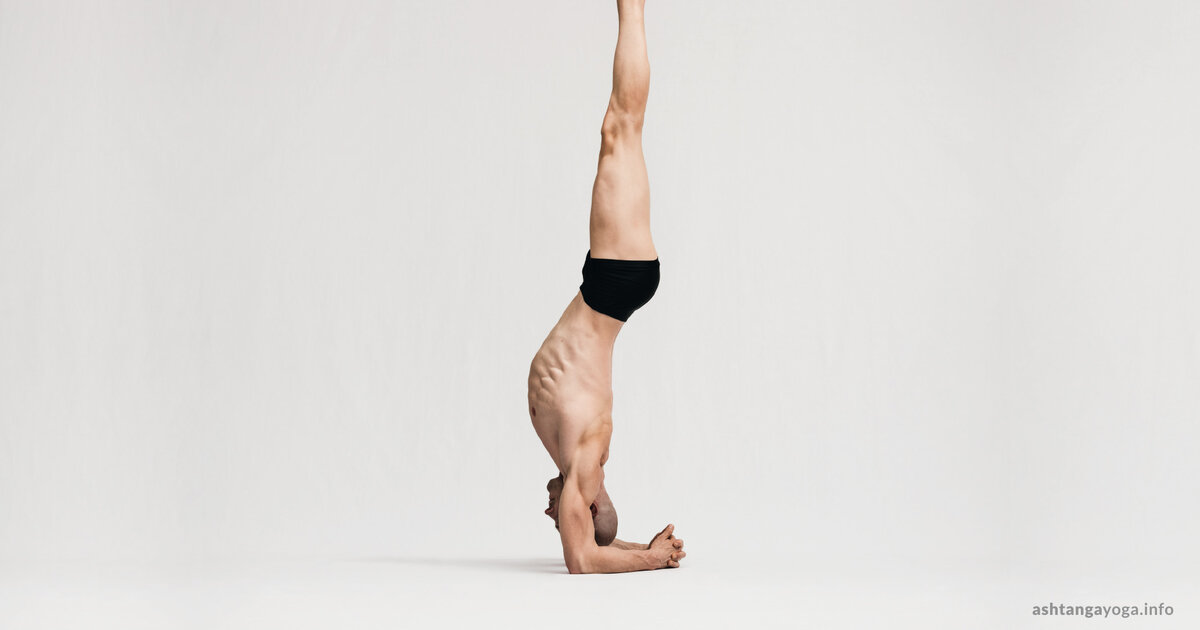
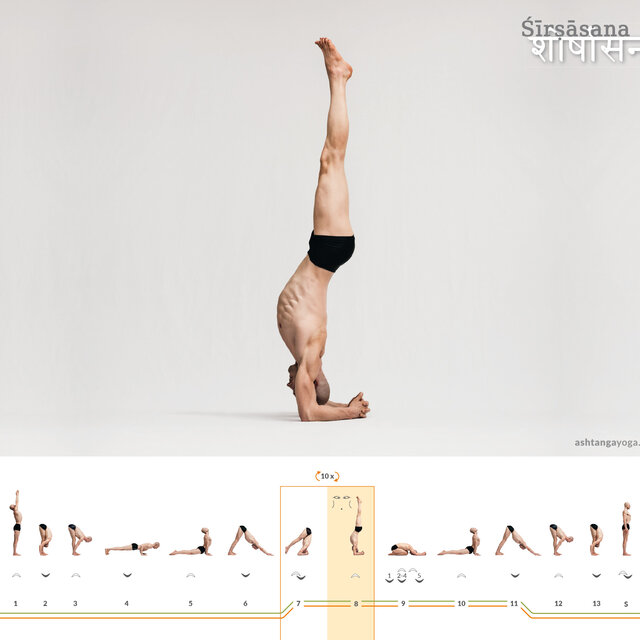
Śīrṣāsana A: headstand

Śīrṣāsana A: headstand

“Headstand” is one of the best-known postures in yoga. The whole body grows vertically upward while the hands behind the head support the head.

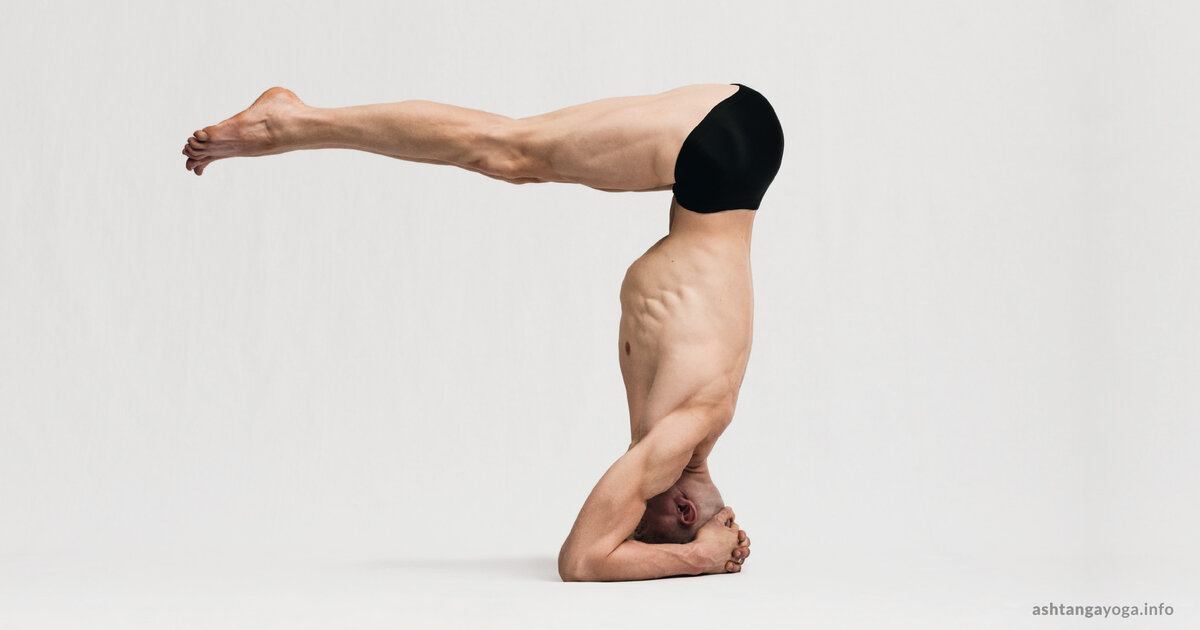
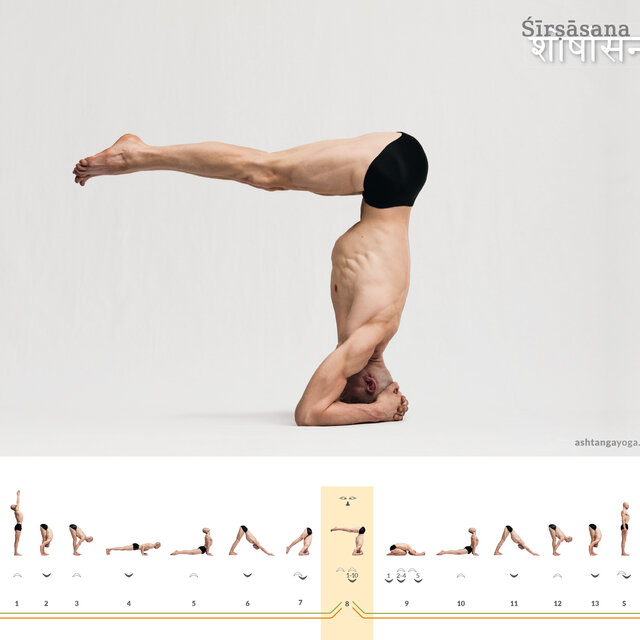
Śīrṣāsana B: headstand

Śīrṣāsana B: headstand

The second variation of headstand builds on the first. The practitioner keeps the legs horizontal. The forearms, with the hands interlaced behind the head...

Śīrṣāsana C: headstand

Śīrṣāsana C: headstand

In the third variation, headstand is less a static posture than a movement. The practitioner lifts and lowers the legs. At the highest point of the movement...

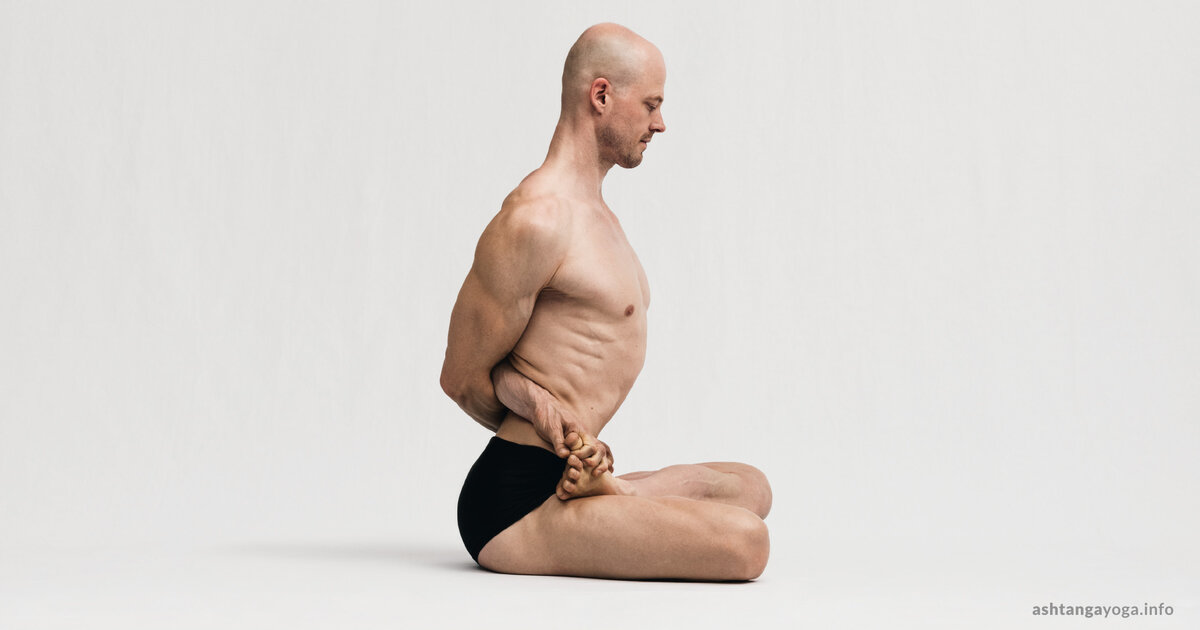
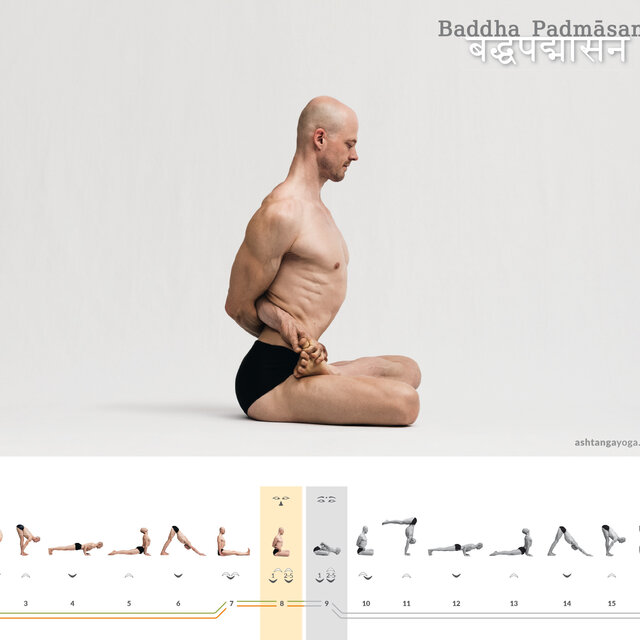
Baddha Padmāsana: bound lotus

Baddha Padmāsana: bound lotus

In “bound lotus,” starting from lotus position, the hands, with the arms crossed behind the back, reach to the big toes.

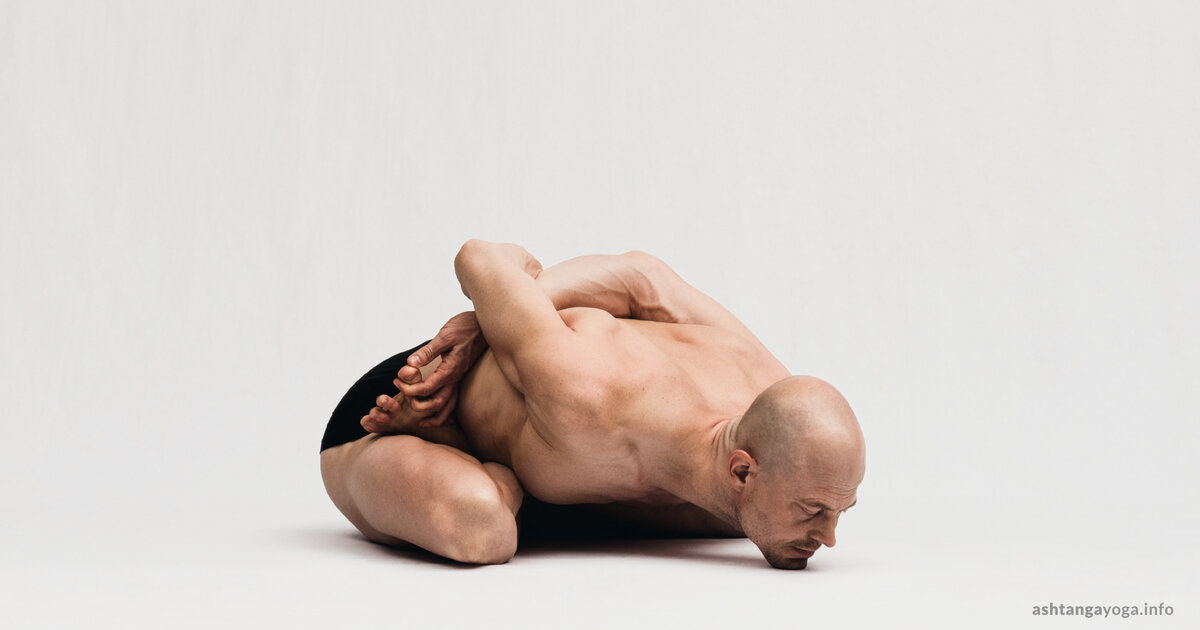
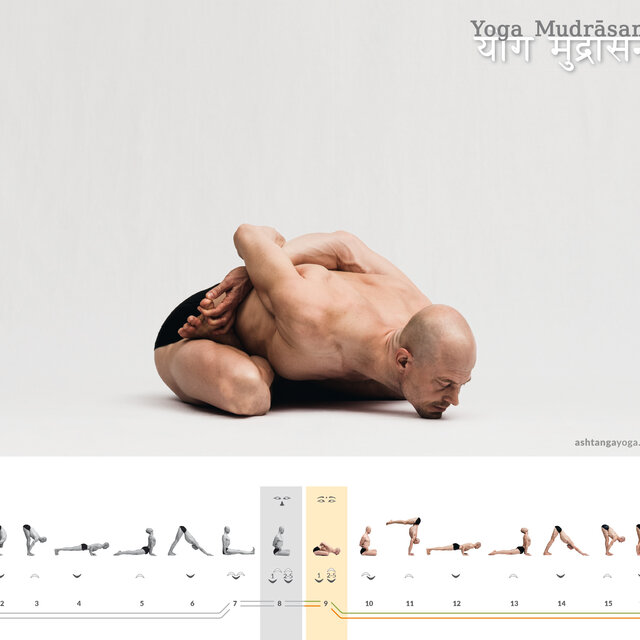
Yoga Mudrāsana: yogic seal

Yoga Mudrāsana: yogic seal

The “yogic seal” is a forward bend in lotus position. With the arms crossed behind the back, the hands reach to the big toes.

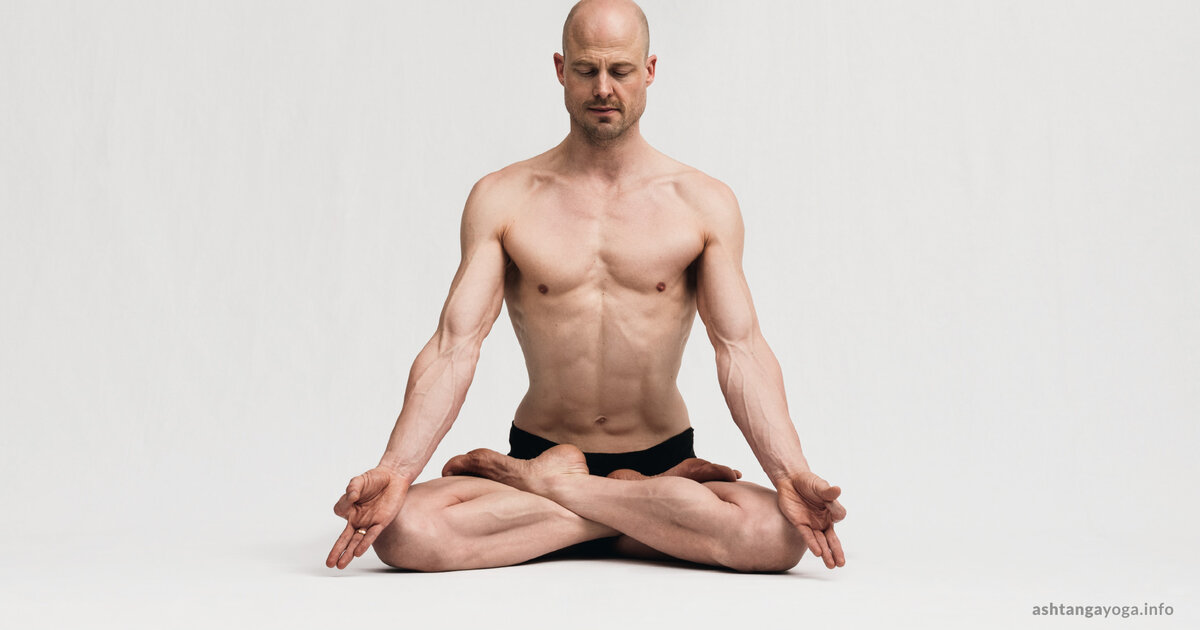
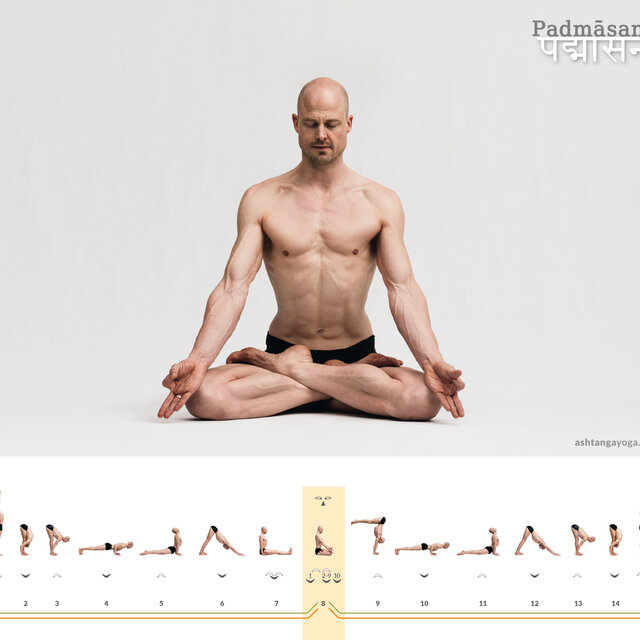
Padmāsana: lotus
Padmāsana: lotus

Padmāsana: lotus

“Lotus” is perhaps the best-known and most characteristic posture in yoga. Both feet rest on the thighs of the opposite side. The spine rises upward in a...

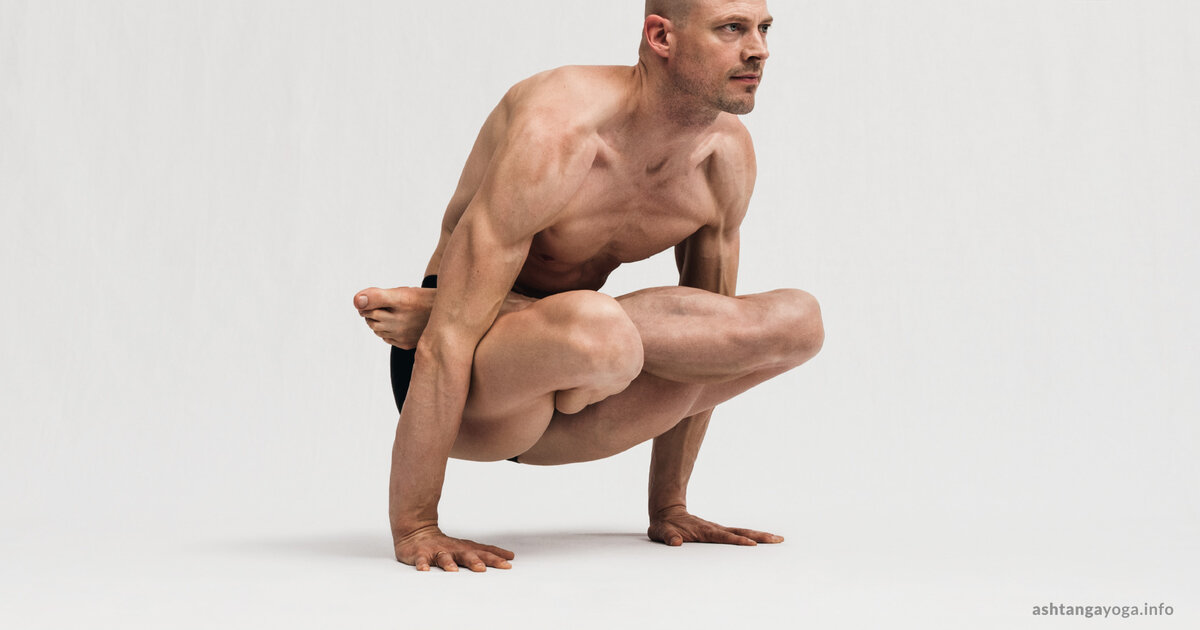
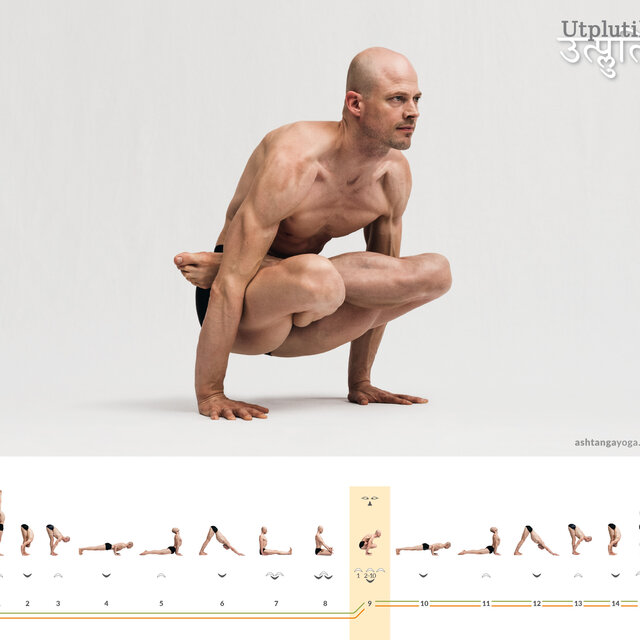
Utplutiḥ: intense floating

Utplutiḥ: intense floating

“Intense floating” is not really a posture in the strict sense. Rather, it is lotus position lifted up through the strength of the arms.

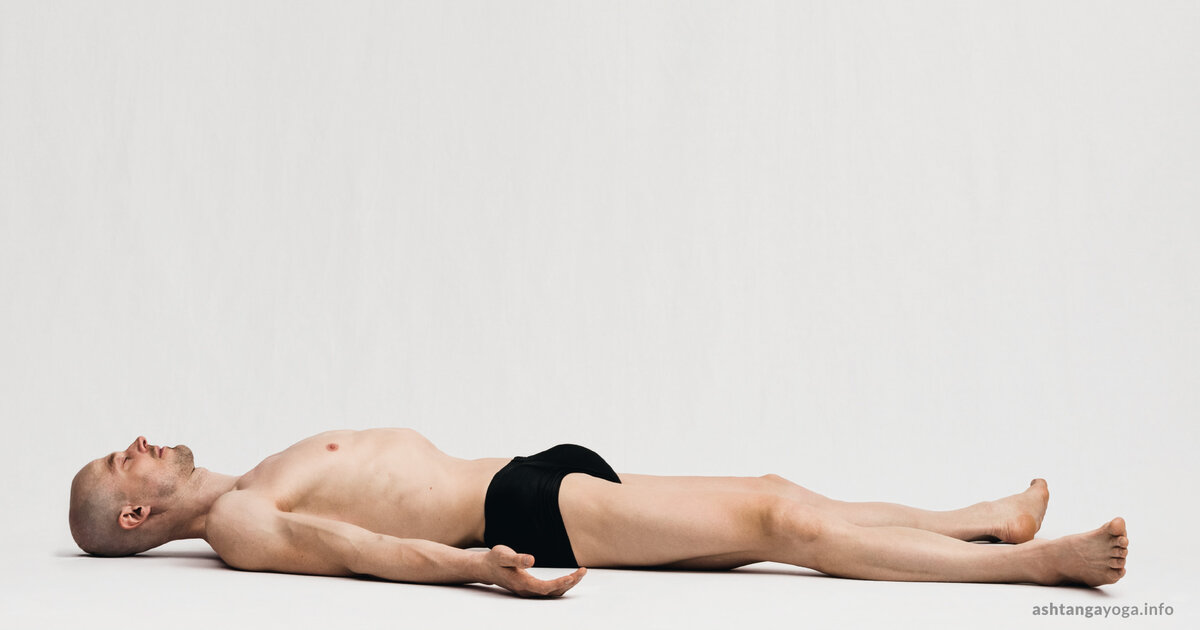
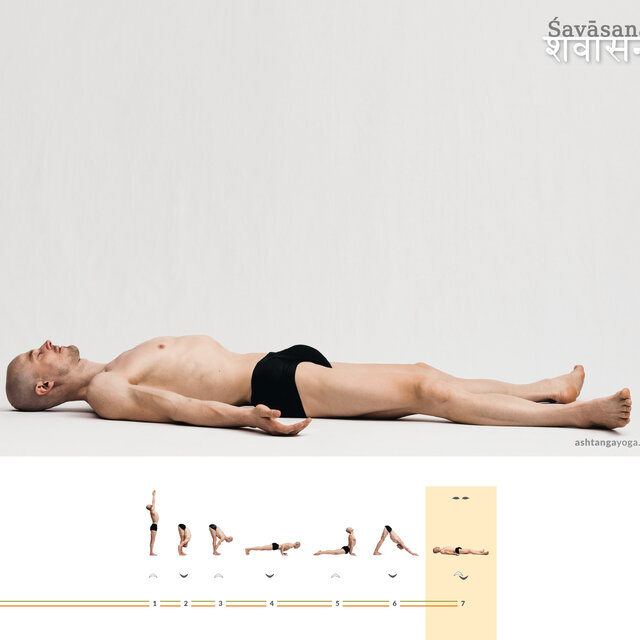
Śavāsana: relaxation

Śavāsana: relaxation

For “relaxation” at the end of practice, the practitioner lies on the back on the floor. The feet are about hip-width apart and fall out to the sides. The...