Sthira Bhaga: The 3rd Series of Aṣṭāṅga Yoga

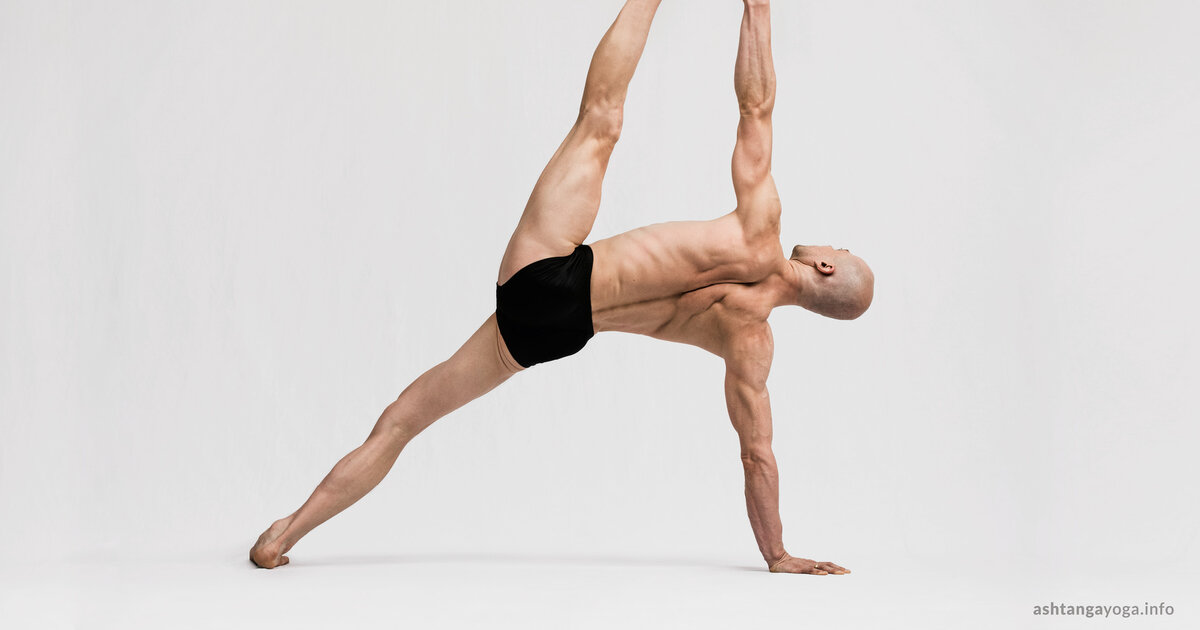
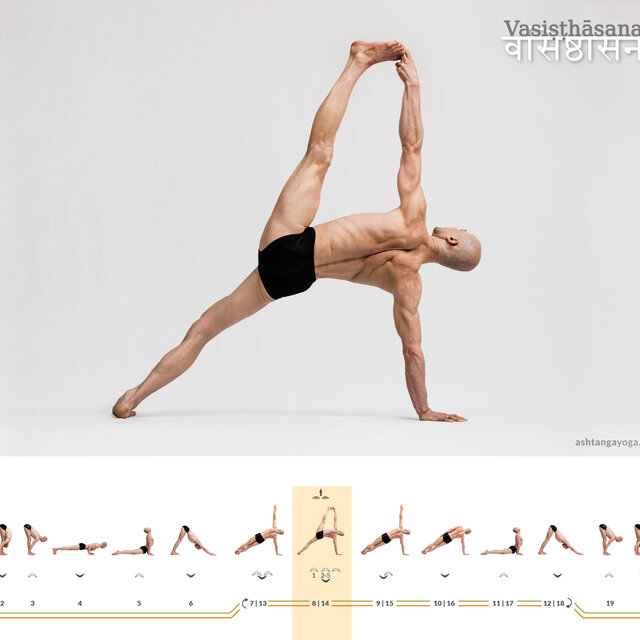
Vasiṣṭhāsana: Pose Named after Vasiṣṭha

Vasiṣṭhāsana: Pose Named after Vasiṣṭha

The "Pose Named after Viasiṣṭha" is a powerful side plank pose where the arm and leg of the not supporting side gracefully reach towards the sky.
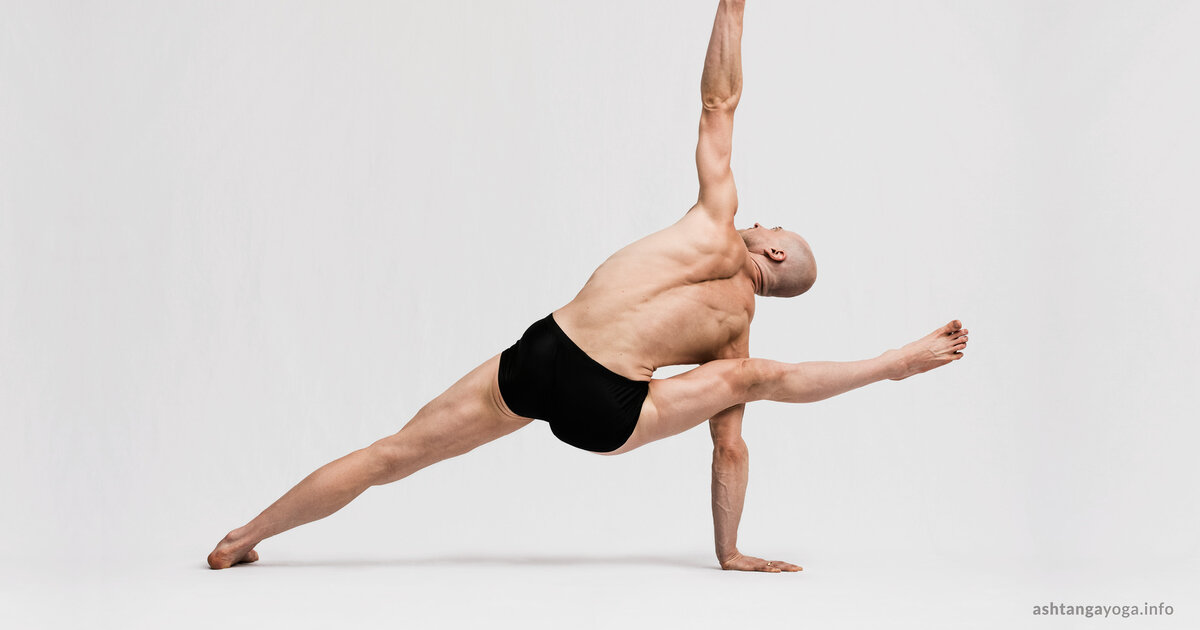
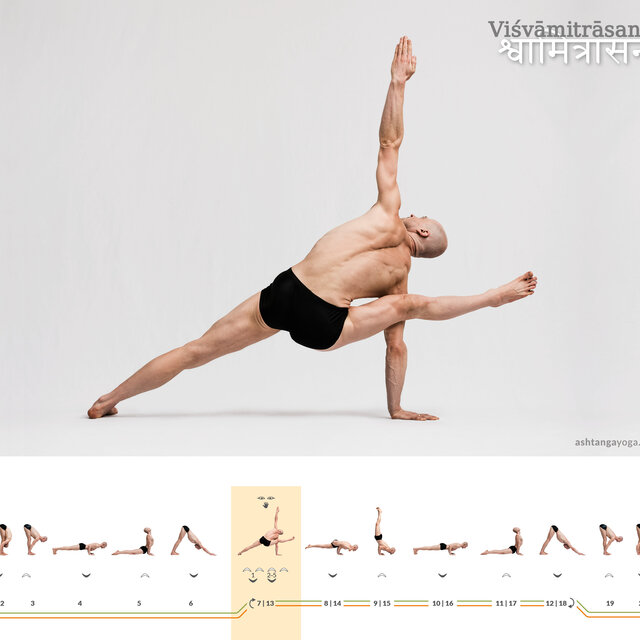
Viśvāmitrāsana: Pose Named after Viśvamitra

Viśvāmitrāsana: Pose Named after Viśvamitra

The "Pose Named after Viśvamitra" is a spectacular side plank pose where the lower leg extends forward over the supporting arm.

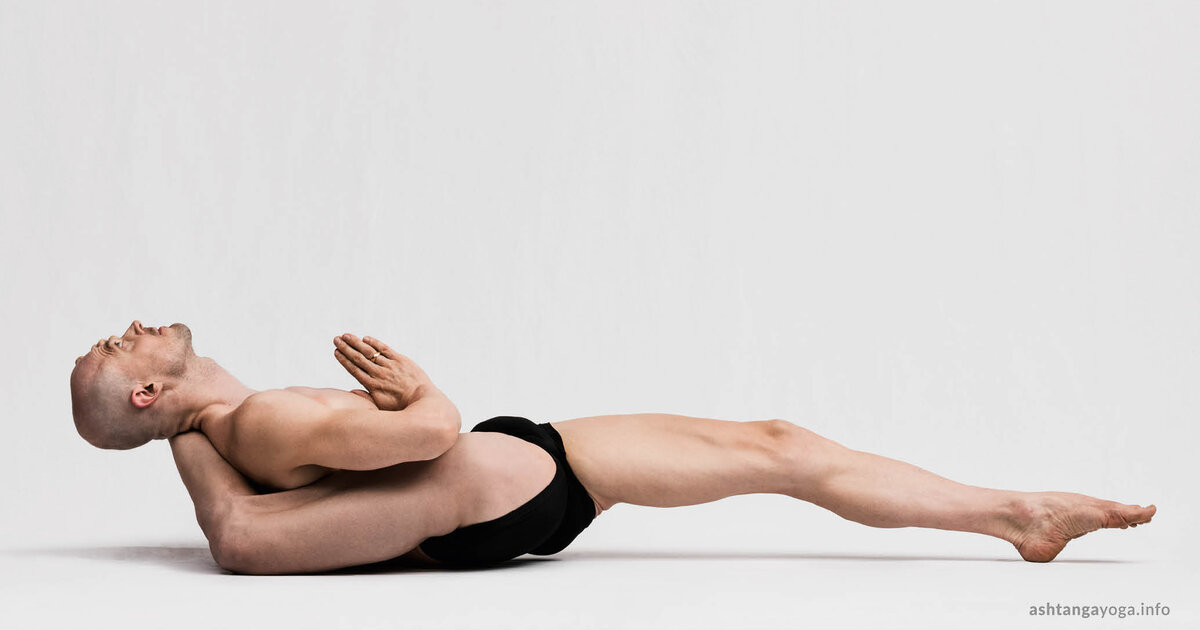
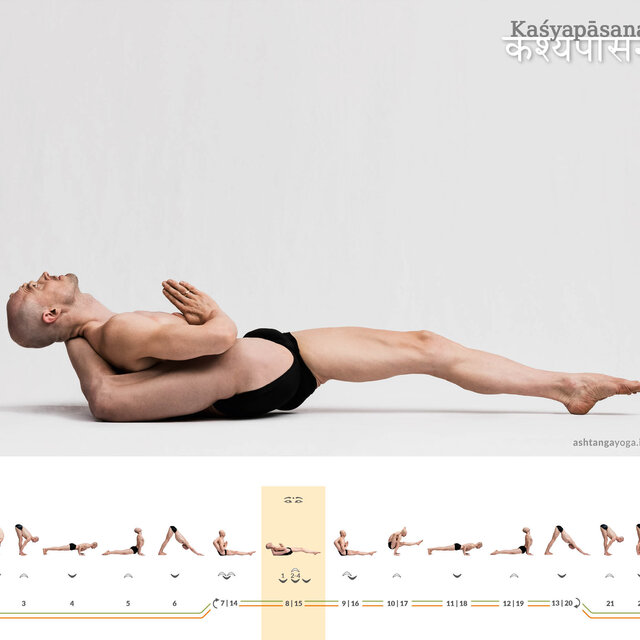
Kaśyapāsana: Pose Named after Kaśyapa

Kaśyapāsana: Pose Named after Kaśyapa

The "Pose Named after Kaśyapa" is the first of five poses with one foot behind the head. In this variation, we are in a supine position.

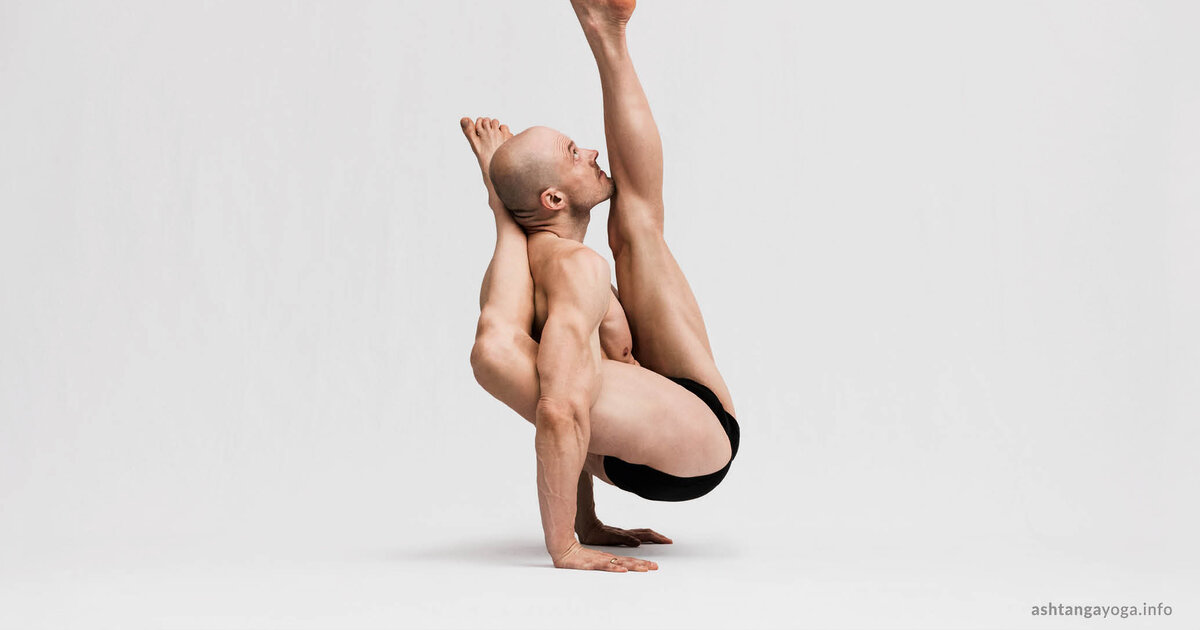
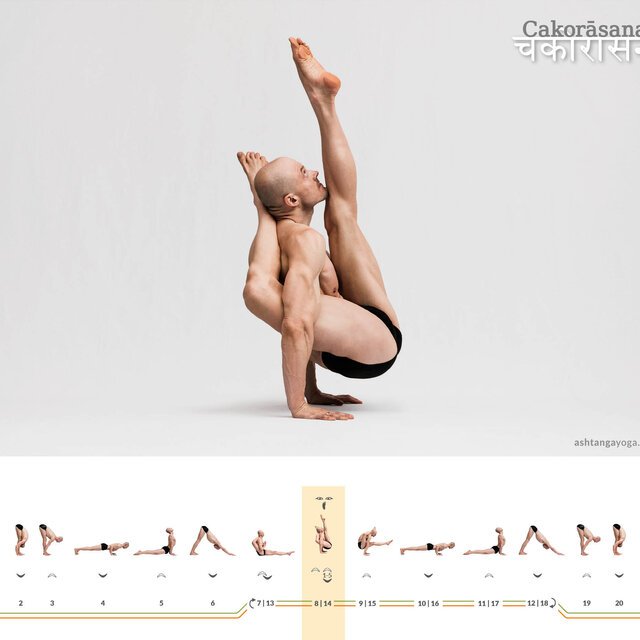
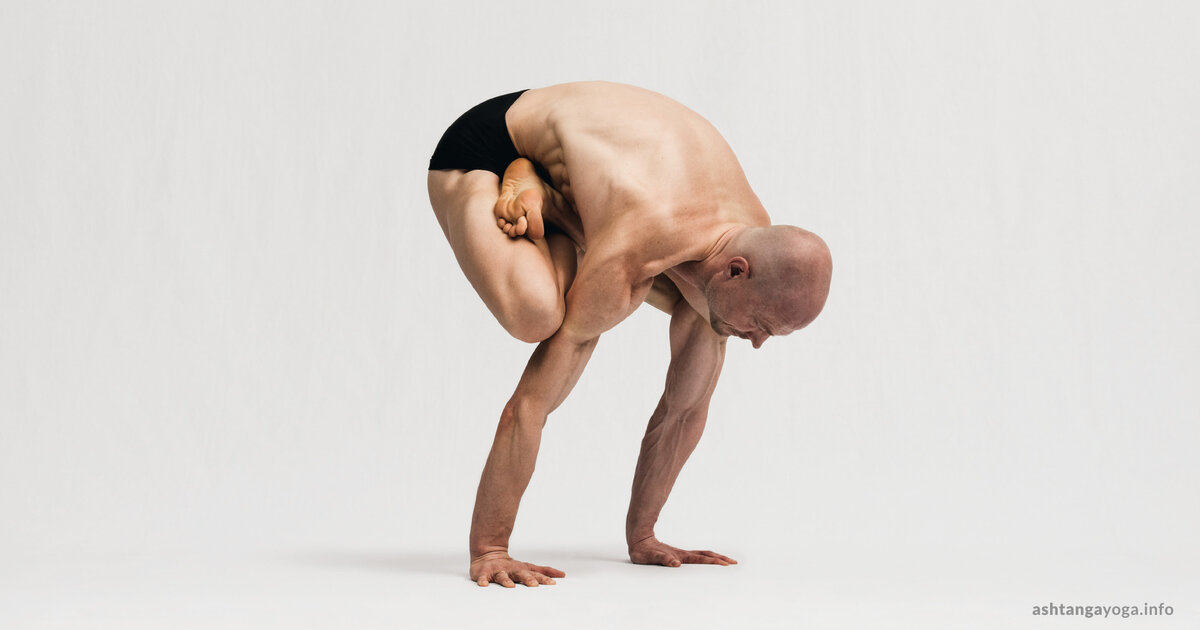
Cakorāsana: A pose named according to the Cakora-bird

Cakorāsana: A pose named according to the Cakora-bird

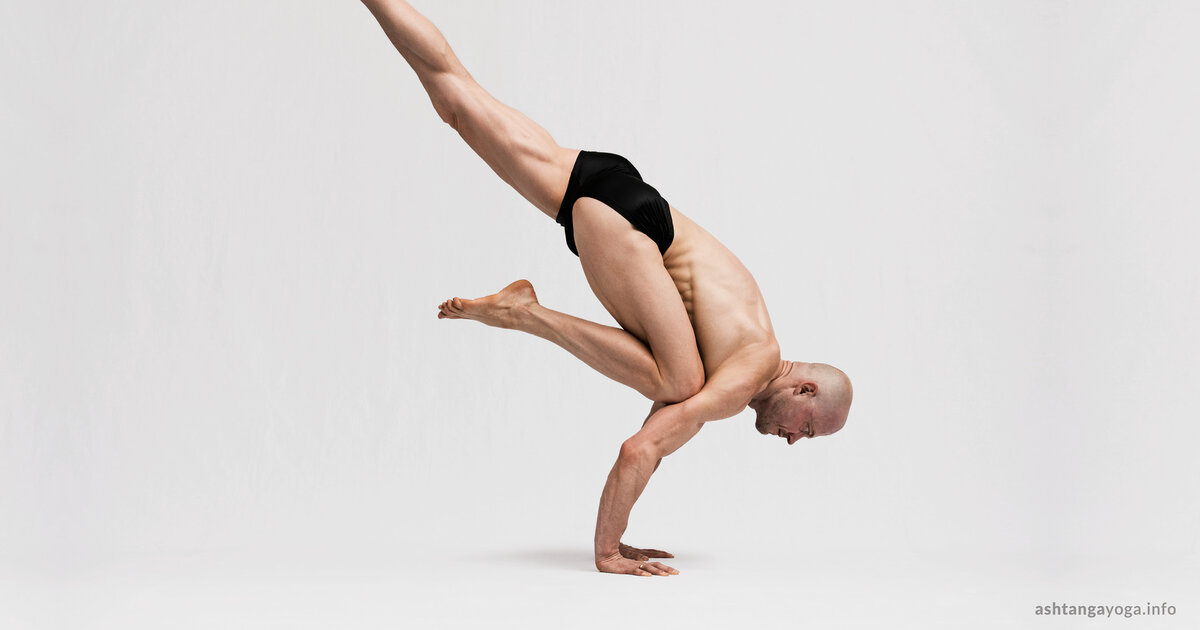
The posture named after the Cakora-bird is an arm balance, with one foot behind the head, and the other leg pointing vertically upwards.

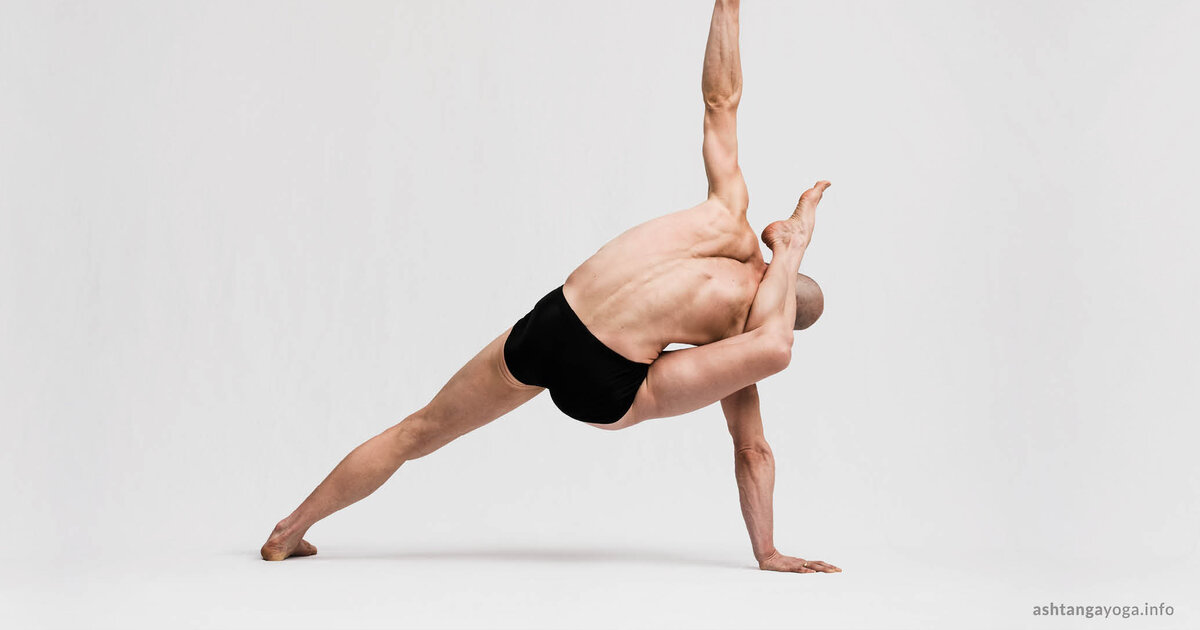
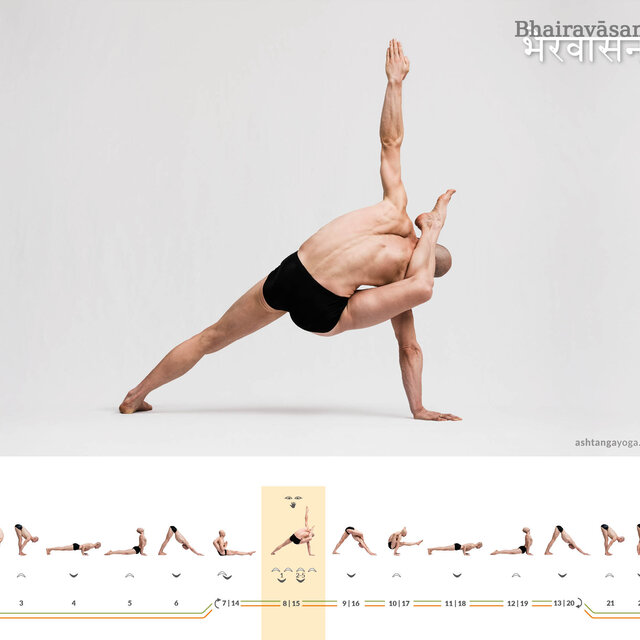
Bhairavāsana: Pose named after Bhairava

Bhairavāsana: Pose named after Bhairava

The posture named after Bhairava combines a side plank with another opportunity to place the foot behind the head.

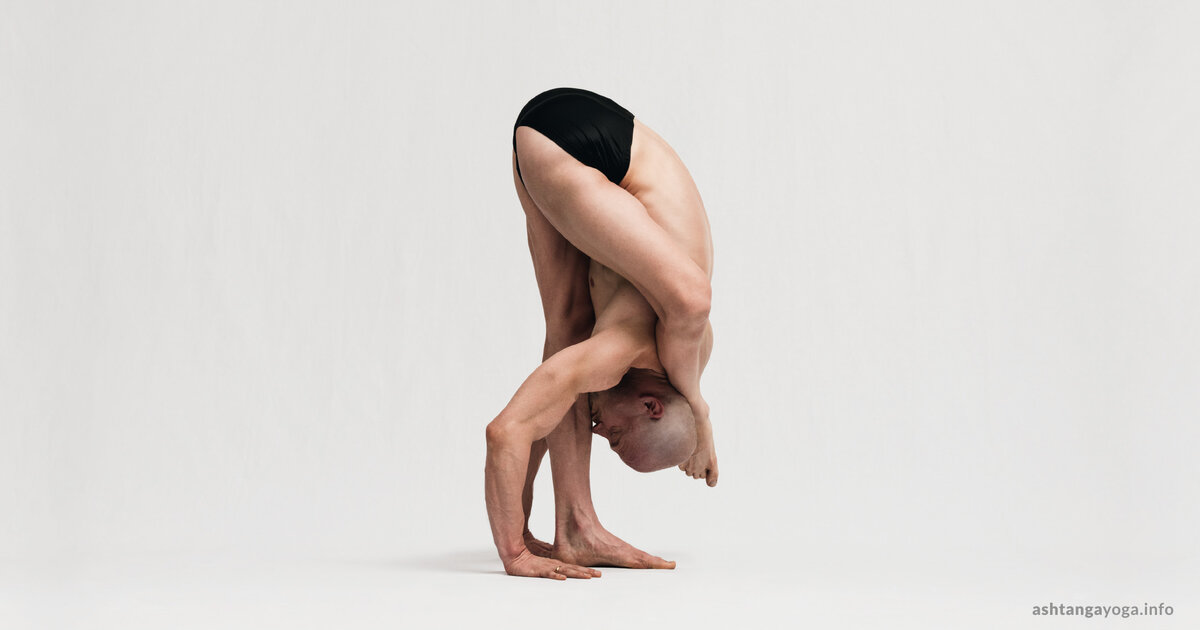
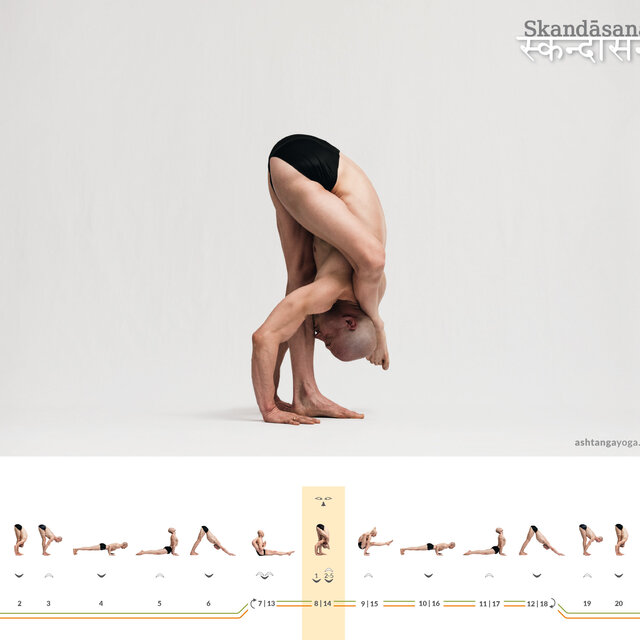
Skandāsana: Pose named after Skanda

Skandāsana: Pose named after Skanda

In the pose named after Skanda, one leg is positioned behind the head while the practitioner performs a standing forward bend.

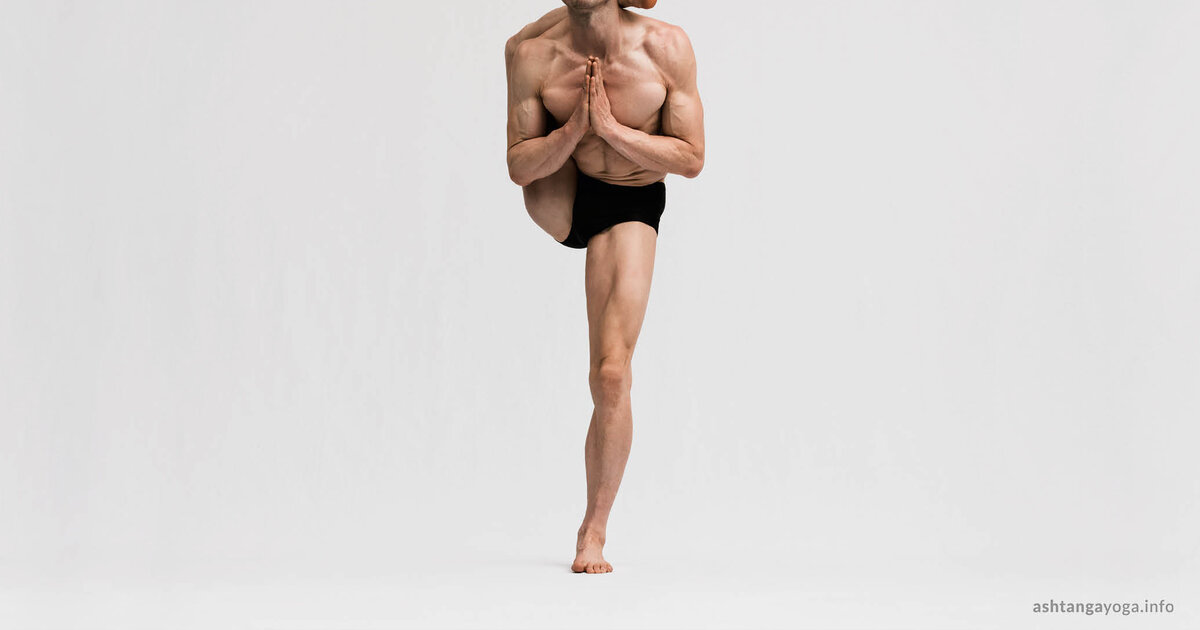
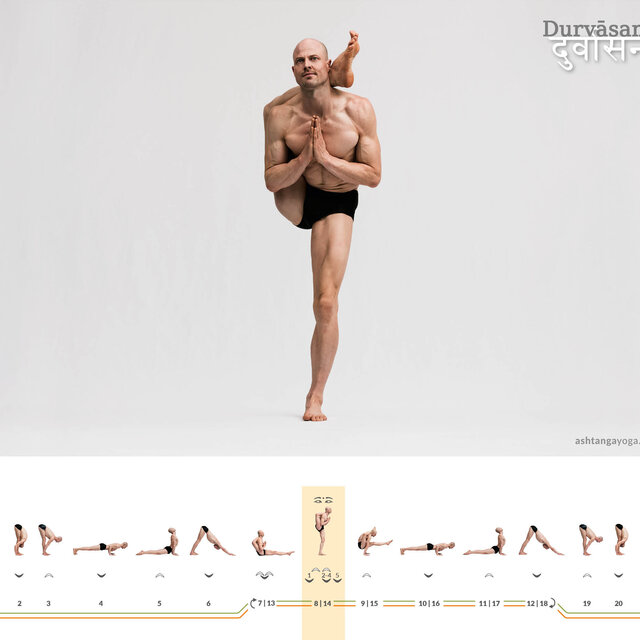
Durvāsana: Pose named after Durva

Durvāsana: Pose named after Durva

The pose named after Durva is a one-legged balancing position. In an upright stance, the other foot is positioned behind the head.

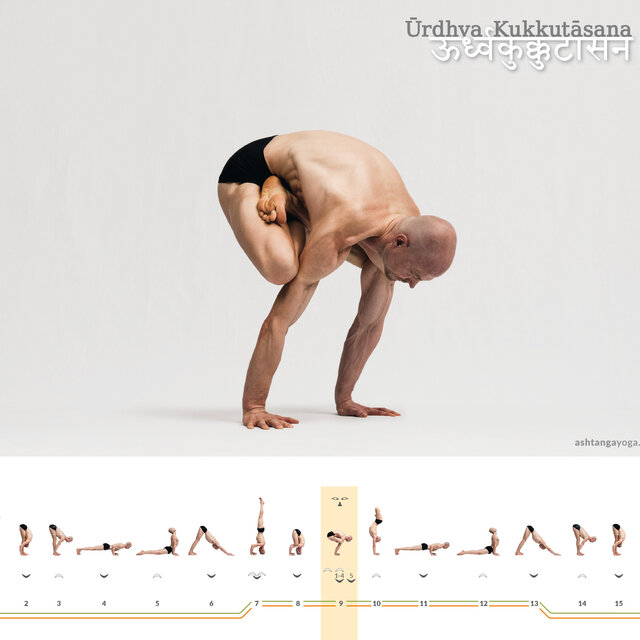
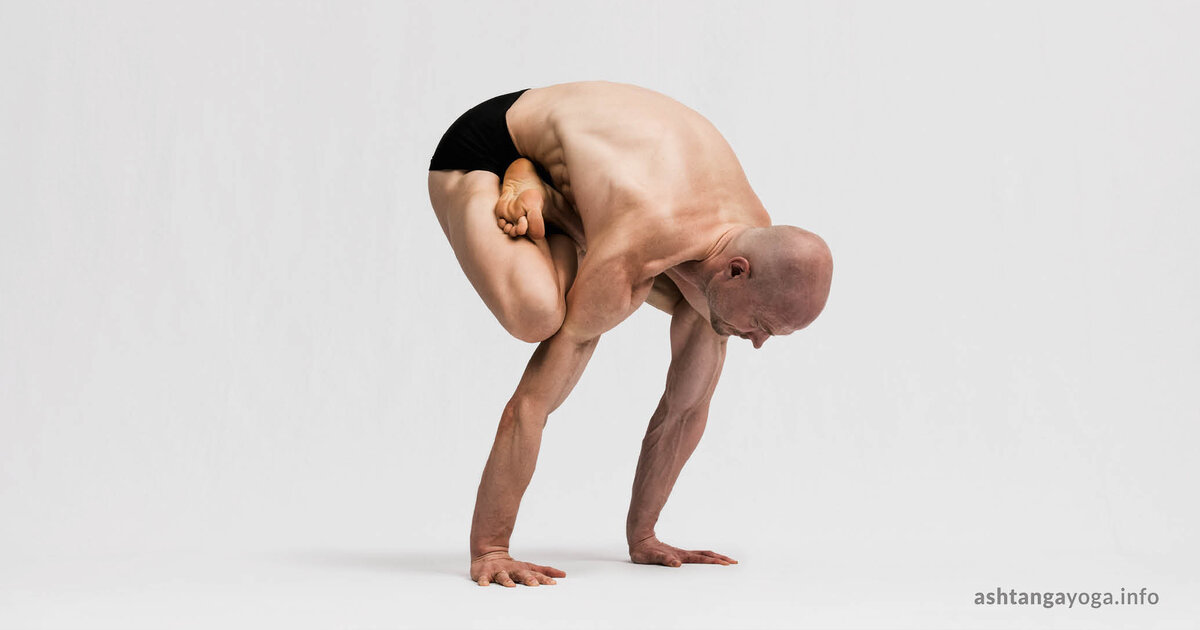
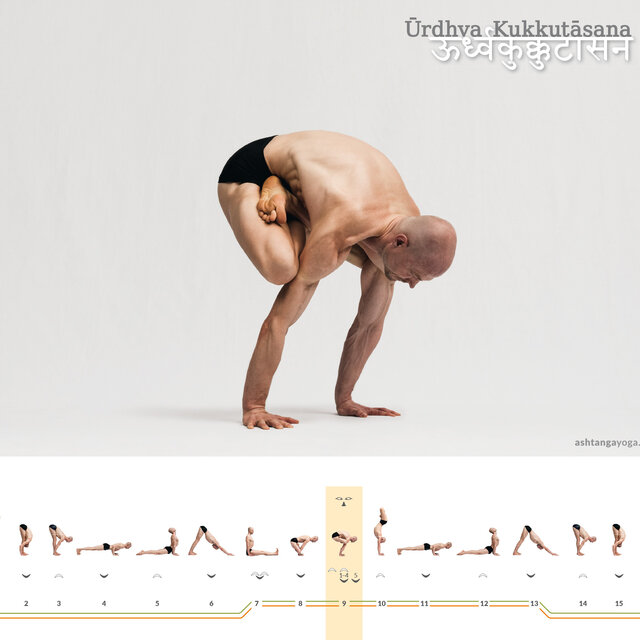
Ūrdhva Kukkuṭāsana A: The Pose of the 'Upward Rooster'

Ūrdhva Kukkuṭāsana A: The Pose of the 'Upward Rooster'

The pose of the 'Upward Rooster,' Ūrdhva Kukkuṭāsana, is an arm balance position in which the folded legs in the Lotus pose are supported on the upper arms.

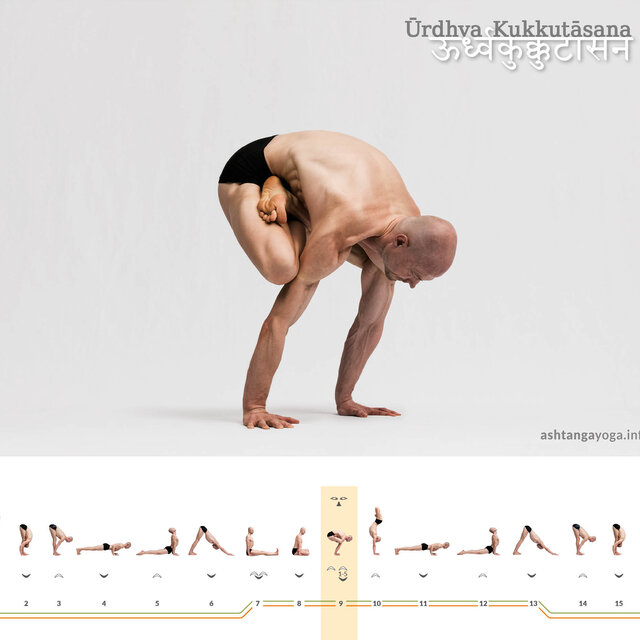
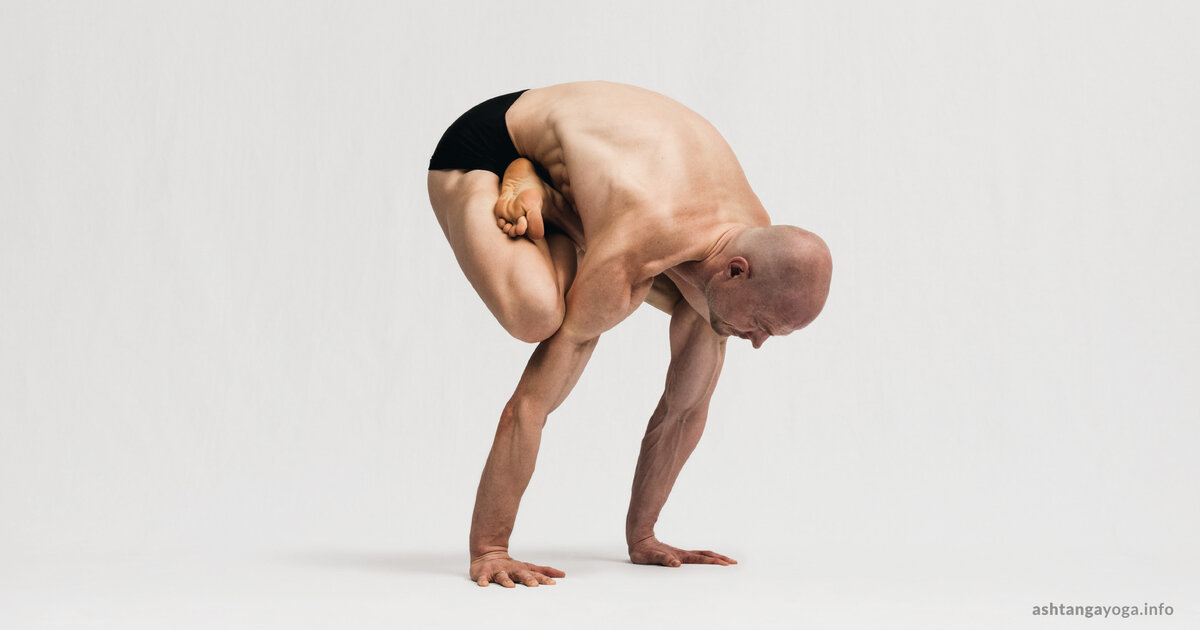
Ūrdhva KukkuṭāsanaB: The Pose of the 'Upward Rooster'

Ūrdhva KukkuṭāsanaB: The Pose of the 'Upward Rooster'

In the 'Upward-facing Rooster' pose version B (Ūrdhva Kukkuṭāsana B), energy is directed upwards while the legs in lotus balance on the upper arms. This...

Ūrdhva KukkuṭāsanaB: The Pose of the 'Upward Rooster'

Ūrdhva KukkuṭāsanaB: The Pose of the 'Upward Rooster'

In the 'Upward-facing Rooster' pose version B (Ūrdhva Kukkuṭāsana B), energy is directed upwards while the legs in lotus balance on the upper arms. This...

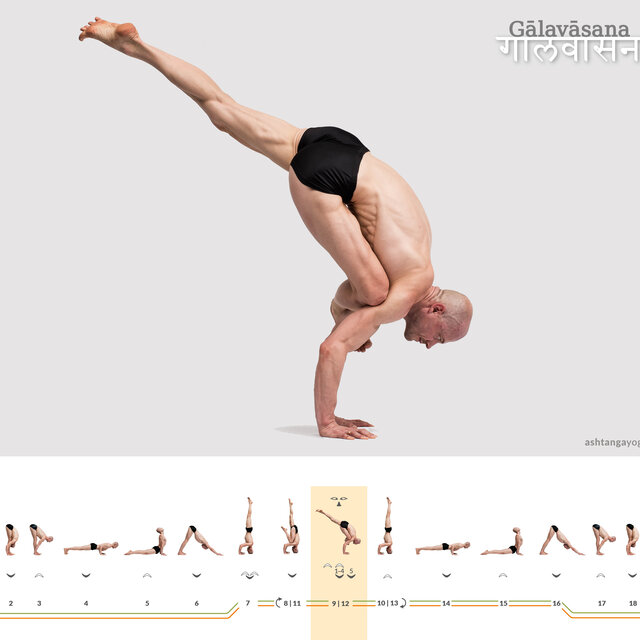
Gālavāsana: Pose dedicated to Gālava

Gālavāsana: Pose dedicated to Gālava

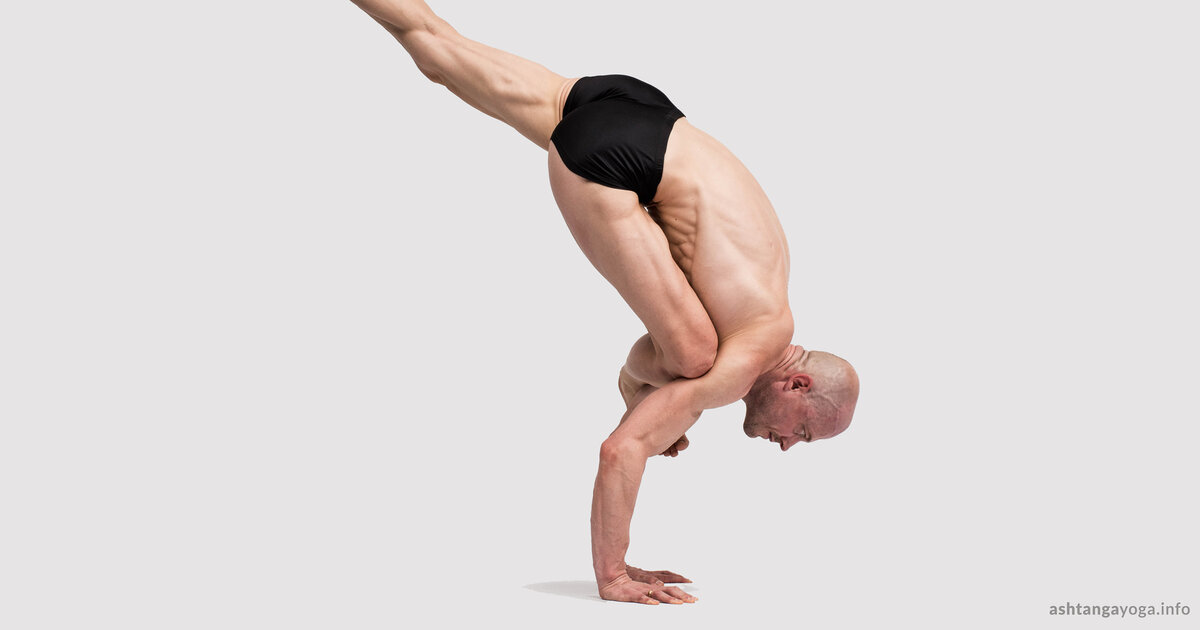
The pose dedicated to Gālava, Gālavāsana, is an arm balance where one shin rests on the upper arms while the other leg extends upward in line with the torso.

Eka Pāda Bakāsana A: Einbeinige-Kranich-Haltung

Eka Pāda Bakāsana A: Einbeinige-Kranich-Haltung

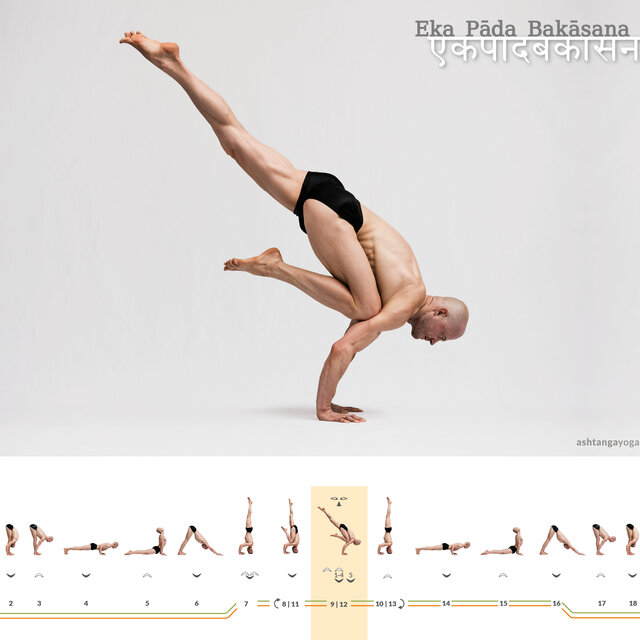
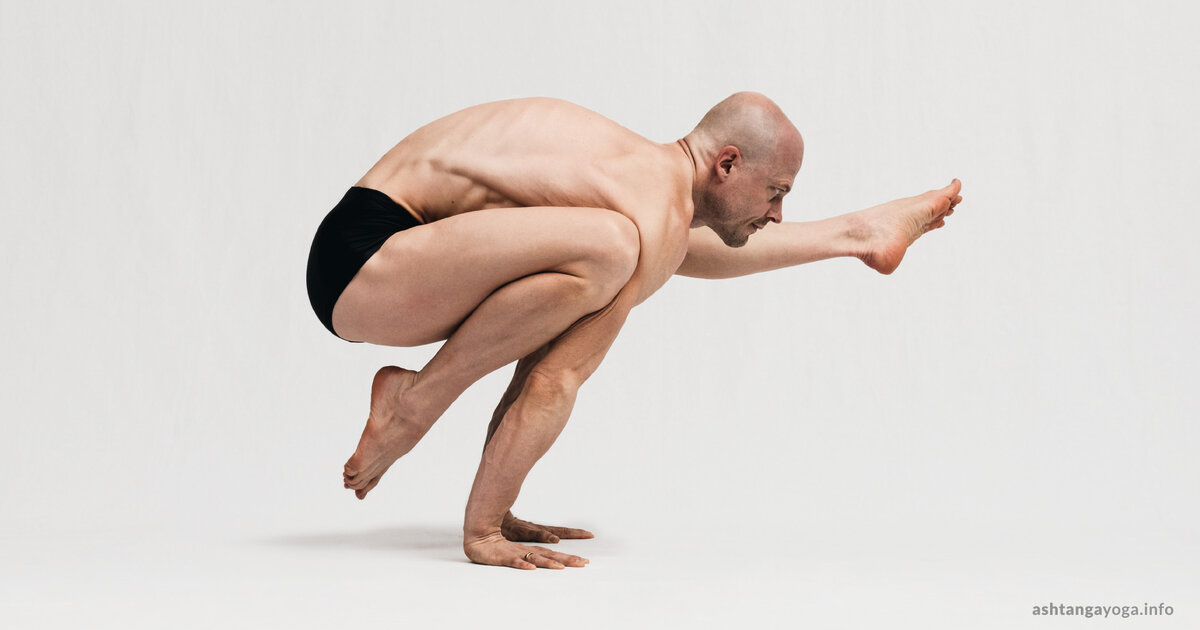
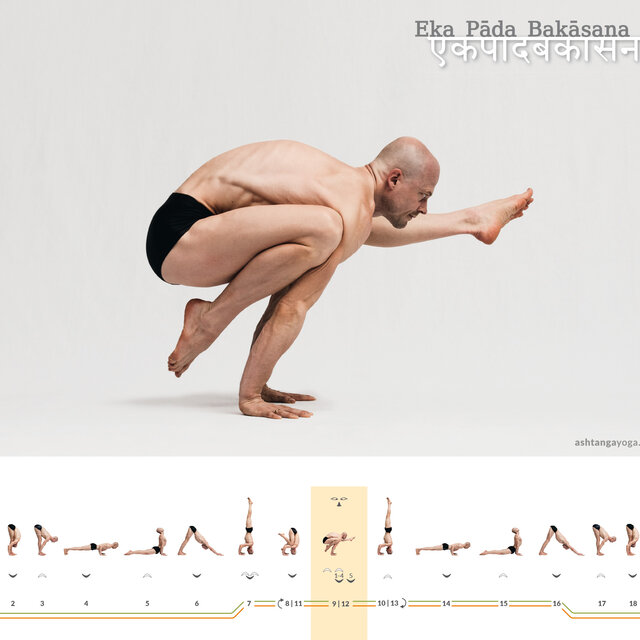
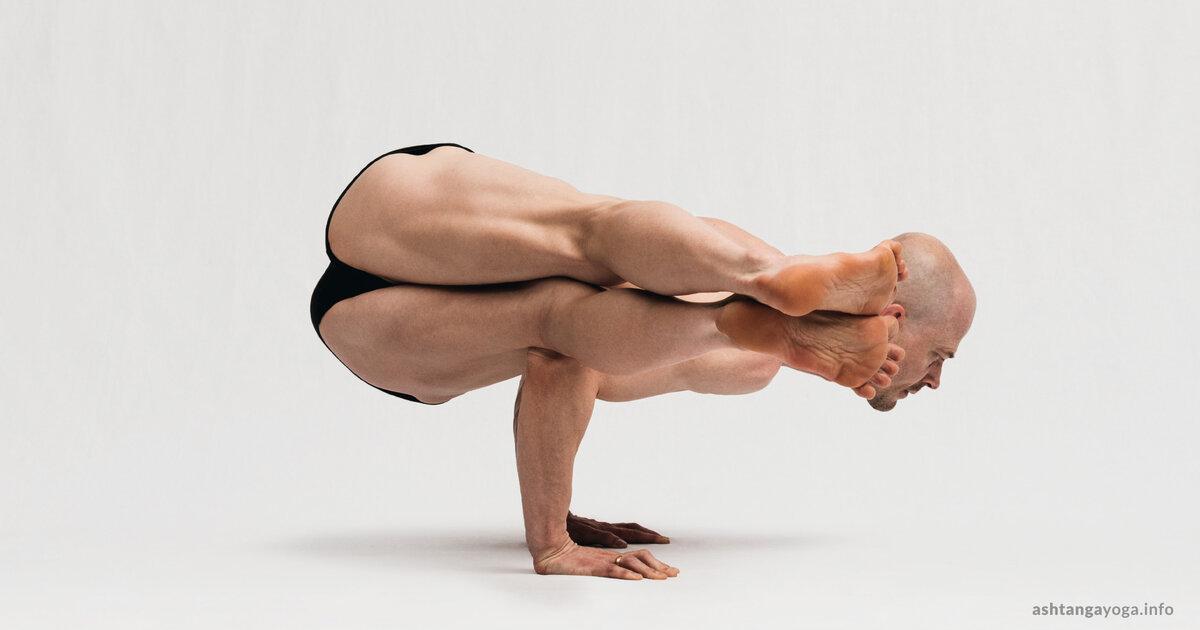
Eka Pāda Bakāsana, oder Einbeinige-Kranich-Haltung, ist, in Variante A, eine fortgeschrittene Yoga-Pose, die auf den Armen balanciert. Ein Knie ist am...

Eka Pāda Bakāsana B: One-Legged Crane Pose

Eka Pāda Bakāsana B: One-Legged Crane Pose

Eka Pāda Bakāsana, or One-Legged Crow Pose, is, in variation B, an advanced yoga pose balancing on arms. One knee is supported on an elbow and the other leg...

Kauṇḍinyāsana A: Position dedicated to Kauṇḍinya

Kauṇḍinyāsana A: Position dedicated to Kauṇḍinya

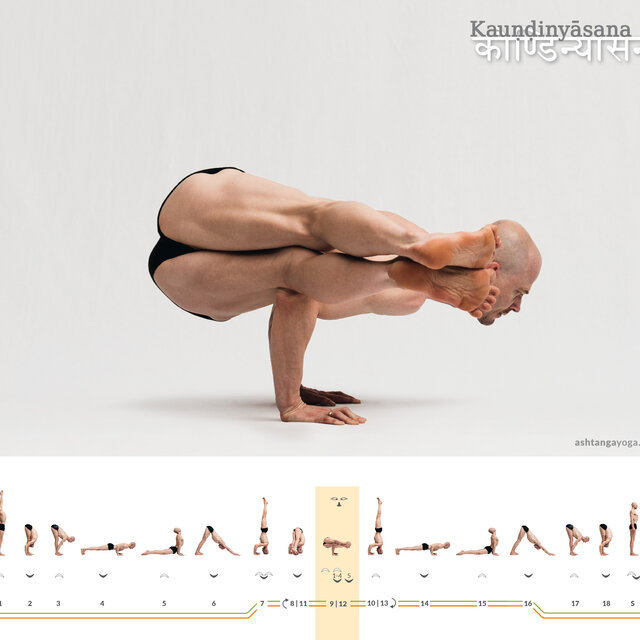
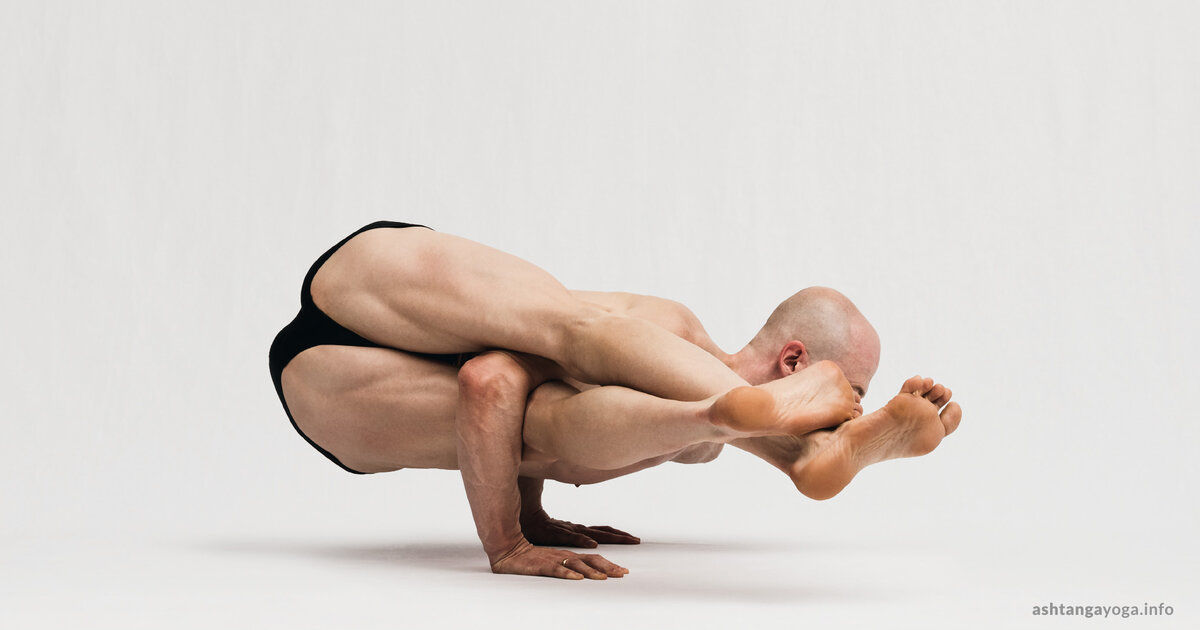
Kauṇḍinyāsana, or the position dedicated to Kauṇḍinya, in variant A, is a posture balanced on the arms. Both legs together are pointing to one side.

Kauṇḍinyāsana B: Position dedicated to Kauṇḍinya

Kauṇḍinyāsana B: Position dedicated to Kauṇḍinya

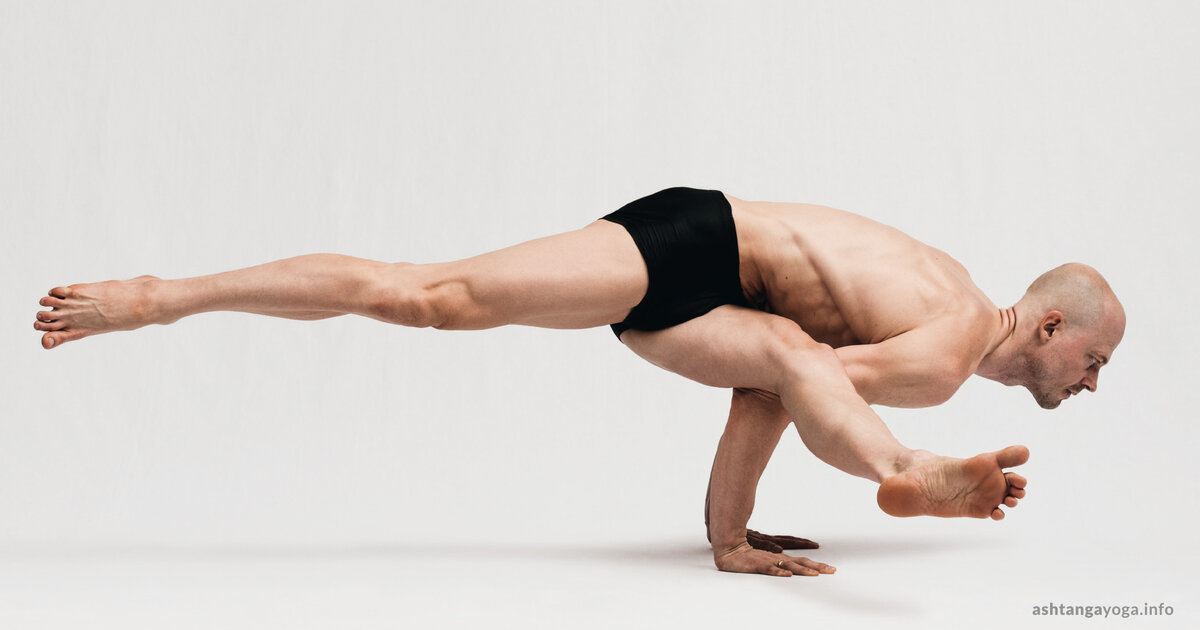
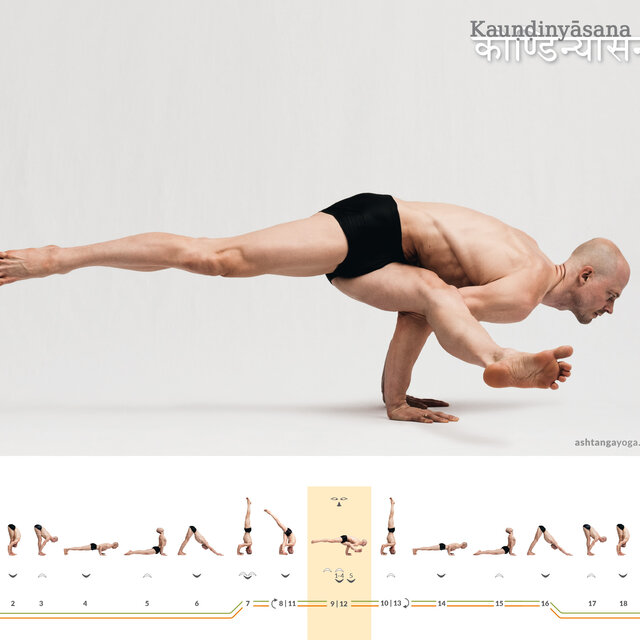
Kauṇḍinyāsana, or the position dedicated to Kauṇḍinya, in variant B, is a posture balanced on the arms. One leg crosses forward, the other extends backwards...

Aṣṭāvakrāsana A: Pose of the Sage Aṣṭāvakra

Aṣṭāvakrāsana A: Pose of the Sage Aṣṭāvakra

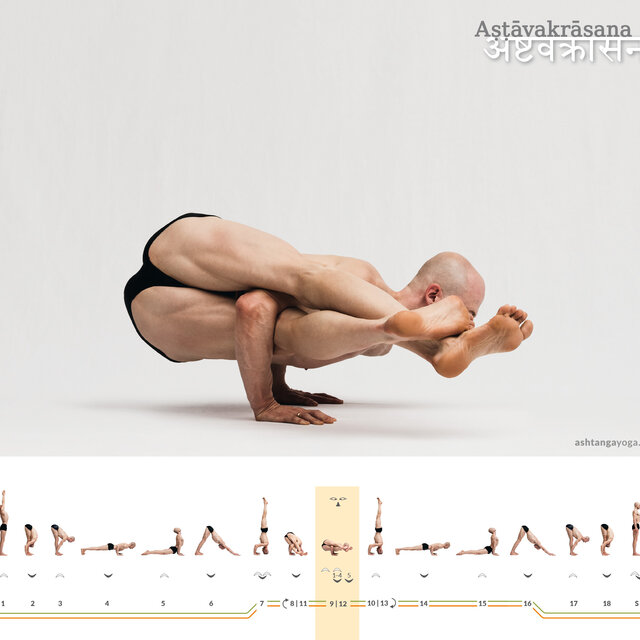
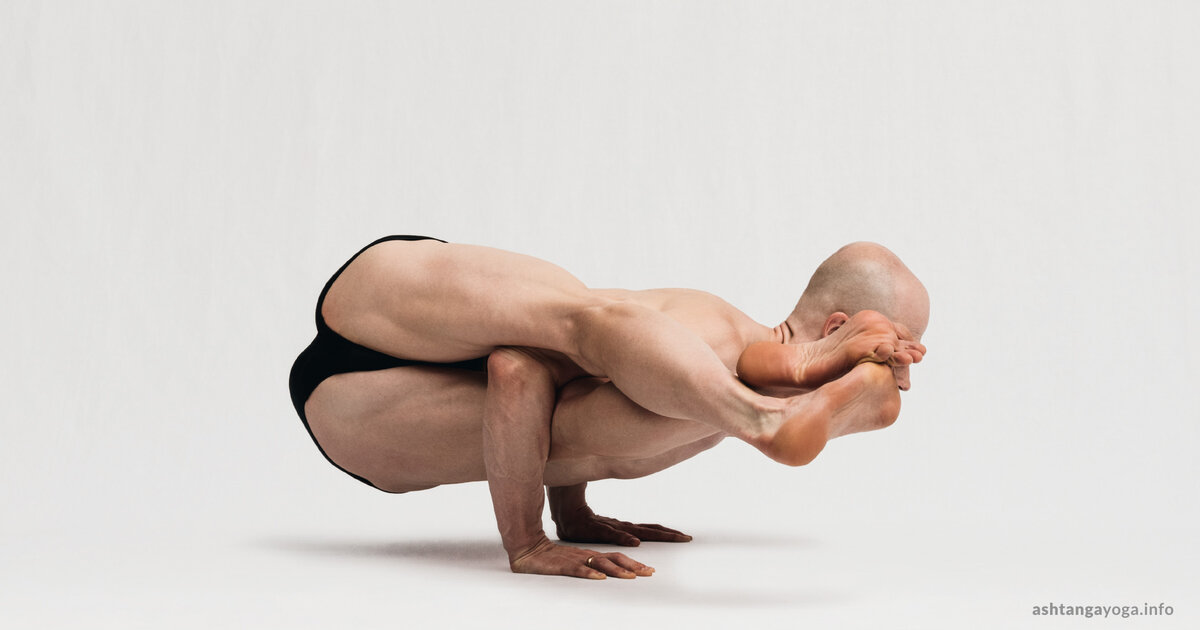
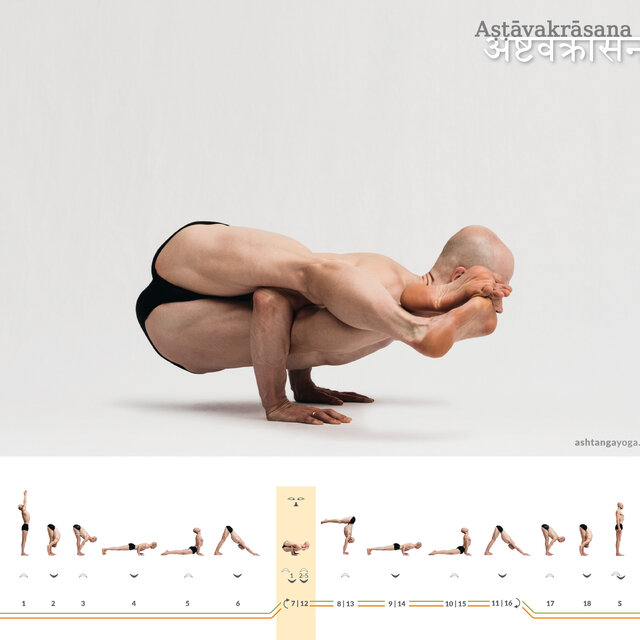
Aṣṭāvakrāsana A or the position dedicated to the sage Aṣṭāvakra is an arm balance with legs entwined to the side.

Aṣṭāvakrāsana A: Pose of the Sage Aṣṭāvakra

Aṣṭāvakrāsana A: Pose of the Sage Aṣṭāvakra

Aṣṭāvakrāsana A or the position dedicated to the sage Aṣṭāvakra is an arm balance with legs entwined to the side.

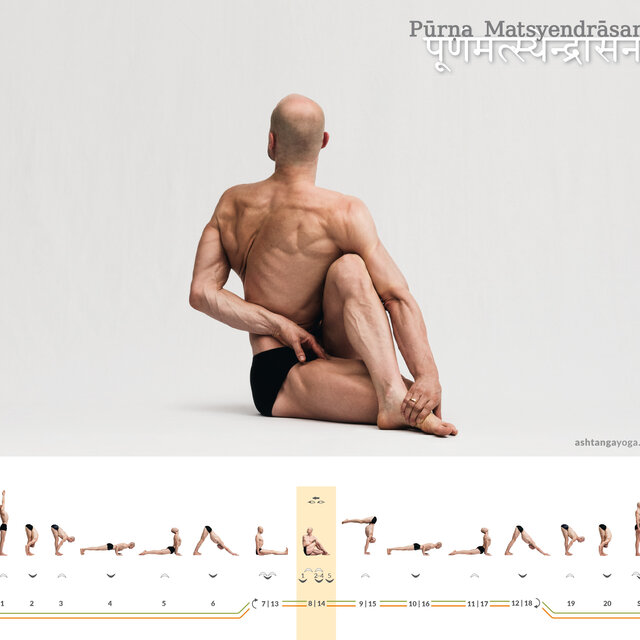
Pūrṇa Matsyendrāsana: The complete pose named after Matsyendranātha

Pūrṇa Matsyendrāsana: The complete pose named after Matsyendranātha

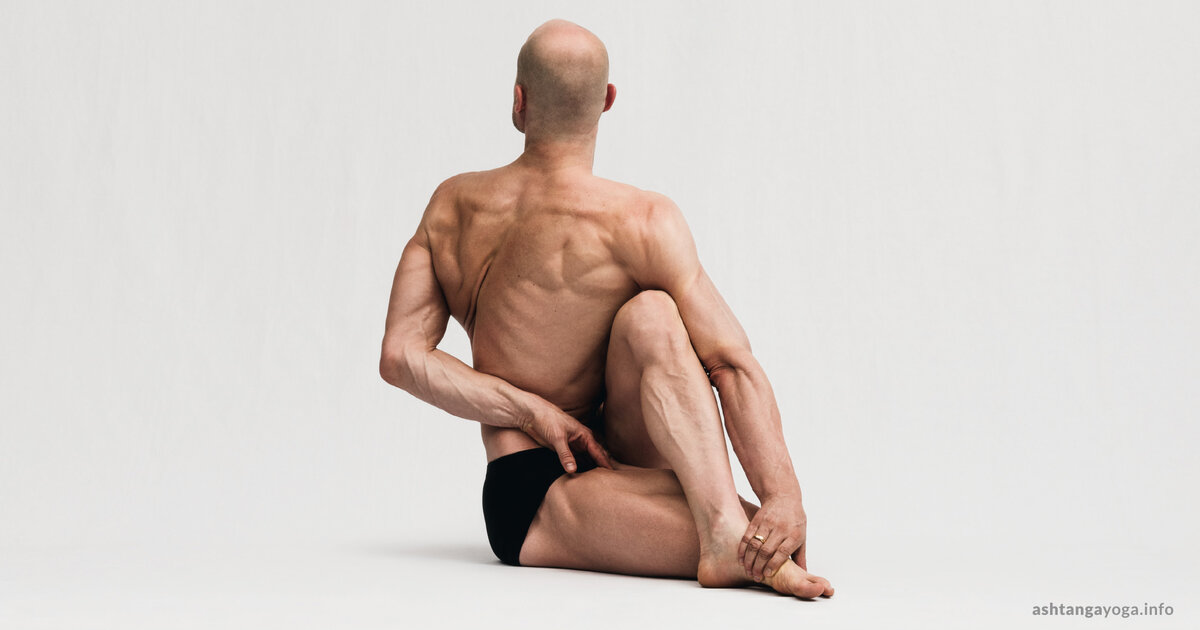
Pūrṇa Matsyendrāsana is a seated twist in which one leg is in Lotus.

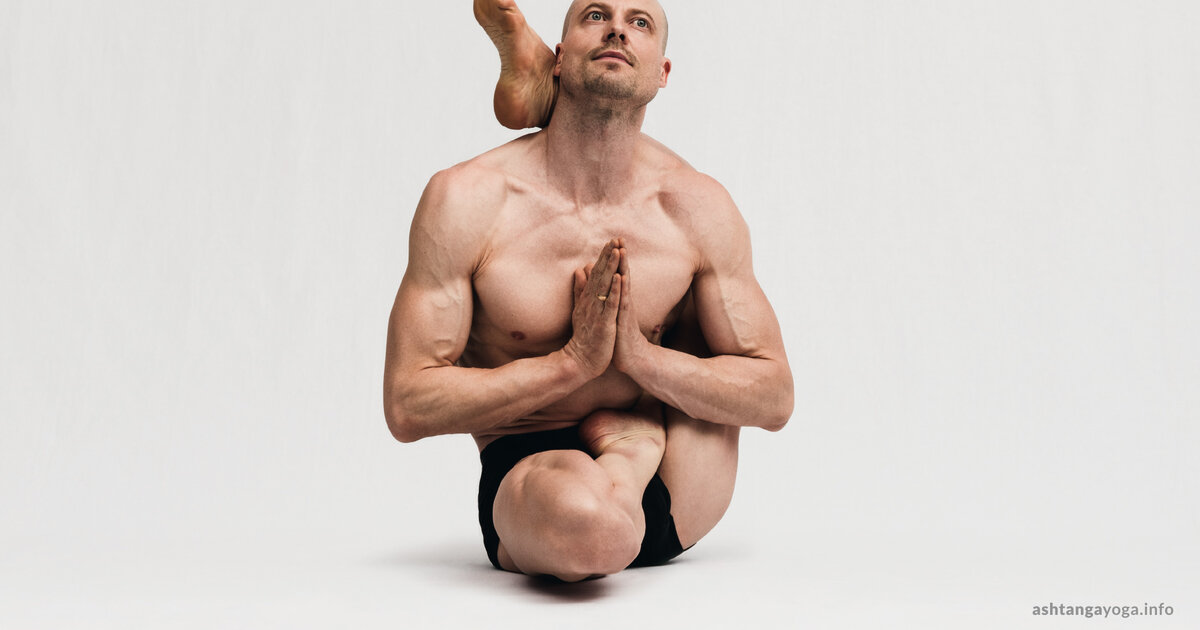
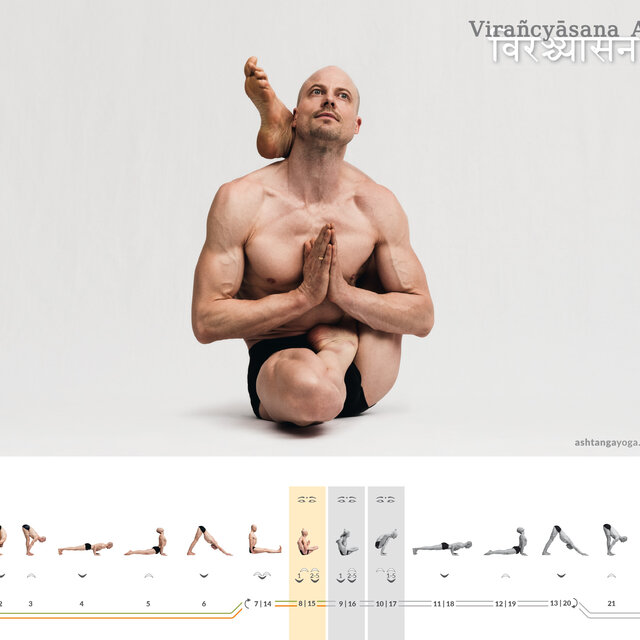
Virañcyāsana A1: Posture of Virañcya

Virañcyāsana A1: Posture of Virañcya

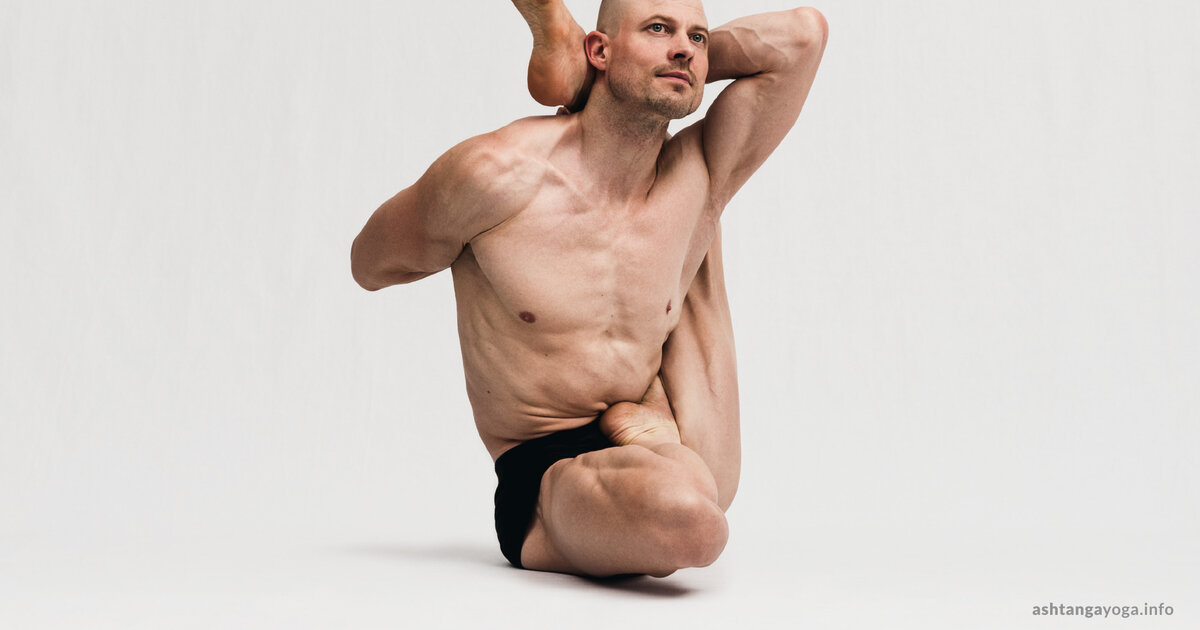
One leg in Lotus, the other behind the head: Virañcyāsana A1 challenges hips, knees, and focus—order emerges when breath and alignment work together with...

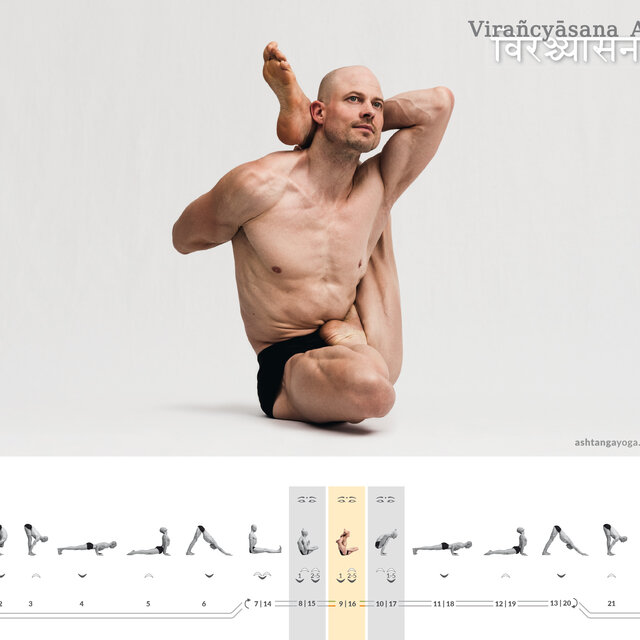
Virañcyāsana A2: Posture of Virañcya

Virañcyāsana A2: Posture of Virañcya

From Virañcyāsana A1, A2 emerges: the arms bind behind the back and the gaze lifts. Precise alignment makes the form stable—not strength, but organization...