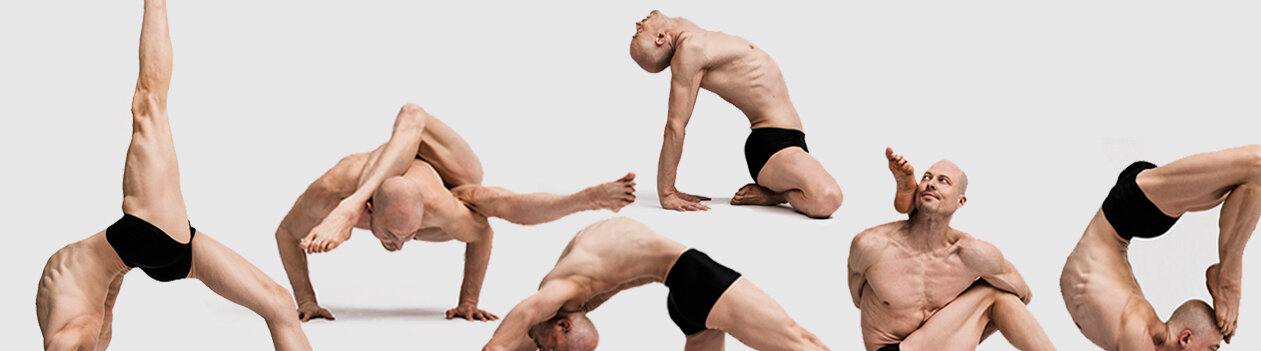
Sthira Bhaga: The 3rd Series of Aṣṭāṅga Yoga

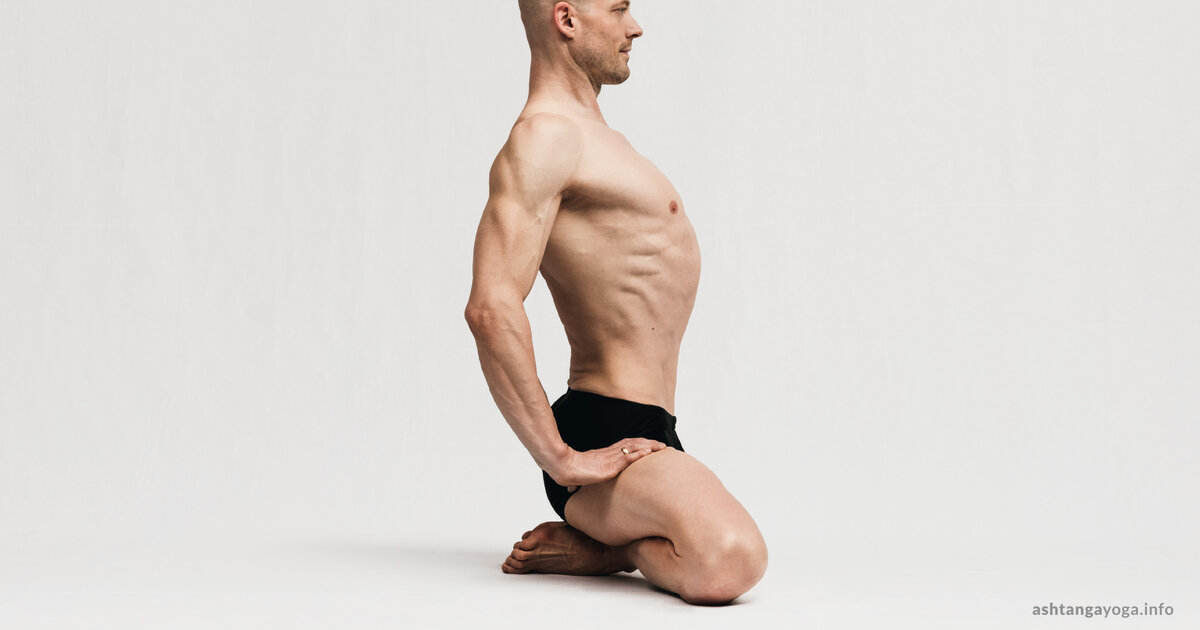
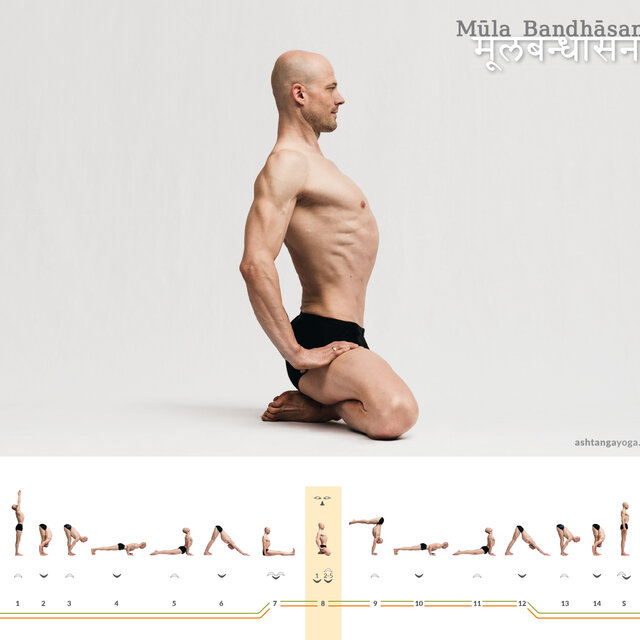
Mūla Bandhāsana: The posture of the root lock

Mūla Bandhāsana: The posture of the root lock

Like Baddha Koṇāsana, but with the feet pointing backward: Mūla Bandhāsana looks simple, yet it demands precision.

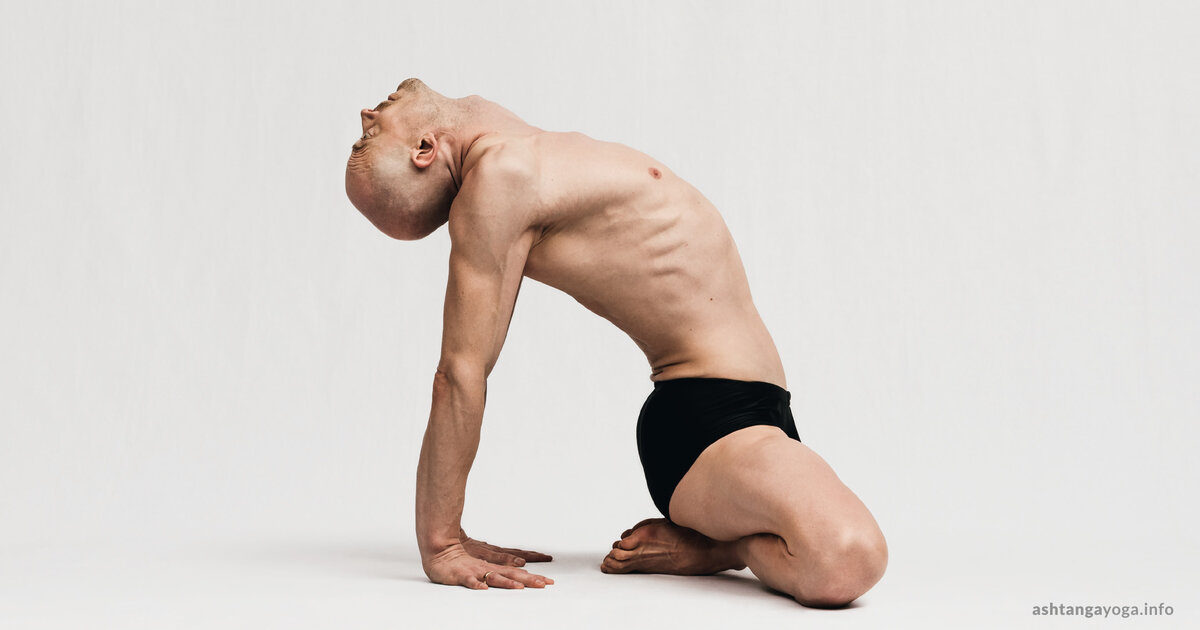
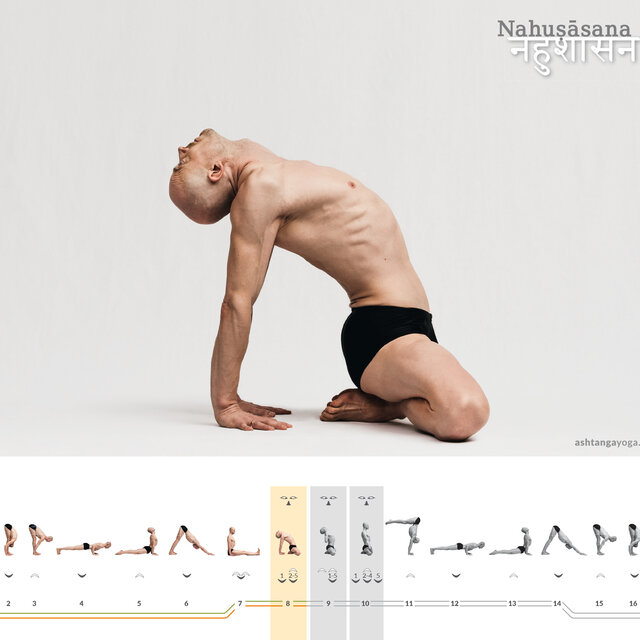
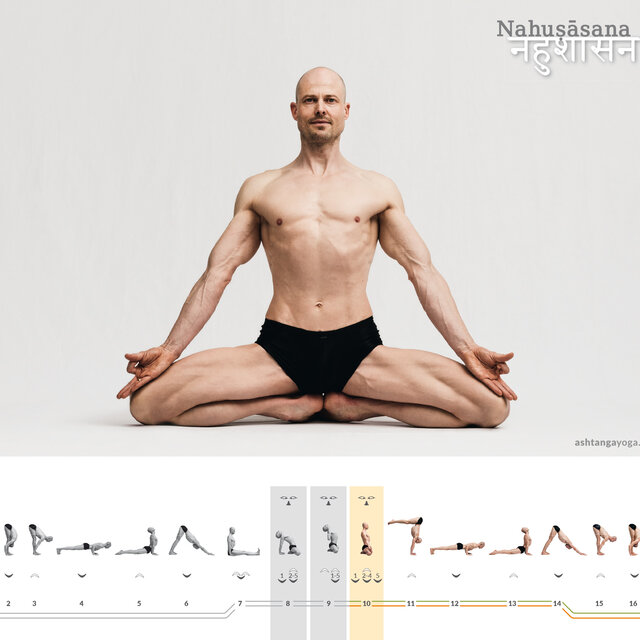
Nahuṣāsana A: The posture of Nahuṣa

Nahuṣāsana A: The posture of Nahuṣa

Like Mūla Bandhāsana, Nahuṣāsana A is built on the same foundation. Here, however, the hands support behind the back and the gaze lifts upward. This...

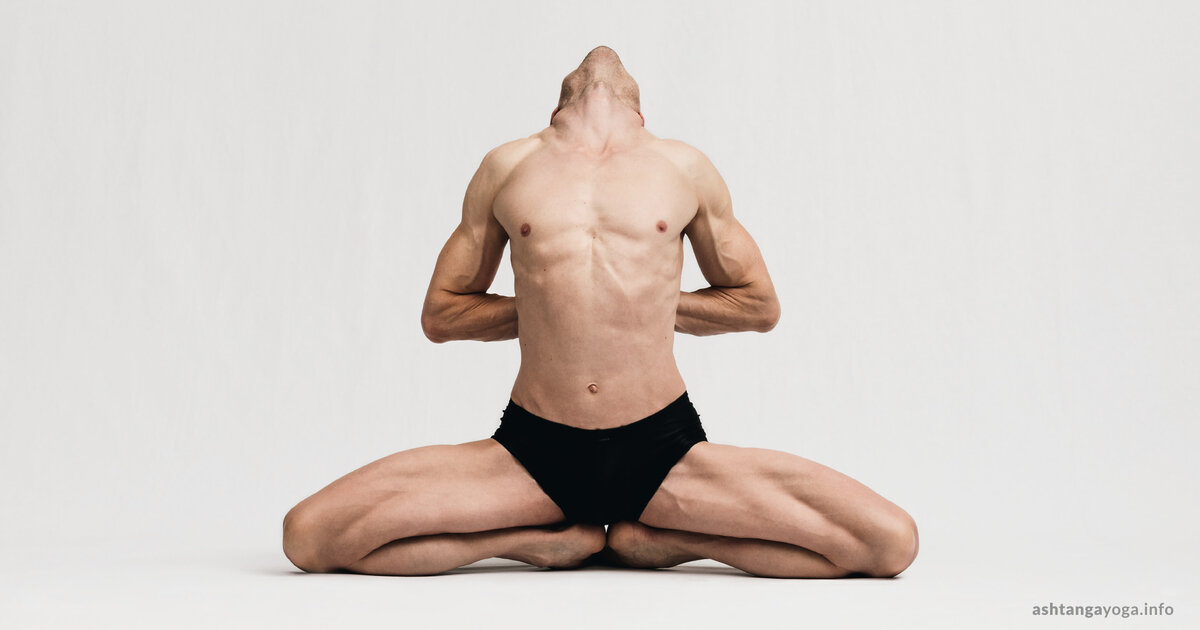
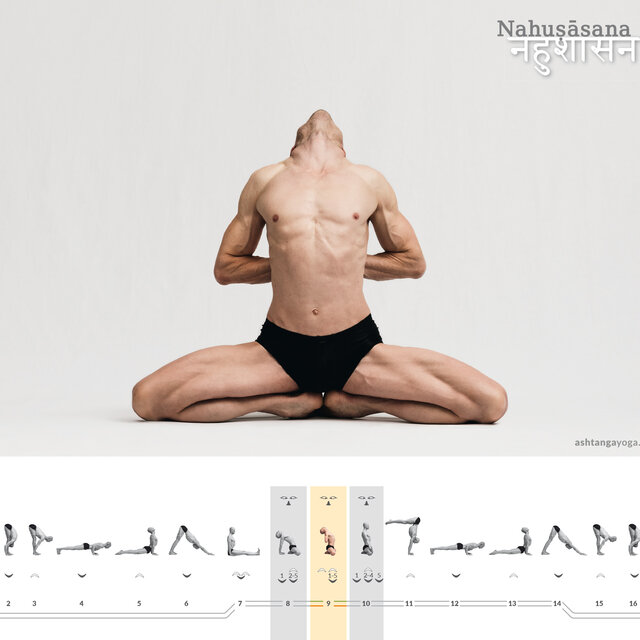
Nahuṣāsana B: The posture of Nahuṣa

Nahuṣāsana B: The posture of Nahuṣa

Like Nahuṣāsana A, Nahuṣāsana B is built on Mūla Bandhāsana. The hands now join behind the back between the shoulder blades, and the gaze lifts upward. The...

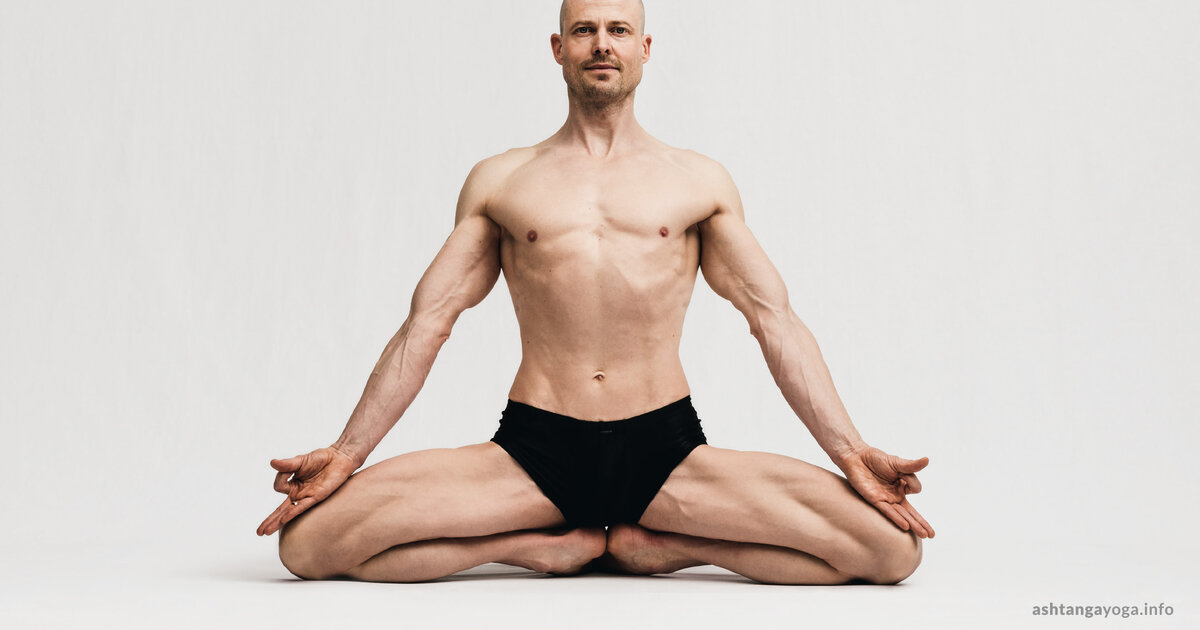
Nahuṣāsana C: The posture of Nahuṣa

Nahuṣāsana C: The posture of Nahuṣa

Nahuṣāsana C is the third of three almost identical postures built on Mūla Bandhāsana. The hands now rest meditatively in Cinmudrā on the knees, and the gaze...

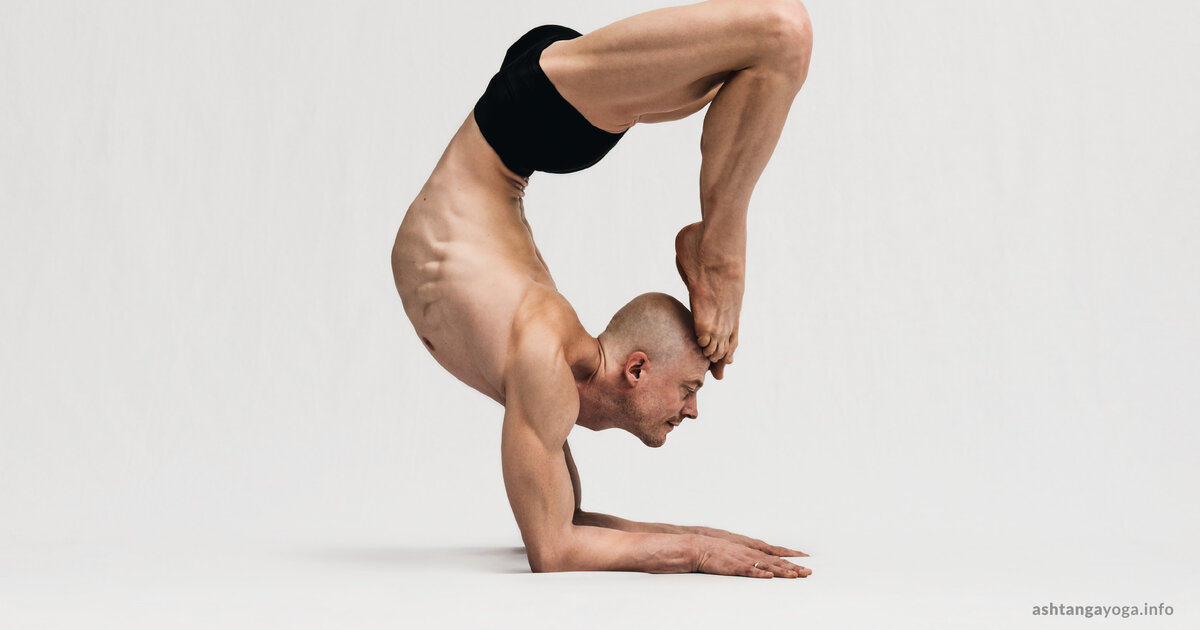
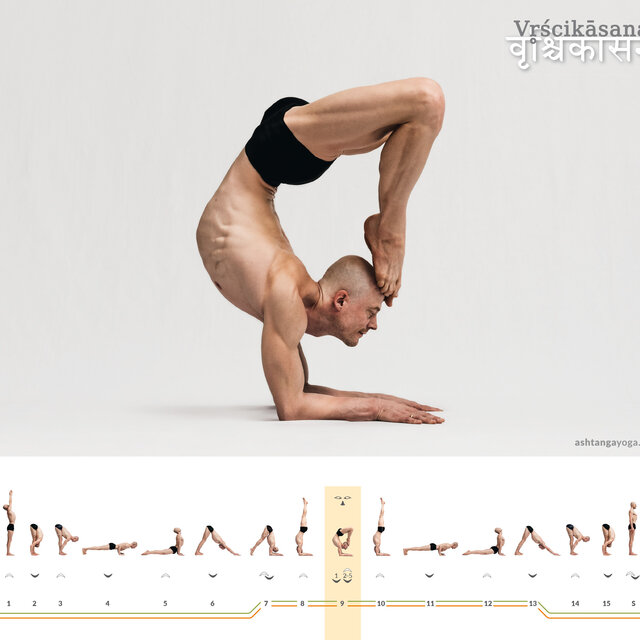
Vṛścikāsana: The Scorpion

Vṛścikāsana: The Scorpion

From forearm stand into a backbend: Vṛścikāsana combines strength and control with wide opening. The posture becomes stable when the base carries quietly and...

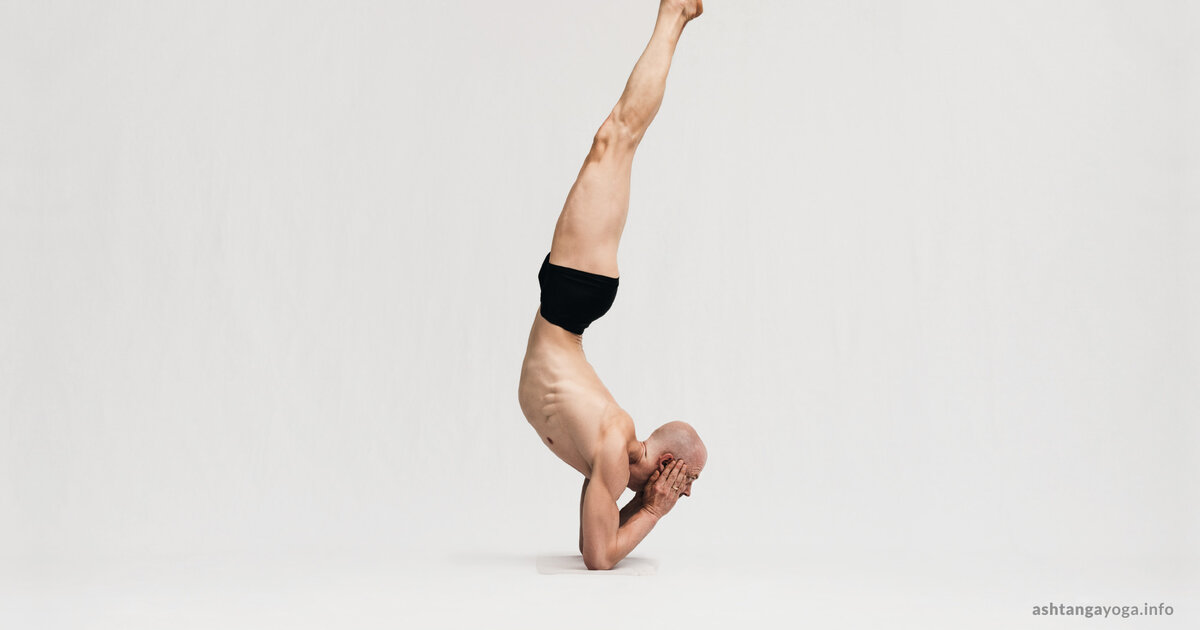
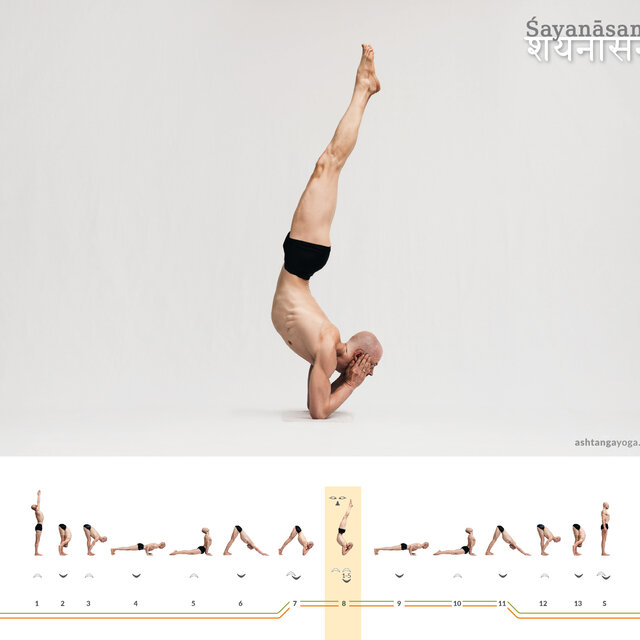
Śayanāsana: The posture of repose

Śayanāsana: The posture of repose

From forearm balance into a seemingly “quiet” vertical line: Śayanāsana requires stability in the shoulder girdle and a clear axis so that balance arises from...

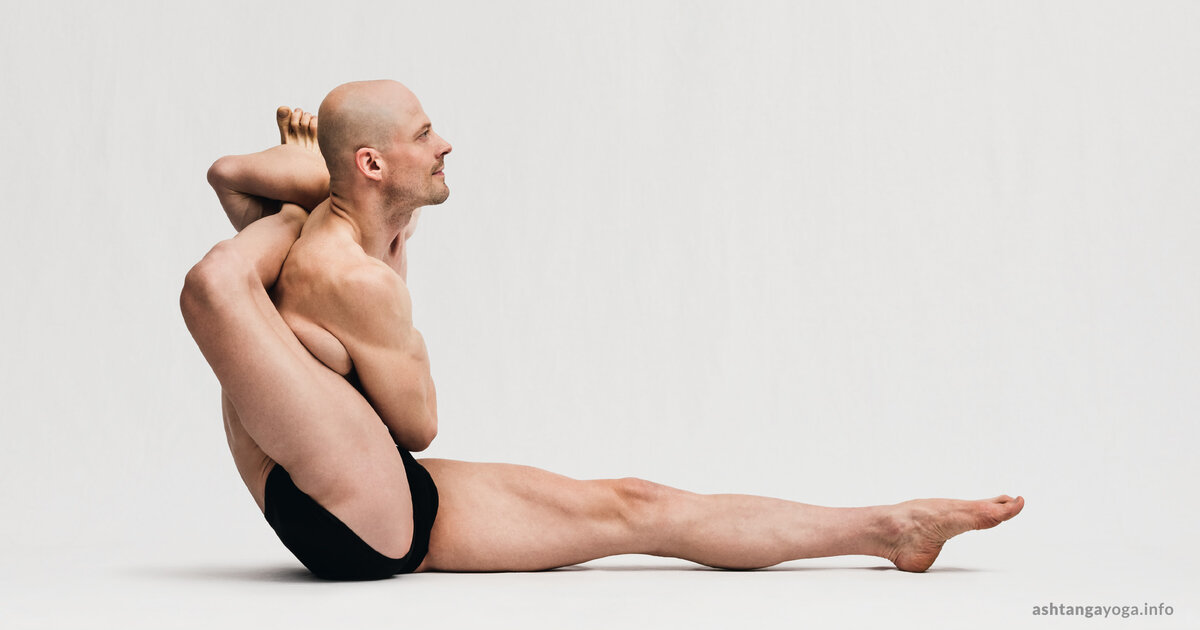
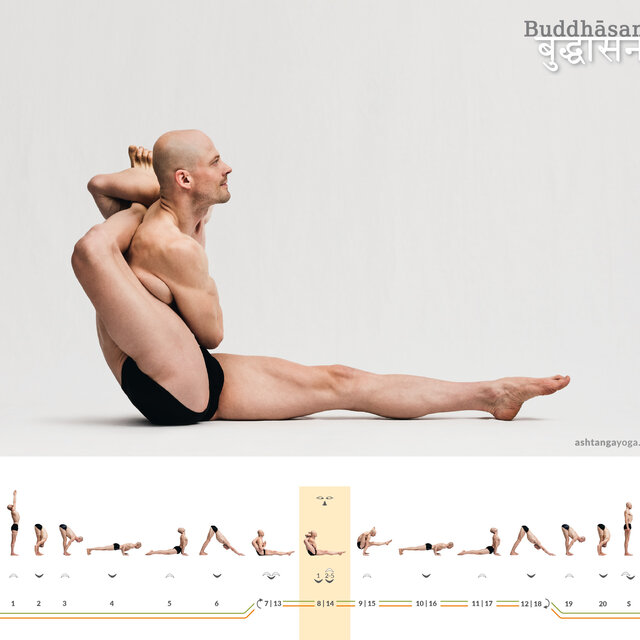
Buddhāsana: The posture of the Buddha

Buddhāsana: The posture of the Buddha

One leg not only goes behind the head, but behind the opposite shoulder: Buddhāsana demands deep hip opening and shoulder mobility. The posture becomes stable...

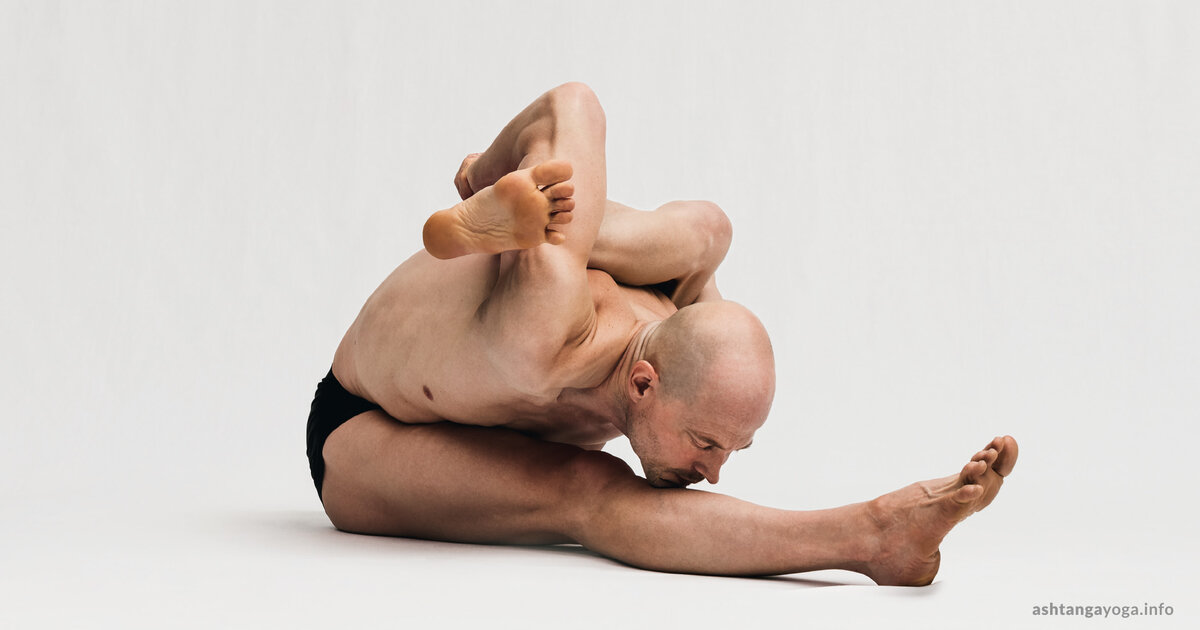
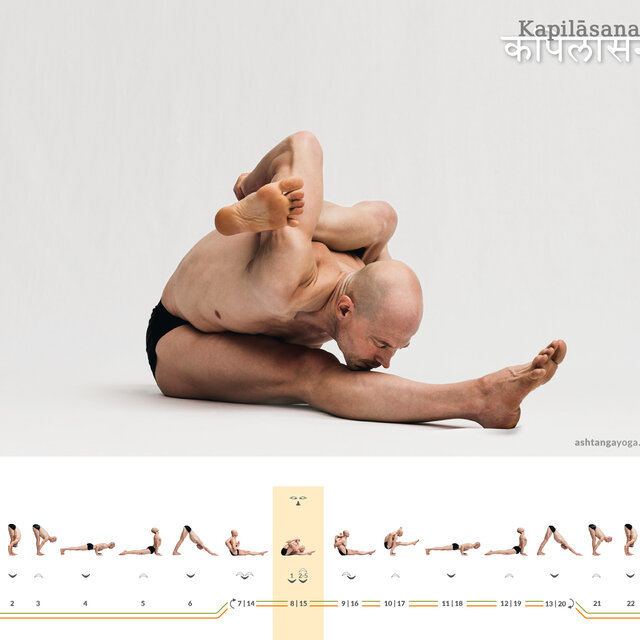
Kapilāsana: The posture of Kapila

Kapilāsana: The posture of Kapila

Kapilāsana expands Buddhāsana by adding a forward fold and an additional bind. In this way, the posture combines deep hip opening and shoulder-girdle mobility...

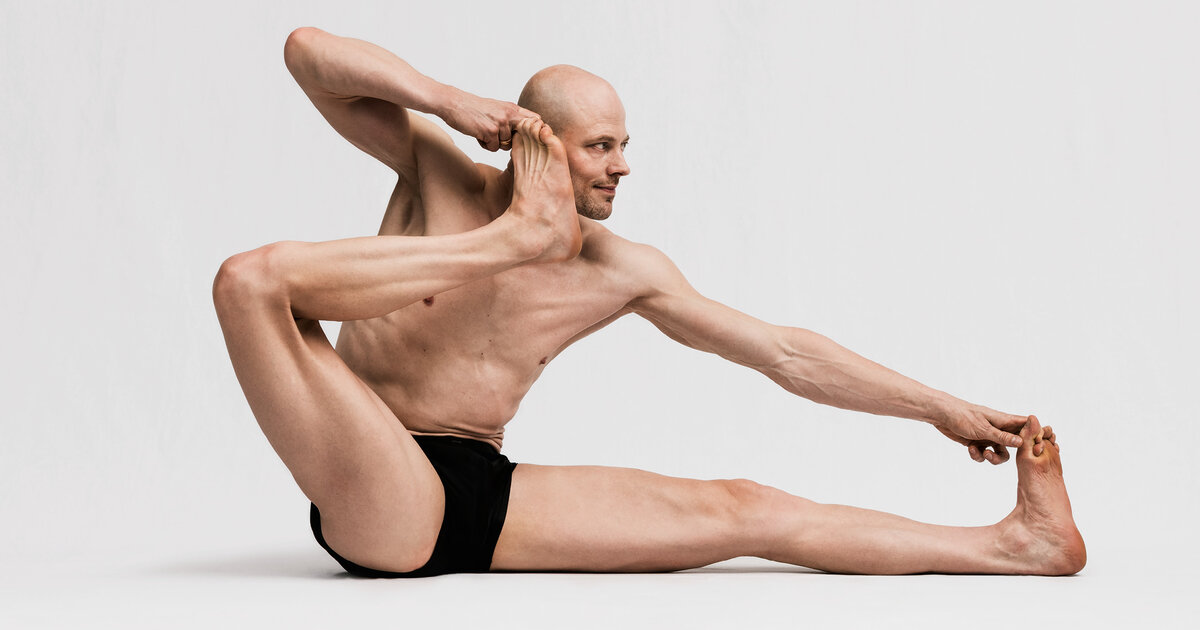
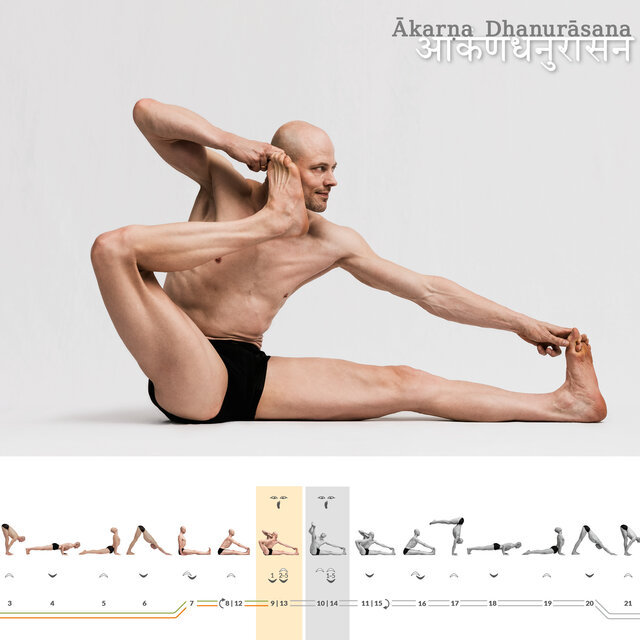
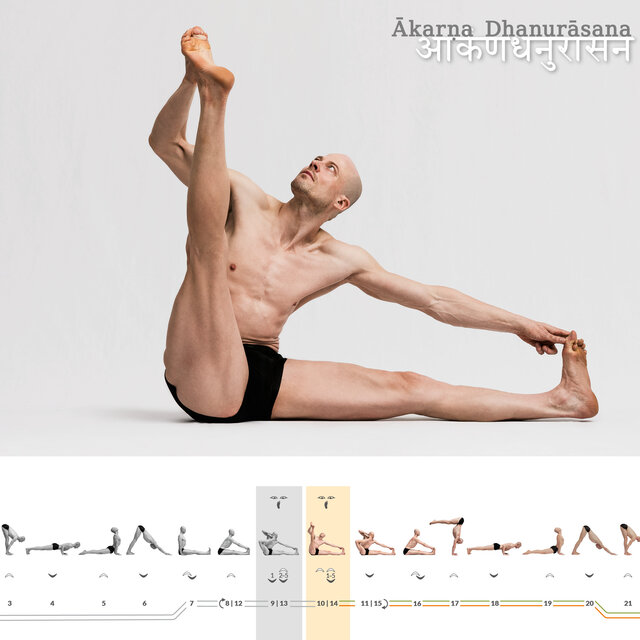
Ākarṇa Dhanurāsana A: The Bow Drawn to the Ear

Ākarṇa Dhanurāsana A: The Bow Drawn to the Ear

One leg extends forward while the other is drawn like a bowstring up to the ear: Ākarṇa Dhanurāsana A combines hip opening, length through the back line of...

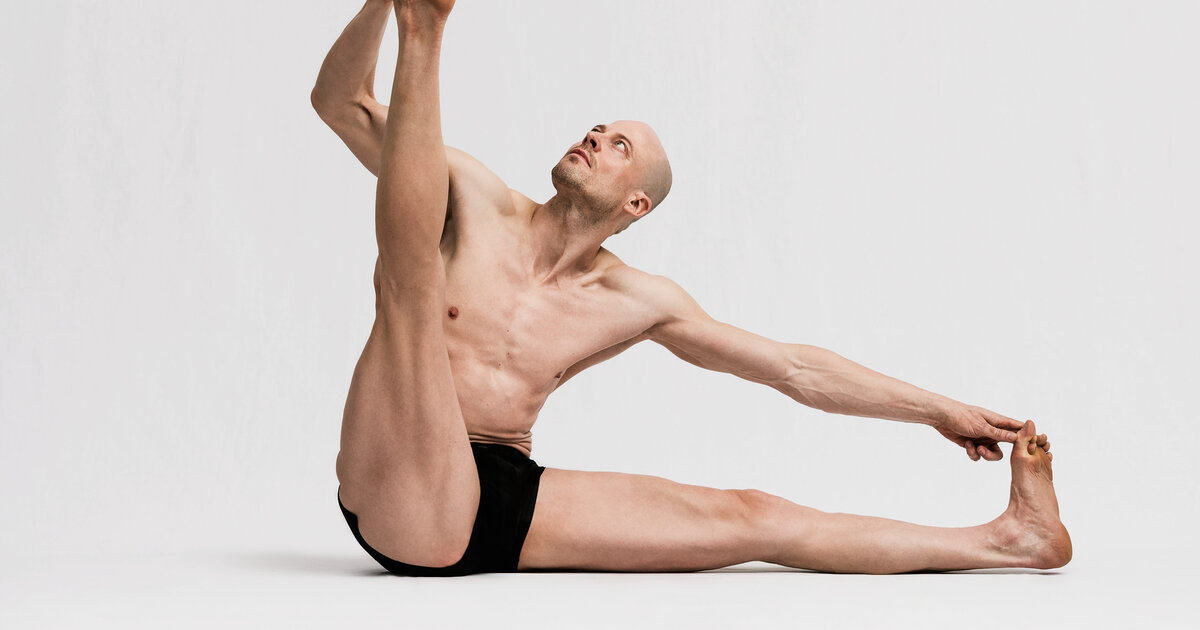
Ākarṇa Dhanurāsana B: The Bow Drawn to the Ear

Ākarṇa Dhanurāsana B: The Bow Drawn to the Ear

From the “drawn bow” a clear upward line emerges: Ākarṇa Dhanurāsana B directs the leg vertically upward, like an arrow that has been released, and requires...

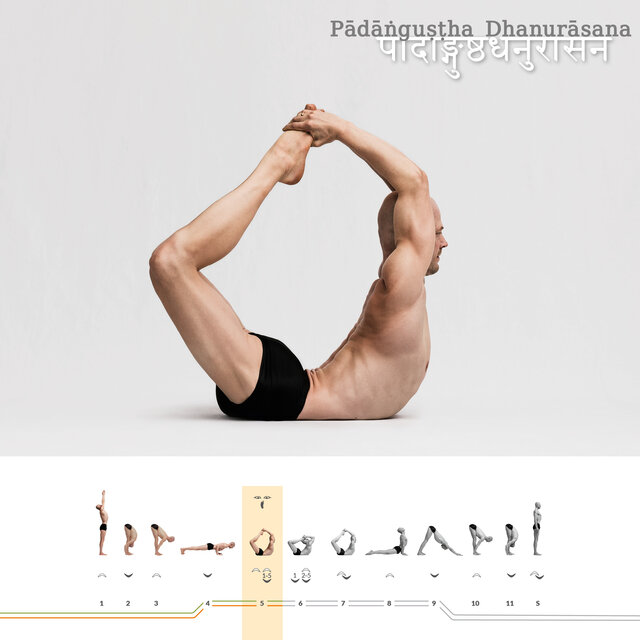
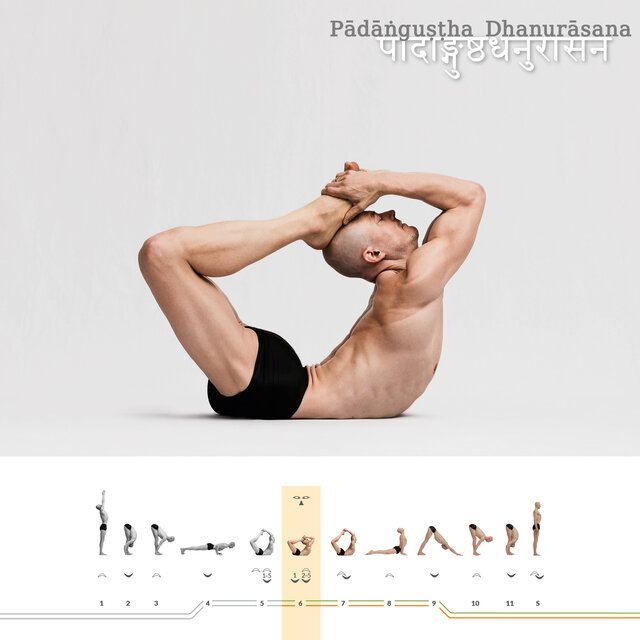
Pādāṅguṣṭha Dhanurāsana A: The Extended Bow at the Big Toe

Pādāṅguṣṭha Dhanurāsana A: The Extended Bow at the Big Toe

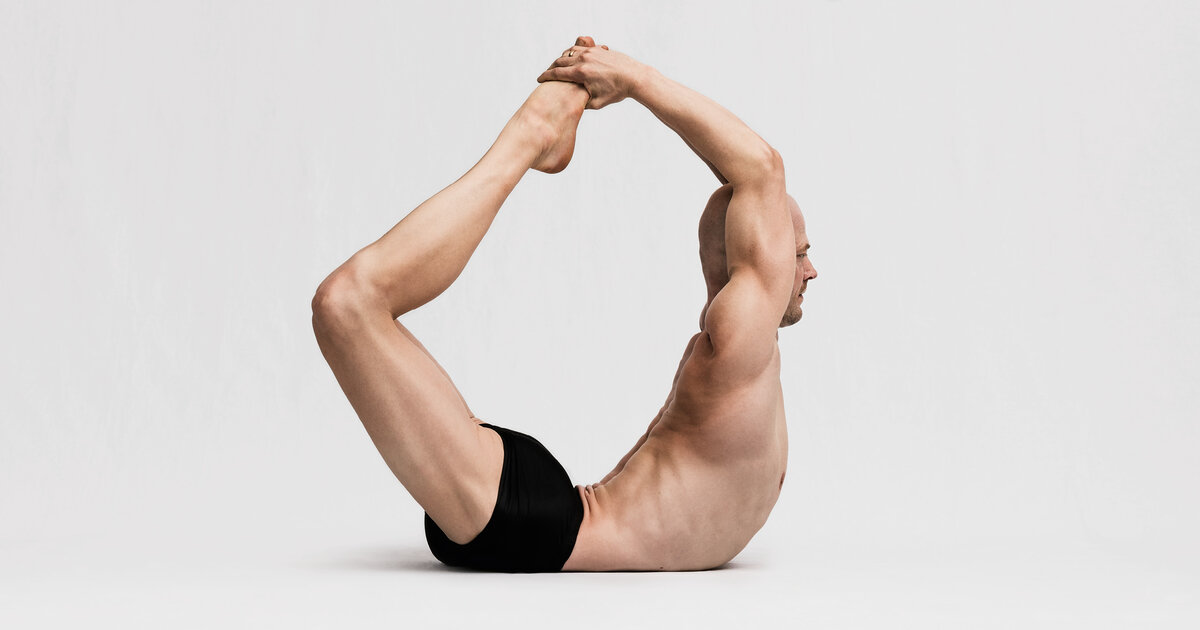
From a prone position into a wide bow: in Pādāṅguṣṭha Dhanurāsana A the arms and legs extend upward while you create length and lift through the grip on the...

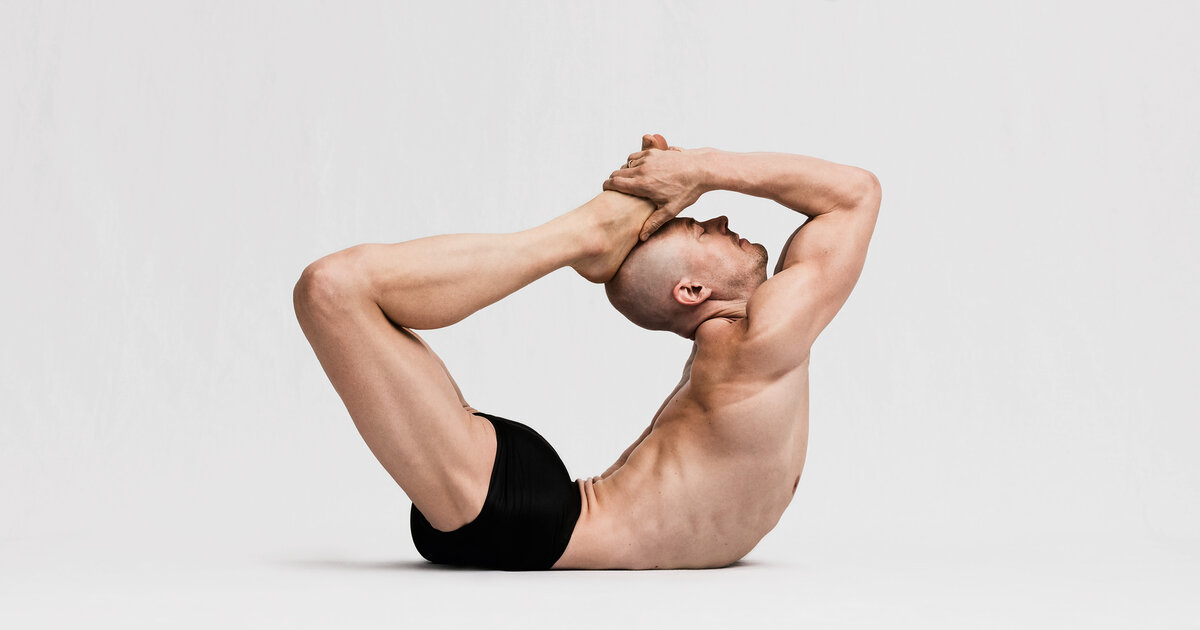
Pādāṅguṣṭha Dhanurāsana B: The Bound Bow at the Big Toe

Pādāṅguṣṭha Dhanurāsana B: The Bound Bow at the Big Toe

From the wide shape the posture becomes a deep backbend: in Pādāṅguṣṭha Dhanurāsana B the knees and elbows bend, and the arms draw the soles of the feet...

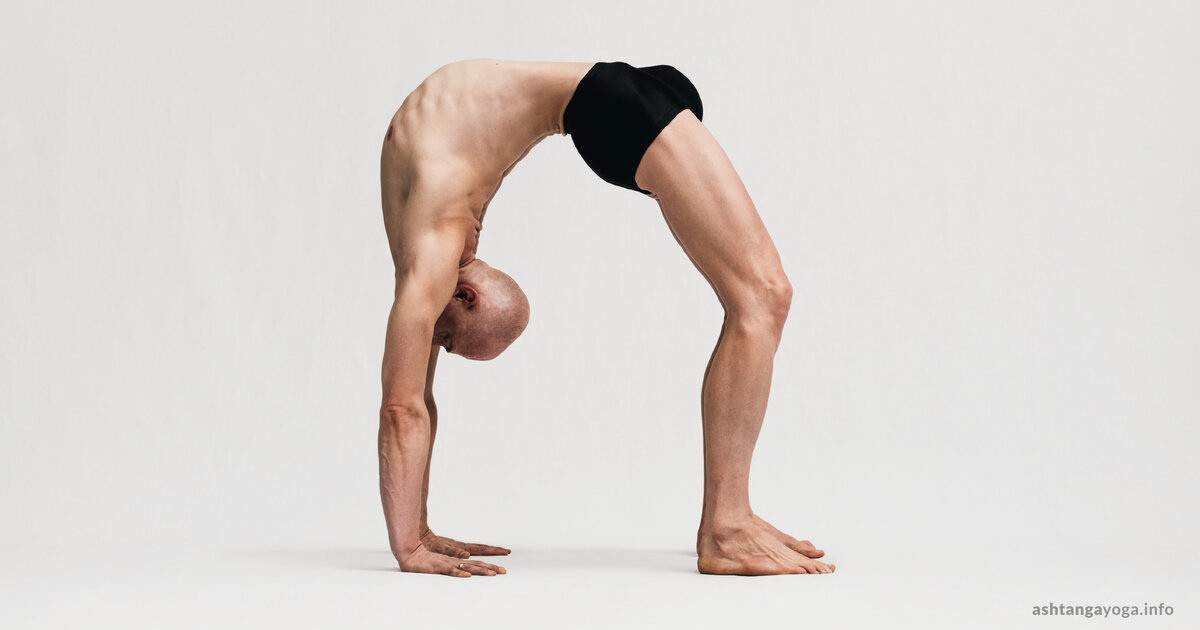
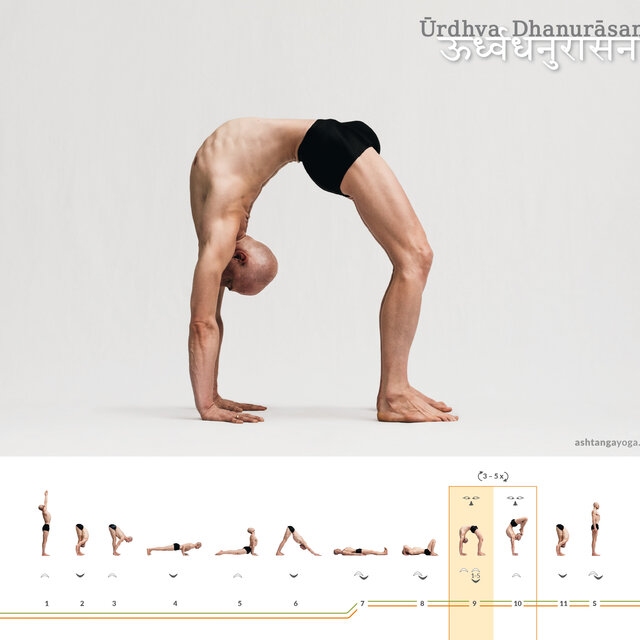
Ūrdhva Dhanurāsana: Upward-Facing Bow

Ūrdhva Dhanurāsana: Upward-Facing Bow

Ūrdhva Dhanurāsana is a backbend with an upward-facing front body, defined only by the touch of hands and feet to the ground - an upward-facing bow.

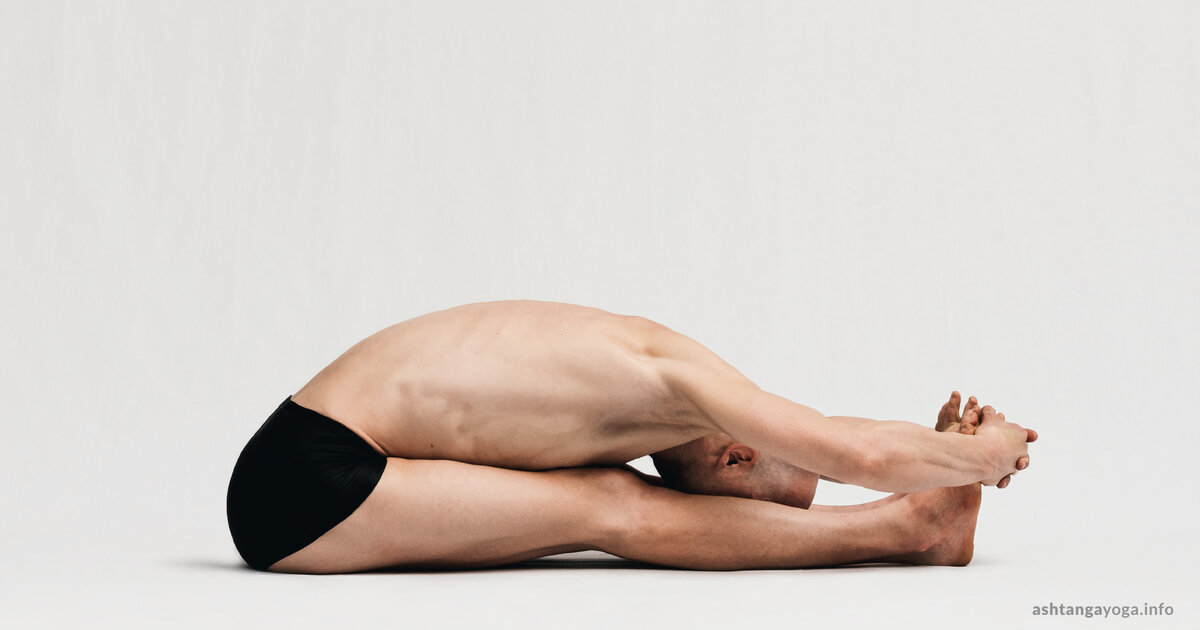
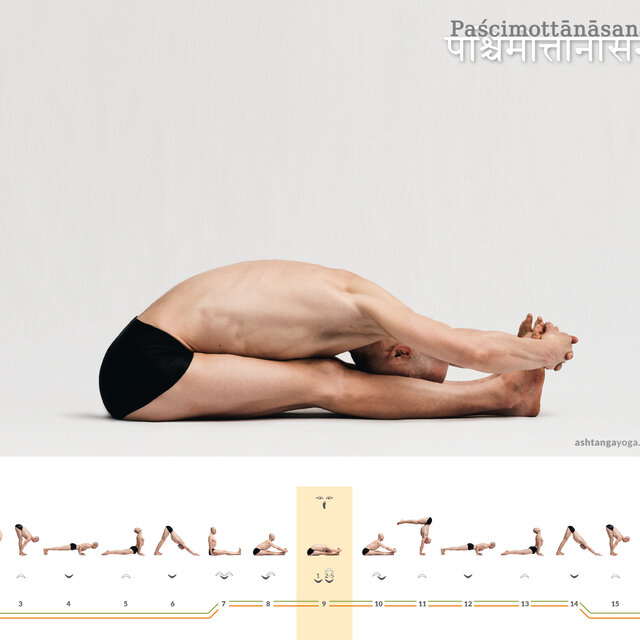
Paścimottānāsana: Seated Forward Bend

Paścimottānāsana: Seated Forward Bend

In the third series of Aṣṭāṅga Yoga, the practice concludes after the backbend with the classic "Seated Forward Bend" - Paścimottānāsana.