

śānta शान्त – gone; extinguished; past; calmed down; quiescent
adjective · particle · substantive masculine · substantive neuter · Word type unspecified
Dictionary sources
AYI dictionary adjective
Cappeller 1891 adjective
Original text · English · adjective
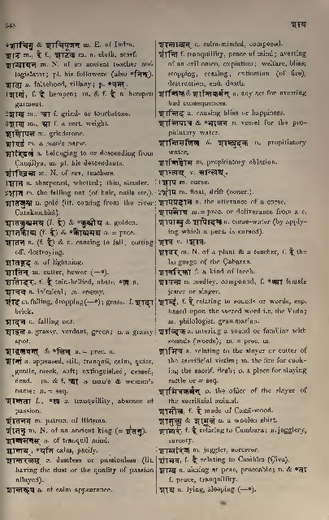
śāntá ·a. appeased, still, tranquil, calm, quiet, gentle, meek, soft; extinguished, ceased, dead. m. & f. ā a man's & woman's name; n. = seq.
Monier-Williams 1872 adjective · Word type unspecified
Original text · English · adjective
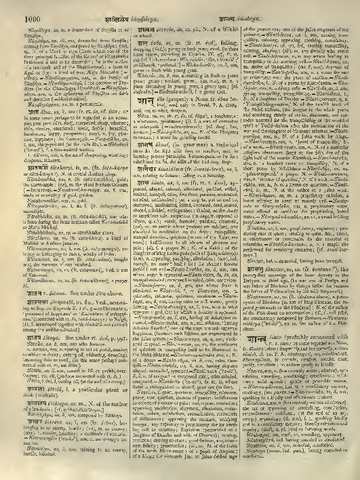
śānta śānta, as, ā, am (fr. rt. 1. śam), ap- peased, allayed, calmed, alleviated, pacified, stilled, hushed, tranquil, calm, free from passions, contented, satisfied, undisturbed; put a stop to, put an end to, destroyed, annihilated, killed, deceased, dead, ceased, abated, subsided, extinguished; shaded, on the shady or auspicious side, auspicious (in augury, opposed to dīpta, q. v.); meek, humble; purified, cleansed; (as), m. an ascetic whose passions are subdued, one absorbed in meditation on the deity; tranquillity, tranquil devotion, quietism (as one of the Rasas, see rasa); indifference to all objects of pleasure and pain; (ā), f. a proper N.; N. of a Śakti; of the daughter of king Loma-pāda (wife of Ṛṣya-śṛṅga); (am), n. appeasing, pacifying, alleviation; (am), ind. enough, no more! hush! fie! for shame! heaven forbid! not so!
Original text · English · Word type unspecified
Śānta, śāntvā, &c. See s. v., p. 1000.
Petersburger 1855 adjective · particle · substantive masculine · substantive neuter · Word type unspecified
Original text · German · adjective · particle · substantive masculine · substantive neuter
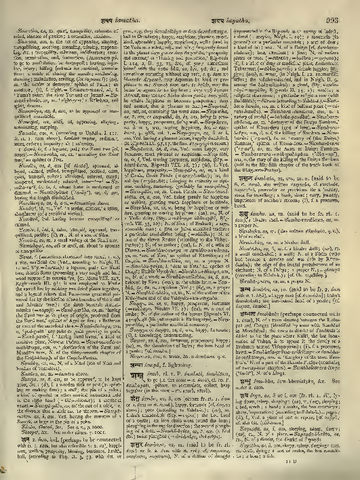
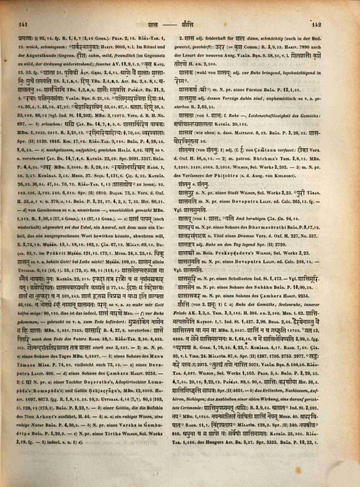
1. śānta (partic. von 2. śam) 1〉 adj. = śamita P. 7,2,27. AK. 3,2,47. a〉 beruhigt, zur inneren Ruhe gelangt, frei von aller Leidenschaft H. 811. H. an. 2,199. MED. t. 63 (śamānvita mit ŚKDR. zu lesen). HALĀY. 2,189. HALĀY. 2,244. BṚH. ĀR. UP. 4,4,23 (vgl. VEDĀNTAS. (Allah.) No. 14. SARVADARŚANAS. 59,21. śrānta ŚAT. BR.). MAITRYUP. 2,4. NṚS. TĀP. UP._in_Ind. St. 9,149. R. 2,103,22. RAGH. 12,20. Spr. (II) 1399. Spr. (II) 4180. Spr. (II) 4772. Spr. (II) (I) 2226 (a˚). KATHĀS. 24,105. WEBER, RĀMAT. UP. 356. BHĀG. P. 1,2,26. BHĀG. P. 3,27,8. BHĀG. P. 3,31,34 (a˚). BHĀG. P. 4,6,34. BHĀG. P. 9,19,29. ˚hṛdaya CHĀND. UP. 8,8,3. śāntātman MAITRYUP. 5,1. M. 1,52. R. 5,81,27. VARĀH. BṚH. S. 101,5. ˚manas VARĀH. BṚH. S. 60,19. MBH. 5,7379. ŚĀK. 102. ˚cetas Spr. 3157. citta Verz. d. Oxf. H. 229,b,29. Verz. d. Oxf. H. 229,b,31. Verz. d. Oxf. H. 229,b,40. KATHĀS. 29,82. BHĀG. P. 3,32,42. mati BHĀG. P. 1,15,28. sanft von einer Person PAÑCAR. 1,14,69. ruhig, still: mṛga R. GORR. 2,99,3. RAGH. 14,79. Nacht ĀŚV. GṚHY. 4,6,6. Ort, Zustand u. s. w. MAITRYUP. 6,36. NṚS. TĀP. UP._in_Ind. St. 9,122. Ind. St. 9,126. Spr. (II) 2065. R. 4,44,21. ŚĀK. 15. ŚĀK. 95. KATHĀS. 5,139. KATHĀS. 21,26. śānte vartmani saṃsthitāḥ HARIV. 1030. BHĀG. P. 3,26,21. SĀṂKHYAK. 38 (neben ghora und mūḍha). VP. 1,2,44. VP. 1,2,49. VP. 1,7,13. ānanda BHĀG. P. 2,2,31. BHĀG. P. 3,2,15. BHĀG. P. 3,25,38. toya MBH. 3,2511. Spr. 2976. HARIV. 2981. fg. HARIV. 2986. tejas Spr. (II) 2789. mild: Rede ŚAT. BR. 1,1,4,12 (superl.). ŚAT. BR. 7,3,8. ŚAT. BR. 7,4,8. Spr. 2519, v. l. Geruch BHĀG. P. 3,26,45. bāṇau BHĀG. P. 5,2,8. BHĀG. P. 5,8,22. Wind ŚĀK. 86. rasa (in der Poesie) TRIK. 1,1,126. H. 295. H. an. MED. HALĀY. 1,92. SĀH. D. 238. na yatra duḥkhaṃ na sukhaṃ na cintā na dveṣarāgau na ca kācidicchā . rasaḥ sa śāntaḥ kathito munīndraiḥ sarveṣu bhāveṣu śamapramāṇaḥ .. SĀH. D. 92,15. fg. R. 1,4,7 (R. 1,3,46 GORR.). PRAB. 2,16. RĀJA-TAR. 1,23. weich, schmiegsam: ˚śarkaravālukāḥ HARIV. 9005, v. l. Im Ritual und der Auguralkunde (Gegens. dīpta) zahm, mild, freundlich (im Gegensatz zu wild, der Ordnung widerstrebend); faustus AV. 19,9,1. AV. 19,9,2. ˚vṛkṣa KAUŚ. 13. KAUŚ. 53. fg. ˚śākhā 21. pṛthivī ĀŚV. GṚHY. 2,4,14. āpo̱ vai śā̱ntāḥ śā̱ntābhi̱ḥ śucàṃ śamayati TS. 5,1,5,1. diś TBR. 2,1,3,5. AIT. BR. 3,8. AIT. BR. 8,1. aśāntatanu 24. śāntáyoni TBR. 1,2,1,8. śāntaiḥ stuvanti PAÑCAV. BR. 21,2,9. ˚ravāḥ pakṣimṛgasaṃghāḥ VARĀH. BṚH. S. 21,16. ˚pakṣimṛgarāvitā diśaḥ VARĀH. BṚH. S. 24,12. VARĀH. BṚH. S. 30,4. VARĀH. BṚH. S. 30,7. VARĀH. BṚH. S. 45,16. VARĀH. BṚH. S. 47,27. ˚ceṣṭāvirāvin VARĀH. BṚH. S. 53,61. VARĀH. BṚH. S. 87,1. āśā, diś VARĀH. BṚH. S. 36,2. VARĀH. BṚH. S. 53,109. VARĀH. BṚH. S. 86,12 (vgl. Ind. St. 10,202). MBH. 3,16875. Verz. d. B. H. No. 897. — b〉 erloschen: agni ŚAT. BR. 14,7,1,5. ŚAT. BR. 14,7,1,6. śāntārciriva pāvakaḥ MBH. 1,5923. MBH. 1,6817. R. 5,21,13. ˚raśmirivādityaḥ R. 6,70,50. jvarajvālāḥ Spr. (II) 1130. Spr. (II) 1816. KIR. 17,16. RĀJA-TAR. 3,181. BHĀG. P. 4,28,44. BHĀG. P. 9,6,55. — c〉 nachgelassen, aufgehört, gewichen HALĀY. 4,82. vāc so v. a. verstummt ŚAT. BR. 14,7,1,6. KATHĀS. 22,69. Spr. 2691. Spr. 3317. BHĀG. P. 4,4,24. ˚jvara MBH. 3,3008. R. 5,28,18. ˚rathakṣobhapariśrama RAGH. 1,58. RAGH. 5,47. KUMĀRAS. 3,42. MEGH. 37. SUŚR. 1,131,6. ŚIŚ. 4,22. KATHĀS. 26,32. KATHĀS. 36,84. KATHĀS. 47,54. KATHĀS. 70,73. RĀJA-TAR. 1,15 (śāntāśeṣa˚ zu lesen). RĀJA-TAR. 92. RĀJA-TAR. 102. RĀJA-TAR. 106. RĀJA-TAR. 3,192. RĀJA-TAR. 3,420. RĀJA-TAR. 6,310. Spr. (II) 1810. DAŚAK. 73,5. Verz. d. Oxf. H. 55,a,1 v. u. 379,a,14. BHĀG. P. 3,21,37. BHĀG. P. 4,2,2. BHĀG. P. 4,7,33. HIT. 80,21. — d〉 von Geschossen so v. a. unwirksam —, unschädlich gemacht MBH. 1,212. R. 1,56,5 (R. 1,57,5 GORR.). R. 1,56,14 (R. 1,57,13 GORR.). — e〉 śāntaṃ pāpam (auch wiederholt) abgewehrt sei das Uebel, ein Ausruf, mit dem man ein Unheil, das ein ausgesprochenes Wort bewirken könnte, abwehren will, R. 2,74,19. MṚCCH. 13,1. MṚCCH. 18,18. MṚCCH. 162,2. ŚĀK. 67,13. MĀLAV. 69,10. DAŚAK. 93,7. im Prākrit MṚCCH. 121,15. MṚCCH. 173,1. MUDR. 24,5. MUDR. 25,18. dhik śāntam so v. a. behüte Gott! bei Leibe nicht! MṚCCH. 109,21. śāntam allein UTTARAR. 6,14 (10,1). 55,4 (72,2). 88,14 (114,1). śāntametanmahāsattva mā smaivaṃ bhāṣathāḥ punaḥ KATHĀS. 22,215. ekadā tatra rātrau ca sa nṛśaṃsaścakāra yat . kathoparodhataḥ śāntamavācyamapi kathyate .. KATHĀS. 77,44. īdṛśaḥ sa videśasthaḥ śāntaṃ mā bhūtkadā ca na KATHĀS. 101,243. śāntaṃ dūtaśca vipraśca na vadhya iti jalpatā KATHĀS. 46,166. na bhokṣye 'haṃ nāgān śāntamataḥ param so v. a. so wahr mir Gott helfen möge! KATHĀS. 90,195. dies ist das indecl. śāntaṃ vāraṇe MED. — f〉 zur Ruhe gekommen, — gebracht so v. a. zum Tode befördert: supratīkena nāgena sa hi śāntaḥ MBH. 1,531. MBH. 1,7523. śāntāri R. 4,27,5. verstorben: śānte pitari nach dem Tode des Vaters RAGH. 18,7. RĀJA-TAR. 2,56. RĀJA-TAR. 4,332. RĀJA-TAR. 4,402. gonandasaṃtatirajāyata tatra śāntā starb aus RĀJA-TAR. 3,527. — 2〉 m. N. pr. a〉 eines Sohnes des Tages MBH. 1,2587. — b〉 eines Sohnes des Manu Tāmasa MĀRK. P. 74,60. vielleicht auch MĀRK. P. 75,45. — c〉 eines Devaputra LALIT. 401. — d〉 eines Sohnes des Śambara HARIV. 9254. — 3〉 f. ā N. pr. a〉 einer Tochter Daśarathaʼs, Adoptivtochter Lomapādaʼs (Romapādaʼs) und Gattin Ṛṣyaśṛṅgaʼs, MBH. 12,8609. HARIV. 1697. HARIV. 8673. fgg. R. 1,8,16. R. 1,8,25. R. 1,10,3. UTTARAR. 4,16 (7,7). 80,3 (103,3). 128,12 (173,9). BHĀG. P. 9,23,7. — b〉 einer Göttin, die die Befehle des 7ten Arhantʼs ausführt, H. 44. — 4〉 n. a〉 ein ruhiges Wesen, eine ruhige Natur BHĀG. P. 4,30,4. — b〉 N. pr. eines Varṣa in Jambudvīpa BHĀG. P. 5,20,3. — c〉 N. pr. eines Tīrtha WILSON, Sel. Works 2,19. fg. — 5〉 indecl. s. u. 1〉e〉.
Original text · German · adjective
2. śānta adj. fehlerhaft für śāta dünn, schmächtig (auch in der Bed. gewetzt, geschärft): udara (= kṛśa Comm.) R. 2,9,33. HARIV. 7890 nach der Lesart der neueren Ausg. VARĀH. BṚH. S. 58,50, v. l. śitaśāntau kṛśe tīkṣṇe H. an. 2,200.
Original text · German · Word type unspecified
1. śānta a〉 c〉 Z. 6 streiche 106, da śāntāvasādaḥ = śāntau asādaḥ ist.
Böhtlingk 1879 adjective · substantive masculine · substantive neuter
Original text · German · adjective · substantive masculine · substantive neuter
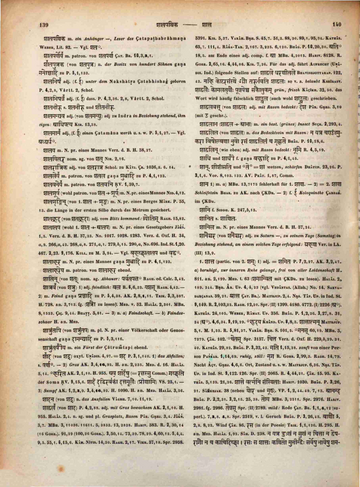
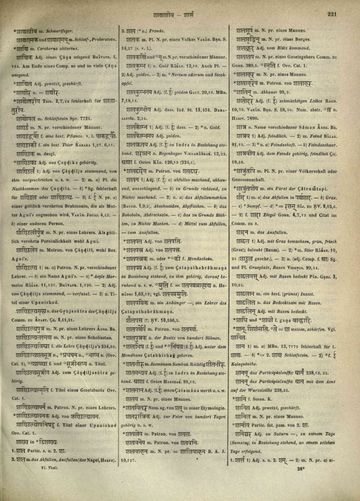
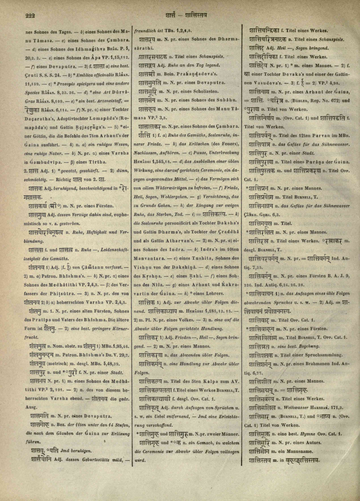
1. śāntá — 1〉 Adj. s. u. 2. śam — 2〉 m. N. pr. — a〉 eines [Page6-222-a] Sohnes des Tages. — b〉 eines Sohnes des Manu Tāmasa. — c〉 eines Sohnes des Śambara. — d〉 eines Sohnes des Idhmajihva BHĀG. P. 5,20,2. BHĀG. P. 5,20,3. — e〉 eines Sohnes des Āpa VP. 1,15,112. — f〉 eines Devaputra. — 3〉 f. śāntā — a〉 eine best. Śruti S. S. S. 24. — b〉 *Emblica officinalis RĀJAN. 11,159. — c〉 *Prosopis spicigera und eine andere Species RĀJAN. 8,33. 36. — d〉 *eine Art Dūrvā Gras RĀJAN. 8,109. — e〉 *ein best. Arzeneistoff, = reṇukā RĀJAN. 6,114. — f〉 N. pr. — α〉 einer Tochter Daśarathaʼs, Adoptivtochter Lomapādaʼs (Romapādaʼs) und Gattin Ṛśyaśṛṅgaʼs. — β〉 *einer Göttin, die die Befehle des 7ten Arhantʼs der Jaina ausführt. — 4〉 n. — a〉 ein ruhiges Wesen, eine ruhige Natur. — b〉 N. pr. — α〉 eines Varṣa in Jambūdvīpa. — β〉 eines Tīrtha.
Original text · German · adjective
2. śānta Adj. — 1〉 *gewetzt, geschärft. — 2〉 dünn, schmächtig. — Richtig śāta von 2. śā.
Cappeller 1887 Word type unspecified
Original text · German · Word type unspecified
śānta (s. 2. śam) m. Mannsn.; f. ā Frauenname; n. Gemütsruhe.

Burnouf 1866 Word type unspecified
Original text · French · Word type unspecified
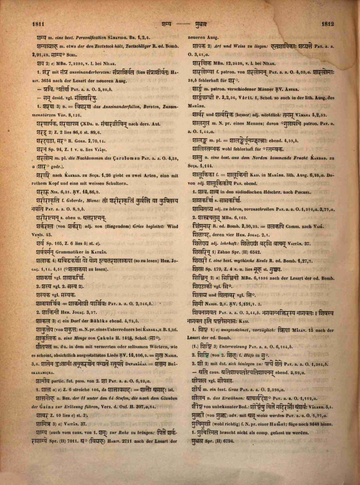
śānta śānta (pp. de śam) apaisé, tranquille, calme. — S. m. dévot qui a pacifié son cœur. Paix du cœur. — À l'ac. n. śāntam, doucement! moins vite!

Derived words
Occurrences in source texts (9)
MandUp 1 occurrence
PYS 3 occurrences
SiSa 1 occurrence
Continue with AYI Free
Image source: AYI archive.