

āśraya आश्रय – substrate; support; refuge
substantive masculine · Word type unspecified
Dictionary sources
AYI dictionary substantive masculine
substrate; support; refuge
Derived from
Monier-Williams 1872 substantive masculine
Original text · English · substantive masculine
Ā-śraya, as, m. that to which anything is annexed, or with which anything is closely connected, or on which anything depends or rests; a recipient, the per- son or thing in which any quality or article is inherent or retained or received; seat, resting-place; dwelling, asylum, place of refuge, shelter; depending on, having recourse to; help, assistance, protection; authority, sanction, warrant; a plea, an excuse; being inclined or addicted to, following, practising; attaching to, choosing, taking; joining, union, attachment; de- pendance, contiguity, vicinity; relation; connection; appropriate act or one consistent with the character of the agent; (in gram.) the subject, that to which the predicate is annexed; (with Buddhists) the five organs of sense with manas or mind (the six together being the recipients of the āśrita or objects which enter them by way of their ālambana or qualities); source, origin. Āśraya may occur at the end of compounds in the sense of ‘depending on, resting on, endowed or furnished with’ (e. g. aṣṭa-guṇāśraya, see under aṣṭa).
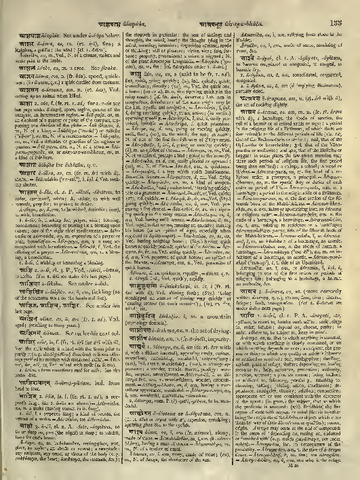
Petersburger 1855 substantive masculine · Word type unspecified
Original text · German · substantive masculine
āśraya (von śri mit ā) m. 1〉 woran sich Etwas anschliesst, womit Etwas in unmittelbare Berührung tritt, woran sich Etwas lehnt, worauf sich Etwas stützt, woran Etwas haftet P. 3,3,85. māṃ śoko dahatyagnirivāśrayam mich verzehrt der Gram wie Feuer Alles womit es in Berührung kommt (vgl. āśrayāśa) R. 2,104,24. vṛkṣeṣu — jaghanāśrayeṣu an die Bäume (gespiesst), mit denen die Beine in unmittelbarer Berührung standen, RAGH. 9,60. niṣaṇṇamājānusame pīṭhe sthānāśraye (der Platz, auf dem die Bank steht) same SUŚR. 2,215,19. citraṃ yathāśrayamṛte (wie ein Bild ohne Unterlage) — tadvadvinā viśeṣairna tiṣṭhati nirāśrayaṃ liṅgam SĀṂKHYAK. 41. asya (visargasya) āśrayasthānāni seine Organe (die Organe, mit denen er ausgesprochen wird) sind die der Consonanten, an welche er sich lehnt, P. 1,1,9, Sch. guṇāśraya das woran die Eigenschaften haften, das Substrat der Eigenschaften, als Erklärung von dravya Stoff AK. 3,4,156; vgl. āśrayatva und āśrayin. labdhāśrayā (prārthanā) einen festen Halt gewonnen habend, als Erkl. von labdhāvakāśā Sch. zu ŚĀK. 17,4. upaghna durch āśraya erklärt P. 3,3,85. = sāmīpya Nähe JAṬĀDH._im_ŚKDR. P. 3,3,85, Sch. = ādhāra Stütze TRIK. 3,3,305. HĀR. 266. — 2〉 Sitz, Standort, Behälter AK. 3,4,87. H. 991. H. 10. kva ta āśrayaḥ PAÑCAT. 211,4. bhavadāśrayaḥ HIT. 33,13. gartāśrayāḥ Thiere die in Höhlen wohnen M. 7,72. tapovanāśraya adj. R. 1,4,31. ekasthānāśraya VID. 62. aṅkāśrayapraṇayinastanayān ŚĀK. 176. (jaṅgamaṃ viṣaṃ) ṣoḍaśāśrayam SUŚR. 2,251,11. (vgl. adhiṣṭhāna ebend. und SUŚR. 2,257,6). malayo nāma śikharī candanāśrayaḥ ŚUK. 38,17. jalāśayasya nātidūrāśrayāṃ vistīrṇāṃ śilām PAÑCAT. 51,20. vātāhatācca jaladherudatiṣṭhanmahormayaḥ . āśrayābhibhavakrodhādiva (gleichsam aus Zorn darüber, dass das Schiff ihren Wohnsitz bewältigte) śailāḥ sapakṣakāḥ .. KATHĀS. 25,43. nānāvidhānannarasānvanyamūlaphalāśrayān aus Wurzeln und Früchten des Waldes gewonnen R. 2,54,18. vāṇamāśrayamukhātsamuddharan d. i. aus dem Köcher RAGH. 11,26. (raghum) āśrayaṃ duṣprasahasya tejasaḥ RAGH. 3,58. R. 3,39,42. — 3〉 Wohnsitz, Zufluchtsstätte, Ruheplatz überh.: śabdajalāśrayādibhiḥ (ŚAṂK.: āśraya = maṇḍapa) ŚVETĀŚV. UP. 2,10. kānane vividhāśraye R. 3,56,1. R. 4,43,45. ŚĀNTIŚ. 4,6. nirāśraya obdachlos R. 1,44,2. VET. 28,12. — 4〉 Anschluss, Zuflucht, Hilfe, Beistand, Schutz AK. 2,8,1,18. H. 735. sevāvṛttividāṃ caiva nāśrayaḥ pārthivaṃ vinā PAÑCAT. I, 43. ahaṃ ślādhyastavāśrayaḥ R. 3,55,16. bhartā vai hyāśrayaḥ strīṇām VET. 32,10. rāmasyāśrayagarvitam R. 4,15,19. sarve dūṣaṇāśrayanirbhayāḥ R. 3,31,37. madāśraya sich an mich anschliessend BHAG. 7,1. mahānnaivāśrayaḥ kāraṇam das eigene Handeln gewährt keine grosse Hilfe BHARTṚ. 2,90. na tvaṃ samarthastāṃ hartuṃ rāmabāhubalāśrayām R. 3,41,29. sābhūdrāmāśrayā punaḥ RAGH. 12,35. pitṛmātrāśraye (so ist zu lesen) gaccha begieb dich in den Schutz der Eltern VET. 32,3. ye narāḥ — sarvasyāśrayabhūtāḥ HIT. I, 58. nirāśraya schutzlos, keines Schutzes bedürfend BHAG. 4,20. — 5〉 Ausflucht; Ausrede (vyapadeśa) JAṬĀDH._im_ŚKDR. — 6〉 Anschluss, Wahl, das Ergreifen: yo 'vamanyeta te mūle (śrutiṃ smṛtiṃ ca) hetuśāstrāśrayāt durch Anschluss an rationalistische Lehrbücher M. 2,11. (vinaśyati) snehaḥ pravāsāśrayāt dadurch dass man seinen Aufenthalt in der Fremde nimmt PAÑCAT. I, 185. — 7〉 Anschluss, Verbindung, Verknüpfung: āśvāsito vicitrārthaiḥ pūrvarājñāṃ kathāśrayaiḥ (durch eine Reihe, eine Kette von Erzählungen) SĀV. 6,7. medhāṃ cāṣṭaguṇāśrayām (vgl. buddhiraṣṭāṅgā R. 4,6,1. R. 5,81,14). INDR. 4,9. = skandha Menge (?) TRIK. 3,3,305. — 8〉 Anschluss, das Beruhen auf Etwas, Bezug, Abhängigkeit ṚV. PRĀT. 11,8. ṚV. PRĀT. 11,34. purāprasiddherubhayoranāśrayāt wegen seiner Unabhängigkeit von vorgängiger Bestimmung jener beiden ṚV. PRĀT. 11,36. yasmādvṛttistadāśrayā weil sein Lebensunterhalt von ihr abhängt YĀJÑ. 2,48. lokavedāśrayeva vāk MBH. 1,309. sarvairapyetairnītiśāstrāśrayamabhihitam PAÑCAT. 155,8. anyo'nyāśrayaguṇāḥ SĀṂKHYAK. 12. pratipratiguṇāśrayaviśeṣāt SĀṂKHYAK. 16. nānāśrayā prakṛtiḥ SĀṂKHYAK. 62. sthānyāśrayaṃ kāryam eine grammat. Operation, welche von der primitiven Form (Gegens. ādeśa Substitut) abhängt KĀŚ._zu_P. 1,1,56. tadāśrayā padasaṃjñā die davon abhängige Benennung pada P. 1,1,62, Sch. napuṃsakāśrayaṃ hrasvatvam P. 7,3,31, Sch. sarvāśrayāṃ vedanām die Empfindung, die allen gemein ist, YĀJÑ. 3,143. prema parasparāśrayam eine gegenseitige Liebe RAGH. 3,24. — 9〉 Subject (woran sich das Prädicat anschliesst) ANNAṂBH._in_Z. d. d. m. G. 7,291, N. 1. — 10〉 pl. buddh. die fünf Sinnesorgane und das Manas, als Behälter der Objecte (āśrita), welche vermittelst ihrer Attribute (ālambana) darin Eingang finden, BURN. Intr. 449. Vgl. āsrava 2.
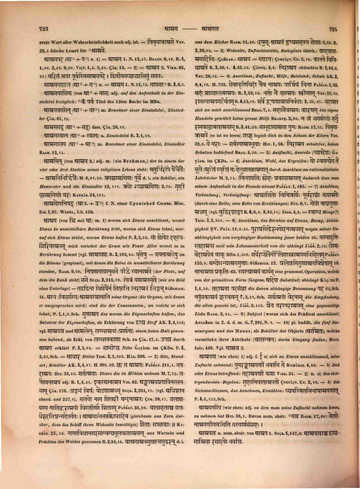
Original text · German · Word type unspecified
āśraya 4〉 grahaṇaṃ guṇavatkāryahetorāśraya ucyate SĀH. D. 477. SĀH. D. 471. Z. 5 mahānnaivāśrayaḥ kāraṇam falsch aufgefasst; vgl. Spr. 1255.
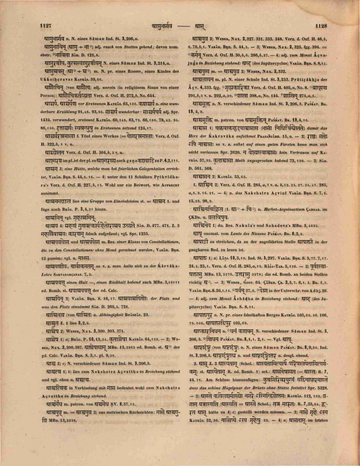
Böhtlingk 1879 substantive masculine
Original text · German · substantive masculine
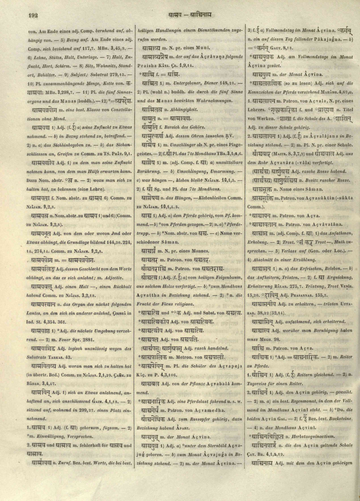
āśraya m. (adj. Comp. f. ā) — 1〉 das Sichanlehnen —, Sichanheften an Spr. 7699. — 2〉 nächste Umgebung. — 3〉 Anschluss —, Hingabe an, das sich einer Sache Ergeben Spr. 2991. das Greifen zu Chr. 252,5. — 4〉 das Berufen auf, Abhängigkeit. [Page1-192-a] von. Am Ende eines adj. Comp. beruhend auf, abhängig von. — 5〉 Bezug auf. Am Ende eines adj. Comp. sich beziehend auf Chr. 117,7. MBH. 3,45,9. — 6〉 Lehne, Stütze, Halt, Unterlage. — 7〉 Halt, Zuflucht, Hort, Schirm. — 8〉 Sitz, Wohnsitz, Standort, Behälter. — 9〉 Subject; Substrat Chr. 279,13. — 10〉 Pl. zusammenhängende Menge, Kette von. kathāśrayaḥ MBH. 3,298,7. — 11〉 Pl. die fünf Sinnesorgane und das Manas (buddh.). — 12〉 *= vyapadeśa.
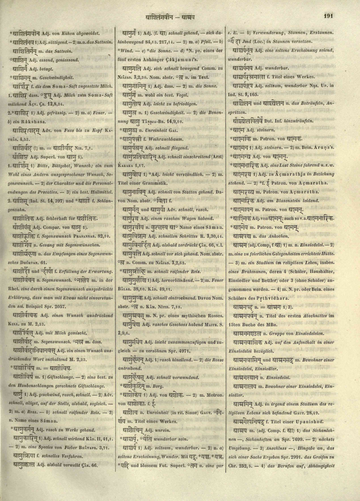
Apte 1890 substantive masculine
Original text · English · substantive masculine
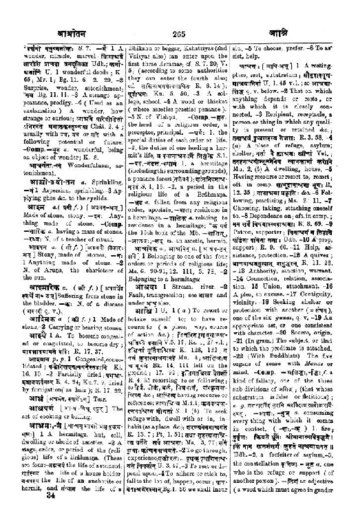
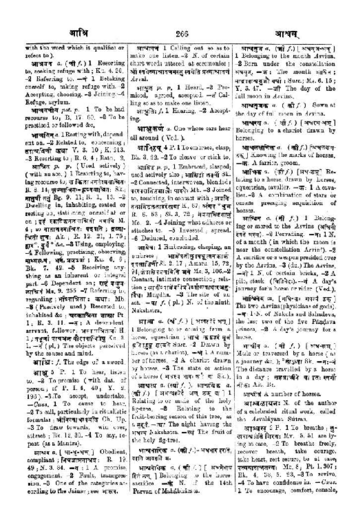
āśrayaḥ [āśri-ac] 1 A restingplace, seat, substratum; sauhṛdādapṛthagāśrayāmimāṃ U. 1. 45 v. l.; so āśrayāsiddha q. v. below. 2 That on which anything depends or rests, or with which it is closely connected. 3 Recipient, receptacle, a person or thing in which any quality is present or retained &c.; tamāśrayaṃ duṣprasahasya tejasaḥ R. 3. 58. 4 (a) A place of refuge, asylum; shelter; bhartā vai hyāśrayaḥ strīṇāṃ Vet.; tadahamāśrayonmūlanenaiva tvāmakāmāṃ karomi Mu. 2. (b) A dwelling, house. 5 Having recourse or resort to, resort; oft. in comp. sābhūdrāmāśrayā bhūyaḥ R. 12. 35; nānāśrayā prakṛtiḥ &c. 6 Following, practising; Ms. 2. 11. 7 Choosing, taking, attaching oneself to. 8 Dependence on; oft. in comp.; mama sarve viṣayāstvadāśrayāḥ R. 8. 69. 9 Patron, supporter; vināśrayaṃ na tiṣṭhaṃti paṃḍitā vanitā latāḥ Udb. 10 A prop, support; R. 9. 60. 11 Help, assistance, protection. 12 A quiver; bāṇamāśrayamukhāt samuddharan R. 11. 26. 13 Authority, sanction, warrant. 14 Connection, relation, association. 15 Union, attachment. 16 A plea, an excuse. 17 Contiguity, vicinity. 18 Seeking shelter or protection with another (= saṃśraya), one of the six gunas, q. v. 19 An appropriate act, or one consistent with character. 20 Source, origin. 21 (In gram.) The subject, or that to which the predicate is attached. 22 (With Buddhists) The five organs of sense with Manas or mind. Comp. — asiddhaḥ, -ddhiḥ f. a kind of fallacy, one of the three sub-divisions of asiddha; (that whose substratum is false or fictitious); e. g. gagamāraniṃdaṃ surabhi araviṃdatva tsarojāraviṃdavat. — āśaḥ, -bhuj a. consuming every thing with which it comes in contact. — (śaḥ, -k) 1 fire; durvṛttaḥ kriyate dhūrtaiḥ śrīmānātmavivṛddhaye . kiṃ nāma khalasaṃsargaḥ kurute nāśrayāśavat .. Udb. 2 a forfeiter of asylum. 3 the constellation kṛttikā. — bhūta a. one who is the refuge or support (of another person). — liṃgaṃ an adjective (a word which must agree in gender ([Page 0266-a]) with the word which it qualifies or refers to).
Cappeller 1887 substantive masculine
Original text · German · substantive masculine
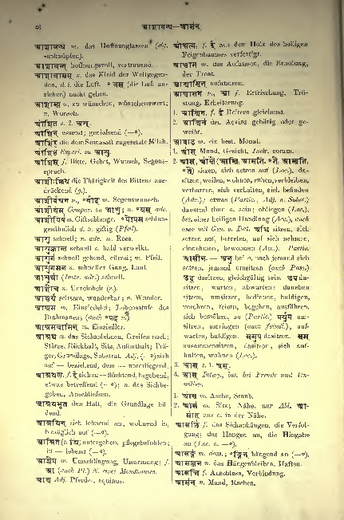
āśraya m. das Sichanlehnen, Greifen nach; Stütze, Rückhalt, Sitz, Aufenthalt; Träger, Grundlage, Substrat. Adj. (—˚) sich auf — beziehend, dem — unterliegend.
Burnouf 1866 substantive masculine
Original text · French · substantive masculine
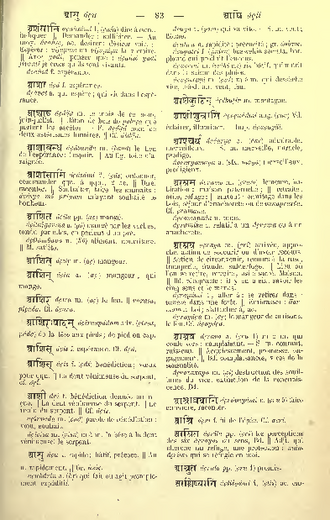
āśraya āśraya m. (śri) arrivée, approche, action de secourir ou d'avoir recours. Action de circonvenir, recours à la ruse, tromperie, fraude, subterfuge. Lieu où l'on se retire, retraite; asile sacré. Maison. Bd. réceptacle: il y en a six, savoir les cinq sens et le manas. āśrayāmi 1, aller à; se retirer dans: vanam dans une forêt. Embrasser: dharmam la Loi; s'attacher à, ac. āśrayāśa m. (aś) le mangeur de maisons, le feu. Cf. āśayāśa.
Derived words
Occurrences in source texts (5)
HP 1 occurrence
PYS 2 occurrences
SiSa 1 occurrence
SVU 1 occurrence
Continue with AYI Free
Image source: AYI archive.