SVU 2.10: The Sheltered Place

SVU 2.10: Outer Conditions for Quiet Yoga Practice

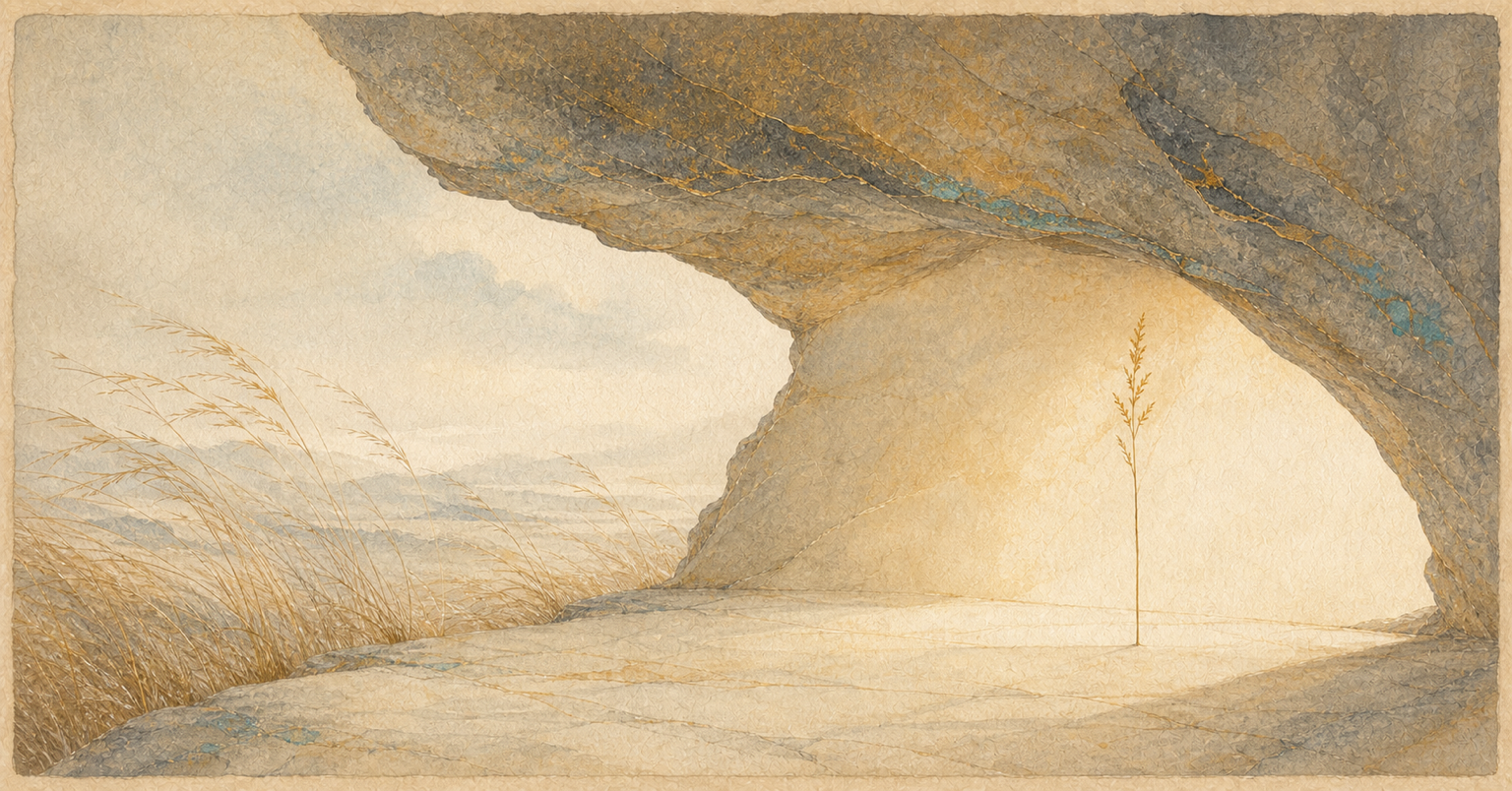
A level, clean, quiet and sheltered place that strains neither mind nor eyes makes concentrated yoga practice possible.

Dr. Ronald Steiner Dr. Ronald Steiner Nils Jacob Liersch Nils Jacob Liersch
Śvetāśvatara Upaniṣad 2.10
समे शुचौ शर्करावह्निवालुकाविवर्जिते शब्दजलाश्रयादिभिः |
same śucau, śarkarā-vahni-vālukā;-vivarjite, śabda-jalāśrayādibhiḥ | Analysis ▾ Analysis ▴
same
lokative singular neuter
adjective
in a level, even place
śucau
lokative singular neuter
adjective
in a clean place
śarkarā
dvandva-compound
substantive feminine
pebbles, gravel
vahni
dvandva-compound
substantive masculine
fire
vālukā
tatpuruṣa-compound ablative
substantive feminine
sand
vivarjite
lokative singular neuter past participle passive
previx
verbal root
free from, avoiding
śabda
dvandva-compound
substantive masculine
sound, noise
jala
dvandva-compound
substantive neuter
water
āśraya
dvandva-compound
substantive masculine
shelter, refuge
ādibhiḥ
instrumental case plural
substantive masculine
with these and the like
मनो ऽनुकूले न तु चक्षुपीडने गुहानिवाताश्रयणे प्रयोजयेत् ||10||
mano 'nukūle, na tu cakṣu-pīḍane; guhā-nivātā,śrayaṇe prayojayet ||10|| Analysis ▾ Analysis ▴
manas
tatpuruṣa-compound dative
substantive neuter
for the mind
anukūle
lokative singular neuter
adjective
agreeable, favourable
na
particle
not
tu
particle
but
cakṣu
tatpuruṣa-compound dative
substantive neuter
for the eye
pīḍane
lokative singular
substantive neuter
oppressive, painful
guhā
tatpuruṣa-compound lokative
substantive feminine
in a cave
nivāta
karmadhāraya-compound
adjective
sheltered from wind, windless
āśrayaṇe
lokative singular
substantive neuter
in a shelter, abode
prayojayet
3rd person singular aktive optative causative
previx
verbal root
one should apply oneself, practise
Metre: Pāda 1: Jagatī; Pāda 2: Jagatī with Vaṃśa ending; Pāda 3: Jagatī with Vaṃśa ending; Pāda 4: Jagatī with Vaṃśa ending
In a level [place] (same | loc sg n), in a clean one (śucau | loc sg n), free from pebbles, fire and sand (śarkarā-vahni-vālukā-vivarjite | loc sg n ppp), [and] from noise, water, shelters and the like (śabda-jalāśrayādibhiḥ | ins pl), agreeable to the mind (mano'nukūle | loc sg n), but (tu) not (na) oppressive to the eye (cakṣu-pīḍane | loc sg), in a cave-like shelter protected from the wind (guhā-nivātāśrayaṇe | loc sg), one should practise (prayojayet | 3p sg act opt caus).
Dr. Ronald Steiner - 2026 - historically literal
Practise in a level, clean place, free from pebbles, fire, sand, disturbing noise and water. The place should be agreeable to the mind, not strain the eyes, and offer shelter like a cave protected from the wind.
Dr. Ronald Steiner - 2026 - modern transfer

The Bhāṣya attributed to Śaṅkara requires a level, clean place free of stones, fire, sand, noise and water needed for general use. It should be conducive to the mind without distracting it through striking sights. A sheltered, windless cave serves the solitary orientation of consciousness towards the highest Self.

Śaṅkara's Bhāṣya on the Śvetāśvatara Upaniṣad

To external safety Śaṅkarānanda adds the psychological condition of a beautiful place that calms the mind without stimulating the eyes. A cave or some other windless shelter may serve. Only after choosing this conducive place of retreat should the practitioner carefully undertake the complete eight-limbed yoga.

Śaṅkarānanda's Śvetāśvataropaniṣaddīpikā

Nārāyaṇa makes the requirements of the place concrete with verses from Haṭhayoga: a safe and well-provisioned country, solitude and a small, clean and sheltered yoga hut. Among the six destroyers of yoga he names overeating, overexertion, idle talk and company; its promoters include enthusiasm, courage, expertise, determination and seclusion.

Nārāyaṇa's Śvetāśvataropaniṣaddīpikā

Besides unevenness, dirt, stones, fire and sand, Vijñānabhagavat also names animal sounds, draughts, nearby bodies of water and buildings as possible disturbances. What remains decisive is conduciveness to the mind: the place should neither irritate the eyes nor cause heat and should lie in a cave or a similarly windless shelter.

Vijñānabhagavat's Śvetāśvataropaniṣadvivaraṇa
śabdajalāśrayādibhiḥ LV1958, ASS1927 ] śabdajalāśayādibhiḥ conj. Böhtlingk apud LV1958-app
Critical Apparatus
Rein sei der Ort und eben, von Geröll und Sand, Von Feuer, von Geräusch und Wasserlachen frei; Hier, wo den Geist nichts stört, das Auge nichts verletzt, In windgeschützter Höhlung schicke man sich an.
Paul Deussen - 1921
In a clean level spot, free from pebbles, fire, and gravel, By the sound of water and other propinquities Favorable to thought, not offensive to the eye, In a hidden retreat protected from the wind, one should practise Yoga.
Robert Hume - 1921
One should perform yoga, having resorted to a place which should be free from wind and should be solitary (or should have a cave), which should be level, clean, free from pebbles, fire, sand, as well as from noise, watery places, etc., should be (above all) agreeable to the mind and not oppressive to the eye.
Siddhesvar Varma Shastri - 1916
Rein sei der Ort und eben, von Geröll und Sand, Von Feuer, von Geräusch und Wasserlachen frei; Hier, wo den Geist nichts stört, das Auge nichts verletzt, In windgeschützter Höhlung schicke man sich an.
Paul Deussen - 1897
Let him perform his exercises in a place<1> level, pure, free from pebbles, fire, and dust, delightful by its sounds, its water, and bowers, not painful to the eye, and full of shelters and caves.
<1: The question is whether sabdagalāsrayādibhih should be referred to mano ’nukūle, as I have translated it, or to vivargite, as Saṅkara seems to take it, because he renders sabda, sound, by noise, and āsraya by mandapa, a booth. See Bhagavadgītā VI, 11. In the Maitr. Up. VI, 30, Rāmatīrtha explains sukau dese by girinadīpulinaguhādisuddhastāne. See also Āsv. Grihya-sūtras III, 2, 2.>
F. Max Müller - 1884
At a level place, free from pebbles, fire, and gravel, pleasant to the mind by its sounds, water, and bowers, not painful to the eye, and repairing to a cave, protected from the wind, let a person apply (his mind to god).
Edward Röer - 1853

Continue with AYI Free

Illustrations: AI-generated.

Editor

Dr. Ronald Steiner

From Ulm

The "Yoga Doc" - Dr. Ronald Steiner is the founder of the AYI method. This method links traditional Ashtanga Yoga with innovative Yogatherapy and living Philosophy. This forms a practice that is personal for each and... more ›

Nils Jacob Liersch

Meine Begeisterung für Yoga, indische Philosophie und Sanskrit führte mich zum Studium der Indologie und Religionswissenschaft an der Universität Heidelberg. Seit 2004 befinde ich mich auf meinem persönlichen Yogaweg... more ›

Messages and ratings
1 messages

Please log in to write a message. Go to login