

āgama आगम – reliable tradition
adjective · substantive masculine · substantive neuter · Word type unspecified
Dictionary sources
AYI dictionary substantive masculine · substantive neuter
substantive masculine
reliable tradition
Derived from
substantive neuter
tradition
Cappeller 1891 adjective
Original text · English · adjective
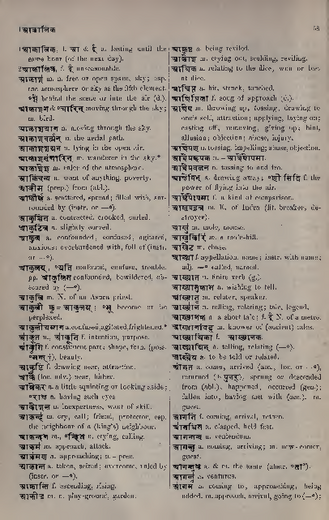
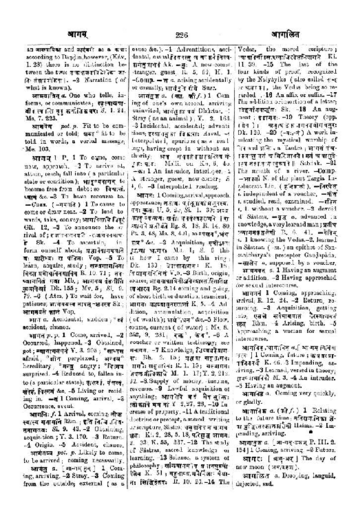
ā́gama ·a. coming to, approaching, being added. m. approach, arrival, going to (--°); course (of a river), appearance, origin; income, revenue, possession, title; knowl edge, science, doctrine; augment (g.).
Monier-Williams 1872 adjective
Original text · English · adjective
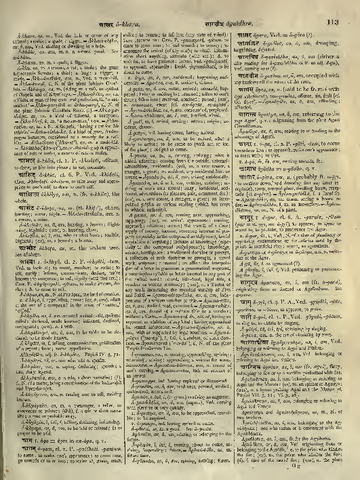
Ā-gama, as, ā, am, coming near, approaching, supplying; (as), m. arrival, appearance; coming, approach; addition; course; the mouth of a river; supply of money, income, revenue; increase of pro- perty (especially in the compound arthāgama), lawful acquisition of anything; increase of knowledge (espe- cially in the compound vidyāgama); knowledge, science, intelligence; a traditional doctrine or precept, a collection of such doctrines or precepts, a sacred work, scripture; a manual; an affix; the interpola- tion of a letter in grammar, a grammatical augment, a meaningless syllable or letter inserted in any part of the radical word; record, title-deed, legal title, a voucher or written testimony; (am), n. a Tantra or any work inculcating the mystical worship of Śiva and Śakti.
Petersburger 1855 adjective · substantive masculine · substantive neuter · Word type unspecified
Original text · German · adjective · substantive masculine · substantive neuter
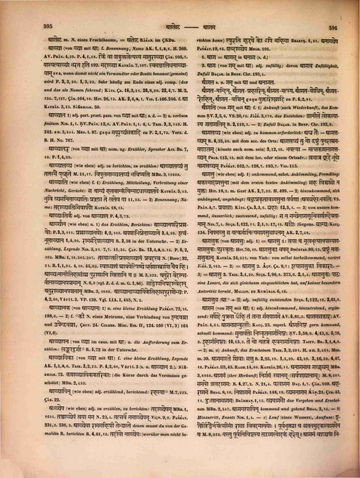
āgama (von gam mit ā) 1〉 adj. hinzukommend, hinzutretend, ergänzend: maryā̀de pu̱tramā dhèhi̱ taṃ tvamā gàmayāgame AV. 6,81,2. āgamasakāraḥ AV. PRĀT. 4,61. āgamaśaṣkulīḥ KAUŚ. 23. superl. ā́gamiṣṭha gern kommend, schnell kommend: su̱tāvàto niṣkṛ̱tamāgàmiṣṭhaḥ ṚV. 3,58,9. ṚV. 4,43,2. ṚV. 5,76,2. i̱hāgàmiṣṭhāḥ ṚV. 10,15,3. te no nakṣatre havamāgamiṣṭhāḥ TAITT. BR. 3,1,1,8. — 2〉 m. a〉 Ankunft, das Erscheinen TRIK. 3,3,291. H. an. 3,461. MED. m. 39. āgamāste śivāḥ santu R. 2,25,19. R. 1,1,39. R. 1,42,26. R. 3,16,32. R. 4,47,18. PAÑCAT. III, 45. RAGH. 14,80. KATHĀS. 26,11. anāgamāya gacchadhvam MBH. 3,8868. āgamaṃ (ihre Herkunft) nirgamaṃ sthānam (sarvapaṇyānām) M. 8,401. samayo jaladāgamaḥ R. 4,27,2. N. 21,4. phalāgama DAŚ. 1,7. ŚĀK. 109. aharāgame BHAG. 8,18. niśāgame PAÑCAT. 148,19. vyasanāgama CĀṆ. 21. ŚUK. 43,11. duḥkhānāmāgamaḥ BRĀHMAṆ. 1,15. vyayāgamau das Vergehen und Erscheinen MBH. 2,547. āgamāpāyin kommend und gehend BHAG. 2,14. — b〉 Hinzutritt, Zusatz NIR. 1,4. — c〉 Lauf (eines Wassers), Ausfluss: etairliṅgairnayetsīmāṃ rājā vivadamānayoḥ . pūrvabhuktyā ca satatamudakasyāgamena ca M. 8,252. yastu pūrvaniviṣṭasya taḍāgasyodakaṃ haret . āgamaṃ vāpyapāṃ bhindyāt M. 9,281. pītapheṇāgamaśca vaktrāt SUŚR. 2,290,7. kṛṣṇaraktā˚ SUŚR. 2,293,5. — d〉 sehr häufig in comp. mit artha und Wörtern von ähnlicher Bedeutung: Zufluss von Geldern, von Reichthümern; Einkommen, Einkünfte: tasmādarthāgamāḥ sarve lobhamohavivardhanāḥ MBH. 3,88. HIT. Pr. 18. dharmyairdhanāgamaiḥ MBH. 2,1210. vipulādvā dhanāgamāt M. 8,347. M. 9,246. CĀṆ. 85. pracuranityadhanāgamā (nṛpanītiḥ) BHARTṚ. 2,39. sapta vittāgamā dharmyāḥ M. 10,115. PAÑCAT. 7,15. draviṇāgama PAÑCAT. II, 12. — e〉 mit Ergänzung von artha oder einem ähnlichen Worte: Zufluss eines Besitzes, bes. das rechtmässige Inbesitzkommen einer Sache: kṛte yuge . nādharmeṇāgamaḥ kaścinmānuṣānprativartate M. 1,81. itareṣvāgamāddharmaḥ pādaśastvavaropitaḥ M. 1,82. saṃbhogo dṛśyate yatra na dṛśyetāgamaḥ kvacit . āgamaḥ kāraṇaṃ tatra na saṃbhoga iti sthitiḥ .. M. 8,200. YĀJÑ. 2,27. YĀJÑ. 2,171. anāgatavidhānaṃ ca kartavyaṃ viṣaye nṛpaiḥ . āgamaścāpi kartavyo (SCHL.: praesenti quoque tempori consulendum) yathā doṣo na jāyate R. 1,17,8. — f〉 in comp. mit vidyā Zufluss von Kenntnissen, von Wissenschaften KĀṆ. 35. KĀṆ. 37. — g〉 mit Ergänzung von vidyā oder einem Worte von ähnlicher Bedeutung: Zufluss einer Kenntniss, Kenntniss, Wissen, Nachricht: evamākhyātavānbālī sa hyabhijño hariprabhuḥ . āgamo me tato 'vyaktas (vya˚?) tasmādetadbravīmi te .. R. 4,35,26. atraiva ca mayā prāpta āgamo vānareṣu vai R. 6,4,30. nāmarūpāgamaṃ tasya prāvedayata vānaraḥ R. 4,3,2. yathāyamāgamo mahyaṃ yathā cedamabhūtpurā MBH. 1,2912. asākṣikahate cihnairyuktibhiścāgamena (nach dem was man davon weiss, ST.: nach dem Gerüchte) ca . draṣṭavyo vyavahāraḥ YĀJÑ. 2,212. saṃdigdhalekhyaśuddhiḥ syātsvahastalikhitādibhiḥ . yuktiprāptikriyācihnasaṃbandhāgamahetubhiḥ (STENZLER: und nach früheren Maassregeln) YĀJÑ. 2,92. prajñayā sadṛśāgamaḥ . āgamaiḥ sadṛśārambhaḥ RAGH. 1,15. āgamavṛddhasevin RAGH. 6,41. śiṣyapradeyāgamāḥ (kavayaḥ) BHARTṚ. 2,12. aitihyamanumānaṃ ca pratyakṣamapi cāgamam . ye hi samyakparīkṣante kutasteṣāmabuddhitā .. R. 5,87,23. — h〉 überlieferte Lehre, Vorschrift; Sammlung von solchen Lehren oder Vorschriften, Lehrbuch (AK. 3,4,89. TRIK. 3,2,12. TRIK. 3,3,291. H. an. 3,461. MED. m. 39): pratyakṣaṃ cānumānaṃ ca śāstraṃ ca vividhagamam M. 12,105. yadyāgamairna vidyāṃ (verb. fin.) ca tamahaṃ bhūtabhāvanam MBH. 3,11175. āgamānanatikramya MBH. 3,1163. mahāprājñaṃ dharmāṇāmāgatāgamam MBH. 3,1030. sarvāgamaparāyaṇāḥ MBH. 3,12637. asiddhaṃ parokṣamāptāgamātsiddham SĀṂKHYAK. 6. SUŚR. 1,24,2. SUŚR. 2,10,20. SUŚR. 2,175,11. SUŚR. 2,518,7. bahudhāpyāgamairbhinnāḥ panthānaḥ siddhihetavaḥ RAGH. 10,27. pākhaṇḍāgamāḥ PRAB. 85,17. PRAB. 29,1. PRAB. 51,5. śāstrāgame vaiṣṇavāḥ VET. 36,1. saṃgītāgamasāgara DHŪRTAS. 68,15. = siddhānta u. s. w. bewiesene Wahrheit H. 242. Bei den Buddh. Gesetzsammlung (deren 4 erwähnt werden) BURN. Intr. 48. fg. BURN. Intr. 315. BURN. Intr. 317. fg. BURN. Intr. 9. āgamaśāstra Titel eines von GAUḌAPĀDA verfassten Werkes Verz. d. B. H. No. 349—Verz. d. B. H. No. 352. Ind. St. 2,101—Ind. St. 2,104. āgamaśāstravivaraṇa heisst ŚAṂKARAʼs Commentar dazu ebend. 1,469. — i〉 Suffix AV. PRĀT. 3,77. — k〉 Augment, ein am Anfange, in der Mitte oder am Ende hinzutretender bedeutungsloser Laut P. 3,1,3, Vārtt. u. s. w. — 3〉 n. ein Tantra: āgataṃ pañcavaktrāttu gataṃ ca girijānane . mataṃ ca vāsudevasya tasmādāgamamucyate .. TANTRAŚĀSTRA_im_ŚKDR. COLEBR. Misc. Ess. II, 178.
Original text · German · Word type unspecified
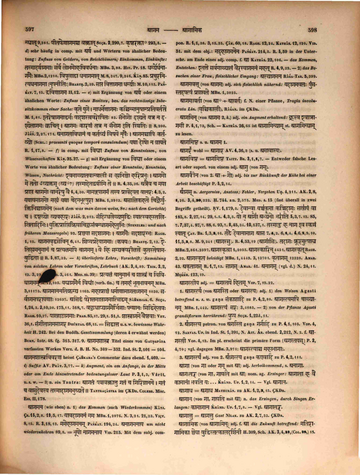
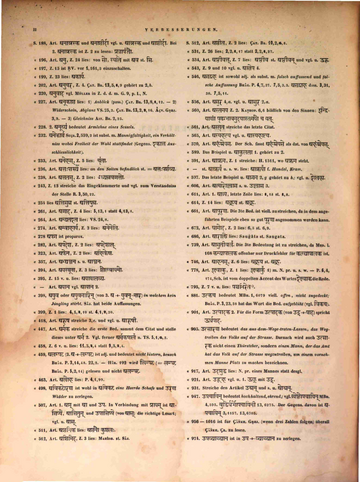
āgama [vgl. [1:597]] Das letzte Beispiel u. āgama 2,g gehört zu h; vgl. u. aitihya. (revision)
Original text · German · Word type unspecified
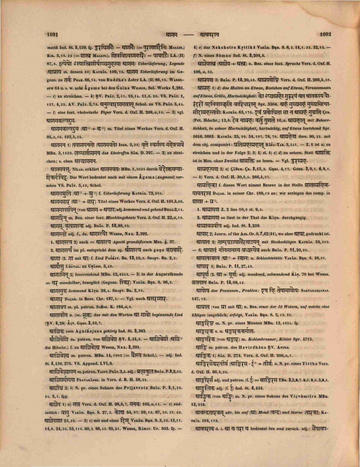
āgama 2〉a〉 am Ende eines adj. comp. f. ā KATHĀS. 56,391. — d〉 füge noch Erlangung, Erwerb hinzu. — e〉 das letzte Beispiel gehört zu d〉. — f〉 das Lernen, Auswendiglernen (beim Lehrer): caturbhiśca prakārairvidyopayuktā bhavati āgamakālena svādhyāyakālena pravacanakālena vyavahārakāleneti PAT._in_MAHĀBH. 39. āgamakāla = grahaṇakāla KAIYY. — g〉 yasyāgamo kevalajīvikāyai taṃ jñānapaṇyaṃ vaṇijaṃ vadanti Kenntnisse, Wissen Spr. 2660. Das letzte Beispiel gehört zu h〉. — h〉 = chandas HALĀY. 1,9. yastu granthārthatattvajño nāsya granthāgamo vṛthā so v. a. Kenntniss des überlieferten Wortlautes Spr. 4919. vyākaraṇāgama der überlieferte Wortlaut der Grammatik Ind. St. 5,159. fg. duradhigamaiḥ — āgamaiḥ (= purāṇādibhiḥ MALLIN.) KIR. 5,18. KIR. 5,22 (= śāstra MALLIN.). śivaviṣṇvāgamaparaiḥ — pāṣaṇḍaiḥ LA. (II) 87,8. ityeṣo 'syāstriśīrṣākhyaguhāyā āgamaḥ Ueberlieferung, Legende (āmnāya st. dessen 60) KATHĀS. 109,75. āgama Ueberlieferung im Gegens. zu tarka PRAB. 86,14. von Buddhaʼs Lehre LA. (II) 86,13. WASSILJEW 64 u. s. w. acht Āgama bei den Jaina WILSON, Sel. Works 1,281. — i〉 zu streichen. — k〉 ṚV. PRĀT. 2,11. ṚV. PRĀT. 10,14. ṚV. PRĀT. 11,6. ṚV. PRĀT. 11,20. VS. PRĀT. 1,137. VS. PRĀT. 4,22. AV. PRĀT. 3,78. anusvārāgamatvāt Schol. zu VS. PRĀT. 5,44. — l〉 eine best. rhetorische Figur Verz. d. Oxf. H. 208,a,10. — 3〉 vgl. āgamakalpadruma.

Böhtlingk 1879 adjective · substantive masculine · substantive neuter
Original text · German · adjective · substantive masculine · substantive neuter
ā́gama — 1〉 Adj. (f. ā) hinzukommend, hinzutretend [Page1-161-b] AV. 19,35,3. — 2〉 m. (adj. Comp. f. ā) — a〉 Ankunft. — b〉 Herkunft. — c〉 Eintreffen, Eintritt (eines Zeitpunktes, Zustandes). — d〉 Lauf (eines Wassers), Ausfluss. — e〉 Erwerb, Besitz. — f〉 das Lernen, Erlernen. — g〉 erlangte Kenntniss, Wissen, Kunde. — h〉 überlieferter Wortlaut, überlieferte Lehre, Ueberlieferung; Gesetzsammlung. — i〉 Hinzutritt, Zusatz. — k〉 Augment (gramm.) — l〉 eine best. rhetorische Figur. — 3〉 n. ein Tantra.
Apte 1890 substantive masculine
Original text · English · substantive masculine
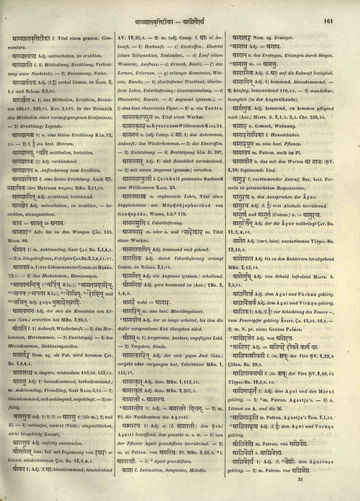
āgamaḥ 1 Coming, arrival, approach, appearance; latāyāṃ pūrvalūnāyāṃ prasūnasyāgamaḥ kutaḥ U. 5. 20; Śi. 1. 30; avyaktād vyaktayaḥ sarvāḥ prabhavaṃtyaharāgame . rātryāgame pralīyaṃte Bg. 8. 18; R. 14. 80; Pt. 3. 48; Ms. 8. 401; so vyasana˚, aṃdhakāra˚ &c. 2 Acquisition; eṣo'syā mudrāyā āgamaḥ Mu. 1; Ś. 6 this is how I came by this ring; Dk. 139; vedānāmāgamaḥ K. 18; vidyāgamanimittaṃ V. 5. 3 Birth, origin, source; āgamāpāyino' nityāstāṃstitikṣasva bhārata Bg. 2. 14 coming and going, of short birth or duration, transient; āgamaḥ kāvyāmṛtarasānāṃ K. 5. 4 Addition, accumulation, acquisition (of wealth); artha˚, dhana˚ &c. 5 Flow, course, current (of water); Ms. 8. 252, Ms. 9. 281; rakta˚, pheṇa˚. 6 A voucher or written testimony; see anāgama. 7 Knowledge; śiṣyapradeyāgamāḥ Bh. 2. 15; prajñayā sadṛśāgamaḥ āgamaiḥ sadṛśāraṃbhaḥ R. 1. 15; yasyāgamaḥ kevalajīvikāyai M. 1. 17; Y. 2. 212, Y. 2. 92. 8 Supply of money, income, revenue. 9 Lawful acquisition of anything; āgamope balaṃ naiva bhuktiḥ stokāpi yatra no Y. 2. 27, Y. 2. 28. 10 Increase of property. 11 A traditional doctrine or precept, a sacred writing or scripture, Śāstra; anumānena na cāgamaḥ kṣataḥ Ki. 2. 28, Ki. 5. 18; pariśuddha āgamaḥ Ki. 2. 33; K. 55, K. 337. 12 The study of Śāstras, sacred knowledge or learning. 13 Science, a system of philosophy; sāṃkhyāgameneva pradhānapuruṣopetena K. 51; bahudhāpyāgamairbhinnāḥ paṃthānaḥ siddhihetavaḥ R. 10. 26. 14 The ([Page 0226-c]) Vedas, the sacred scripture; nyāyanirṇītasāratvānnirapekṣamivāgame Ki. 11. 39. 15 The last of the four kinds of proof, recognized by the Naiyāyikas (also called śabda or āptavākya, the Vedas being so regarded). 16 An affix or suffix. 17 The addition or insertion of a letter; bhavedvarṇāgamāddhaṃsaḥ Sk. 18 An augment; iḍāgamaḥ. 19 Theory (opp. prayoga); catuḥṣaṣṭikalāgamaprayogacaturaḥ Dk. 120. 20 — (maḥ, -maṃ) A work inculcating the mystical worship of śiva and śakti, a Tantra; āgataṃ paṃcavaktrāttu gataṃ ca girijānane . mataṃ ca vāsudevasya tasmādāgamamucyate .. Śabdak. 21 The mouth of a river. Comp. — āvartā N. of the plant Targia Involucrata Lin. (vṛścikālī). — nirapekṣa a. independent of a voucher. — nīta a. studied, read, examined. — rahita a. 1 without a voucher. 2 devoid of Śāstras. — vṛddha a. advanced in knowledge, a very learned man; pratīpa ityāgamavṛddhasevī R. 6. 41. — vedin a. 1 knowing the Vedas. 2 learned in Śāstras. ( — m.) an epithet of Śankarāchārya's preceptor Gauḍapāda. — sākṣepa a. supposed by a voucher.
Cappeller 1887 Word type unspecified
Original text · German · Word type unspecified
ā́gama hinzukommend; m. Ankunft; Erwerb, Besitz, Lehre, Ueberlieferung, Wissenschaft; augment (g.).
Burnouf 1866 adjective
Original text · French · adjective
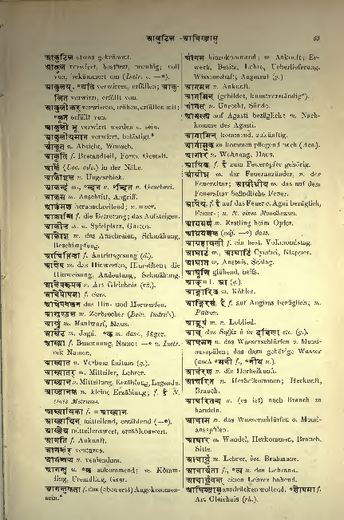
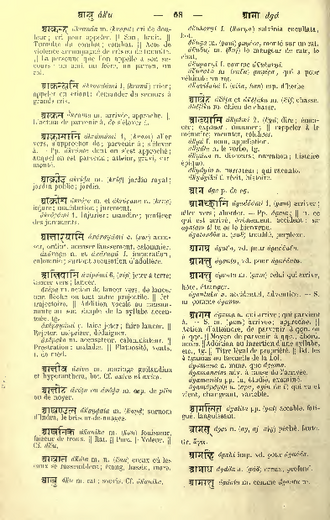
āgama āgama a. qui arrive; qui parvient à. — S. m. (gam) arrivée; approche. Action d'atteindre, de parvenir à qqn. ou à qqc. Moyen de parvenir à qqc., abord, accès. Addition ou insertion d'une syllabe, etc., tg. Titre légal de propriété. Bd. les 4 āgamas ou Recueils de la Loi. āgamana n. mms. que āgama. āgamanatas adv. à cause de l'arrivée. āgamanīta pp. lu, étudié, examiné. āgamāpāyin a. (apa, ayin de i) qui va et vient, changeant, variable.
Occurrences in source texts (5)
HP 2 occurrences
PYS 1 occurrence
SiSa 1 occurrence
VBT 1 occurrence
Continue with AYI Free
Image source: AYI archive.