

āveśa आवेश – entering; entrance; immersion; absorption
substantive masculine · Word type unspecified
Dictionary sources
AYI dictionary substantive masculine
entering; entrance; immersion; absorption
Derived from
Cappeller 1891 substantive masculine
Original text · English · substantive masculine
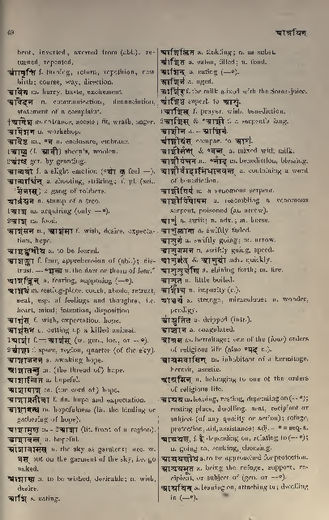
†āveśa ·m. entrance, access; fit, wrath, anger.
Monier-Williams 1872 substantive masculine · Word type unspecified
Original text · English · substantive masculine
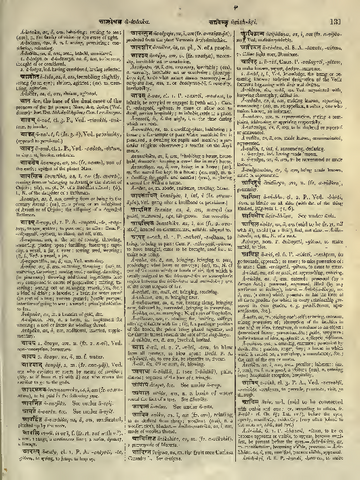
Ā-veśa, as, m. joining one's self; entering, entrance, taking possession of; absorption of the faculties in one wish or idea, intentness, devotedness to an object; demoniacal frenzy, possession, &c.; pride, arrogance; indistinctness of idea, apoplectic or epileptic giddiness.
Original text · English · Word type unspecified
āveśa ā-veśa, &c. See under ā-viś.
Petersburger 1855 substantive masculine · Word type unspecified
Original text · German · substantive masculine
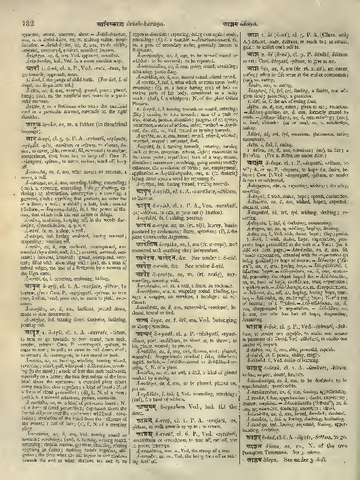
āveśa (von viś mit ā) m. 1〉 das Sichanfügen, Anschliessen: āveśādanivṛttiḥ KĀTY. ŚR. 22,3,51. — 2〉 das Hineingehen, Eindringen: cicchāyāveśato buddhau bhānam BĀLAB. 6. sehr häufig von Gemüthszuständen, die den ganzen Menschen in Besitz nehmen: krodhāveśa MBH. 1,585. śokā˚ MBH. 3,398. ŚĀK. CH. 90,1. PRAB. 89,1. PRAB. 96,11. PRAB. 96,12. bhramā˚ BHARTṚ. 1,88. viṣādavismayā˚ VID. 172. bhaktirasā˚ KATHĀS. 25,230. madanā˚ KATHĀS. 22,113. smarā˚ SĀH. D. 57,2. smayāveśavivarjita RAGH. 5,19. ST.: fastu superbiaque liber. — 3〉 das Eindringen von bösen Geistern, Besessensein H. 321. āveśavidhāna Verz. d. B. H. No. 903. — 4〉 Stolz, Hochmuth TRIK. 3,2,19. H. 1499. — Vgl. svāveśa.
Original text · German · Word type unspecified
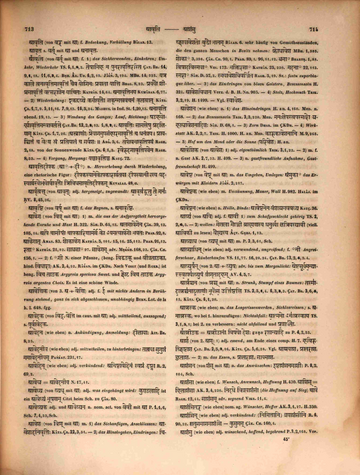
āveśa 2〉 gṛhāveśaḥ kleśaḥ das Hineintreten in ein Haus Spr. 5319. ārūḍhasmarāveśā KATHĀS. 65,230. — 3〉 Verz. d. Oxf. H. 322,b,32. āveśo duḥ- khamohādyairapasmāro 'ṅgatāpakṛt PRATĀPAR. 53,b,4. — 5〉 das Hängen an (= āsakti Schol.): dehāveśa BHĀG. P. 11,20,13.
Böhtlingk 1879 substantive masculine
Original text · German · substantive masculine
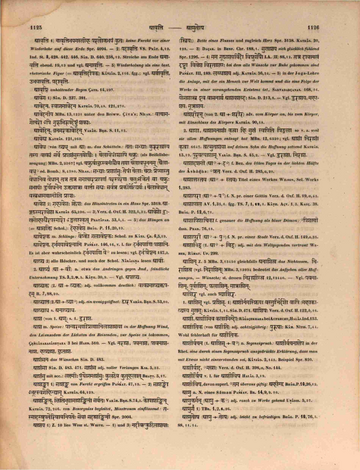
āveśa m. (adj. Comp. f. ā) — 1〉 das Hereintreten in Spr. 7231. — 2〉 das Miteingeschlossensein KĀTY. ŚR. 22,3,51. — 3〉 das Ergriffensein, Benommensein (von einer heftigen Gemüthserscheinung). — 4〉 Wuth, Zorn BĀLAR. 146,18. KĀD. II,58,8. — 5〉 das Besessensein. — 6〉 das Hängen an. — 7〉 *Stolz, Hochmuth.
Apte 1890 substantive masculine
Original text · English · substantive masculine
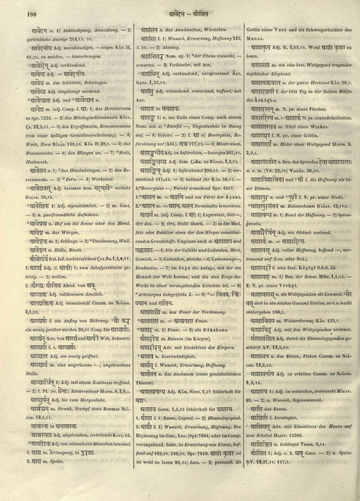
āveśaḥ 1 Entering into, entrance; āveśaṃ kṛ Pt. 1 to enter or infuse oneself into. 2 Taking possession of, influence, exercise; smaya˚ influence of pride R. 5. 19; so madana˚, krodha˚, bhaya˚ &c. 3 Intentness, devotedness to an object, complete absorption in one wish or idea. 4 Pride, arrogance. 5 Flurry, agitation, anger, passion; K. 291. 6 Demoniacal possession. 7 Apoplectic or epileptic giddiness.
Cappeller 1887 substantive masculine
Original text · German · substantive masculine
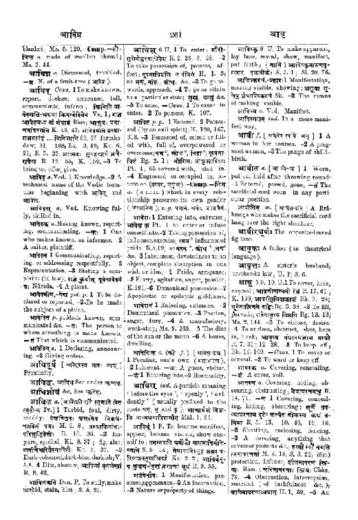
āveśa m. Eintritt, Anfall.
Burnouf 1866 substantive masculine
Original text · French · substantive masculine
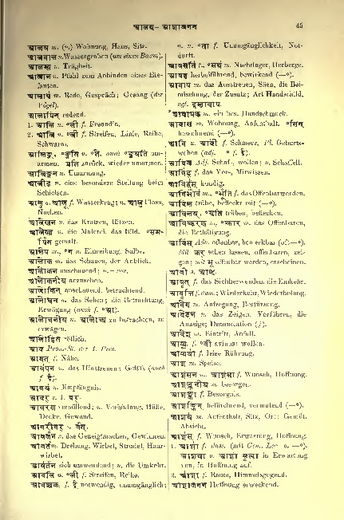
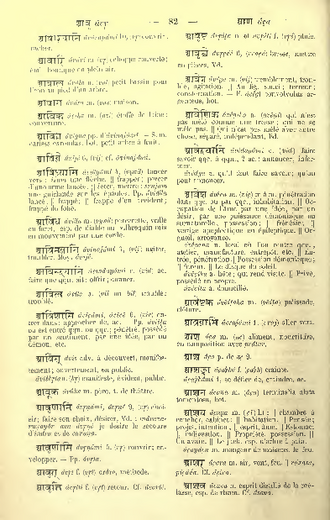
āveśa āveśa m. (viś) m à m. pénétration dans qqc. ou par qqc., inhabitation. Occupation de l'âme par une idée, par un désir, par une puissance démoniaque ou surnaturelle, possession; frénésie; vertige apoplectique ou épileptique. Orgueil, arrogance. āveśana n. local où l'on rentre qqc., atelier, manufacture, entrepôt, etc. Entrée, pénétration. Possession démoniaque; fureur. Le disque du soleil. āveśika a. hôte; qui rend visite. Privé, possédé en propre. āveśita a. domicilié.
Occurrences in source texts (3)
PJH 1 occurrence
PYS 1 occurrence
VBT 1 occurrence
Continue with AYI Free
Image source: AYI archive.