anāgata अनागत – future; not yet arisen
adjective · substantive neuter · Word type unspecified
Dictionary sources
AYI dictionary adjective
future; not yet arisen
Derived from
Cappeller 1891 adjective
Original text · English · adjective
ánāgata ·a. not yet come, future.
Monier-Williams 1872 adjective
Original text · English · adjective
anāgata an-āgata, as, ā, am (rt. gam), not come, not arrived; future; not attained, not learnt; unknown; (am), n. the future.
Petersburger 1855 adjective · Word type unspecified
Original text · German · adjective
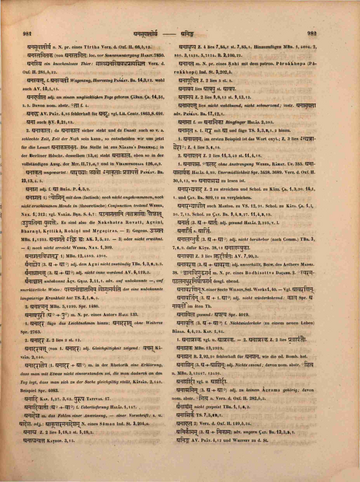
anāgata (3. a + āgata) adj. 1〉 noch nicht angekommen ŚAT. BR. 3,2,4,7. ŚAT. BR. 3,4,1,5. — 2〉 noch nicht gekommen, bevorstehend, zukünftig RĀJAN._im_ŚKDR. R. 3,46,9. R. 4,63,20. anāgataṃ bhayaṃ dṛṣṭvā PAÑCAT. II, 14. anāgatavidhānaṃ kar oder pravidhā Anstalten für die Zukunft treffen R. 1,17,8. R. 3,30,11. R. 4,14,29. anāgataṃ kar vorsichtig zu Werke gehen PAÑCAT. III, 226. PAÑCAT. III,228. — 3〉 nicht angenommen, nicht gebilligt: arthaṃ vā yadi vā kāmaṃ nayaśāstreṣvanāgatam R. 3,56,18.
Original text · German · Word type unspecified
anāgata 1〉 ˚yogin mit dem (factisch) noch nicht angekommenen, noch nicht erschienenen Monde in (theoretische) Conjunction tretend WEBER, Nax. 1,312; vgl. VARĀH. BṚH. S. 4,7: ṣaḍanāgatāni (nakṣatrāṇi) pauṣṇāt (uḍupatinā yujyante). Es sind also die Nakṣatra Revatī, Aśvinī, Bharaṇī, Kṛttikā, Rohiṇī und Mṛgaśiras. — 2〉 Gegens. upagata MBH. 1,1252. anāgate 'hni śvaḥ AK. 3,5,22. — 3〉 oder nicht erwähnt. — 4〉 noch nicht erreicht WEBER, Nax. 1,309.
Böhtlingk 1879 adjective · Word type unspecified
Original text · German · adjective
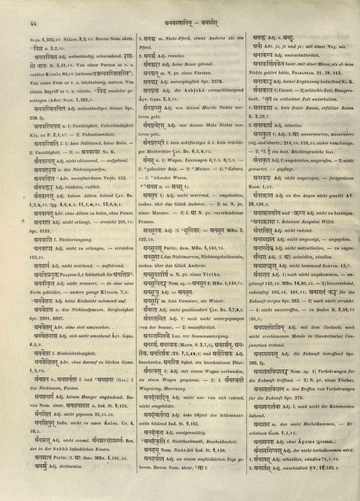
ánāgata Adj. — 1〉 noch nicht angekommen, — angelangt Chr. 142,26. MBH. 14,80,24. — 2〉 bevorstehend, zukünftig Chr. 105,26. Chr. 161,11. anāgataṃ krar für die Zukunft sorgen Spr. 263. — 3〉 noch nicht erreicht. — 4〉 nicht anzutreffen, — zu finden R. 3,56,18 (R. ed. Bomb. 3,50,9).
Original text · German · Word type unspecified
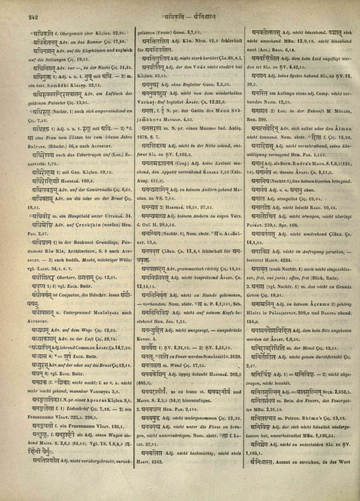
anāgata 2〉 Loc. in der Zukunft M. MÜLLER, Ren. 299. [Nachtrag, Band 5]
Original text · German · Word type unspecified
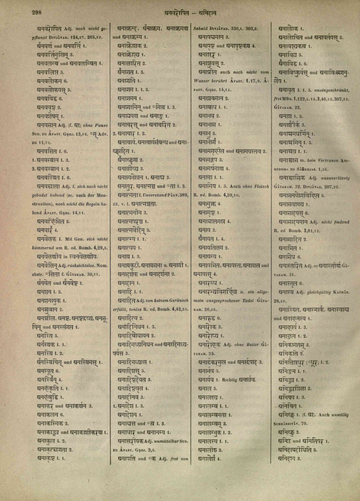
ánāgata I. 5. [Nachtrag, Band 7]
Apte 1890 adjective · substantive neuter
Original text · English · adjective · substantive neuter
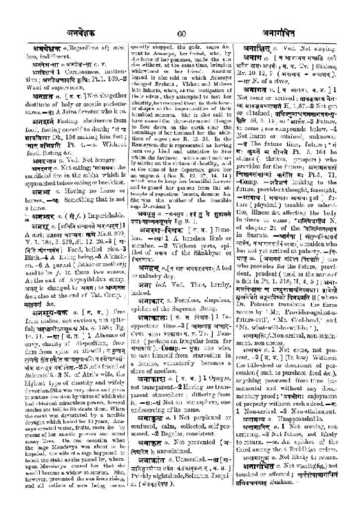
anāgata a. [na āgataḥ, na. ta.] 1 Not come or arrived; tāvadbhayasya bhetavyaṃ yāvadbhayamanāgataṃ H. 1. 57. 2 Not got or obtained; vardhiṣṇumāśrayamanāgatamabhyupaiti Śi. 5. 14; so ˚ārtava. 3 Future, to come; see compounds below. 4 Not learnt or attained, unknown. — taṃ The future time, future; ˚taṃ yaḥ kurute sa śobhate Pt. 3. 164 he shines (thrives, prospers) who provides for the future; anāgatavatīṃ ciṃtāmasaṃbhāvyāṃ karoti yaḥ Pt. 5. 71. Comp. — avekṣaṇaṃ looking to the future, provident thought, foresight. — ābādhaḥ [anāgataḥ ābādhaḥ duḥkhaṃ] future (physical) trouble or calamities, illness &c. affecting the body in times to come; ˚pratiṣedhanīyaṃ N. of chapter 24 of the cikitsitasthāna in Suśruta. — ārtavā [strīpuṣpavikāsanaṃ ārtavaṃ, na āgatamārtavaṃyasyāḥ] a maiden who has not yet arrived at puberty. — vidhātṛ m. [anāgataṃ uddiśya vidadhāti] one who provides for the future, provident, prudent (used as the name of a fish in Pt. 1. 318; H. 4. 5); anāgatavidhātā ca pratyutpannamatistathā . dvāvetau sukhamedhete yadbhaviṣyo vinaśyati .. (where Dr. Peterson translates the three names by ‘Mr. Provider-against-a-future-evil’, ‘Mr. Cool-head,’ and ‘Mr. what-will-be-will-be’).
Cappeller 1887 Word type unspecified
Original text · German · Word type unspecified
ánāgata nicht angekommen bevorstehend, zuküftig.