

bāhu बाहु – arm
substantive feminine · substantive masculine · Word type unspecified
Dictionary sources
AYI dictionary substantive masculine
Cappeller 1891 substantive masculine
Original text · English · substantive masculine
bāhú ·m. arm, esp. fore-arm, (of beasts) foreleg, esp. its upper part; a cert. measure of length; N. of a Daitya & sev. princes.
Monier-Williams 1872 substantive masculine · Word type unspecified
Original text · English · substantive masculine
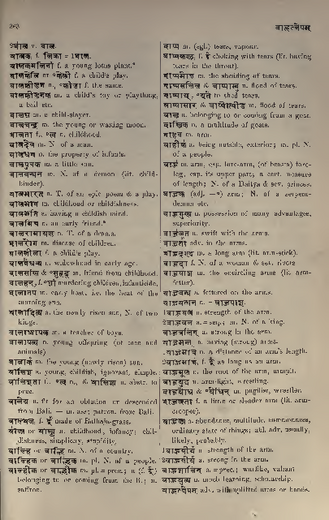
bāhu 1 . bāhu, us, m. (fr. rt. bah for baṃh, said to be fr. rt. bādh; by some grammarians 1. bāhu is said to be both m. and f.; for 2. bāhu see col. 3), the arm, (bāhū udyamya, raising the two arms; Lakṣmaṇo Rāmasya dakṣiṇo bāhuḥ, Lakṣmaṇa is Rāma's right arm; ājānu- bāhu, one whose arms reach as far as his kness; cf. ud-b˚, ūrdhva-b˚); the fore-arm, the arm between the elbow and the wrist, (opposed to pra-gaṇḍa, q. v.); the fore-foot of an animal, (according to the commentators especially the upper part of the fore- foot, but perhaps also the lower part; cf. pṛśni- b˚); the whole upper extremity of the body (in medicine, as opposed to sakthi, the lower extre- mity); the limb of a bow (Ved.); the bar of a chariot-pole (Ved.); a door-post [cf. dvāra-b˚]; (in geometry) the base of a right-angled triangle, leg of a triangle, side of an angular figure [cf. bāhu-pratibāhu]; the shadow of the gnomon on a sun-dial; the constellation Ārdrā, (in this sense also ū, m. du.); N. of a Daitya; of a prince (enumerated among eighteen who brought ruin upon their families by their illegal actions, Mahā-bh. Udyoga-p. 2731); of a son of Vṛka; of a son of Vajra; (adjective com- pounds having bāhu in the sense of ‘arm’ at the end and applied to the names of persons make their fem. in ū); [cf. Zend bâzu, ‘the arm;’ Gr. πῆχυ-ς, βραχίων; Lat. brachium; Old Norse bôg-r = Old Germ. buoc, ‘a bow, bend.’]
Original text · English · Word type unspecified
bāhu 2 . bāhu (fr. bahu, p. 677, col. 2), oc- curring at the beginning of compounds as follow. (For 1. bāhu see col. 1.)
Petersburger 1855 substantive feminine · substantive masculine · Word type unspecified
Original text · German · substantive feminine · substantive masculine
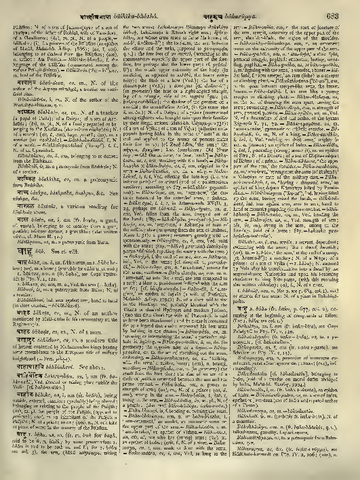
bāhú (von bah, baṃh) NIR. 3,8. UJJVAL._zu_UṆĀDIS. 1,28. 1〉 m. f. (das letztere nicht zu belegen) TRIK. 3,5,17. SIDDH. K. 248,b,5. a〉 Arm, in engerer Bed. Vorderarm, πῆχυς; in der Medicin die ganze obere Extremität, wie sakthi die untere. NAIGH. 2,4. AK. 2,6,2,31. TRIK. 2,6,26. H. 589. HALĀY. 2,367. saha̱ ojò bā̱hvorvo̱ balàṃ hi̱tam ṚV. 5,57,6. ṚV. 3,29,6. dadhā̀no̱ vajràṃ bā̱hvoḥ ṚV. 4,22,3. pra bā̱hū àsrāk ṚV. 4,53,3. ṚV. 6,71,1. ṚV. 6,71,5. (hastaghnaḥ) ahìriva bho̱gaiḥ paryèti bā̱hum ṚV. 6,75,14. sākṣā̀ma̱ tānbā̱hubhi̱ḥ śāśàdānān ṚV. 7,98,4. ṚV. 8,20,11. AV. 10,2,5. AV. 11,9,1. AV. 11,9,13. AV. 11,10,16. VS. 11,57. sa patitvā bāhumapiśaśre ŚAT. BR. 1,7,3,19. divaṃ bāhubhyāṃ nodāpuḥ ŚAT. BR. 13,5,4,14. bāhurvā aratniḥ ŚAT. BR. 14,1,2,6. ŚAT. BR. 5,4,1,15. ŚAT. BR. 7,4,1,36. ĀŚV. GṚHY. 4,2,8. na bāhubhyāṃ nadīṃ taret ĀŚV. GṚHY. 3,9,6. M. 4,77. bāhvoḥ prāpaṇānte KĀTY. ŚR. 17,4,10. M. 1,31. M. 1,87. M. 4,175. M. 10,45. pīna N. 5,5. SUŚR. 1,125,12. SUŚR. 1,345,8. SUŚR. 1,349,3. RAGH. 2,32. bāhū udyamya ŚĀK. 7,7. ŚĀK. 7,29. VID. 214. VID. 263. yadi caitasya vīrasya bāhvornādyāhamantaram . praviśāmi so v. a. von ihm umarmt werde N. 21,10. ˚bhaṅgi DHŪRTAS. 87,16. kṣatriyasyājigīṣasya dhigbāhū dhikca yauvanam KATHĀS. 42,80. (lakṣmaṇaḥ) rāmasya dakṣiṇo bāhuḥ lieb —, unentbehrlich wie der rechte Arm R. 3,38,13. ājānubāhu adj. dessen Arme bis an die Knie reichen MBH. 7,2244. R. GORR. 1,1,14. yugavyāyata˚ adj. RAGH. 3,34. mahā˚ adj. N. 2,11. N. 4,30. N. 12,8. N. 14,11. R. 1,1,11. hrasvabāhu adj. f. MĀRK. P. 69,30. P. 4,1,67. Ist das f. des adj. comp. ein N. pr., so geht dieses auf ū aus, ebend. — b〉 beim Thier Vorderfuss; besonders, nach den Comm., der obere Theil desselben. Bei der Regelmässigkeit der Aufeinanderfolge von aṃsau, doṣaṇī, bāhū dürfte es jedoch richtiger sein in Uebereinstimmung mit der Bedeutung des Wortes beim menschlichen Arm den untern Theil des Vorderfusses zu verstehen und doṣan die andere Bed. beizulegen. AV. 9,7,7. AV. 10,9,19. AIT. BR. 2,6. AIT. BR. 7,1. ṚV. 10,102,4. ĀŚV. GṚHY. 1,11,4. ĀŚV. GṚHY. 4,2,8. ŚAT. BR. 13,2,2,5. — c〉 Arm des Bogens (nach dem Schol. zu KĀTY. ŚR. 15,5,18) ŚAT. BR. 5,3,5,28. — d〉 Arm der Wagendeichsel: kūbarabāhū GOBH. 3,4,26. — e〉 Pfosten der Thür; s. dvāra˚. — f〉 Kathete SŪRYAS. 10,8. SŪRYAS. 10,10. bāhupratibāhū die gegenüberstehenden Seiten einer Figur COLEBR. Alg. 295. bāhuphala the result from the base-sine SŪRYAS. 2,41. SŪRYAS. 2,46. the sine of an are of a circle of position contained between the Sun and the Prime Vertical SIDDHĀNTAŚIR. 237, N. — g〉 der Schatten eines Sonnenzeigers SŪRYAS. 3,24. SŪRYAS. 3,40. — h〉 sg. und du. das Sternbild Ārdrā Ind. St. 3,468. WEBER, Nax. II, 300. WEBER, Nax. II,370. WEBER, Nax. II,376. WEBER, Nax. II,387. — 2〉 m. N. pr. P. 4,1,96. VOP. 7,1. eines Daitya MBH. 12,8263. eines Fürsten MBH. 5,85. durch ungesetzliches Verfahren schändet er sein Geschlecht: bāhuḥ sundaravaṃśānām (kalirajāyata) MBH. 5,2731. ein Sohn Vṛkaʼs HARIV. 760. fgg. VP. 373. ein Sohn Vajraʼs VP. 440. — Vgl. ugra˚, udbāhu, ūrdhva˚, nṛ˚, pṛśni˚, pra˚, prati˚, bhadrabāhū, mahā˚, vajra˚, śiti˚, sahasra˚, su˚, sthūlabāhū.
Original text · German · Word type unspecified
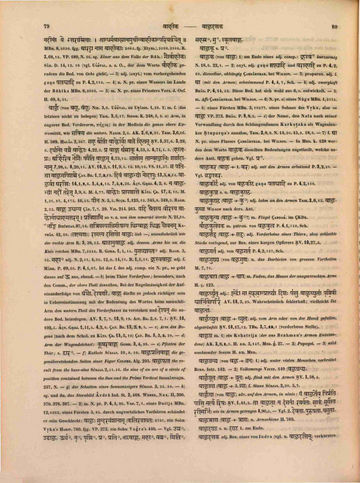
bāhu 1〉f〉 überh. Seite einer geometrischen Figur COLEBR. Alg. 58.
Böhtlingk 1879 substantive feminine · substantive masculine
Original text · German · substantive feminine · substantive masculine
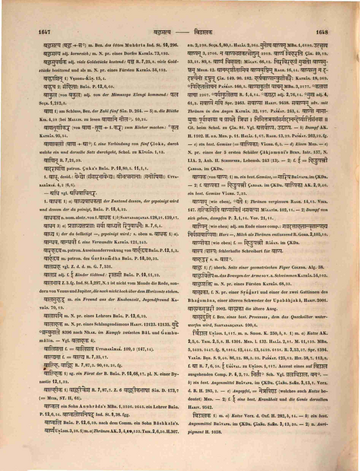
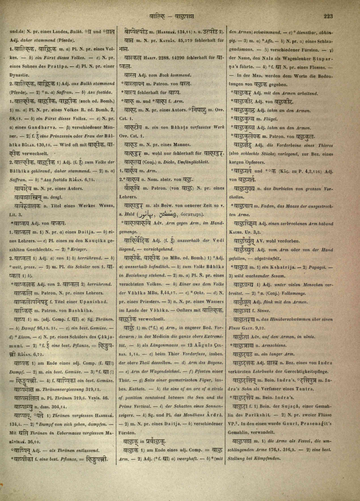
bāhú — 1〉 m. (*f.) — a〉 Arm, in engerer Bed. Vorderam; in der Medicin die ganze obere Extremität. — b〉 als Längenmaass = 12 Aṅgula ŚULBAS. 1,14. — c〉 beim Thier Vorderfuss, insbes. der obere Theil desselben. — d〉 Arm des Bogens. — e〉 Arm der Wagendeichsel. — f〉 Pfosten einer Thür. — g〉 Seite einer geometrischen Figur, insbes. Kathete. — h〉 the sine of an are of a circle of position contained between the Sun and the Prime Vertical. — i〉 der Schatten eines Sonnenzeigers. — k〉 Sg. und Pl. das Mondhaus Ārdrā. — 2〉 m. N. pr. eines Daitya. — b〉 verschiedener Fürsten.
Apte 1890 substantive masculine
Original text · English · substantive masculine
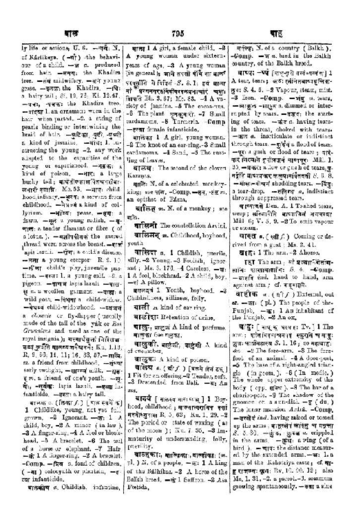
bāhuḥ [bādh ku dhasya haḥ Tv.] 1 The arm; śāṃtamidamāśramapadaṃ sphurati ca bāhuḥ kutaḥ phalamihāsya Ś. 1. 16; so mahābāhuḥ &c. 2 The fore-arm. 3 The forefoot of an animal. 4 A door-post. 5 The base of a right-angled triangle (in geom.). 6 (In medic.) The whole upper extremity of the body (opp. sakthi). 7 The bar of a chariot-pole. 8 The shadow of the gnomon on a sun-dial. — hū (du.) The lunar mansion Ārdrā. Comp. — utkṣepaṃ ind. having raised or tossed up the arms; bāhūtkṣepaṃ kraṃdituṃ ca pravṛttā Ś. 5. 30. — kuṃṭha, -kubja a. crippled in the arms. — kuṃthaḥ a wing (of a bird). — cāpaḥ the distance measured by the extended arms. — jaḥ 1 a man of the Kṣatriya caste; cf. bāhū rājanyaḥ kṛtaḥ Rv. 10. 90. 12; also Ms. 1. 31. 2 a parrot. 3 sesamum growing spontaneously. — jyā a sine ([Page 0796-a]) (in math.). — traḥ, -traṃ, -trāṇa vantbrass (armour for the arms). — daṃḍaḥ 1 a staff-like arm. 2 punishment with the arm or fist. — pāśaḥ 1 a particular attitude in fighting. 2 the arm thrown round, as in the act of embracing. — pratibāhau the opposite sides of a figure. — prasāraḥ -prasāraṇaṃ stretching the arms (for embracing &c.). — praharaṇaḥ a boxer. — (ṇaṃ) boxing. — phalaṃ (in geom.) the result for the base sine. — balaṃ strength of arm, muscular strength. — bhūṣaṇaṃ, -bhūṣā an ornament worn on the arm, an armlet. — bhedin m. an epithet of Viṣṇu. — mūlaṃ 1 the armpit. 2 the shoulderblade. — yuddhaṃ a hand-to-hand or close fight, personal or pugilistic encounter, boxing. — yādheḥ, -yodhin m. a pugilist, boxer. — latā an armlike creeper. ˚aṃtaraṃ the breast, bosom. — vikṣepaḥ 1 the act of throwing about the arms, moving the arms. 2 swimming. — vīryaṃ strength of arm. — vyāyāmaḥ athletic exercise. — śālin m. 1 an epithet of Śiva. 2 of Bhīma. — śikharaṃ the upper part of the arm, the shoulder. — saṃbhabaḥ a man of the Kṣatriya caste. — sahasrabhṛt m. an epithet of king Kārtavīrya (also called sahasrārjuna).
Cappeller 1887 substantive masculine
Original text · German · substantive masculine
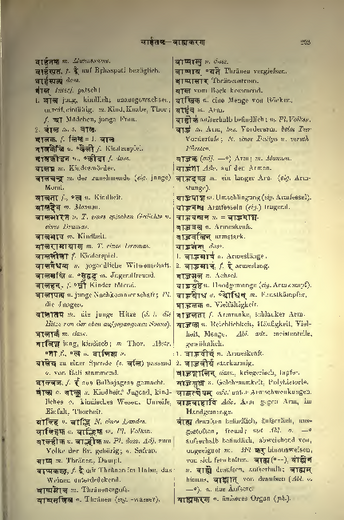
bāhú m. Arm, bes. Vorderarm, beim Tier Vorderfuß; N. eines Daitya u. versch Fürsten.
Burnouf 1866 substantive masculine
Original text · French · substantive masculine
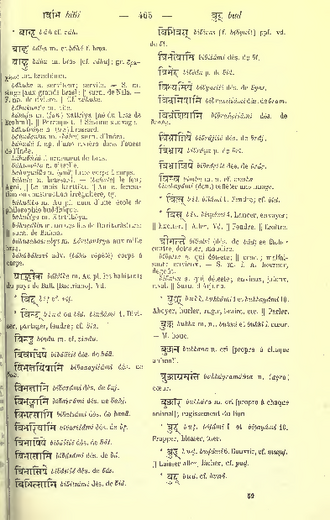
bāhu bāhu m. bras [cf. vāhu]; gr. ϐραχίων; lat. brachium. bāhuka a. serviteur; servile. — S. m. singe [aux grands bras]; surn. de Nala. — F. np. de rivière. Cf. vāhuka. bāhukuntha m. aile. bāhuja m. (jan) kṣatriya [né du bras de Brahmā]. Perroquet. Sésame sauvage. bāhutrāṇa n. (trai) brassard. bāhudantin m. (bahu) surn. d'Indra. bāhudā f. np. d'une rivière dans l'ouest de l'Inde. bāhubhūṣā f. ornement de bras. bhāhumūla n. aisselle. bāhuyuddha n. (yudh) lutte corps à corps. bāhula n. brassard. — (bahula) le feu; Agni. Le mois kārttika. Au n. formation ou construction irrégulière, tg. bāhulika m. Au pl. nom d'une école de philosophie buddhique. bāhuleya m. Kārttikeya. bāhuśālin m. un des fils de Dhṛtarāṣṭra; surn. de Bhīma. bāhusahasrabhṛt m. Kārttavīrya aux mille bras. bāhūbāhavi adv. (bāhu répété) corps à corps.
Occurrences in source texts (6)
MAN 3 occurrences
SVU 2 occurrences
VBT 1 occurrence
Continue with AYI Free
Image source: AYI archive.