

śravaṇa श्रवण – Hören; Ohr; Studium durch Hören
Adjektiv · Substantiv Feminin · Substantiv Maskulin · Substantiv Neutrum · Worttyp nicht bestimmt
Wörterbuchquellen
AYI Wörterbuch Substantiv Neutrum
Hören; Ohr; Studium durch Hören
Cappeller 1891 Adjektiv · Substantiv Neutrum
Originaltext · Englisch · Substantiv Neutrum
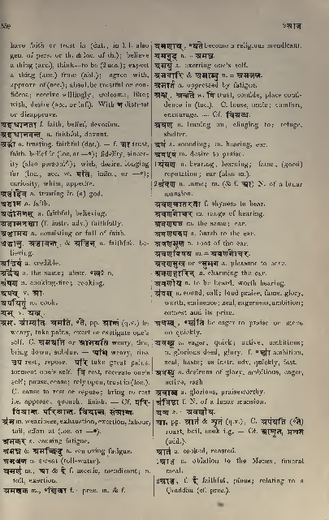
śrávaṇa1 ·n. hearing, learning; fame, (good) reputation; ear (also m.).
Originaltext · Englisch · Adjektiv
śrávaṇa2 ·a. lame; m. (& f. ā) N. of a lunar mansion.
Monier-Williams 1872 Substantiv Neutrum
Originaltext · Englisch · Substantiv Neutrum
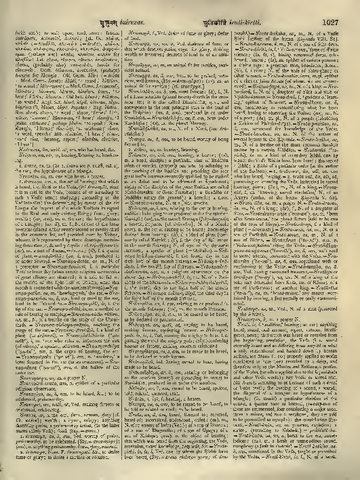
1. śravaṇa, am, n. the act of hearing; that which is heard, i. e. Śruti or the Veda, (iti śravaṇāt, since it is so said in the Veda, because of or according to such a Vedic text); studying; (according to the Vedānta-sāra) the determining by means of the six Liṅgas the import of the whole Vedānta in regard to the Real and only existing Being; fame, glory; wealth; (as, am), m. n. the ear; the hypothenuse of a triangle; (as, ā), m. f., N. of one of the lunar asterisms (placed either twenty-second or twenty-third in the common list, and presided over by Viṣṇu, whence it is represented by three footsteps contain- ing three stars, a, α, β, and γ Aquilæ; cf. tri-vikrama); (as), m. a sort of disease, = śroṇa; (ā), f. a species of plant, = muṇḍīrikā; (as, ā, am), produced in or under Śravaṇā.
Originaltext · Englisch · Substantiv Neutrum
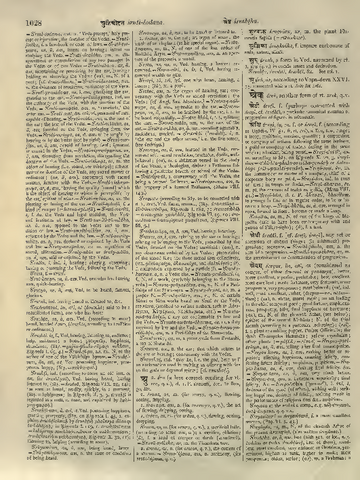
2. śravaṇa, am, n. (for sravaṇa, q. v.), the act of flowing, dripping, oozing.
Petersburger 1855 Adjektiv · Substantiv Maskulin · Substantiv Neutrum · Worttyp nicht bestimmt
Originaltext · Deutsch · Adjektiv · Substantiv Maskulin · Substantiv Neutrum
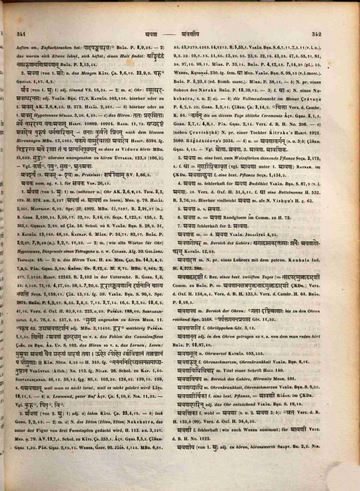
2. śrávaṇa (von 2. śru) 1〉 adj. a〉 lahm KĀTY. ŚR. 23,4,16. — b〉 leck GOBH. 3,2,43. — 2〉 m. a〉 N. des 20ten (21ten, 22ten) Nakṣatra, das unter der Figur von drei Fusstapfen gedacht wird, H. 113. H. an. 3,227. MED. ṇ. 79. AV. 19,7,4. Schol. zu KĀTY. ŚR. 335,1. ĀŚV. GṚHY. 3,5,2. ŚĀṄKH. GṚHY. 1,20. PĀR. GṚHY. 2,10. PĀR. GṚHY. 2,14. WEBER, JYOT. 95. YĀJÑ. 1,142. MBH. 6,81. MBH. 6,85. MBH. 13,3279. MBH. 13,4265. MBH. 14,1213. R. 5,55,1. VARĀH. BṚH. S. 6,7. VARĀH. BṚH. S. 6,11. VARĀH. BṚH. S. 7,2. VARĀH. BṚH. S. 7,11 (v. l. n.). VARĀH. BṚH. S. 9,3. VARĀH. BṚH. S. 9,33. VARĀH. BṚH. S. 10,1. VARĀH. BṚH. S. 10,15. VARĀH. BṚH. S. 11,60. VARĀH. BṚH. S. 15,20. VARĀH. BṚH. S. 15,30. VARĀH. BṚH. S. 23,6. VARĀH. BṚH. S. 32,16. VARĀH. BṚH. S. 43,38. VARĀH. BṚH. S. 47,6. VARĀH. BṚH. S. 55,31. VARĀH. BṚH. S. 81,20. VARĀH. BṚH. S. 97,16. VARĀH. BṚH. S. 98,11. MĀRK. P. 33,14. BHĀG. P. 4,12,48. BHĀG. P. 7,14,20 (pl.). BHĀG. P. 23. WEBER, KṚṢṆAJ. 230. fg. fem. ā MED. VARĀH. BṚH. S. 98,15 (v. l. masc.). BHĀG. P. 5,23,6 (ed. Bomb. masc.). MĀRK. P. 58,41. — b〉 N. pr. eines Sohnes des Naraka BHĀG. P. 10,59,12. — 3〉 f. ā a〉 N. eines Nakṣatra, s. u. 2〉a〉. — b〉 die Vollmondsnacht im Monat Śrāvaṇa P. 4,2,5. P. 4,2,23. GOBH. 3,3,11. ŚĀṄKH. ŚR. 3,14,2. ˚cintā Verz. d. Cambr. K. 64. ˚karman die an diesem Tage übliche Ceremonie ĀŚV. GṚHY. 2,1,1. GOBH. 3,7,1. GOBH. 4,8,1. PĀR. GṚHY. 2,14. Verz. d. B. H. No. 206. — c〉 (neben Śraviṣṭhā) N. pr. einer Tochter Citrakaʼs HARIV. 1921. HARIV. 2089. Rājādhidevaʼs HARIV. 2034. — 4〉 n. = śravaṇākarman (s. u. 3〉b〉) ŚĀṄKH. GṚHY. 4,15. — Vgl. śroṇa, ślavaṇa, 2. śrāvaṇa, śrāvaṇika.
Originaltext · Deutsch · Substantiv Maskulin · Substantiv Neutrum
1. śrávaṇa (von 1. śru) 1〉 m. (seltener n.) Ohr AK. 2,6,2,45. TRIK. 3,3,139. H. 574. H. an. 3,227 (śravaṇaṃ st. śrāvaṇaṃ zu lesen). MED. ṇ. 79. HALĀY. 2,361. MAITRYUP. 6,22. Spr. (II) 4992. MBH. 12,7397. R. 2,91,27 (n.). R. GORR. 2,100,24. R. GORR. 3,50,17. R. GORR. 3,52,30. R. GORR. 5,14,19. SUŚR. 1,125,8. SUŚR. 1,126,4. SUŚR. 2,363,3. GṚHYAS. 2,98. ad ŚĀK. 54. Schol. zu ŚĀK. 8. VARĀH. BṚH. S. 28,9. VARĀH. BṚH. S. 51,8. KATHĀS. 13,160. KATHĀS. 48,38. CAURAP. 6. MĀRK. P. 34,71. MĀRK. P. 82,17. BHĀG. P. 2,2,37. BHĀG. P. 7,9,40 (n.). BHĀG. P. 9,2,7. BHĀG. P. 9,11,23. — 2〉 m. (wie alle Wörter für Ohr) Hypotenuse, Diagonale eines Tetragons u. s. w. COLEBR. Alg. 59. GOLĀDHY. TRIPRAŚN. 48. — 3〉 n. das Hören TRIK. H. an. MED. ŚAT. BR. 14,5,4,5. ŚAT. BR. 14,7,3,6. PĀR. GṚHY. 3,10. CHĀND. UP. 8,12,4. M. 8,74. MBH. 1,865. MBH. 2,277. MBH. 7,2128. HARIV. 12243. R. 2,102 in der Unterschr. R. GORR. 1,3,38. R. GORR. 1,4,140. R. GORR. 1,71,19. R. GORR. 4,17,20. R. GORR. 4,58,3. R. GORR. 7,20,6. dūrācchravaṇāni darśanāni cāsya bhavanti SUŚR. 1,158,11. ŚĀK. 15,15. fg. ŚĀK. 15,59. VARĀH. BṚH. S. 90,8. Spr. 2871. BHĀG. P. 1,2,17. BHĀG. P. 1,8,35. BHĀG. P. 2,4,3. BHĀG. P. 2,7,15. BHĀG. P. 3,7,14. BHĀG. P. 3,16,6. BHĀG. P. 9,3,34. BHĀG. P. 10,6,3. BHĀG. P. 10,41,16. Verz. d. Oxf. H. 85,b,13. Verz. d. Oxf. H. 225,a,20. PAÑCAT. 188,10. SARVADARŚANAS. 4,6. SARVADARŚANAS. 76,6. SARVADARŚANAS. 76,8. SARVADARŚANAS. 157,9. SARVADARŚANAS. 157,22. ˚subhaga angenehm zu hören MEGH. 11. ˚paruṣa 62. ugraśravaṇadarśana adj. MBH. 3,15856. dūra˚ weithörig PAÑCAR. 1,1,50. ṇico 'śravaṇaṃ chāndasam so v. a. das Fehlen des Causalsuffixes ŚAṂK._zu_BṚH. ĀR. UP. S. 102. das Hören so v. a. das Lernen, Lesen: śuśrūṣā śravaṇaṃ caiva grahaṇaṃ dhāraṇaṃ tathā . ūho 'poho 'rthavijñānaṃ tattvajñānaṃ ca dhīguṇāḥ .. KĀM. NĪTIS. 4,22 = H. 310. fg. ˚manananididhyāsanasamādhyanuṣṭhāna VEDĀNTAS. (Allah.) No. 113. fg. NĪLAK. 26. Schol. zu KAP. 1,60. SARVADARŚANAS. 46,13. fgg. SARVADARŚANAS. 58,12. SARVADARŚANAS. 85,4. fgg. SARVADARŚANAS. 103,20. SARVADARŚANAS. 124,22. fgg. SARVADARŚANAS. 139,10. fgg. SARVADARŚANAS. 159,5. aśravaṇāt weil man es nicht lernt, weil es nicht gelehrt wird LĀṬY. 10,11,5. — 4〉 n. Leumund, guter Ruf ĀŚV. ŚR. 1,10,8. NIR. 11,33. — Vgl. kuru˚, pitṛ˚, vi˚.
Originaltext · Deutsch · Substantiv Maskulin
3. śravaṇa m. eine best. zum Weissfärben dienende Pflanze SUŚR. 2,175,4. f. ā = muṇḍīrikāvṛkṣa (vgl. śrāvaṇā unter 1. śrāvaṇa) RATNAM._im_ŚKDR. śravaṇāhvayā f. eine best. Pflanze SUŚR. 1,134,2.
Originaltext · Deutsch · Substantiv Maskulin
4. śravaṇa m. fehlerhaft für śramaṇa Buddhist VARĀH. BṚH. S. 87,9 (v. l. śramaṇa). VARĀH. BṚH. S. 36. Verz. d. Oxf. H. 51,b,11. f. ā eine Bettelnonne H. 532. R. 3,76,20. Hierher vielleicht śravaṇa m. als N. Viṣṇuʼs H. ś. 63.
Originaltext · Deutsch · Substantiv Neutrum
5. śravaṇa n. s. sravaṇa.
Originaltext · Deutsch · Substantiv Neutrum
6. śravaṇa n. = śrapaṇa Randglosse im Comm. zu H. 75.
Originaltext · Deutsch · Worttyp nicht bestimmt
7. śravaṇa fehlerhaft für 2. śrāvaṇa.
Böhtlingk 1879 Adjektiv · Substantiv Feminin · Substantiv Maskulin · Substantiv Neutrum · Worttyp nicht bestimmt
Originaltext · Deutsch · Adjektiv · Substantiv Feminin · Substantiv Maskulin · Substantiv Neutrum
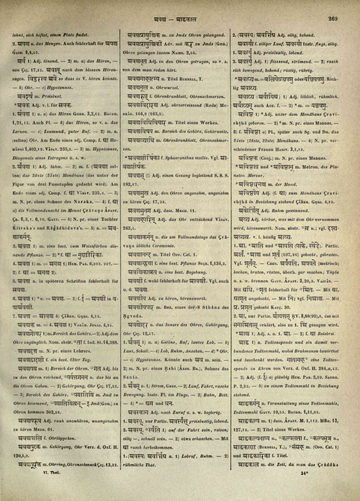
2. śrávaṇa — 1〉 Adj. lahm. — 2〉 m. f. (śravaṇā selten) das 20ste (23ste) Mondhaus (das unter der Figur von drei Fussstapfen gedacht wird). Am Ende eines adj. Comp. f. ā VĀSAV. 235,2. — 3〉 m. N. pr. eines Sohnes des Naraka. — 4〉 f. ā — a〉 die Vollmondsnacht im Monat Śrāvaṇa ĀPAST. ŚR. 8,5,1. 6,10. GAUT. — b〉 N. pr. einer Tochter Citrakaʼs und Rājādhidevaʼs. — 5〉 n. = śravaṇākarman.
Originaltext · Deutsch · Substantiv Maskulin · Substantiv Neutrum
1. śrávaṇa — 1〉 n. — a〉 das Hören GOBH. 3,2,62. BAUDH. 1,21,15. Auch Pl. — b〉 das Hören, so v. a. das Lernen. — c〉 Leumund, guter Ruf. — 2〉 m. n. (selten) Ohr. Am Ende eines adj. Comp. f. ā HEMĀDRI 1,402,19. VĀSAV. 235,2. — 3〉 m. Hypotenuse, Diagonale eines Tetragons u. s. w.
Originaltext · Deutsch · Substantiv Maskulin
3. śravaṇa — 1〉 m. eine best. zum Weissfärben dienende Pflanze. — 2〉 *f. ā = muṇḍīrikā.
Originaltext · Deutsch · Substantiv Maskulin
4. śravaṇa — 1〉 m. = śramaṇa 1〉 HEM. PAR. 6,203. 207. — 2〉 f. ā = śramaṇa 2〉.
Originaltext · Deutsch · Substantiv Neutrum
5. śravaṇa n. in späteren Schriften fehlerhaft für sravaṇa.
Originaltext · Deutsch · Substantiv Neutrum
6. śravaṇa — 1〉 *n. = śrapaṇa. — 2〉 f. ī = śrapaṇī in vapāśrávaṇī.
Originaltext · Deutsch · Worttyp nicht bestimmt
7. śravaṇa = śrāvaṇa 4〉 ŚĀṄKH. GṚHY. 4,15.
Apte 1890 Substantiv Maskulin · Substantiv Neutrum
Originaltext · Englisch · Substantiv Maskulin · Substantiv Neutrum
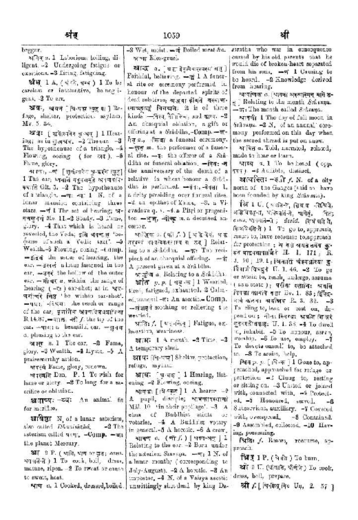
śravaṇaḥ, -ṇaṃ [śṛṇotyanena śru-karaṇe lyuṭ] 1 The ear. dhvanati madhupasamūhe śravaṇamapidadhāti Gīt. 5. 2 The hypothenuse of a triangle. — ṇaḥ -ṇā N. of a lunar mansion containing three stars. — ṇaṃ 1 The act of hearing; śravaṇasubhagaṃ Me. 11. 2 Study. 3 Fame, glory. 4 That which is heard or revealed, the Veda; iti śrabaṇāt ‘because of such a Vedic text’. 5 Wealth. 6 Flowing, oozing. Comp. — iṃdriyaṃ the sense of hearing, the ear. — utpalaṃ a lotus fastened in the ear. — udaraṃ the hollow of the outer ear. — gocara a. within the range of hearing. — (raḥ) ear-shot; as in śravaṇagocare tiṣṭha ‘be within ear-shot’. — pathaḥ, -viṣayaḥ the reach or range of the ear; vṛttāṃtena śravaṇaviṣayaprāpiṇā R. 14. 87. — pālaḥ-lī f. the tip of the ear. — pāśaḥ a beautiful ear. — sumaga a. pleasing to the ear.
Originaltext · Englisch · Substantiv Neutrum
śravaṇaḥ, -ṇaṃ [śṛṇotyanena śru-karaṇe lyuṭ] 1 The ear. dhvanati madhupasamūhe śravaṇamapidadhāti Gīt. 5. 2 The hypothenuse of a triangle. — ṇaḥ -ṇā N. of a lunar mansion containing three stars. — ṇaṃ 1 The act of hearing; śravaṇasubhagaṃ Me. 11. 2 Study. 3 Fame, glory. 4 That which is heard or revealed, the Veda; iti śrabaṇāt ‘because of such a Vedic text’. 5 Wealth. 6 Flowing, oozing. Comp. — iṃdriyaṃ the sense of hearing, the ear. — utpalaṃ a lotus fastened in the ear. — udaraṃ the hollow of the outer ear. — gocara a. within the range of hearing. — (raḥ) ear-shot; as in śravaṇagocare tiṣṭha ‘be within ear-shot’. — pathaḥ, -viṣayaḥ the reach or range of the ear; vṛttāṃtena śravaṇaviṣayaprāpiṇā R. 14. 87. — pālaḥ-lī f. the tip of the ear. — pāśaḥ a beautiful ear. — sumaga a. pleasing to the ear.
Cappeller 1887 Substantiv Neutrum · Worttyp nicht bestimmt
Originaltext · Deutsch · Substantiv Neutrum
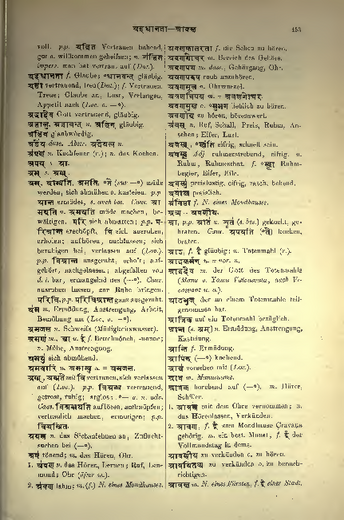
1. śrávaṇa n. das Hören, Lernen; Ruf, Leumund; Ohr (öfter m.).
Originaltext · Deutsch · Worttyp nicht bestimmt
2. śrávaṇa lahm; m. (f.) N. eines Mondhauses.
Burnouf 1866 Substantiv Maskulin · Substantiv Neutrum
Originaltext · Französisch · Substantiv Maskulin · Substantiv Neutrum
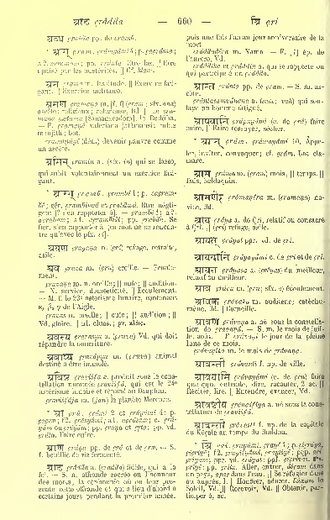
śravaṇa m. n. oreille; ouïe; audition. — N. service, domesticité. Ecoulement. — M. f. le 23ᵉ astérisme lunaire, contenant α, β, γ de l'Aigle.
Quelltextfundstellen (7)
HP 4 Fundstellen
SiSa 3 Fundstellen
SiSa 3.34-3.38: Förderliche Mittel 2 Fundstellen
Direkt belegt
Mit AYI Free weitermachen
Bildquelle: AYI Archiv.