

abhidhā अभिधा – umgebend.
Adjektiv · Verbalwurzel · Substantiv Feminin · Worttyp nicht bestimmt · Verb
Wörterbuchquellen
Cappeller 1891 Adjektiv
Originaltext · Englisch · Adjektiv
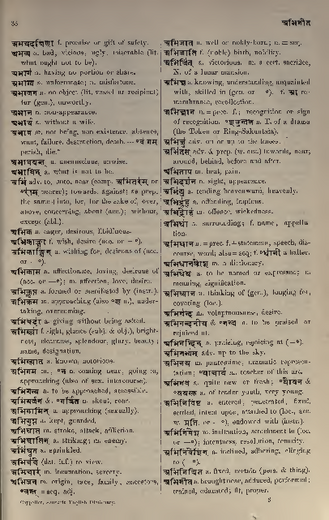
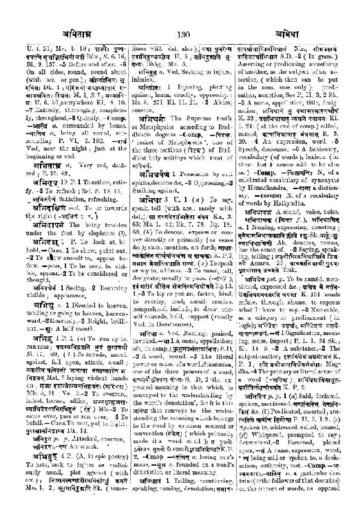
abhidhā́ ·a. surrounding; f. name, appellation.
Monier-Williams 1872 Substantiv Feminin · Verb
Originaltext · Englisch · Substantiv Feminin
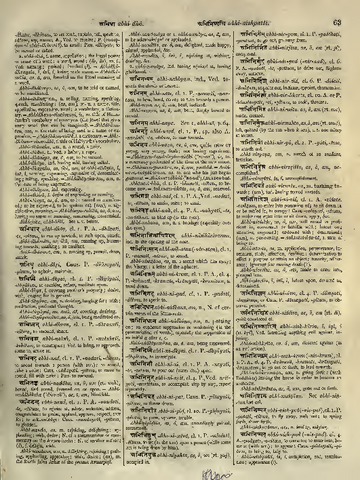
2. abhi-dhā, f. name, appellation; the literal power or sense of a word; a word, sound; (ās, ās), m. f., Ved. naming; praised; invoked (?).
Originaltext · Englisch · Verb
abhidhā 1 . abhi-dhā, cl. 3. P. A. -dadhāti, -dhatte, -dhātum, to set forth, explain, tell, speak to, address, say, name; A., Ved. to receive; P. (corrup- tion of abhi-dhāvati?), to assail: Pass. -dhīyate, to be named or called.

Petersburger 1855 Adjektiv · Worttyp nicht bestimmt
Originaltext · Deutsch · Adjektiv
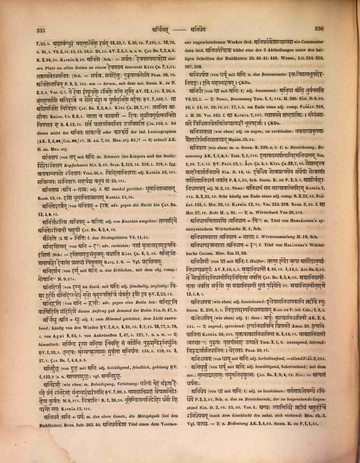
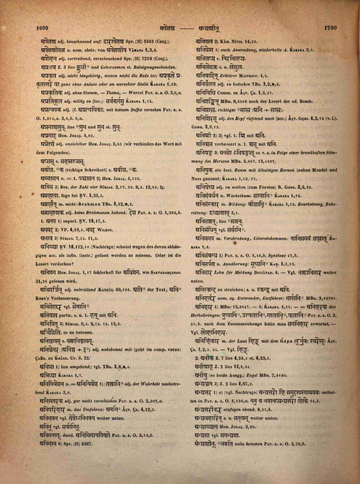
abhidhā́ (von dhā mit abhi) 1〉 adj. benennend: a̱bhi̱dhā àsi̱ bhuvànamasi VS. 22,3. — 2〉 Name, Benennung TRIK. 1,1,118. H. 260. SĀH. D. 9,20. SĀH. D. 10,1. SĀH. D. 14,18. SĀH. D. 16,19. SĀH. D. 16,21. SĀH. D. 17,5. SĀH. D. 17,6. am Ende eines adj. comp. PAÑCAT. 210,3. H. 26. VID. 165. f. ā KATHĀS. 7,107. nyāyamate śabdaśaktiḥ . mīmāṃsāmate vidhisamavetavidhivyāpārī bhūtapadārthaḥ . ŚKDR.
Originaltext · Deutsch · Adjektiv
abhidhā 2〉 SĀH. D. 252. SĀH. D. 267. RĀJA-TAR. 5,380. śūravarmābhidha adj. RĀJA-TAR. 22.
Originaltext · Deutsch · Worttyp nicht bestimmt
abhidhā 1〉 lies umgebend; vgl. TBR. 3,8,3,4.
Böhtlingk 1879 Adjektiv · Substantiv Feminin
Originaltext · Deutsch · Adjektiv · Substantiv Feminin
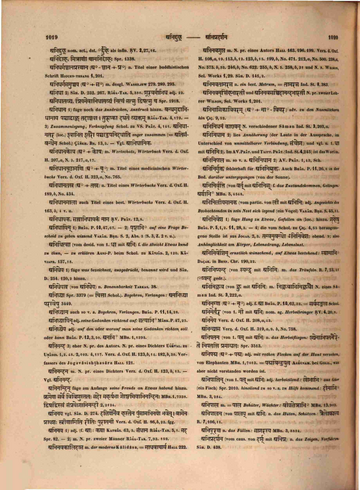
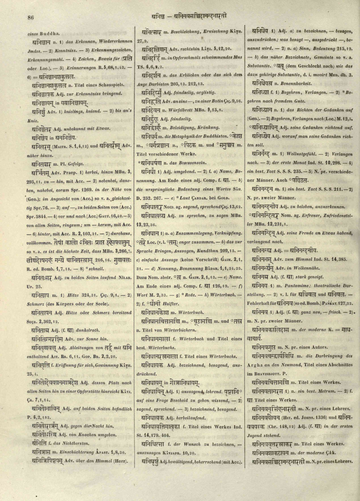
abhidhā́ — 1〉 Adj. umgebend. — 2〉 f. — a〉 Name, Benennung. Am Ende eines adj. Comp. f. ā. — b〉 die ursprüngliche Bedeutung eines Wortes SĀH. D. 252,267. — c〉 *Laut ŚABDAC. bei GOLD.
Apte 1890 Adjektiv · Verbalwurzel
Originaltext · Englisch · Adjektiv
abhidhā a. Ved. Naming; praised, invoked. — dhā 1 A name, appellation; oft. in comp.; kusumavasaṃtādyabhidhaḥ S. D. 2 A word, sound. 3 The literal power or sense of a word, denotation, one of the three powers of a word; vācyortho'bhidhayā bodhyaḥ S. D. 2 ‘the expressed meaning is that which is conveyed to the understanding by the word's denotation’, for it is this abhidhā that conveys to the understanding the meaning which belongs to the word by common consent or convention (saṃketa) (which primarily made it a word at all); sa mukhyo'rthastatra mukhyo yo vyāpāro'syābhidhocyate K. P. 2. Comp. — dhvaṃsin a. losing one's name. — mūla a. founded on a word's denotation or literal meaning.
Originaltext · Englisch · Verbalwurzel
abhidhā 3 U. 1 (a) To say, speak, tell (with acc., rarely with dat.); sā tathyamevābhihitā bhavena Ku. 3. 63; Ms. 1. 42; Bk. 7. 78; Bg. 18. 68. (b) To denote, express or convey directly or primarily (as sense &c.); state, mention, set forth; sākṣātsaṃketitaṃ yorthamabhidhatte sa vācakaḥ K. P. 2; tannāma yenābhidadhāti sattvaṃ. (c) To speak or say to, address. 2 To name, call, designate; usually in pass. — (dhīyate); idaṃ śarīraṃ kauṃteya kṣetramityabhidhīyate Bg. 13. 1. 3 To lay or put on, fasten, bind; to overlay, load; assail; receive, comprehend, include; to draw oneself towards, hold, support (mostly Ved. in these senses).
Cappeller 1887 Worttyp nicht bestimmt
Originaltext · Deutsch · Worttyp nicht bestimmt
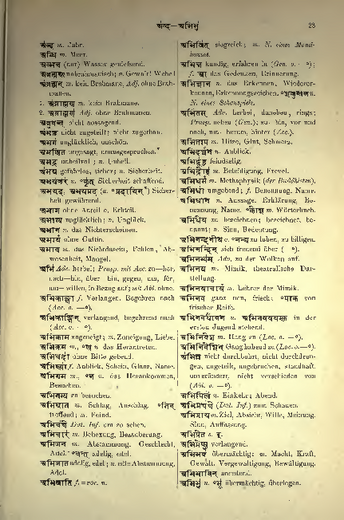
abhidhā́ umgebend; f. Benennung, Name.
Burnouf 1866 Substantiv Feminin
Originaltext · Französisch · Substantiv Feminin
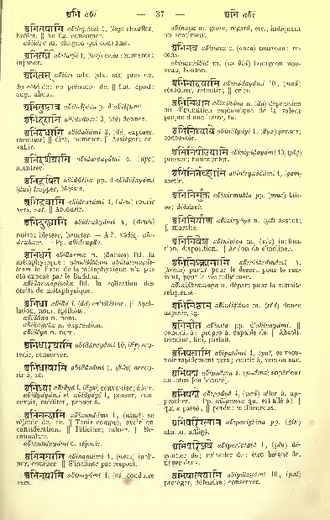
abhidhā abhidhā f. (dhā) exhibition. Apellation, nom, épithète. abhidhāna n. nom. abhidhāyaka n. expression. abhidheya n. nom.
Quelltextfundstellen (1)
SiSa 1 Fundstelle
Mit AYI Free weitermachen
Bildquelle: AYI Archiv.