

akṣi अक्षि – Auge
Substantiv Neutrum · Worttyp nicht bestimmt
Wörterbuchquellen
AYI Wörterbuch Substantiv Neutrum
Auge
Cappeller 1891 Substantiv Neutrum
Originaltext · Englisch · Substantiv Neutrum
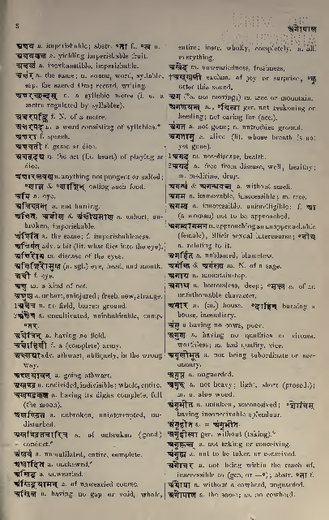
ákṣi ·n. eye.
Monier-Williams 1872 Substantiv Neutrum
Originaltext · Englisch · Substantiv Neutrum
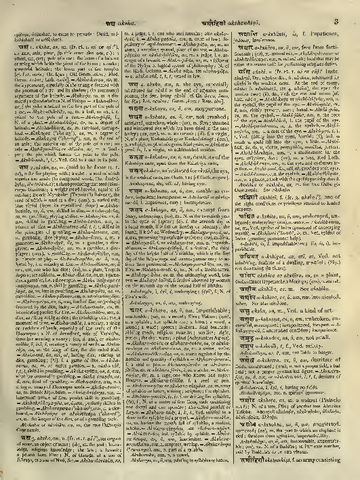
akṣi akṣi, n. (fr. rt. 1. aś or añj? Instr. akṣṇā, Dat. akṣṇe &c., fr. akṣan, substituted for akṣi in the weakest cases. At the end of comp. akṣa is substituted, see 4. akṣa), the eye; the number two; (ī), du., Ved. the sun and moon [cf. Lith. aki-s].
Petersburger 1855 Substantiv Neutrum · Worttyp nicht bestimmt
Originaltext · Deutsch · Substantiv Neutrum
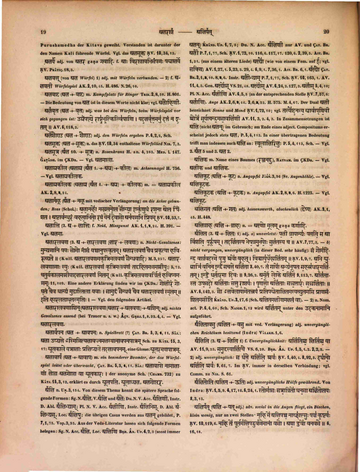
ákṣi n. UṆ. 3,154. Von diesem Thema kennt die spätere Sprache folgende Formen: Sg. N. ákṣi, V. ákṣi und ákṣe; Du. N. V. Acc. ákṣiṇī, Instr. D. Abl. ákṣibhyām; Pl. N. V. Acc. ákṣīṇi, Instr. ákṣibhis, D. Abl. ákṣibhyas, Loc. ákṣiṣu; die übrigen Casus werden aus akṣan gebildet, P. 7,1,75. VOP. 3,95. Aus der Veda-Literatur lassen sich folgende Formen belegen: Sg. N. Acc. ákṣi, Loc. akṣiṇi BṚH. ĀR. UP. 4,2,3 (sonst immer akṣan) CHĀND. UP. 1,7,5; Du. N. Acc. ákṣiṇī nur AV. und ŚAT. BR. akṣī́ P. 7,1,77, Sch. ṚV. 1,72,10. ṚV. 1,116,6. ṚV. 1,117,17. ṚV. 1,120,6. ṚV. 2,39,5. AIT. BR. 1,21. (aus einem älteren Liede) akṣyaù (wie von einem Fem. auf ī; vgl. sakthi) AV. 1,27,1. AV. 5,23,3. AV. 5,29,4. AV. 6,9,1. AV. 7,36,1. AIT. BR. 6,1. ákṣyau ŚAT. BR. 3,1,3,10. ŚAT. BR. 3,8,2,6. Instr. akṣī́bhyām P. 7,1,77, Sch. ṚV. 10,163,1. AV. 11,4,3. Gen. akṣyòs VS. 21,48. akṣyós AV. 6,24,2. AV. 6,127,3. akṣós AV. 5,4,10; Pl. N. Acc. ákṣīṇi AV. 6,5,5 (an der entsprechenden Stelle ṚV. 7,57,6: akṣā́ṇi). Auge AK. 2,6,2,44. AK. 3,6,3,22. H. 575. M. 4,67. Der Dual akṣī bezeichnet Sonne und Mond ṚV. 1,72,10; vgl. tasyaùda̱nasya̱ dyāvā̀pṛthi̱vī śrotrè sūryācandra̱masā̱vakṣìṇī AV. 11,3,2. AV. 11,4,3. In Zusammensetzungen ist akṣi (nicht akṣan) im Gebrauch; am Ende eines adject. Compositums erscheint jedoch stets akṣa, P. 5,4,113. In einer übertragenen Bedeutung trifft man indessen auch akṣi an: sthūlākṣirikṣuḥ P. 5,4,113, Sch. — Vgl. 2. ákṣa 5 und 3. akṣa 2.
Originaltext · Deutsch · Worttyp nicht bestimmt
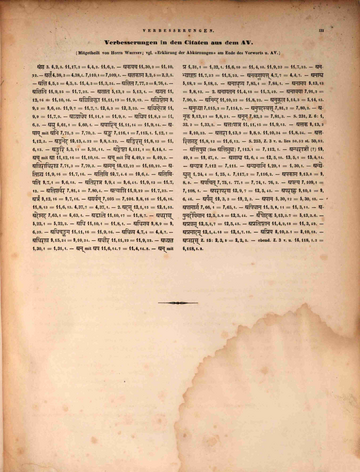
akṣi [vgl. [1:19]] {6,5,5} = {4,5,5}. {11,4,3} = {11,3,34}. (revision)
Originaltext · Deutsch · Worttyp nicht bestimmt
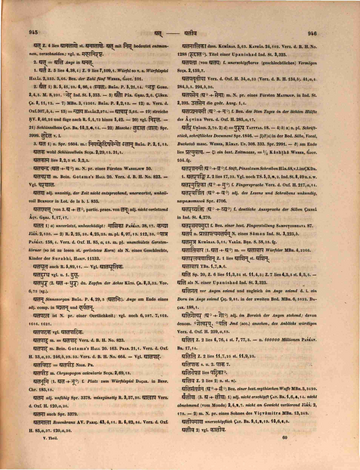
akṣi Sp. 20, Z. 6 lies 11,3,34 st. 11,4,3; *Z. 7 lies 4,5,5 st. 6,5,5. — akṣi als N. einer Upaniṣad Ind. St. 3,325.
Originaltext · Deutsch · Worttyp nicht bestimmt
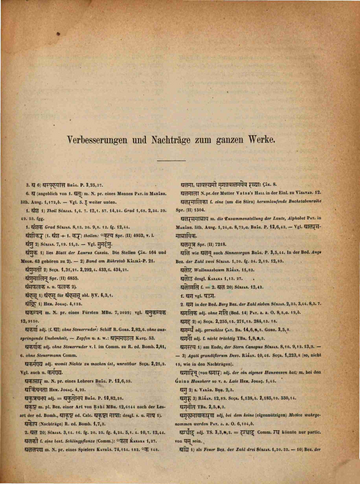
akṣi wie akṣan auch Sinnesorgan BHĀG. P. 3,5,44. In der Bed. Auge Bez. der Zahl zwei SŪRYAS. 1,30. fg. SŪRYAS. 1,34. SŪRYAS. 2,19. fg. SŪRYAS. 12,89.
Böhtlingk 1879 Substantiv Neutrum
Originaltext · Deutsch · Substantiv Neutrum
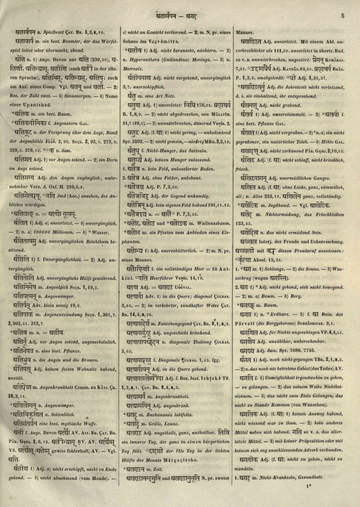
ákṣi n. — 1〉 Auge. Davon nur akṣi (Chr. 230,20), akṣiṇī, akṣibhyām, akṣīṇi (auch akṣī́ in der älteren Sprache), akṣibhis, akṣibhyas, akṣiṣu; auch am Anf. eines Comp. Vgl. akṣan und akṣī. — 2〉 Bez. der Zahl zwei. — 3〉 Sinnesorgan. — 4〉 Name einer Upaniṣad.
Apte 1890 Substantiv Neutrum
Originaltext · Englisch · Substantiv Neutrum
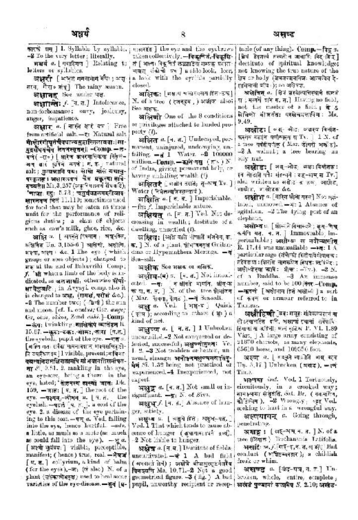
akṣi n. [aśnute viṣayān; aś-ksi, aśorṇit Uṇ. 3. 155-6] akṣiṇī, akṣīṇi, akṣṇā, akṣṇaḥ &c. 1 The eye (which grasps or sees objects); changed to akṣa at the end of Bahuvrīhi Comp; f. ˚kṣī when a limb of the body is indicated, as jalajākṣī, otherwise dīrghākṣāveṇuyaṣṭiḥ; in Avyayī. comp. also it is changed to akṣa, (samakṣaṃ, parokṣaṃ &c.). 2 The number two; — (kṣiṇī) the sun and moon. [cf. L. oculus; Germ. auge; Gr. okos, okkos, Zend ashi.] Comp. — kaṃpaḥ twinkling; nākṣikaṃpaṃ vyatiṣṭhata R. 15. 67. — kūṭaḥ -ṭakaḥ, -golaḥ, -tārā [ṣa. ta.] the eyeball, pupil of the eye. — gata a. [akṣṇi gataḥ sarvadā bhāvanāvaśāt akṣyasannikṛṣṭopi upasthita iva] 1 visible, present; na vibhāvayatyaniśamakṣigatāmapi māṃ bhavānatisamīpatayā Śi. 9. 81. 2 rankling in the eye, an eye-sore, being a thorn in the eye, hated; ˚tohamasya hāsyo jātaḥ Dk. 159. — jāhaḥ [ṣa. ta.] the root of the eye. — pakṣman, -loman n. [ṣa. ta.] the eyelash. — paṭalaṃ [ṣa. ta.]. a coat of the eye. 2 a disease of the eye pertaining to this coat. — pat a. Ved. falling into the eye, hence hurtful. — adv. a little, as much as a mote (as much as could fall into the eye). — bhū a. [akṣṇo bhūrviṣayaḥ] visible, perceptible, manifest; (hence) true, real. — bheṣajaṃ [ṣa. ta.] collyrium, a kind of balm (for the eyes). — jaḥ (jaṃ also) N. of a plant (paṭṭikālodhravṛkṣa) used to heal some varieties of the eye-disease. — bhruvaṃ [ ([Page 0008-b]) samāhāradvaṃdva] the eye and the eyebrows taken collectively. — vikūṇitaṃ, — vikūśitaṃ [akṣṇaḥ vikūṇitaṃ lajjādinā samyak prasārābhāvāt saṃkoco yatra] a side-look, leer, a look with the eyelids partially closed.
Cappeller 1887 Substantiv Neutrum
Originaltext · Deutsch · Substantiv Neutrum
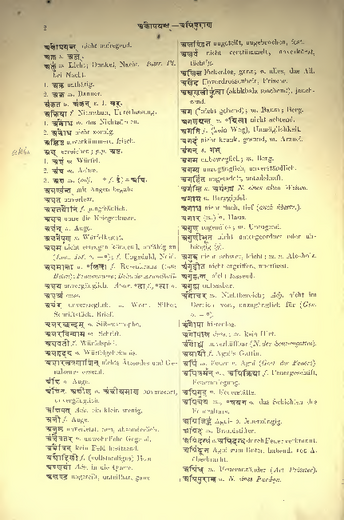
ákṣi n. Auge.
Burnouf 1866 Substantiv Neutrum
Originaltext · Französisch · Substantiv Neutrum
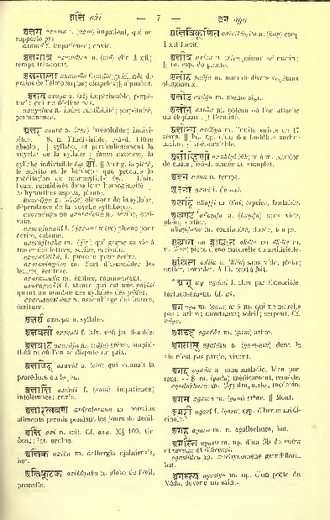
akṣi akṣi n. œil. Cf. akṣa. M§ 109. Gr. ὄϰϰος; lat. oculus.
Quelltextfundstellen (4)
HP 1 Fundstelle
SVU 2 Fundstellen
VBT 1 Fundstelle
Mit AYI Free weitermachen
Bildquelle: AYI Archiv.