

kṛṣṇa कृष्ण – schwarz; dunkel
Adjektiv · Substantiv Maskulin · Substantiv Neutrum · Worttyp nicht bestimmt
Wörterbuchquellen
AYI Wörterbuch Adjektiv
schwarz; dunkel
Cappeller 1891 Adjektiv
Originaltext · Englisch · Adjektiv
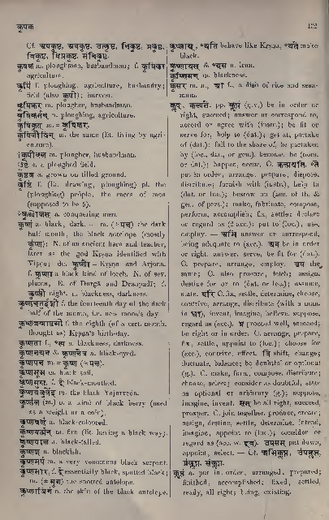
kṛṣṇá ·a. black, dark. --m. (±pakṣa) the dark half month, the black antelope (mostly kṛ́ṣṇa); N. of an ancient hero and teacher, later as the god Kṛṣṇa identified with Viṣṇu; du. kṛṣṇau = Kṛṣṇa and Arjuna. f. kṛṣṇā a. black kind of leech. N. of sev. plants, E. of Durgā and Draupadī; f. kṛṣṇī́ night. n. blackness, darkness.
Monier-Williams 1872 Adjektiv · Worttyp nicht bestimmt
Originaltext · Englisch · Adjektiv
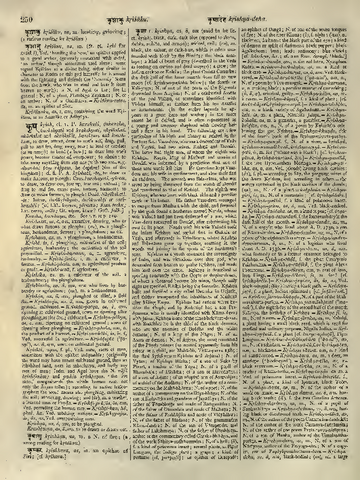
kṛṣṇa 1 . kṛṣṇa, as, ā, am (said to be fr. rt. kṛṣ), black, dark, dark-blue (opposed to śveta, śukla, rohita, and aruṇa); wicked, evil; (as), m. black, the colour, or dark-blue, which is often con- founded with black by the Hindūs; the black ante- lope; a kind of beast of prey (described in the Veda as feeding on carrion and dead corpses); a crow; the Indian cuckoo or Kokila; the plant Carissa Carandas; the dark half of the lunar month from full to new moon [cf. kṛṣṇa-pakṣa below]; the fourth or Kali-yuga; N. of one of the poets of the Ṛg-veda descended from Aṅgiras; N. of a celebrated Avatār of the god Viṣṇu, or sometimes identified with Viṣṇu himself, as distinct from his ten Avatārs or incarnations. (In the earlier legends he ap- pears as a great hero and teacher; in the more recent he is deified, and is often represented as a young and amorous shepherd with flowing hair and a flute in his hand. The following are a few particulars of his birth and history as related in the Purāṇas &c.: Vasu-deva, who was a descendant of Yadu and Yayāti, had two wives, Rohiṇī and Devakī. The latter had eight sons, of whom the eighth was Kṛṣṇa. Kaṃsa, king of Mathurā and cousin of Devakī, was informed by a prediction that one of these sons would kill him. He therefore kept Vasu- deva and his wife in confinement, and slew their first six children. The seventh was Bala-rāma, who was saved by being abstracted from the womb of Devakī and transferred to that of Rohiṇī. The eighth was Kṛṣṇa, who was born with black skin and a peculiar mark on his breast. His father Vasu-deva managed to escape from Mathurā with the child, and favoured by the gods found a herdsman named Nanda, whose wife Yaśodā had just been delivered of a son, which Vasu-deva conveyed to Devakī, after substituting his own in its place. Nanda with his wife Yaśodā took the infant Kṛṣṇa and settled first in Gokula or Vraja, and afterwards in Vṛndāvana, where Kṛṣṇa and Bala-rāma grew up together, roaming in the woods and joining in the sports of the herdsmen's sons. Kṛṣṇa as a youth contested the sovereignty of Indra, and was victorious over that god, who descended from heaven to praise Kṛṣṇa, and made him lord over the cattle. Kṛṣṇa is described as sporting constantly with the Gopīs or shepherdesses, of whom a thousand became his wives, though only eight are specified, Rādhā being the favourite. Kṛṣṇa built and fortified a city called Dvāraka in Gujarāt, and thither transported the inhabitants of Mathurā after killing Kaṃsa. Kṛṣṇa had various wives be- sides the Gopīs, and by Rukmiṇī had a son Pra- dyumna, who is usually identified with Kāma-deva; with Jainas, Kṛṣṇa is one of the nine black Vasu-devas; with Buddhists he is the chief of the black demons, who are the enemies of Buddha and the white demons); N. of a king of the Nāgas; N. of an Asura or demon; N. of Arjuna, the most renowned of the Pāṇḍu princes (so named apparently from his colour as a child, see Mahā-bh. Virāṭa-parva 1389; the dual kṛṣṇau = Kṛṣṇa and Arjuna); N. of Vyāsa; of Kṛṣṇa Hārīta; of a son of Śuka by Pīvarī, a teacher of the Yoga; N. of a pupil of Bharadvāja; of Dāśārha; of a son of Havirdhāna; of a son of Arjuna; of an adopted son of Asamañjas; of a chief of the Andhras; N. of the author of a com- mentary on the Mahā-bhārata; N. of a poet; N. of the author of a commentary on the Dāya-bhāga; N. of the son of Keśavārka and grandson of Jayāditya; N. of the father of Tānabhaṭṭa and uncle of Raṅganātha; N. of the father of Dāmodara and uncle of Malhaṇa; N. of the father of Prabhūjīka and uncle of Vidyādhara; N. of the father of Madana; N. of the grammarian Rāma-candra; N. of the son of Vāruṇendra and father of Lakṣmaṇa; N. of the father of Hīrabhaṭṭa, author of the commentary called Caraka-bhāṣya, and of the work Sāhitya-sudhāsamudra; N. of a hell; (ā), f. a kind of poisonous insect; several plants, as Piper Longum, the Indigo plant; a grape; a kind of perfume [cf. parpaṭī]; an epithet of Draupadī; an epithet of Durgā; N. of one of the seven tongues of fire; N. of the river Kistna; (ī), f. night; (am), n. blackness, darkness; the black part of the eye; a kind of demon or spirit of darkness; black pepper; black Agallochum; iron; lead; antimony; blue vitriol; [cf. kārṣṇa, &c.; cf. also Russ. cernyi, ‘black.’]
Originaltext · Englisch · Worttyp nicht bestimmt
2. kṛṣṇa, nom. P. kṛṣṇati, to behave or act like Kṛṣṇa.
Petersburger 1855 Adjektiv · Substantiv Maskulin · Substantiv Neutrum · Worttyp nicht bestimmt
Originaltext · Deutsch · Adjektiv · Substantiv Maskulin · Substantiv Neutrum
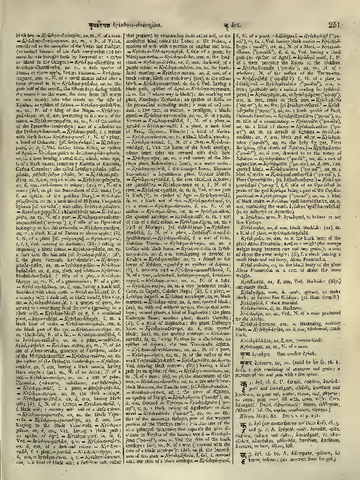
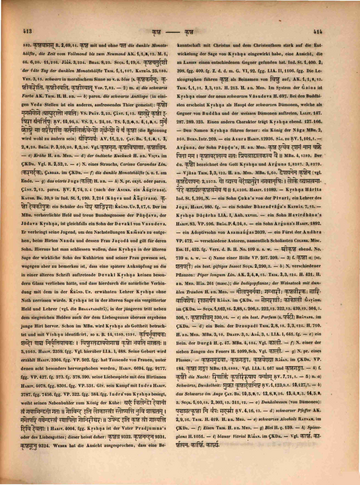
kṛṣṇa 1〉 adj. f. ā oxyt. Uṇ. 3,4. ŚĀNT. 1,12. schwarz, dunkel (Gegens. śveta, śukla; rohita, aruṇa) AK. 1,1,4,23. TRIK. 3,3,123. H. 1397. H. 17. H. an. 2,136. MED. ṇ. 8. nabhàḥ ṚV. 8,85,14. tamàḥ AV. 5,3,11. rātriḥ AV. 13,3,26. rajàḥ ṚV. 1,35,2. ṚV. 1,35,4. ṚV. 1,35,9. emà ṚV. 1,58,4. tvak ṚV. 130,8. ṚV. 9,41,1. abhvàm ṚV. 1,140,5. ṚV. 1,92,5. lomāni ŚAT. BR. 1,1,4,2. śakuna ŚAT. BR. 14,1,1,31. ṚV. 10,16,6. AV. 7,64,1. Kuh ŚAT. BR. 2,2,4,15. ŚAT. BR. 9,2,3,30. Pferd LĀṬY. 3,1. Kleid ŚAT. BR. 5,2,5,17. Schuhe KĀTY. ŚR. 22,4,21. a̱nyadrocàte kṛ̱ṣṇama̱nyat ṚV. 3,55,11. (oṣadhe) rāme kṛṣṇe asikni ca AV. 1,23,1. AV. 8,7,1. ṚV. 8,41,10. ṚV. 8,82,13. VS. 24,1. VS. 24,10. VS. 24,40. AV. 5,23,4. TS. 5,2,4,2. TS. 5,3,1,4. TS. 5,4,9,3. kṛ̱ṣṇā àsedha̱dapa̱ sadmàno̱ jāḥ ṚV. 6,47,21. ṚV. 8,62,18. yasyā̀ṃ kṛ̱ṣṇamàru̱ṇaṃ ca saṃhìte ahorātre vihìte̱ bhūmyā̱madhì AV. 12,1,52. kṛ̱ṣṇaṃ ca̱ varṇàmaru̱ṇaṃ ca saṃ dhùḥ ṚV. 1,73,7. KĀTY. ŚR. 7,3,23. puruṣaḥ kṛṣṇaḥ piṅgākṣaḥ ŚAT. BR. 11,6,1,7. ŚAT. BR. 11,6,1,13. (ṛtvik) anatikṛṣṇo 'natiśvetaḥ (Sch.: = nātibālo nātivṛddhaḥ) LĀṬY._in_Ind. St. 1,51. lohitakṛṣṇavarṇā (v. l. lohitaśuklakṛṣṇā) ŚVETĀŚV. UP. 4,5. tila SUŚR. 1,377,13. asau sukṛṣṇo vihagaḥ kokilaḥ R. 2,52,2. VET. 4,8. H. 49. kṛṣṇanetra schwarzäugig, ein Beiw. Śivaʼs MBH. 14,200. kṛṣṇavāsa MBH. 13,882. kṛṣṇavāsas R. 2,69,14. kṛṣṇa mit und ohne pakṣa die dunkle Monatshälfte, die Zeit vom Vollmond bis zum Neumond AK. 1,1,3,12. M. 1,66. M. 6,20. M. 11,216. YĀJÑ. 3,324. BHAG. 8,25. SUŚR. 1,19,6. kṛṣṇacaturdaśī der 14te Tag der dunklen Monatshälfte TRIK. 1,1,107. KATHĀS. 25,180. VET. 3,15. schwarz in moralischem Sinne so v. a. böse (s. kṛṣṇakarman). kṛṣṇīkaroti, kṛṣṇībhavati, kṛṣṇīsyāt VOP. 7,82. — 2〉 m. a〉 die schwarze Farbe AK. TRIK. H. H. an. — b〉 parox. die schwarze Antilope (in einigen Veda — Stellen ist ein anderes, aasfressendes Thier gemeint): kṛṣṇo mṛgasaṃyoge (ādyudātto bhavati) VS. PRĀT. 2,25. ŚĀNT. 1,12. ā̱kha̱re kṛṣṇā̀ iṣi̱rā ànartiṣuḥ ṚV. 10,94,5. VS. 2,1. VS. 24,36. TS. 5,2,6,5. TS. 6,1,3,1. śunè kro̱ṣṭre mā śàrīrāṇi̱ kartàma̱liklàvebhyo̱ gṛdhrèbhyo̱ ye cà kṛ̱ṣṇā (die Betonung wird wohl zu ändern sein) àvi̱ṣyavàḥ AV. 11,2,2. ŚAT. BR. 1,1,4,1. ŚAT. BR. 3,2,1,28. BHĀG. P. 3,10,20. BHĀG. P. 8,2,20. Vgl. kṛṣṇamṛga, kṛṣṇaviṣāṇā, kṛṣṇājina. — c〉 Krähe H. an. MED. — d〉 der indische Kuckuck H. an. VIŚVA_im_ŚKDR. Vgl. R. 2,52,2. — e〉 N. eines Strauchs, Carissa Carandas Lin. (karamardaka), ŚABDAR._im_ŚKDR. — f〉 die dunkle Monatshälfte (s. u. 1.) am Ende. — g〉 das vierte Yuga (kali) H. an. — h〉 N. pr. oxyt. oder parox. ŚĀNT. 2,13. parox. ṚV. 8,74,3. ṚV. 8,74,4 (nach der ANUKR. ein Āṅgirasa). KAUṢ. BR. 30,9_in_Ind. St. 1,190. Ind. St. 3,214 (Kāṇva und Āṅgirasa). kṛṣṇo devakīputraḥ ein Schüler des ghora āṅgirasaḥ CHĀND. UP. 3,17,6. Der im MBH. verherrlichte Held und treue Bundesgenosse der Pāṇḍava, der Yādava Kṛṣṇa, ist gleichfalls ein Sohn der Devakī von Vasudeva. Er verbringt seine Jugend, um den Nachstellungen Kaṃsaʼs zu entgehen, beim Hirten Nanda und dessen Frau Yaśodā und gilt für deren Sohn. Hieraus hat man schliessen wollen, dass Kṛṣṇa in der älteren Sage der wirkliche Sohn des Kuhhirten und seiner Frau gewesen sei, wogegen aber zu bemerken ist, dass eine spätere Anknüpfung an die in einer älteren Schrift auftretende Devakī Kṛṣṇa keinen besondern Glanz verliehen hätte, und dass hierdurch die natürliche Verbindung mit dem in der CHĀND. UP. erwähnten Lehrer Kṛṣṇa ohne Noth zerrissen würde. Kṛṣṇa ist in der älteren Sage ein vergötterter Held und Lehrer (vgl. die BHAGAVADGĪTĀ), in der jüngeren tritt neben dem siegreichen Helden auch der dem Liebesgenuss überaus ergebene junge Hirt hervor. Schon im MBH. wird Kṛṣṇa als Gottheit betrachtet und mit Viṣṇu identificirt, so z. B. MBH. 14,1589. MBH. 14,1591. kṛṣirbhūvācakaḥ śabdo ṇaśca nirvṛttivācakaḥ . viṣṇustadbhāvayogācca kṛṣṇo bhavati sāttvataḥ .. MBH. 5,2563. HARIV. 2359. fgg. Vgl. hierüber LIA. I, 488. Seine Geburt wird erzählt HARIV. 3304. fgg. VP. 502. fgg. hat Tausende von Frauen, unter denen acht besonders hervorgehoben werden, HARIV. 6694. fgg. HARIV. 9177. fgg. VP. 427. fg. VP. 573. VP. 578. fg. VP. 590. seine Liebesspiele mit den Hirtinnen HARIV. 4078. fgg. HARIV. 8301. fgg. VP. 531. GĪT. sein Kampf mit Indra HARIV. 3787. fgg. HARIV. 7456. fgg. VP. 522. fgg. VP. 584. fgg. Indra von Kṛṣṇa besiegt, weiht seinen Nebenbuhler zum König der Kühe: ahaṃ kilendro devānāṃ tvaṃ gavāmindratāṃ gataḥ .. govinda iti lokāstvāṃ stoṣyanti bhuvi śāśvatam . mamopari yathendrastvaṃ sthāpito gobhirīśvaraḥ .. upendra iti kṛṣṇa tvāṃ gāsyanti divi devatāḥ . HARIV. 4004. fgg. Kṛṣṇa ist der Vater Pradyumnaʼs oder des Liebesgottes; dieser heisst daher: kṛṣṇaja HARIV. 9322. kṛṣṇanandana HARIV. 9331. kṛṣṇasūnu HARIV. 9324. WEBER hat die Ansicht ausgesprochen, dass eine Bekanntschaft mit Christus und dem Christenthum stark auf die Entwickelung der Sage von Kṛṣṇa eingewirkt habe, eine Ansicht, die an LASSEN einen entschiedenen Gegner gefunden hat. Ind. St. 1,400. fgg. Ind. St. 2,398. fgg. Ind. St. 2,409. fg. Z. d. d. m. G. VI, 92. fgg. LIA. II, 1106. fgg. Die Lexicographen führen kṛṣṇa als Beinamen von viṣṇu auf, AK. 1,1,1,13. TRIK. 1,1,31. TRIK. 3,3,123. H. 215. H. an. MED. Im System der Jaina ist Kṛṣṇa einer der neun schwarzen Vāsudeva H. 697. Bei den Buddhisten erscheint Kṛṣṇa als Haupt der schwarzen Dämonen, welche als Gegner von Buddha und der weissen Dämonen auftreten, LALIT. 147. LALIT. 287. LALIT. 289. LALIT. 325. Einen andern Charakter trägt Kṛṣṇa ebend. 127. ebend. 166. — Den Namen Kṛṣṇa führen ferner: ein König der Nāga MBH. 2,360. BURN. Intr. 269. — ein Asura HARIV. 12936. SĀY._zu_ṚV. 1,101,1. — Arjuna, der Sohn Pāṇḍuʼs, H. an. MED. kṛṣṇa ityeva daśamaṃ nāma cakre pitā mama . kṛṣṇāvadātasya sataḥ priyatvādbālakasya vai .. MBH. 4,1389. Der du. kṛṣṇau bezeichnet den Gott Kṛṣṇa und Arjuna MBH. 1,8287. MBH. 3,8279. — Vyāsa TRIK. 3,3,123. H. an. MED. MBH. 1,60. dvaipāyanena kṛṣṇena (vgl. kṛṣṇadvaiyāyana) MBH. 2,2573. yo vyasya vedāṃścaturo bhagavānṛṣiḥ . loke vyāsatvamāpede kārṣṇyātkṛṣṇatvameva ca .. MBH. 1,4236. HARIV. 11089. — Kṛṣṇa Hārīta Ind. St. 1,391, N. — ein Sohn Śukaʼs von der Pīvarī, ein Lehrer des Yoga, HARIV. 980. fg. — ein Schüler Bharadvājaʼs KATHĀS. 7,15. — Kṛṣṇa Dāśārha LIA. I, Anh. XXVIII. — ein Sohn Havirdhānaʼs HARIV. 83. VP. 106. BHĀG. P. 4,24,8. — ein Sohn Arjunaʼs HARIV. 1892. — ein Adoptivsohn von Asamañjas HARIV. 2039. — ein Fürst der Andhra VP. 472. — verschiedene Autoren, namentlich Scholiasten COLEBR. Misc. Ess. II, 452. fg. Verz. d. B. H. No. 109 u. s. w. — śrīkṛṣṇa ebend. No. 739 u. s. w. — i〉 Name einer Hölle VP. 207. VP. 209. — 3〉 f. kṛṣṇā a〉 (sc. śatapadī) ein best. giftiges Insect SUŚR. 2,290,3. — b〉 N. verschiedener Pflanzen: Piper longum Lin. AK. 2,4,3,15. TRIK. 3,3,124. H. 421. H. an. MED. HĀR. 261 (masc.); die Indigopflanze; der Weinstock mit dunklen Trauben H. an. MED. = nīlapunarnavā; gambhārī; kṛṣṇajīraka; sārivāviśeṣa; rājasarṣapa RĀJAN._im_ŚKDR. = somarājī; kākolī JAṬĀDH._im_ŚKDR. — SUŚR. 1,162,16. SUŚR. 2,88,1. SUŚR. 2,206,5. SUŚR. 2,222,12. SUŚR. 2,322,12. SUŚR. 2,439,19. SUŚR. 2,504,5. SUŚR. 2,506,7. kṛṣṇāvījam SUŚR. 330,16. — c〉 ein best. Parfum (s. parpaṭī) BHĀVAPR._im_ŚKDR. — d〉 ein Bein. der Draupadi TRIK. 2,8,18. TRIK. 3,3,124. H. 710. H. an. MED. MBH. 3,10. DRAUP. 3,5. ARJ. 3,1. LIA. I, 641. fg. — e〉 ein Bein. der Durgā H. ś. 47. MBH. 4,184. Vgl. kālī. — f〉 N. einer der sieben Zungen des Feuers H. 1099, Sch. Vgl. kālī. — g〉 N. pr. eines Flusses, = kṛṣṇasamudbhavā, kṛṣṇagaṅgā, kṛṣṇaveṇyā RĀJAN._im_ŚKDR. VP. 184. kṛṣṇā gaṅgā MBH. 13,4888. Vgl. LIA. I, 167 und kṛṣṇagaṅgā. — 4〉 f. kṛṣṇī́ die Nacht: ri̱ṇaktì kṛ̱ṣṇīràru̱ṣāya̱ panthā̀m ṚV. 7,71,1. — 5〉 n. a〉 Schwärze, Dunkelheit: śu̱krā kṛ̱ṣṇādàjaniṣṭa ṚV. 1,123,9. ṚV. 1,123,1. ṚV. 10,127,7. — b〉 das Schwarze im Auge ŚAT. BR. 10,5,2,7. ŚAT. BR. 12,8,2,26. ŚAT. BR. 13,4,2,3. ŚAT. BR. 14,5,2,3. SUŚR. 1,10,18. SUŚR. 2,303,13. SUŚR. 2,311,12. — c〉 Dunkelwesen (von Dämonen): pa̱ñcā̱śatkṛ̱ṣṇā ni vàpaḥ sa̱hasrā̀ ṚV. 4,16,13. — d〉 schwarzer Pfeffer AK. 2,9,36. TRIK. H. 419. H. an. MED. — e〉 schwarzes Aloeholz RATNAM._im_ŚKDR. — f〉 Eisen TRIK. H. an. MED. — g〉 Blei H. ś. 159. — h〉 Spiessglanz H. 1051. — i〉 blauer Vitriol RĀJAN._im_ŚKDR. — Vgl. kārṣṇa, kārṣṇāyana, kārṣṇi, kārṣṇya.
Originaltext · Deutsch · Worttyp nicht bestimmt
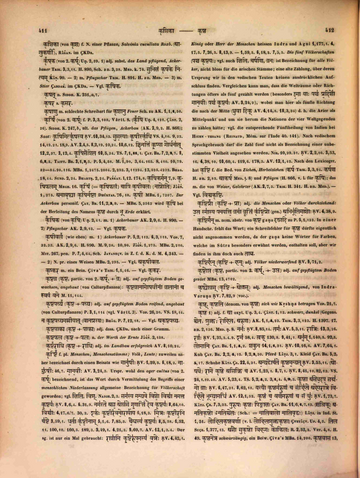
kṛṣṇa 2〉h〉 N. pr. eines Wesens im Gefolge Skandaʼs MBH. 9,2559. — 3〉f〉 HALĀY. 1,68. — g〉 Verz. d. Oxf. H. 10,a, N. 1. Verz. d. Oxf. H. 16,b,16. Verz. d. Oxf. H. 102,a, No. 158. ˚revāsaṃgama Verz. d. Oxf. H. 65,b,42. HALL 75. — h〉 N. pr. einer der Mütter im Gefolge Skandaʼs MBH. 9,2640. — 5〉b〉 das Schwarze im Monde TBR. 1,2,1,2.
Böhtlingk 1879 Adjektiv · Substantiv Maskulin · Substantiv Neutrum
Originaltext · Deutsch · Adjektiv · Substantiv Maskulin · Substantiv Neutrum
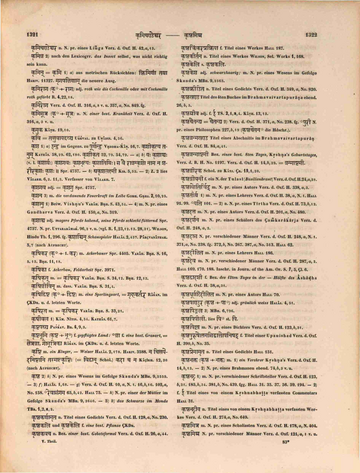
kṛṣṇa — 1〉 Adj. oxyt. (f. ā́) schwarz, dunkel; auch [Page2-095-b] schwarz in moralischem Sinne. — Mit pakṣa m. die dunkele Monatshälfte, die Zeit von Vollmond bis zum Neumond. — 2〉 m. — a〉 *die schwarze Farbe. — b〉 Parox. (einmal im AV. oxyt.) die schwarze Antilope und ein best. aasfressendes Thier. — c〉 *der indische Kuckuck. — d〉 *Krähe. — e〉 *Carissa carandas. — f〉 die dunkele Monatshälfte. — g〉 *das vierte Weltalter (kali). — h〉 N. pr. — α〉 parox. eines alten Sängers. — β〉 eines alten Weisen, eines Sohnes der Devakī. Derselben Mutter entstammt der im MBH. verherrlichte Held und Lehrer Kṛṣṇa, der treue Bundesgenosse der Pāṇḍava, der schliesslich zur Gottheit erhoben und mit Viṣṇu identificirt wird. Er hat Tausende von Frauen, unter denen acht besonders hervorgehoben werden. Du. Bez. Kṛṣṇaʼs und Arjunaʼs. — γ〉 eines Wesens im Gefolge Skandaʼs. — δ〉 eines Asura. — ε〉 eines Schlangendämons. — ζ〉 verschiedener Männer. — i〉 Bein. Arjunaʼs. des Sohnes des Pāṇḍu. — k〉 Pl. Bez. der Śūra in Śālmaladvīpa VP.² 2,194. — l〉 ein best. Hölle. — 3〉 f. kṛṣṇā — a〉 eine Blutegelart Chr. 217,5. Chr. 217,6. — b〉 ein best. giftiges Insect. — c〉 Name verschiedener Pflanzen. Nach den Lexicographen: Piper longum, die Indigopflanze, Weinstock mitdunklen Trauben, eine blau blühende Punarnavā. Gmelina arborea, Nigella indica, Sinapis ramosa, Vernonia anthelmintica, = kākolī und eine Art Sārivā. — d〉 ein best. wohlriechender Stoff. — e〉 Bein. — α〉 der Draupadī. — β〉 der Durgā. — f〉 *Name einer der sieben Zungen des Feuers. — g〉 N. pr. — α〉 einer der Mütter im Gefolge Skandaʼs. — β〉 einer Yoginī HEMĀDRI 2,a,97,5. fgg. — γ〉 eines Flusses. Auch in Verbindung mit gaṅgā. — 4〉 f. kṛṣṇī́ Nacht. — 5〉 n. oxyt. — a〉 Schwärze, Dunkelheit. — b〉 das Schwarze im Auge. — c〉 das Schwarze im Monde. — d〉 Dunkelwesen (von Dämonen). — e〉 *schwarzer Pfeffer. — f〉 *schwarzes Aloeholz. — g〉 *Eisen. — h〉 *Blei. — i〉 *Spiessglanz. — k〉 *blauer Vitriol.
Apte 1890 Adjektiv · Substantiv Maskulin · Substantiv Neutrum
Originaltext · Englisch · Adjektiv · Substantiv Maskulin · Substantiv Neutrum
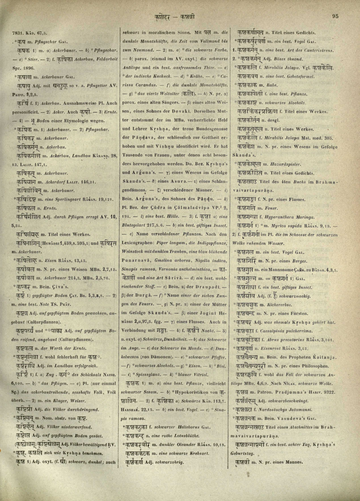
kṛṣṇa a. [kṛṣ-nak] 1 Black, dark, dark-blue. 2 Wicked, evil. — ṣṇaḥ 1 The black colour. 2 The black antelope. 3 A crow. 4 The (Indian) cuckoo. 5 The dark half of a lunar month (from full to new moon). 6 The Kali age. 7 Viṣṇu in his eighth incarnation, born as the son of Vasudeva and Devakī. [Kṛṣṇa is the most celebrated hero of Indian mythology and the most popular of all the deities. Though the real son of Vasudeva and Devakī and thus a cousin of Kaṃsa, he was, for all practical purposes, the son of Nanda and Yaśodā by whom he was brought up and in whose house he spent his childhood. It was here that his divine character began to be gradually discovered, when he easily crushed the most redoubtable demons, such as Baka, Pūtanā &c., that were sent to kill him by Kaṃsa, and performed many other feats of ([Page 0421-c]) surprising strength. The chief companions of his youth were the Gopīs or wives of the cowherds of Gokula, among whom Rādhā was his special favourite; (cf. Jayadeva's Gītagovinda). He killed Kaṃsa, Naraka, Keśin, Ariṣṭa and a host of other powerful demons. He was a particular friend of Arjuna, to whom he acted as charioteer in the great war, and his staunch support of the cause of the Pāṇḍavas was the main cause of the overthrow of the Kauravas. On several critical occasions, it was Kṛṣṇa's assistance and inventive mind that stood the Pāṇḍavas in good stead. After the general destruction of the Yādavas at Prabhāsa, he was killed unintentionally by a hunter named Jaras who shot him with an arrow mistaking him at a distance for a deer. He had more than 16000 wives, but Rukmini and Satyabhāmā, (as also Rādhā) were his favourites. He is said to have been of dark-blue or cloud-like colour; cf. bahiriva malinataraṃ tava kṛṣṇa manopi bhaviṣyati nūna Gīt. 8. His son was Pradyumna]. 8 N. of Vyāsa, the reputed author of the Mahābhārata. 9 N. of Arjuna. 10 Aloe wood. 11 The Supreme spirit. 12 Black pepper. 13 Iron. — ṣṇā 1 N. of Draupadī, wife of the Pāṇḍavas; Ki. 1. 26. 2 N. of a river in the Deccan that joins the sea at Masulipattam. 3 A kind of poisonous insect. 4 N. of several plants. 5 A grape. 6 A kind of perfume. 7 An epithet of Durgā. 8 One of the 7 tongues of fire. — ṣṇī A dark night. — ṣṇaṃ 1 Blackness, darkness (moral also). 2 Iron. 3 Antimony. 4 The black part of the eye. 5 Black pepper. 6 Lead. 7 An inauspicious act. 8 Money acquired by gambling. Comp. — aguru n. a kind of sandal-wood. — acalaḥ an epithet of the mountain Raivataka. — ajinaṃ the skin of the black antelope. — adhvan, -arcis m. an epithet of fire; cf. kṛṣṇavartman. — ayas n., — ayasaṃ, — āmiṣaṃ iron, crude or black iron. — aṣṭamī, janmāṣṭamī the 8th day of the dark half of Śrāvaṇa when Kṛṣṇa was born; also called gokulāṣṭamī. — āvāsaḥ the holy fig-tree. — udaraḥ a kind of snake. — kaṃdaṃ a red lotus. — karman a. of black deeds, criminal, wicked, depraved, guilty, sinful. — kākaḥ a raven. — kāyaḥ a buffalo. — kāṣṭhaṃ a kind of sandal-wood, agallochum. ([Page 0422-a]) — kohalaḥ a gambler. — gaṃgā the river kṛṣṇaveṇī. — gati fire: āyodhate kṛṣṇagatiṃ sahāyaṃ R. 6. 42. — garbhāḥ (f. pl.) 1 the pregnant wives of the demon Kṛṣṇa. 2 waters in the interiors of the clouds. — godhā a kind of poisonous insect. — grīvaḥ N. of Śiva. — caṃcukaḥ a kind of pea. — caṃdraḥ N. of Vasudeva. — cara a. what formerly belonged to Kṛṣṇa. — cūrṇaṃ rust of iron. — tāmraṃ a kind of sandal wood. — tāraḥ 1 a species of antelope. 2 an antelope (in general). — dehaḥ a bee. — dhanaṃ money got by foul means. — dvaipāyanaḥ N. of Vyāsa: tamahamarāgamakṛṣṇa kṛṣṇadvaipāyanaṃ vaṃde Ve. 1. 4. — pakṣaḥ the dark half of a lunar month. 2 an epithet of Arjuna. — padī a female with black feet. — paviḥ an epithet of Agni. — piṃgala a. dark-brown. — (lā) N. of Durgā. — mṛgaḥ the black antelope; śṛṃge kṛṣṇamṛgasya vāmanayanaṃ kaṃḍūyamānāṃ mṛgīṃ Ś. 6. 16. — mukhaḥ, -vaktraḥ, -vadanaḥ the blackfaced monkey. — yajurvedaḥ the Taittirīya or black Yajurveda. — yāmaḥ an epithet of Agni. — raktaḥ dark-red colour. — rūpya = ˚cara q. v. — lavaṇaṃ 1 a kind of black salt. 2 a factitious salt. — lohaḥ the loadstone. — varṇaḥ 1 black colour. 2 N. of Rāhu. 3 a Śūdra. — vartman m. 1 fire; R. 11. 42; Ms. 2. 94. 2 N. of Rāhu. 3 a low man, profligate, black-guard. — viṣāṇā Ved. the horns of the black antelope. — veṇī N. of a river. — śakuniḥ a crow. — śāraḥ, -sāraḥ, — sāraṃgaḥ the spotted antelope; kṛṣṇasāre dadaccakṣustvayi cādhijyakārmuke Ś. 1. 6, V. 4. 31. — śṛṃgaḥ a buffalo. — sakhaḥ, -sārathiḥ an epithet of Arjuna. — (khī) cummin seed.
Cappeller 1887 Worttyp nicht bestimmt
Originaltext · Deutsch · Worttyp nicht bestimmt
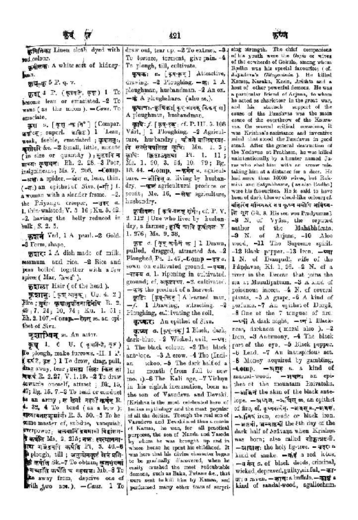
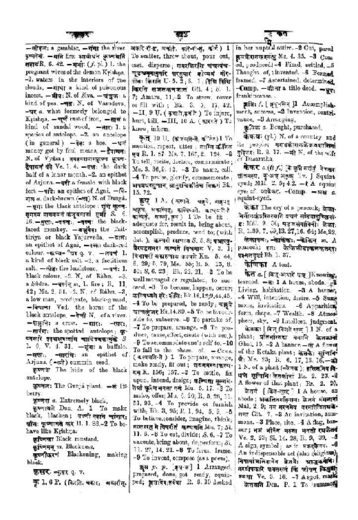
kṛṣṇá schwarz, dunkel; m. die schwarze Antilope (gew. kṛ́ṣṇa) der dunkle Halbmonat (von Vollmond bis Neumond); N. eines alten Helden (sp. Gottes = Viṣṇu) Du. kṛṣṇau Kṛṣṇa und Arjuna. — f. kṛṣṇā eine Blutegelart; N. versch. Pflanzen; Bein. der Durgā u. der Draupadī. kṛṣṇī́ Nacht. — n. Schwärze, Dunkelheit.
Burnouf 1866 Adjektiv
Originaltext · Französisch · Adjektiv
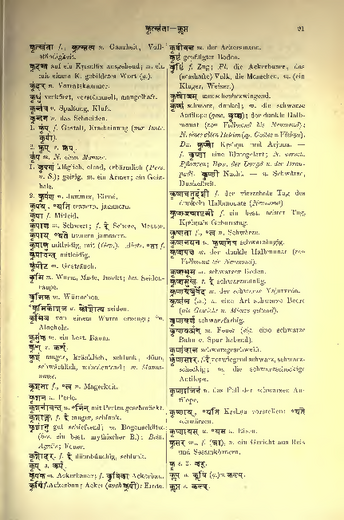
kṛṣṇa kṛṣṇa a. noir, bleu foncé. — S. m. couleur noire ou bleue; coucou kokila; corbeau; carissa carondas, bot. Np. de Kṛṣṇa, 10ᵉ et dernière incarnation de Viṣṇu; surnom de Vyāsa et d'Arjuna; kṛṣṇau du. Kṛṣṇa et Arjuna. Bd. un des rois des nāgas. — S. f. kṛṣṇā raisin noir; nom de diverses plantes: l'indigotier, le poivre long, la nigelle de l'Inde, la moutarde noire, etc. Surnom de Draupadī. — S. n. fer; sulfate de cuivre; poivre noir. kṛṣṇakanda n. nymphæa rubra, bot. kṛṣṇakarman a. (kṛ) qui fait des actions noires, criminel, pervers, pécheur. kṛṣṇakāka m. corbeau. kṛṣṇakohala m. joueur de profession. kṛṣṇagarbha a. Vd. d'origine noire, de nature noire, ép. des Dasyus et des nuages. kṛṣṇacaturdaśī f. le 14ᵉ jour de la partie obscure de la lunaison, ou jour-noir. kṛṣṇacūrṇa n. rouille; limaille de fer. kṛṣṇajaṭā f. nard indien ou valeriana jaṭāmāṃsī, bot. kṛṣṇajīraka m. nigella indica, bot. kṛṣṇatāmra n. bois de sandal noir. kṛṣṇatāra m. (tārā) antilope aux yeux noirs. kṛṣṇadeha a. qui a le corps noir. — S. m. grosse abeille noire. kṛṣṇadvaipāyana m. np. de Vyāsa; cf. kṛṣṇa et dvaipāyana. kṛṣṇadhattūra m. la pomme épineuse noire ou datura fastuosa. kṛṣṇapakṣa m. les 14 jours du déclin de la Lune. kṛṣṇapāka m. (pac) carissa carondas, arbre dont le fruit mûr est noir. kṛṣṇapiṅgalā f. surnom de Durgā, dont le corps est représenté d'un brun-rougeâtre. kṛṣṇapiṇḍītaka m. vangueria spinosa, bot. kṛṣṇapuṣpa a. qui a des fleurs noires. — S. m. datura noir ou fastuosa. — S. f. le priyaṅgu. kṛṣṇaphala a. qui a des fruits noirs. — S. m. carissa carondas. — S. f. serratula anthelminthica, bot. kṛṣṇabhūmi f. terre noire, argile bleue; pays dont les terres sont noires; terreau. [Page183-2] kṛṣṇabhūmijā f. (jan) esp. d'herbe qui croît dans les terres noires. kṛṣṇabhedi f. (bhid) la plante nommée kaṭukī. kṛṣṇamṛt f. mms. que kṛṣṇabhūmi. kṛṣṇamṛttikā f. mms. kṛṣṇayoni a. Vd. d'origine noire, de race noire, ép. des Dasyus et des nuages; cf. kṛṣṇagarbha. kṛṣṇala m. une raktikā. — kṛṣṇalā f. cf. guñjā. kṛṣṇalavaṇa n. sel préparé artificiellement. kṛṣṇaloha n. [oxide noir de fer] pierre d'aimant. kṛṣṇalohita a. de couleur pourpre. — S. m. la pourpre. kṛṣṇavaktra m. [la bête à la face noire] singe. kṛṣṇavartman m. [qui trace un sentier noir] le feu. Rāhu ou le nœud ascendant de la Lune. Homme de mauvaise conduite, polisson. kṛṣṇavalli f. ocymum pilosum, bot. kṛṣnavīja m. esp. noire de moringa, bot. kṛṣṇavṛntā f. bignonia suaveolens, bot. La māṣaparṇī. kṛṣṇaśāra m. antilope noire. Cf. kṛṣṇasāra. kṛṣṇaśṛṅga m. buffle. kṛṣṇasakhi f. graine de cumin. kṛṣṇasarpa m. serpent noir. kṛṣṇasāra a. noir; dont l'essence ou l'extrait est noir. — S. m. antilope noire. Mimosa catechu, euphorbia tirucalli, etc., bot. — Dalbergia sisu, bot. kṛṣṇasāraṅga m. antilope noire. kṛṣṇaskandha m. le tamāla à bourgeons noirs. kṛṣṇāguru n. (aguru) agallochum ou aloès noir. kṛṣṇācala m. (acala) la Montagne-noire ou partie occidentale du Vindhya. kṛṣṇānadī f. la Rivière-noire, peut-être la Kitsna, dans le Deccan. kṛṣṇāmiṣa n. (āmiṣa) fer. kṛṣṇāyasa n. (ayas) fer. kṛṣṇāyāmi 10 (dén. de kṛṣṇa) devenir noir, se noircir. Actt. noircir, rendre noir. kṛṣṇārcis m. (arcis) le feu [à cause de la fumée]. kṛṣṇārjaka m. basilic noir, ocymum pilosum, bot. kṛṣṇāvāsa m. (āvāsa) ficus religiosa ou arbre de Kṛṣṇa. kṛṣṇāśrita a. (ā; śri) voué au culte de Kṛṣṇa. [Page184-1] kṛṣṇikā f. (sfx. ika) moutarde noire. kṛṣṇīkaromi 8 (kṛ) noircir, rendre noir. kṛṣṇoraga m. (uraga) serpent noir.

Abgeleitete Wörter
Quelltextfundstellen (4)
PYS 1 Fundstelle
SVU 1 Fundstelle
Mit AYI Free weitermachen
Bildquelle: AYI Archiv.