
Parivṛtta Trikoṇāsana: revolved triangle pose
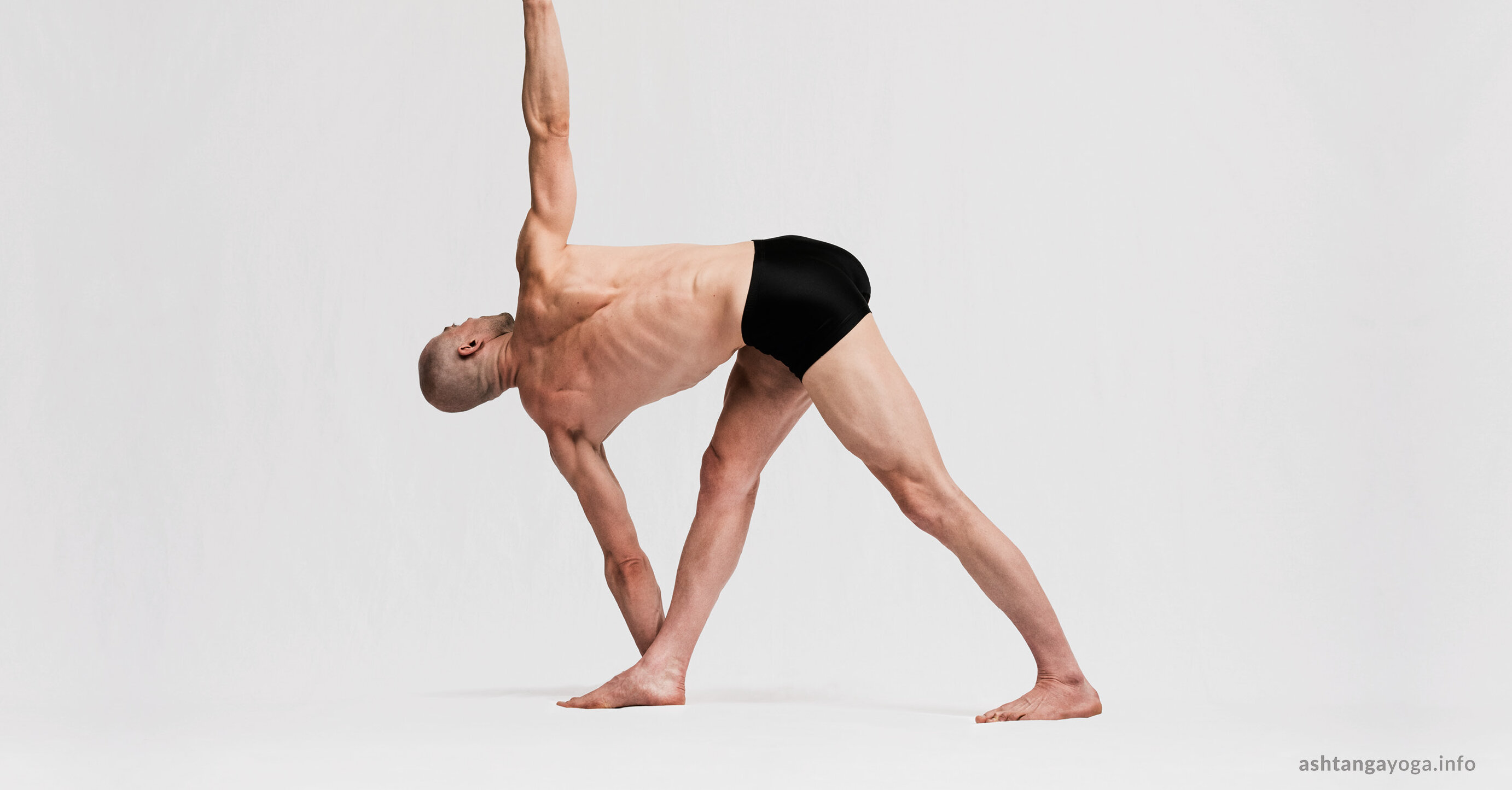
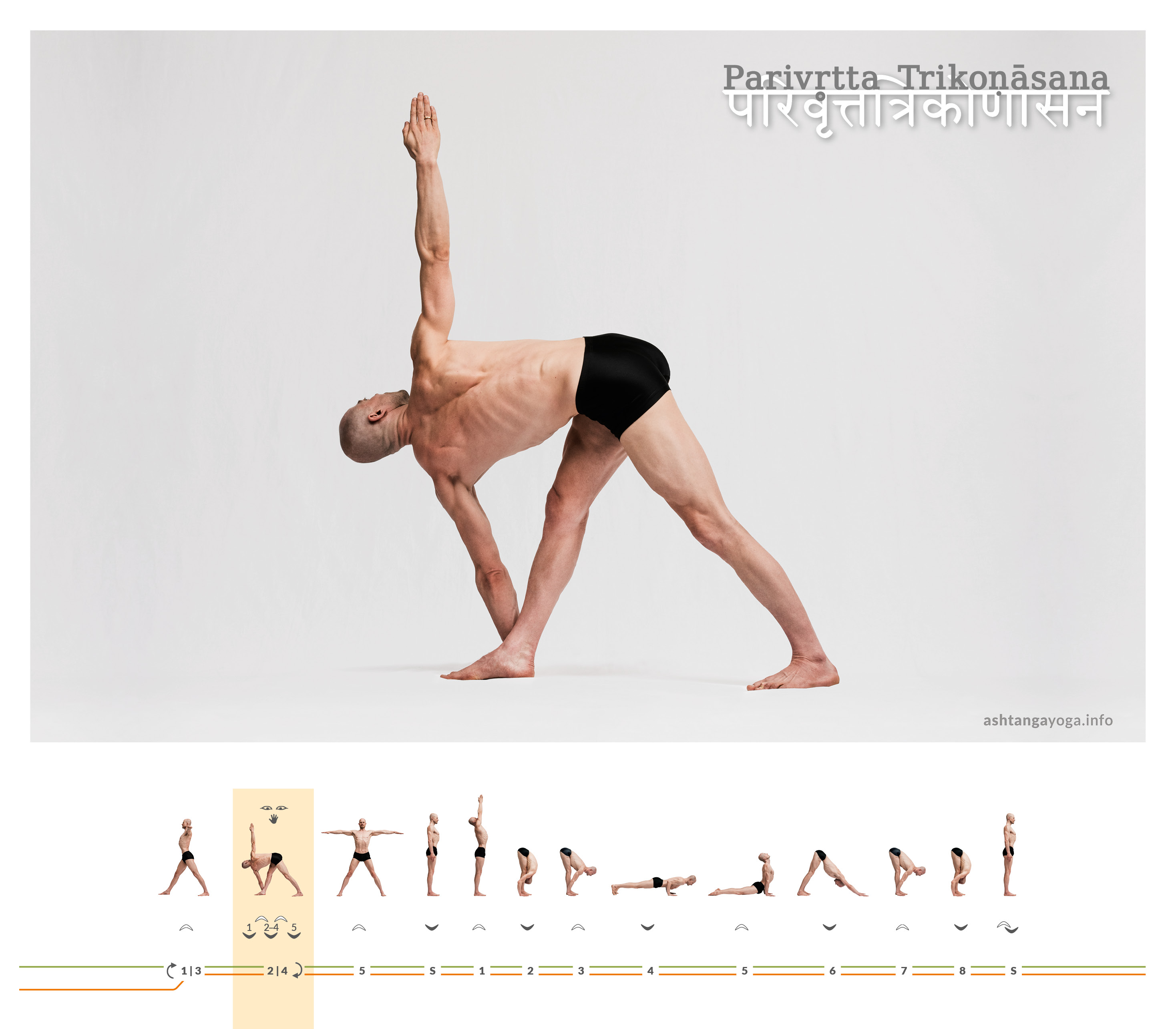
In revolved triangle pose, the legs and the arms with the torso each form a triangle. The upper body rotates so the hand reaches beside the opposite foot.
Vinyāsa 2 - Exhale, 5 breaths
As you exhale, reach forward from the pelvis until your torso comes to horizontal. Only then rotate to the right from your thoracic spine. Place your left palm on the floor outside your right foot, with the fingers pointing in the same direction as the foot. Let the rotation continue to the right through your cervical spine and turn your gaze upward, following your right hand. Stay here until the fifth exhalation.
Note: As far as possible, avoid bending and twisting your lumbar spine at the same time. As you enter the posture, first tilt forward from the pelvis. The whole back keeps its natural S-shape. Use the idea of cultivating length to create a floating tension between the vertebrae. Only when the torso has reached horizontal do you initiate the twist. The rotation therefore moves through a lengthened spine, not a rounded one.
Vinyāsa 3 to 4
At the end of the fifth exhalation, turn your gaze down toward the left hand. Inhale and lift your torso upright. In the same breath, turn your feet and place them as in Vinyāsa 1. From here, repeat Vinyāsa 2 on the left side of your body.
Vinyāsa 5 - Inhale
At the end of the fifth exhalation, turn your gaze down toward the left hand. Inhale and lift your torso upright. In the same breath, turn both legs and slide your feet until they stand parallel and symmetrical to one another. Your arms are spread horizontally, palms facing down.
Samasthitiḥ - Exhale
Step or jump both feet back to the starting position of neutral standing as you exhale.
Traditionally, you can move directly from here into the movement flow of the next posture. In the AYI method, follow the movement flow of this posture through one complete vinyāsa. This helps you keep warmth and rhythm.
Vinyāsa 1 to 9 and Samasthitiḥ
Follow the movement flow you know through one complete vinyāsa.
From neutral standing, move into the movement flow of the next posture.
Effect: Revolved triangle brings rotation especially into the thoracic spine. This rotation mobilizes the facet joints between the individual vertebrae. Overall, independent of direction, it creates more space for movement in the thoracic spine. For this reason, Parivṛtta Trikoṇāsana is also a good preparation for forward-bending postures. Yet the rotation mobilizes not only the spine; it also reshapes the entire rib cage. The organs of the chest receive a natural massage and the lungs can unfold in new directions.
Continue with AYI Free
Photographer: Richard Pilnick - www.richardpilnick.com

Please log in to write a message. Go to login
No messages yet.