
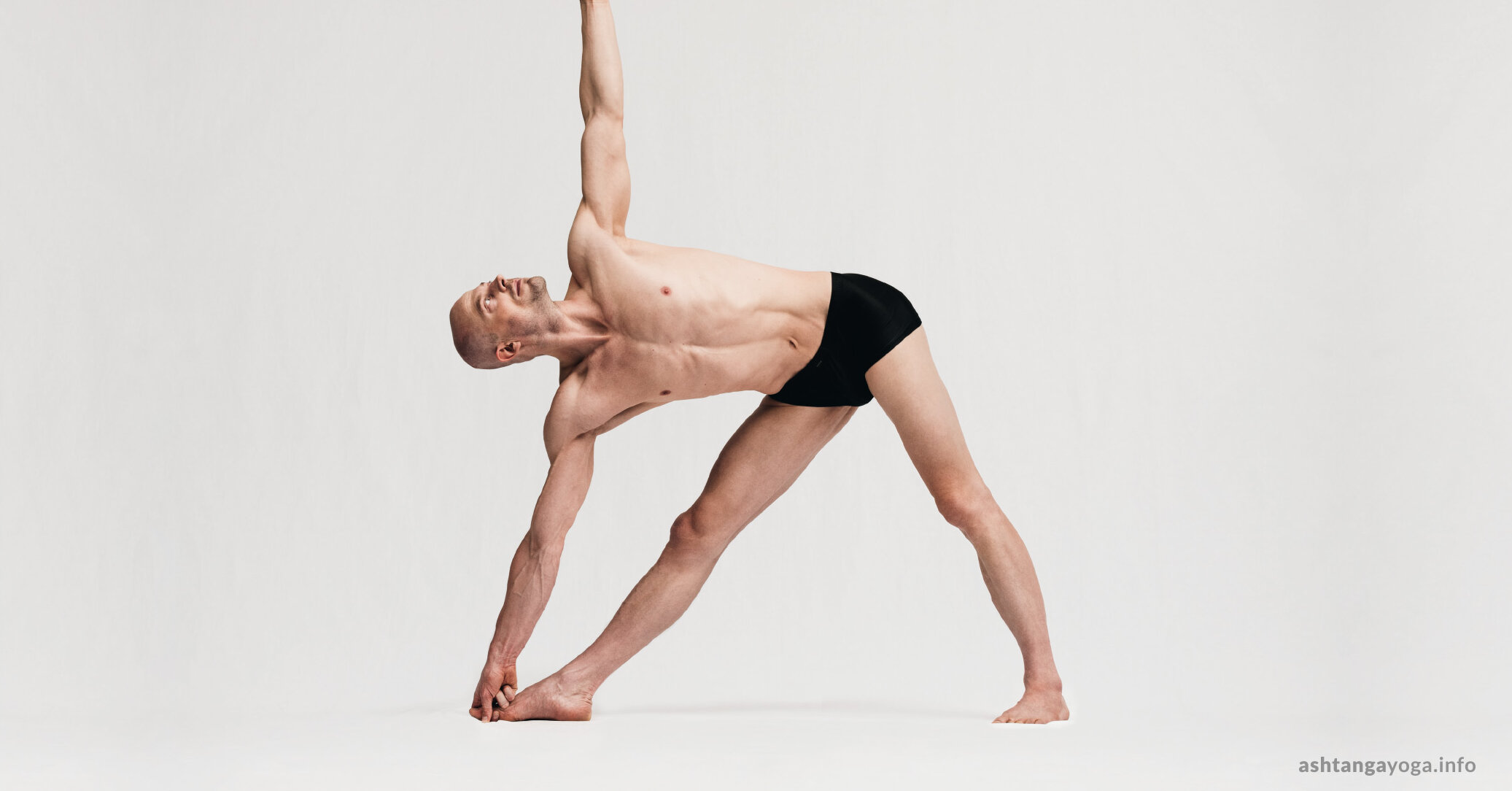
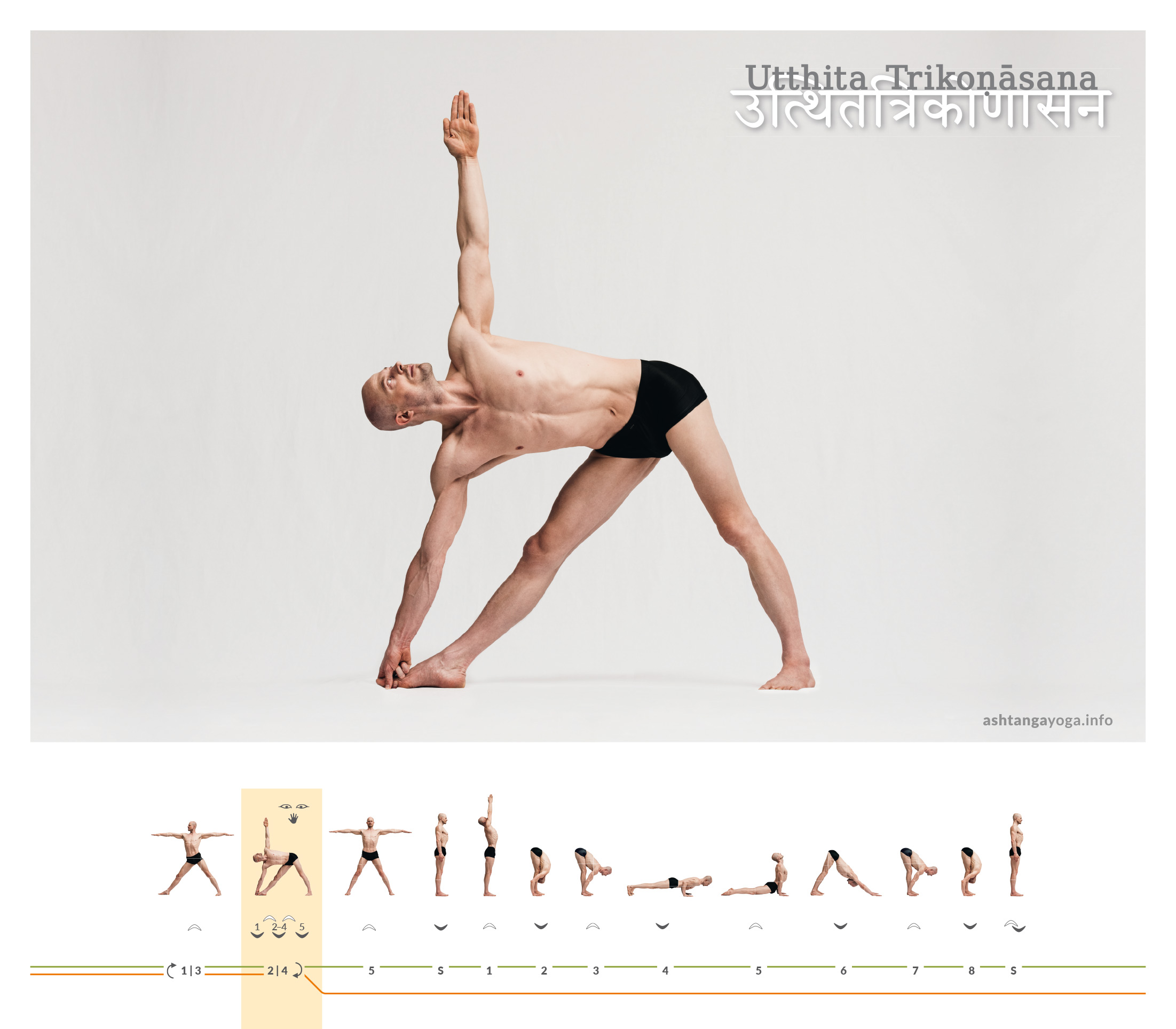
Utthita Trikoṇāsana: triangle pose
In triangle pose, the legs and the floor form a triangle. More triangular shapes appear between the horizontal torso and the vertical arms.
Note: The ankle joint is best understood as a hinge joint. The knee joint of the nearly straight standing leg also functions most like a hinge joint. Therefore, make sure that the front of your right thigh points in the direction of your right foot. In this way, you bring both hinge joints into the same line. This harmonizes the pressure in the joints.
Vinyāsa 2 - Exhale, 5 breaths
First tilt your pelvis forward, then, as you exhale, follow the reach of your right arm. Finally, take hold of your right big toe with the index and middle fingers. Your thumb counters the grip. Turn the palm of your left hand toward the front of your body and follow your left hand with your gaze. Stay here until the fifth exhalation.
Note: First tilt your pelvis so that you deepen the lordosis, or backbend, in your lumbar spine before reaching sideways. This gives the greater trochanter space to move behind the rim of the pelvis. In this way, your sacroiliac joints remain spacious on both sides and your spine can grow long with ease.
Vinyāsa 3 to 4
At the end of the fifth exhalation, turn your gaze down toward the right hand. Inhale and lift your torso upright. In the same breath, turn your feet and place them as in Vinyāsa 1. From here, repeat Vinyāsa 2 on the left side of your body.
In the traditional count: Move directly from here into the movement flow of the next posture.
Effect: Triangle pose, Utthita Trikoṇāsana, develops external rotation in the hip joint and flexibility in the backs of the legs. It gives the spine an opportunity to grow in length and the shoulder blades an opportunity to spread outward. In mythology, the triangle represents the trinities of this world: arising, remaining, passing away; above, below, middle; sattva, rajas, tamas; and more.
Continue with AYI Free
Photographer: Richard Pilnick - www.richardpilnick.com

Please log in to write a message. Go to login