
Prasārita Pādottānāsana C: wide-legged forward bend
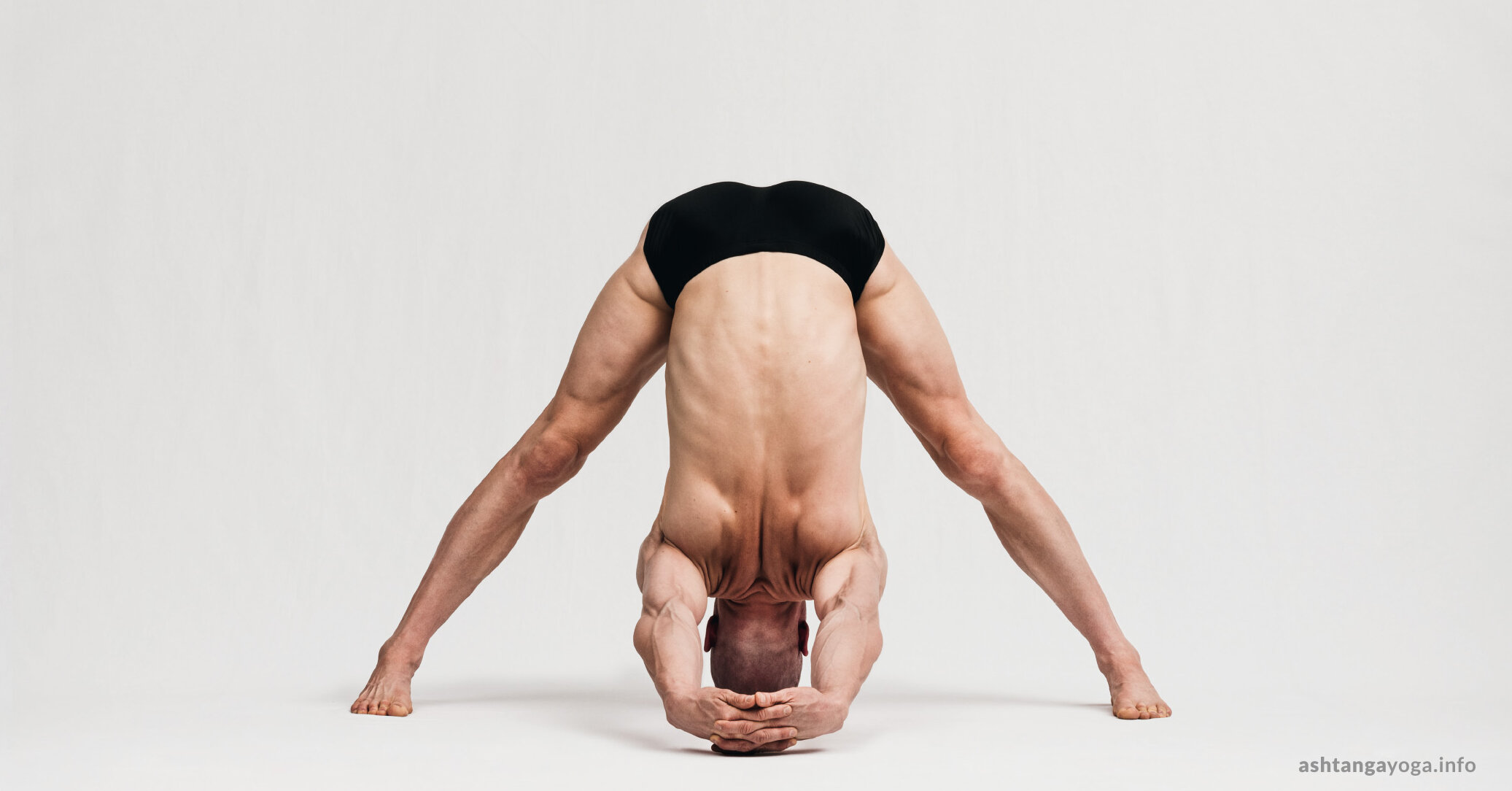
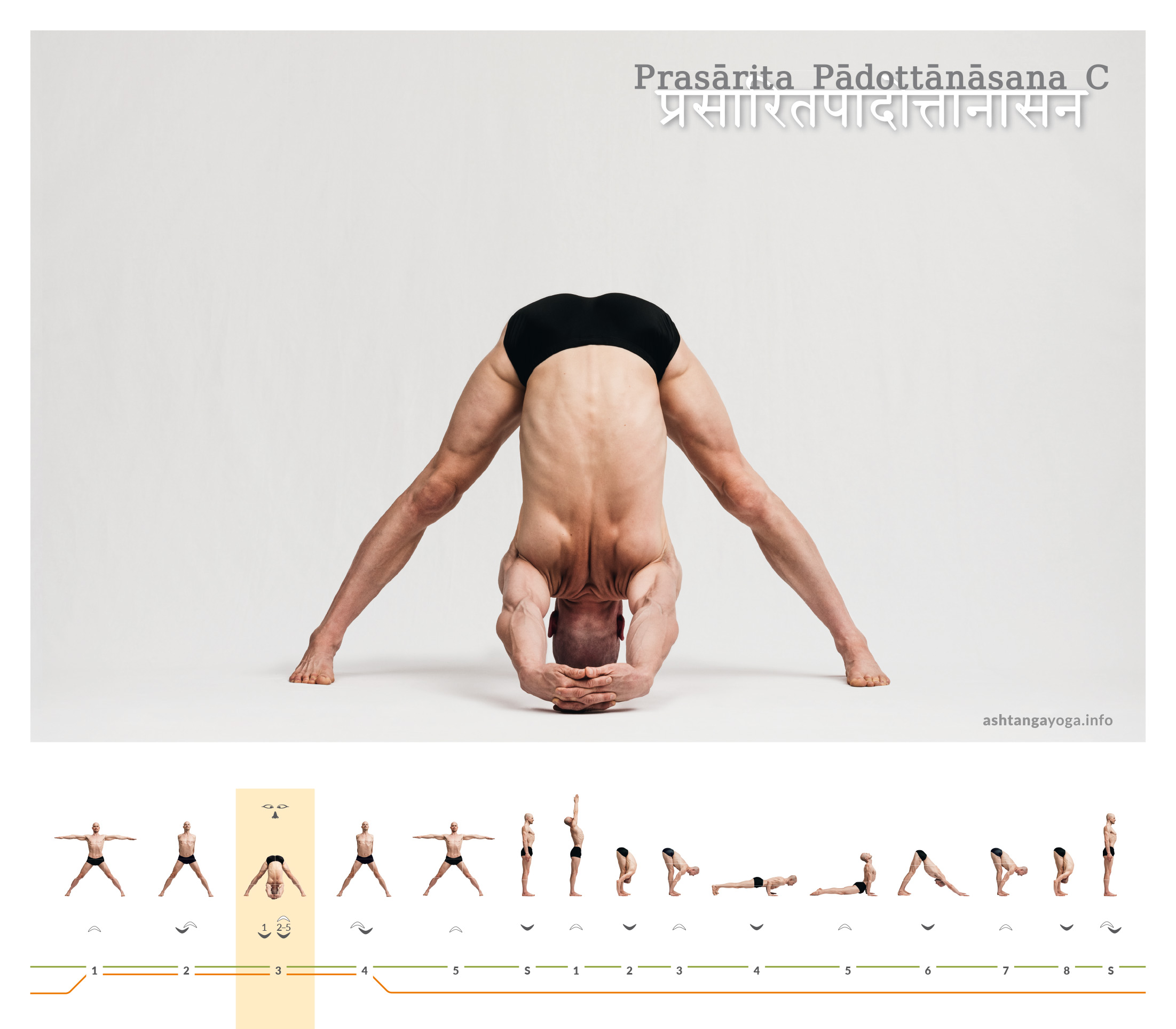
In the third version of the wide-legged forward bend, the torso folds forward while the hands clasp behind the back and reach toward the floor.
Special note: Among Aṣṭāṅga practitioners, there is discussion about whether turning the hands is traditional and, if so, in which direction. Apparently, Sri K. Pattabhi Jois taught different versions at different times. A sense of a traditional form gradually developed. Not turning the hands, as shown here, essentially corresponds to Sri K. Pattabhi Jois's teaching after about 2005. Before that, it was common to turn the clasped hands so the thumbs pointed upward. In the 1970s and 1980s, most practitioners turned the hands the other way around, so the thumbs pointed downward. This is usually the easier direction.
Vinyāsa 3 - Exhale, 5 breaths
Fold forward and down from the pelvis. Let your arms reach far behind you. With enough flexibility, your hands touch the floor behind your head. Stay here until the fifth exhalation.
Note: Keep a slight bending tone in your elbows. This helps your shoulder blades grow long and creates space for movement.
Vinyāsa 4 - Inhale, exhale
Inhale and rise fully upright again. Your hands remain clasped behind you. Exhale slowly and deeply here.
In the traditional count: Move directly from here into the movement flow of the next posture.
Effect: The third version of Prasārita Pādottānāsana adds a mobilization of the shoulder blades to the effects of the previous versions.
Continue with AYI Free
Photographer: Richard Pilnick - www.richardpilnick.com

Please log in to write a message. Go to login
No messages yet.