
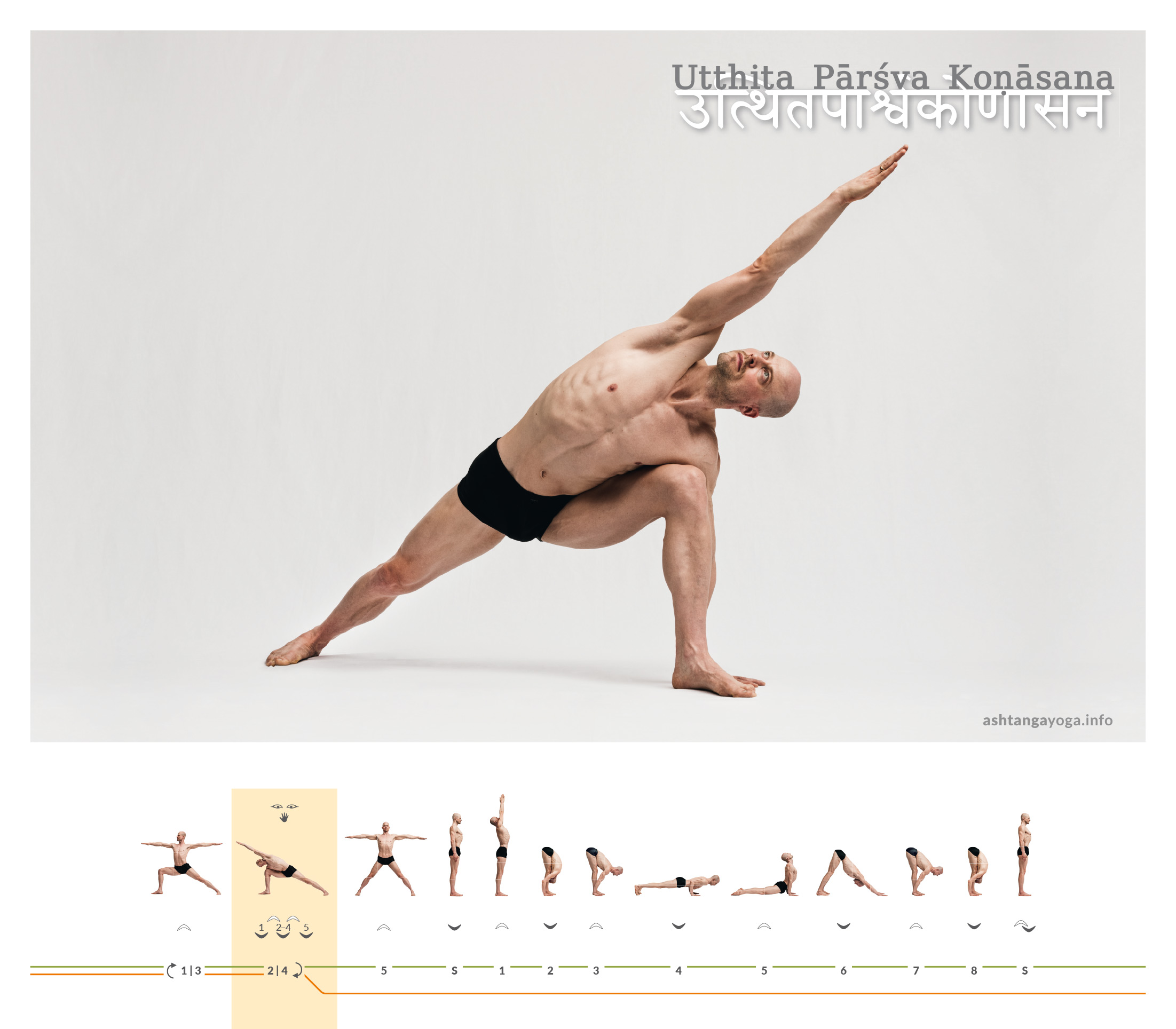
Utthita Pārśva Koṇāsana: extended side angle
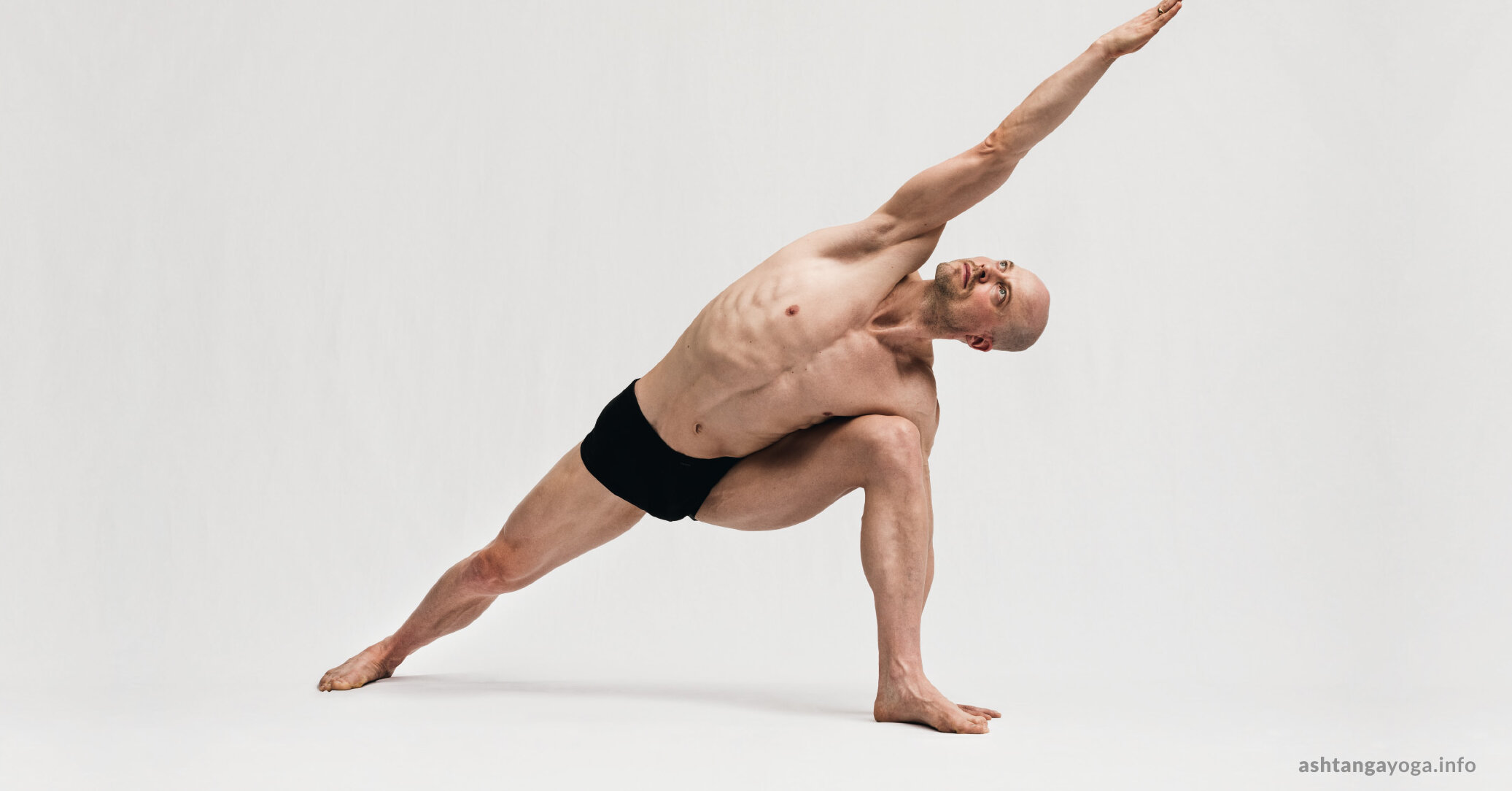
In extended side angle, the legs take a wide stance, the front thigh is nearly horizontal, and the side body lengthens into one long line.
Note: As in Utthita Trikoṇāsana, the heels are on one line in this posture and the back foot is slightly turned in. Now, however, the stance is longer and the front leg is bent. The back foot should therefore be turned in a little less. This allows you to make good contact with the floor through the outer edge and also through the mound of the big toe, preserving stability in the back ankle.
Vinyāsa 2 - Exhale, 5 breaths
First tilt your pelvis forward, then, as you exhale, follow the reach of your right arm. Place the palm of your right hand beside the outer edge of your right foot. The fingers of the right hand point in the same direction as the right foot. Extend your left arm in the continuation of your left flank. Stay here until the fifth exhalation.
Note: When the arm lifts to the side, the upper arm can come close to the roof of the shoulder. This can irritate or injure the tendon of the supraspinatus muscle. To avoid this, first let the left arm hang consciously downward before sliding it from below into the continuation of your flank. In this way, you move around the shoulder roof. Also make sure that your thumb is slightly higher than your little finger and that your armpit turns toward the floor. Actively lengthen the arm together with the shoulder blade. This helps the shoulder blade move in the direction of the arm and guides the shoulder roof out of the way.
Vinyāsa 3 to 4
At the end of the fifth exhalation, turn your gaze down toward the right hand. Inhale and lift your torso upright. In the same breath, turn your feet and place them as in Vinyāsa 1. From here, repeat Vinyāsa 2 on the left side of your body.
In the traditional count: Move directly from here into the movement flow of the next posture.
Effect: Extended side angle, Utthita Pārśva Koṇāsana, creates length along the side of the body and therefore stretches the lateral fascia. The practice is an opportunity to cultivate the shoulder blade's participation in the movement of the arm.
Continue with AYI Free
Photographer: Richard Pilnick - www.richardpilnick.com

Please log in to write a message. Go to login