
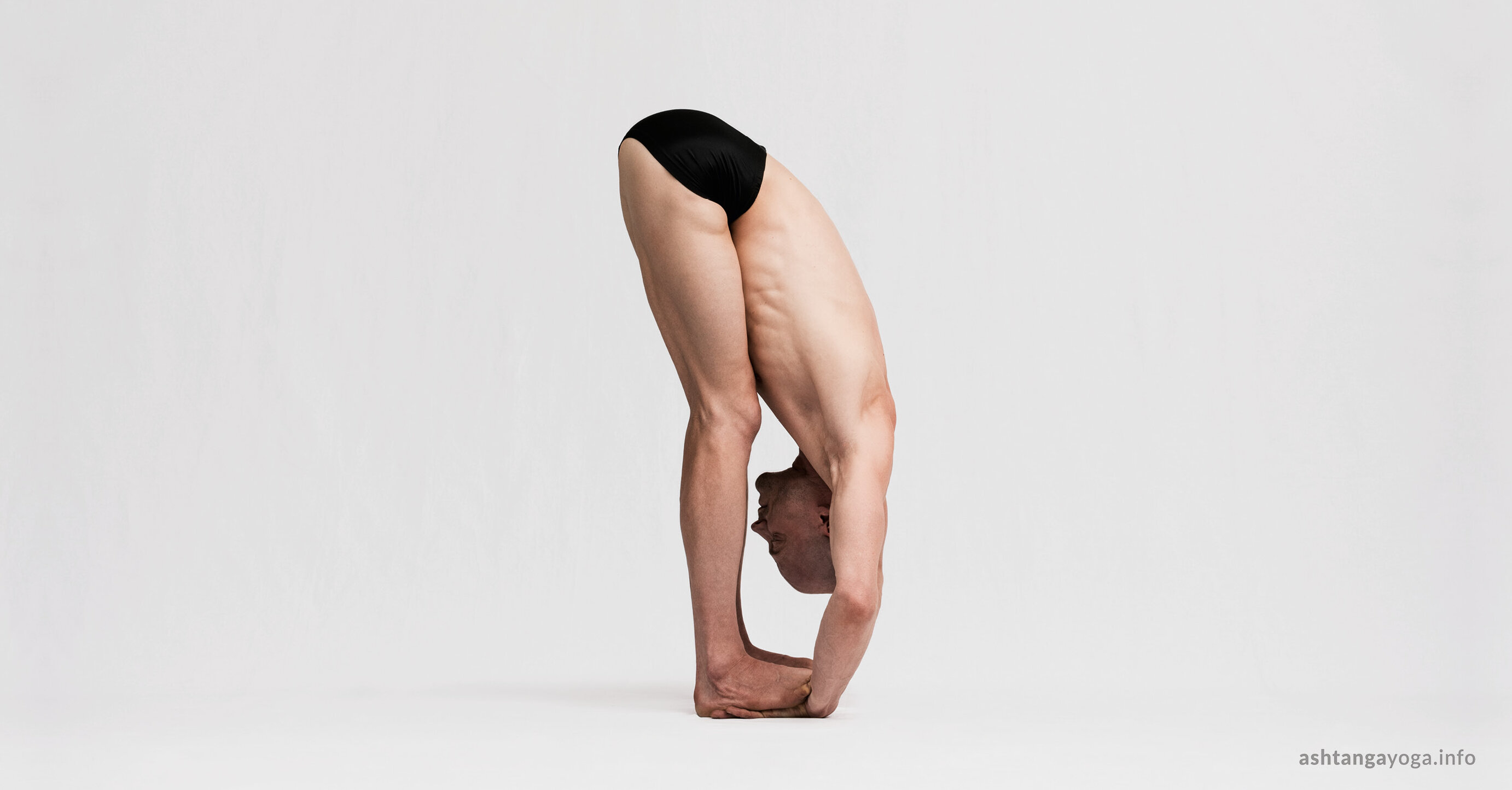
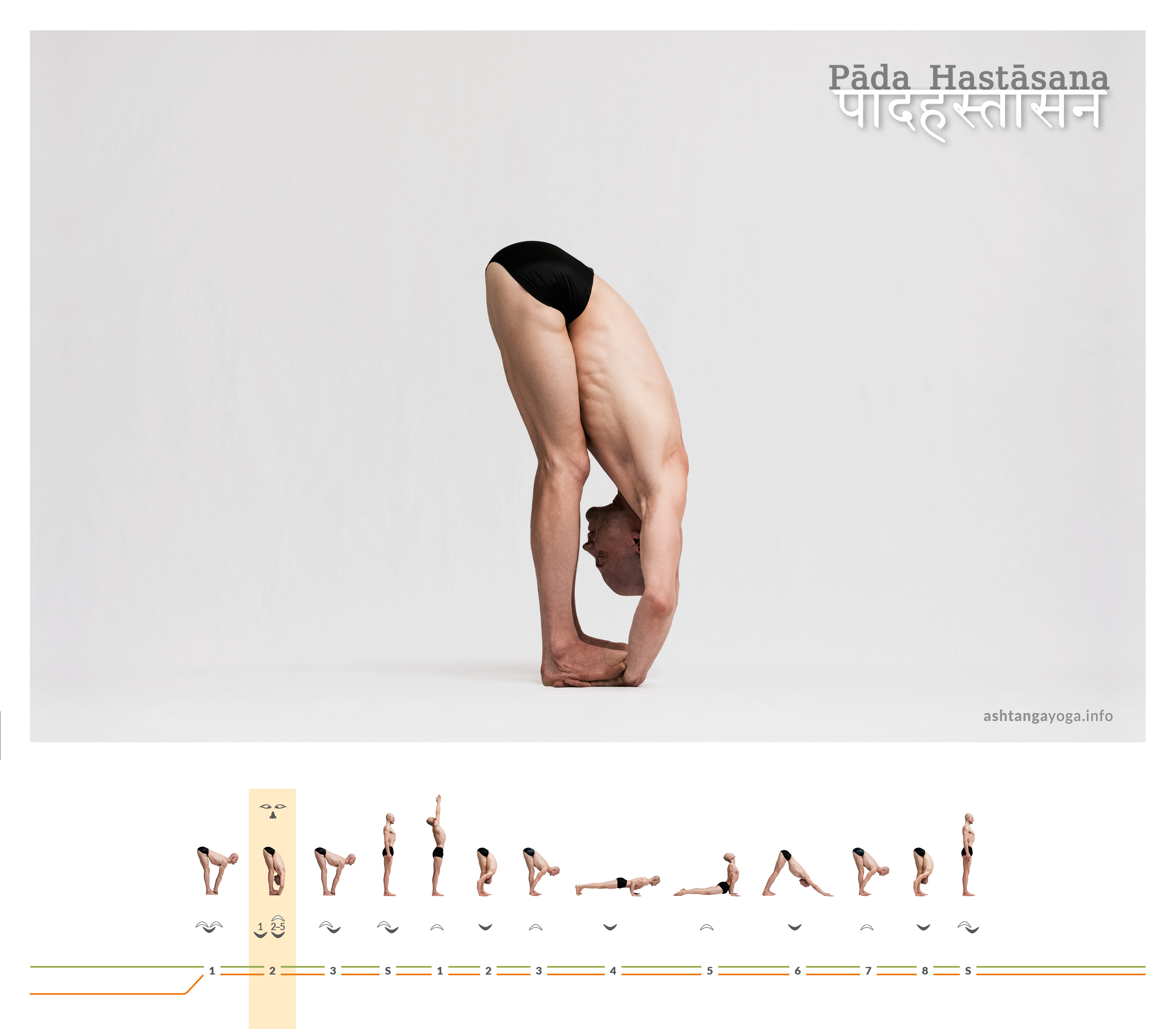
Pāda Hastāsana: hand-to-foot pose
Hand-to-foot pose is the second posture and the second standing forward bend in the Fundamentals. Here the palms slide underneath the soles of the feet.
Try: Separate the middle and ring fingers from one another. Make a "V" shape with your hand before sliding your palm under the sole of the foot. Then you can slide the middle finger past the inside of the heel and the ring finger past the outside, allowing your palm to move farther under the sole.
Vinyāsa 2 - Exhale, 5 breaths
As you exhale, bend your elbows out to the sides and roll your upper body down, beginning from the pelvis. Finally, your torso rests on your thighs while your head is between your shins. Stay here until the fifth exhalation.
Note: Let your shoulder blades widen out to the sides. Move them toward your elbows, which are pointing outward. This gives your neck space.
Vinyāsa 3 - Inhale, exhale
Inhale, straighten your arms, and lift your torso as far as possible. Keep your palms under the soles of your feet for one long exhalation.
Samasthitiḥ - Inhale, exhale
As you inhale, bring your hands to the rim of your pelvis. Your fingers point forward. Press your hands down into the pelvis and rise upright. Then, as you exhale, step or jump your feet back together. Lower your hands into neutral standing.
Traditionally, you can move directly from here into the movement flow of the next posture. In the AYI method, follow the movement flow of this posture through one complete vinyāsa. This helps you keep warmth and rhythm.
Vinyāsa 1 to 9 and Samasthitiḥ
Follow the movement flow you know through one complete vinyāsa.
From neutral standing, move into the movement flow of the next posture.
Effect: The Aṣṭāṅga Yoga practice sequence is wisely structured. The second standing forward bend builds on the flexibility developed in the first. Placing the hands under the soles of the feet requires more flexibility in the backs of the legs. You can use the opportunity to massage your wrists with your toes. Flexion and a gentle pull are an ideal counterbalance to supporting weight on the hands.
Continue with AYI Free
Photographer: Richard Pilnick - www.richardpilnick.com

Please log in to write a message. Go to login
No messages yet.