

pāda पाद – chapter; section; foot; quarter
substantive masculine · Word type unspecified
Dictionary sources
AYI dictionary substantive masculine
Cappeller 1891 substantive masculine
Original text · English · substantive masculine
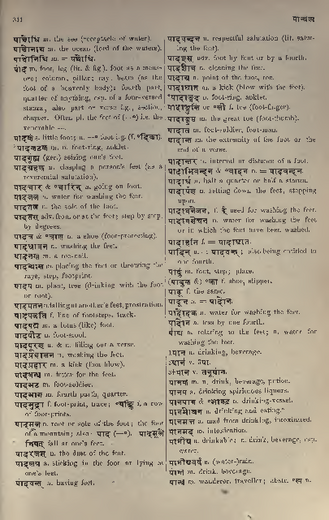
pā́da ·m. foot, leg (lit. & fig.), foot as a measure; column, pillar; ray, beam (as the foot of a heavenly body); fourth part, quarter of anything, esp. of a four-versed stanza, also part or verse i.g., section, chapter. Often pl. the feet of (--°) i.e. the venerable --.
Monier-Williams 1872 substantive masculine
Original text · English · substantive masculine
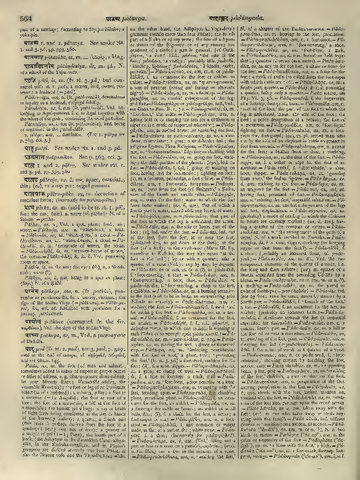
Pāda, as, m. the foot (of men and animals; sometimes added in token of respect to proper names or titles of address, e. g. ākarṇayantu deva-pādāḥ, let your Majesty listen; Kumārila-pādāḥ, the venerable Kumārila); the foot or leg of an inanimate object (as of a bedstead); a column, pillar; a foot as a measure (= 12 Aṅgulis); the foot or root of a tree; the foot of a mountain, a hill at the foot of a mountain; the bottom (of a bag); a ray or beam of light (rays being considered as the feet or hands of the heavenly bodies); a quarter, a fourth part (this sense is perhaps derived from the foot of a quadruped being one out of four); a quarter of a weight of gold (= 1(1/4) Paṇa); the fourth part of a book, (the Adhyāyas in the Śaunakīyā Catur-adhyā- yikā, in the Śārīraka-mīmāṃsā, and in Pāṇini's grammar are divided severally into four Pādas, as also the Dhanur-veda and the Vāyu-Purāṇa; while, on the other hand, the Adhyāyas in Vopa-deva's grammar contain more than four Pādas); the fourth part of a Śloka or of any verse; the line of a hymn or stanza of the Ṛg-veda or of any stanza; the quadrant of a circle; a part in general; [cf. Goth. fōtu-s, ‘a foot:’ Lith. páda-s, ‘the sole of the foot;’ pénda-s, ‘a vestige:’ probably Hib. fadadh, ‘kindling, lighting;’ fadaidhim, ‘I kindle, excite, provoke.’]
Petersburger 1855 substantive masculine · Word type unspecified
Original text · German · substantive masculine
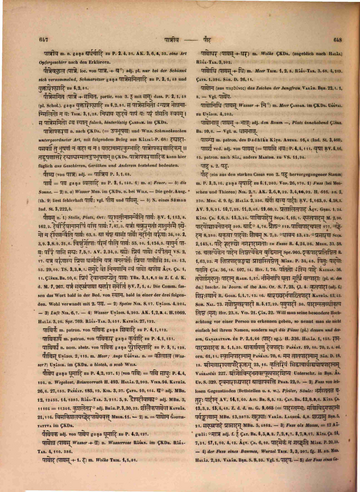
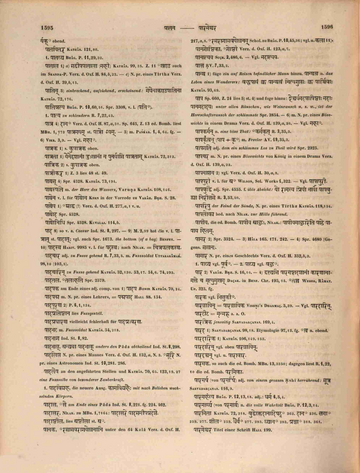
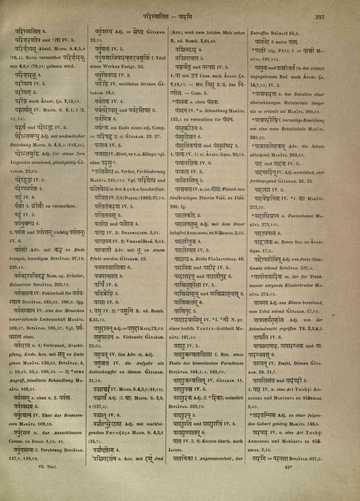
pā́da (ein aus den starken Casus von 2. pad hervorgegangener Stamm) m. P. 3,3,16. gaṇa vṛṣādi zu P. 6,1,203. VOP. 26,170. 1〉 Fuss (bei Menschen und Thieren) NIR. 2,7. AK. 2,6,2,22. AK. 3,4,16,92. H. 616. H. an. 2,230. MED. d. 9. fg. HALĀY. 2,356. ayò asya̱ pādā̀ḥ ṚV. 1,163,9. ṚV. 4,58,3. AV. 9,8,21. AV. 10,7,39. AV. 11,3,46. AV. 19,60,2. prakṣālitapāda ĀŚV. GṚHY. 1,24. KĀTY. ŚR. 6,6,3. KĀTY. ŚR. 15,5,24. pāṇipādeṣu SUŚR. 1,16,1. hastapādam M. 2,90. pādayoścāvanejanam 209. ārdra˚ M. 4,76. prauḍha˚ M. 112. pāṇipādacapala 177. ˚cchedana M. 8,280. akṛtvā pādayoḥ śaucam N. 7,3. ˚dhāvana N. 13,42. ˚prasāraṇa SUŚR. 2,145,1. pādai rudantyo nagarādāgatāḥ zu Fusse R. 4,24,36. MEGH. 33. MEGH. 58. MEGH. 76. calatyekena pādena tiṣṭhatyekena buddhimān Spr. 905. ekapādapratiṣṭhita R. 1,63,23. na kṣiptapādajaṅghaśca prājñastiṣṭhet MĀRK. P. 34,45. pituḥ pādayoḥ patati ŚĀK. 56,18. ŚĀK. 107,14. HIT. I, 76. patito 'smi pāde CAURAP. 36. tayorjagṛhatuḥ pādān RAGH. 1,57. bhīmenāpi dhṛtā mūrdhni yatpādāḥ (pl. st. des du.) Inschr. in Journ. of the Am. Or. S. 7,25, Śl. 4. kṛtapādā (adj. f.) śiraḥsthāne R. GORR. 1,1,7. R. GORR. 1,1,15. R. GORR. 1,1,16. āraṇyadarbhapāṭitapādā KATHĀS. 13,43. SOM. NAL. 73. gajoṣṭrakharapādī R. 5,17,29. pṛthupādī 30. pādānstabdhīkṛtya tiṣṭha (mṛga) HIT. 23,8. VID. 21. ŚĀK. 32. Will man seine besondere Hochachtung vor einer Person zu erkennen geben, so nennt man sie nicht einfach bei ihrem Namen, sondern sagt die Füsse (pl.) dessen und dessen, GAṆARATNAM._zu_P. 2,1,66 (pādaḥ sg.). H. 336. HALĀY. 1,155. rāmapādaprasādaka R. 1,1,35. ākarṇayantu devapādāḥ PAÑCAT. 19,10. PAÑCAT. ed. orn. 70,2. PAÑCAT. ed. orn. 70,4. PAÑCAT. ed. orn. 61,11. svāmipādānām PAÑCAT. 70,6. mama tātapādānām SĀH. D. 18,18. śrīmannārāyaṇapādairuktam SĀH. D. 23,16. kṛtiriyaṃ siddhācāryāśvaghoṣapādānām VAJRASŪCI 227. śrīgovindabhagavatpūjyapādaśiṣya Unterschr. in BṚH. ĀR. UP. S. 329. evamārādhyapādā ājñāpayanti PRAB. 22,9. — 2〉 Fuss von leblosen Gegenständen (Bettstellen u. s. w.), Pfeiler, Säule: bhagàstatakṣa ca̱tura̱ḥ pādā̀n AV. 14,1,60. AIT. BR. 8,5. AIT. BR. 8,12. ŚAT. BR. 12,8,3,6. KĀTY. ŚR. 13,3,2. KĀTY. ŚR. 15,4,48. Z. d. d. m. G. 9,665 (= pādastambha). maṇividrumapādānāṃ paryaṅkāṇām MBH. 13,2873. khaṭvāyāḥ VARĀH. LAGHUJ. 4,8. śayyāsu BṚH. 5,21. sahasrapādaṃ prāsādam MBH. 5,4862. — 3〉 Fuss als Maass, = 12 Aṅguli: ˚mātra adj. f. ī ŚAT. BR. 6,5,3,2. ŚAT. BR. 7,2,1,7. ŚAT. BR. 8,7,2,17. KĀTY. ŚR. 16,7,31. KĀTY. ŚR. 17,1,10. KĀTY. ŚR. 17,4,12. ĀŚV. ŚR. 6,10. pādamekaṃ na gacchati MĀRK. P. 20,38. — 4〉 der Fuss eines Baumes, Wurzel TRIK. 3,3,207. fg. H. an. MED. HALĀY. 2,28. VARĀH. BṚH. S. 8,35. Vgl. 1. pādapa. — 5〉 der Fuss eines Gebirges, Vorberg AK. 2,3,7. TRIK. H. 1034. H. an. MED. HALĀY. 2,12. vindhyarkṣayoḥ pāde nagayoḥ HARIV. 5224. haimavate pāde R. 1,38,17. śailasya R. 2,56,15 (R. 2,56,19 GORR.). R. 96,2. R. 5,56,31. ARJ. 4,8. RAGH. 5,30. MBH. 3,12294. MEGH. 19. MĀRK. P. 56,8. MĀRK. P. 57,18. giripādāḥ MBH. 3,11026. ŚĀK. 144. BHĀG. P. 6,4,20. mandarādyeṣu pādeṣu MĀRK. P. 56,4. — 6〉 Strahl (die Strahlen werden als Füsse und auch als Hände der Himmelskörper aufgefasst) AK. 3,4,16,92 H. 100. H. an. MED. HALĀY. 1,39. marīcinaḥ pādānagrāhyāngṛhṇataḥ MBH. 5,1335. sūryapādāḥ KĀM. NĪTIS. 12,48. PAÑCAT. I, 372. RĀJA-TAR. 3,291. candra˚ KUMĀRAS. 1,61. VIKR. 45,9. VIKR. 45,61. MEGH. 71. MEGH. 90. Strahl und Fuss zugleich BHARTṚ. 2,30. RAGH. 16,53. ŚIŚ. 9,34. — 7〉 Viertel (Fuss des vierfüssigen Thieres) AK. 2,9,90. AK. 3,4,16,92. H. 1434. H. an. MED. paśupādaprakṛtiḥ prabhāgapādaḥ (dīnārādipādaḥ DURGA) prabhāgapādasāmānyāditarāṇi padāni (granthapadāni kṣetrapadāni vā DURGA) NIR. 2,7. eines Gewichts Gold ŚAT. BR. 14,6,1,2. adharmasya M. 8,18. sapādaṃ paṇamarhati 1 ¹⁄₄ Paṇa M. 241. M. 404. YĀJÑ. 2,174. MBH. 2,2327. ekapādena hīyante sahasrāṇi śatāni ca MBH. 12,8498. pādāvaśiṣṭa SUŚR. 2,43,10. SUŚR. 2,50,16. pādāvakṛṣṭa SUŚR. 205,14. VARĀH. BṚH. S. 5,46. VARĀH. BṚH. S. 32,3. VARĀH. BṚH. S. 42,39. VARĀH. BṚH. S. 47,47. VARĀH. BṚH. S. 52,4. VARĀH. BṚH. S. 52,30. VARĀH. BṚH. S. 53,14. VARĀH. BṚH. S. 102,1. VARĀH. BṚH. S. 102,4. LAGHUJ. 2,8. LAGHUJ. 9,20. SŪRYAS. 8,5. SŪRYAS. 11,21. SŪRYAS. 12,20. SŪRYAS. 12,38. SŪRYAS. 12,41. SŪRYAS. 12,60. SŪRYAS. 12,63. SŪRYAS. 12,64. RĀJA-TAR. 4,407. vaidyo vyādhyupasṛṣṭaśca bheṣajaṃ paricārakaḥ . ete pādāścikitsāyāḥ karmasādhanahetavaḥ die vier Stücke d. h. erforderlichen Dinge SUŚR. 1,123,8. SUŚR. 1,123,18. fgg. vyavahārasya prathamaḥ pādaḥ (vgl. uttarapāda, kriyā˚) MṚCCH. 142,20. ṛddhi˚ BURN._in_Lot. de la b. l. 310. fg. Die Adhyāya in der Śaunakīyā Caturadhyāyikā (Verz. d. B. H. No. 361), in der Śārīrakamīmāṃsā (MADHUS._in_Ind. St. 1,19) und in Pāṇiniʼs Grammatik zerfallen in 4 Pāda; desgleichen der Dhanurveda (MADHUS._in_Ind. St. 1,21) und das VĀYU-P. (Verz. d. Oxf. H. 50,a, N.). Dagegen enthalten die Adhyāya in Vopadevaʼs Grammatik auch mehr als 4 Pāda; vgl. auch den Schol. zu UPAL._bei_PERTSCH 24. — 8〉 im Bes. Versviertel, Verstheil überh. AIT. BR. 4,4. ṛcaṃ vārdharcaṃ vā pādaṃ vā padaṃ vā varṇaṃ vā ŚĀṄKH. BR. 26,5. LĀṬY. 1,2,1. LĀṬY. 10,6,9. KAUŚ. 139. KAUŚ. 140. ĀŚV. ŚR. 1,1. ĀŚV. ŚR. 5,14. NIR. 7,9. NIR. 11,6. ṚV. PRĀT. 16,6. fgg. ṚV. PRĀT. 16,8. ṚV. PRĀT. 17,15. fgg. ṚV. PRĀT. 17,27. fgg. ṚV. PRĀT. 17,28. VS. PRĀT. 1,157. M. 2,77. MBH. 1,247. MBH. 1,259. MBH. 1,2318. MBH. 3,10669. R. 1,2,21. R. 1,2,43 padaṃ pādaṃ ślokam SUŚR. 1,13,3. ŚRUT. 2. ŚRUT. 23. ŚRUT. 34. PAÑCAT. 127,14. pādavat ṚV. PRĀT. 1,14. — 9〉 Theil überh. (vgl. aṣṭāpādya, dvipādya): dṛteḥ M. 2,99. SUŚR. 2,215,16. — Vgl. aja˚, antaḥpādam, uttarapāda, kriyā˚, gūḍha˚ (Schlange MBH. 7,5407), catuṣ˚, citrapādā, jālapāda, taraṇḍapādā, tāmrapādī, tripāda, dvi˚, ni˚, pañca˚.
Original text · German · Word type unspecified
pāda 8〉 so v. a. Caesur Ind. St. 8,297. — 9〉 M. 2,99 hat die v. l. pātrāt st. pādāt; vgl. auch Spr. 1673. the bottom (of a bag) BENFEY. — 10〉 pādastha HARIV. 9985 v. l. für paṭṭastha; nach NĪLAK. = citraphalakastha.
Original text · German · Word type unspecified
pāda 9〉 gemeint ist ein Fuss einer als Schlauch dienenden Thierhaut; vgl. dṛteścaraṇāt VARĀH. YOGAYĀTRĀ 1,4.
Böhtlingk 1879 substantive masculine · Word type unspecified
Original text · German · substantive masculine
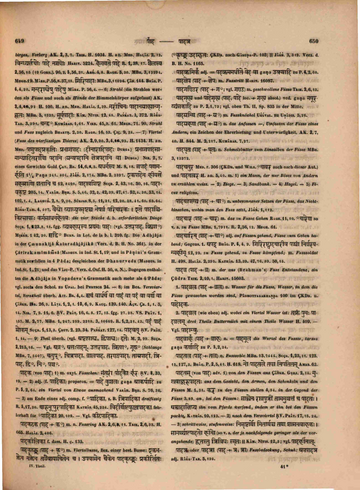
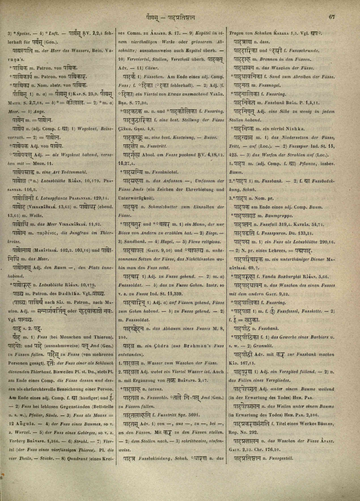
pā́da m. — 1〉 Fuss (bei Menschen und Thieren). pādayoḥ und pāde (ausnahmsweise) pat Jmd (Gen.) zu Füssen fallen. pādais zu Fusse (von mehreren Personen gesagt). dṛteḥ der Fuss einer als Schlauch dienenden Thierhaut, Bisweilen Pl. st. Du., stets Pl. am Ende eines Comp. die Füssen und dessen als ehrfurchtsvolle Bezeichnung einer Person. Am Ende eines adj. Comp. f. ā (häufiger) und ī. — 2〉 Fuss bei leblosen Gegenständen (Bettstelle u. s. w.), Pfeiler, Säule. — 3〉 Fuss als Maass = 12 Aṅgula. — 4〉 der Fuss eines Baumes, so v. a. Wurzel. — 5〉 der Fuss eines Gebirges so v. a. Vorberg BHĀVAPR. 1,266. — 6〉 Strahl. — 7〉 Viertel (der Fuss eines vierfüssigen Thieres). Pl. die vier Theile, — Stücke. — 8〉 Quadrant [Page4-067-b] (eines Kreises Comm. zu ĀRYABH. S. 17). — 9〉 Kapitel in einem viertheiligen Werke oder grösserem Abschnitte: ausnahmsweise auch Kapitel überh. — 10〉 Versviertel, Stollen, Verstheil überh. pādavat Adv. — 11〉 Cäsur.
Original text · German · Word type unspecified
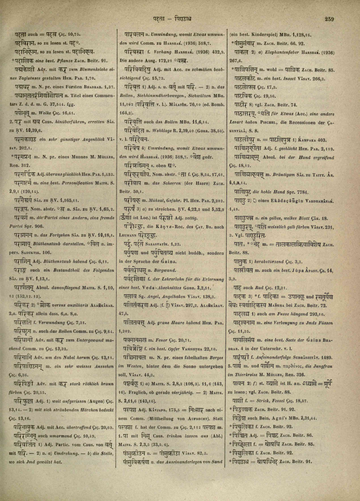
pāda auch Rad ŚIŚ. 12,21. [Nachtrag, Band 5]
Original text · German · Word type unspecified
pāda und pādaka IV. 5. [Nachtrag, Band 7]
Apte 1890 substantive masculine
Original text · English · substantive masculine
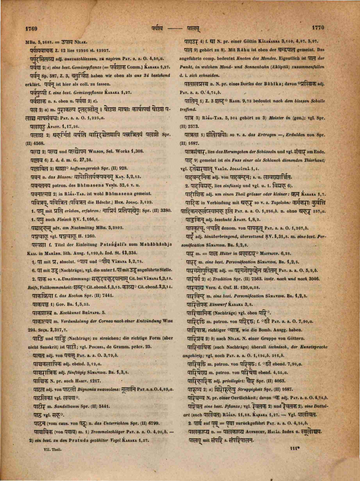
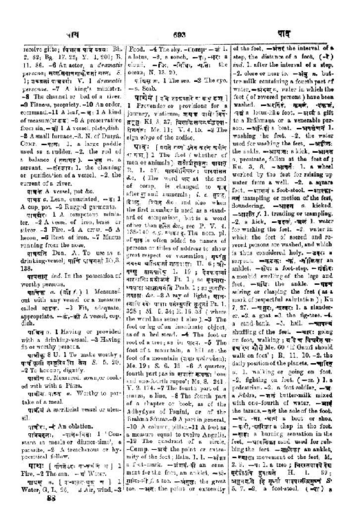
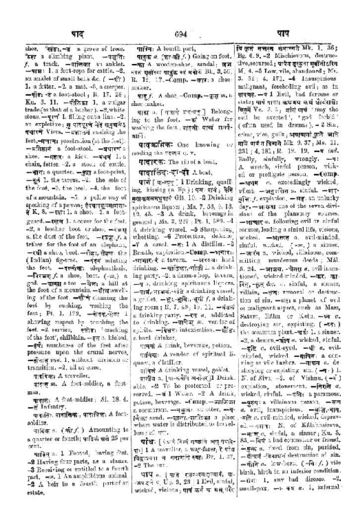
pādaḥ [padyate gamyo'nena karaṇe karmaṇi vā ghañ] 1 The foot (whether of men of animals); tayorjagṛhatuḥ pādān R. 1. 57; pādayornipatyaḥ pādapatita &c. The word pāda at the end of comp. is changed to pād after su and numerals; i. e. supād, dvipād, tripād &c.; and also when the first member is used as a standard of comparison, but is a word other than hasti &c.; see P. V. 4. 138-140 e. g. vyāghrapād. The nom. pl. of pāda is often added to names of persons or titles of address to show great respect or veneration; mṛṣyaṃtu lavasya baliśatāṃ tātapādāḥ U. 6; jīvatsu tātapāreṣu U. 1. 19; devapa dānāṃ nāsmābhiḥ prayojanaṃ Pt. 1; so evamārādhyapādā ājñāpayaṃti Prab. 1; so kumārilapādāḥ &c. 2 A ray of light; bālasyāpi raveḥ pādāḥ pataṃtyupari bhūbhṛtāṃ Pt. 1. 328; Śi. 9. 34; R. 16. 53 (where the word has sense 1 also). 3 The foot or leg of an inanimate object, as of a bed stead. 4 The foot or root of a tree; as in pādapa. 5 The foot of a mountain, a hill at the foot of a mountain (pādāḥ pratyaṃtaparvatāḥ); Me. 19: Ś. 6. 16. 6 A quarter, fourth part; as in sapādo rūpaṃkaḥ ‘one and one-fourth rupee’: Ms. 8. 241; Y. 2. 174. 7 The fourth part of a stanza, a line. 8 The fourth part of a chapter or book, as of the Adhyāyas of Pāṇini, or of the Brahma Sūtras. 9 A part in general. 10 A column, pillar. 11 A foot as a measure equal to twelve Aṅgulis. 12 The quadrant of a circle. Comp. — agraṃ the point or extremity of the foot; Ratn. 1. 1. — aṃkaḥ a foot-mark. — aṃgadaṃ -dī an orna ment for the foot, an anklet. — aṃguliḥ -lī f. a toe. — aṃguṣṭhaḥ the great toe. — ataḥ the point or extremity ([Page 0693-c]) of the feet. — aṃtaraṃ the interval of a step, the distance of a foot. — (re) ind. 1 after the interval of a step. 2 close or near to. — aṃbu n. butter milk containing a fourth part of water. — aṃbhas n. water in which the feet (of revered persons) have been washed. — araviṃdaṃ, -kamalaṃ, -paṃkajaṃ, — padmaṃ a lotus-like foot. — arghyaṃ a gift to a Brāhmaṇa or a venerable person. — alindī a boat. — avasecanaṃ 1 washing the feet. 2 the water used for washing the feet. — aṣṭhīlaḥ the ankle. — āghataḥ a kick. — ānata a. prostrate, fallen at the feet of; Ku. 3. 8. — āvartaḥ 1 a wheel worked by the feet for raising up water from a well. 2 a square foot. — āsanaṃ a foot-stool. — āsphālanaṃ trampling or motion of the feet, floundering. — āhata a. kicked. — āhati f. 1 treading or trampling. 2 a kick. — udakaṃ, -jalaṃ 1 water for washing the feet. 2 water in which the feet of sacred and revered persons are washed, and which is thus considered holy. — udaraḥ a serpent. — kaṭakaḥ -kaṃ, -vīlikā an anklet. — kṣepaḥ a foot-step. — gaṃḍīraḥ a morbid swelling of the legs and feet. — grathiḥ the ankle. — grahaṇaṃ seizing or clasping the feet (as a mark of respectful salutation); Ku. 7. 27. — caturaḥ, -catvaraḥ 1 a slanderer. 2 a goat. 3 the fig-tree. 4 a sand-bank. 5 hail. — cāpalyaṃ shuffling of the feet. — cāraḥ going on foot, walking; yadi ca vicaret pādaca reṇa gaurī Me. 60 ‘if Gaurī should walk on foot’; R. 11. 10. 2 the daily position of the planets. — cārin a. 1 walking or going on foot. 2 fighting on foot. ( — m.) 1 a pedestrian. 2 a footsoldier. — jaḥ a Śūdra. — jalaṃ butter-milk mixed with one-fourth of water. — jāhaṃ the tarsus. — talaṃ the sole of the foot. — traḥ, -trā, -trāṇaṃ a boot or shoe. — dārī, -dārikā a chap in the feet. — dāhaḥ a burning sensation in the feet. — dhāvanikā sand used for rubbing the feet. — nālikā an anklet. — nyāsaḥ movement of the feet; M. 2. 9. — paḥ 1 a tree; nirastapādape deśa eraṃḍo'pi drumāyate H. 1. 69; anubhavati hi mūrdhnā pādapastīvramuṣṇaṃ Ś. 5. 7. 2 a foot-stool. — (pā) a ([Page 0694-a]) shoe. ˚khaṃḍaḥ, -ḍaṃ a grove of trees. ˚ruhā a climbing plant. — paddhatiḥ f. a track. — pālikā an anklet. — pāśaḥ 1 a foot-rope for cattle. 2 an anklet of small bells &c. — (śī) 1 a fetter. 2 a mat. 3 a creeper. — pīṭhaḥ -ṭhaṃ a foot-stool; R. 17. 28; Ku. 3. 11. — pīṭhikā 1 a vulgar trade (as that of a barber). 2 white stone. — pūraṇaṃ 1 filling out a line. 2 an expletive; tu pādapūraṇe bhede samuccaye' vadhāraṇe Viśva. — prakṣālanaṃ washing the feet. — praṇāmaḥ prostration (at the feet). — pratiṣṭhānaṃ a foot-stool. — pradhāraṇaṃ a shoe. — prahāraḥ a kick. — baṃdhanaṃ 1 a chain, fetter. 2 a stock of cattle. — bhāgaḥ a quarter. — mudrā a foot-print. — mūlaṃ 1 the tarsus. 2 the sole of the foot. 3 the heel. 4 the foot of a mountain. 5 a polite way of speaking of a person; devapādamūlamāgatāhaṃ K. 8. — rakṣaḥ 1 a shoe. 2 a footguard. — rakṣaṇaṃ 1 a cover for the feet. 2 a leather boot or shoe. — rajas n. the dust of the feet. — rajjuḥ f. a tether for the foot of an elephant. — rathī a shoe, boot. — rohaḥ, -rohaṇaḥ the (Indian) fig-tree. — vaṃdanaṃ saluting the feet. — valmīkaḥ elephantiasis. — virajas f. a shoe, boot. ( — m.) a god. — śākhā a toe. — śailaḥ a hill at the foot of a mountain. — śothaḥ swelling of the foot. — śaucaṃ cleaning the feet by washing, washing the feet; Pt. 1. 172. — sevanaṃ, -sevā 1 showing respect by touching the feet. 2 service. sphoṭaḥ ‘cracking of the feet’, chilblain. — hata a. kicked. — harṣaḥ numbness of the feet after pressure upon the crural nerves. — hīnāt ind. 1 without division or transition. 2 all at once.
Cappeller 1887 substantive masculine
Original text · German · substantive masculine
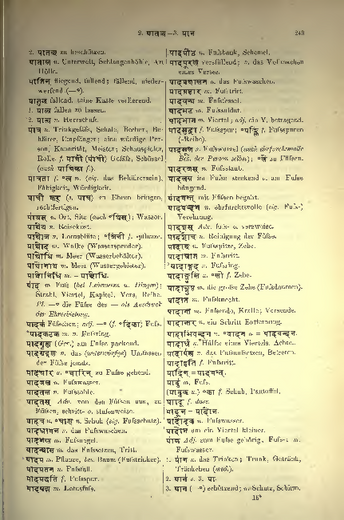
pā́da m. Fuß (bei Lebewesen u. Dingen); Strahl, viertel, Kapitel, Vers, Reihe. Pl. —˚ die Füße des — als Ausdruck der Ehrerbietung.
Burnouf 1866 substantive masculine
Original text · French · substantive masculine
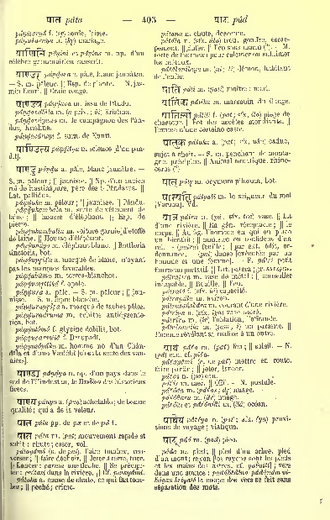
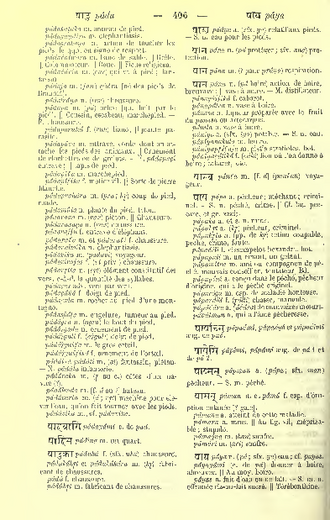
pāda m. pied; pied d'un arbre, pied d'un mont; rayon [les rayons sont les pieds et les mains des astres, cf. gabhasti]; vers dans une stance: padābhedena pādānām vibhāgaḥ kriyate la coupe des vers se fait sans séparation des mots. [Page406-1]
Occurrences in source texts (48)
AsFu 3 occurrences
AsS1 2 occurrences
Tryanga Mukhaika Paada Pashchimottanasana 1 occurrence
Direct occurrences
Utthita Hasta Paadaangushthasana A 1 occurrence
Direct occurrences
-
AsS1 UtthitaHastaPadangushthasana Segment 3
Utthita Hasta Padangushthasana B 1 occurrence
Direct occurrences
-
AsS1 UtthitaHastaPadangushthasana Segment 3
DYS 6 occurrences
GoS 2 occurrences
HP 16 occurrences
HP 1.17-1.32: Āsana 6 occurrences
Direct occurrences
4 more source pages
MandUp 5 occurrences
SiSa 10 occurrences
SiSa 3.84-3.87: Siddhāsana 2 occurrences
Direct occurrences
SiSa 4.26-4.30: Mahāmudrā-Praxis 2 occurrences
Direct occurrences
SVU 2 occurrences
Continue with AYI Free
Image source: AYI archive.