

anna अन्न – grain; food
adjective · substantive masculine · substantive neuter
Dictionary sources
AYI dictionary substantive neuter
grain; food
Cappeller 1891 substantive neuter
Original text · English · substantive neuter
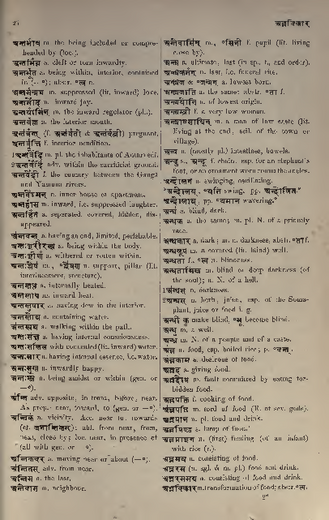
ánna ·n. food, esp. boiled rice; p. °vant.
Monier-Williams 1872 adjective · substantive masculine
Original text · English · adjective
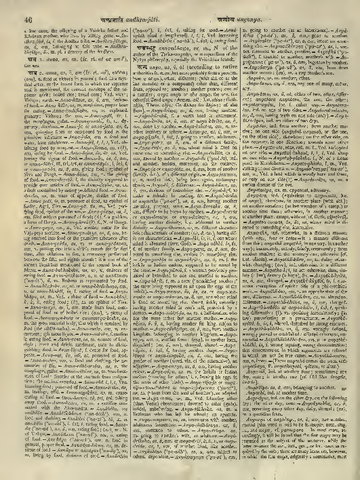
anna 2 . anna, as, ā, am (fr. rt. ad), eaten; (am), n. food or victual in general; food in a mys- tical sense, or the lowest form in which the supreme soul is manifested, the coarsest envelope of the su- preme spirit; boiled rice; bread corn; Ved. water; Viṣṇu; earth.
Original text · English · substantive masculine
anna 1 . anna, as, m. (fr. rt. at or am?), the sun.
Petersburger 1855 adjective · substantive masculine · substantive neuter
Original text · German · adjective · substantive masculine · substantive neuter
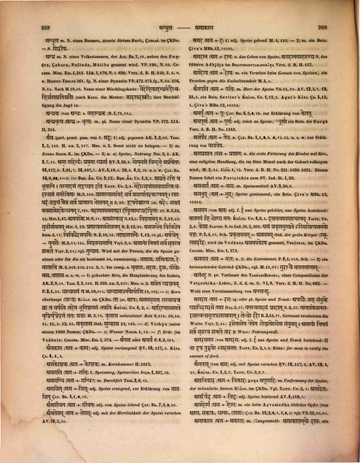
ánna (part. praet. pass. von 1. ad) 1〉 adj. gegessen AK. 3,2,60. TRIK. 3,3,226. H. an. 2,257. MED. n. 2. Sonst nicht zu belegen. — 2〉 m. Sonne SIDDH. K._im_ŚKDR. — 3〉 n. a〉 Speise, Nahrung NIR. 3,9. AK. 2,7,24. annā̱ yadindràḥ pratha̱mā vyāśà ṚV. 3,36,8. mogha̱mannàṃ vindate̱ apràcetāḥ ṚV. 10,117,6. ṚV. 1,61,7. ṚV. 10,107,7. AV. 5,18,4. AV. 5,28,3. AV. 8,2,19. u. s. w. ŚAT. BR. 14,8,13,1—ŚAT. BR. 14,8,13,3. (= BṚH. ĀR. UP. 5,12). BṚH. ĀR. UP. 1,2,5. adyate 'tti ca bhūtāni . tasmādannaṃ taducyata iti TAITT. UP. 2,2. medo'sṛṅmāṃsamajjāsthi vadantyannaṃ manīṣiṇaḥ M. 3,182. prāṇasyānnamidaṃ sarvaṃ prajāpatirakalpayat . sthāvaraṃ jaṅgamaṃ caiva sarvaṃ prāṇasya bhojanam .. M. 5,28. dūṣayeccāsya (sc. areḥ) satataṃ yavasānnodakendhanaṃ M. 7,195. carāṇāmannamacarā daṃṣṭriṇāmapyadaṃṣṭriṇaḥ M. 7,29. R. 5,35,42. HIT. I, 47. annapakti M. 9,11. annasaṃskāra N. 15,3. miṣṭamannam R. 1,19,22. sujīrṇamannam HIT. I, 19. praśastamannabhojanam R. 2,12,92. annapānena vividhena INDR. 4,11. vividhairannapānaiḥ R. 2,10,15. bhakṣyānnapānaiḥ R. 1,12,10. pl.: arcayet — nṝnannaiḥ M. 3,81. M. 3,124. miṣṭānyannāni VIŚV. 3,3. annānāṃ nicayaṃ sarvaṃ sṛjasva śabale VIŚV. 2,24; vgl. munyanna. Wird mit der Person, die die Speise geniesst oder für die sie bestimmt ist, zusammeng.: gaṇānna, gaṇikānna, devānnāni M. 4,209. M. 4,212. M. 4,213. M. 5,7. Im comp. s. ghṛtānna, tadanna, drvanna, pīvoanna, vaśānna u. s. w. — b〉 gekochter Reis, die Hauptnahrung des Inders, AK. 2,9,48. TRIK. 3,3,226. H. 395. H. an. 2,257. MED. n. 2. annena vyañjanam P. 2,1,34. dhānyamannaṃ ca M. 10,114. dhānyānnadhanacauryāṇi M. 11,162. — c〉 Korn überhaupt (dhānya) RĀJAN._im_ŚKDR. tā (sc. āpaḥ) annamasṛjanta tasmādyatra kva ca varṣati tadeva bhūyiṣṭhamannaṃ bhavati CHĀND. UP. 6,2,4. ādityājjāyate vṛṣṭirvṛṣṭerannaṃ tataḥ prajāḥ M. 3,76. kṛtānna zubereiteter Reis M. 9,219. M. 10,86. M. 10,94. M. 11,3. M. 12,65. akṛtānna ibid. śuṣkānna M. 11,166. — d〉 Viṣṇu (unter seinen 1000 Namen) ŚKDR. — e〉 Wasser NAIGH. 1,12. — f〉 Erde (im Vedānta) COLEBR. Misc. Ess. I, 374. — ánanna oder ananná P. 6,2,161.
Böhtlingk 1879 adjective · substantive neuter
Original text · German · adjective · substantive neuter
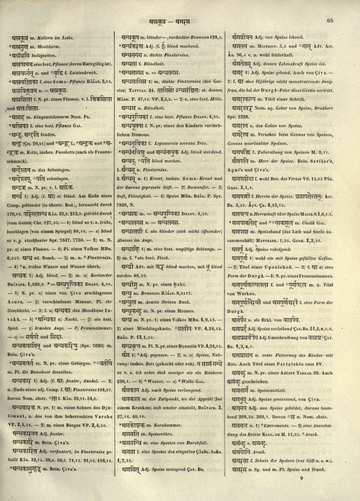
ánna — 1〉 *Adj. gegessen. — 2〉 n. — a〉 Speise, Nahrung; insbes. Reis (gekocht oder roh). na tvānnaṃ manye so v. a. ich achte dich weniger als ein Reiskorn Chr. 230,1. — b〉 *Wasser. — c〉 *Wolke GAL.
Apte 1890 substantive masculine · substantive neuter
Original text · English · substantive masculine · substantive neuter
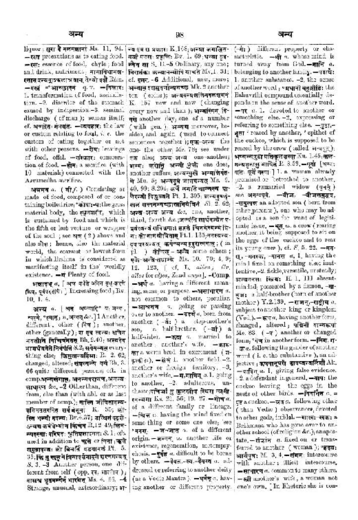
annaṃ [ad-kta; anityanena, an-nan; according to Yāska, from ad, adyate atti ca bhūtāni; or from ā-nam, ā ābhimukhyena hyetannataṃ prahvībhūtaṃ bhavati bhojanāya bhūtānāṃ] 1 Food (in general); adyate'tti ca bhūtāni tasmādannaṃ taducyate T. Up.; medo'sṛṅmāṃsamajjāsthi vadaṃtyannaṃ manīṣiṇaḥ Ms. 3. 182; ahamannaṃ bhavānbhoktā H. 1. 54 I am your prey &c.; carāṇāmannamacarāḥ Ms. 5. 29. 2 Food as representing the lowest form in which the Supreme Soul is manifested, being the coarsest and last of the 5 vestures (kośa) in which the soul is clothed and passes from body to body in the long process of metempsychosis -“the nutrimentitious vesture or visible body in the world of sense” (sthūlaśarīra called annamayakośa). 3 Boiled rice; annena vyaṃjanaṃ P. II. 1. 34. 4 Corn (bread corn); tā (āpaḥ) annamasṛjaṃta tasmādyatra kva ca varṣati tadeva bhūyiṣṭhamannaṃ bhavati Ch. Up.; ādityājjāyate vṛṣṭirvṛṣṭerannaṃ tataḥ prajāḥ . Ms. 3. 76; kṛta˚ Ms. 9. 219; Ms. 10. 86, Ms. 12. 65. 5 Water. 6 Earth (pṛthivyā annahetutvādannaśabdavācyatā). 7 N. of Viṣṇu. — nnaḥ The sun (sa hi annahetuvṛṣṭihetuḥ). Comp. — akālaḥ = anākāla q. v. — attṛ, -ādin -āhārin eating food. — ada a. 1 eating food. 2 having a good appetite (dīptāgni). ([Page 0097-c]) — (daḥ) N. of Viṣṇu. — adyaṃ proper food, food in general; Ms. 3. 82, Ms. 4. 112, Ms. 11. 144. — ācchādanaṃ, -vastraṃ food and clothing, food and raiment, the bare necessaries of life. — āyuḥ (annāyu) consisting of, living by, food, desirous of food ( annabaṃdhanaḥ, annajīvanaḥ). — kālaḥ hour of dinner; meal-time. — kiṭṭaḥ = ˚mala q. v. — kūṭaḥ a large heap of boiled rice. — koṣṭhakaḥ 1 a cupboard; granary. 2 Viṣṇu. 3 the sun. — gatiḥ f. the passage of food, gullet (cf. bahiḥsrotas). — gaṃdhiḥ dysentery, diarrhœa. — ja, -jāta a. produced from food as the primitive substance. — jalaṃ food and water, bare subsistence. — tejas a. having the vigour caused by food. — da, -dātṛ, -dāyin, -prada a. 1 giving food; vāridastṛptimāpnoti sukhamakṣayyamannadaḥ Ms. 4. 229. 2 epithet of Śiva. — dā N. of Durgā or Annapūrṇā. — dāsaḥ [annena pālito dāsaḥ śāka. ta.] a servant who works for food only, one who becoms a servant or slave by getting food only. — devatā the deity supposed to preside over articles of food. — doṣaḥ 1 sin arising from eating prohibited food; Ms. 5. 4. 2 a defect in the food eaten; derangement of food or the humours of the body; ālasyādannadoṣācca mṛtyurviprāñ jighāṃsati Ms. 5. 4. — dveṣaḥ dislike of food, loss of appetite. — patiḥ lord or possessor of food, epithet of Savitṛ, Agni, and Śiva. — pākaḥ cooking of food; digestion of food (by the fire in the stomach). — pū a. purifying food, epithet of the Sun. — pūrṇa a. filled with, possessed of, food. — (rṇā) a form of Durgā (the goddess of plenty); ˚īśvarī N. of Durgā or a form of Bhairavī. — peyaṃ = vājapeyaṃ q. v. — pralaya a. being dissolved into food after death. — prāśaḥ, — prāśanaṃ the ceremony of giving a newborn child food to eat for the first time, one of the 16 Saṃskāras performed between the 5th and 8th month (usually in the sixth, Ms. 2. 34) with preliminary oblations to fire (Mar. uṣṭāvaṇa); Ms. 2. 34; Y. 1. 12. — brahman, -ātman m. Brahma as represented by food. — bhakta a. [annārthaṃ bhaktaḥ dāsaḥ] = annadāsa q. v. — bhuj a. eating food, epithet of Śiva. — maya a. see below. — malaṃ 1 excrement, feces; P. VI. 1. 148 Sk. 2 spirituous ([Page 0098-a]) liquor; surā vai malamannānāṃ Ms. 11. 94. — rakṣā precautions as to eating food. — rasaḥ essence of food, chyle; food and drink, nutriment; nānāvidhānannarasān vanyamūlaphalāśrayān tebhyo dadau Rām. — vastraṃ = ˚ācchādanaṃ q. v. — vikāraḥ 1 transformation of food, assimilation. 2 disorder of the stomach caused by indigestion. 3 seminal discharge (of man); semen itself; cf. annādretaḥ saṃbhavati. — vyavahāraḥ the law or custom relating to food, i. e. the custom of eating together or not with other persons. — śeṣaḥ leavings of food, offal. — saṃskāraḥ consecration of food. — homaḥ a sacrifice (with 10 materials) connected with the Aśvamedha sacrifice.

Cappeller 1887 substantive neuter
Original text · German · substantive neuter
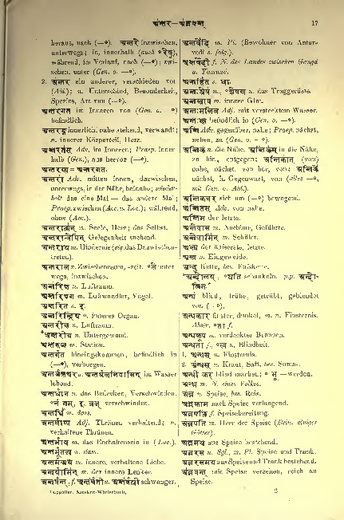
ánna n. Speise, bes. Reis.
Burnouf 1866 substantive neuter
Original text · French · substantive neuter
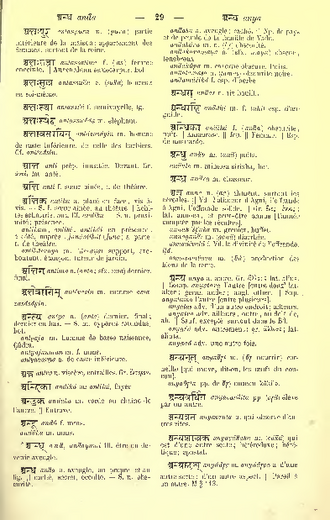
anna anna n. (ad) aliment, surtout les céréales. Vd. l'aliment d'Agni, l'offrande à Agni, l'offrande solide. Gr. ἔνος, ἔννος; lat. annona, et peut-être annus [l'année comptée par les récoltes]. annakoṣṭhaka m. grenier, buffet. annagandhi m. (gandh) diarrhéé. annadevatā f. Vd. la divinité de l'offrande, īḷā. annasambhava m. (bhū) production des biens de la terre.
Occurrences in source texts (8)
DYS 1 occurrence
HP 1 occurrence
SiSa 4 occurrences
SS 1 occurrence
SVU 1 occurrence
Continue with AYI Free
Image source: AYI archive.