

ghaṭa घट – pot; vessel; union
adjective · substantive masculine · Word type unspecified
Dictionary sources
AYI dictionary substantive masculine
pot; vessel; union
Cappeller 1891 substantive masculine
Original text · English · substantive masculine
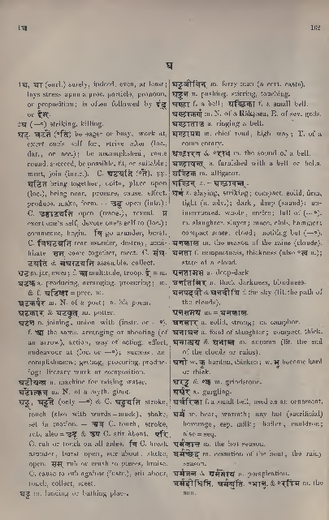
ghaṭa ·m. jar, ewer; f. ā multitude, troop, ī = m.
Original text · English · substantive masculine
ghaṭa ·m. landing or bathing place.
Monier-Williams 1872 adjective
Original text · English · adjective
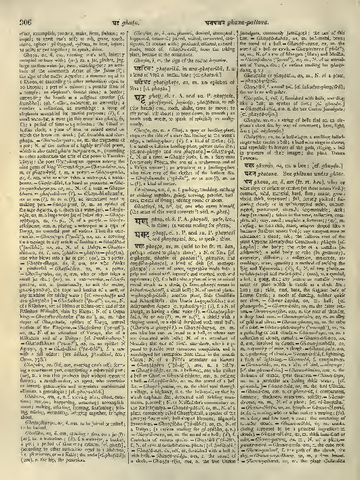
Ghaṭa, as, ā, am, exerting one's self, intently occupied or busy with; (as), m. a jar, pitcher, jug, large earthen water-jar, ewer, watering-pot; an attri- bute of the nineteenth Arhat of the Jainas (?); the sign of the zodiac Aquarius; a measure equal to 1 Droṇa, or (according to other authorities) equal to 20 Droṇas; a part of a column; a peculiar form of a temple; an elephant's frontal sinus; a border; suspending the breath as a religious exercise [cf. kumbha]; (ā), f. effort, endeavour, an assembly; a number, a collection, an assemblage; a troop of elephants assembled for martial purposes; (ī), f. a small water-jar, a ewer (in this sense also ghaṭi, is, f.); a period of time = 24 minutes; the Gharī or Indian clock, a plate of iron or mixed metal on which the hours are struck; [cf. kumbha and dur- ghaṭa.]
Petersburger 1855 adjective · substantive masculine · Word type unspecified
Original text · German · adjective · substantive masculine
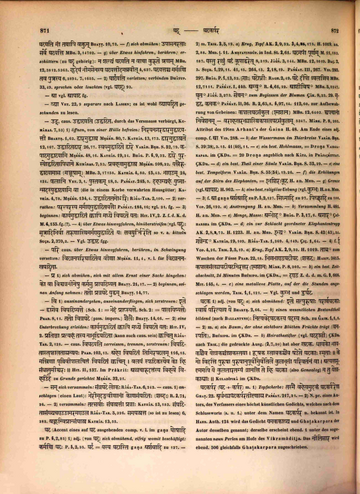
ghaṭa (Accent eines auf ghaṭa ausgehenden comp. v. l. im gaṇa ghoṣādi zu P. 6,2,85) 1〉 adj. (von ghaṭ) sich abmühend, eifrig womit beschäftigt: karmaṇi ghaṭaḥ P. 5,2,35. ghaṭá = yasya ghaṭāsti gaṇa arśaādi zu P. 5,2,127. — — 2〉 m. TRIK. 3,5,19. a〉 Krug, Topf AK. 2,9,32. AK. 3,4,25,175. H. 1019. H. an. 2,88. MED. ṭ. 11. AMṚTAVINDŪP._in_Ind. St. 2,61. ghaṭamapāṃ pūrṇam M. 11,183. M. 11,187. yastu rajjuṃ ghaṭaṃ kūpāddharet M. 8,319. YĀJÑ. 3,144. MBH. 12,1019. DAŚ. 2,3. SUŚR. 1,29,11. SUŚR. 1,41,15. SUŚR. 1,264,13. SUŚR. 2,18,19. PAÑCAT. III, 267. VID. 293. VID. 297. BHĀG. P. 1,13,52. (gāḥ) ghaṭodhnīḥ RAGH. 2,49. ghaṭe dīpo jvalanniva MBH. 12,7111. PAÑCAT. I, 440. ambu˚ R. 4,61,22. āśīviṣa˚ MBH. 5,5247. ghṛta˚ YĀJÑ. 3,273. secana˚ zum Begiessen der Blumen ŚĀK. 8,23. ŚĀK. 8,29. mṛdghaṭa, kanaka˚ PAÑCAT. II, 36. R. 2,65,8. R. 6,97,14. R. 6,112,60. zur Aufbewahrung von Gebeinen: kapālaghaṭasaṃkula (śmaśāna) MBH. 12,6403. śvapacānāṃ niveśanam — varāhakharabhagnāsthikapālaghaṭasaṃkulam MBH. 12,5347. MĀRK. P. 8,205. Attribut des 19ten Arhantʼs der Jaina H. 48. Am Ende eines adj. comp. f. ā VID. 288. — b〉 der Wassermann im Thierkreise VARĀH. BṚH. S. 39 (38), 3. VARĀH. BṚH. S. 39 (38),15. VARĀH. BṚH. S. 41 (40), 11. — c〉 ein best. Hohlmaass, = Droṇa VAIDYAKAPAR._im_ŚKDR. = 20 Droṇa angeblich nach KĀTY._in_PRĀYAŚCITTAT. ŚKDR. — d〉 ein best. Theil einer Säule VARĀH. BṚH. S. 52,29. — e〉 eine best. Tempelform VARĀH. BṚH. S. 55(54), 19. VARĀH. BṚH. S. 55(54),26. — f〉 die Erhöhungen auf der Stirn des Elephanten, = ibhaśiraḥkūṭa H. an. MED. — g〉 Grenze (vgl. āghāṭa) H. 962. — h〉 eine best. religiöse Uebung (vgl. kumbha) H. an. MED. — 3〉 f. ā gaṇa arśaādi zu P. 5,2,127. sidhmādi zu P. 5,2,97. picchādi zu P. 5,2,100. VOP. 26,192. a〉 Anstrengung H. an. MED. — b〉 Versammlung H. 481. H. an. MED. — c〉 Menge, Masse: ambhoda˚ BHĀG. P. 3,17,6. agāra˚ ŚRĪHARṢA_im_ŚKDR. — d〉 ein zur Schlacht geordneter Elephantentrupp AK. 2,8,2,75. H. 1223. H. an. MED. ibhya˚ VARĀH. BṚH. S. 42 (43), 34. gajendra˚ KATHĀS. 19,109. RĀJA-TAR. 1,369. RĀJA-TAR. 4,149. ŚIŚ. 1,64. — 4〉 f. ī VOP. 4,26. TRIK. 3,5,19. a〉 Krug, Topf AK. 2,9,32. H. 1019. tāmra˚ zum Waschen der Füsse PRAB. 22,18. bhinnabhāṇḍaghaṭīghaṭa (śakaṭa) HARIV. 3415. kapālasaṃlagnaghaṭīghaṭanirantara (śmaśāna) MĀRK. P. 8,205. — b〉 ein best. Zeitabschnitt, 24 Minuten BHŪRIPR._im_ŚKDR. = daṇḍa Z. d. d. m. G. 9,668. MIT. 145,4. — c〉 eine metallene Platte, auf der die Stunden angeschlagen werden, TRIK. 1,1,121. — Vgl. kumbha und durghaṭa.
Original text · German · Word type unspecified
ghaṭa 1〉 hierher stellt BENFEY PAÑCAT. II, 74; vgl. jedoch Spr. 5273. — 2〉a〉 KATHĀS. 57,32. fgg. Spr. 5273. MĀRK. P. 12,22 (wo ghaṭaḥ st. ghaṭī zu lesen; BENFEY zieht irriger Weise die Stelle zu b). — c〉 = Droṇa ŚĀRṄG. SAṂH. 1,1,21. Verz. d. Oxf. H. 307,b,10. — i〉 Kopf (nach dem Schol.) MBH. 1,6079. — k〉 N. pr. eines Diebes (neben karpara; vgl. ghaṭakarpara) KATHĀS. 64,43. — 3〉c〉 ṣaṭpada˚ Spr. 2580. — 4〉b〉 der 60te Theil eines Tages: nakṣatragolo nākṣatraṣaṣṭighaṭībhiḥ parivartyate Schol. zu SŪRYAS. 1,25. — d〉 Bez. einer best. Procession Verz. d. Oxf. H. 86,b,14. — Vgl. bhadra˚.
Böhtlingk 1879 adjective · substantive masculine · Word type unspecified
Original text · German · adjective · substantive masculine
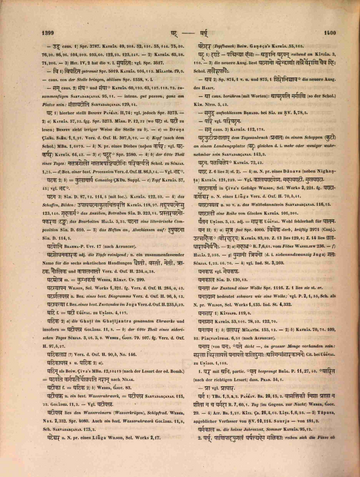
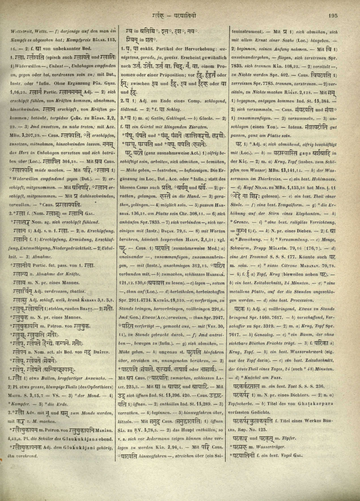
ghaṭa — 1〉 *Adj. — a〉 sich abmühend, eifrig beschäftigt mit (Loc.). — b〉 = ghaṭāsyāsti gaṇa arśādi in der KĀŚ. — 2〉 m. — a〉 Krug, Topf (insbes. zum Schöpfen von Wasser). MBH. 13,141,14. — b〉 der Wassermann im Thierkreise. — c〉 ein best. Hohlmaass. — d〉 Kopf NĪLAK. zu MBH. 1,155,38 hat MED. t. 11 (˚bhede nā śiraḥ gelesen). — e〉 ein best. Theil einer Säule. — f〉 eine best. Tempelform. — g〉 *die Erhöhung auf der Stirn eines Elephanten. — h〉 *Grenze. — i〉 *eine best. religiöse Verrichtung, = kumbha 1〉i〉. — k〉 N. pr. eines Diebes. — 3〉 f. ā — a〉 *Bemühung. — b〉 *Versammlung. — c〉 Menge, Schwarm, Trupp MĀLATĪM. 79,16 (176,7). — d〉 eine Art Trommel S. S. S. 177. Könnte auch ghaṭa m. sein. — e〉 *süsse Zitrone MADANAV. 70,78. — 4〉 f. ī — a〉 Topf, Krug (bisweilen neben ghaṭa). — b〉 ein best. Zeitabschnitt, 24 Minuten. — c〉 *eine metallenen Platte, auf der die Stunden angeschlagen werden. — d〉 eine best. Procession.
Original text · German · Word type unspecified
ghaṭa , Z. 11 lies 3〉 st. 2〉. ghaṭām aṭ sich rechtfertigen lassen BHADRAB. 4,92. BHADRAB. 4,94. [Nachtrag, Band 5]
Original text · German · Word type unspecified
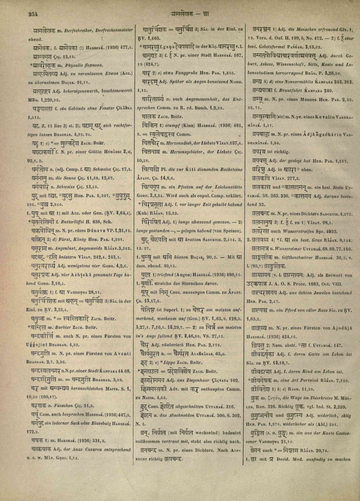
ghaṭa II. 5. [Nachtrag, Band 7]
Apte 1890 substantive masculine
Original text · English · substantive masculine
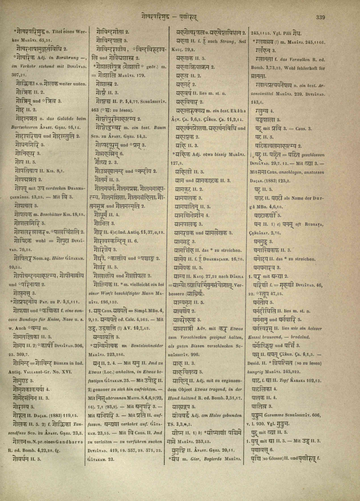
ghaṭaḥ [ghaṭa ac] 1 A large earthen water-jar, pitcher, jar, watering-pot; kūpe paśya payonidhāvapi ghaṭo gṛhṇāti tulyaṃ jalaṃ Bh. 2. 49. 2 The sign Aquarius of the zodiac (also called kuṃbha). 3 An elephant's frontal sinus. 4 Suspending the breath as a religious exercise. 5 A measure equal to 20 droṇas. 6 A part of a column. 7 A border. 8 A peculiar form of a temple. Comp. — āṭopaḥ covering for a carriage or any article of furniture. — udbhavaḥ, -jaḥ, -yoniḥ, -saṃ bhavaḥ epithets of the sage Agastya. — ūdhas f. (forming ghaṭodhnī) a cow with a full udder; gāḥ koṭiśaḥ sparśayatā ghaṭodhnīḥ R. 2. 49. — karparaḥ 1 N. of a poet. 2 a piece of a broken jar, pot-sherd; jīyeya yena kavinā yamakaiḥ pareṇa tasmai vahaṃyamudakaṃ ghaṭakarpareṇa Ghaṭ. 22. — kāraḥ, -kṛt m. a potter. — grahaḥ a water-bearer. — dāsī a procuress; cf. kuṃbhadāsī. — paryasanaṃ the ceremony of performing the funeral rites of a patita or apostate (who is unwilling to go back to his caste &c.) during his very life-time. — bhedanakaṃ an instrument used in making pots. — rājaḥ a water-jar of baked clay. — rathāpanaṃ placing a water-pot as a type of Durgā.
Cappeller 1887 substantive masculine
Original text · German · substantive masculine
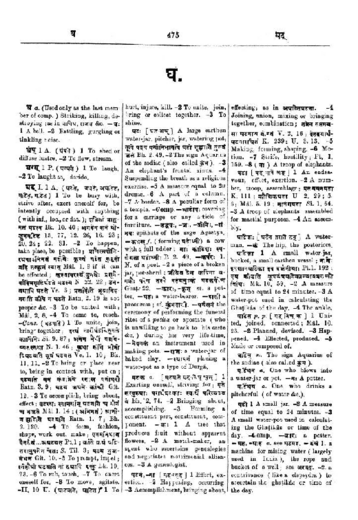
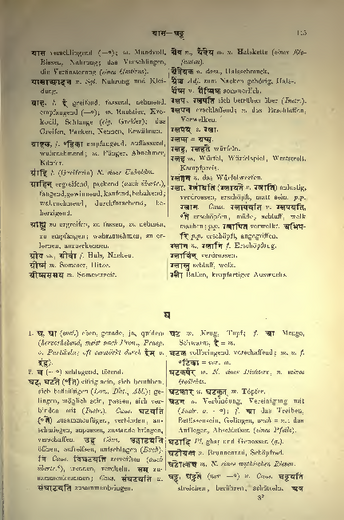
ghaṭa m. Krug, Topf; f. ā Menge, Schwarm, ī = m.
Burnouf 1866 substantive masculine
Original text · French · substantive masculine
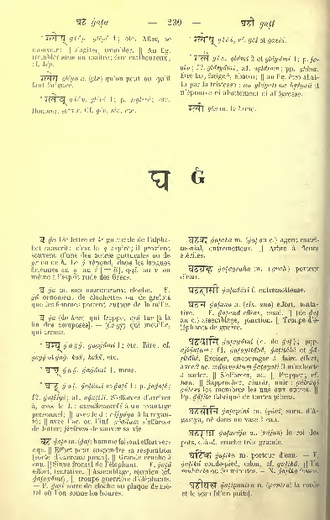
ghaṭa ghaṭa m. (ghaṭ) homme faisant effort vers qqc. Effort pour suspendre sa respiration [sorte d'exercice pieux]. Grande cruche à eau. Sinus frontal de l'éléphant. — F. ghaṭā effort, tentative. Assemblage, réunion (cf. ghaṭayāmi); troupe guerrière d'éléphants. — F. ghaḷī sorte de cloche ou plaque de métal où l'on sonne les heures.
Occurrences in source texts (12)
DYS 4 occurrences
HP 3 occurrences
SiSa 3 occurrences
Continue with AYI Free
Image source: AYI archive.