

svasthānaṃ gacchati prāṇaḥ †sūryāṅge manasā tathā† MBHDL2026 ] svasthāne sthiratām eti pavano manasā saha NS1882
sadā kāyo MBHDL2026 ] mahākāyo NS1882
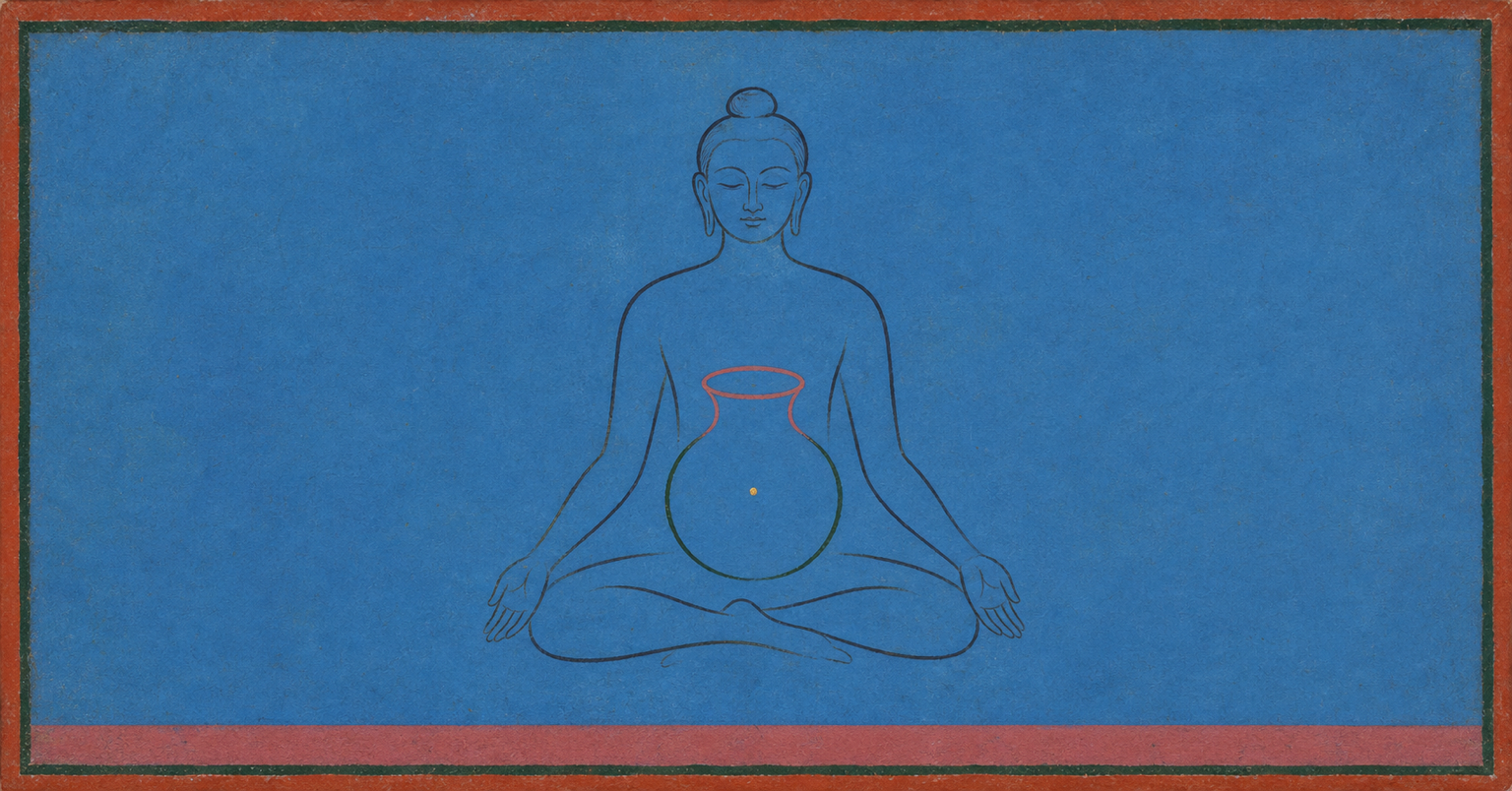
Mind and Kuṇḍalinī are to be absorbed reciprocally into one another: the mind rests in the power and the power in the mind. Brahmānanda adds that the actual task is to stabilize discriminative knowledge and contemplate the supreme state. The bodily model and the practice of consciousness are thus explicitly related to one another.
tad dhyāyet MBHDL2026 ] dhārayet NS1882
Kha, unlimited space, serves as an image of Brahman. One first meditates with the statements “I am Brahman” and “Brahman is I”; afterward, even this conceptual meditation is to be abandoned. Brahmānanda thus describes a path from a corrective identification to a state without mental construction.
For Brahmānanda, the state is both empty and full: empty because no second thing exists alongside Brahman, and full because Brahman is present within and without. The image of a pot in space or water explains how apparent limitation can persist without truly dividing the undivided ground.
saṃkalpa-mātra-kalanaiva jagat samagraṃ saṃkalpa-mātra-kalanā hi mano-vilāsaḥ | Analysis ▾ Analysis ▴
saṃkalpam etam ata utsṛja nirvikalpaṃ āśritya niścayam avāpnuhi rāma śāntim ||11*23|| Analysis ▾ Analysis ▴
With a quotation from the Yoga Vāsiṣṭha tradition, Brahmānanda explains the external and internal worlds as constructions of thought. The self in Nirvikalpa is free from the oppositions of agent and experiencer and from distinctions of time, place, and objects. The statement aims at the end of conceptual separation, not at denying ordinary experience on its own level.
saṃkalpam etam ata MBHDL2026 ] saṅkalpamātramatim NS1882
The subsequent images of camphor in fire and salt in water explain the same movement: the mind dissolves into the self and loses its independent form. Since, according to Brahmānanda, the known, the process of knowing, and the knowing mind are all mental formations, duality ends when they disappear; Kaivalya denotes what does not vanish with them.
For Brahmānanda, Laya is not already present when a sense object is temporarily forgotten. What matters is that the underlying Vāsanās, ingrained tendencies, do not arise again. The commentary thus shifts the emphasis from the momentary absence of a thought to the lasting calming of its causes.
Continue with AYI Free
Illustrations: AI-generated.

Please log in to write a message. Go to login
No messages yet.