

kanda कन्द – root bulb; kanda
substantive masculine · substantive neuter · Word type unspecified
Dictionary sources
AYI dictionary substantive neuter
root bulb; kanda
Cappeller 1891 substantive masculine
Original text · English · substantive masculine
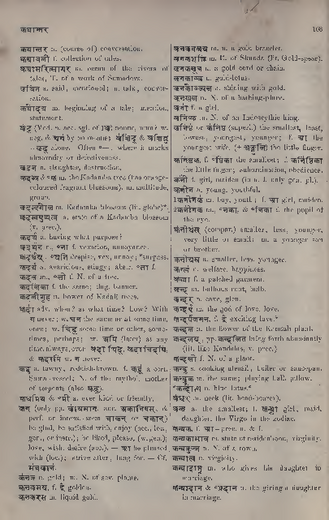
kanda ·m. bulbous root, bulb.
Monier-Williams 1872 substantive masculine · substantive neuter
Original text · English · substantive masculine · substantive neuter
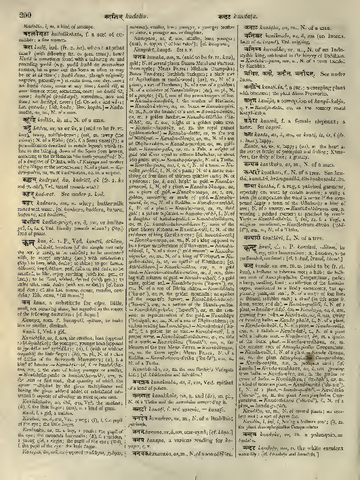
kanda kanda, as, am, m. n. (said to be fr. rt. kan), a bulbous or tuberous root; a bulb; the bulb- ous root of Amorphophallus Campanulatus; garlic; a lump, swelling, knot; an affection of the feminine organ, considered as a fleshy excrescence, but ap- parently prolapsus uteri; N. of a metre of four lines of thirteen syllables each; a cloud (in this sense fr. kam, water, and da).
Petersburger 1855 substantive masculine · substantive neuter · Word type unspecified
Original text · German · substantive masculine · substantive neuter
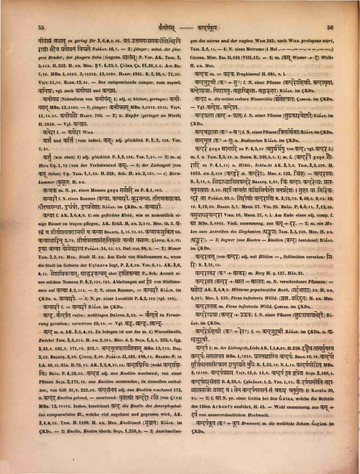
kanda m.n. AK. 3,6,4,35. Zu belegen ist nur das m. 1〉 Wurzelknolle, Zwiebel TRIK. 3,3,204. H. an. 2,224. MED. d. 2. SUŚR. 1,5,1. fgg. SUŚR. 1,225,1. SUŚR. 2,43,9. fgg. SUŚR. 2,165,6. SUŚR. 2,171,16. fgg. SUŚR. 2,252,7. kandamūlaphalāśinām MBH. 13,712. DAŚ. 2,33. BHARTṚ. 3,26. ŚĀNTIŚ. 2,20. PAÑCAT. II, 161. PAÑCAT. II,188,12. BRAHMA-P. in LA. 49,18. SĀH. D. 75,11. AK. 1,2,3,37. AK. 1,2,3,42. kandāṣṭibhiḥ (wohl kandāṣṭhibhiḥ) BHĀG. P. 4,28,36. kandaja adj. aus Knollen wachsend, von einer Pflanze SUŚR. 2,171,15. aus Knollen entstanden, in denselben enthalten, von Gift SUŚR. 87,9. SUŚR. 252,20. kandasaṃbhava adj. aus Knollen wachsend SUŚR. 172,9. kandada Knollen gebend, — ansetzend: vṛkṣāṇāṃ kandado 'si (von Śiva) MBH. 12,10403. Insbes. bezeichnet kanda die Knolle des Amorphophallus campanulatus Bl., welche viel angebaut und gegessen wird, AK. 2,4,5,22. TRIK. H. 1189. H. an. MED. Knoblauch (gṛñjana) RĀJAN._im_ŚKDR. — 2〉 Knolle, Knoten überh. SUŚR. 1,258,9. — 3〉 Anschwellungen des uterus und der vagina WISE 383; nach WILS. prolapsus uteri, TRIK. 2,6,14. — 4〉 N. eines Metrums (4 Mal ⏑ – – ⏑ – – ⏑ – – ⏑ – – ⏑) COLEBR. Misc. Ess. II, 161 (COLEBR. Misc. Ess. VIII, 13). — 5〉 m. (kam Wasser + da) Wolke H. an. MED.
Original text · German · Word type unspecified
kanda 1〉 MBH. 12,10403 liest die ed. Bomb. richtig vṛkṣāṇāṃ kakudo 'si. — Vgl. ānanda˚, mahā˚, rakta˚, māṃsakandī.
Böhtlingk 1879 substantive masculine · substantive neuter · Word type unspecified
Original text · German · substantive masculine · substantive neuter
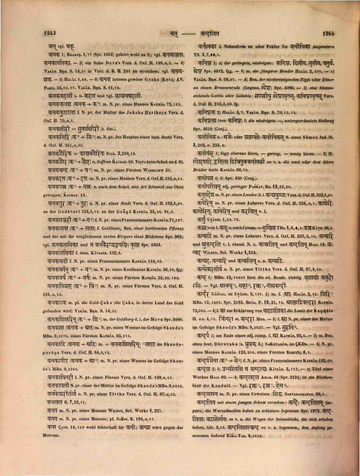
1. kanda — 1〉 m. *n. — a〉 Wurzelknolle, Zwiebel. — b〉 *die Knolle von Amorphophallus campanulatus. — c〉 *Knoblauch. — d〉 Knolle, Knoten überh. — e〉 Anschwellungen des uterus und der vagina. — f〉 ein best. Metrum. — g〉 ein best. Tact S. S. S. 213. — 2〉 f. ī in māsa˚.
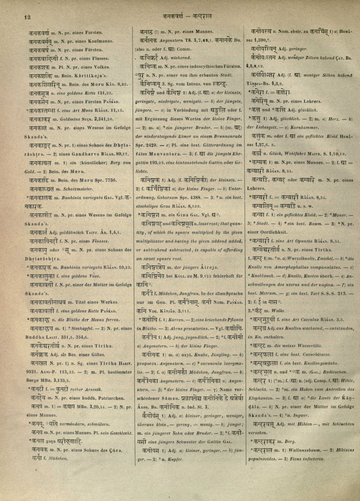
Original text · German · Word type unspecified
1. kanda Z. 6, lies māṃsa˚. [Nachtrag, Band 6]
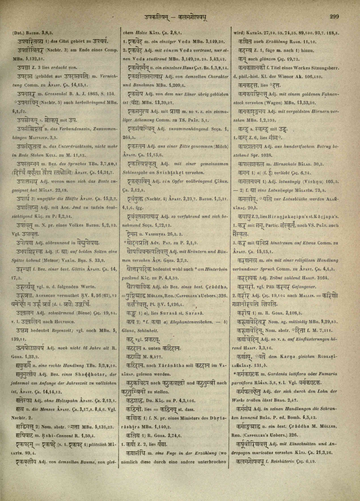
Original text · German · Word type unspecified
1. kanda II. 6. N. pr. eines Fürsten Festgr. 17. [Nachtrag, Band 7]
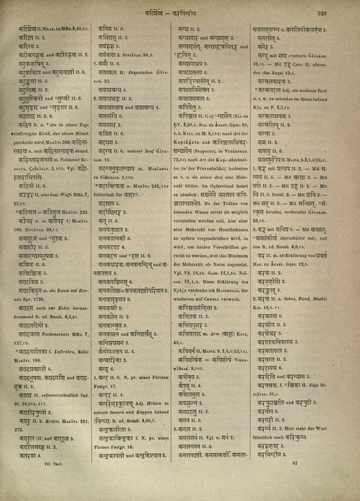
Cappeller 1887 substantive masculine
Original text · German · substantive masculine
kanda m. Wurzelknolle, Zwiebel.
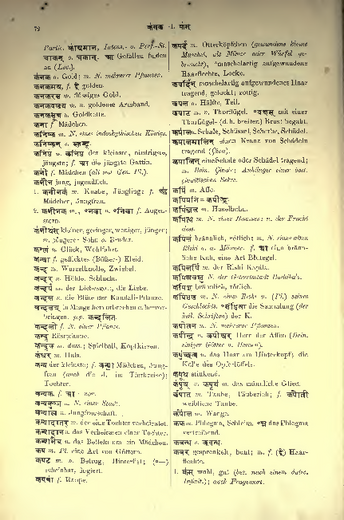
Burnouf 1866 substantive masculine · substantive neuter
Original text · French · substantive masculine · substantive neuter
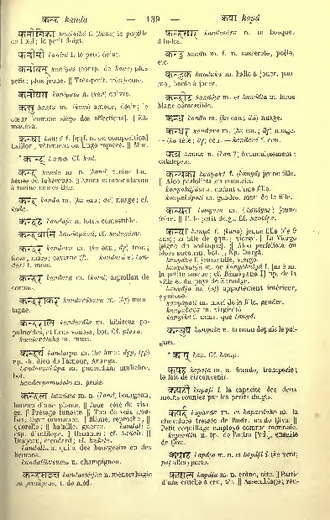
kanda kanda m. n. (kand) racine bulbeuse ou tubéreuse. Arum campanulatum à racine comestible.
Original text · French · substantive masculine
kanda kanda m. (ka eau; dā) nuage; cf. kada.
Occurrences in source texts (11)
GoS 2 occurrences
HP 3 occurrences
SiSa 6 occurrences
SiSa 5.77-5.81: Kanda und Hauptnāḍīs 2 occurrences
Direct occurrences
SiSa 5.132-5.143: Innere Vārāṇasī 2 occurrences
Direct occurrences
-
SiSa 5.135 Segment 10
-
SiSa 5.140 Segment 11
Continue with AYI Free
Image source: AYI archive.