

piṇḍa पिण्ड – body
substantive feminine · substantive masculine · substantive neuter · Word type unspecified
Dictionary sources
AYI dictionary substantive masculine · substantive neuter
Cappeller 1891 substantive masculine
Original text · English · substantive masculine
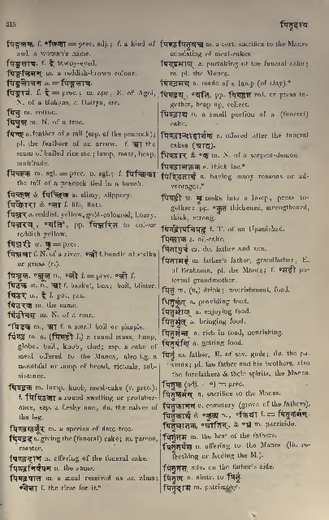
píṇḍa ·m. n. (piṇḍī f.) a round mass, lump, globe, ball, knob, clod; esp. a cake of meal offered to the Manes, also i.g. a mouthful or lump of bread, victuals, subsistence.
Monier-Williams 1872 substantive masculine · substantive neuter
Original text · English · substantive masculine · substantive neuter
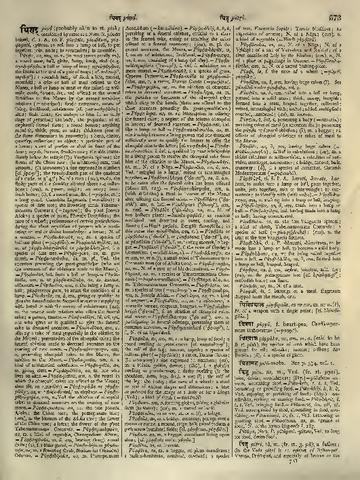
Piṇḍa, as, am, m. n. (in most senses usually m.), a round mass, ball, globe, lump, knob, clod (e. g. ayaḥ-piṇḍa, a ball or lump of iron; agni-piṇḍau, the knobs at the end of a pair of tongs; cf. netra-p˚, mṛt-p˚); a roundish lump of food, a bite, morsel, mouthful; a cake or ball of meal offered to the Manes, a ball or lump of meat or rice mixed up with milk, curds, flowers, &c., and offered at the several Śrāddhas to the Manes by the nearest surviving relations (= ni-vāpa); food; sustenance, means of living, livelihood, subsistence [cf. para-piṇḍāda]; alms; flesh, meat; the embryo or fetus in an early stage of gestation; the body; the projection of an elephant's frontal sinus; a round button; anything roundish, thick, gross, or solid; thickness (one of the three dimensions in geometry); a heap, cluster, quantity, collection; an object; a particular part of a house; a sort of portico or shed in front of the door; myrrh, incense, frankincense; the side imme- diately below the armpit (?); Vangueria Spinosa; the flower of the China rose; (in arithmetic) sum, total amount; (in astronomy) a sine expressed in numbers [cf. jyā-p˚]; the twenty-fourth part of the quadrant of a circle, or 3° 45; N. of a man; (au), m. du. the fleshy parts of the shoulder situated above the collar- bone; (am), n. power, might; an army; iron; fresh butter; (ī), f. a round mass, &c. (= piṇḍa, m.); a long gourd, Cucurbita Lagenaria (= a-lābu); a species of date tree; the flowering shrub Tabernæ- montana Coronaria (= tagara); the plant Jonesia Aśoka; a species of palm, Phœnix Dactylifera; the nave of a wheel; performance of certain gesticulations during the silent repetition of prayers while medi- tating on real or divine knowledge; a house; N. of a woman.
Petersburger 1855 substantive masculine · substantive neuter · Word type unspecified
Original text · German · substantive masculine · substantive neuter
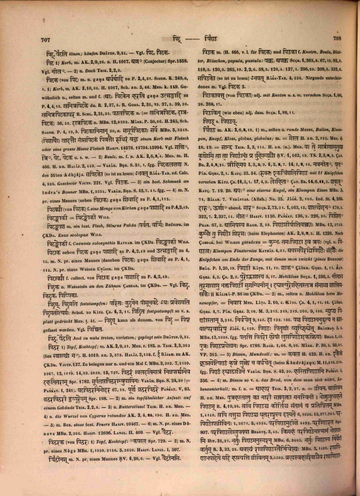
píṇḍa m. AK. 3,6,2,18. 1〉 m., selten n. runde Masse, Ballen, Klumpen, Knopf, Kloss, globus, globulus; m. = gola H. an. 2,123. MED. ḍ. 18. MED. ḍ. 19. = sāndra TRIK. 3,3,114. H. an. (n.). MED. yā te̱ gātrā̀ṇāmṛtu̱thā kṛ̱ṇomi̱ tā tā̱ piṇḍā̀nā̱ṃ pra jùhomya̱gnau ṚV. 1,162,19. TS. 2,3,8,2. ŚAT. BR. 2,4,2,24. vrīhimaya ŚAT. BR. 5,5,5,9. ŚAT. BR. 6,5,3,7. ŚAT. BR. 14,1,2,18. navanīta˚, ghṛta˚ PĀR. GṚHY. 2,1. KAUŚ. 52. KAUŚ. 54. (rukma) ekaviṃśatipiṇḍa mit 21 Knöpfchen versehen KĀTY. ŚR. 16,5,1. KĀTY. ŚR. 17,4,2. lohita˚ ŚAT. BR. 14,6,11,3. śakṛt˚ KAUŚ. 7. KAUŚ. 19. KAUŚ. 20. ayaḥ˚ eine eiserne Kugel, ein Klumpen Eisen MBH. 3,71. BĀLAB. 7. VEDĀNTAS. (Allah.) No. 35. YĀJÑ. 2,105. Ind. St. 4,266. dāru˚, ūrṇā˚ ebend. sāra˚ SUŚR. 2,73,21. SUŚR. 1,163,13. śālyodana˚ SUŚR. 170,3. SUŚR. 322,7. SUŚR. 2,357,14. māṃsa˚ HARIV. 1130. PAÑCAT. 136,2. PAÑCAT. 226,20. piśita˚ PRAB. 67,2. āmiṣasya RAGH. 2,59. piṇḍaśīrṣātivakttrāḥ MBH. 12,3749. kumbhau tu piṇḍau śirasaḥ (beim Elephanten) AK. 2,8,2,5. H. 1226. Nach ŚABDAC._bei_WILSON geradezu = kumbha. tamaḥpiṇḍā iva trayaḥ (vgl. u. piṇḍatva) Klumpen Finsterniss KATHĀS. 4,81. ayasmayairagnipiṇḍaiḥ saṃdaṃśaiḥ die Knöpfchen am Ende der Zange, mit denen man zwickt (pince BURNOUF) BHĀG. P. 5,26,19. piṇḍī KĀṬH. 11,10. śāka˚ ŚĀṄKH. GṚHY. 1,11. ĀŚV. GṚHY. 4,3. ŚR. 2,3. puroḻāśasya ŚR. 5,17. Mehlkloss SUŚR. 1,236,3. nītāya turagāyāśu bhaktapiṇḍīṃ sugandhinīm . dadyātpurohitastatra saṃmantrya śāntimantrakaiḥ .. KĀLIKĀ-P. 86_im_ŚKDR. — 2〉 m., selten n. Mehlkloss beim Manenopfer, = nivāpa MED. LĀṬY. 2,10,4. KĀTY. ŚR. 4,1,11. KĀTY. ŚR. 4,1,16. ŚĀṄKH. GṚHY. 4,7. PĀR. GṚHY. 3,10. M. 3,215. M. 3,218. M. 3,219. M. 3,260. M. 9,186. nyupya piṇḍāṃstān M. 3,216. nirvapet M. 9,140. dā M. 132. M. 136. pañca piṇḍānanuddhṛtya na snāyātparavāriṣu YĀJÑ. 1,159. piṇḍaḥ pitṝṇāṃ vyucchidyet BRĀHMAṆ. 3,8. MBH. 13,5938. fgg. patanti pitaro hyeṣāṃ luptapiṇḍodakakriyāḥ BHAG. 1,42. putraḥ piṇḍaprayojanaḥ Spr. 1788. RAGH. 1,66. RAGH. 8,26. MĀRK. P. 30,5. MĀRK. P. 50,91. VP. 315. — 3〉 Bissen, Mundvoll; m. = kavala H. 425. H. an. ekaikaṃ hrāsayetpiṇḍaṃ kṛṣṇe śukle ca vardhayet (beim Cāndrāyaṇa) M. 11,216. M. 11,218. fgg. piṇḍaṃ dadyādvājine VARĀH. BṚH. S. 43,20. hastipiṇḍāni PAÑCAT. I, 356. — 4〉 m. Bissen so v. a. das Brod, von dem man sich nährt, Lebensunterhalt; m.f.n. = āhāra TRIK. 3,2,27. n. = jīvana, ājīvana H. an. MED. putrahastāttu kā nārī sattvayuktā manasvinī . bhoktumutsahate piṇḍam R. 4,19,26. tvayi piṇḍaśca kīrtiśca saṃtānaṃ ca pratiṣṭhitam MBH. 1,4148. tvayi tantuśca piṇḍaśca dhṛtarāṣṭrasya dṛśyate MBH. 6,1626. MBH. 15,977. MBH. 15,981. parapiṇḍopajīvinaḥ MBH. 1,5671. MBH. 5,4534. parapiṇḍamudīkṣe MBH. 1,4492. parapiṇḍarata Spr. 807. parapiṇḍalolupatayā BHARTṚ. 3,48. kimahaṃ parapiṇḍenātmānaṃ bhojayāmi HIT. 31,21. bhartuḥ piṇḍamanusmaran MBH. 6,3403. bhartuḥ piṇḍasya nirveśaṃ kartum R. 3,33,25. avaśyaṃ rājapiṇḍastairniveśyaḥ MBH. 3,1426. rājapiṇḍabhayādete yadi hāsyanti jīvitam MBH. 5,4362. brahmasvahāriṇaścaiva rājapiṇḍāpahāriṇaḥ MBH. 7,702. bhartṛ˚ PAÑCAT. 71,4. saphalīkṛtabhartṛpiṇḍastapasvī (so ist wohl zu lesen) MĀLAV. 68,18. piṇḍaspṛhāṃ parityajya RĀJA-TAR. 5,133. — 5〉 m. du. die auf der Achsel über dem Schlüsselbein her liegenden fleischigen Theile; = dehaikadeśa MED. dvau cāsya piṇḍāvadhareṇa kaṇṭhādajātaromau sumanoharau ca MBH. 3,10053. — 6〉 m.n. Körper, Leib; = aṅga, deha TRIK. 3,3,114. H. 564. H. an. MED. HALĀY. gosadṛśa˚ TARKAS. 49. ekāntavidhvaṃsiṣu madvidhānāṃ piṇḍeṣvanāsthā khalu bhautikeṣu RAGH. 2,57. prāṇapiṇḍasamudāya ŚAṂK._zu_BṚH. ĀR. UP. S. 193. ˚grahaṇa BṚH. ĀR. UP. S. 247. BṚH. ĀR. UP. S. 97. BṚH. ĀR. UP. S. 129. BṚH. ĀR. UP. S. 253. BṚH. ĀR. UP. S. 328. — 7〉 m. Myrrhe (vgl. gola) AK. 2,9,105. H. 1063. H. an. MED. RATNAM. 145. Weihrauch H. an. MED. eine andere Art Räucherwerk: gugguluvālakamustānakhaśarkarāḥ kramāddhūpāḥ . anyo vālakamāṃsīturuṣkanakhacandanaiḥ piṇḍaḥ .. VARĀH. BṚH. S. 76,16. — 8〉 die Blüthe der chinesischen Rose, m. H. an. n. MED. — 9〉 m. Vangueria spinosa Roxb. (vgl. piṇḍītaka) RĀJAN._im_ŚKDR. — 10〉 ein best. Theil eines Hauses, m. TRIK. 3,3,114. MED. n. H. an. — 11〉 n. Eisen AK. 2,9,98. H. 1037. H. an. MED. — 12〉 m. Fleisch DHAR._bei_WILS. — 13〉 n. frische Butter ŚABDAC._bei_WILS. — 14〉 m. der Fötus in der ersten Zeit der Schwangerschaft RATNAM._bei_WILS. — 15〉 Umfang (thickness HALL) ĀRYABHAṬṬA_in_Journ. of the Am. Or. S. 6,558. aśītisahasrādhikayojanalakṣapiṇḍāyāṃ ratnaprabhāyām, daśottarayojanaśatapiṇḍe nabhodeśe Schol. zu H. 94. — 16〉 m. Menge, Haufen; = vṛnda H. an.; vgl. piṇḍay. — 17〉 m. Summe (vgl. piṇḍay) WILS. — 18〉 = bala Macht, Heer; m. MED. n. H. an. — 19〉 m. ein in Zahlen ausgedrückter Sinus SŪRYAS. 2,16. SŪRYAS. 2,32. — 20〉 m. N. pr. eines Mannes gaṇa naḍādi zu P. 4,1,99. — 21〉 f. ī́ gaṇa gaurādi zu P. 4,1,41. a〉 Ballen u. s. w. s. u. 1. — b〉 Flaschengurke (alābu). — c〉 eine Art Dattelbaum (kharjūrabheda, kharjūrī). — d〉 Tabernaemontana coronaria R. Br., eine Species der Tab., (tagara, piṇḍītagara) H. an. MED. — e〉 = piṇḍikā Nabe RĀYAM._zu_AK. ŚKDR. — f〉 = jñānanirūpaṇārthakopanyāsaḥ DHAR._im_ŚKDR. performance of certain gesticulations, accompanying the silent repetition of prayers, etc. in meditation on real or divine knowledge WILS. — h〉 Haus WILS.; diese Bed. ist wohl aus piṇḍīśūra = geheśūra geschlossen worden. — i〉 N. pr. eines Weibes gaṇa kurvādi zu P. 4,1,151. — Vgl. jyā˚, jyāṃrdha˚, tarku˚, dvārapiṇḍī, netra˚, parapiṇḍāda, mṛtpiṇḍa, śaka˚, sa˚.
Original text · German · Word type unspecified
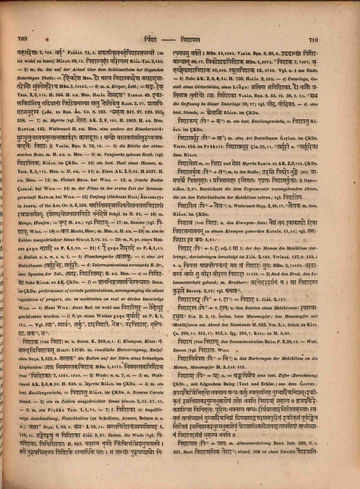
piṇḍa 1〉 tūla˚ LA. (II) 90,21. piṇḍī P. 1,4,52, Vārtt. 8, Sch. Pille Verz. d. Oxf. H. 283,12 v. u. ˚vidhi Verz. d. Oxf. H. 311,b,23. — 2〉 ekapiṇḍaśrāddha Verz. d. Oxf. H. 294,b,32. — 6〉 BHĀG. P. 12,3,2. ˚dhāraṇa SARVADARŚANAS. 99,8. ˚pātana SARVADARŚANAS. 98,3. ˚sthairya SARVADARŚANAS. 97,11. fg. SARVADARŚANAS. 99,20. Körper im weitesten Sinne, jedes Ding von bestimmten Dimensionen SARVADARŚANAS. 16,6. BHĀṢĀP. 123.
Böhtlingk 1879 substantive feminine · substantive masculine · substantive neuter
Original text · German · substantive feminine · substantive masculine · substantive neuter
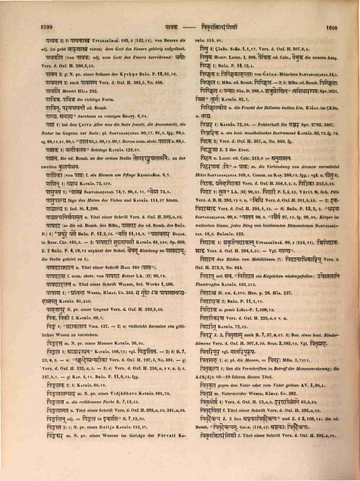
píṇḍa — 1〉 m. f. (piṇḍī ĀPAST. ŚR. 19,26) und n. (selten) — a〉 eine runde Masse, Klumpen, Knopf, Kloss, globus, globulus; Ballen, Auswuchs CARAKA. 6,17. kuḍyasya piṇḍaḥ patati es fällt ein Stück von der Wand Chr. 221,10. — b〉 Bissen so v. a. das Brod, von dem man sich nährt, Lebensunterhalt GAUT. 12,27. 22,35. *f. — 2〉 m. n. (selten) — a〉 Mehlkloss beim Manenopfer. — b〉 Bissen, Mundvoll. — c〉 Körper, Leib: Person [Page4-081-b] Chr. 276,8. *m. *n. — d〉 Körper im weitesten Sinne, jedes Ding von bestimmter Dimension VAJRACCH. 45,4. *n. — e〉 *die Blüthe der chinesischen Rose. — f〉 *ein best. Theil des Hauses. — g〉 *Macht, Heer. — 3〉 m. — a〉 Du. die auf der Achsel über dem Schlüsselbein her liegenden fleischigen Theile. — b〉 Du. *die beiden Erhöhungen auf der Stirn des Elephanten, die bei der Brunstzeit stark anschwellen. — c〉 *der Fötus in der ersten Zeit der Schwangerschaft. — d〉 ein best. Räucherwerk VARĀH. BṚH. S. 77,9. Nach den Lexicographen Myrrhe und Olibanum RĀJAN. 6,116. — e〉 *Fleisch. — f〉 *Vangueria spinosa. — g〉 *Menge, Haufe. — h〉 Totalsumme J. A. O. S. 6,558. Comm. zu H. 94. Nur am Ende eines adj. Comp. (f. ā) — i〉 ein in Zahlen ausgedrückter Sinus. — k〉 Laut, Ton S. S. S. 5,2. — l〉 *N. pr. eines Mannes. — 4〉 *f. ā eine Moschusart RĀJAN. 12,51. — 5〉 f. piṇḍī — a〉 S. 1〉a〉 b〉. — b〉 Pille. — c〉 *Nabe. — d〉 ein best. Baum DAŚAK. 35,8. nach den Lexicographen Tabernaemontana coronaria oder eine andere Species und eine Art Dattelbaum. — e〉 *Flaschengurke. — f〉 *performance of certain gesticulations, accompanying the silent repetition of prayers, etc. in meditation on real or divine knowledge. — g〉 *N. pr. eines Weibes. — 6〉 *n. — a〉 Eisen. — b〉 Stahl RĀJAN. 13,46. — c〉 frische Butter.
Cappeller 1887 substantive masculine · substantive neuter
Original text · German · substantive masculine · substantive neuter
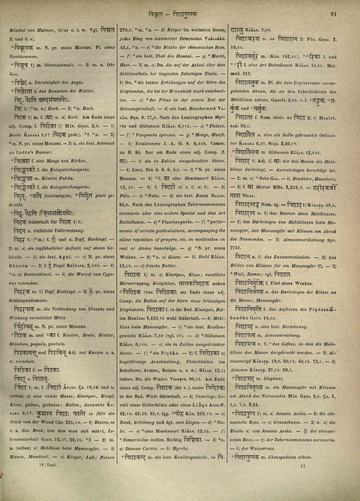
píṇḍa m. n. (piṇdī) f.) Klumpen, Knopf, Stück, Bissen, Brot, Lebensunterhalt. m. (n.) Mehlkloß (r.) Körper, Leib; Person, Individuum (ph.).
Burnouf 1866 substantive masculine
Original text · French · substantive masculine
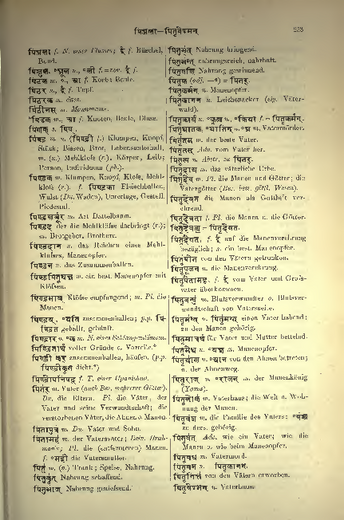
piṇḍa piṇḍa m. tas, amas; boule; boulette de riz; sorte de gâteau que l'on offre aux Ancêtres dans un śrāddha; en gén. mets, aliment préparé; bouchée; apophyse frontale de l'éléphant; l'embryon au commencement de la gestation [? le placenta]; myrrhe, encens en grains. Au fig. somme, total; le corps; la partie qui est au-dessous de l'aisselle; force, pouvoir. Portique ou auvent à la porte d'une maison. Hibiscus rose-de-Chine. — N. aliments, subsistance, moyens de vivre. Fer. Beurre frais. — F. piṇḍī moyeu de roue. Maison. Longue gourde. Sorte de posture pieuse d'une personne qui médite. piṇḍaka m. apophyse frontale de l'éléphant. Encens. piṇḍakharjūra m. [f. ī] esp. de dattier. piṇḍagosa m. myrrhe. piṇḍapāta m. (pat) aumône [m à m. jet de boulettes de riz. piṇḍapātika a. qui vit d'aumônes, Bd. piṇḍapāda m. éléphant. [Page411-2] piṇḍapuṣpa n. fleur de l'aśoka, du lotus, du tabernæmontana; rose-de-Chine. piṇḍapuṣpaka m. chénopode blanc, bot. piṇḍaphalā f. gourde amére, bot. piṇḍamustā f. cyperus pertenuis, bot. piṇḍamūla n. carotte. piṇḍala m. digue, chaussée. piṇḍasa m. (? as) mendiant qui vit d'aumônes. piṇḍāta m. encens en grains. piṇḍābhra n. (abhra) grêle, nuage de grèle. piṇḍāra m. (ṛ) mendiant qui vit d'aumônes. Gardien de buffles, bouvier. Trewia nudiflora, bot. piṇḍālu m. esp. de racine comestible et médicinale. piṇḍi f. (sfx. i) moyeu de roue. piṇḍika m. np. d'Anātha-Piṇḍika ou Piṇḍada, marchand buddhiste célèbre pour sa charité. — F. moyeu de roue. Cou-de-pied [? cheville du pied]. piṇḍila m. digue, chaussée. Arithméticien; astrologue (piṇḍa somme). — F. cucumis madraspatanus, bot. piṇḍīra a. (sfx. īra) qui fait boule, sec, sans suc; sans saveur. — S. m. os de sèche. Grenade. piṇḍīśūra m. jocrisse, m à m. héros-depâtisserie (?). piṇḍodakakriyā f. (udaka; kṛ) l'offrande des gâteaux et de l'eau. piṇḍoli f. restes d'un repas, miettes.
Occurrences in source texts (9)
HP 3 occurrences
PJH 1 occurrence
SiSa 4 occurrences
VBT 1 occurrence
Continue with AYI Free
Image source: AYI archive.