

saṃskāra संस्कार – impression; imprint; latent disposition
substantive masculine
Dictionary sources
AYI dictionary substantive masculine
impression; imprint; latent disposition
Derived from
Cappeller 1891 substantive masculine
Original text · English · substantive masculine
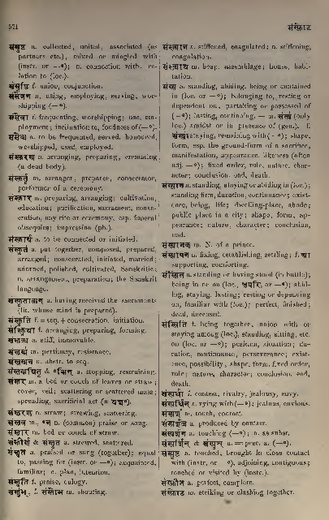
saṃskāra ·m. preparing, arranging; cultivation, education; purification, sacrament, consecration, any rite or ceremony, esp. funeral obsequies; impression (ph.).
Monier-Williams 1872 substantive masculine
Original text · English · substantive masculine
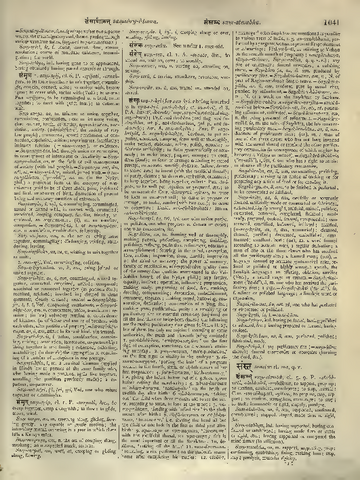
Saṃs-kāra, as, m. forming well or thoroughly, making perfect, perfecting, completing, finishing, polishing, refining, perfection, refinement, education, accomplishment; forming in the mind, conception, idea, notion; impression, form, mould; impression on the mind or memory; the power of memory, faculty of recollection, self-reproductive quality (one of the twenty-four qualities enumerated in the Vai- śeṣika branch of the Nyāya phil.); any faculty, capacity, instinct; operation, influence; preparation, making ready, preparation of food, &c., cooking, dressing, compounding; decoration, embellishment, ornament, elegance; making sacred, hallowing, con- secration, dedication; consecration of a king, &c.; making pure, purification, purity; a sanctifying or purificatory rite or essential ceremony (enjoined on all the first three or twice-born classes; the following are the twelve purificatory rites given in Manu II. 27, but of these ten only are enjoined according to some authorities, the tenth and eleventh being omitted: 1. garbhādhāna, ‘embryo-reception,’ on the first sigh of conception, sometimes on a woman's attain- ing maturity: 2. puṃ-savana, ‘male-production,’ on the first signs of vitality in the embryo: 3. sī- mantonnayana, ‘parting the hair’ of a pregnant woman in the fourth, sixth, or eighth month of her first pregnancy: 4. jāta-karman, ‘birth-ceremony,’ i. e. giving the infant butter out of a golden spoon before cutting the navel-string: 5. nāma-karman or nāma-karaṇa, ‘naming-rite’ on the tenth or twelfth day after birth: 6. niṣkramaṇa, ‘taking out’ the child when three months old to see the sun or, according to some, to look at the moon: 7. an- na-prāśana, ‘feeding with boiled rice’ in the sixth month after birth: 8. cūḍā-karman or cūḍā-ka- raṇa, ‘tonsure-rite,’ i. e. shaving the head all but the cūḍā or one lock in the first or third year after birth: 9. upa-naya or upa-nayana, ‘investiture’ with the sacrificial thread, see upa-naya; this is the most important of all the Saṃskāras: 10. ke- śānta, ‘cutting off the hair:’ 11. sam-āvartana, ‘returning,’ a rite performed on the student's return home after completing his studies: 12. vivāha, ‘marriage:’ other Saṃskāras are mentioned as peculiar to various parts of India, e. g. an-avalobhana, per- formed by a pregnant woman to prevent disappointment or miscarriage; Viṣṇu-bali, an offering to Viṣṇu on the seventh month of pregnancy; svargārohaṇa, sūrya-vilokana, karṇa-vedha, q. q. v. v.); any rite or ceremony; funeral obsequies; a polishing stone.
Petersburger 1855 substantive masculine
Original text · German · substantive masculine
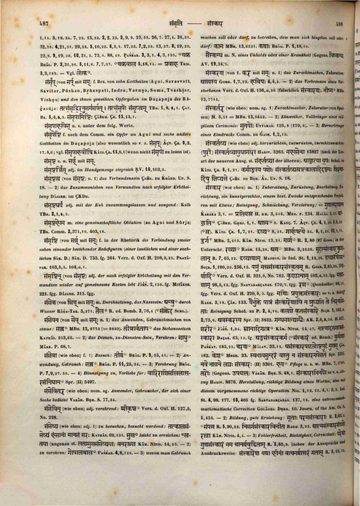
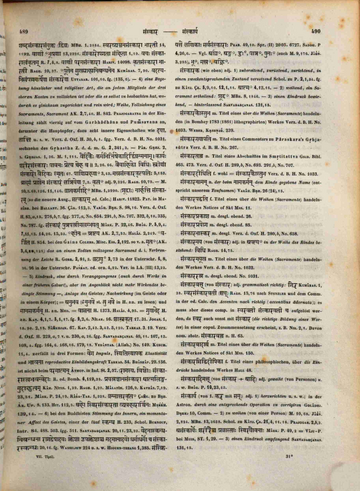
saṃskāra (wie eben) m. 1〉 Zubereitung, Zurüstung, Bearbeitung, Zurichtung, ein kunstgerechtes, einem best. Zwecke entsprechendes Verfahren mit Etwas; Reinigung, Schmückung, Verzierung; = guṇāntarādhāna CARAKA 3,1. = pratiyatna H. an. 3,616. MED. r. 234. HALĀY. 5,57. āhuti˚ ŚĀṄKH. GṚHY. 1,1. ājya˚ ŚĀṄKH. GṚHY. 1,8. KAUŚ. 7. ĀŚV. ŚR. 4,1,20. ĀŚV. ŚR. 5,6,25 (˚tva). KĀTY. ŚR. 1,7,21. dravya˚ KĀTY. ŚR. 8,21. gārhapatye KĀTY. ŚR. 34. KĀTY. ŚR. 6,1,21. KĀTY. ŚR. 12,1,11. durga˚ MBH. 2,615. KĀM. NĪTIS. 13,31. mārga˚ R. 2,80 (R. 2,87 GORR.). in der Unterschr. rathyā˚ RAGH. 15,38. anna˚ MBH. 3,2636. sūdānsaṃskārakuśalān R. 7,65,22. dravyāṇām MADHUS._in_Ind. St. 1,14,26. dravyasaṃyoga˚ SUŚR. 1,190,20. SUŚR. 1,236,13. paśuṃ mantrasaṃskārasaṃskṛtam R. GORR. 2,83,36. svarṇādi˚ Verz. d. Oxf. H. 321,b, No. 762. kuṇḍānām Verz. d. Oxf. H. 105,a,32. fgg. mantrāṇām Verz. d. Oxf. H. 98,b,13. fgg. SARVADARŚANAS. 170,7. fgg. rasa˚ (Quecksilber) SARVADARŚANAS. 99,21. fgg. Verz. d. Oxf. H. 320,b,5. fgg. maṇiḥ prayuktasaṃskāraḥ so v. a. Schliff RAGH. 3,18. ŚĀK. 133. yairbhukte pātraṃ saṃskāreṇāpi na śudhyati te niravasitāḥ Reinigung Schol. zu P. 2,4,10. kalaśe kṛtasaṃskāre SUŚR. 1,163,8. SUŚR. 2,75,6. avaskarasya Spr. (II) 3832. gandhamālyādyaiḥ AK. 2,6,3,36. H. 637. śarīra˚ YĀJÑ. 1,84. snānādigātra˚ KĀM. NĪTIS. 14,47. nātyādṛtagātrasaṃskārā DAŚAK. 63,12. fg. aṅgasaṃskārakarma (˚saṃskāraṃ ed. Bomb.) kurvāṇā PAÑCAT. 185,25. caraṇa˚ MĀLAV. 33,12. asaṃskārapāṭaloṣṭhapuṭaṃ mukham ŚĀK. 182. keśa˚ MEGH. 33. svabhāvasundaraṃ vastu na saṃskāramapekṣate Spr. 3331. nave bhājane lagnaḥ saṃskāraḥ Spr. (II) 5301. haya˚ Pflege u. s. w. MBH. 7,3799. taroḥ (Gegens. upaghāta) VARĀH. BṚH. S. 48,1. saṃskārābhinayau so v. a. Anzug HARIV. 8676. Herstellung, richtige Bildung eines Wortes, eine mit diesem vorgenommene richtige Operation NIR. 1,12. NIR. 1,13. NIR. 4,1. NIR. 5,2. Ind. St. 4,98. Ind. St. 4,177. Ind. St. 10,405. fg. SARVADARŚANAS. 137,15. eine astronomisch-mathematische Correction GOLĀDHY. DṚKK. 10. Journ. of the Am. Or. S. 6,454. — 2〉 Bildung, gute Erziehung: sūtāḥ paramasaṃskārāḥ R. 2,65,2. ˚saṃpanna R. 5,90,22. nisargasaṃskāravinīta RAGH. 3,35. ātmasaṃskārasaṃpanno rājā KĀM. NĪTIS. 4,4. — 3〉 Fehlerfreiheit, Richtigkeit, Correctheit: pareṣāṃ guṇasaṃskāraṃ mama cānarthabuddhitām R. 5,85,5. insbes. der Aussprache und Ausdrucksweise: saṃskāreṇa yathā hīnāṃ vācamarthāntaraṃ gatām R. 5,18,19. śabdasaṃskārasaṃyukta (dvija) MBH. 1,2884. svaravyañjanasaṃskārā bhāratī MBH. 14,1192. vāṇī ˚bhūṣaṇā MBH. 13,2321. saṃskāropagatā saṃhitā MBH. 1,19. vacaḥ saṃskārālaṃkṛtam R. 7,4,8. vāṇī paramasaṃskārā HARIV. 14098. kṛtasaṃskārā bhāratī RAGH. 10,37. ˚pūtena sukhagrāhyanibandhanena KUMĀRAS. 7,90. vadatyabhisaṃpannamārṣeṇa saṃskāreṇa UTTARAR. 101,10. fg. UTTARAR. (135,6). — 4〉 eine Begehung häuslicher und religiöser Art, die an jedem Mitgliede der drei oberen Kasten zu vollziehen ist oder die es selbst zu beobachten hat, wodurch es gleichsam zugerichtet und rein wird; Weihe, Vollziehung eines Sacraments, Sacrament AK. 2,7,40. H. 842. PRAYOGARATNA in der Einleitung zählt vierzig auf vom Garbhādhāna und Puṃsavana an, darunter die Hauptopfer, dazu acht innere Eigenschaften wie dayā, kṣānti u. s. w. Verz. d. Oxf. H. 30,b,1. fgg. Verz. d. B. H. No. 1031. sechzehn des Gṛhastha Z. d. d. m. G. 2,341,3. — PĀR. GṚHY. 2,5. GṚHYAS. 1,36. M. 1,111. vaidikaiḥ karmabhirniṣekādirdvijanmanām . kāryaḥ śarīrasaṃskāraḥ pāvanaḥ pretya ceha ca .. M. 2,26. M. 2,66. vaivāhiko vidhiḥ strīṇāṃ saṃskāro vaidikaḥ smṛtaḥ 67. pāṇigrahaṇa˚ M. 3,43. mantrasaṃskārakṛtpatiḥ M. 5,153. brāhmaṃ prāptena saṃskāraṃ kṣatriyeṇa M. 7,2. kṛta˚ adj. M. 9,326. RAGH. 10,79. — M. 10,3. M. 10,69. M. 10,126. M. 11,146. jātakarmādi˚ MBH. 1,2990. (śūdrāḥ) nārhanti saṃskāram (so die neuere Ausg., satkāram ed. Calc.) HARIV. 11822. PAT._in_MAHĀBH._bei_BALLANT. 36. ŚĀK. 112,3. VARĀH. BṚH. S. 98,16. Verz. d. Oxf. H. 85,a,15. fgg. Verz. d. Oxf. H. 276,b,7. Verz. d. Oxf. H. 277,a, No. 654. fgg. Verz. d. Oxf. H. 291,b, No. 707. Verz. d. Oxf. H. 332,b,10. fgg. Verz. d. Oxf. H. 332,335, No. 787. fg. saṃskāraṃ putrapatnīmalambhayat MĀRK. P. 22,46. BHĀG. P. 5,9,4. BHĀG. P. 7,11,13. BHĀG. P. 7,14,26. BHĀG. P. 7,15,52. ˚hīna = vrātya AK. 2,7,53. HALĀY. 2,249. ˚varjita H. 854. bei den Jaina COLEBR. Misc. Ess. 2,192. so v. a. mṛta˚ (AK. 3,4,18,121) das an einem Todten vollzogene Sacrament d. i. Verbrennung der Leiche R. GORR. 2,81,3. jaṭāyu˚ R. GORR. 2,3,73 in der Unterschr. R. GORR. 6,8,26. R. GORR. 6,8,96 in der Unterschr. PAÑCAT. ed. orn. 4,22. VET. in LA. (III) 13,22. — 5〉 Eindruck, eine durch Vorangegangenes (auch durch Werke in einer früheren Geburt), aber im Augenblick nicht mehr Wirkendes bedingte Stimmung —, Anlage des Geistes; Nachwirkung (im Geiste oder in einem Körper); = anubhava ('nubhave st. tu bhave in H. an. zu lesen) und mānasakarman H. an. MED. = vāsanā H. 1373. HALĀY. 4,95. = guṇabheda H. an. KAṆ. 4,1,7. fg. KAṆ. 5,1,17. fg. KAṆ. 9,2,6. NĪLAK. 16. śāstrakṛta NĪLAK. 17. NĪLAK. 31. YOGAS. 1,18. YOGAS. 1,50. YOGAS. 2,15. SĀṂKHYAK. 67. KAP. 2,42. KAP. 3,43. KAP. 5,120. TARKAS. 3. TARKAS. 19. Verz. d. Oxf. H. 229,a,7 v. u. 230,a,26. fgg. SARVADARŚANAS. 40,11. fgg. SARVADARŚANAS. 107,13. SARVADARŚANAS. 108,4. fgg. SARVADARŚANAS. 164,6. SARVADARŚANAS. 168,16. fgg. SARVADARŚANAS. 179,18. VEDĀNTAS. (Allah.) No. 149. KUSUM. 11,4. zerfällt in drei Formen: vega Impuls, sthitisthāpaka Elasticität und bhāvanā reproductive Einbildungskraft TARKAS. 54. BHĀṢĀP. 29. BHĀṢĀP. 156. ist nicht beim paramātman ĀTMOP._in_Ind. St. 2,57. (rāmasya, viṣṇoḥ) saṃskārāstvabhavanvedāḥ R. ed. Bomb. 6,119,25. prayatnajñānasaṃskārā ātmaliṅgamudāhṛtam KĀM. NĪTIS. 1,29. RAGH. 1,20. MĀLATĪM. 126,9. KATHĀS. 7,19. KATHĀS. 23,51. MĀRK. P. 24,19. RĀJA-TAR. 1,328. janmāntarakṛta˚ ŚAṂK._zu_BṚH. ĀR. UP. S. 133. HIT. 112,5. aho sthirasaṃskāratā vyavahārārthinaḥ MṚCCH. 139,14. — 6〉 bei den Buddhisten Stimmung des Innern, ein momentaner Affect des Geistes, einer der fünf skandha H. 233, Schol. BURNOUF, Intr. 84. fgg. BURNOUF, Intr. 488. BURNOUF, Intr. 503. fgg. BURNOUF, Intr. 511. SARVADARŚANAS. 20,11. SARVADARŚANAS. 23,22. vedanāskandhanibandhanā rāgadveṣādayaḥ kleśā upakleśāśca madamānādayo dharmādharmau ca saṃskāraskandhaḥ SARVADARŚANAS. 20,16. fg. WASSILJEW 224 u. s. w. HIOUEN-THSANG 1,385. saṃskriyante kṣaṇikāḥ sarvasaṃskārāḥ PRAB. 49,10. Spr. (II) 2005. Spr. (II) 6727. SADDH. P. 4,26,6. — Vgl. agni˚, aṅga˚, duḥ˚, pātra˚, punaḥ˚ (auch M. 9,176. YĀJÑ. 3,255), bhū˚, mantra˚, vahni˚.
Böhtlingk 1879 substantive masculine
Original text · German · substantive masculine
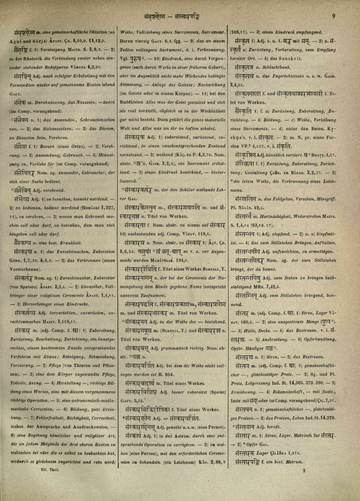
saṃskāra m. (adj. Comp. f. ā) — 1〉 Zubereitung, Zurüstung, Bearbeitung, Zurichtung, ein kunstgerechtes, einem bestimmten Zwecke entsprechendes Verfahren mit Etwas; Reinigung, Schmückung, Verzierung. — 2〉 Pflege (von Thieren und Pflanzen). — 3〉 eine dem Körper zugewandte Pflege, Toilette, Anzug. — 4〉 Herstellung —, richtige Bildung eines Wortes, eine mit diesem vorgenommene richtige Operation. — 5〉 eine astronomisch-mathmatisches Correction. — 6〉 Bildung, gute Erziehung. — 7〉 Fehlerfreiheit, Richtigkeit, Correctheit, insbes. der Aussprache und Ausdrucksweise. — 8〉 eine Begehung häuslicher und religiöser Art, die an jedem Mitgliede der drei oberen Kasten zu vollziehen ist oder die es selbst zu beobachten hat, wodurch es gleichsam zugerichtet und rein wird; [Page7-009-b] Weihe, Vollziehung eines Sacraments, Sacrament. Deren vierzig GAUT. 8,8. fgg. — 9〉 das an einem Todten vollzogene Sacrament, d. i. Verbrennung. Vgl. puruṣa˚. — 10〉 Eindruck, eine durch Vergangenes (auch durch Werke in einer früheren Geburt), aber im Augenblick nicht mehr Wirkendes bedingte Stimmung, — Anlage des Geistes; Nachwirkung (im Geiste oder in einem Körper). — 11〉 bei den Buddhisten Alles was der Geist gestaltet und sich als real vorstellt, obgleich es in der Wirklichkeit gar nicht besteht. Dazu gehört die ganze materielle Welt und Alles was an ihr zu haften scheint.
Apte 1890 substantive masculine
Original text · English · substantive masculine
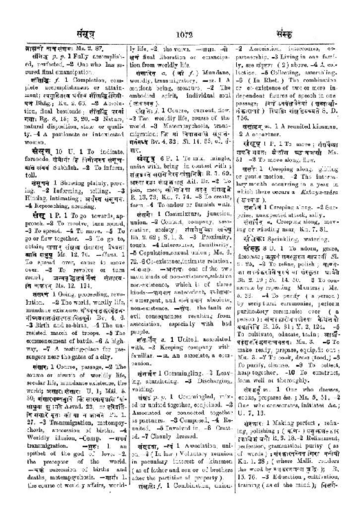
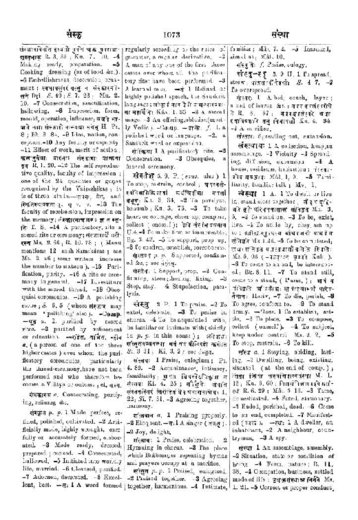
saṃskāraḥ 1 Making perfect, refining, polishing; (maṇiḥ) prayuktasaṃskāra ivādhikaṃ babhau R. 3. 18. 2 Refinement, perfection, grammatical purity (as of words); saṃskāravatyeva girā manīṣī Ku. 1. 28; (where Malli renders the word by vyākaraṇajanyā śuddhiḥ); R. 15. 76. 3 Education, cultivation, training (as of the mind); ([Page 1073-a]) nisargasaṃskāravinati ityasau nṛpaṇe cakra yuvarājaśabdabhāk R. 3. 35 Ku. 7. 10. 4 Making ready, preparation. 5 Cooking dressing (as of food &c.). 6 Embellishment, decoration, ornament; svabhāvasuṃdaraṃ vastu na saṃskāramapekṣate Dṛ. Ś. 49; Ś. 7. 23; Mu. 2. 10. 7 Consecration, sanctification, hallowing. 8 Impression, form, mould, operation, influence; yannave bhājane lagnaḥ saṃskāro nānyathā bhavet H. Pr. 8; Bh. 3. 84. 9 Idea, notion, conception. 10 Any faculty or capacity 11 Effect of work, merit of action. phalānumeyāḥ prāraṃbhāḥ saṃskārāḥ prāktanā iva R. 1. 20. 12 The self-reproductive quality, faculty of impression; one of the 24 qualities or guṇas recognised by the Vaiśeṣikas; it is of three kinds:-bhāvanā, vega, and sthitisthāpakatā q.q. v.v. 13 The faculty of recollection, impression on the memory; saṃskāramātrajanyaṃ jñānaṃ smṛtiḥ T. S. 14 A purificatory rite, a sacred rite or ceremony; saṃskārārthaṃ śarīrasya Ms. 2. 66; R. 10. 78; (Manu mentions 12 such Saṃskāras; see Ms. 2. 26; some writers increase the number to sixteen). 15 Purification, purity. 16 A rite or ceremony in general. 17 Investiture with the sacred thread. 18 Obsequial ceremonies. 19 A polishing stone; Ś. 6. 5 (where saṃskāra may mean ‘polishing’ also). Comp. — pūta a. 1 purified by sacred rites. 2 purified by refinement or education. — rahita, varjita, -hīna a. (a person of one of the three higher castes) over whom the purificatory ceremonies, particularly the thread-ceremony, have not been performed and who therefore becomes a Vrātya or outcast; cf. vrātya.
Cappeller 1887 substantive masculine
Original text · German · substantive masculine
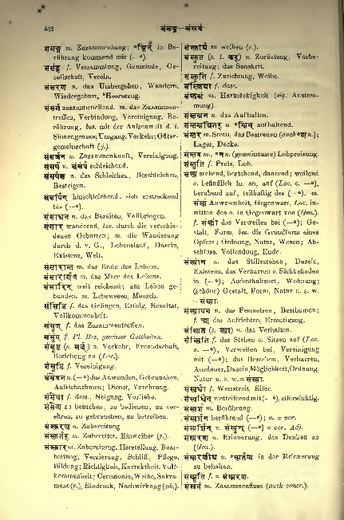
saṃskāra m. Zubereitung, Herstellung, Bearbeitung, Verzierung, Schliff, Pflege, Bildung; Richtigkeit, Korrenkheit, Vollkommenheit; Ceremonie, Weihe, Sakrament (r.), Eindruck,Nachwirkung (ph.).
Burnouf 1866 substantive masculine
Original text · French · substantive masculine
saṃskāra m. confection, fabrication, apprêt; décoration; consécration; accomplissement d'une cérémonie [par ex. celles de la nativité, de la tonsure, du mariage, des funérailles, etc.] conformément aux rites. Faculté de l'âme ou de l'esprit; conception intellectuelle; au pl. les concepts, Bd.
Occurrences in source texts (9)
PYS 9 occurrences
PYS 1.50–51: Samādhi without Seed 2 occurrences
Direct occurrences
PYS 3.9–12: Three Transformations of Citta 2 occurrences
Direct occurrences
1 more source page
Continue with AYI Free
Image source: AYI archive.