

siṃha सिंह – siṃha; lion
substantive masculine · Word type unspecified
Dictionary sources
AYI dictionary substantive masculine
siṃha; lion
Cappeller 1891 substantive masculine
Original text · English · substantive masculine
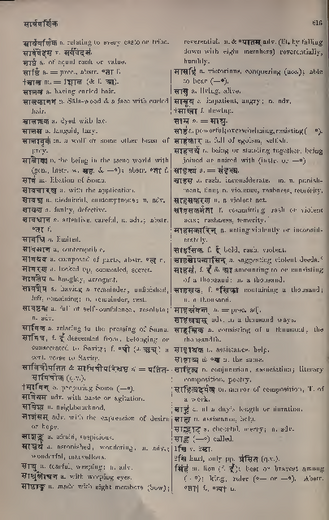
siṃhá ·m. lion (f. ī́); best or bravest among (--°); king, ruler (°-- or --°). Abstr. °tāÅ f., °tvaÅ n.
Monier-Williams 1872 substantive masculine
Original text · English · substantive masculine
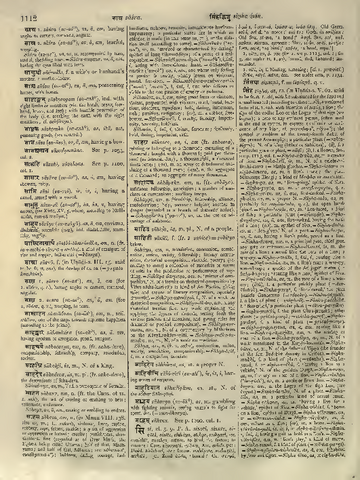
siṃha siṃha, as, m. (in Uṇādi-s. V. 62. said to be fr. rt. 1. sic, with ha substituted for the final and a nasal inserted; according to others fr. sih, a weakened form of rt. 1. sah, with insertion of nasal), a lion; the sign of the zodiac Leo or the Lagna of that sign (see lagna); a hero or any eminent person, (often used at the end of comps. to express excellence or emi- nence of any kind, cf. puruṣa-s˚, rāja-s˚); the symbol or emblem of the twenty-fourth Arhat of the present Ava-sarpiṇī; a particular plant (= rakta- śigru); N. of a king (father of Sāhideva); (ā), f. a particular grass or plant, = nāḍī; (ī), f. a lioness, &c., see p. 1113, col. 1.
Petersburger 1855 substantive masculine · Word type unspecified
Original text · German · substantive masculine
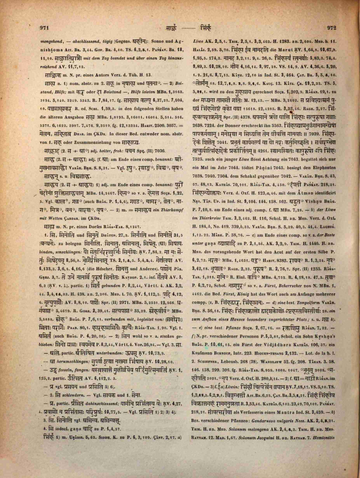
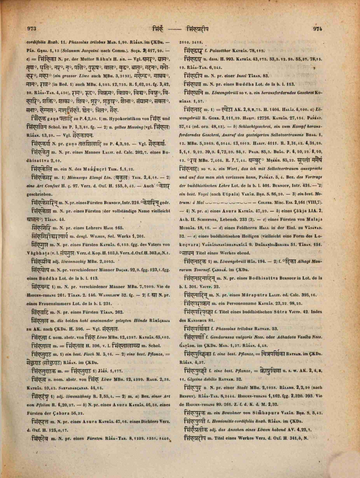
siṃhá 1〉 m. UṆĀDIS. 5,62. SIDDH. K._zu_P. 6,3,109. ŚĀNT. 2,17. a〉 Löwe AK. 2,5,1. TRIK. 2,5,1. TRIK. 3,3,462. H. 1283. H. an. 2,604. MED. h. 11. HALĀY. 2,59. HALĀY. 5,70. si̱ṃhā ìva nānadati die Marut ṚV. 1,64,8. ṚV. 10,67,9. ṚV. 1,95,5. ṚV. 1,174,3. nānada ṚV. 3,2,11. ṚV. 3,9,4. ṚV. 3,26,5. si̱ṃhasyà sta̱nathā̀ḥ ṚV. 5,83,3. ṚV. 5,74,4. ṚV. 9,89,3. ṚV. 10,28,10. bhīma ?ṚV. 4,16,14. ṚV. 9,97,28. VS. 14,9. AV. 4,36,6. AV. 5,20,1. AV. 5,20,2. AV. 5,21,6. AV. 8,7,15. KĀṬH. 12,10_in_Ind. St. 3,464. ŚAT. BR. 5,5,4,10. ˚lomán ŚAT. BR. 18. ŚAT. BR. 12,7,1,8. ŚAT. BR. 12,7,2,8. ŚAT. BR. 12,9,1,6. KAUŚ. 13. KĀTY. ŚR. 19,2,22. TS. 5,5,21,1. wird zu den guhāśaya gerechnet SUŚR. 1,202,9. RĀJAN. 19,1. zu der madhyamā tāmasī gatiḥ M. 12,43. — MBH. 3,2402. sa praviśyāśramaṃ puṇyaṃ siṃhagoṣṭhaṃ vṛko yathā MBH. 3,15618. MBH. 12,4285. R. 3,53,46. RAGH. 2,27. siṃhavatparākramet Spr. (II) 4378. apamāne trayo yānti siṃhāḥ satpuruṣā gajāḥ Spr. (II) 2638. Spr. (II) 7224. der Donner erschreckt ihn Spr. (II) 5563. siṃhavyāghrabhujaṃgānāmanyeṣāṃ pāpakarmaṇām . manorathā na sidhyanti tena jīvanti mānavāḥ .. Spr. (II) 7039. siṃhādekaṃ śikṣet Spr. (II) 7041. prabhūtaṃ kāryamalpaṃ vā yo naraḥ kartumicchati . sarvārambheṇa tatkuryātsiṃhādekaṃ prakīrtitam .. Spr. (II) 4261. sthānasthitaḥ kāpuruṣo 'pi siṃhaḥ Spr. (II) 7525. auch ein junger Löwe flösst Achtung ein 7043. begattet sich nur ein Mal im Jahr Spr. (II) 7044. tödtet Pāṇini Spr. (II) 7045. besiegt den Elephanten Spr. (II) 7038. Spr. (II) 7040. Spr. (II) 7504. dem Schakal gegenüber Spr. (II) 7042. — VARĀH. BṚH. S. 43. VARĀH. BṚH. S. 57. VARĀH. BṚH. S. 48,13. KATHĀS. 70,101. RĀJA-TAR. 4,450. ˚daṃpatī PAÑCAT. 218,21. siṃhānyoktayaḥ Verz. d. Oxf. H. 123,a,46. mit dem Ātman identificirt NṚS. TĀP. UP._in_Ind. St. 9,104. Ind. St. 9,144. Ind. St. 9,158. Ind. St. 9,162. adbhuta˚ Viṣṇu BHĀG. P. 7,10,9. am Ende eines adj. comp. f. ā MBH. 7,28. — b〉 der Löwe im Thierkreise TRIK. 3,3,462. H. 116, Schol. H. an. MED. Verz. d. Oxf. H. 184,b, No. 419. Verz. d. Oxf. H. 339,b,33. VARĀH. BṚH. S. 5,39. VARĀH. BṚH. S. 40,3. VARĀH. BṚH. S. 41,4. LAGHUJ. 1,12. LAGHUJ. 1,22. MĀRK. P. 58,76. — c〉 am Ende eines comp. so v. a. der Beste unter gaṇa vyāghrādi zu P. 2,1,56. AK. 3,2,9. TRIK. H. 1440. H. an. MED. das vorangehende Wort hat den Acut auf der ersten Silbe P. 6,2,72. bharata˚ MBH. 1,4631. yadu˚ HARIV. 8382. rāghava˚ R. 1,3,24. nṛpa˚ R. 3,42,18. bhūpāla˚ RAGH. 2,33. puruṣa˚ R. 2,76,7. Spr. (II) 1255. RĀJA-TAR. 1,318. muni˚ R. Einl. kapi˚ MBH. 4,752. R. 4,18,18. R. 4,47,2. tṛṇa˚ P. 6,2,72, Schol. nāgapura˚ so v. a. Fürst, Beherrscher von N. MBH. 1,4462. die Bed. Fürst, König hat das Wort auch am Anfange mehrerer compp. (z. B. siṃhadvār, siṃhāsana). — d〉 eine best. Tempelform VARĀH. BṚH. S. 56,18. siṃhaḥ siṃhākrānto dvādaśakoṇo 'ṣṭahastavistīrṇaḥ 28. ein zum Aufbau eines Hauses besonders zugerichteter Platz; s. u. gaja 4〉. — e〉 eine best. Pflanze SUŚR. 2,67,16. = raktaśigru RĀJAN. 7,32. — f〉 N. pr. verschiedener Personen P. 5,3,81, Schol. ein Sohn Kṛṣṇaʼs BHĀG. P. 10,61,15. ein Fürst der Vidyādhara KATHĀS. 106,37. ein Kaufmann BURNOUF, Intr. 223. HIOUEN-THSANG 2,132. — Lot. de la b. l. 2. SCHIEFNER, Lebensb. 268 (38). WASSILJEW 52. fg. WASSILJEW 208. TĀRAN. 3. TĀRAN. 58. TĀRAN. 146. TĀRAN. 158. TĀRAN. 299. TĀRAN. 306. fg. RĀJA-TAR. 8,959. RĀJA-TAR. 8,1008. RĀJA-TAR. 8,1047. ˚bhūbhṛt RĀJA-TAR. 2008. ˚mahīpati RĀJA-TAR. 2021. ˚nṛpa Verz. d. Oxf. H. 280,b,14. — 2〉 f. ā = nāḍī RĀJAN._im_ŚKDR. — 3〉 f. ī a〉 Löwin: si̱ṃhyàṃ ci̱tpetvèna jaghāna ṚV. 7,18,17. VS. 5,10. TS. 1,2,12,2. TS. 6,2,7,1. vijṛmbhantī AIT. BR. 6,35. ŚAT. BR. 3,5,1,21. siṃhaṃ siṃhīva vikrāntamahaṃ rāmamanuvratā R. 3,53,46. KATHĀS. 6,102. KATHĀS. 23,49. KATHĀS. 70,101. PAÑCAT. 218,21. sāṃvatsarīyā als Verfasserin eines Mantra Ind. St. 3,459. — b〉 Bez. verschiedener Pflanzen: Gendarussa vulgaris Nees. AK. 2,4,3,21. TRIK. H. an. MED. Solanum melongena AK. 2,4,4,2. TRIK. H. an. MED. RATNAM. 12. MED. 1,67. Solanum Jacquini H. an. RATNAM. 7. Hemionitis cordifolia Roxb. 11. Phaseolus trilobus MAD. 1,90. RĀJAN._im_ŚKDR. — PĀR. GṚHY. 1,13 (Solanum Jacquini nach Comm.). SUŚR. 2,417,20. — c〉 = siṃhikā N. pr. der Mutter Rāhuʼs H. an. — Vgl. amara˚, grāma˚, tṛṇa˚, dhṛti˚, nara˚, nṛ˚, pakṣi˚, puruṣa˚, bāla˚, buddha˚, bhrātṛ˚, madana˚, manohara˚, mahā˚ (ein grosser Löwe auch MBH. 3,2193), mahendra˚, mādhava˚, māna˚, rāja˚ (in Bed. 1〉 auch MBH. 4,285. MBH. 12,725. R. 1,62,21. fg. R. 3,42,20. RĀJA-TAR. 4,450), rāma˚, rudra˚, vikrama˚, vijaya˚, viśva˚, viṣṇu˚, vihāri˚, śakti˚, śākya˚, śiva˚, śūra˚, śṛṅgāra˚, śobhā˚, saṃgrāma˚, sabala˚, sabhā˚, hemmata˚, mātṛsiṃhī, śveta˚, sita˚, saiṃha.
Original text · German · Word type unspecified
siṃha , undeutlich der Anusvāra.
Böhtlingk 1879 substantive masculine
Original text · German · substantive masculine
siṃhá — 1〉 m. — a〉 Löwe. Wird mit dem Ātman identificirt. Am Ende eines adj. Comp. f. ā. — b〉 der Löwe im Thierkreise. — c〉 am Ende eines Comp. so v. a. der Beste unter; auch Fürst —, Beherrscher von. Diese Bedeutung auch am Anfange einiger Composita. — d〉 eine best. Tempelform. — e〉 ein zum Aufbau eines Hauses besonders zugerichteter Platz. — f〉 eine roth blühende Moringa. — g〉 ein best. Tact. S. S. S. 213. — h〉 N. pr. — α〉 eines Sohnes des Kṛṣṇa. — β〉 eines Fürsten der Vidyādhara. — γ〉 verschiedener anderer Personen DIVYĀVAD. 523,22. — 2〉 f. ī́ — a〉 Löwin. Als Bez. der Uttaravedi, Nomin. siṃhī́ḥ TS. 1,2,12,2. TS. 1,2,12,3. — b〉 Bez. verschiedener Pflanzen. Nach den Lexicographen Solanum jacquinii und Solanum melongena, Gendarussa vulgaris, Hemionitis cordifolia und Phaseolus trilobus. — c〉 *Ader RĀJAN. 18,74. — d〉 *= siṃhikā N. pr. der Mutter Rāhuʼs.
Original text · German · substantive masculine
siṃha m. auch ein best. mythischer Vogel R. ed. Bomb. 4,42,16. fg. [Nachtrag, Band 7]
Apte 1890 substantive masculine
Original text · English · substantive masculine
siṃhaḥ [hiṃs-ac pṛṣo˚] 1 A lion; (it is said to be derived from hiṃs; cf. bhavedvarṇāgamāddhaṃsaḥ siṃho varṇaviparyayāt Sk.); na hi suptasya siṃhasya praviśaṃti mukhe mṛgāḥ Subhāṣ. 2 The sign Leo of the zodiac. 3 (At the end of comp.) Best, pre-eminent of a class; e. g. raghusiṃha, puruṣasiṃha; Pt. 1. 361; U. 5. 22. Comp. — avalokanaṃ the (backward) glance of a lion. ˚nyāyaḥ the maxim of the lion's (backward) glance, generally used to mark the connection of a thing with what precedes and follows; (for explanation see under nyāya). — āsanaṃ a throne, a seat of honour. — (naḥ) a particular mode of sexual enjoyment. — āsyaḥ a particular position of the hands. — keśaraḥ 1 the Bakula tree. 2 a lion's mane. — gaḥ an epithet of Śiva. — talaṃ the palms of the hands opened and joined together. — tuṃḍaḥ a kind of fish. — daṃṣṭraḥ an epithet of Śiva. — darpa a. as proud as a lion. — dvāraṃ the main or principal gate (of a palace &c.). — dhvaniḥ, — nādaḥ 1 the roar of a lion; Ku. 1. 56; Mk. 5. 29. 2 a war-cry. — nādaḥ N. of Śiva. — yānā, -rathā N. of the goddess Pārvatī. — līlaḥ a kind of coitus. — vāhanaḥ an epithet of Śiva. ([Page 1122-c]) — vāhinī an epithet of Durgā. — vikrāṃtaḥ a horse. — saṃhanana a. 1 as strong as a lion. 2 handsome. — (naṃ) the killing of a lion. — sthaḥ an epithet of the planet Jupiter when in the constellation Leo.
Cappeller 1887 substantive masculine
Original text · German · substantive masculine
siṃhá m. Löwe; Fürst, Beherrscher von, Bester unter (—˚); Mannsn. f. siṃhī́ Löwin. Abstr. siṃhatā f., ˚tva n.

Burnouf 1866 substantive masculine
Original text · French · substantive masculine
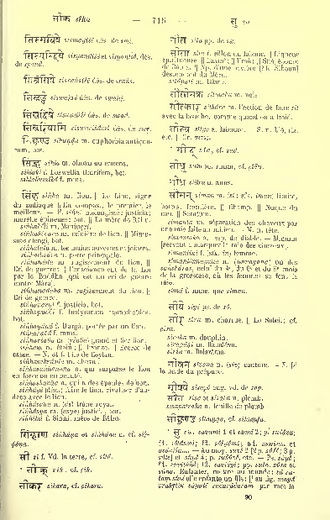
siṃha siṃha m. lion. Le Lion, signe du zodiaque. En compos., le premier, le meilleur. — F. siṃhī melongène; justicia; morelle épineuse; bot. La mère de Rāhu. siṃhakeli m. Mañjuśrī. siṃhakeśara m. crinière de lion. Mimusops elengi, bot. siṃhatala m. les mains ouvertes et jointes. siṃhadvāra n. porte principale. siṃhanāda m. rugissement du lion. Cri de guerre; l'enseignement de la Loi par le Buddha [qui est un cri de guerre contre Māra]. siṃhanādaka m. rugissement du lion. Cri de guerre. siṃhaparṇī f. justicia, bot. siṃhapucchī f. hedysarum lagopodioïdes, bot. siṃhayānā f. Durgā, portée par un lion. siṃharathā f. mms. siṃharṣabha m. (ṛṣabha) grand et fier lion. siṃhala n. étain; bronze. Ecorce de casse. — N. et f. l'île de Ceylan. siṃhavikrānta m. cheval. siṃhasaṃhanana a. qui surpasse le lion en force ou en beauté. siṃhaskandha a. qui a des épaules de lion. siṃhāye (dén.) faire le lion, rivaliser d'audace avec le lion. siṃhāsana n. (ās) trône royal. siṃhāsya m. (āsya) justicia, bot. siṃhikā f. Siṃhī, mère de Rāhu.
Derived words
Occurrences in source texts (6)
DYS 3 occurrences
HP 3 occurrences
Continue with AYI Free
Image source: AYI archive.