

tanu तनु – thin; subtle; attenuated
adjective · substantive feminine · substantive masculine · Word type unspecified
Dictionary sources
AYI dictionary adjective · substantive feminine
Monier-Williams 1872 Word type unspecified
Original text · English · Word type unspecified
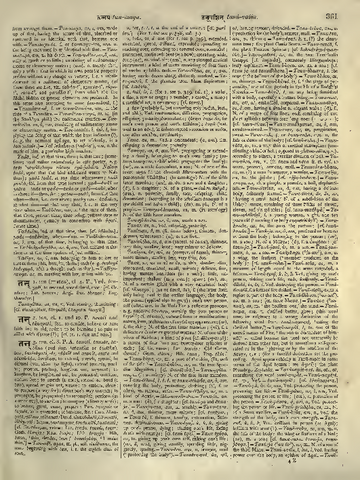
Tanu, us, us, or vī or ūs, u, thin, slender, slim, attenuated, emaciated, small, minute; delicate, fine, having minute interstices (as a web); little, un- important; shallow (as a river); spare; (us), m., N. of a certain Ṛṣi with a very emaciated body [cf. tānavya]; (us or tanū, ūs), f. (the latter form only being used in the earlier language), the body, the person (applied also to gods); one's own person, self (often used in the Veda like a reflexive pronoun, e. g. yajasva tanvam, worship thy own person or thyself; cf. ātman); outward form or manifestation; nature, form, or character of anything; appearance; (us), f. the skin; N. of the first lunar mansion; (vī), f. a delicate or slender or graceful woman; N. of one of the wives of Kṛṣṇa; a kind of plant [cf. śāla-parṇī]; a stanza of four lines and twenty-four syllables in each; [cf. Gr. τανυ- Lat. tenuis; Old Germ. dunni; Germ. dūnn; Hib. tana; Eng. thin.]
Original text · English · Word type unspecified
tanu tanu. See p. 361, col. 2.
Petersburger 1855 adjective · substantive feminine · substantive masculine · Word type unspecified
Original text · German · adjective · substantive feminine · substantive masculine
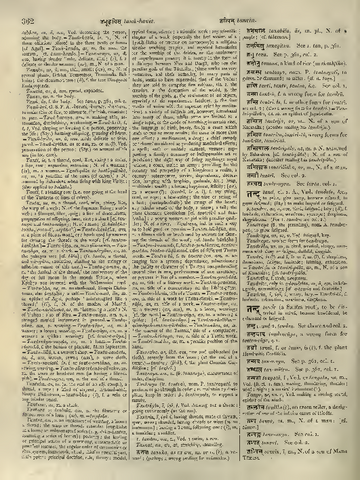
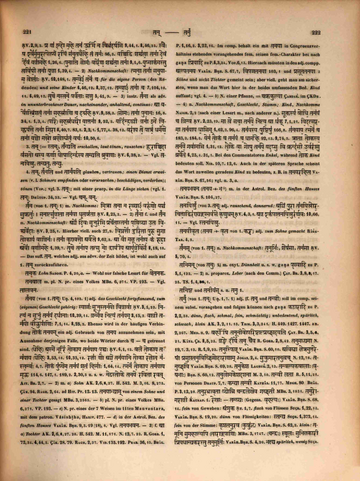
tanú (von 1. tan) Uṇ. 1,7. 1〉 adj. (f. tanu und tanvī) soll im comp. seinem subst. vorangehen und folgen können nach gaṇa kaḍārādi zu P. 2,2,38. dünn, flach, schmal, fein, schmächtig; unbedeutend, spärlich, schwach, klein AK. 3,2,11. AK. 3,2,15. TRIK. 3,3,241. H. 449. H. 1427. H. 1447. H. an. 2,267. MED. n. 9. barhīṃṣi tanūnīvopariṣṭātpracchādayati ŚAT. BR. 3,5,4. ŚAT. BR. 3,5,21. KĀTY. ŚR. 8,5,25. jaṅghe dīrghe tanū caiva R. GORR. 2,8,42. tanumadhyamā N. 19,7. N. 3,13. R. 1,9,22. tanusphij VARĀH. BṚH. S. 60,10. avidyā kṣetramuttareṣāṃ prasuptatanuvicchinnodārāṇām YOGAS. 2,4. sukumāratanutvac N. 12,78. tanucchavi VARĀH. BṚH. S. 69,28. tanukeśa LAGHUJ. 2,13. tanvalpakabālāḥ (vṛṣabhāḥ) BṚH. S. 60,12. tanulomakeśadaśanā M. 3,10. tanvī latā R. 5,11,21. von Personen DRAUP. 7,7. kanyā tanvī KATHĀS. 11,77. MEGH. 80. BHĀG. P. 3,12,28. tanurabhrāvṛtā vyomni candralekheva gacchatī MBH. 3,1831. tanuromarājī CAURAP. 1. rekhāḥ — tanvyaḥ (Gegens. vṛhatyaḥ) VARĀH. BṚH. S. 68. VARĀH. BṚH. S. 14. fein von Geweben: aṃśuka ṚT. 1,7. flach von Flüssen SUŚR. 1,22,13. VARĀH. BṚH. S. 19,20. dünn von Flüssigkeiten: stanya SUŚR. 1,372,14. fein von der Stimme: kṛśatanurava (kukkuṭa) VARĀH. BṚH. S. 62,2. klein: tanūni sumahāntyapi (tārārūpāṇi) MBH. 3,1747. (candraḥ) sthūlaḥ subhikṣakārī priyadhānyakarastu tanumūrtiḥ VARĀH. BṚH. S. 4,20. bhakṣya spärlich, wenig SUŚR. 1,235,17. pūyasyāsrāvaḥ SUŚR. 84,8. SUŚR. 84,135. SUŚR. 84,9. tanuprakāśena — śaśinā RAGH. 3,2. tanuvāgvibhava RAGH. 1,9. tanurapi na te doṣaḥ AMAR. 27. atanu bedeutend, reichlich, gross: atanuṣu vibhaveṣu ŚĀK. 105. atanvīṃ śriyamaśnute MBH. 3,6028. atanubhūtirnṛpa iva BHARTṚ. 3,89. atanukṣaya RĀJA-TAR. 4,317. compar. tanīyaṃs und tanutara überaus dünn, fein u. s. w. BHĀG. P. 3,8,13. tato devāstanīyāṃsa iva pariśiśiṣire ŚAT. BR. 2,2,2,9. pakṣapucchāni tanīyāṃsīva ŚAT. BR. 8,7,2,10. tanīyo 'ñjanarekhayā RĀJA-TAR. 1,208. phalaṃ mama tanīyo 'pi kāśmīreṣu bhavedyadi RĀJA-TAR. 3,223. tanutaraiḥ svedāmbhasaḥ śīkaraiḥ AMAR. 3. taniṣṭha superl.: eteṣāṃ lokānāmantarikṣalokastaniṣṭhaḥ ŚAT. BR. 7,1,2,20. ŚAT. BR. 1,8,1,16. Vgl. pratanu. — 2〉 m. N. pr. eines überaus abgemagerten Ṛṣi MBH. 12,4665. Vgl. tānavya. — 3〉 f. tanú (tánu ŚĀNT. 2,12) und tanū́; nur die letztere Form in der älteren Sprache, während die spätere Sprache die mit der Kürze auch häufig gebraucht. Uṇ. 1,81. SIDDH. K. 248,b,11. VOP. 4,31. Im Veda ist tanvàm (auch BHĀG. P. 3,12,33. tanuvam BHĀG. P. 7,9,37; vgl. P. 6,4,77, Vārtt.), tanvàs und tanvì gebräuchlicher als tanūm, tanvās und tanvām; tanuvā BHĀG. P. 3,16,22. BHĀG. P. 3,21,20. BHĀG. P. 4,5,3. tanvàs nom. und acc. pl. im Veda. a〉 Leib, Körper; Person, übrigens ohne Einschränkung auf die äussere Erscheinung; auch von Göttern gebraucht. AK. 2,6,2,22. AK. 3,4,18,115. H. 563. H. an. MED. mi̱nāti̱ śriyàṃ jari̱mā ta̱nūnā̀m ṚV. 1,179,1. ā̱vista̱nvàṃ kṛṇuṣe dṛ̱śe kam ṚV. 123,11. ṚV. 1,10. ṚV. 124,6. ṚV. 2,39,2. samàpacyanta ta̱nvàsta̱nūbhìḥ AV. 14,2,32. ṚV. 10,10,3. ŚAT. BR. 3,7,4,11. saṃ vàḥ pṛcyantāṃ ta̱nva1̱̀ ḥ saṃ manā̀ṃsi̱ samù vra̱tā AV. 7,74,1. ta̱nvā̱3̱̀ virū̀pe ṚV. 3,4,6. yattè śu̱kraṃ ta̱nvo̱3̱̀ rocàte ṚV. 1,140,11. va̱ndārùste ta̱nvàṃ vande agne ṚV. 147,2. ṚV. 2,36,5. ja̱ṭha̱re somàṃ ta̱nvī̱3̱̀ saho̱ mahàḥ ṚV. 2,16,2. mā̱yāḥ kṛ̀ṇvā̱nasta̱nvaṃ1̱̀ pari̱ svām ṚV. 3,53,8. balàṃ dhehi ta̱nūṣù no̱ balàmindrāna̱ḻutsù naḥ ṚV. 3,53,18. saṃ gàcchasva ta̱nvā̀ (von einem Gestorbenen) ṚV. 10,14,8. ṚV. 10,16,5. VS. 2,24. ete vai yajñasyāntye tanvau yadagniśca viṣṇuśca AIT. BR. 1,1. prajāpatervisrastādramyā tanūrmadhyata udakrāmat ŚAT. BR. 7,4,1,16. KĀTY. ŚR. 5,2,14. — svādhyāyena u. s. w. brāhmīyaṃ kriyate tanuḥ M. 2,28. akṣiṇvanyogatastanum M. 100. M. 4,189. tyaktvā tanum M. 6,32. BHĀG. P. 3,12,33. KATHĀS. 8,34. agnau jahau tanum KATHĀS. 21,111. purā hi — dadāti kasmaicidanarhate tanum (draupadī) DRAUP. 6,20. gandharvīṇāṃ tanūṣu R. 1,16,5. R. 1,16,6 (girayaḥ) praviśya tāstāstanavo (acc.) ramante sveṣu sānuṣu HARIV. 3813. pratyujjagmuḥ praharṣeṇa prāṇaṃ tanva (nom. pl.) ivāgatam BHĀG. P. 1,13,4. varatanu adj. f. voc. MĀLAV. 74. bhāryā putraḥ svakā tanuḥ die eigene Person (vgl. b〉) M. 4,184. vom Körper der Gestirne VARĀH. BṚH. S. 3,27. VARĀH. BṚH. S. 3,28. VARĀH. BṚH. S. 3,40. VARĀH. BṚH. S. 4,24. VARĀH. BṚH. S. 4,29. VARĀH. BṚH. S. 9,45. VARĀH. BṚH. S. 11,8. VARĀH. BṚH. S. 11,23. VARĀH. BṚH. S. 20,8. VARĀH. BṚH. S. 46,8 (9). SŪRYAS. 2,52. tanumiva kalāmātraśeṣāṃ himāṃśoḥ MEGH. 87. — b〉 die eigene Person, das Selbst; häufig die Stelle des pron. refl. vertretend (vgl. ātman)ḥ (yanme brahma cakra) sakhye̱ sakhā̀yasta̱nvè ta̱nūbhìḥ ṚV. 1,165,11. to̱kasyà — ta̱nūnā̀m ṚV. 2,9,2. ṚV. 10,4,7. mā hā̀smahi pra̱jayā̱ mā ta̱nūbhìḥ ṚV. 10,128,5. sva̱yaṃ gā̱tuṃ ta̱nvà i̱cchamā̀nam ṚV. 4,18,10. mṛ̱ḍayā̀ nasta̱nūbhyo̱ mayàstokebhyàḥ kṛdhi AV. 1,13,2. tu̱ryāma̱ dasyū̀nta̱nūbhìḥ ṚV. 5,70,3. yathāyàja kra̱tubhìrdeva de̱vāne̱vā yàjasva ta̱nvàm so opfere auch dir selbst ṚV. 10,7,6. ṚV. 6,11,2. avà dru̱gdhāni̱ pitryā̀ sṛjā̱ no 'va̱ yā va̱yaṃ càkṛ̱mā ta̱nūbhìḥ ṚV. 7,86,5. te tanvānāstanūstatra brahmavaṃśānanuttamān sich in Brahmanengeschlechtern fortpflanzend HARIV. 2386. — c〉 Wesen, Daseins- oder Erscheinungsform: a̱pāma̱gnista̱nūbhìḥ saṃvidā̱naḥ AV. 4,15,10. śi̱vayā̀ ta̱nvopà spṛśata̱ tvacàṃ me AV. 1,33,4. yāstè śi̱vāsta̱nvò jātavedaḥ ṚV. 10,16,4. AV. 9,2,25. ye tè agne śi̱ve ta̱nuvaù — gho̱rāsta̱nuvàḥ TBR. 1,1,7,3. ti̱sra ù te (agne,) ta̱nvàḥ ṚV. 3,20,2. ṚV. 10,51,1. VS. 4,17. VS. 5,1. VS. 5,8. ŚAT. BR. 2,2,1,14. yā tè prāṇa pri̱yā ta̱nūḥ AV. 11,4,9. VS. 4,2. VS. 4,26. ta enaṃ (agnayaḥ) śāntatanavo 'bhihutā abhiprītāḥ svargaṃ lokamabhivahanti AIT. BR. 8,24. ŚAT. BR. 6,1,2,17. ŚĀṄKH. ŚR. 3,6,3. KAṬHOP. 2,23. pratyakṣābhiḥ prasannastanubhiravatu vastābhiraṣṭābhirīśaḥ ŚĀK. 1. sattvena no varadayā tanuvā BHĀG. P. 3,16,22. BHĀG. P. 3,21,20. gharmasya tanvau s. unter gharma BHĀG. P. 4. und vgl. KĀTY. ŚR. 26,4,10 LĀṬY. 1,6,25. — d〉 tanu Haut AK. 3,4,18,115. H. an. MED. yā ta eṣā rarāṭyā tanūḥ Stirnrunzeln PĀR. GṚHY. 3,13. — e〉 tanu in d. Astrol. Bez. des ersten Hauses VARĀH. LAGHUJ. 1,15. VARĀH. LAGHUJ. 8,6. fgg. BṚH. 1,15. BṚH. 5,4. BṚH. 11,10. BṚH. 12,4. BṚH. 19(18), 1. Vgl. tanugṛha. — 4〉 f. tanvī a〉 ein schlankes, feingegliedertes Frauenzimmer BHARTṚ. 1,71. ŚĀK. 19. ŚĀK. 45. MĀLAV. 94. AMAR. 3. BRAHMA-P. 56,4. VID. 141. Vgl. tanvaṅgī. — b〉 N. pr. einer der Gemahlinnen Kṛṣṇaʼs: śaivyasya ca sutāṃ tanvīm HARIV. 6703. Viell. nur adj., da dieselbe HARIV. 9179 sudattā genannt wird. — c〉 eine best. Pflanze (s. śālaparṇī) RĀJAN._im_ŚKDR.; vgl. tannī. — d〉 N. eines Metrums (4 Mal – ⏑ ⏑ – –, ⏑ ⏑ ⏑ ⏑ ⏑ ⏑ –, – ⏑ ⏑ – ⏑ ⏑ ⏑ ⏑ ⏑ ⏑ – –; die erste Cäsur kann auch fehlen) COLEBR. Misc. Ess. II, 163 (COLEBR. Misc. Ess. XIX, 1).
Original text · German · Word type unspecified
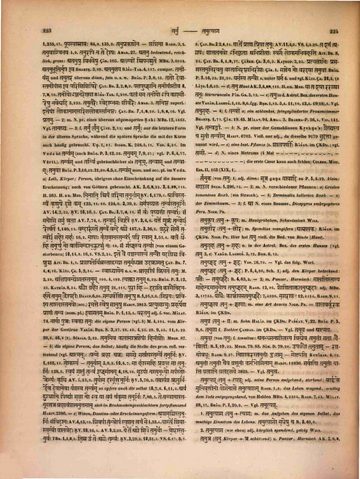
tanu 1〉 schwach, gering; Bez. einer der vier Grade des Kleśa im Yoga SARVADARŚANAS. 165,18. compar. tanīyaṃs im Gegens. zu bhūyaṃs PAÑCAV. BR. 25,3,6. — 3〉c〉 bhrātā marutpatermūrtirmātā sākṣātkṣitestanuḥ Spr. 3685. — e〉 ˚sthāna Verz. d. Oxf. H. 330,a,27. — 4〉d〉 Ind. St. 8,403 (bei uns richtig).
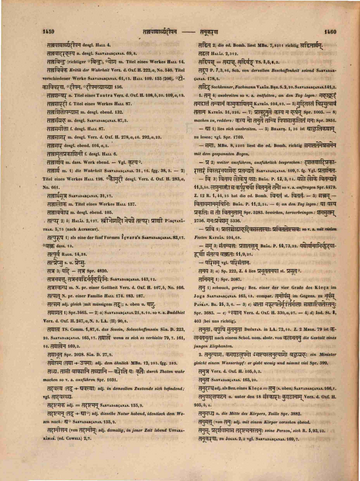
Böhtlingk 1879 adjective · substantive feminine · substantive masculine · Word type unspecified
Original text · German · adjective · substantive feminine · substantive masculine
tanú — 1〉 Adj. (f. tanu, tanū́ und tanvī) tenuis, dünn, flach, schmal, fein, schmächtig, schlank, klein, schwach, unbedeutend, spärlich, wenig. Compar. tanutara (Chr. 295,31) und tánīyaṃs, Superl. tániṣṭha. — 2〉 m. N. pr. eines überaus abgemagerten Ṛṣi. — 3〉 f. tanu und tanū́ — a〉 Leib, Körper, Gestalt. tanuṃtyaj oder hā (Chr. 119,27) den Körper fahren lassen, so v. a. das Leben aufgeben. — b〉 Person. svakā die eigene P. iyaṃ tanurmama (Chr. 320,10) so v. a. ich hier. — c〉 die eigene Person, das Selbst (häufig die Stelle des Pron. reflex. vertretend). — b〉 Person. svakā die eigene P. iyam tanurmama (Chr. 320,10) so v. a. ich hier. — c〉 die eigene Person, das Selbst (häufig die Stelle des Pron. reflex. vertretend). — d〉 Wesen, Daseins- oder Erscheinungsform. rarāṭyāṃ (wohl so zu lesen) tanūrmanyoḥ so v. a. ein Zeichen des Grimmes auf der Stirn PĀR. GṚHY. 3,13,5. — e〉 *tanu Haut. — f〉 tanu das erste astrol. Haus. — 4〉 f. tanvī — a〉 ein schlankes, feingegeliedertes Frauenzimmer. — b〉 *Desmodium gangeticum. — c〉 *Balanites roxburghii RĀJAN. 6,72. — d〉 ein best. Metrum. — e〉 N. pr. einer Gattin Kṛṣṇaʼs.
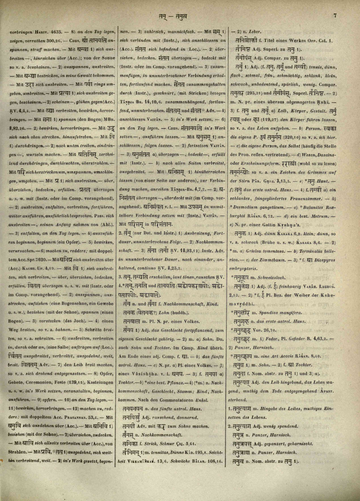
Original text · German · Word type unspecified
tanu 3〉a〉 m. BHĀM. V. 2,79. [Nachtrag, Band 4]
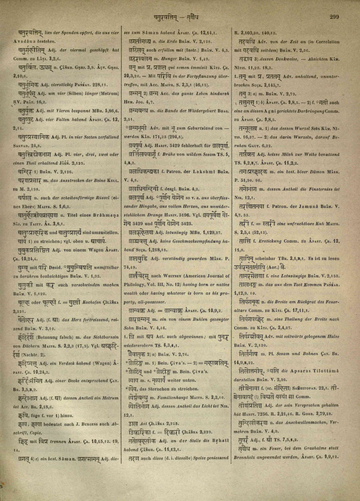
Original text · German · Word type unspecified
tanú III. 4. Adj. vāc ṚV. 8,76,12. gir ṚV. 8,1,18. [Nachtrag, Band 7]
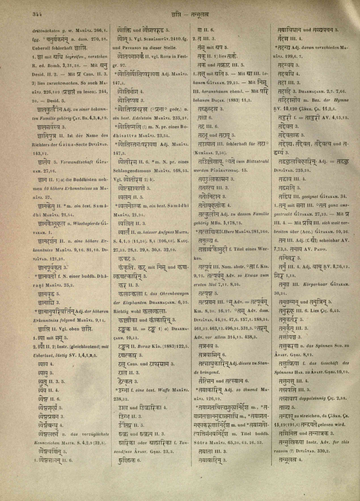
Apte 1890 adjective
Original text · English · adjective
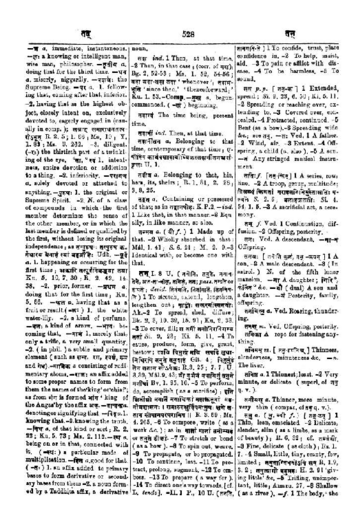
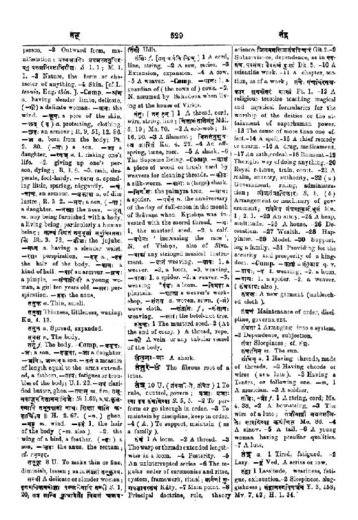
tanu a. (nu, nvī f.) [tan-un] 1 Thin, lean, emaciated 2 Delicate, slender, slim (as a limbs, as a mark of beauty); R. 6. 32; cf. tanvaṃgī. 3 Fine, delicate (as cloth); Rs. 1. 7. 4 Small, little, tiny, scanty, few, limited; tanuvāgvibhavo'pi san R. 1. 9, R. 3. 2; tanutyāgo bahugrahaḥ H. 2. 91 ‘giving little’ &c. 5 Trifling, unimportant, little; Amaru. 27. 6 Shallow (as a river). — f. 1 The body, the ([Page 0529-a]) person. 2 Outward form, manifestation: pratyakṣabhiḥ prapannastanubhiravatu vastābhiraṣṭābhirīśaḥ Ś. 1. 1; M. 1. 1. 3 Nature, the form or character of anything. 4 Skin. [cf. L. tenuis, Eng. thin.]. Comp. — aṃga a. having slender limbs, delicate. — (gī) a delicate woman. — ūnaḥ the wind. — kūpaḥ a pore of the skin. — chada (da) a. protecting, clothing. — chadaḥ an armour; R. 9. 51; R. 12. 86. — ja a. born from the body; Pt. 2. 80. — (jaḥ) a son. — jā a daughter. — tyaj a. 1 risking one's life. 2 giving up one's person, dying; R. 1. 8. 3 rash, desperate, fool-hardy. — tyāga a. spending little, sparing, niggardly. — traṃ, — trāṇaṃ, an armour. — prakāśa a. of dim lustre; R. 3. 2. — bhavaḥ a son. — (vā) a daughter. — bhastrā the nose. — bhṛt m. any being furnished with a body, a living being; particularly a human being: kalpaṃ rithataṃ tanubhṛtāṃ tanubhistataḥ kiṃ Bh. 3. 73. — bījaḥ the jujube. — madhya a. having a slender waist. — rasaḥ perspiration. — ruh n., — ruhaṃ the hair of the body. — vāta a kind of hell — vāraṃ an armour — vraṇaḥ a pimple. — saṃcāriṇī a young woman, a girl ten years old — saraḥ perspiration. — hradaḥ the anus.
Cappeller 1887 Word type unspecified
Original text · German · Word type unspecified
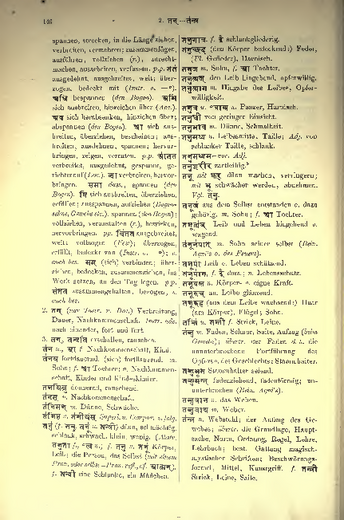
tanú (f. tanu, tanū́ u. tanvī) dünn, schmächtig, schlank, schwach, klein, wenig. (Abstr. tanutā f., ˚tva n.) f. tanu u. tanū́ Körper, Leib; die Person, das Selbst (mit einem Pron. oder selbst = Pron. refl., cf. ātman). f. tanvī eine Schlanke, ein Mädchen.
Burnouf 1866 adjective · Word type unspecified
Original text · French · adjective
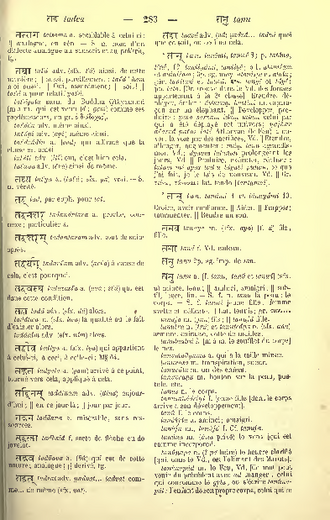
tanu tanu a. [f. tanu, tanū et tanvī] (sfx. u) mince, ténu; aminci, amaigri; subtil, léger, fin. — S. f. n. tanu la peau; le corps. — S. f. tanvī jeune fille, femme svelte et délicate. Lat. tenuis; gr. τανυ… tanuja m. (jan) fils; tanujā fille. tanutra n. (trā) et tanutrāṇa n. (sfx. ana) armure, cuirasse, cotte de mailles. tanubhastrā f. [m à m. le soufflet du corps] le nez. tanumadhyama a. qui a la taille mince. tanurasa m. transpiration, sueur. tanuvāta m. un des enfers. tanuvraṇa m. bouton sur la peau, pustule, etc. tanus n. le corps. tanusañcāriṇī f. jeune fille [dont le corps arrive à son développement]. tanū f. le corps. tanūkṛta a. aminci; amaigri. tanūja m., tanūjā f. Cf. tanuja. tanūna m. (ūna privé) le vent [qui est comme incorporel]. tanūnapa n. (? pā boire) le beurre clarifié [qui, dans le Vd., est l'aliment des Maruts]. tanūnapād m. le Feu, Vd. [Ce mot peut venir du précédent avec ad manger: celui qui consomme le ghṛta; ou s'écrire tanūnapāt: l'enfant de son propre corps, celui qui se [Page284-1] nourrit de son propre corps, c-à-d. du bois de l'autel]. tanūruha m. n. (ruh croître) poil; l'aile avec ses plumes. — M. fils [né du corps des parents]. tanūhrada m. fondement, anus, rectum.

Original text · French · Word type unspecified
tanu tanu 2p. sg. imp. de tan.
Occurrences in source texts (7)
GoS 1 occurrence
HP 1 occurrence
HTK 3 occurrences
PYS 1 occurrence
SiSa 1 occurrence
Continue with AYI Free
Image source: AYI archive.