

yuvan युवन् – young; youthful
adjective · substantive masculine · Word type unspecified
Dictionary sources
AYI dictionary adjective
young; youthful
Cappeller 1891 adjective
Original text · English · adjective
yúvan ·a. & m. young, young man, youth (E. of sev. gods); a younger descendant (g.).
Monier-Williams 1872 Word type unspecified
Original text · English · Word type unspecified
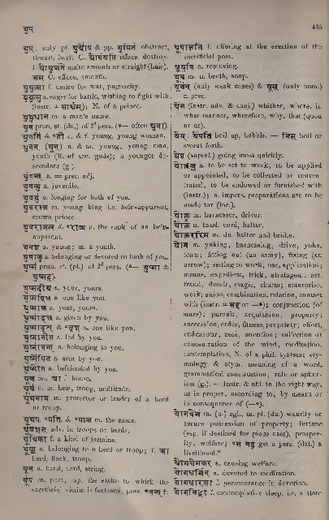
yuvan yuvan, ā, yuvati or yuvatī or yūnī, a (said to be fr. rt. 2. yu, but according to some for dyuvan, fr. 3. dyu or rt. 2. div, ‘to shine;’ com- par. yavīyas, q. v.; superl. yaviṣṭha, q. v.), young, youthful, juvenile, adult, arrived at puberty (applied to men or animals); endowed with native or natural strength, strong, excellent, good, healthy; (ā), m. a youth, young man, a young animal; (in the Veda yuvan is also applied to Indra, Agni, and various other gods); the younger descendant of any one (an elder descendant being still alive); N. of the ninth year in Jupiter's cycle of sixty years; (yuvati, is), f. a girl, young woman, any youthful female, any young female animal, (ibha-yuvati, a young female elephant; the term yuvati is also applied in the Veda to Uṣas, Night and Morning, Heaven and Earth); turmeric; (yuvatī), f. = yuvati, a young woman; the sign of the zodiac Virgo; [cf. Lat. juveni-s, jun-ior, Junius, junix: Goth. juggs: Angl. Sax. iong, iung, geong, geogudh: Lith. jauna-s: Slav. junu, ‘a youth;’ junosti, ‘youth.’]
Petersburger 1855 adjective · substantive masculine
Original text · German · adjective · substantive masculine
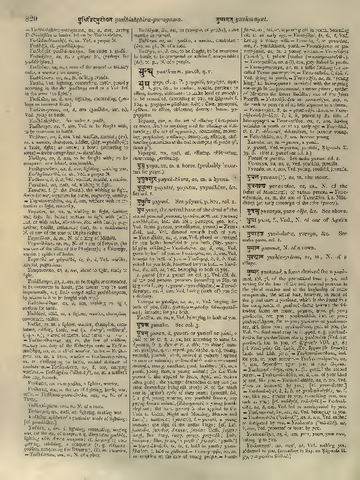
yúvan (von 2. yu; vgl. ā jā̱yā yùvate̱ patìm ṚV. 1,105,2) UṆĀDIS. 1,156. yuvā, yūnas, yūne u. s. w. P. 6,4,133. VOP. 3,117. das na geht nie in ṇa über VOP. 30. VOP. 6,9 Anf. 1〉 adj. jung, m. Jüngling, ein junger Mann AK. 2,6,1,42. H. 339. MED. n. 111 (= taruṇa, śreṣṭha, nisargabalaśālin). HALĀY. 2,348. yuvā̀nā pi̱tarā̱ punàrakrata ṚV. 1,20,4. ṚV. 1,63,3. ṚV. 1,112,21. ṚV. 1,144,4. yuvā̀ ga̱ṇāḥ ṚV. 87,4. ṚV. 5,61,13. yuvākùmāraḥ ṚV. 1,155,6. ṚV. 2,4,5. ṚV. 2,35,4. ṚV. 5,60,5. ṚV. 5,74,5. VS. 22,22. AV. 7,2,1. AV. 9,4,24. AV. 10,8,44. ka̱nyā̱3̱̀ yuvā̀naṃ vindate̱ patìm AV. 11,5,18. ŚAT. BR. 7,2,1,15. ĀŚV. GṚHY. 1,23,2. ĀŚV. GṚHY. 2,7,11. KAUŚ. 9. yūnā̀ (du.) ha̱ santā̀ pratha̱maṃ vi jàjñatuḥ ṚV. 9,68,5. yuvan heissen Indra, Agni, Marut und andere Götter ṚV. 2,20,3. ṚV. 3,32,7. ṚV. 3,46,1. ṚV. 5,1,1. ṚV. 6,5,1. ṚV. 6,62,4. ṚV. 7,67,10. -- ṚV. 1,165,2. ṚV. 1,186,1. ṚV. 3,31,7. ṚV. 5,57,8. ṚV. 7,20,1. yuvan, sthavira M. 2,120. M. 2,216. yuvasthavirabālāḥ MBH. 3,2522. MBH. 3,15595. R. 2,84,8. NṚS. TĀP. UP._in_Ind. St. 9,112. RAGH. 3,70. RAGH. 6,81. ṚT. 6,20. Spr. 1392. Spr. 1968. Spr. 3375. VARĀH. BṚH. S. 76,3. VARĀH. BṚH. S. 76,12. KATHĀS. 3,64. KATHĀS. 18,110. KATHĀS. 18,365. BHĀG. P. 4,29,72. yuvā puruṣaḥ VET. in LA. (III) 19,6. von Thieren KĀTY. ŚR. 4,9,13. KĀTY. ŚR. 25,12,9. MBH. 1,5570. MBH. 13,3518. H. 1276. cātaka˚ Spr. 661. Spr. 2956. f. yūnī VOP. 4,27. ŚABDAR._im_ŚKDR. Vgl. punaryuvan, yaviṣṭha, yavīyaṃs, yuvati. — 2〉 m. in der Gramm. ein jüngerer Nachkomme eines Mannes bei Lebzeiten eines älteren P. 1,2,65. P. 2,4,58. P. 4,1,90. P. 4,1,94. P. 4,1,163; vgl. u. gotra 1〉b〉. — 3〉 m. Bez. des 9ten Jahres im 60jährigen Jupitercyclus VARĀH. BṚH. S. 8,31. WEBER, JYOT. 98. Verz. d. Oxf. H. 331,b, No. 782.
Böhtlingk 1879 adjective · substantive masculine · Word type unspecified
Original text · German · adjective · substantive masculine
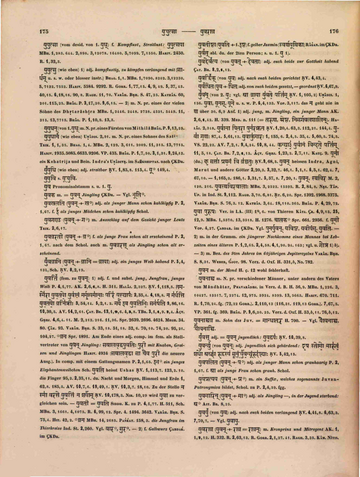
yúvan (schwach yūn) — 1〉 Adj. (*f. yūnī) und Subst. jung, Jüngling, ein junger Mann (nach RĀJAN. 18,16 bis zum 50sten Jahre). So heissen Indra, Agni, die Marut und andere Götter. — 2〉 m. — a〉 in der Grammatik ein jüngerer Nachkomme eines Mannes bei Lebzeiten eines älteren. — b〉 [Page5-148-c] das 9te Jahr im 60jährigen Jupitercyclus. — c〉 *ein 60jähriger (!) Elephant GAL.
Original text · German · Word type unspecified
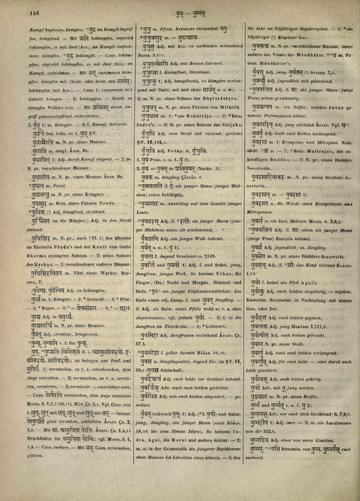
yuvan V. 1〉 auch von Thieren. bhallūka˚ ein junger Bär MĀLATĪM. (ed. Bomb.) 304,1. [Nachtrag, Band 7]
Apte 1890 adjective · substantive masculine
Original text · English · adjective · substantive masculine
yuvan a. [yautīti yuvā, yu-kanin Uṇ. 1. 154] (yuvatiḥ -tī or yūti f.; compar. yavīyas or kanīyas; superl. yaviṣṭha or kaniṣṭha) 1 Young, youthful, adult, arrived at puberty. 2 Strong, healthy. 3 Excellent, good. — m. (nom. yuvā, yuvānau, yuvānaḥ, acc. pl. yūnaḥ, instr. pl. yuvabhiḥ &c.) 1 A young man, a youth; sā yūni tasminnabhilāṣabaṃrdhaṃ śaśāka śālīnatayā na vaktuṃ R. 6. 81. 2 A younger descendant (the elder being still alive); jīvati tu vaṃśye yuvā P. IV. 1. 163; P. I. 2. 65, ([Page 0896-a]) P. II. 4. 58, P. IV. 1. 90. Comp. — khalati a. (tiḥ -tī f.) bald in youth. — gaṃḍaḥ an eruption on the cheeks or face of young men. — jarat a. (tī f.) appearing old in youth, prematurely old. — rāj m., — rājaḥ an heirapparent, a prince-royal, crownprince; (asau) nṛpeṇa cakre yuvarājaśabdabhāk R. 3. 35.
Cappeller 1887 Word type unspecified
Original text · German · Word type unspecified
yúvan (yūn) m. jung, Jüngling; best. jüngere Nachkommen (g.).
Burnouf 1866 adjective
Original text · French · adjective
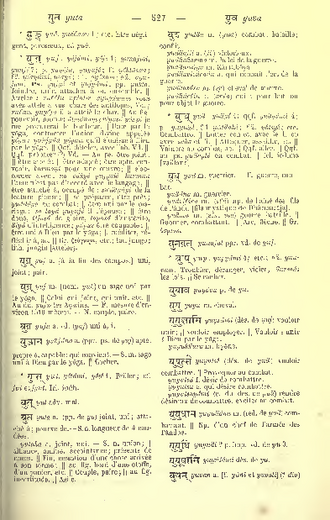
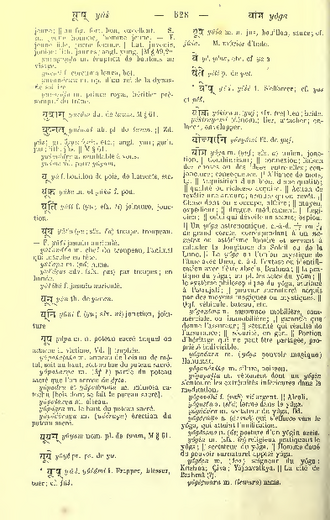
yuvan yuvan a. [f. yūnī et yuvatī] (? div) [Page528-1] jeune; au fig. fort, bon, excellent. — S. m. jeune homme, homme jeune. — F. jeune fille, jeune femme. Lat. juvenis, junior; lith. jaunas; angl. yung. M§ 49, 2°. yuvagaṇḍa m. éruption de boutons au visage. yuvati f. curcuma longa, bot. yuvanāśva m. np. d'un roi de la dynastie solaire. yuvarāja m. prince royal, héritier présomptif du trône.
Occurrences in source texts (4)
DYS 1 occurrence
GoS 1 occurrence
Continue with AYI Free
Image source: AYI archive.