
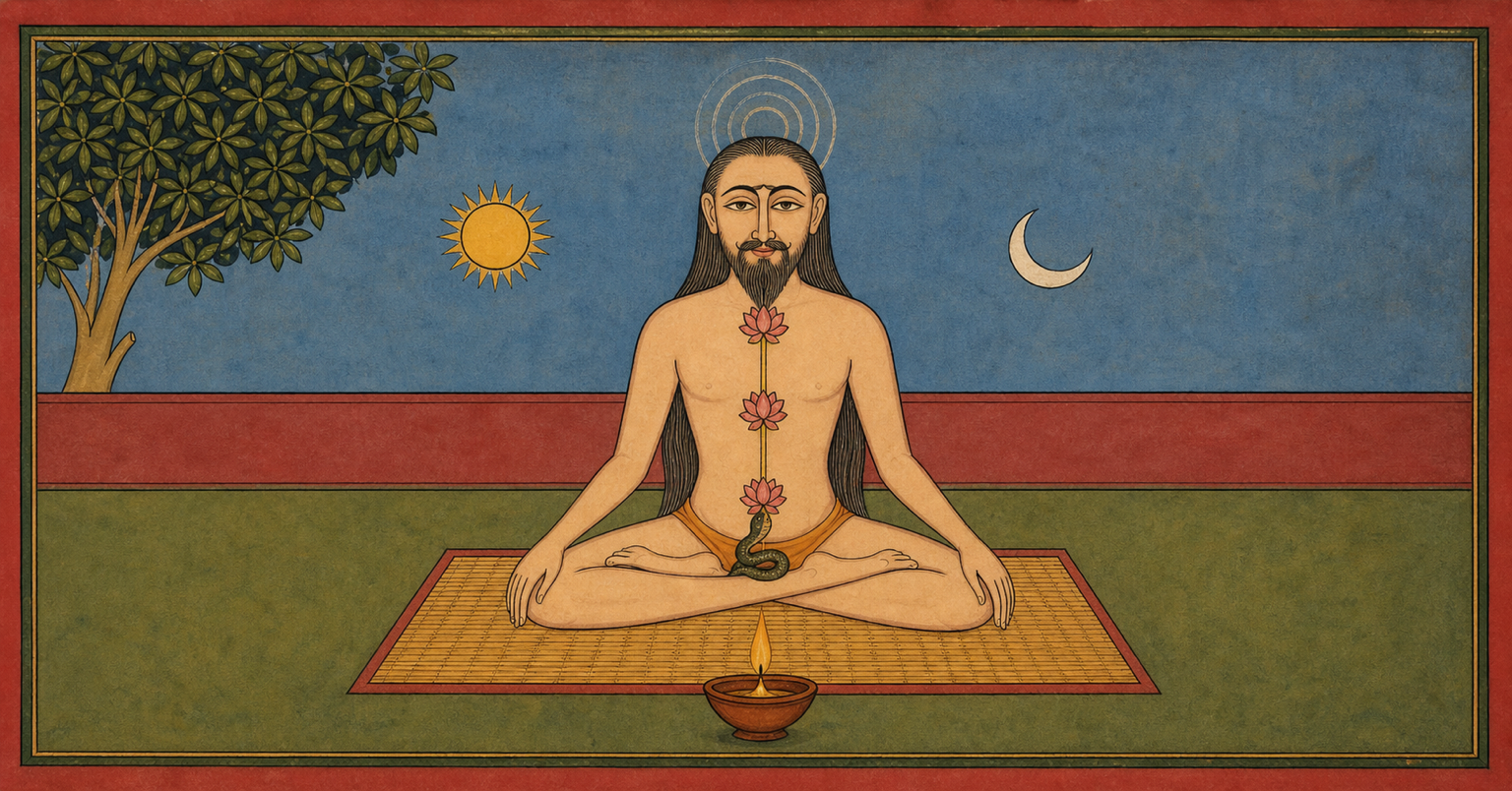

A meditating yogi sits between sun and moon; lotus blossoms mark the body’s center, a serpent rests at the pelvis, and an oil lamp burns in front.

Haṭhapradīpikā: Practice on the Path to Rājayoga

Composed around 1400 CE, the text unites Āsana, breath control, Mudrā, and Samādhi in an influential path of Haṭhayoga.

Dr. Ronald Steiner Dr. Ronald Steiner
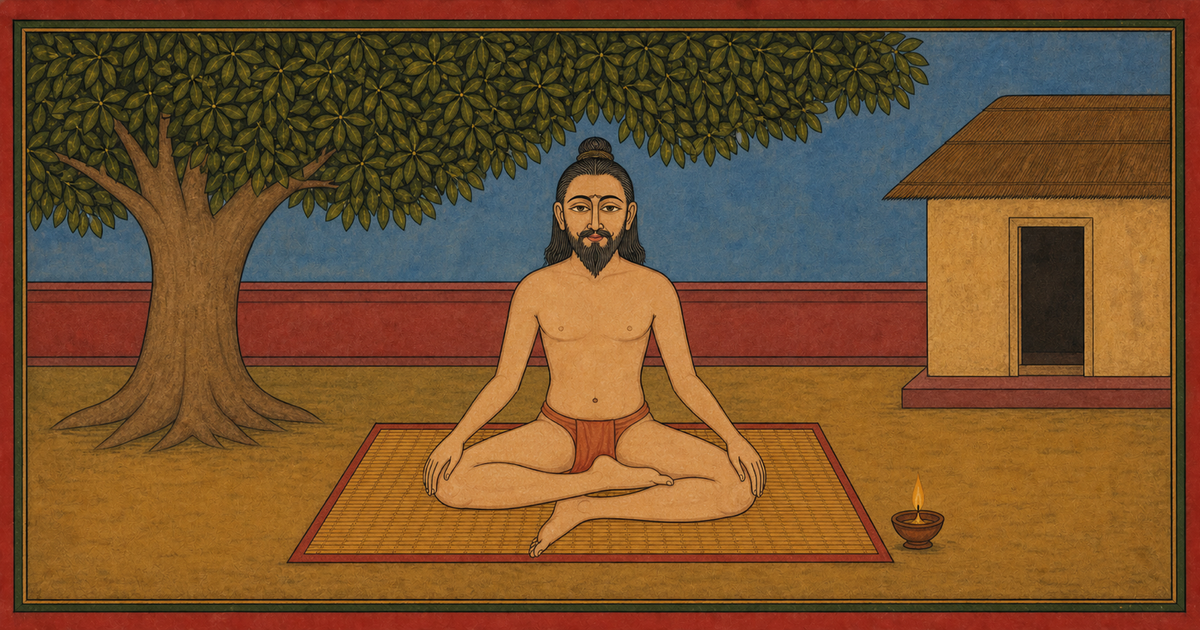
A yogi sits in lotus pose beneath a tree in front of a practice hut, with an oil lamp burning nearby.

Haṭhapradīpikā 1: Foundations and Āsana

Guru, conditions for practice, and Āsanas open the path of Haṭha and direct it toward stability, health, and Rājayoga.

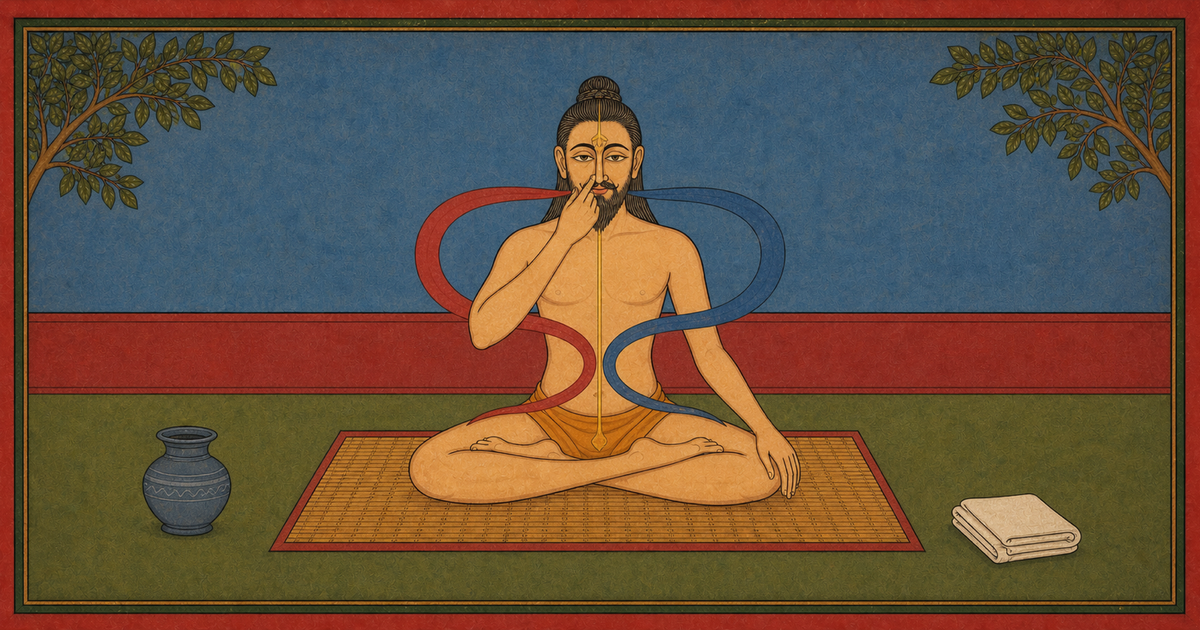
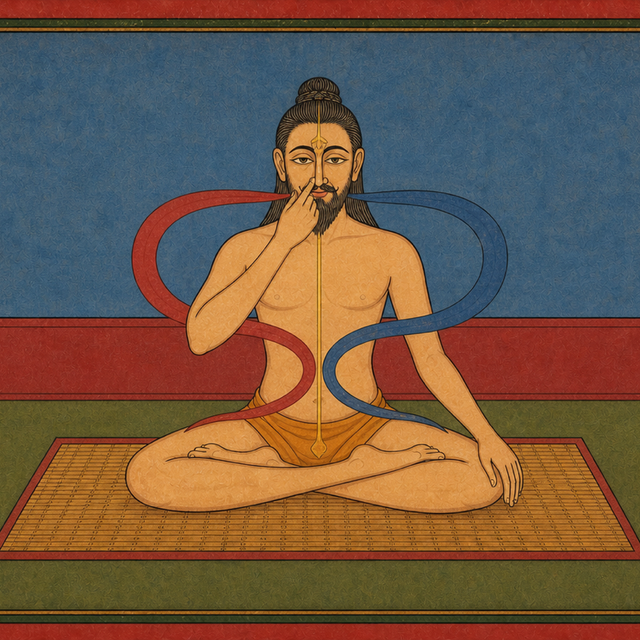
A yogi practices alternate-nostril breathing; red and blue breath streams circle the body, with a water vessel and cloth nearby.

Haṭhapradīpikā 2: Prāṇāyāma and Purification

Purification, control of the breath, and Kumbhaka regulate vital energy and prepare the transition to subtler practices.

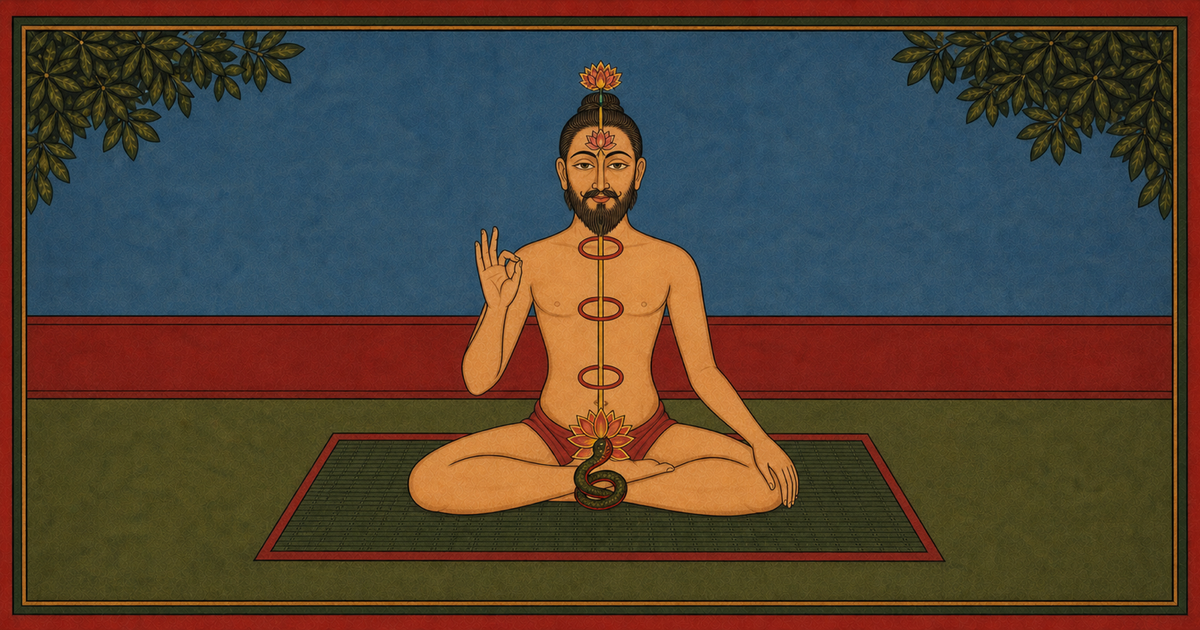
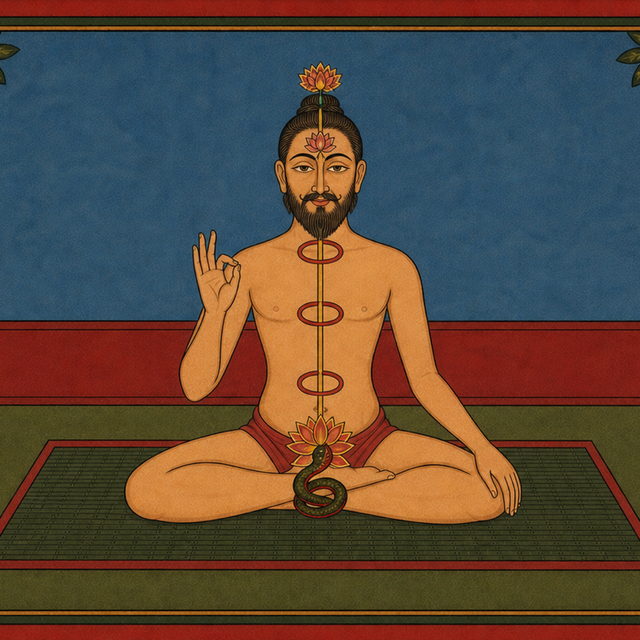
A meditating yogi forms a mudrā; lotus blossoms and rings mark the body’s center, while a serpent coils at the pelvis.

Haṭhapradīpikā 3: Mudrā and Kuṇḍalinī

Mudrās, Bandhas, and work with Kuṇḍalinī are intended to lead the breath into the central channel and foster yogic accomplishment.

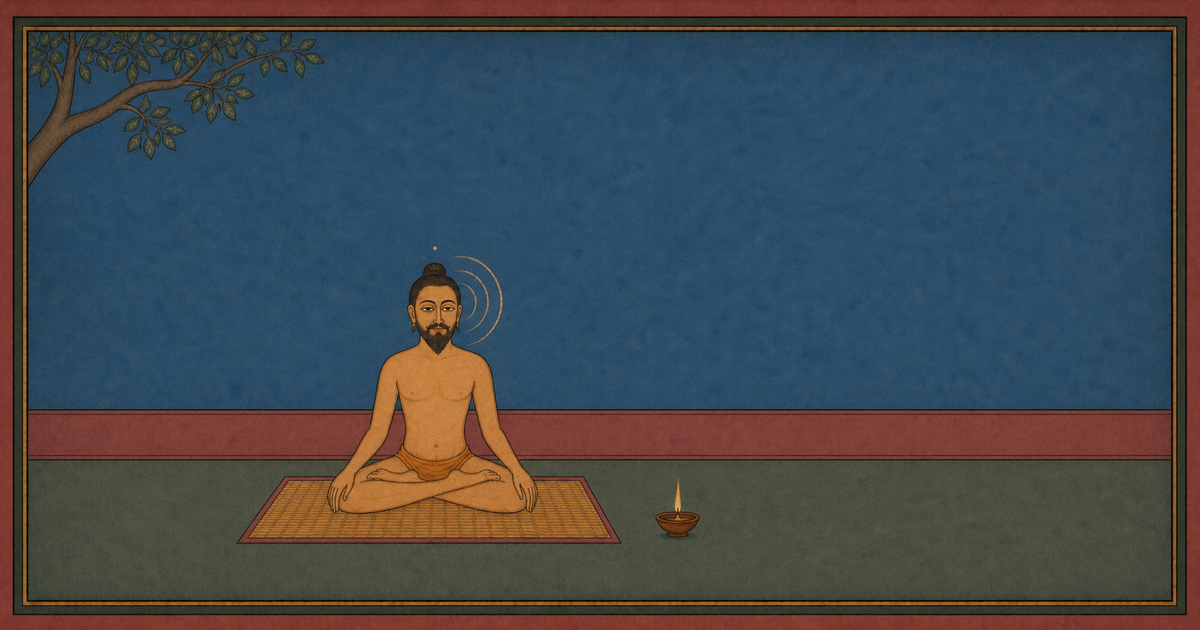
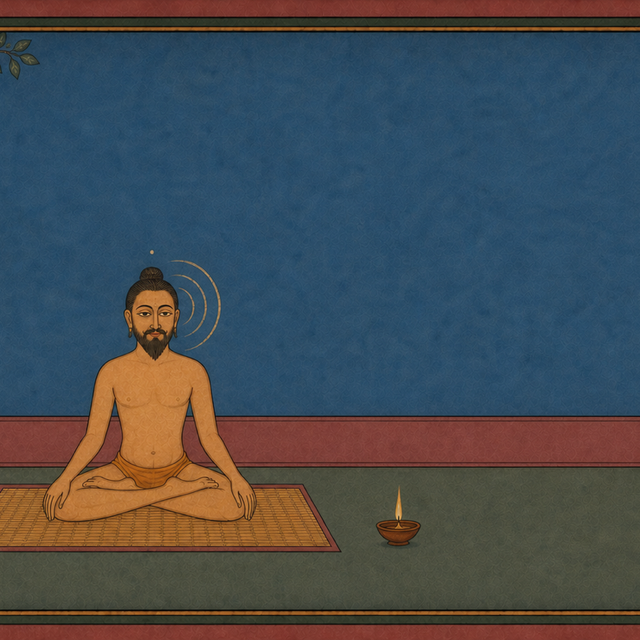
A seated yogi listens inwardly; subtle sound waves spread beside his head and an oil lamp burns nearby.

Haṭhapradīpikā 4: Samādhi, Nāda, and Laya

Laya, the practice of inner sound, and Samādhi describe the dissolution of mental movement and the completion of the path of Haṭha.

Illustrations: AI-generated.

Editor

Dr. Ronald Steiner

From Ulm

The "Yoga Doc" - Dr. Ronald Steiner is the founder of the AYI method. This method links traditional Ashtanga Yoga with innovative Yogatherapy and living Philosophy. This forms a practice that is personal for each and... more ›