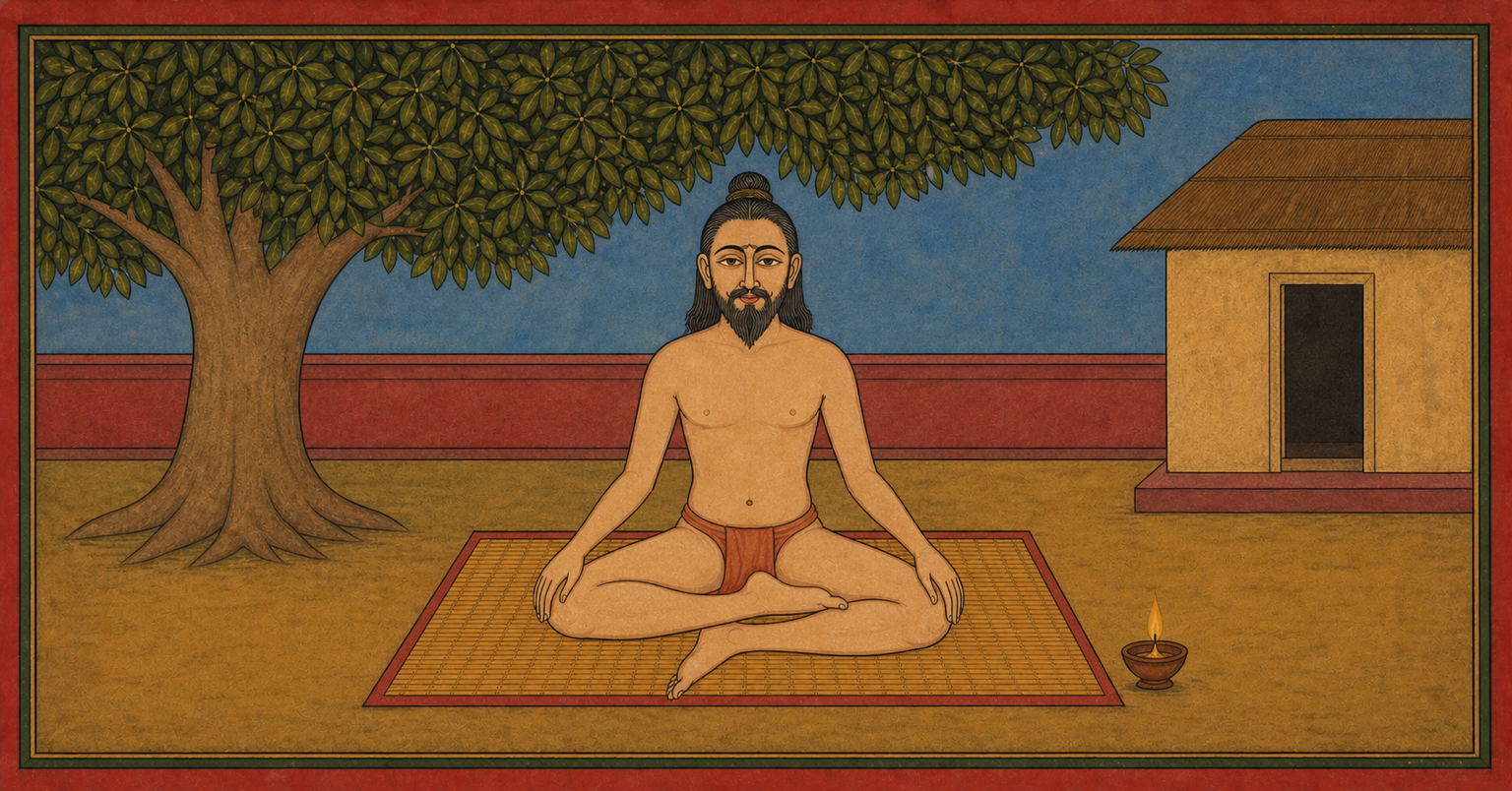
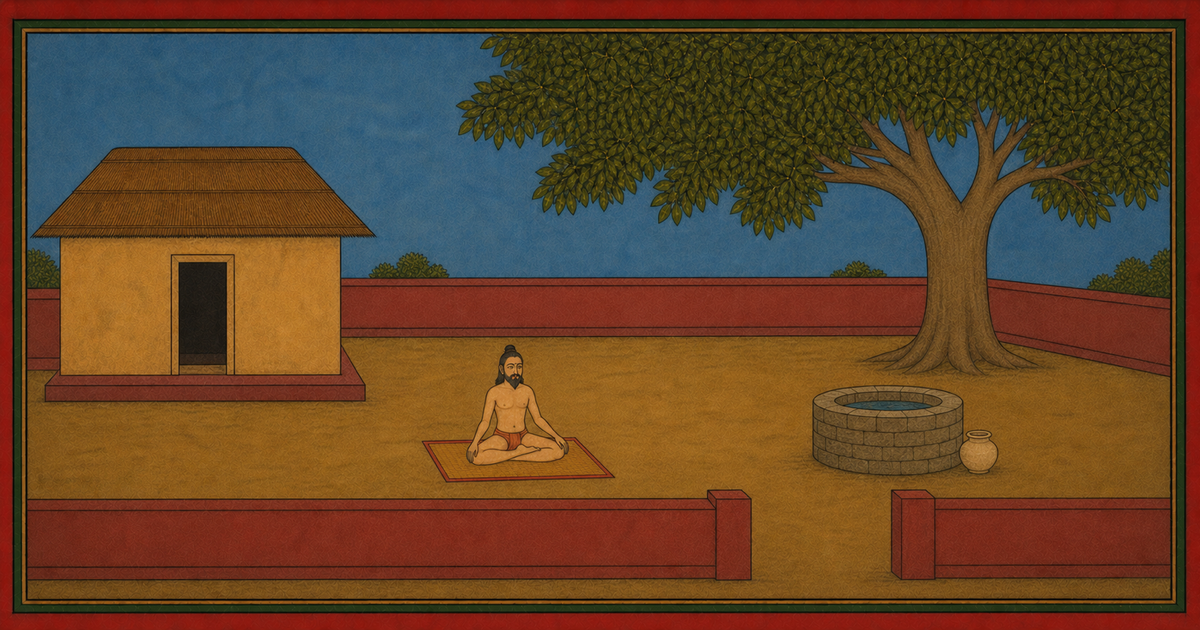
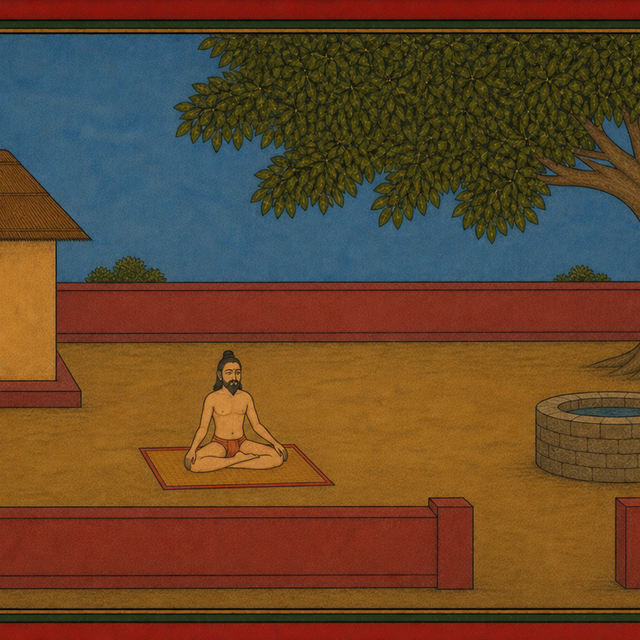
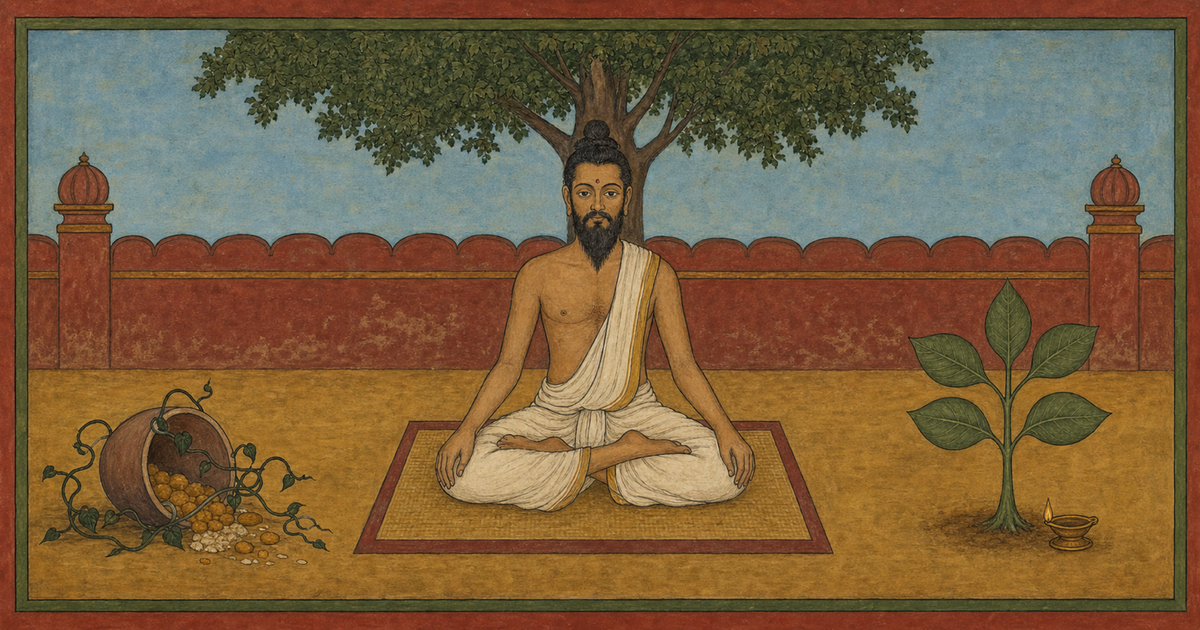
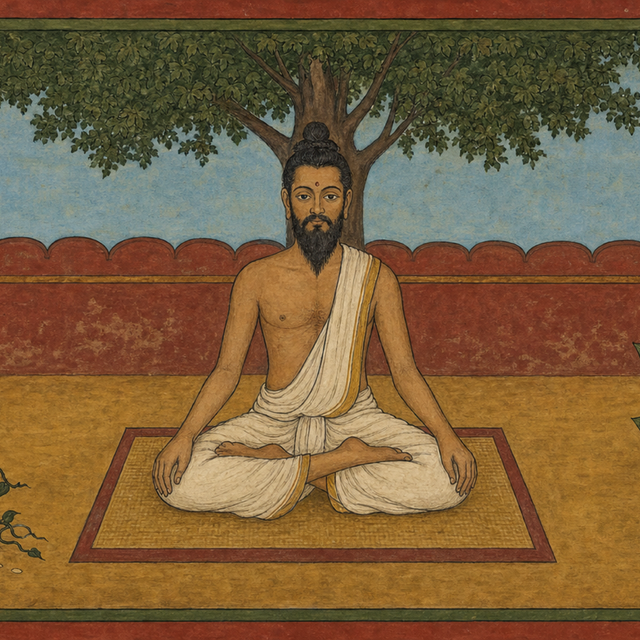
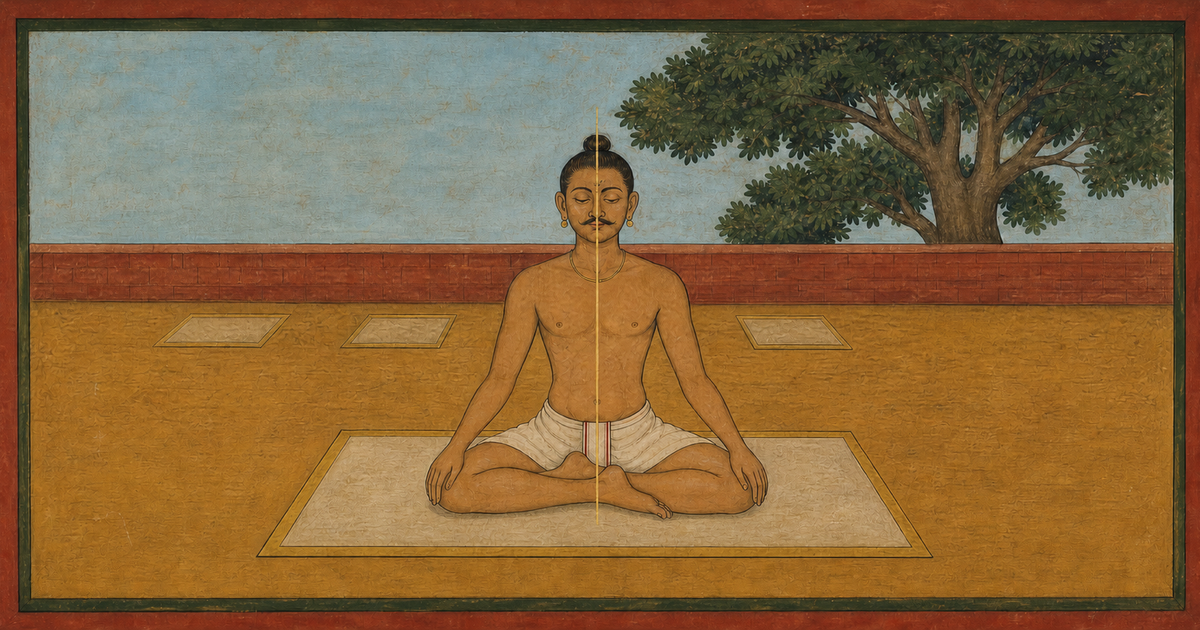
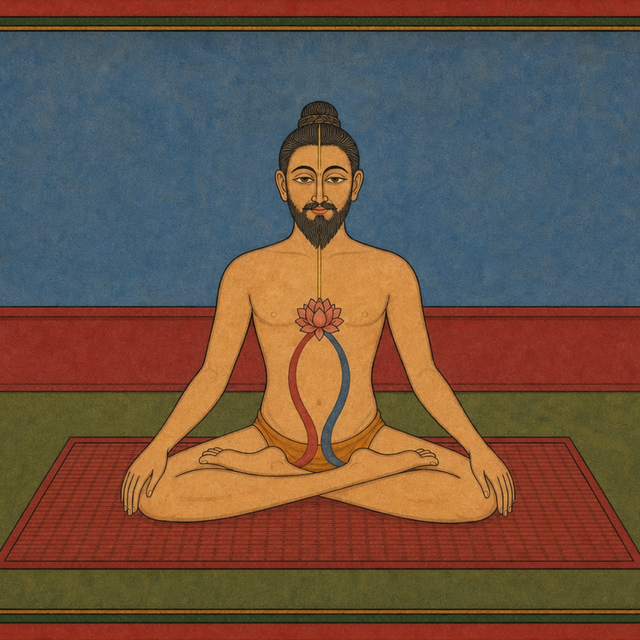
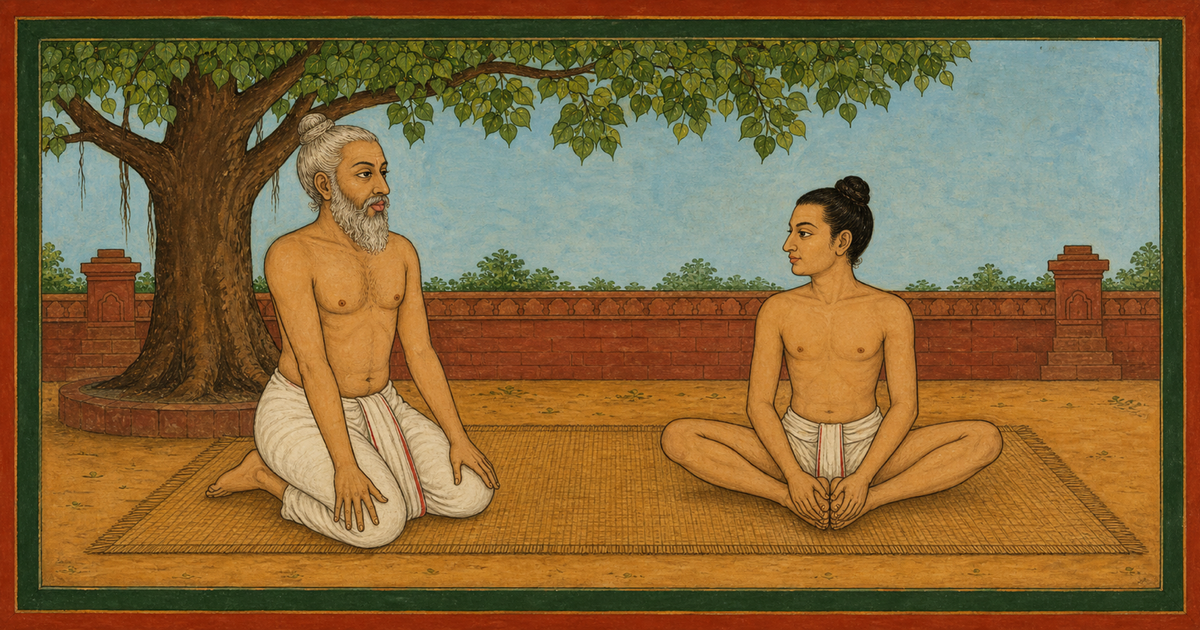
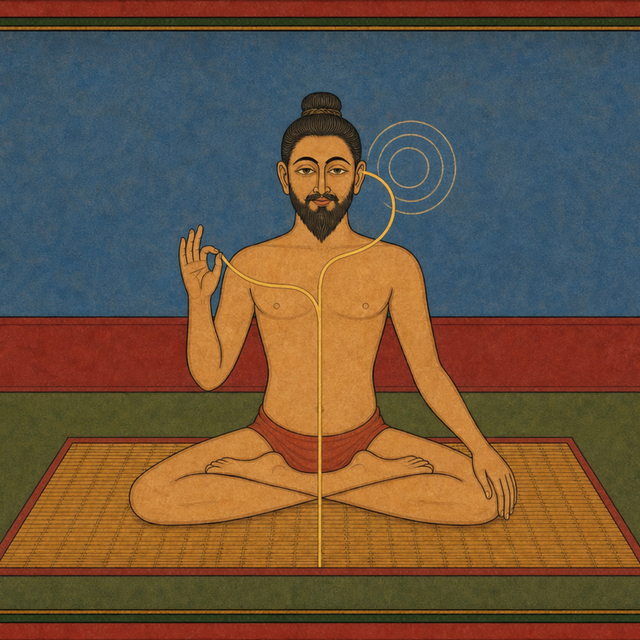
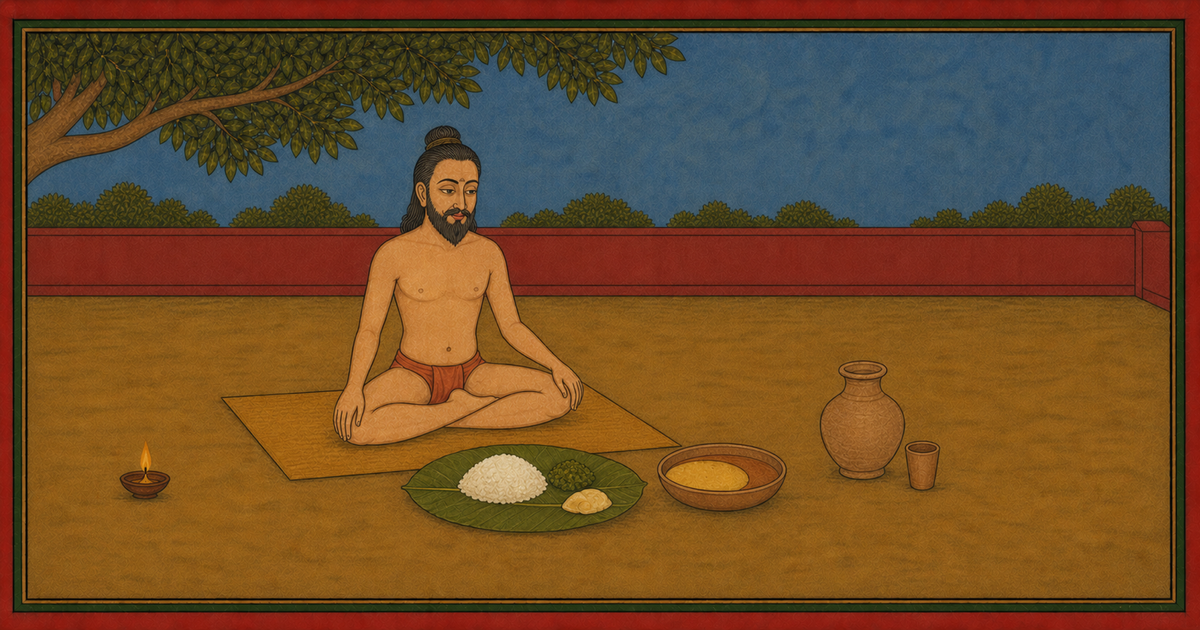
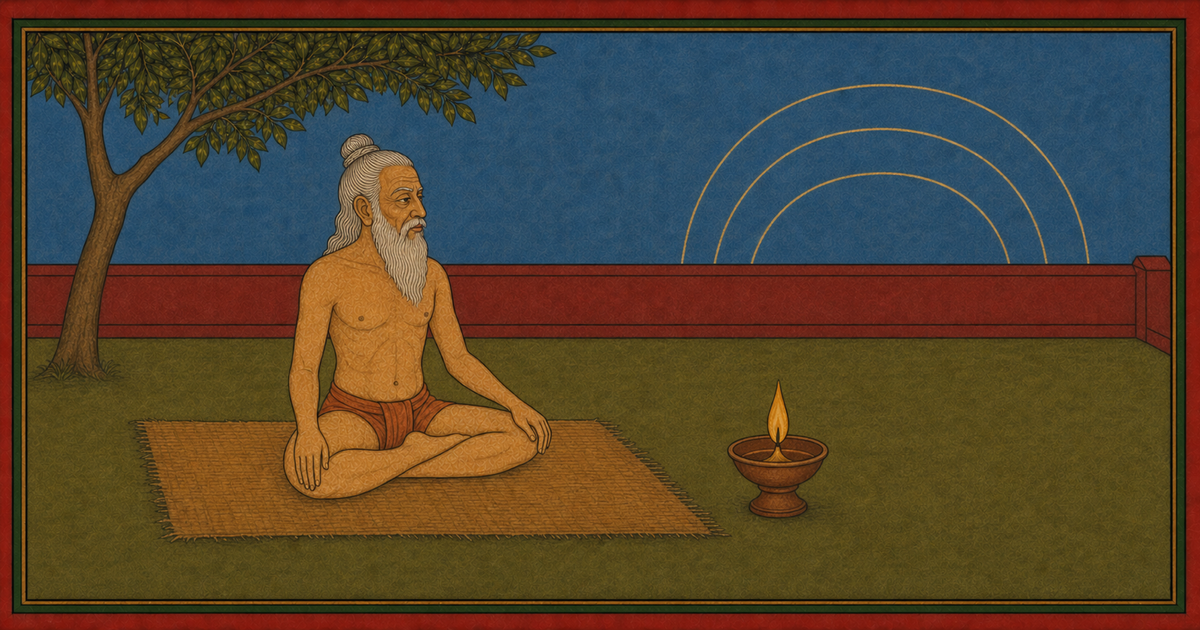
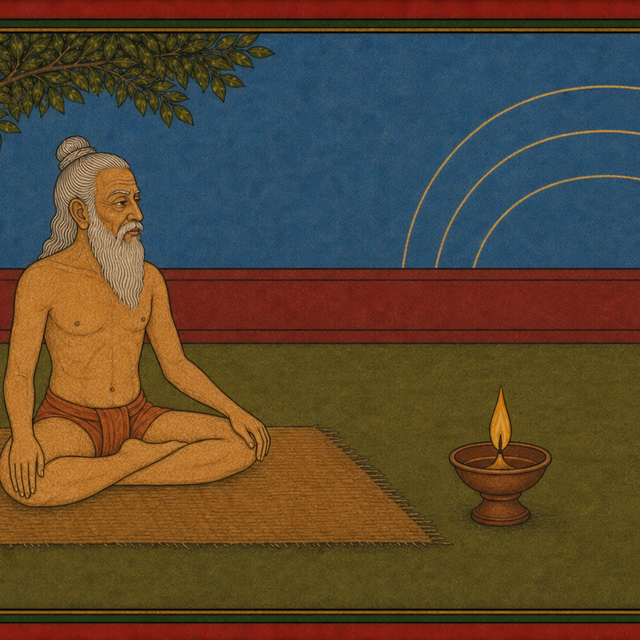
A yogi sits in lotus pose beneath a tree in front of a practice hut, with an oil lamp burning nearby.

Haṭhapradīpikā 1: Foundations and Āsana

Guru, conditions for practice, and Āsanas open the path of Haṭha and direct it toward stability, health, and Rājayoga.

Dr. Ronald Steiner Dr. Ronald Steiner
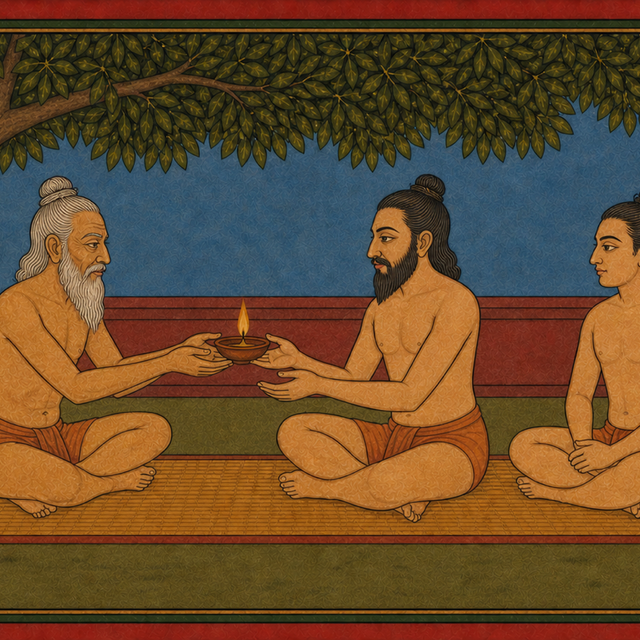
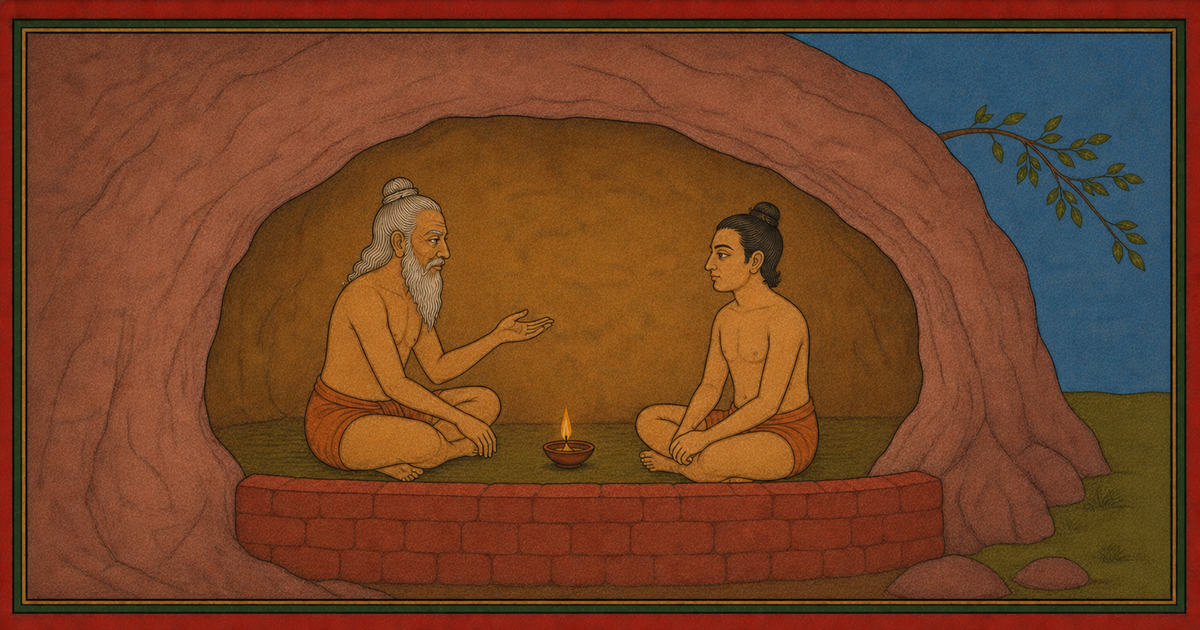
Illustration for the Haṭha Pradīpikā section “HP 1.1-1.3: Opening”.

Haṭha Pradīpikā 1.1-1.3: Opening and Purpose of the Teaching

Ādinātha, the Guru, and Svātmārāma frame Haṭha as a ladder to Rājayoga and a lamp for seekers in the darkness of many teachings.

Haṭha Pradīpikā 1.1
Metre: Upajāti
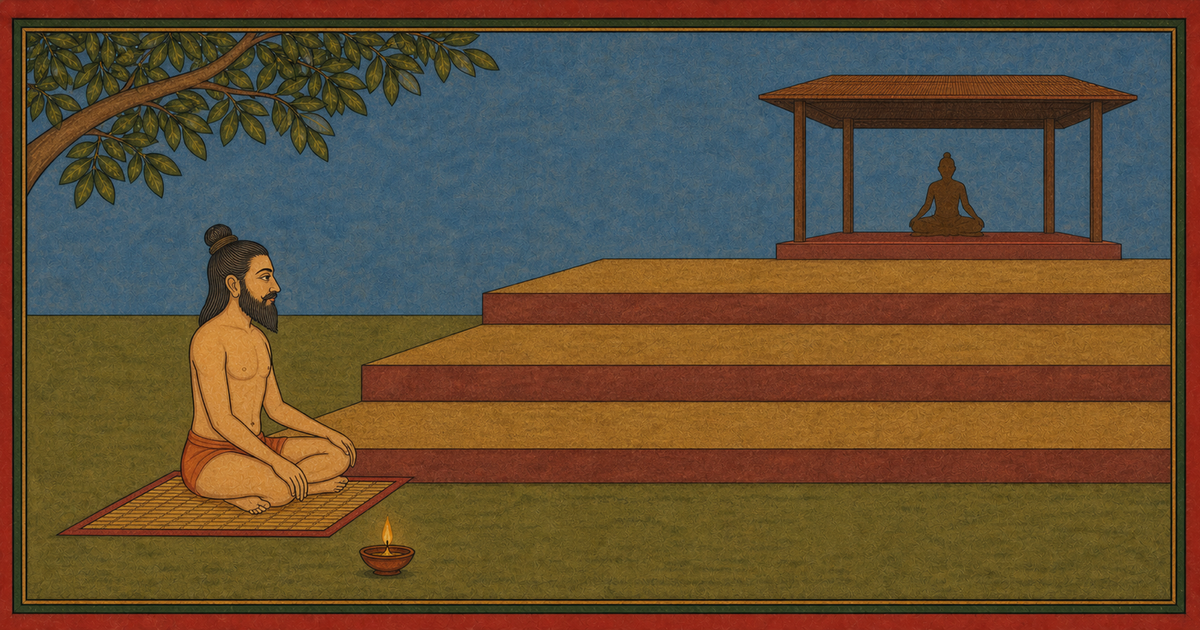
Homage (namaḥ | nom sg) be (astu | 3p sg act imp) to this (tasmai | dat sg) glorious Ādinātha (śrī-ādināthāya | dat sg), by whom (yena | ins sg) the science of Haṭhayoga (haṭha-yoga-vidyā | nom sg) was taught (upadiṣṭā | nom sg f ppp); it shines (virājate | 3p sg med pres) like (iva) a stairway (adhirohiṇī | nom sg) for one who wishes (icchoḥ | gen sg m pca) to ascend (āroḍhum | inf) to the lofty royal terrace (pronnata-rāja-saudham | acc sg).
Dr. Ronald Steiner - 2026 - historically literal
Haṭha Pradīpikā 1.2
Metre: Anuṣṭubh
Having bowed (praṇamya | abs) to the glorious guru (śrī-guruṃ | acc sg), the Lord (nāthaṃ | acc sg), the Haṭha system (haṭha-vidyā | nom sg) is taught (upadiśyate | 3p sg pas pres) by the yogi (yoginā | ins sg) Svātmārāma (svātmārāmeṇa | ins sg) solely (kevalam) for Rājayoga (rāja-yogāya | dat sg).
Dr. Ronald Steiner - 2026 - historically literal
Haṭha Pradīpikā 1.3
Metre: Anuṣṭubh
For those who, through confusion (bhrāntyā | ins sg), do not know (ajānatām | gen pl pca) the royal path (rāja-mārgam | acc sg) in the darkness of many doctrines (bahu-mata-dhvānte | loc sg), Svātmārāma (svātmārāmaḥ | nom sg), full of compassion (kṛpā-karaḥ | nom sg m), holds up (dhatte | 3p sg med pres) the Lamp on Haṭha (haṭha-pradīpikām | acc sg).
Dr. Ronald Steiner - 2026 - historically literal
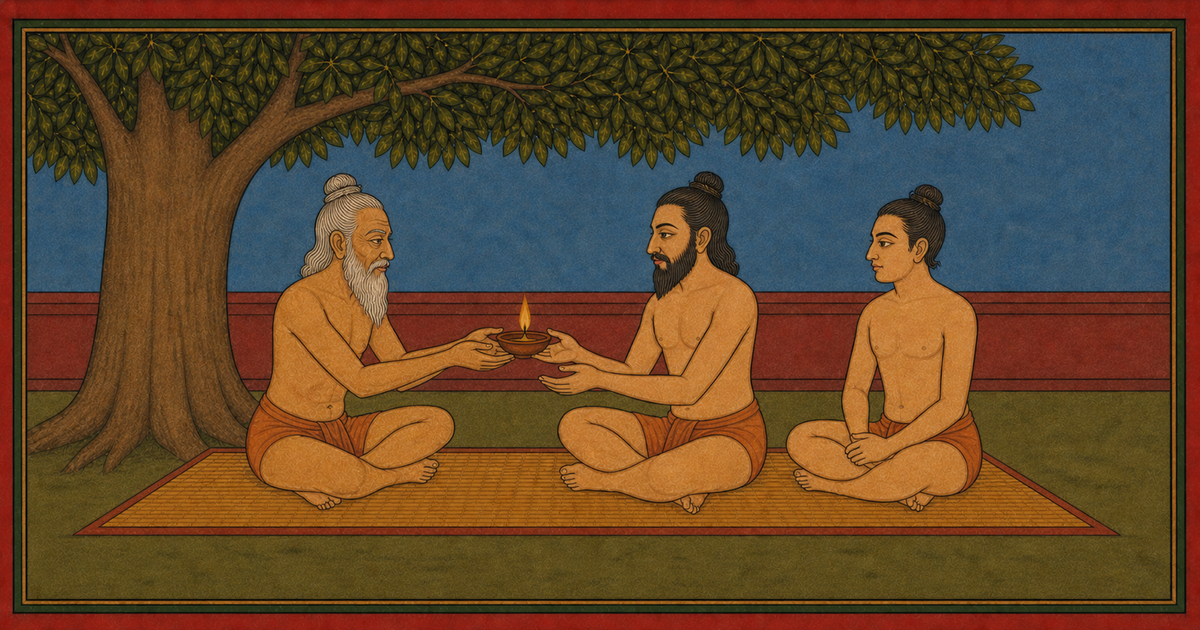
Illustration for the Haṭha Pradīpikā section “HP 1.4-1.10: Lineage of Siddhas”.

Haṭha Pradīpikā 1.4-1.10: Lineage of Siddhas and Protective Power

The teaching is legitimized through the Siddhas; Haṭha appears as a powerful refuge and foundation of the paths of Yoga.

Haṭha Pradīpikā 1.4
Metre: Anuṣṭubh
For (hi) Matsyendra, Gorakṣa, and the others (matsyendra-gorakṣa-ādyāḥ | nom pl) know (vijānate | 3p pl med pres) the science of Haṭha (haṭha-vidyām | acc sg); Svātmārāma (svātmārāmaḥ | nom sg), the yogi (yogī | nom sg), likewise (athavā) knows it (jānīte | 3p sg med pres) through their favour (tat-prasādataḥ | abl sg).
Dr. Ronald Steiner - 2026 - historically literal
Haṭha Pradīpikā 1.5
Metre: Anuṣṭubh
Named are the glorious Ādinātha, Matsyendra, Śābara, Ānanda, and Bhairava (śrī-ādinātha-matsyendra-śābara-ānanda-bhairavāḥ | nom pl), as well as Cauraṅgī, Mīna, Gorakṣa, Virūpākṣa, and Bileśaya (cauraṅgī-mīna-gorakṣa-virūpākṣa-bileśayāḥ | nom pl).
Dr. Ronald Steiner - 2026 - historically literal
Haṭha Pradīpikā 1.6
Metre: Anuṣṭubh
They include Manthānabhairava (manthāna-bhairavaḥ | nom sg), the yogi (yogī | nom sg), Siddhabuddha (siddha-buddhaḥ | nom sg), Kanthaḍi (kanthaḍiḥ | nom sg), Goraṇṭaka (goraṇṭakaḥ | nom sg), Surānanda (surānandaḥ | nom sg), Siddhapāda (siddhapādaḥ | nom sg), and (ca) Carpaṭi (carpaṭiḥ | nom sg).
Dr. Ronald Steiner - 2026 - historically literal
Haṭha Pradīpikā 1.7
Metre: Anuṣṭubh
Next come Kaṇerī (kaṇerī | nom sg), Pūjyapāda (pūjyapādaḥ | nom sg), and (ca) Nityanātha (nityanāthaḥ | nom sg), Nirañjana (nirañjanaḥ | nom sg), Kapālī (kapālī | nom sg), Bindunātha (bindu-nāthaḥ | nom sg), and (ca) Kākacaṇḍīśvara (kākacaṇḍīśvaraḥ | nom sg), Gaya (gayaḥ | nom sg).
Dr. Ronald Steiner - 2026 - historically literal
Haṭha Pradīpikā 1.8
Metre: Anuṣṭubh
They further include Allamaprabhudeva (allama-prabhudevaḥ | nom sg), Ghoḍācolī (ghoḍācolī | nom sg), Ṭiṇṭiṇi (ṭiṇṭiṇiḥ | nom sg), Bhāluki (bhālukiḥ | nom sg), Nāgabodha (nāga-bodhaḥ | nom sg), and (ca) likewise (tathā) Khaṇḍakāpālika (khaṇḍa-kāpālikaḥ | nom sg).
Dr. Ronald Steiner - 2026 - historically literal
Haṭha Pradīpikā 1.9
Metre: Anuṣṭubh
These and others (ādayaḥ | nom pl), thus (iti) named, are great adepts (mahā-siddhāḥ | nom pl) who, through the power of Haṭhayoga (haṭha-yoga-prabhāvataḥ | abl sg), have broken (khaṇḍayitvā | abs) the rod of death (kāla-daṇḍam | acc sg); they (te | nom pl m) roam (caranti | 3p pl act pres) the worlds (brahmāṇḍeṣu | loc pl).
Dr. Ronald Steiner - 2026 - historically literal
Haṭha Pradīpikā 1.10
Metre: Anuṣṭubh
Haṭha (haṭhaḥ | nom sg) is a hut of complete refuge (sama-aśraya-maṭhaḥ | nom sg) for those scorched by the torment of saṃsāra (saṃsāra-tāpa-taptānām | gen pl ppp); Haṭha (haṭhaḥ | nom sg) is the supporting tortoise (ādhāra-kamaṭhaḥ | nom sg) for the worlds of all yogas (aśeṣa-yoga-jagatām | gen pl).
Dr. Ronald Steiner - 2026 - historically literal
Illustration for the Haṭha Pradīpikā section “HP 1.11: Secrecy”.

Haṭha Pradīpikā 1.11: Secrecy of the Haṭha Teaching

The teaching is to be transmitted with care because indiscriminate disclosure weakens its efficacy.

Illustration for the Haṭha Pradīpikā section “HP 1.12-1.14: Place of Practice”.

Haṭha Pradīpikā 1.12-1.14: Place of Practice and Retreat

The text describes the region, hermitage, and inner attitude of the practitioner: protected, clean, secluded, and sustained by the path of the Guru.

Haṭha Pradīpikā 1.12
Metre: Anuṣṭubh
The Haṭhayogis (haṭha-yoginām | gen pl) should dwell (sthātavyam | nom sg n pfp) in an isolated small hut (ekānta-maṭhikā-madhye | loc sg), in a well-ruled country (su-rājye | loc sg), in a righteous region (dhārmike deśe | loc sg) that has plentiful food (su-bhikṣe | loc sg m) and is free from disturbance (nir-upadrave | loc sg m).
Dr. Ronald Steiner - 2026 - historically literal
Haṭha Pradīpikā 1.13
Metre: Śārdūlavikrīḍita
Having a small door (alpa-dvāram | nom sg), no cracks, holes, or unevenness (arandhra-garta-piṭakam | nom sg), being neither excessively high nor low nor spacious (na-ati-ucca-nīca-āyatam | nom sg n), properly and thickly smeared with cow dung (samyak-gomaya-sāndra-liptam | nom sg n ppp), clean (amalam | nom sg n), and entirely free from disturbances (niḥśeṣa-bādhā-ujjhitam | nom sg n ppp), pleasing outside (bāhye | loc sg n) with a porch, platform, and well (maṇḍapa-vedi-kūpa-ruciram | nom sg n), and surrounded by a wall (prākāra-saṃveṣṭitam | nom sg n ppp): this (idam | nom sg n) has been taught (proktam | nom sg n ppp) by the adepts (siddhaiḥ | ins pl), the practitioners of Haṭha (haṭha-abhyāsibhiḥ | ins pl), as the defining feature (lakṣaṇam | nom sg) of a yoga hut (yoga-maṭhasya | gen sg).
Dr. Ronald Steiner - 2026 - historically literal
Haṭha Pradīpikā 1.14
Metre: Anuṣṭubh
Having stayed (sthitvā | abs) in a hut of this kind (evam-vidhe maṭhe | loc sg), free from all concerns (sarva-cintā-vivarjitaḥ | nom sg m ppp), one should regularly (sadā) practise (abhyaset | 3p sg act opt) yoga (yogam | acc sg) alone (eva), following the path taught by the guru (guru-upadiṣṭa-mārgeṇa | ins sg).
Dr. Ronald Steiner - 2026 - historically literal
Illustration for the Haṭha Pradīpikā section “HP 1.15-1.16*2: Factors of Practice”.

Haṭha Pradīpikā 1.15-1.16*2: Obstacles, Supports, and Ethics

Excess, distraction, and harmful conduct are contrasted with supportive qualities as well as Yama and Niyama.

Haṭha Pradīpikā 1.15
Metre: Anuṣṭubh
Through these six (ṣaḍbhiḥ | ins pl), yoga (yogaḥ | nom sg) is lost (vinaśyati | 3p sg act pres): overeating (ati-āhāraḥ | nom sg), overexertion (prayāsaḥ | nom sg), idle talk (prajalpaḥ | nom sg), clinging to non-observance (a-niyama-grahaḥ | nom sg), socialising (jana-saṅgaḥ | nom sg), and (ca) fickleness (laulyam | nom sg).
Dr. Ronald Steiner - 2026 - historically literal
Haṭha Pradīpikā 1.16
Metre: Anuṣṭubh
Through these six (ṣaḍbhiḥ | ins pl), yoga (yogaḥ | nom sg) succeeds (prasidhyati | 3p sg act pres): through energy (utsāhāt | abl sg), conviction (niścayāt | abl sg), steadfastness (dhairyāt | abl sg), knowledge of reality and vision of the self (tattva-jñāna-ātma-darśanāt | abl sg), and relinquishing social contact (jana-saṅga-parityāgāt | abl sg).
Dr. Ronald Steiner - 2026 - historically literal
Haṭha Pradīpikā 1.16*1
Metre: Anuṣṭubh
Non-violence (ahiṃsā | nom sg), truthfulness (satyam | nom sg), non-stealing (asteyam | nom sg), celibate conduct (brahmacaryam | nom sg), patience (kṣamā | nom sg), steadfastness (dhṛtiḥ | nom sg), compassion (dayā | nom sg), sincerity (ārjavam | nom sg), moderate eating (mita-āhāraḥ | nom sg), and also (caiva) purity (śaucam | nom sg): these are the ten (daśa) restraints (yamāḥ | nom pl).
Dr. Ronald Steiner - 2026 - historically literal
Haṭha Pradīpikā 1.16*2
Metre: Anuṣṭubh
Ascetic discipline (tapaḥ | nom sg), contentment (saṃtoṣam | acc sg), faith (āstikyam | nom sg), generosity (dānam | nom sg), worship of Īśvara (īśvara-pūjanam | nom sg), listening to doctrine (siddhānta-śravaṇam | nom sg), and likewise (caiva) moral shame (hrīḥ | nom sg), understanding (matiḥ | nom sg), recitation (japaḥ | nom sg), and (ca) offering into the fire (hutam | nom sg n ppp) constitute the observances.
Dr. Ronald Steiner - 2026 - historically literal
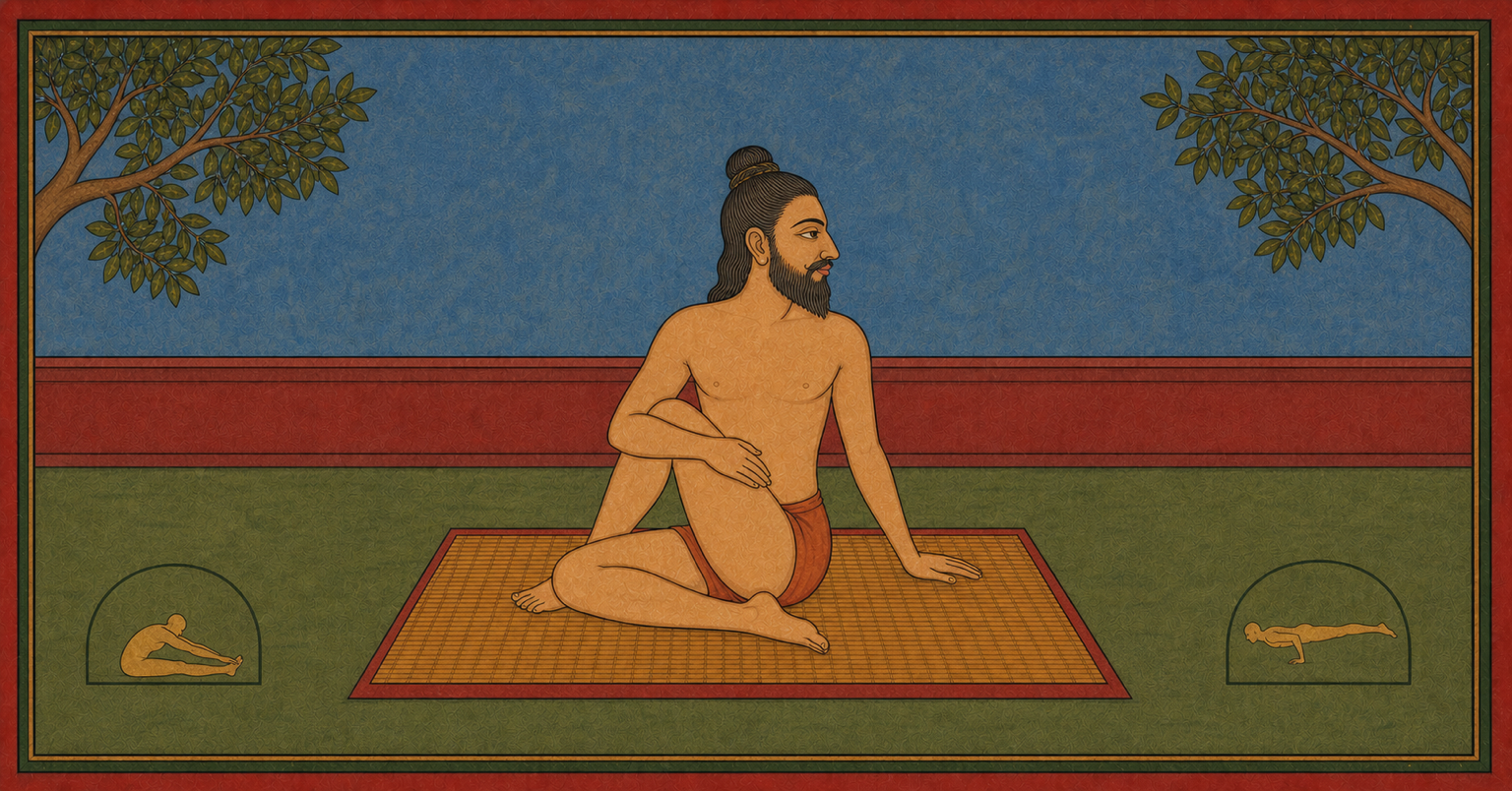
Illustration for the Haṭha Pradīpikā section “HP 1.17-1.32: Āsana”.

Haṭha Pradīpikā 1.17-1.32: Āsana as the First Limb

The section opens the teaching on Āsana and describes individual postures from Svastika to Śava together with their physical and energetic effects.

Haṭha Pradīpikā 1.17
Metre: Anuṣṭubh
Because it is the first auxiliary (prathama-aṅgatvāt | abl sg) of Haṭha (haṭhasya | gen sg), posture (āsanam | nom sg) is taught (ucyate | 3p sg pas pres) first (pūrvam). This (tat | nom sg n) posture (āsanam | nom sg) should bring about (kuryāt | 3p sg act opt) steadiness (sthairyam | acc sg), health (ārogyam | acc sg), and (ca) suppleness of the limbs (aṅga-pāṭavam | acc sg).
Dr. Ronald Steiner - 2026 - historically literal
Haṭha Pradīpikā 1.18
Metre: Anuṣṭubh
Some (kānicit | nom pl n) postures (āsanāni | nom pl), accepted (aṅgīkṛtāni | nom pl n ppp) by sages (munibhiḥ | ins pl) such as Vasiṣṭha and others (vasiṣṭha-ādyaiḥ | ins pl), and (ca) by yogis (yogibhiḥ | ins pl) such as Matsyendra and others (matsyendra-ādyaiḥ | ins pl), are taught (kathyante | 3p pl pas pres) by me (mayā | ins sg).
Dr. Ronald Steiner - 2026 - historically literal
Haṭha Pradīpikā 1.19
Metre: Anuṣṭubh
Having properly (samyak) placed (kṛtvā | abs) both soles of the feet (pāda-tale ubhe | acc du n) in the space (antare | loc sg) between the knees and thighs (jānu-ūrvoḥ | gen du), [one sits] with the body upright (ṛju-kāyaḥ | nom sg), seated (samāsīnaḥ | nom sg m ppp); they call (pracakṣate | 3p pl med pres) this (tat | acc sg n) the auspicious pose (svastikam | acc sg).
Dr. Ronald Steiner - 2026 - historically literal
Haṭha Pradīpikā 1.20
Metre: Anuṣṭubh
One should now (tu) place (niyojayet | 3p sg act opt) the right ankle (dakṣiṇa-gulpham | acc sg) on the left rear side (savye pṛṣṭha-pārśve | loc sg n), and likewise (tathā) also (api) the left [ankle] (savyam | acc sg m) on the right [side] (dakṣiṇe | loc sg n). This is cow-face pose (go-mukham | nom sg), resembling (yathā) a cow's face (go-mukham | acc sg).
Dr. Ronald Steiner - 2026 - historically literal
Haṭha Pradīpikā 1.21
Metre: Anuṣṭubh
Having now (atha) placed (vinyasya | abs) one foot (ekam pādam | acc sg) on one thigh (ekasmin ūruṇi | loc sg), where it is fixed (saṃsthitam | acc sg m ppp), and likewise (tathā) the thigh (ūrum | acc sg) upon the other (itarasmin | loc sg m), this is thus (iti) called (īritam | nom sg n ppp) the hero pose (vīrāsanam | nom sg).
Dr. Ronald Steiner - 2026 - historically literal
Haṭha Pradīpikā 1.22
Metre: Anuṣṭubh
Having firmly pressed (niṣpīḍya | abs) the anus (gudam | acc sg) with both ankles (gulphābhyām | ins du) in crossed order (vyutkrameṇa | ins sg), composed (samāhitaḥ | nom sg m ppp), this (etat | nom sg n) becomes (bhavet | 3p sg act opt) tortoise pose (kūrmāsanam | nom sg): thus (iti) the knowers of yoga (yoga-vidaḥ | nom pl m) know it (viduḥ | 3p pl act perf).
Dr. Ronald Steiner - 2026 - historically literal
Haṭha Pradīpikā 1.23
Metre: Anuṣṭubh
Having properly established (su-saṃsthāpya | abs) the lotus pose (padmāsanam | acc sg), inserted (niveśya | abs) both hands (karau | acc du) through the space (antare | loc sg) between the knees and thighs (jānu-ūrvoḥ | gen du), and placed them (saṃsthāpya | abs) on the ground (bhūmau | loc sg), [one remains] suspended in space (vyoma-sthaḥ | nom sg m): this is the wild-cock pose (kukkuṭāsanam | nom sg).
Dr. Ronald Steiner - 2026 - historically literal
Haṭha Pradīpikā 1.24
Metre: Anuṣṭubh
Remaining in the bind of the wild-cock pose (kukkuṭa-āsana-bandha-sthaḥ | nom sg m), having clasped (saṃbadhya | abs) the neck (kandharām | acc sg) with both arms (dorbhyām | ins du), one lies (śete | 3p sg med pres) face upward (uttānaḥ | nom sg m) like a tortoise (kūrmavat). This (etat | nom sg n) is the upturned tortoise (uttāna-kūrmakam | nom sg).
Dr. Ronald Steiner - 2026 - historically literal
Haṭha Pradīpikā 1.25
Metre: Anuṣṭubh
Having now (tu) grasped (gṛhītvā | abs) both big toes (pāda-aṅguṣṭhau | acc du) with both hands (pāṇibhyām | ins du), [one forms] a bow (dhanuḥ | nom sg), drawn (kṛṣṭam | nom sg n ppp) by pulling (ākarṣaṇāt | abl sg) as far as the ear (śravaṇa-avadhi | acc sg). [This] is called (ucyate | 3p sg pas pres) the bow pose (dhanus-āsanam | nom sg).
Dr. Ronald Steiner - 2026 - historically literal
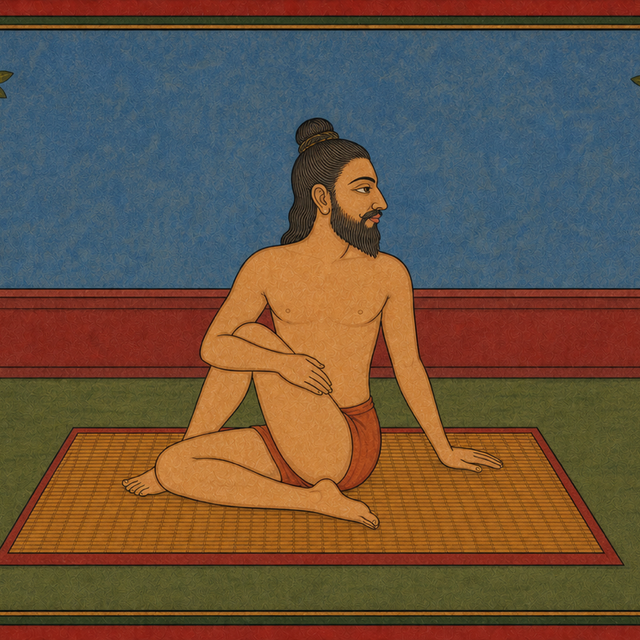
Haṭha Pradīpikā 1.26
Metre: Upajāti
With the right foot (dakṣa-pādam | acc sg) placed at the root of the left thigh (vāma-ūru-mūla-arpita | kd ppp) and the right arm (dakṣa-doṣṇā | ins sg) wrapped (veṣṭita | kd ppp) around the outside (bahir) of the knee (jānoḥ | gen sg), one should grasp the foot (pragṛhya | abs) and remain (tiṣṭhet | 3p sg act opt) with the body twisted (parivartita-aṅgaḥ | nom sg). This posture (āsanam | nom sg) is taught by the glorious Matsyanātha (śrī-matsya-nātha-uditam | nom sg n ppp).
Dr. Ronald Steiner - 2026 - historically literal
Haṭha Pradīpikā 1.27
Metre: Upajāti
Matsyendra's seat (matsyendra-pīṭham | nom sg) is a weapon (astram | nom sg) for destroying a host (maṇḍala-khaṇḍana | tp gen) of chronic and severe (jaṭhara-pracaṇḍa | kd) diseases (ruj | tp gen) of the abdomen (picaṇḍa | tp loc). Through practice (abhyāsataḥ | abl sg), it brings about (dadāti | 3p sg act pres) in people (puṃsām | gen pl) the awakening of Kuṇḍalinī (kuṇḍalinī-prabodham | acc sg) and (ca) steadiness of the spine (daṇḍa-sthiratvam | acc sg).
Dr. Ronald Steiner - 2026 - historically literal
Haṭha Pradīpikā 1.28
Metre: Upajāti
Having extended (prasārya | abs) both legs (pādau | acc du) on the ground (bhuvi | loc sg), straight like staffs (daṇḍa-rūpau | acc du m), and grasped (gṛhītvā | abs) the pair of tips of the feet (pāda-agra-dvitayam | acc sg) with both hands (dorbhyām | ins du), one should remain (vaset | 3p sg act opt) with the forehead placed above the knees (jānu-upari-nyasta-lalāṭa-deśaḥ | nom sg). They call (āhuḥ | 3p pl act perf) this (idam | acc sg n) the back stretch (paścimatāṇam | acc sg).
Dr. Ronald Steiner - 2026 - historically literal
Haṭha Pradīpikā 1.29
Metre: Śiśulīlā
Thus (iti), the back stretch (paścimatāṇam | nom sg), the foremost posture (āsana-agryam | nom sg n), makes (karoti | 3p sg act pres) the breath (pavanam | acc sg) flow backward (paścima-vāhinam | acc sg m). It should cause (kuryāt | 3p sg act opt) the digestive fire (jaṭhara-analasya | gen sg) to rise (udayam | acc sg), make the abdomen (udare | loc sg) slender (kārśyam | acc sg), and (ca) bring people (puṃsām | gen pl) freedom from disease (arogatām | acc sg).
Dr. Ronald Steiner - 2026 - historically literal
Haṭha Pradīpikā 1.30
Metre: Upajāti
Having supported oneself (avaṣṭabhya | abs) on the ground (dharām | acc sg) with both palms (kara-sthalābhyām | ins du), then (tat) placing the sides of the navel upon the elbows (kūrpara-sthāpita-nābhi-pārśvaḥ | nom sg m bv), raised (utthitaḥ | nom sg m ppp) in the air (khe | loc sg) in an elevated posture (ucca-āsanaḥ | nom sg m bv) like a staff (daṇḍavat), they call (pravadanti | 3p pl act pres) this posture (etat pīṭham | acc sg n) the peacock (mayūram | acc sg).
Dr. Ronald Steiner - 2026 - historically literal
Haṭha Pradīpikā 1.31
Metre: Mālinī
The glorious peacock posture (śrī-mayūram āsanam | nom sg) quickly (āśu) removes (harati | 3p sg act pres) all diseases (sakala-rogān | acc pl), overcomes (abhibhavati | 3p sg act pres) abdominal swelling, abdominal disorders, and the like (gulma-udara-ādīn | acc pl m), as well as (ca) the doṣas (doṣān | acc pl). It should (kuryāt | 3p sg act opt) reduce to ashes (bhasma | acc sg) all (aśeṣam | acc sg n) bad food eaten in excess (bahu-kadaśana-bhuktam | acc sg n ppp), kindle (janayati | 3p sg act pres caus) the digestive fire (jaṭhara-agnim | acc sg), and cause (jārayet | 3p sg act opt caus) deadly poison (kāla-kūṭam | acc sg) to be digested.
Dr. Ronald Steiner - 2026 - historically literal
Haṭha Pradīpikā 1.32
Metre: Anuṣṭubh
Lying (śayanam | nom sg) on the ground (bhūmau | loc sg) face upward like a corpse (uttāna-śava-vat) is now (tu) the corpse pose (śava-āsanam | nom sg). It removes fatigue from all postures (sarva-āsana-śrānti-haram | nom sg n) and is a means of resting the mind (citta-viśrānti-sādhanam | nom sg).
Dr. Ronald Steiner - 2026 - historically literal
Illustration for the Haṭha Pradīpikā section “HP 1.33-1.43: Siddhāsana”.

Haṭha Pradīpikā 1.33-1.43: Four Principal Seats and Siddhāsana

Four principal seats are selected from the many Āsanas; Siddhāsana is described precisely and emphasized as a central practice.

Haṭha Pradīpikā 1.33
Metre: Anuṣṭubh
Eighty-four postures (catur-aśīti-āsanāni | nom pl) have been taught (kathitāni | nom pl n ppp) by Śiva (śivena | ins sg). But now (tu), having taken (ādāya | abs) from these (tebhyaḥ | abl pl) the group of four (catuṣkam | acc sg) that constitutes the essence (sāra-bhūtam | acc sg n), I (aham | nom sg) describe them (bravīmi | 1p sg act pres).
Dr. Ronald Steiner - 2026 - historically literal
Haṭha Pradīpikā 1.34
Metre: Anuṣṭubh
Siddha (siddham | nom sg n), Padma (padmam | nom sg), likewise (tathā) Siṃha (siṃham | nom sg), and Bhadra (bhadram | nom sg n): and so (ceti) this is the group of four (catuṣṭayam | nom sg). Among these (tatra), it is also (api ca) the best (śreṣṭham | nom sg n); therefore, friend (sakhe | voc sg), always (sadā) sit (tiṣṭha | 2p sg act imp) in Siddhāsana (siddha-āsane | loc sg).
Dr. Ronald Steiner - 2026 - historically literal
Haṭha Pradīpikā 1.35
Metre: Śārdūlavikrīḍita
Having firmly (dṛḍham) brought (ghaṭitam | acc sg n ppp) the root of the heel (aṅghri-mūla | tp gen) to the perineal region (yoni-sthānakam | acc sg), and having done this (kṛtvā | abs), one should place (vinyaset | 3p sg act opt) one foot (pādam ekam | acc sg) at the penis (meḍhre | loc sg). Then (atha), one-pointed in mind (eka-hṛdayaḥ | nom sg m bv), holding (dhṛtvā | abs) the body (vigraham | acc sg) straight (samam | acc sg m), one remains motionless (sthāṇuḥ | nom sg m), the senses restrained (saṃyamita-indriyaḥ | nom sg m bv), looking (paśyan | nom sg m pca) with an unmoving gaze (acala-dṛśā | ins sg) into the space (antaram | acc sg) between the eyebrows (bhruvoḥ | gen du). And (ca) this (etat | nom sg n), which opens the gate to liberation (mokṣa-kapāṭa-bheda-janakam | nom sg n), is called (procyate | 3p sg pas pres) Siddhāsana (siddha-āsanam | nom sg).
Dr. Ronald Steiner - 2026 - historically literal
Haṭha Pradīpikā 1.36
Metre: Anuṣṭubh
Having placed (nikṣipya | abs) the left heel (savya-gulpham | acc sg) above (upari) the penis (meḍhrāt | abl sg), and likewise (tathā) placed (nikṣipya | abs) the other heel (gulpha-antaram | acc sg) above it (upari), this (idam | nom sg n) becomes (bhavet | 3p sg act opt) Siddhāsana (siddha-āsanam | nom sg).
Dr. Ronald Steiner - 2026 - historically literal
Haṭha Pradīpikā 1.37
Metre: Anuṣṭubh
Some call (prāhuḥ | 3p pl act perf) this (etat | acc sg n) Siddhāsana (siddha-āsanam | acc sg); others (anye | nom pl m) know it (viduḥ | 3p pl act perf) as Vajrāsana (vajra-āsanam | acc sg). Some (eke | nom pl m) say (vadanti | 3p pl act pres) Muktāsana (mukta-āsanam | acc sg), while others (pare | nom pl m) call it (prāhuḥ | 3p pl act perf) Guptāsana (gupta-āsanam | acc sg).
Dr. Ronald Steiner - 2026 - historically literal
Haṭha Pradīpikā 1.38
Metre: Anuṣṭubh
Just as (iva) moderate eating (mita-āhāram | acc sg) [is essential] among the restraints (yameṣu | loc pl), and non-violence (ahiṃsām | acc sg) among the observances (niyameṣu | loc pl), so the adepts (siddhāḥ | nom pl) know (viduḥ | 3p pl act perf) Siddhāsana (siddha-āsanam | acc sg) as the principal (mukhyam | acc sg n), the one (ekam | acc sg n), among all postures (sarva-āsaneṣu | loc pl).
Dr. Ronald Steiner - 2026 - historically literal
Haṭha Pradīpikā 1.39
Metre: Anuṣṭubh
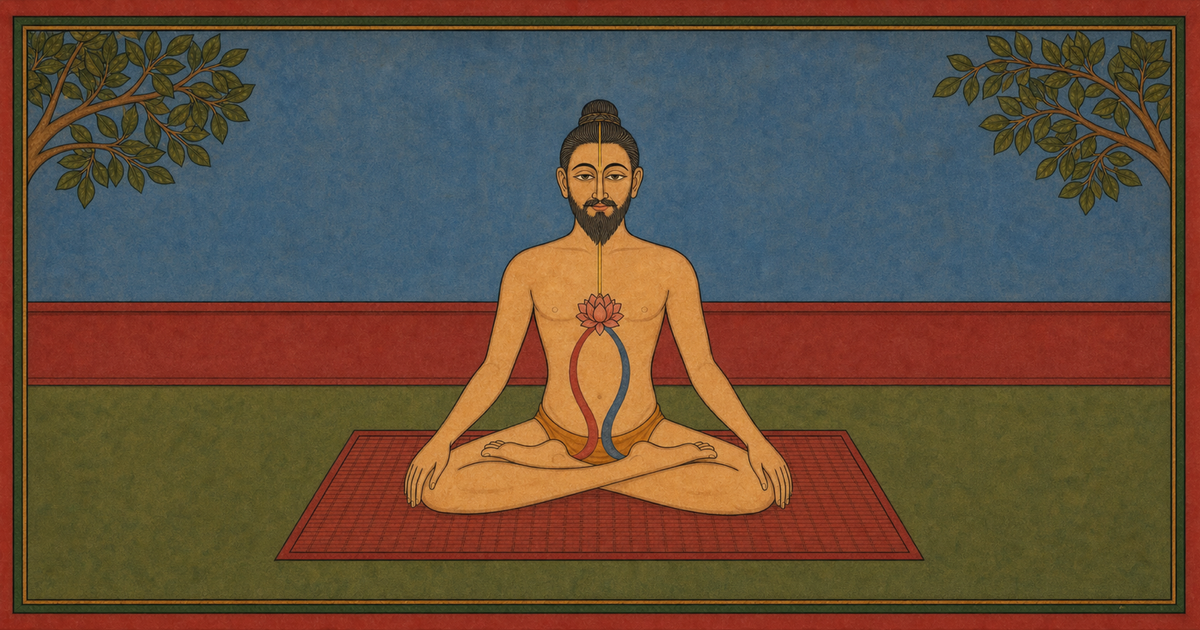
Among the eighty-four seats (catur-aśīti-pīṭheṣu | loc pl), one should always (sadā) prefer (bhajet | 3p sg act opt) Siddhāsana (siddham | acc sg n) alone (eva), just as (iva), among the seventy-two thousand channels (dvā-saptati-sahasreṣu nāḍiṣu | loc pl), [one should prefer] Suṣumṇā (suṣumṇām | acc sg).
Dr. Ronald Steiner - 2026 - historically literal
Haṭha Pradīpikā 1.40
Metre: Anuṣṭubh
The yogi (yogī | nom sg) who meditates on the Self (ātman-dhyāyī | nom sg m) and eats moderately (mita-āhārī | nom sg m) attains (āpnuyāt | 3p sg act opt) completion (niṣpattim | acc sg) when he practises Siddhāsana (siddha-āsana-abhyāsāt | abl sg) regularly (sadā) for up to (yāvat) twelve years (dvādaśa-vatsaram | acc sg). When Siddhāsana is present (siddha-āsane sati | loc absl sg), what purpose (kim | nom sg n) would (syāt | 3p sg act opt) the many tiring seats (śrama-daiḥ bahubhiḥ pīṭhaiḥ | ins pl) serve?
Dr. Ronald Steiner - 2026 - historically literal
Haṭha Pradīpikā 1.41
Metre: Anuṣṭubh
Just as (yathā) Unmanī (unmanī | nom sg), the state beyond mind, arises (utpadyate | 3p sg med pres) by itself (svayam), without effort (nirāyāsāt | abl sg), indeed (eva), when the prāṇa breath (prāṇa-anile | loc absl sg) is carefully (sa-avadhānam | acc sg) held (baddhe | loc absl sg m ppp) in Kevala Kumbhaka (kevala-kumbhake | loc sg), ...
Dr. Ronald Steiner - 2026 - historically literal
Haṭha Pradīpikā 1.42
Metre: Anuṣṭubh
... so (tathā) the triad of locks (bandha-trayam | nom sg n) arises (upajāyate | 3p sg med pres) by itself (svayam), without effort (anāyāsāt | abl sg), indeed (eva), when one is always (sadā) firmly (dṛḍham) established (baddhe | loc absl sg n ppp) in this one (ekasmin | loc absl sg n) Siddhāsana (siddha-āsane | loc absl sg).
Dr. Ronald Steiner - 2026 - historically literal
Haṭha Pradīpikā 1.43
Metre: Anuṣṭubh
There is no (na) posture (āsanam | nom sg) like Siddha (siddha-sadṛśam | nom sg n), no (na) breath retention (kumbhaḥ | nom sg) comparable to Kevala (kevala-upamaḥ | nom sg m), no (na) mudrā (mudrā | nom sg) equal to Khecarī (khecarī-samā | nom sg f), and no (na) dissolution (layaḥ | nom sg) like Nāda (nāda-sadṛśaḥ | nom sg m).
Dr. Ronald Steiner - 2026 - historically literal
Illustration for the Haṭha Pradīpikā section “HP 1.44-1.49: Padmāsana”.

Haṭha Pradīpikā 1.44-1.49: Padmāsana and Inner Collectedness

Padmāsana is explained in several forms and connected with breath concentration, the dynamics of Prāṇa and Apāna, the action of Śakti, and liberation.

Haṭha Pradīpikā 1.44
Metre: Śārdūlavikrīḍita
Having placed (saṃsthāpya | abs) the right foot (dakṣiṇam caraṇam | acc sg) upon the left thigh (vāma-ūru-upari), and (ca) likewise (tathā) the left one (vāmam | acc sg m) upon the right thigh (yāmya-ūru-upari), one should firmly (dṛḍham) hold (dhṛtvā | abs) both big toes (aṅguṣṭhau | acc du) with both hands (karābhyām | ins du) by the method from behind (paścimena vidhinā | ins sg), place (nidhāya | abs) the chin (cibukam | acc sg) on the chest (hṛdaye | loc sg), and gaze (ālokayet | 3p sg act opt) at the tip of the nose (nāsā-agram | acc sg). This (etat | nom sg n), which wards off disease (vyādhi-vighāta-kāri | nom sg n) for the self-restrained (yaminām | gen pl), is called (procyate | 3p sg pas pres) Padmāsana (padma-āsanam | nom sg).
Dr. Ronald Steiner - 2026 - historically literal
Haṭha Pradīpikā
Metre: Anuṣṭubh
Having carefully (prayatnataḥ) placed the two feet (caraṇau | acc du), turned upward (uttānau | acc du m), upon the thighs (ūru-saṃsthau | acc du m), and having done this (kṛtvā | abs), one should likewise (tathā) place (kṛtvā | abs) both hands (pāṇī | acc du), turned upward (uttānau | acc du m), in the middle of the thighs (ūru-madhye | loc sg); then (tataḥ) one should direct (vinyaset | 3p sg act opt) both eyes (dṛśau | acc du) ... toward the tip of the nose (nāsā-agre | loc sg), raise (uttabhya | abs) the root of the front teeth (rāja-danta-mūlam | acc sg) with the tongue (jihvayā | ins sg), place the chin (cibukam | acc sg) on the chest (vakṣasi | loc sg), and gently (śanaiḥ) gather (āsthāpya | abs) the breath (pavanam | acc sg).
Dr. Ronald Steiner - 2026 - historically literal
Haṭha Pradīpikā 1.47
Metre: Anuṣṭubh
This (idam | nom sg n) is called (proktam | nom sg n ppp) Padmāsana (padma-āsanam | nom sg) and destroys all diseases (sarva-vyādhi-vināśanam | nom sg n). It is difficult to attain (durlabham | nom sg n): it is not attained by just anyone (kena | ins sg m), whoever (yena | ins sg m) that may be, even (api), but is attained (labhyate | 3p sg pas pres) on earth (bhuvi | loc sg) by a discerning person (dhīmatā | ins sg).
Dr. Ronald Steiner - 2026 - historically literal
Haṭha Pradīpikā 1.48
Metre: Śārdūlavikrīḍita
Having formed (kṛtvā | abs) both hands (karau | acc du) into a cup (saṃpuṭitau | acc du m ppp), the person (naraḥ | nom sg), having adopted (baddhvā | abs) Padmāsana (padma-āsanam | acc sg) very firmly (dṛḍhataram), firmly (gāḍham) placed (saṃnidhāya | abs) the chin (cibukam | acc sg) on the chest (vakṣasi | loc sg), and held this meditation (tat dhyānam | acc sg) in the mind (cetasi | loc sg), again (vāram) and again (vāram) drives (proccālayan | nom sg m pca) Apāna (apānam | acc sg) and the inhaled breath (pūritam anilam | acc sg) upward (ūrdhvam). Releasing (muñcan | nom sg m pca) Prāṇa (prāṇam | acc sg), he attains (upaiti | 3p sg act pres) unequalled knowledge (atulam bodham | acc sg) through the power of Śakti (śakti-prabhāvāt | abl sg).
Dr. Ronald Steiner - 2026 - historically literal
Haṭha Pradīpikā 1.49
Metre: Anuṣṭubh
The yogi (yogī | nom sg) seated in Padmāsana (padma-āsana-sthitaḥ | nom sg m ppp) who (yaḥ | nom sg m) dies (mriyate | 3p sg med pres) while filling (pūrayan | nom sg m pca) [himself] with breath (mārutam | acc sg) through the openings of the channels (nāḍī-dvāreṣu | loc pl), he (saḥ | nom sg m) [is] indeed (tu) liberated (muktaḥ | nom sg m ppp); here (atra) [there is] no (na) doubt (saṃśayaḥ | nom sg).
Dr. Ronald Steiner - 2026 - historically literal
Illustration for the Haṭha Pradīpikā section “HP 1.50–54: Siṃhāsana and Bhadrāsana”.

Haṭha Pradīpikā 1.50–54: Siṃhāsana and Bhadrāsana

The other two principal seats are described through the position of the feet, the binding of the body, and their yogic effects.

Haṭha Pradīpikā
Metre: Anuṣṭubh
One should place (kṣipet | 3p sg act opt) both ankles (gulphau | acc du) on the two sides (pārśvayoḥ | loc du) of the perineal seam (sīvanyāḥ | gen sg), below (adhaḥ) the scrotum (vṛṣaṇasya | gen sg): the left ankle (savya-gulpham | acc sg) on the right side (dakṣiṇe | loc sg n), but (tu) the right ankle (dakṣa-gulpham | acc sg) on the left side (savyake | loc sg n). Having placed (saṃsthāpya | abs) both hands (hastau | acc du) on the knees (jānvoḥ | loc du) and (ca) extended (saṃprasārya | abs) one's own fingers (sva-aṅgulīḥ | acc pl), one should gaze (nirīkṣeta | 3p sg med opt) at the tip of the nose (nāsā-agram | acc sg) with the mouth open (vyātta-vaktraḥ | nom sg m bv), fully composed (su-samāhitaḥ | nom sg m ppp). This (etat | nom sg n) is (bhavet | 3p sg act opt) Siṃhāsana (siṃha-āsanam | nom sg), always (sadā) revered (pūjitam | nom sg n ppp) by yogis (yogibhiḥ | ins pl). It brings about (kurute | 3p sg med pres) the conjunction of the three locks (bandha-tritaya-saṃdhānam | acc sg) and (ca) is the best posture (āsana-uttamam | nom sg n).
Dr. Ronald Steiner - 2026 - historically literal
Haṭha Pradīpikā
Metre: Anuṣṭubh
One should place (kṣipet | 3p sg act opt) both ankles (gulphau | acc du) at the sides (pārśvayoḥ | loc du) of the perineal seam (sīvanyāḥ | gen sg), below (adhaḥ) the scrotum (vṛṣaṇasya | gen sg). Having firmly (dṛḍham) held (baddhvā | abs) the outer sides of the feet (pārśva-pādau | acc du) with both hands (pāṇibhyām | ins du), one remains completely motionless (su-niścalam | acc sg n). This (etat | nom sg n) becomes Bhadrāsana (bhadra-āsanam | nom sg); it removes all diseases and poisons (sarva-vyādhi-viṣa-apaham | nom sg n). The Siddha yogis (siddha-yoginaḥ | nom pl) indeed (vai) call (āhuḥ | 3p pl act perf) this (idam | acc sg n) Gorakṣāsana (gorakṣa-āsanam | acc sg).
Dr. Ronald Steiner - 2026 - historically literal
Illustration for the Haṭha Pradīpikā section “HP 1.55-1.57: Transition to Kumbhaka”.

Haṭha Pradīpikā 1.55-1.57: Transition to Kumbhaka and Nāda

After the Āsanas, actual practice is what matters: purification of the Nāḍīs, Mudrā, breath, and Nāda lead onward, not clothing or talk.

Haṭha Pradīpikā 1.55
Metre: Anuṣṭubh
When the great yogi (yogīndraḥ | nom sg), in this way (evam), has overcome fatigue (vijita-śramaḥ | nom sg) in the binds of the postures (āsana-bandheṣu | loc pl), he should now (atha) practise (abhyaset | 3p sg act opt) purification of the channels (nāḍī-śuddhim | acc sg), namely the breath techniques with mudrās and other methods (mudrā-ādi-pavana-kriyām | acc sg).
Dr. Ronald Steiner - 2026 - historically literal
Haṭha Pradīpikā 1.56
Metre: Anuṣṭubh
The sequence of practice (abhyāsa-anukramaḥ | nom sg) in Haṭha (haṭhe | loc sg) is posture (āsanam | nom sg), manifold breath retention (citraṃ kumbhakam | nom sg), likewise (tathā) the technique called mudrā (mudrā-ākhyaṃ karaṇam | nom sg), and then (atha) concentration on the inner sound (nāda-anusandhānam | nom sg).
Dr. Ronald Steiner - 2026 - historically literal
Haṭha Pradīpikā 1.57
Metre: Anuṣṭubh
The celibate (brahmacārī | nom sg), moderate-eating (mita-āhārī | nom sg m) yogi (yogī | nom sg), devoted to yoga (yoga-parāyaṇaḥ | nom sg m), becomes accomplished (siddhaḥ | nom sg m ppp) after one year (abdāt | abl sg) and beyond (ūrdhvam). Here (atra) no further consideration (vicāraṇā | nom sg) is to be made (kāryā | nom sg f pfp).
Dr. Ronald Steiner - 2026 - historically literal
Illustration for the Haṭha Pradīpikā section “HP 1.58-1.63: Mitāhāra”.

Haṭha Pradīpikā 1.58-1.63: Mitāhāra and Conduct

Moderate food, dishes to avoid, unfavorable contacts, and recommended foods form the practical foundation.

Haṭha Pradīpikā 1.58
Metre: Anuṣṭubh
Food that is very nourishing and sweet (su-snigdha-madhura-āhāraḥ | nom sg), with one quarter left empty (caturtha-aṃśa-vivarjitaḥ | nom sg m ppp), and that is eaten (bhujyate | 3p sg pas pres) out of love for Śiva (śiva-saṃprītyai | dat sg), that (saḥ | nom sg m) is called (ucyate | 3p sg pas pres) moderate eating (mita-āhāraḥ | nom sg).
Dr. Ronald Steiner - 2026 - historically literal
Haṭha Pradīpikā 1.59
Metre: Vasantatilakā
Pungent, sour, sharp, salty, hot foods and green vegetables (kaṭu-amla-tīkṣṇa-lavaṇa-uṣṇa-harīta-śāka), sour gruel, oil, sesame, mustard, fish, and alcohol (sauvīra-taila-tila-sarṣapa-matsya-madyam | acc sg), goat meat and the like, meat, curds, buttermilk, horse gram, and jujube (ājādi-māṃsa-dadhi-takra-kulattha-kola), and oilcake, asafoetida, garlic, and the like (piṇyāka-hiṅgu-laśuna-ādyam | acc sg n), they call (āhuḥ | 3p pl act perf) unwholesome (apathyam | acc sg n).
Dr. Ronald Steiner - 2026 - historically literal
Haṭha Pradīpikā 1.60
Metre: Upagīti
One should know (vidyāt | 3p sg act opt) food (bhojanam | acc sg) to be unwholesome (ahitam | acc sg n) when it has again (punar), even (api), been reheated (uṣṇī-kṛtam | acc sg n ppp), is dry (rūkṣam | acc sg n), excessively salty (ati-lavaṇam | acc sg n), mixed with sour food (amla-pṛktam | acc sg n ppp), consists of poor, heavy food and too many vegetables (kad-aśana-śāka-utkaṭam | acc sg n), or is spoiled (duṣṭam | acc sg n ppp).
Dr. Ronald Steiner - 2026 - historically literal
Haṭha Pradīpikā 1.61
Metre: Anuṣṭubh
One should avoid (varjayet | 3p sg act opt) proximity to bad people (durjana-prāntam | acc sg), frequenting fire, women, and roads (vahni-strī-patha-sevanam | acc sg), as well as (tathā) observances that afflict the body (kāya-kleśa-vidhim | acc sg), such as early bathing, fasting, and the like (prātaḥ-snāna-upavāsa-ādi | tp gen).
Dr. Ronald Steiner - 2026 - historically literal
Haṭha Pradīpikā 1.62
Metre: Vasantatilakā
Wheat, Śāli rice, barley, and sixty-day rice as fine food (godhūma-śāli-yava-ṣaṣṭika-śobhana-annam | acc sg), milk, ghee, cream, fresh butter, sugar, and honey (kṣīra-ājya-maṇḍa-navanīta-sitā-madhūni | acc pl), dried ginger, pointed-gourd fruit, and the like (śuṇṭhī-paṭolaka-phala-ādi | tp gen), as well as (ca) the five vegetables (pañca-śākam | acc sg), mung beans and the like (mudga-ādi | tp gen), and pure water (divyam udakam | acc sg) are wholesome for the foremost ascetic (yamīndra-pathyam | acc sg n).
Dr. Ronald Steiner - 2026 - historically literal
Haṭha Pradīpikā 1.63
Metre: Anuṣṭubh
The yogi (yogī | nom sg) should consume (ācaret | 3p sg act opt) food (bhojanam | acc sg) that is delicious (mṛṣṭam | acc sg n), very sweet (su-madhuram | acc sg n), nourishing (snigdham | acc sg n), derived from cows (gavyam | acc sg n), strengthening the bodily constituents (dhātu-prapoṣaṇam | acc sg), desired by the mind (manas-abhilaṣitam | acc sg n ppp), and suitable (yogyam | acc sg n).
Dr. Ronald Steiner - 2026 - historically literal
Illustration for the Haṭha Pradīpikā section “HP 1.64-1.65: Practice and Rājayoga”.

Haṭha Pradīpikā 1.64-1.65: Success through Practice and Rājayoga

Regardless of age or weakness, persistent practice leads to success; all methods of Haṭha are directed toward Rājayoga.

Continue with AYI Free

Illustrations: AI-generated.

Editor

Dr. Ronald Steiner

From Ulm

The "Yoga Doc" - Dr. Ronald Steiner is the founder of the AYI method. This method links traditional Ashtanga Yoga with innovative Yogatherapy and living Philosophy. This forms a practice that is personal for each and... more ›