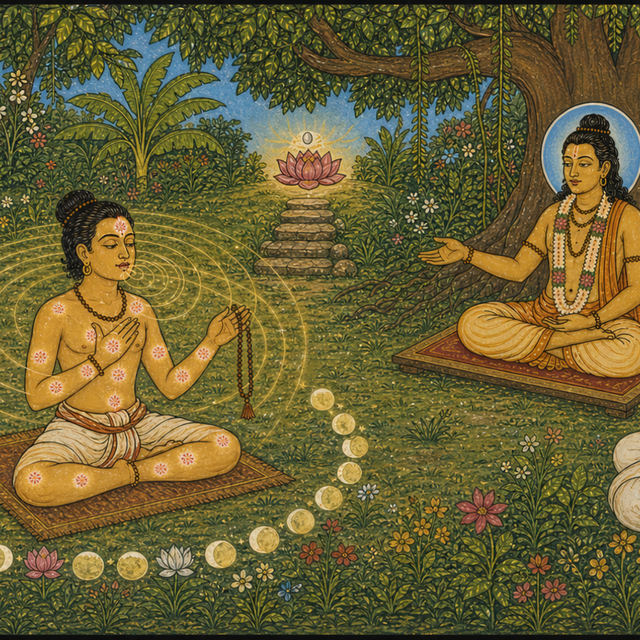
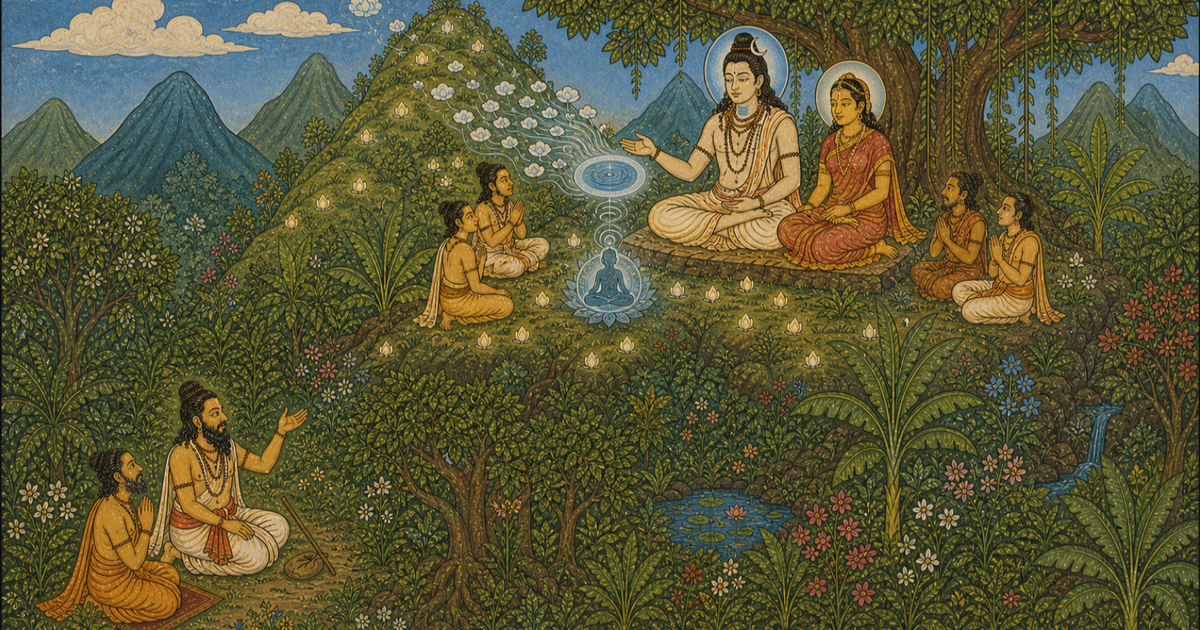
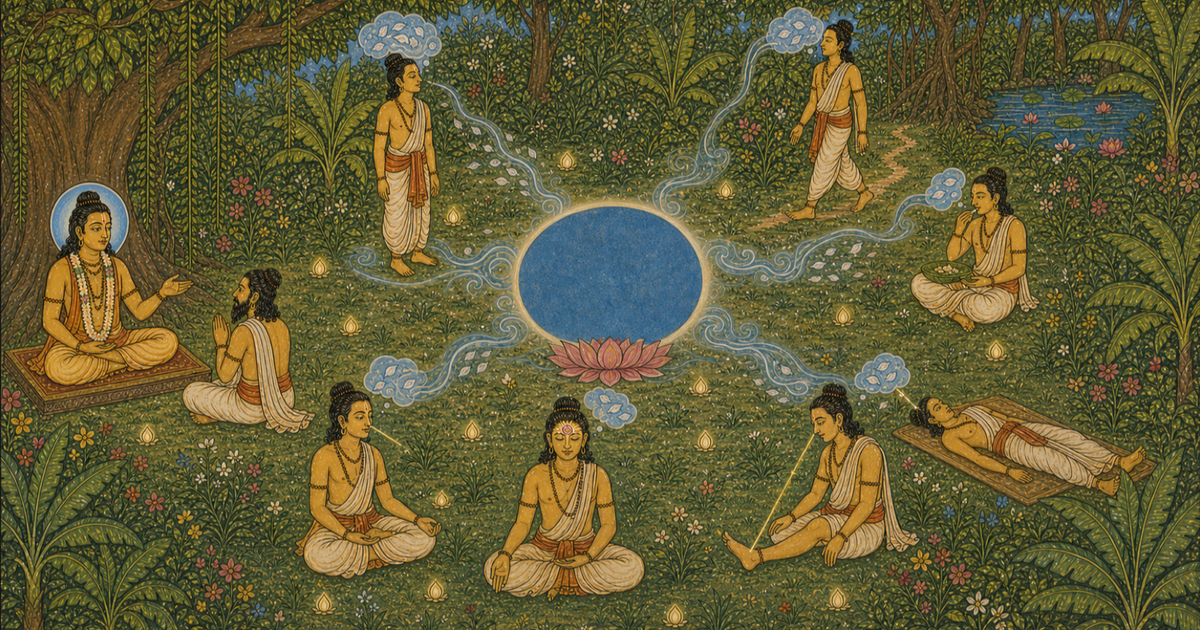





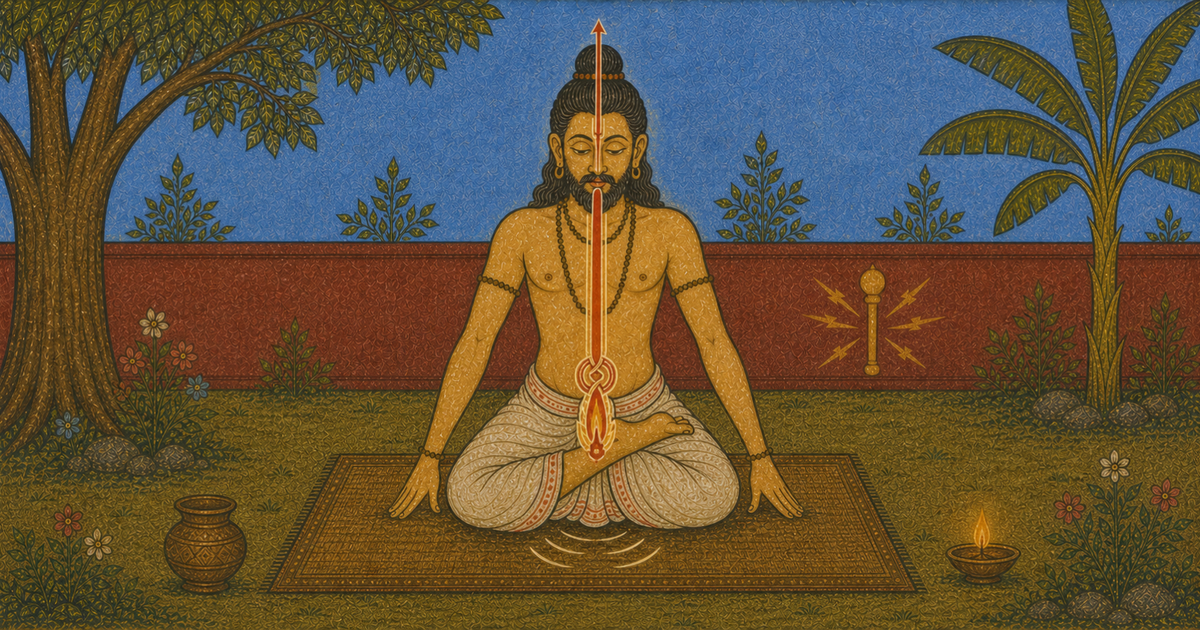
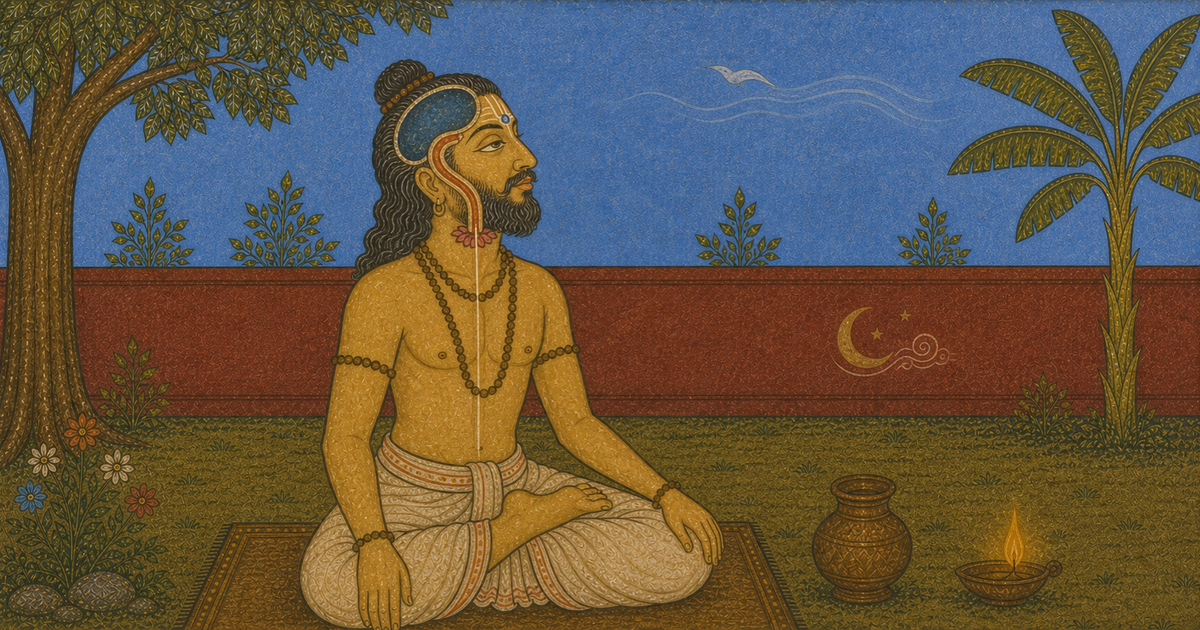
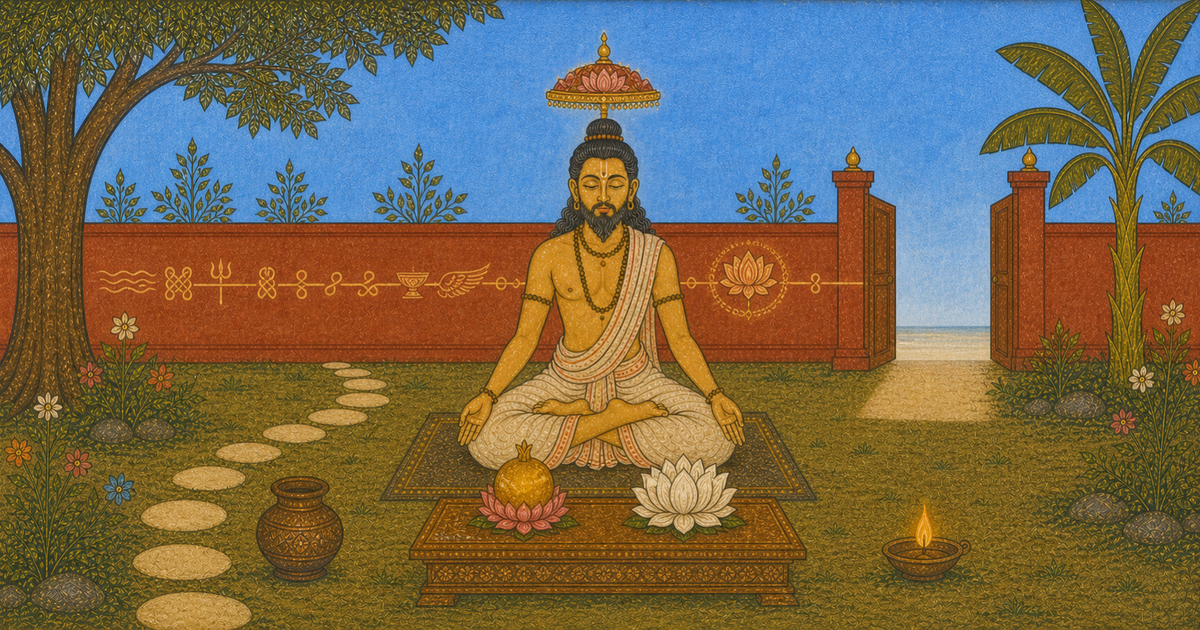
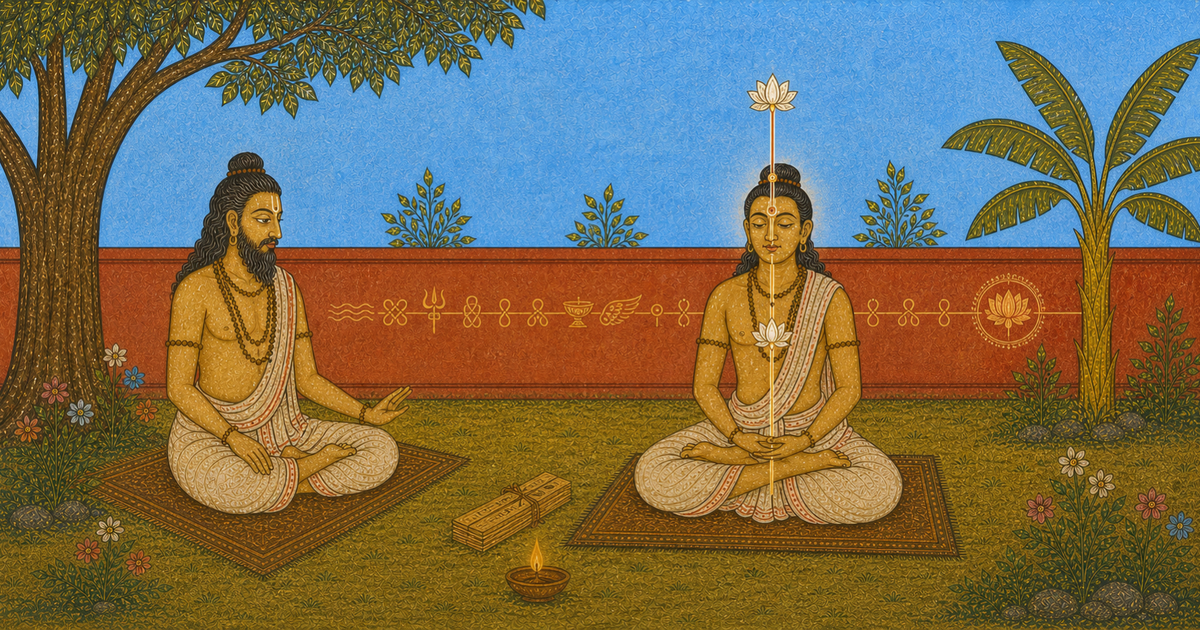
Dattātreyayogaśāstra: Four Paths from Mantra to Royal Yoga

Probably composed around 1200 CE, the teaching dialogue links Mantra, Laya, Haṭha, and Rāja Yoga and leads from seeking a teacher to completion.

Dr. Ronald Steiner Dr. Ronald Steiner Nils Jacob Liersch Nils Jacob Liersch
DYS 1–1*1: Viṣṇu and Nṛsiṃha

Dattātreyayogaśāstra 1–1*1: Consciousness, Bliss, and the Pacification of Obstacles

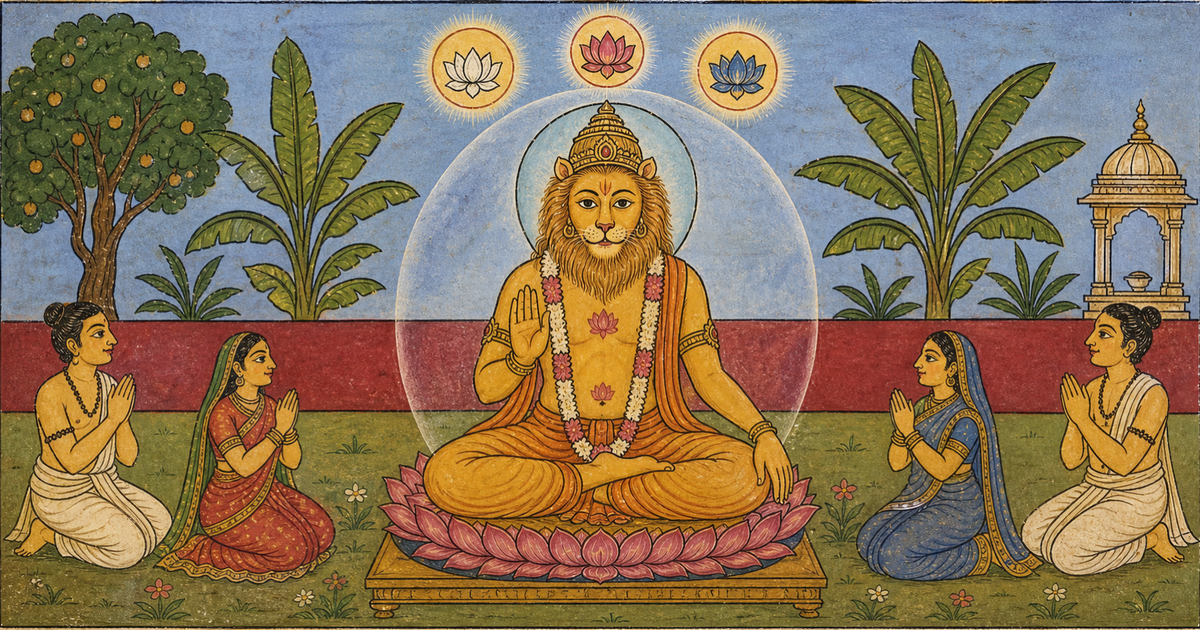
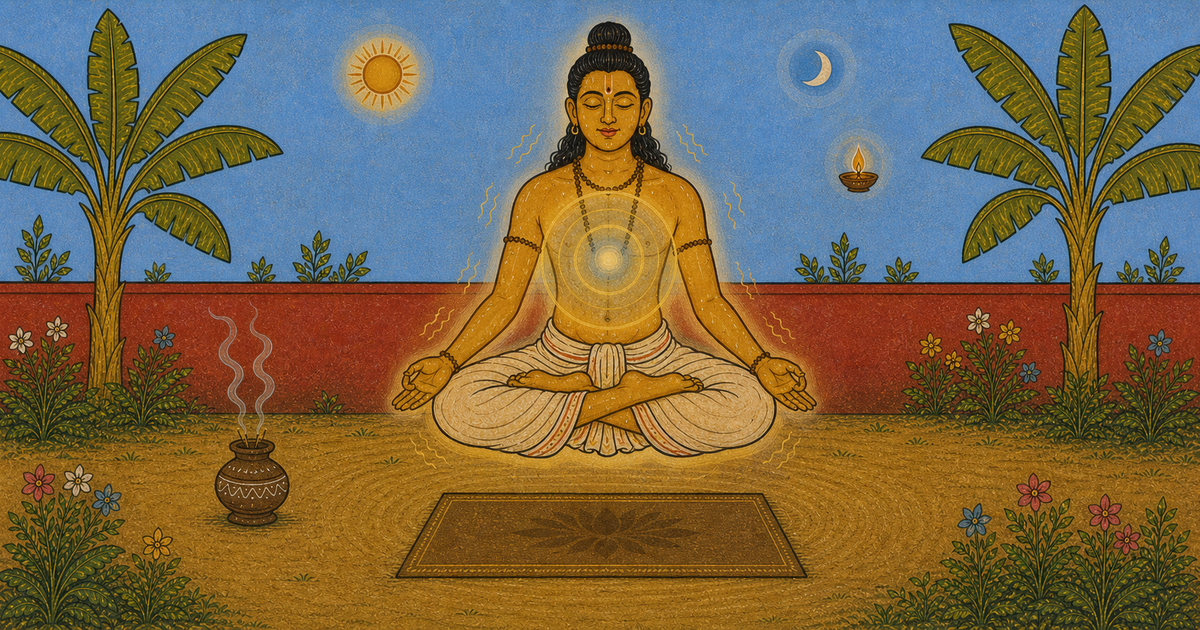
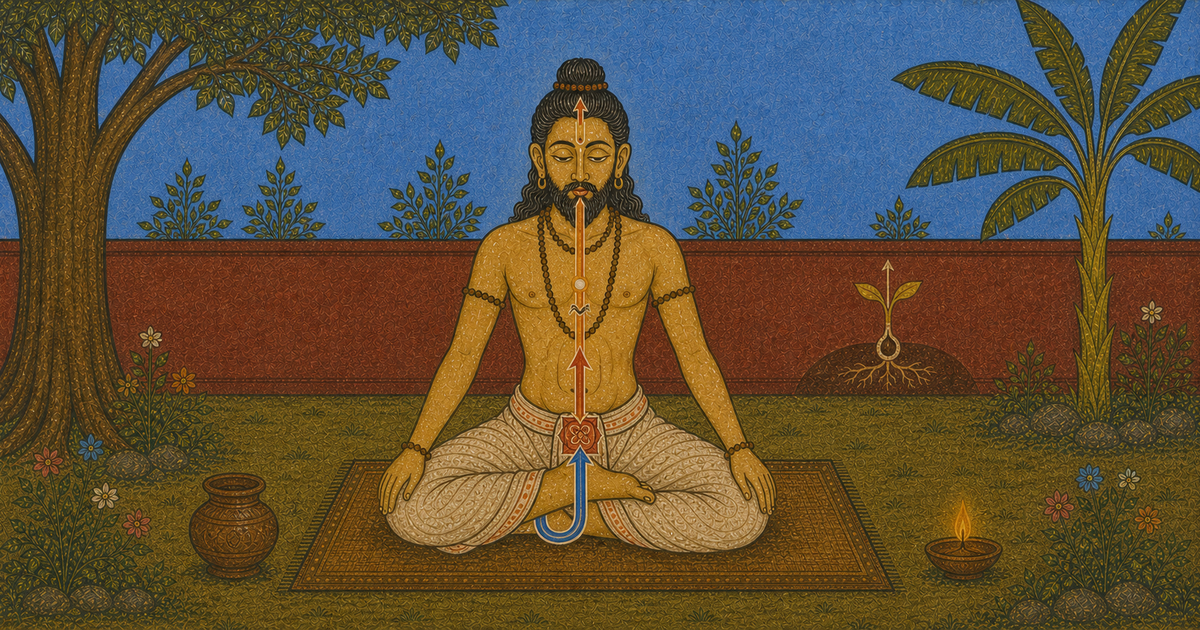
The two invocations revere Viṣṇu, who dwells in the heart-lotuses of yogins, is conceived both with and without qualities, and is reached through yoga, and...

DYS 2–8: Seeking a Teacher

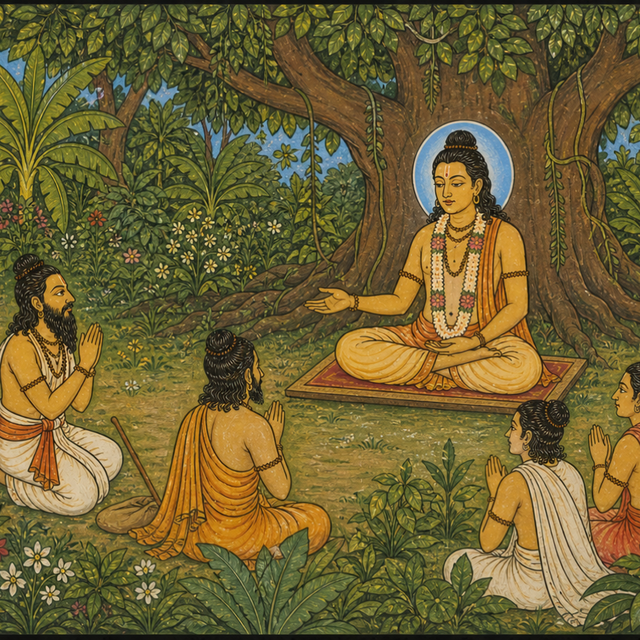
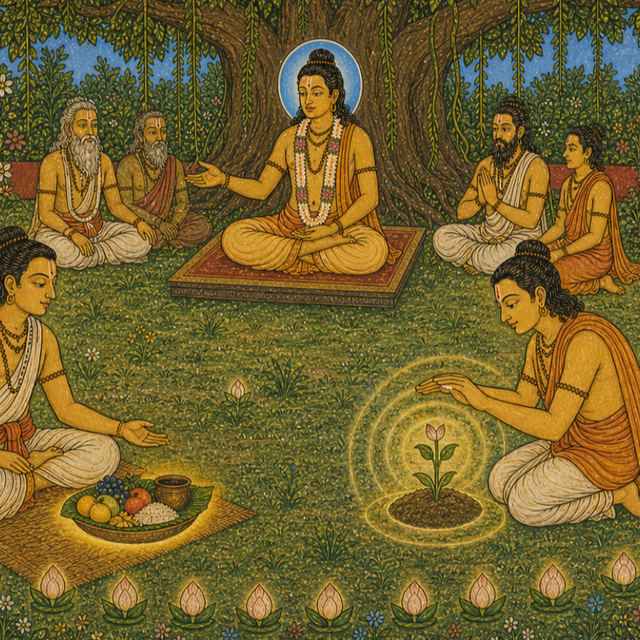
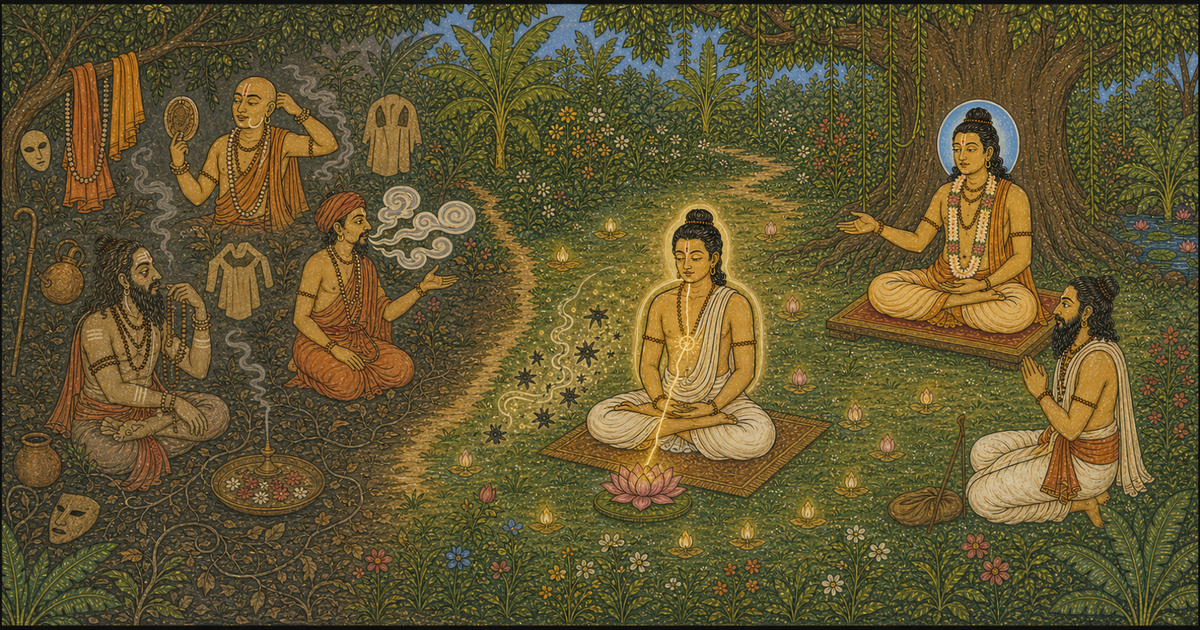
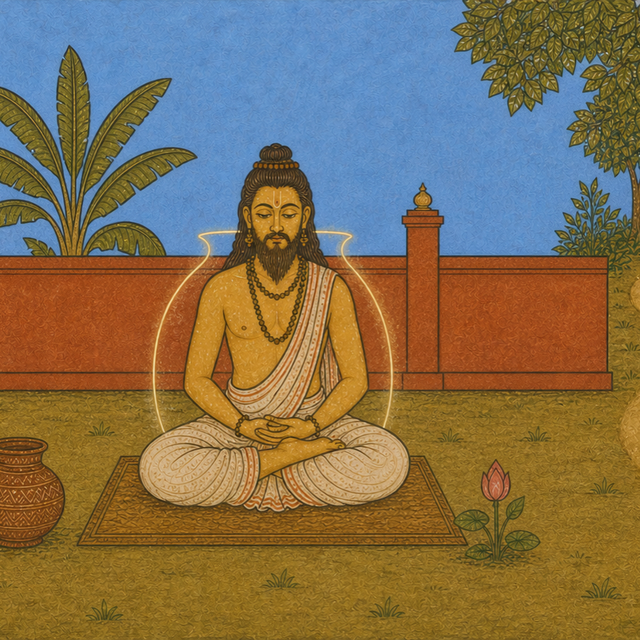
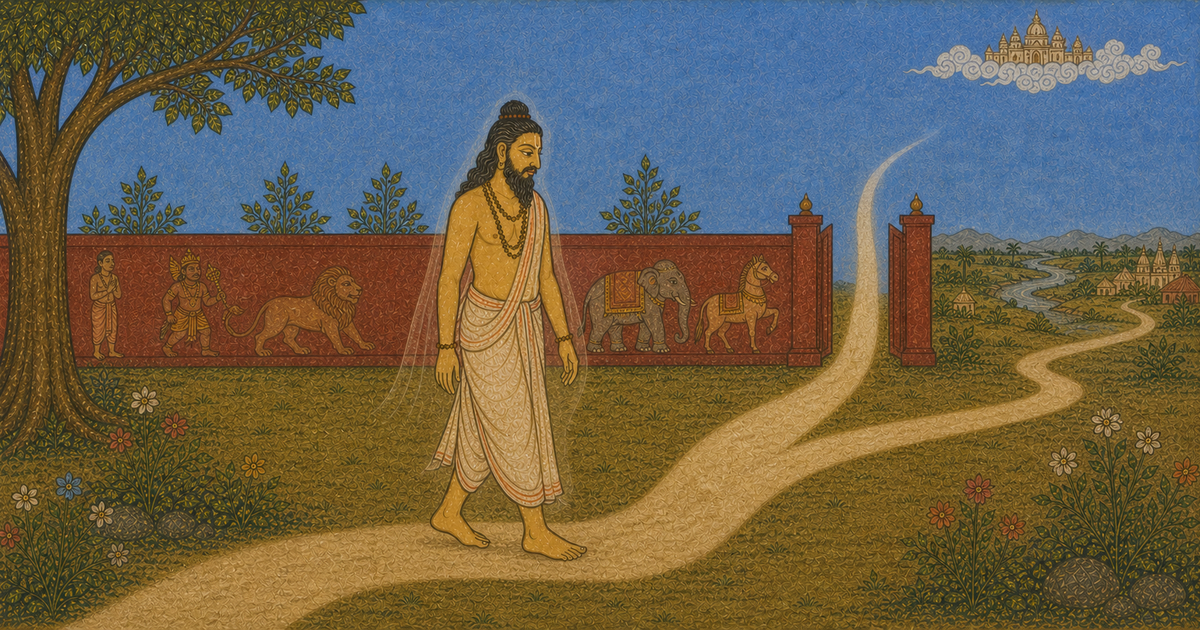
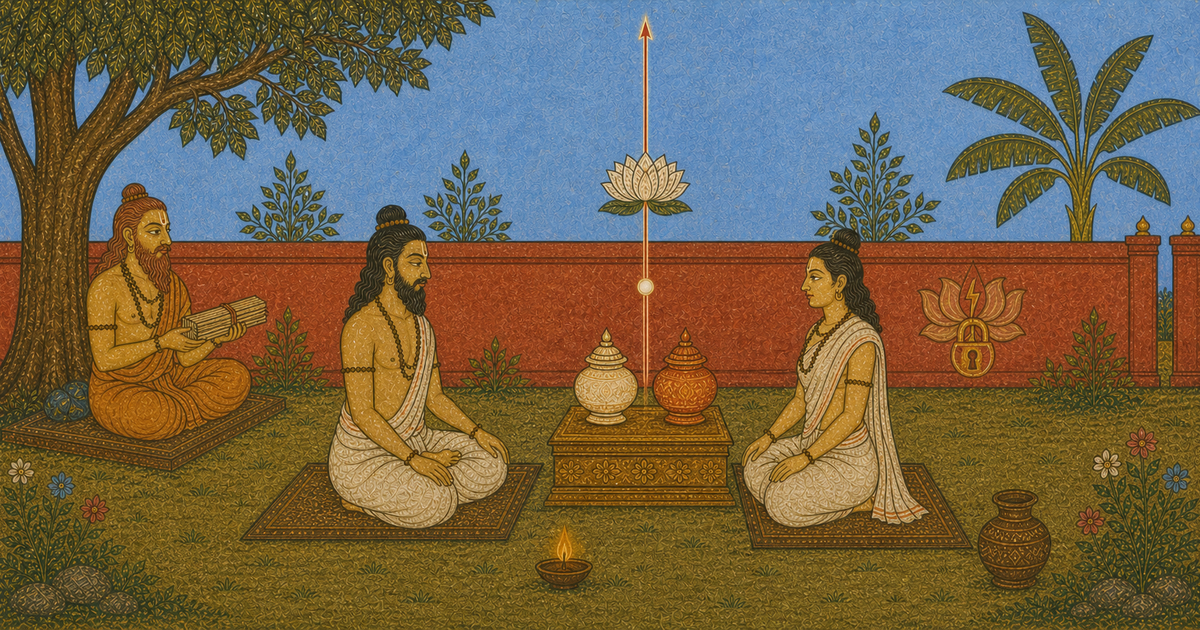
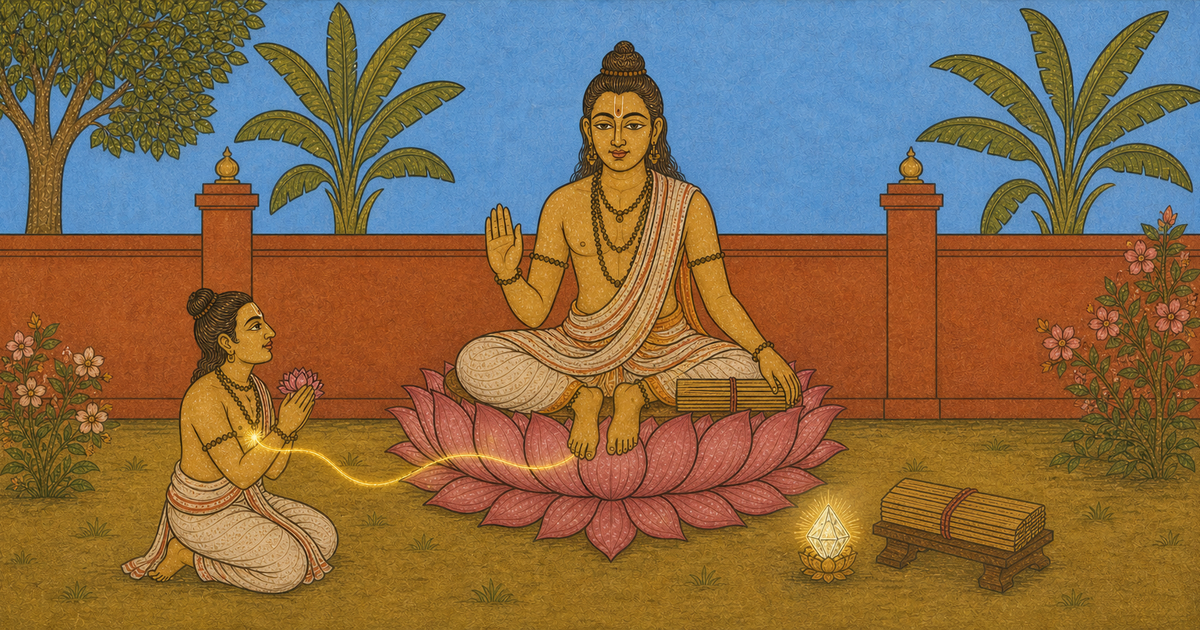
Dattātreyayogaśāstra 2–8: Sāṃkṛti Meets Dattātreya in the Naimiṣa Forest

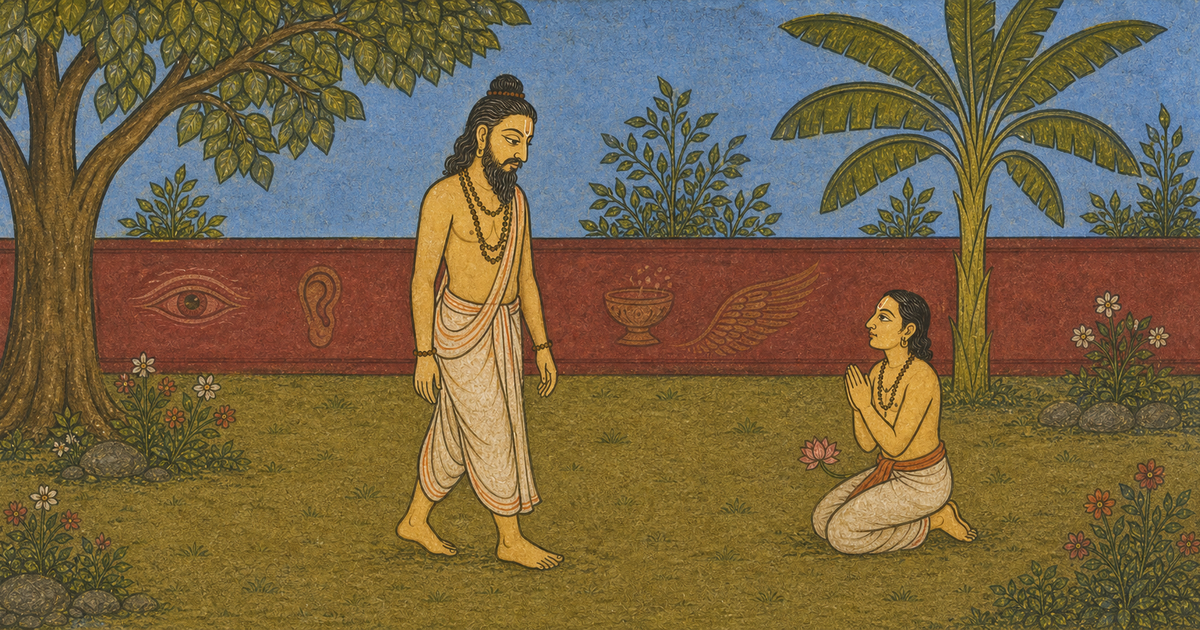
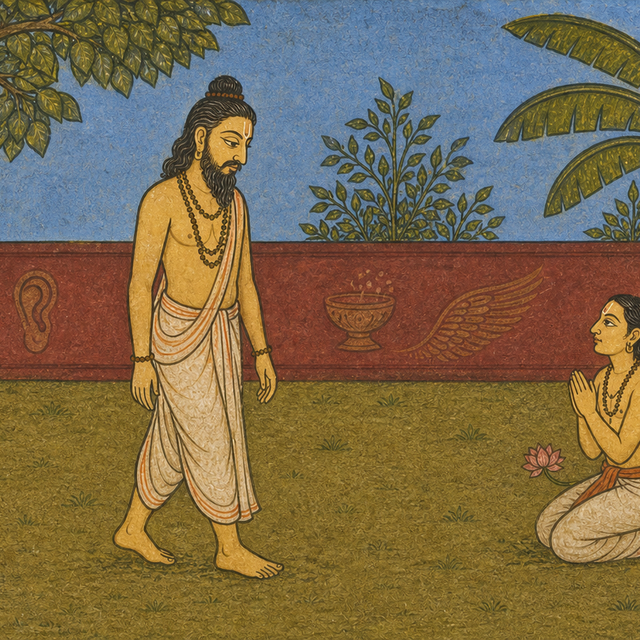
Searching for yoga, Sāṃkṛti finds Dattātreya absorbed in meditation, bows to him, and explains that he has come to learn the teaching.

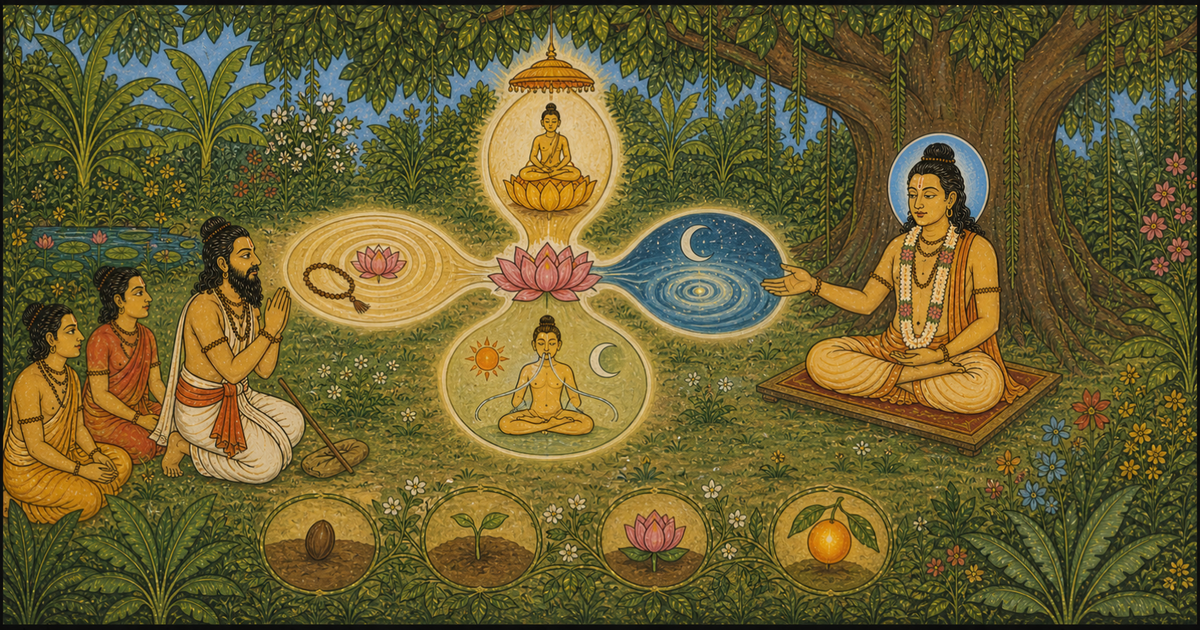
Dattātreyayogaśāstra 2
Metre: Anuṣṭubh
From a desire for yoga (yoga-lipsayā | ins sg), that foremost sage Sāṃkṛti (sāṃkṛtir muni-varyo ’sau | nom sg), having traversed (paricaṅkramya | abs) the whole earth (bhūtalaṃ sakalam | acc sg), reached (āptavān | nom sg) Naimiṣa Forest (naimiṣāraṇyam | acc sg).
Dr. Ronald Steiner - 2026 - historically literal
Dattātreyayogaśāstra 3
Metre: Anuṣṭubh
That sacred [forest] (puṇyam | acc sg n) was adorned (śobhitam | acc sg n) with trees (śākhibhiḥ | ins pl) bearing many kinds of fragrant flowers (sugandhi-nānā-kusumaiḥ | ins pl) and sweet fruit (svādumat-phala-saṃyutaiḥ | ins pl), and embellished with pools of water (jala-kāsāra-maṇḍitam | acc sg n).
Dr. Ronald Steiner - 2026 - historically literal
Dattātreyayogaśāstra 4
Metre: Anuṣṭubh
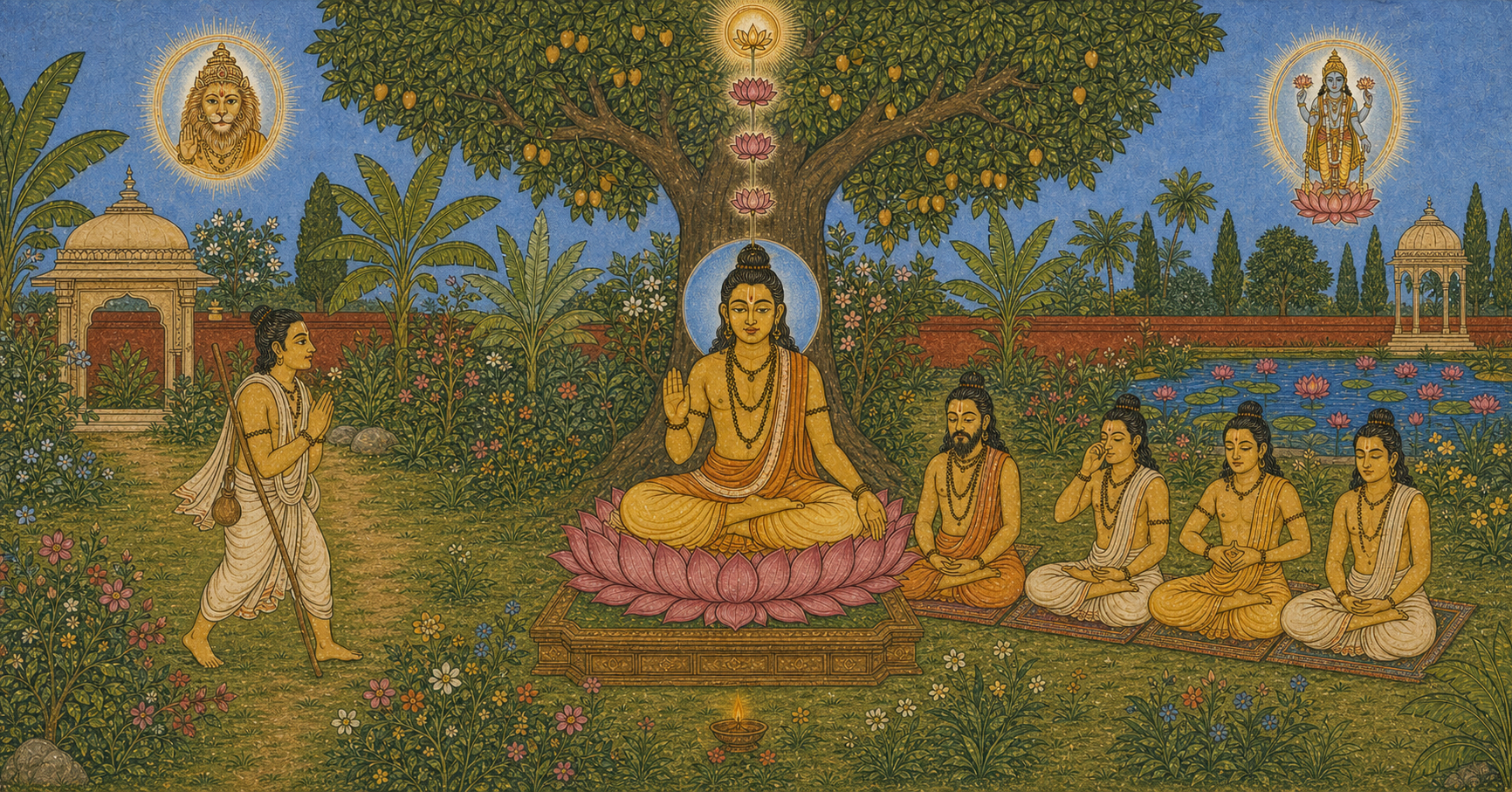
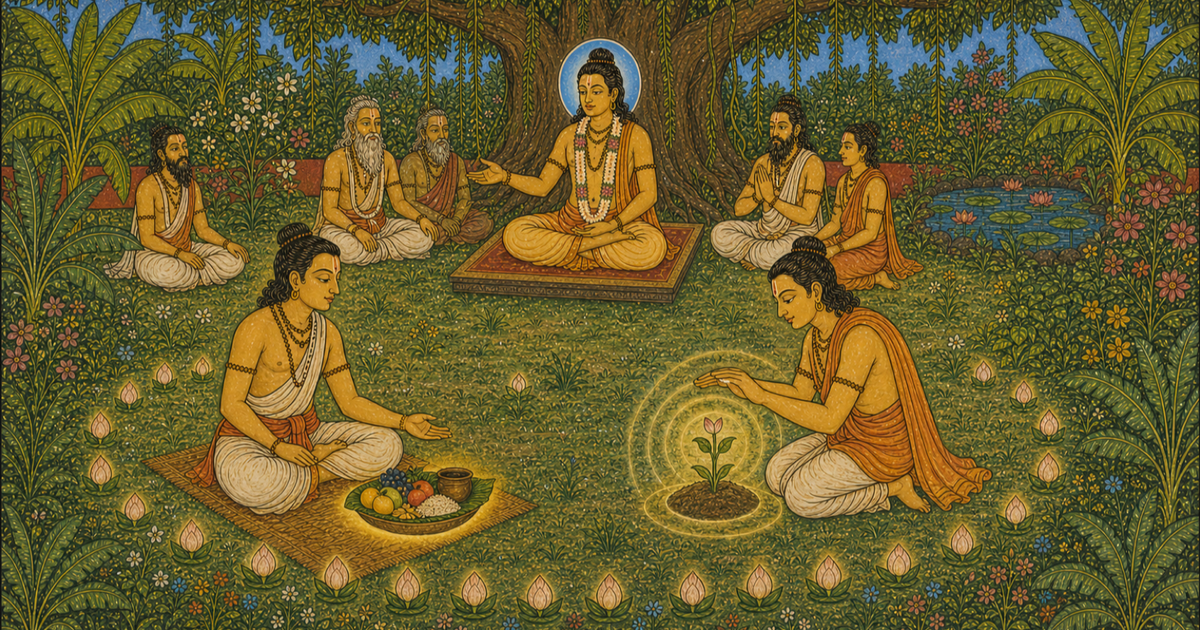
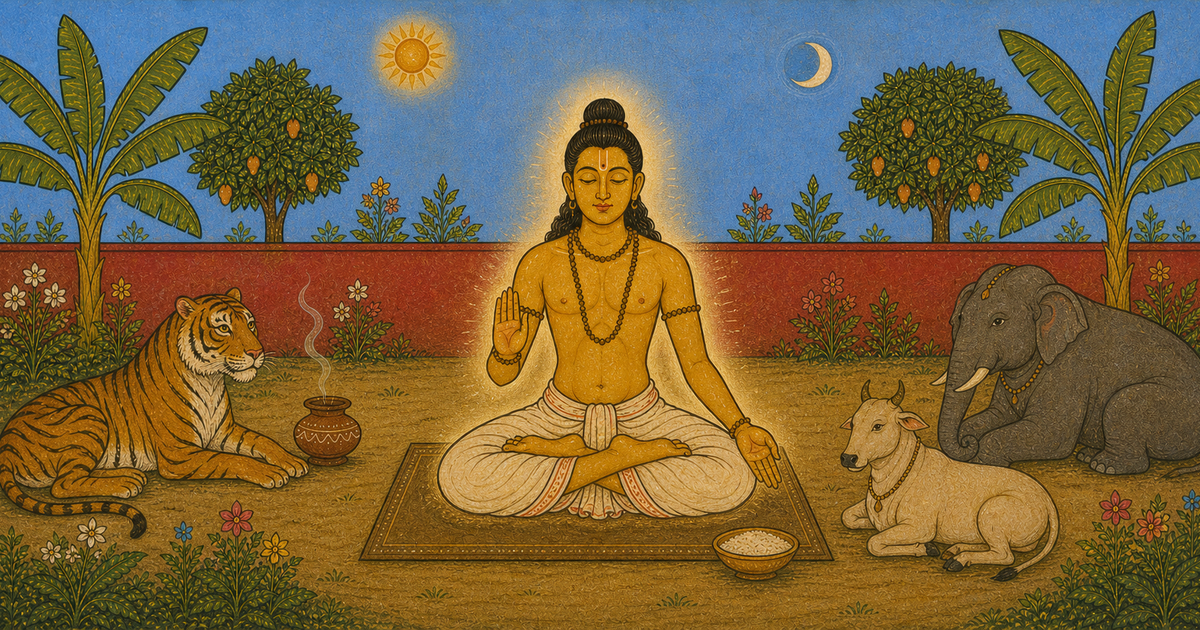
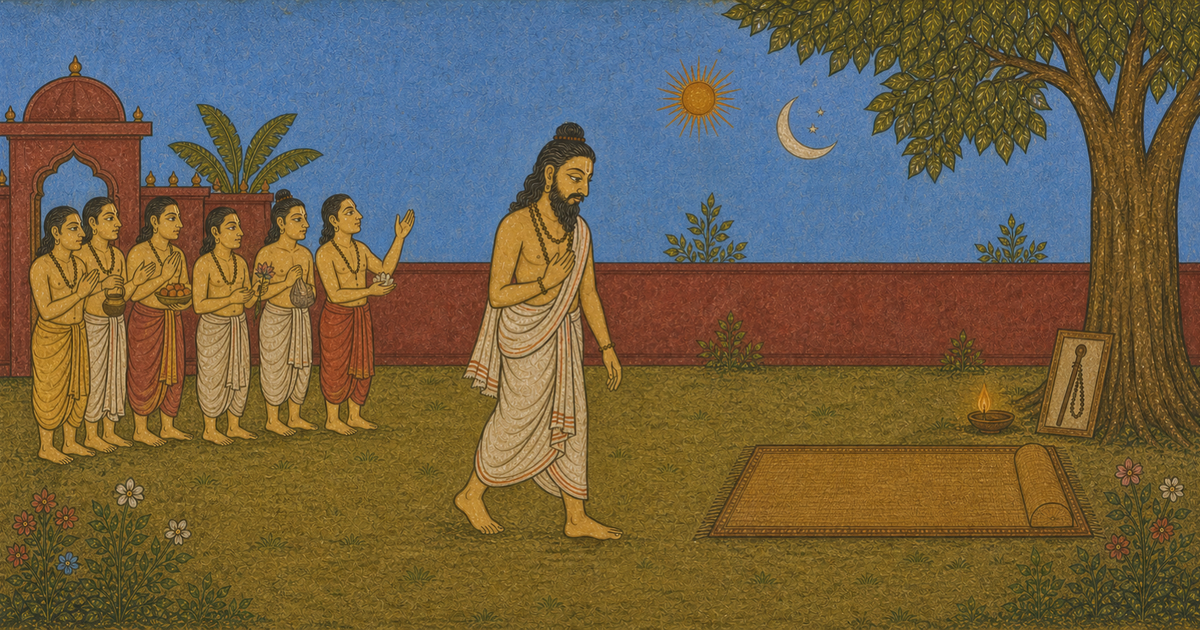
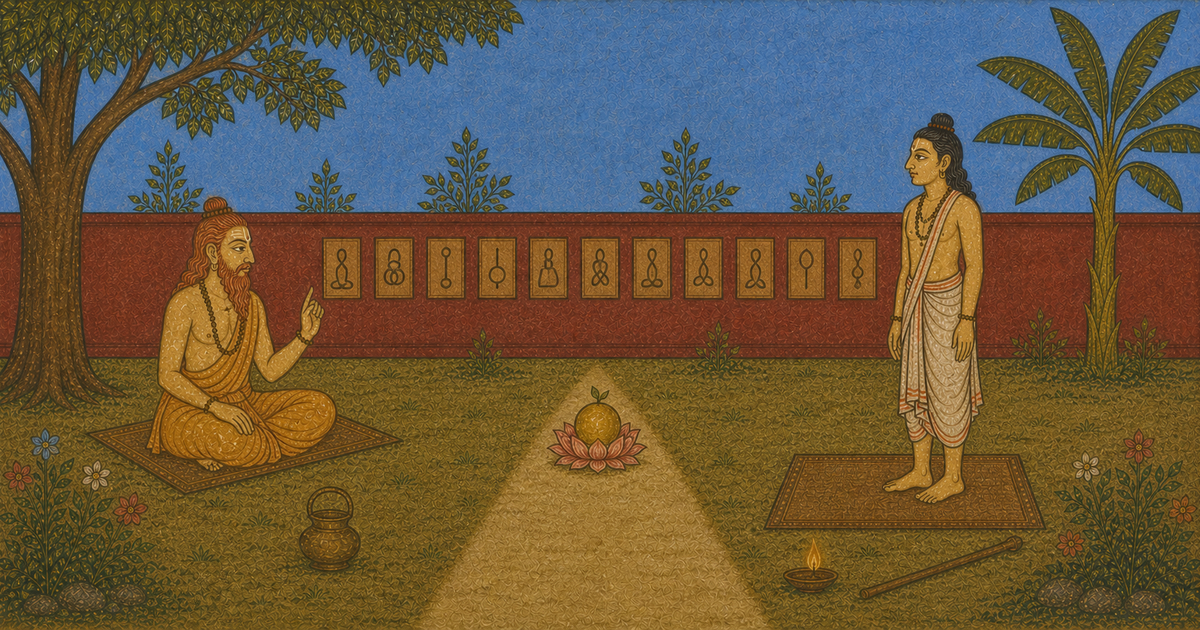
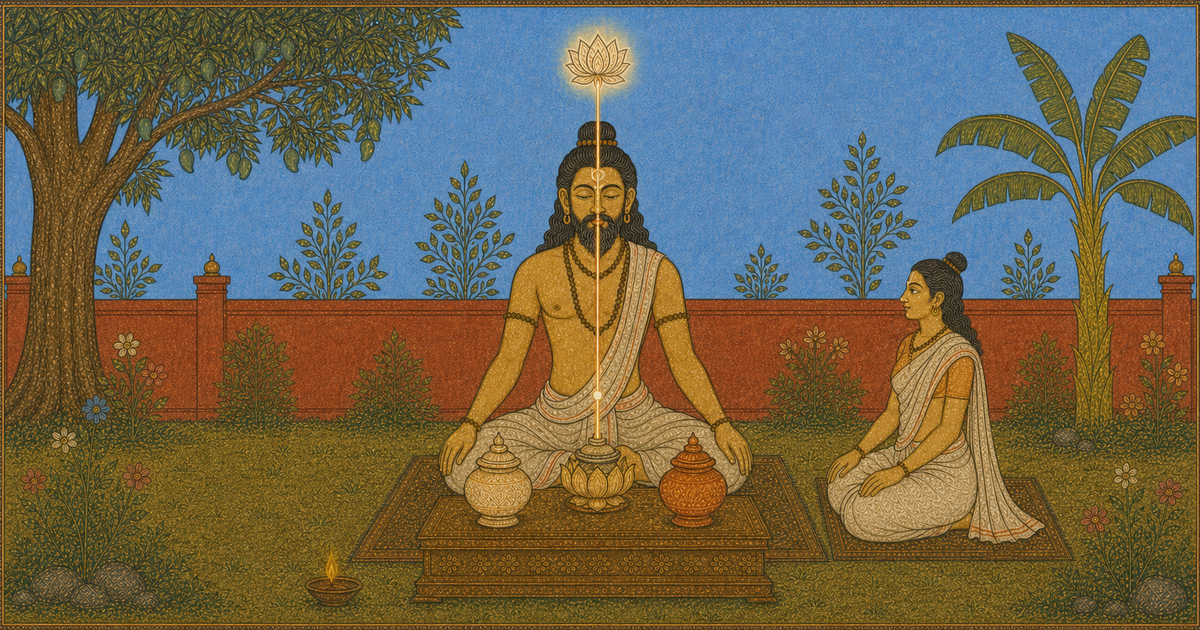
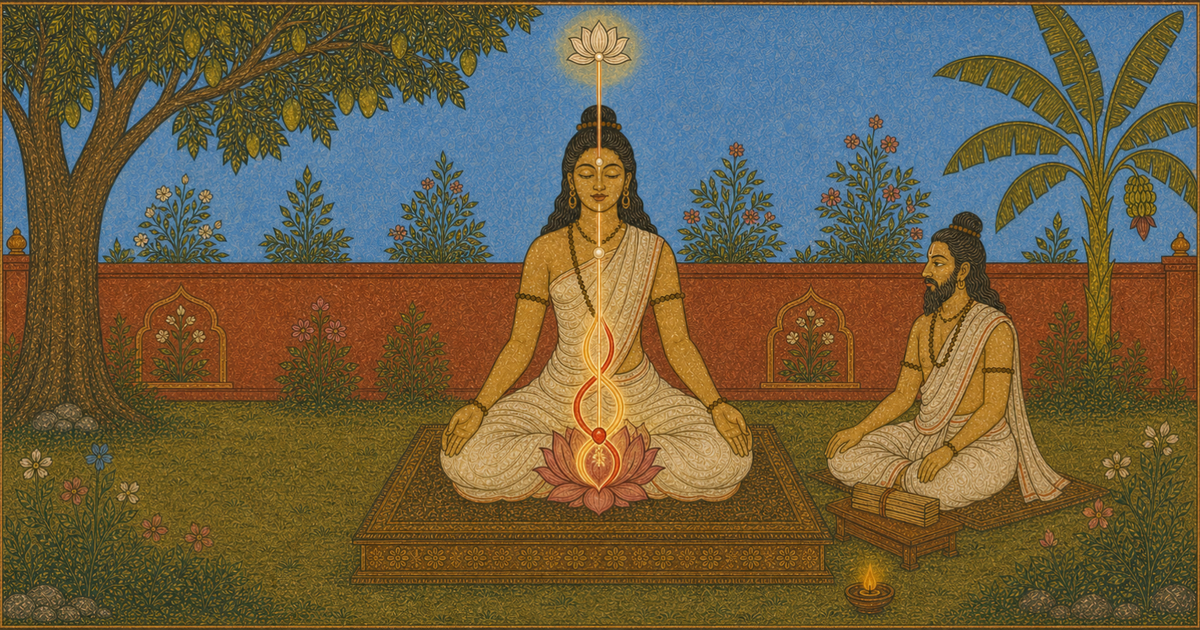
While the sage (sa muniḥ | nom sg) wandered (vicaran | nom sg m pca) there (tatra), he saw (dadarśa | 3p sg act perf), beneath a mango tree (āmra-taroḥ adhaḥ | gen sg), the great sage Dattātreya (dattātreyaṃ mahā-munim | acc sg) seated on a platform (vedikāyāṃ samāsīnam | acc sg).
Dr. Ronald Steiner - 2026 - historically literal
Dattātreyayogaśāstra 5
Metre: Anuṣṭubh
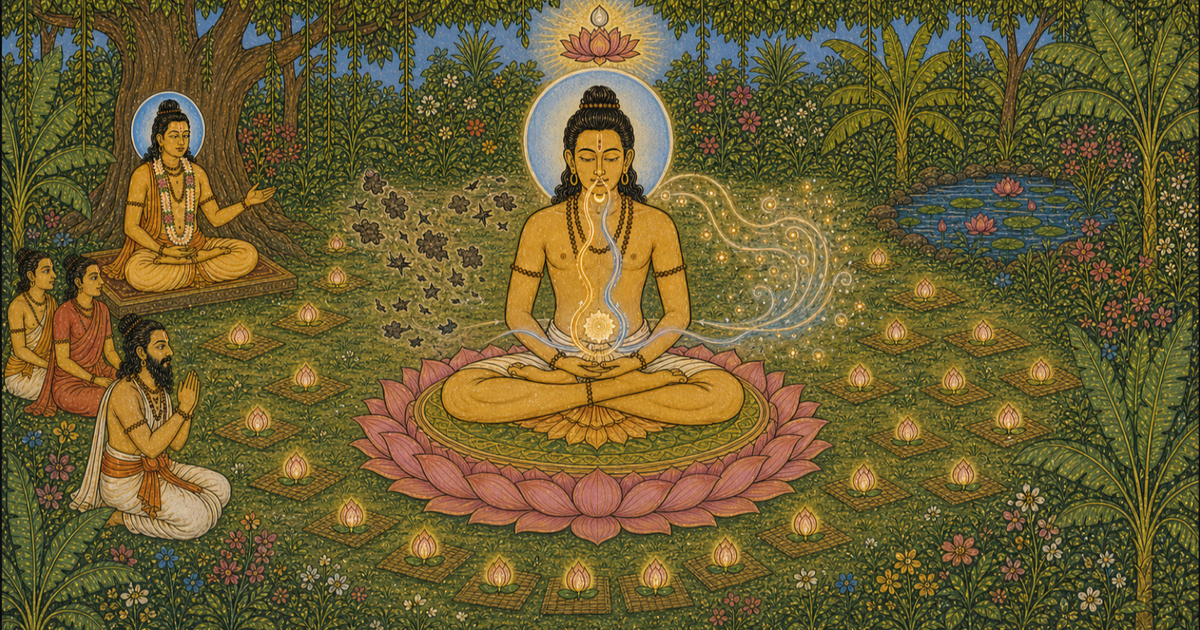
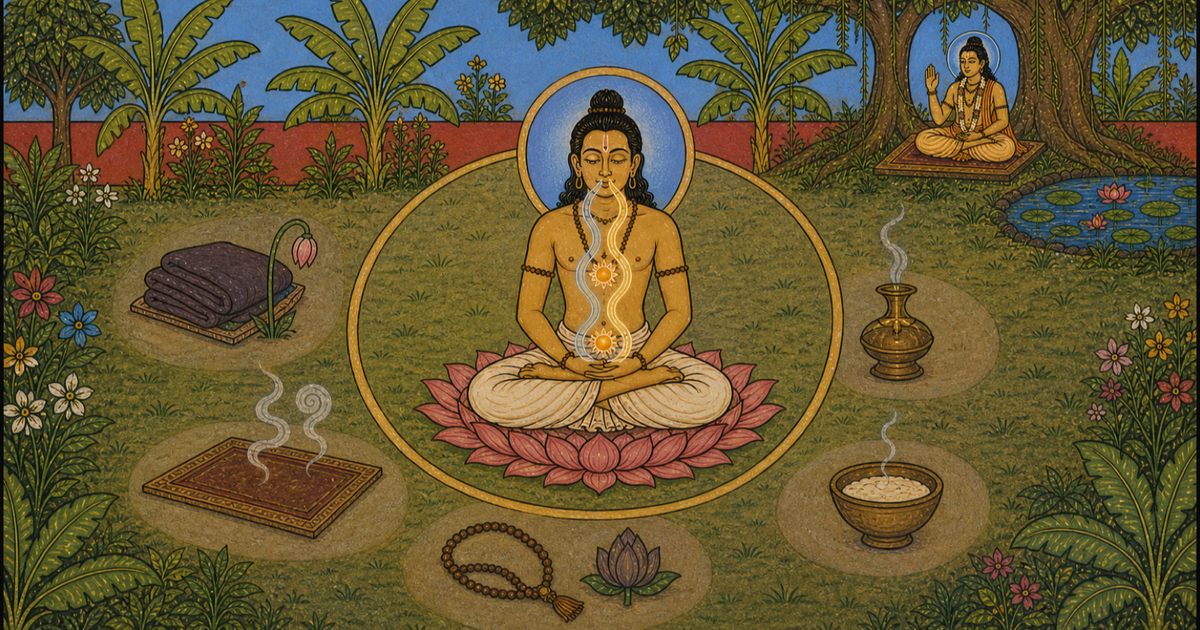
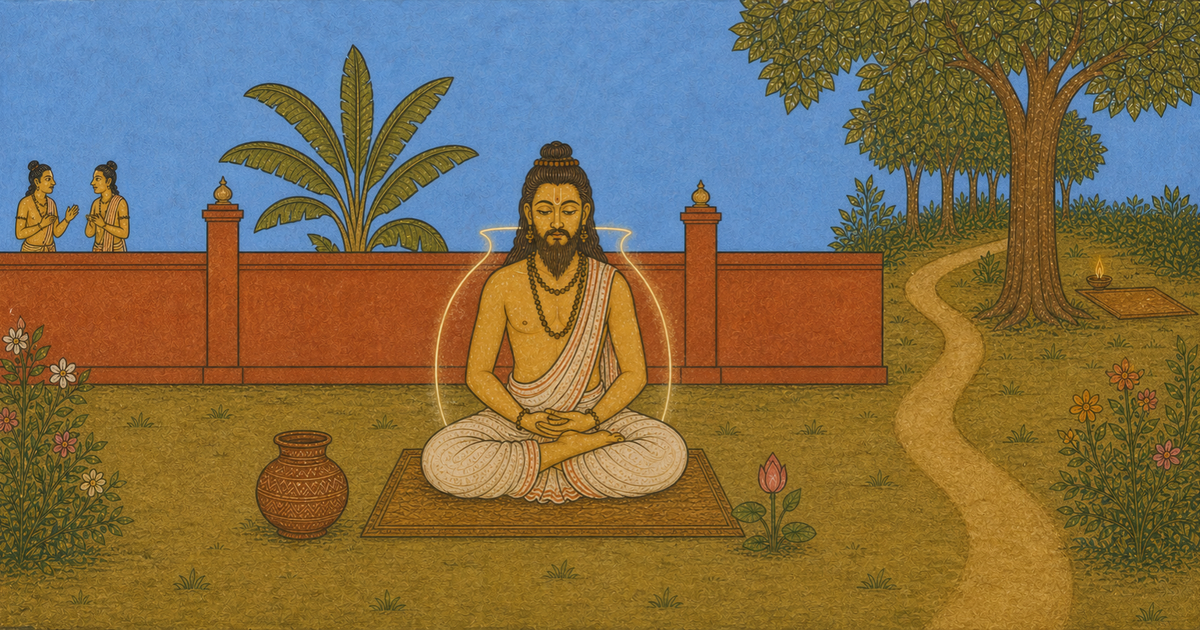
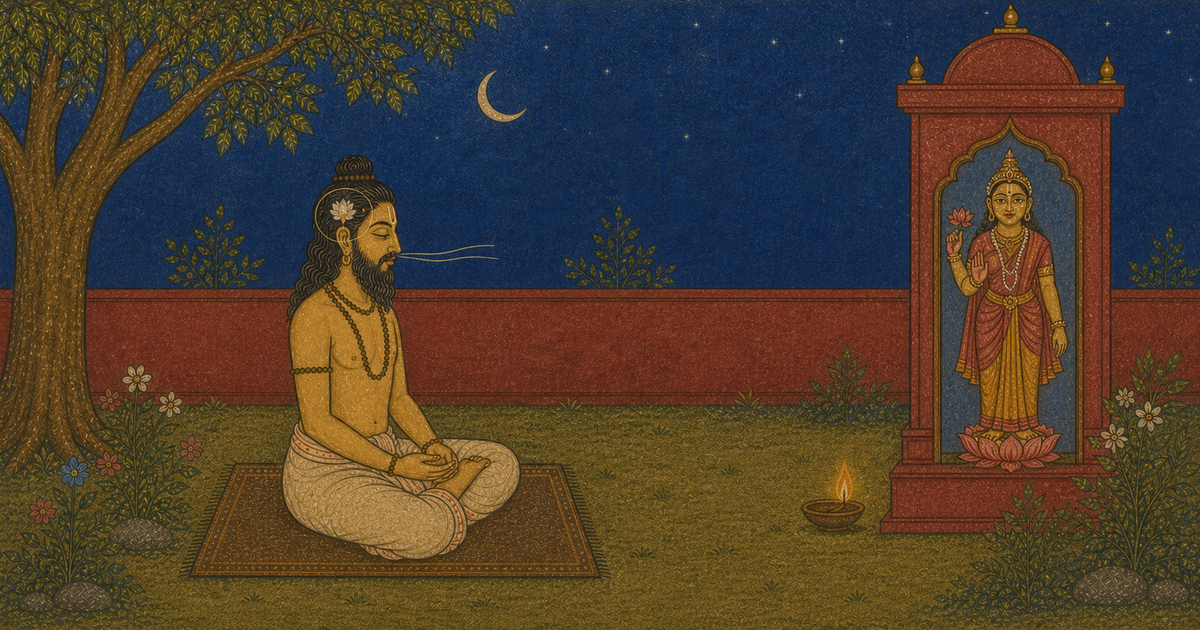
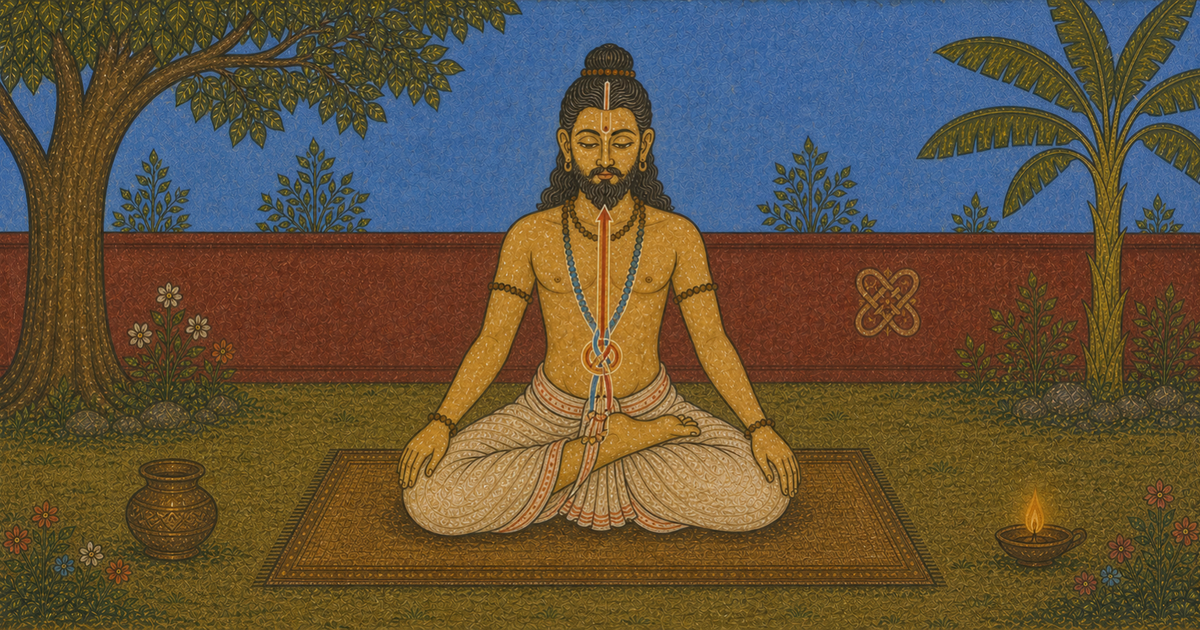
[Dattātreya was] adorned (śobhitam | acc sg) by a firm lotus posture (dṛḍha-padmāsanena api), with his gaze directed to the tip of his nose (nāsāgrārpitayā dṛśā | ins sg) and with the pair of his upturned hands placed between his thighs (ūru-madhya-gatottāna-pāṇi-yugmena | ins sg).
Dr. Ronald Steiner - 2026 - historically literal
Dattātreyayogaśāstra 6
Metre: Anuṣṭubh
Then (tataḥ), after this Sāṃkṛti (saḥ sāṃkṛtiḥ | nom sg) had bowed (praṇamya | abs) to that seer (tam ṛṣiṃ | acc sg), Dattātreya (dattātreyaṃ | acc sg), he sat down (upaviṣṭavān | nom sg) right there (tatraiva), together (saha) with his disciples (tacchiṣyaiḥ | ins pl), facing him (saṃmukham | acc sg n).
Dr. Ronald Steiner - 2026 - historically literal
Dattātreyayogaśāstra 7
Metre: Anuṣṭubh
At that very moment (tadaiva), that sage (saḥ muniḥ | nom sg), having ceased (viramya | abs) from yoga (yogāt | abl sg), affectionately (prīti-pūrvakam | acc sg) addressed (uvāca | 3p sg act perf) to Sāṃkṛti (sāṃkṛtiṃ | acc sg), who stood before him (sva-puraḥ-sthitam | acc sg m ppp), the word (vacaḥ | acc sg), “Welcome” (svāgatam | acc sg).
Dr. Ronald Steiner - 2026 - historically literal
Dattātreyayogaśāstra 8
Metre: Anuṣṭubh
“O Sāṃkṛti (sāṃkṛte | voc sg), tell me (kathaya tvaṃ mām): with what purpose (kim uddiśya | abs) have you come here (ihāgataḥ | nom sg)?” Asked thus (iti pṛṣṭaḥ | nom sg m ppp), he told him (sa taṃ prāha) that he had come here to learn yoga (yogaṃ jñātum ihāgataḥ).
Dr. Ronald Steiner - 2026 - historically literal
DYS 9–11: Four Yogas

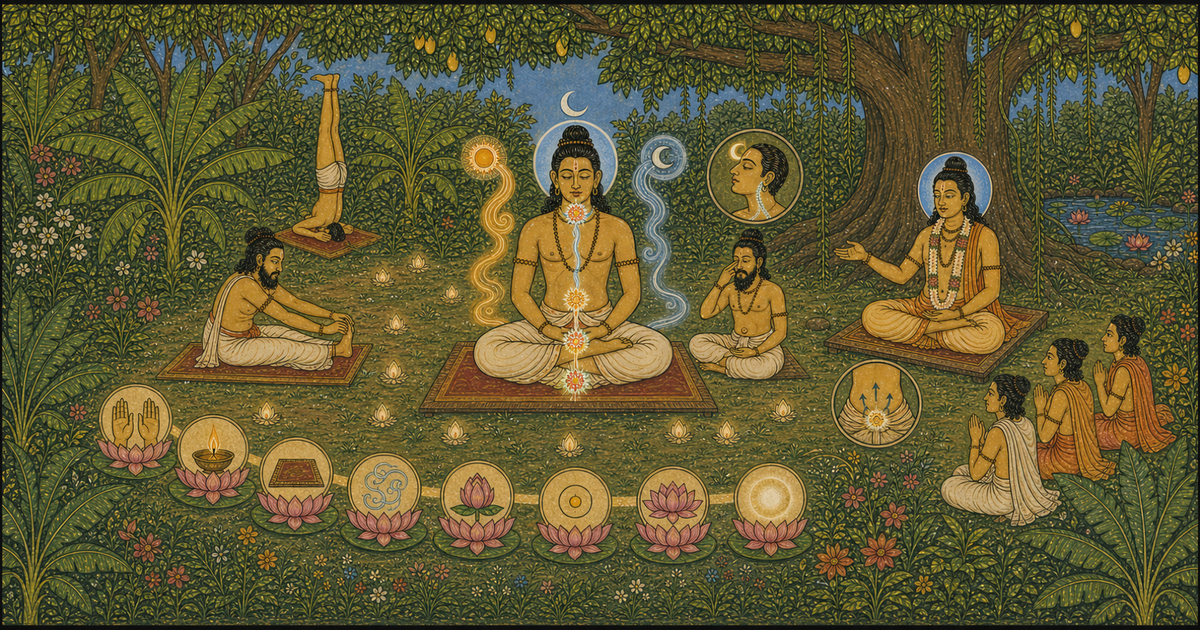
Dattātreyayogaśāstra 9–11: Mantra, Laya, Haṭha, and Rāja Yoga with Four Stages

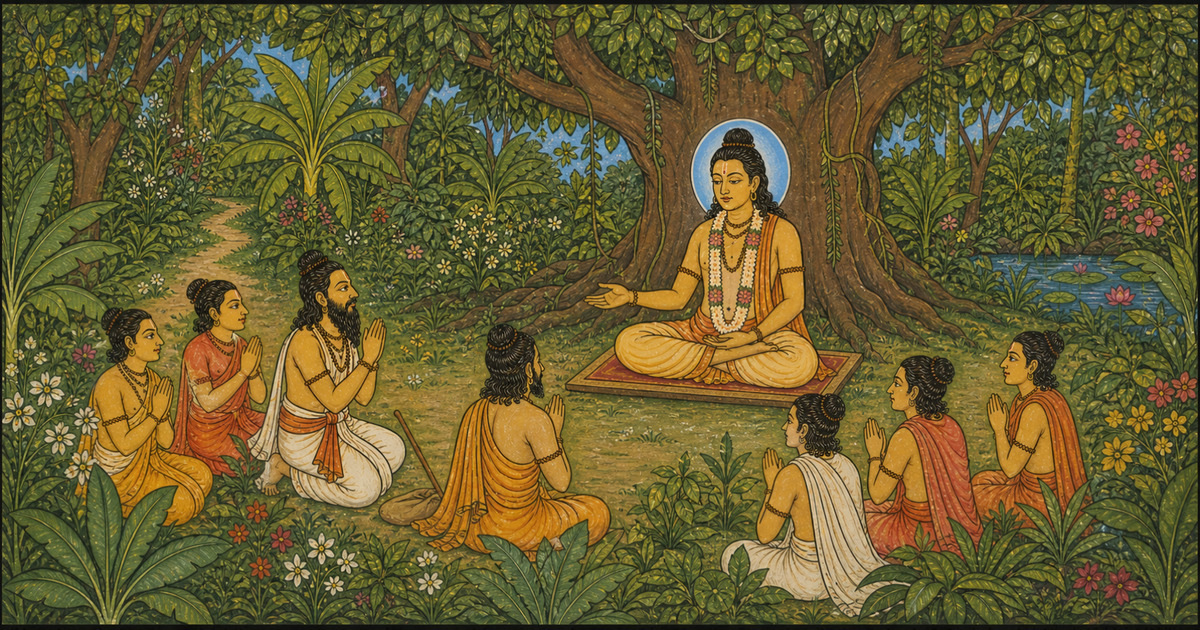
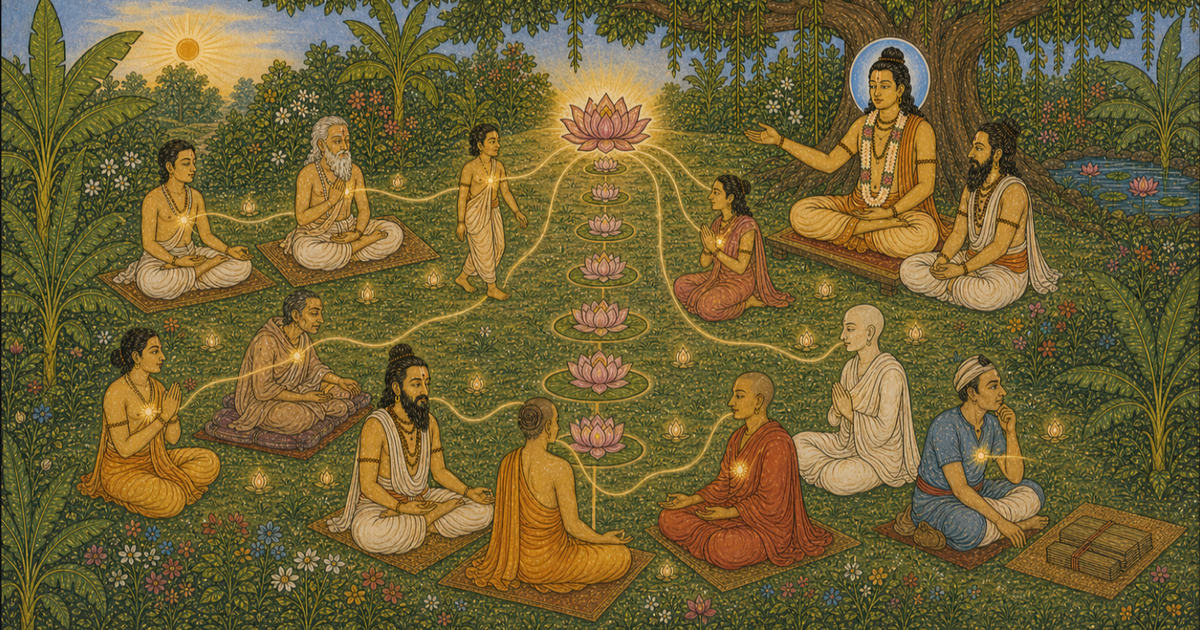
Dattātreya distinguishes four forms of yoga and announces Inception, Union, Accumulation, and Perfection as stages of the path he will teach.

Dattātreyayogaśāstra 9
Metre: Anuṣṭubh; speaker and title lines: prose
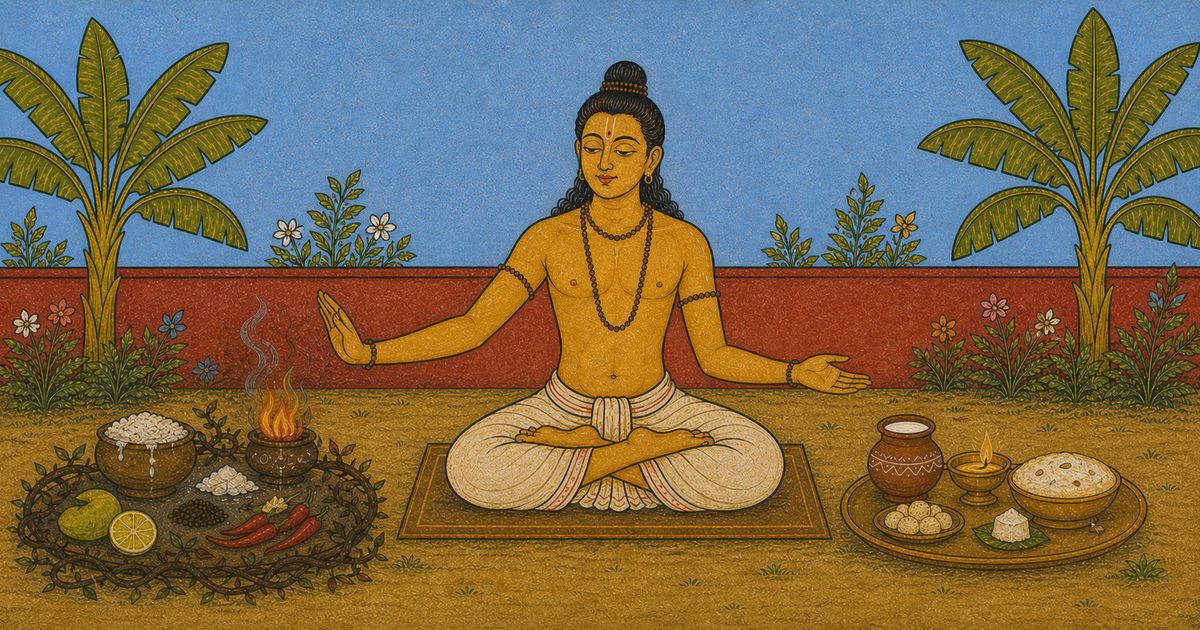
The venerable Dattātreya spoke (śrīdattātreya uvāca): Yoga (yogaḥ | nom sg) truly has many forms (bahudhā), O Brahmin (brahman | voc sg). I shall tell you (kathayāmi te) all of this (tat sarvam | acc sg): Mantrayoga (mantra-yogaḥ | nom sg), Laya (layaḥ | nom sg), and Haṭhayoga as the third (haṭha-yogas tṛtīyakaḥ | nom sg).
Dr. Ronald Steiner - 2026 - historically literal
Dattātreyayogaśāstra 10
Metre: Anuṣṭubh
Rājayoga (rāja-yogaḥ | nom sg) is to be the fourth [yoga] (caturthaḥ syāt) and is held to be the highest of the yogas (yogānām uttamaḥ smṛtaḥ). Commencement (ārambhaḥ | nom sg), Union (ghaṭaḥ | nom sg), and Accumulation (paricayaḥ | nom sg) are held to be [its stages].
Dr. Ronald Steiner - 2026 - historically literal
Dattātreyayogaśāstra 11
Metre: Anuṣṭubh
Completion (niṣpattiḥ | nom sg): thus the four stages are proclaimed (avasthāś ca catasraḥ parikīrtitāḥ | nom pl). I shall explain (vakṣye | 1p sg fut) their details (eteṣāṃ vistaram | acc sg), if you wish to hear them (yadi tvaṃ śrotum icchasi).
Dr. Ronald Steiner - 2026 - historically literal
DYS 12–14: Mantra Yoga

Dattātreyayogaśāstra 12–14: Letter Installation, Mantra, and Twelve Years of Practice

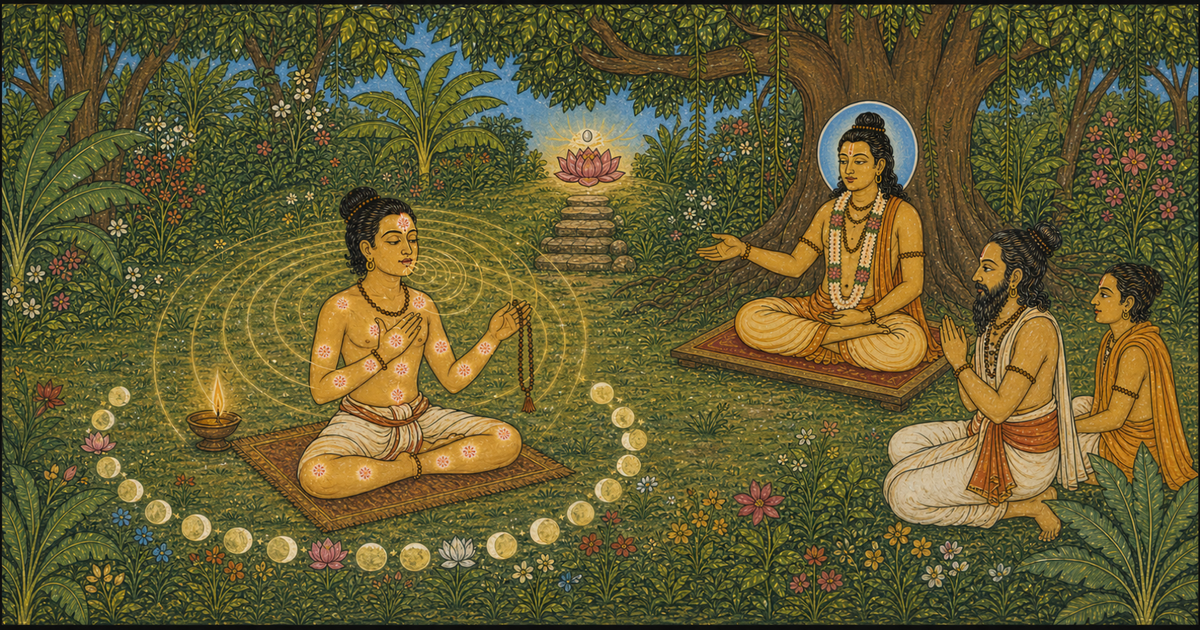
After ritually installing the letters of the alphabet, the wise practitioner should recite a mantra; even one may produce a supernatural power. A practitioner...

Dattātreyayogaśāstra 12
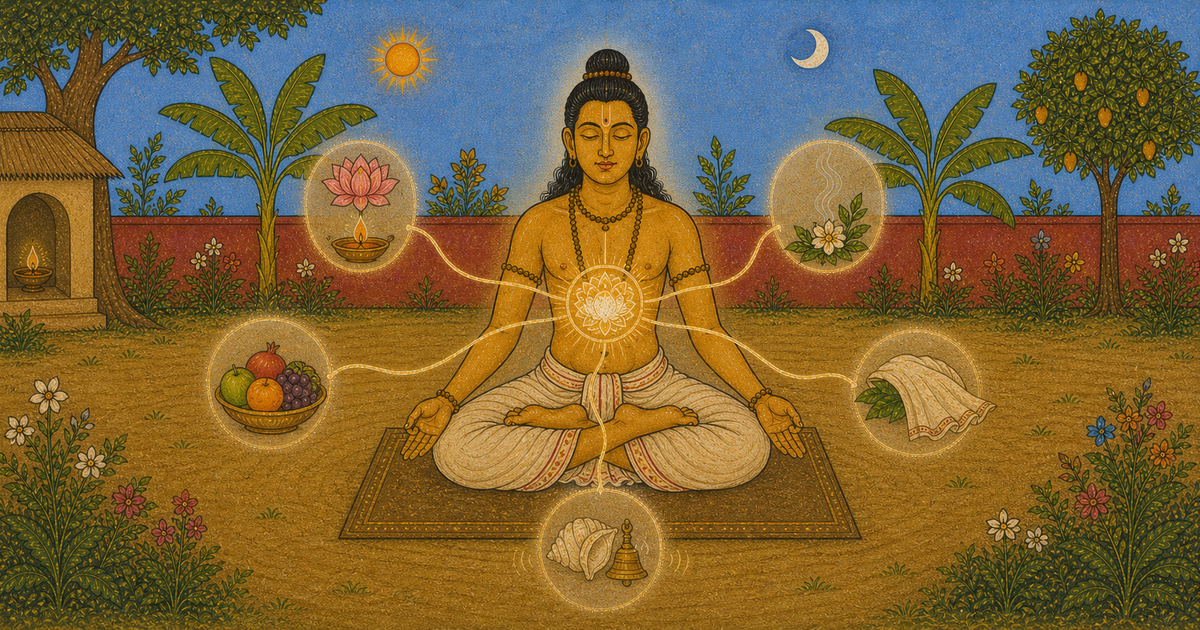
Metre: Anuṣṭubh
The wise person (sudhīḥ | nom sg) should recite a mantra (mantraṃ japet), after first installing the letters on the limbs (aṅgeṣu mātṛkā-nyāsa-pūrvam). A supernatural power may arise (siddhiḥ syāt) through even one [mantra] (ekena ca api | ins sg). That is called Mantrayoga (mantra-yogaḥ sa ucyate).
Dr. Ronald Steiner - 2026 - historically literal
Dattātreyayogaśāstra 13
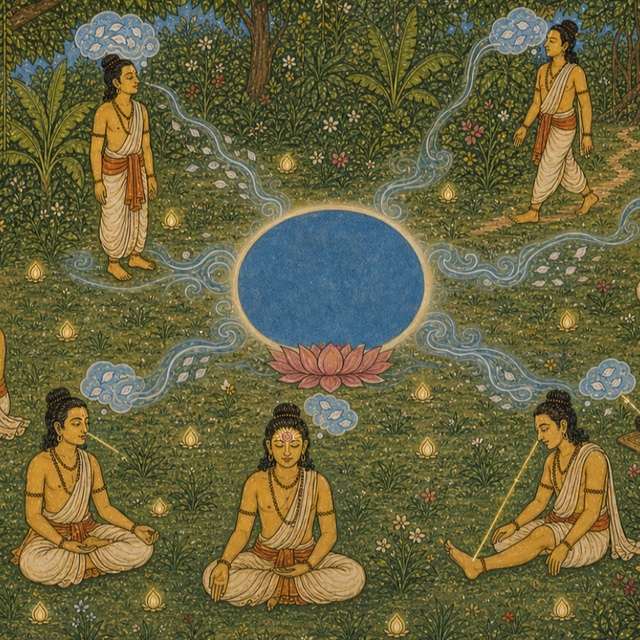
Metre: Anuṣṭubh
The person qualified for it (tasya adhikārī | nom sg) is to be weak (mṛduḥ syāt | nom sg). Yet after twelve years (dvādaśābdaiḥ | ins pl) of practice (sādhanāt | abl sg), he generally (prāyeṇa) obtains knowledge (jñānam | acc sg) and the powers (siddhīḥ | acc pl), beginning with Aṇimā (aṇimādikāḥ | acc pl).
Dr. Ronald Steiner - 2026 - historically literal
Dattātreyayogaśāstra 14
Metre: Anuṣṭubh
The lowest practitioner (sādhaka-adhamaḥ | nom sg), a person of little understanding (alpa-buddhiḥ | nom sg), undertakes (sevate | 3p sg med pres) this yoga (imaṃ yogam | acc sg). For (hi) this (ayam | nom sg) Mantrayoga (mantra-yogaḥ | nom sg) is taught (proktaḥ | nom sg) and is held to be the lowest among the yogas (yogānām adhamaḥ smṛtaḥ | nom sg).
Dr. Ronald Steiner - 2026 - historically literal
DYS 15–19: Śiva’s Laya

Dattātreyayogaśāstra 15–19: The Innumerable Methods of Dissolution

Laya Yoga dissolves the mind through esoteric techniques traced to Ādinātha, or Śiva, and to his instruction of the Śabaras.

Dattātreyayogaśāstra 15
Metre: Anuṣṭubh
The yoga of dissolution (laya-yogaḥ | nom sg) arises through esoteric techniques (saṃketaiḥ | ins pl) from the dissolution of mind (citta-layāt | abl sg). Ādinātha is said to have proclaimed one and a half crore—that is, fifteen million—such techniques (sārdha-koṭiḥ prakīrtitāḥ).
Dr. Ronald Steiner - 2026 - historically literal
Dattātreyayogaśāstra 16
Metre: Anuṣṭubh; speaker and title lines: prose
Sāṃkṛti spoke: “O Lord (bhagavan | voc sg), who is this person (ko ’yaṃ puruṣaḥ | nom sg) who is called Ādinātha (ādināthaḥ ucyate)?”
Dr. Ronald Steiner - 2026 - historically literal
Dattātreyayogaśāstra 17
Metre: Anuṣṭubh; speaker and title lines: prose
Dattātreya (dattātreyaḥ | nom sg) spoke (uvāca | 3p sg act perf): The names (nāmāni | nom pl) of the Great God (mahā-devasya | gen sg) [include] Ādinātha (ādi-nāthaḥ | nom sg), Bhairava (bhairavaḥ | nom sg), and Śabareśa (śabareśaḥ | nom sg). In this form, the god (devo ’yam | nom sg) is the powerful Lord (prabhuḥ | nom sg), wandering (vicaran | nom sg) playfully (līlayā | ins sg).
Dr. Ronald Steiner - 2026 - historically literal
Dattātreyayogaśāstra 18
Metre: Anuṣṭubh
[Śabareśa wandered] on Mount Śrīkaṇṭha (śrīkaṇṭha-parvate | loc sg), together with Gaurī (gauryā saha | ins sg) and the leaders of the Pramathas (pramatha-nāyakaiḥ | ins pl), in the Vindhyas (vindhye | loc sg), on Śrīparvata (śrī-parvate | loc sg), and in the region of the banana grove (kadalī-vana-gocare | loc sg).
Dr. Ronald Steiner - 2026 - historically literal
Dattātreyayogaśāstra 19
Metre: Anuṣṭubh
On Girikūṭa (giri-kūṭe | loc sg) and on Citrakūṭa (citra-kūṭe | loc sg), the mountain marked with footprints (sapādaniyate girau | loc sg), out of compassion (kṛpayā | ins sg) he gave each of the Śabaras (śabarebhyaḥ | dat pl) one esoteric technique (ekaika-saṃketam | acc sg).
Dr. Ronald Steiner - 2026 - historically literal
DYS 20–26: Practising Laya

Dattātreyayogaśāstra 20–26: Simple Ways to Dissolve the Mind

Meditation on emptiness, the nose tip, the back of the head, the brow centre or the big toe, together with relaxed lying down, are presented as accessible...

Dattātreyayogaśāstra 20
Metre: Anuṣṭubh
No one other than him (na anyaḥ taṃ vinā) can teach all those [techniques] (tāni sarvāṇi vaktum śaknoti). I shall explain (kathayiṣyāmi) some (kāni cit | acc pl) that consist of natural practices (sahajābhyāsavat) and are easy (sukham).
Dr. Ronald Steiner - 2026 - historically literal
Dattātreyayogaśāstra 21
Metre: Anuṣṭubh
Standing (tiṣṭhan | nom sg), walking (gacchan | nom sg), sleeping (svapan | nom sg), and eating (bhuñjan | nom sg), one should meditate (dhyāyet | 3p sg act opt) on emptiness (śūnyam | acc sg) day and night (aharniśam | acc sg). This (ayam | nom sg) is indeed (hi) one (ekaḥ | nom sg) technique (saṃketaḥ | nom sg) proclaimed (bhāṣitaḥ | nom sg) by the First Lord (ādināthena | ins sg).
Dr. Ronald Steiner - 2026 - historically literal
Dattātreyayogaśāstra 22
Metre: Anuṣṭubh
Another [method] is proclaimed as consisting merely in gazing at the tip of the nose (nāsāgra-dṛṣṭi-mātreṇa aparaḥ parikīrtitaḥ). Another is meditation on the back part of the head (śiraḥ-pāścātya-bhāgasya dhyānam), which conquers death (mṛtyuṃ-jayaḥ).
Dr. Ronald Steiner - 2026 - historically literal
Dattātreyayogaśāstra 23
Metre: Anuṣṭubh
Another esoteric technique (paraḥ saṃketaḥ | nom sg) is taught as consisting merely in gazing between the eyebrows (bhrū-madhya-dṛṣṭi-mātreṇa | ins sg). The application of †līl↠ash (līlā-vibhūti-lepaḥ | nom sg) too is proclaimed to be excellent (uttamaḥ parikīrtitaḥ).
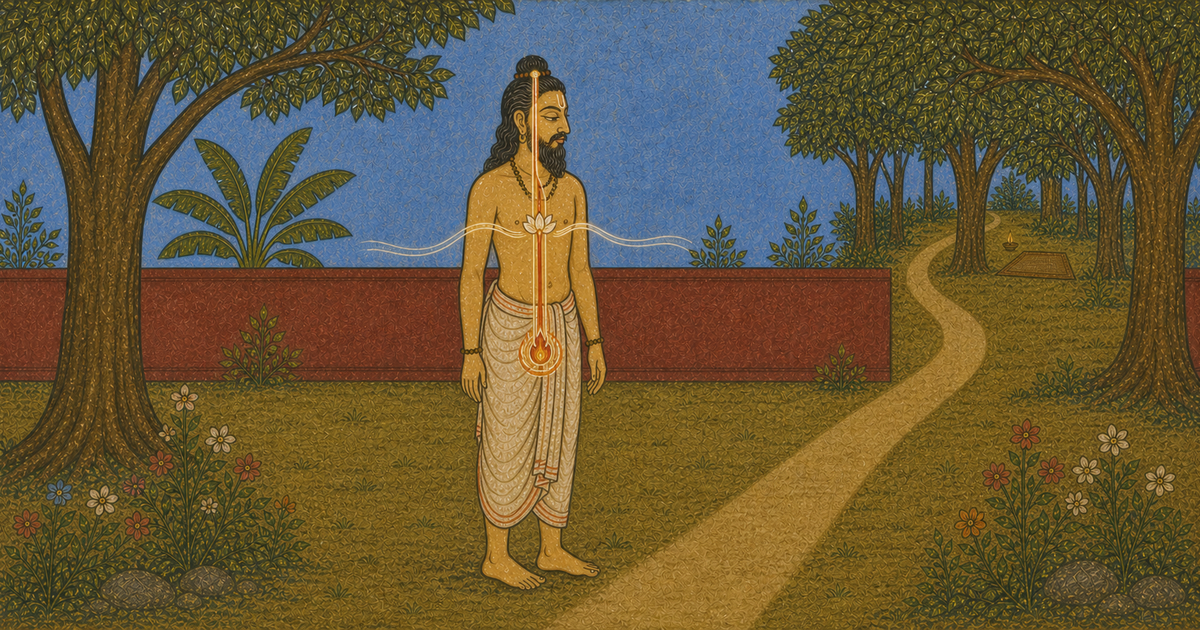
Dr. Ronald Steiner - 2026 - historically literal
Dattātreyayogaśāstra 24
Metre: Anuṣṭubh
An excellent dissolution [of mind] (laya uttamaḥ | nom sg) takes place in the big toe of one’s own right foot (svasya dakṣiṇa-pādasya aṅguṣṭhe | loc sg). Lying on the ground like a corpse on its back (uttāna-śavavad bhūmau śayanam | nom sg) is the very best (uttamottamaḥ).
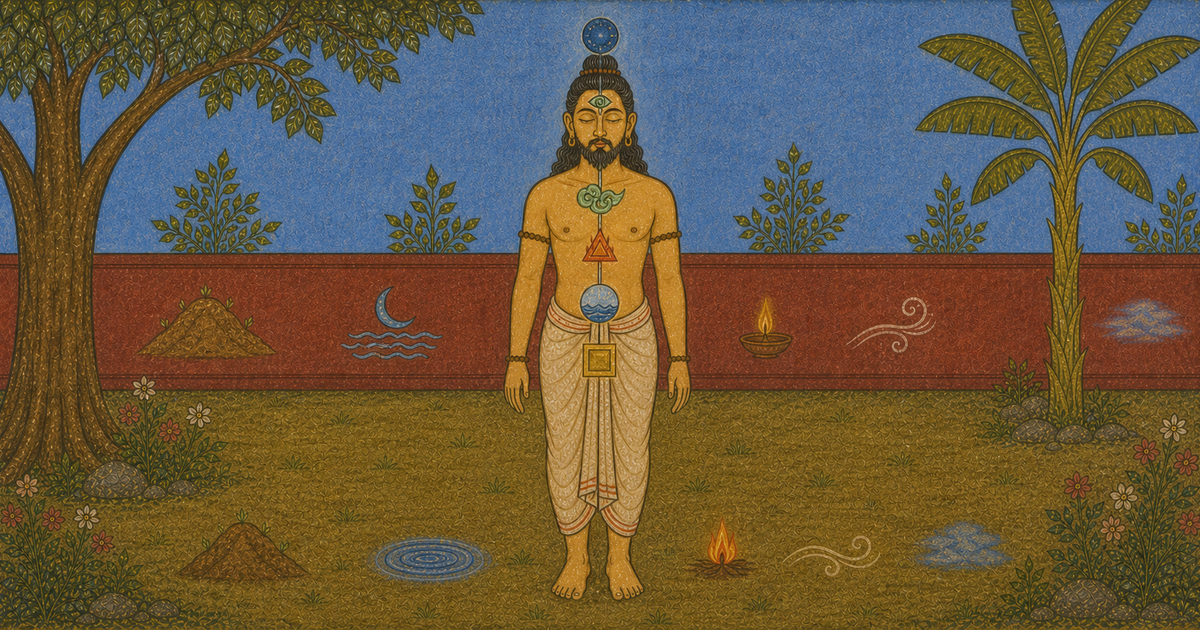
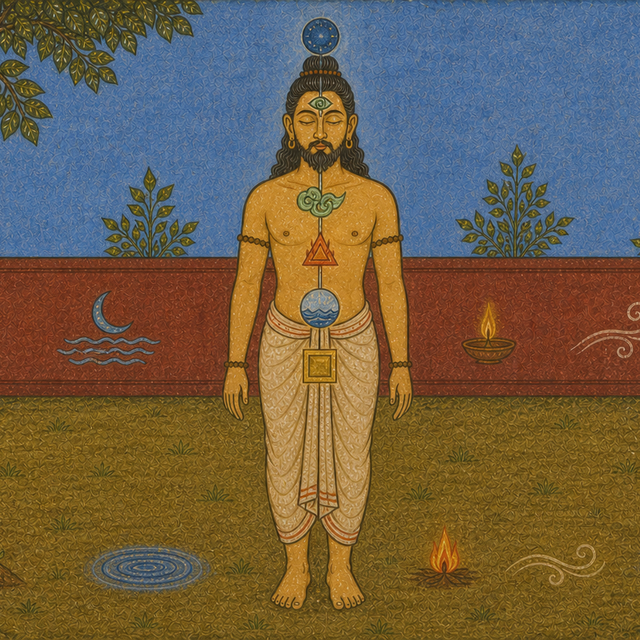
Dr. Ronald Steiner - 2026 - historically literal
Dattātreyayogaśāstra 25
Metre: Anuṣṭubh
If (cet) one were to perform [this] (kuryāt | 3p sg act opt), relaxed (śithilaḥ | nom sg), in a solitary place (nirjane deśe | loc sg), one would attain (āpnuyāt | 3p sg act opt) accomplishment (siddhim | acc sg). Thus (evam) Śaṅkara (śaṅkaraḥ | nom sg) related (kathayām āsa | 3p sg act perf) many techniques (bahu-saṃketān | acc pl).
Dr. Ronald Steiner - 2026 - historically literal
Dattātreyayogaśāstra 26
Metre: Anuṣṭubh
The dissolution of mind (cittasya layaḥ | nom sg) that arises through [these and] many other techniques (saṃketair bahubhiś cānyaiḥ | ins pl) is precisely Layayoga (sa eva laya-yogaḥ syāt). Now hear Haṭhayoga (haṭha-yogam ataḥ śṛṇu).
Dr. Ronald Steiner - 2026 - historically literal
DYS 27–31: Survey of Haṭha

Dattātreyayogaśāstra 27–31: Eight Limbs and Kapila’s Physical Methods

The text places an eight-limbed yoga beside Kapila’s Haṭha system and lists mudrās, bandhas, inversion, Vajrolī, Amarolī, and Sahajolī.

Dattātreyayogaśāstra 27
Metre: Anuṣṭubh
Yama (yamaḥ | nom sg) and (ca) Niyama (niyamaḥ | nom sg), then Āsana (āsanam | nom sg), and thereafter (tataḥ param) Prāṇāyāma (prāṇāyāmaḥ | nom sg) are the first four [limbs] (caturthaḥ syāt); Pratyāhāra (pratyāhāraḥ | nom sg) is the fifth (pañcamaḥ | nom sg).
Dr. Ronald Steiner - 2026 - historically literal
Dattātreyayogaśāstra 28
Metre: Anuṣṭubh
Then (tataḥ) concentration (dhāraṇā | nom sg) is taught [as the sixth limb] (proktā | nom sg), and meditation (dhyānam | nom sg) is called the seventh [limb] (saptamam ucyate). Samādhi (samādhiḥ | nom sg) is taught as the eighth [limb] (aṣṭamaḥ proktaḥ) and grants the fruit of every merit (sarva-puṇya-phala-pradaḥ | nom sg).
Dr. Ronald Steiner - 2026 - historically literal
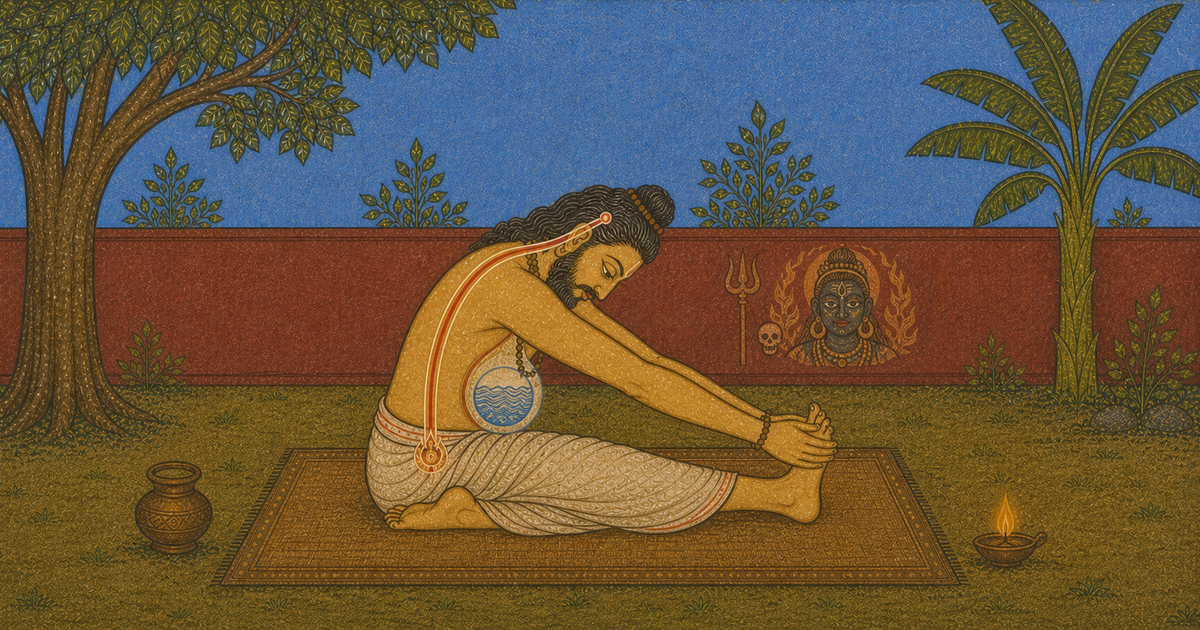
Dattātreyayogaśāstra 29
Metre: Anuṣṭubh
Thus Yājñavalkya and others (yājñavalkyādayaḥ | nom pl) knew (viduḥ | 3p pl perf) eight-limbed yoga (aṣṭāṅga-yogam | acc sg). Likewise, accomplished adepts such as Kapila (kapilādyāḥ siddhāḥ | nom pl) practised Haṭha differently from that [eight-limbed yoga] (haṭhaṃ kuryus tad-anyathā).
Dr. Ronald Steiner - 2026 - historically literal
Dattātreyayogaśāstra 30
Metre: Anuṣṭubh
And that [Haṭha] is as follows (tad yathā ca): Mahāmudrā (mahā-mudrā | nom sg), Mahābandha (mahā-bandhaḥ | nom sg), then Khecarīmudrā (tataś ca khecarī-mudrā | nom sg), and likewise Jālandhara Bandha (bandho jālandharaḥ | nom sg).
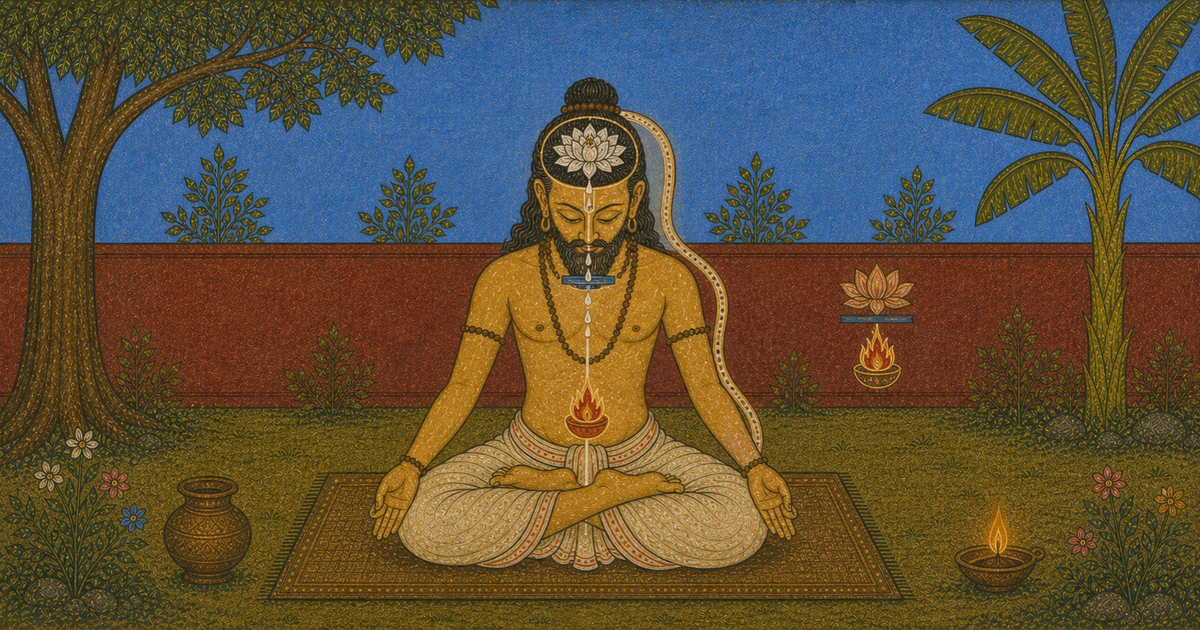
Dr. Ronald Steiner - 2026 - historically literal
Dattātreyayogaśāstra 31
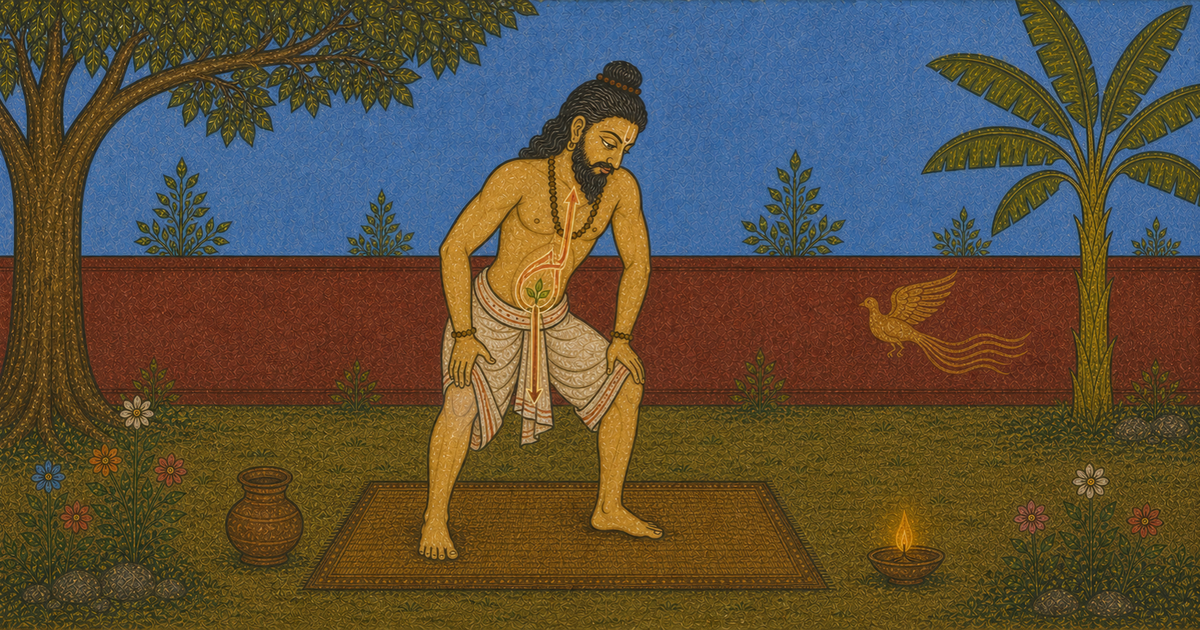
Metre: Anuṣṭubh
Uḍḍiyāṇa (uḍḍiyāṇam | nom sg), Mūlabandha (mūla-bandhaḥ | nom sg), and Viparītakṛti (viparīta-kṛtiḥ | nom sg) likewise [belong to it]. Vajrolī (vajrolī | nom sg), Amarolī (amarolī | nom sg), and Sahajolī (sahajolī | nom sg) are held to be threefold (tridhā matā).
Dr. Ronald Steiner - 2026 - historically literal
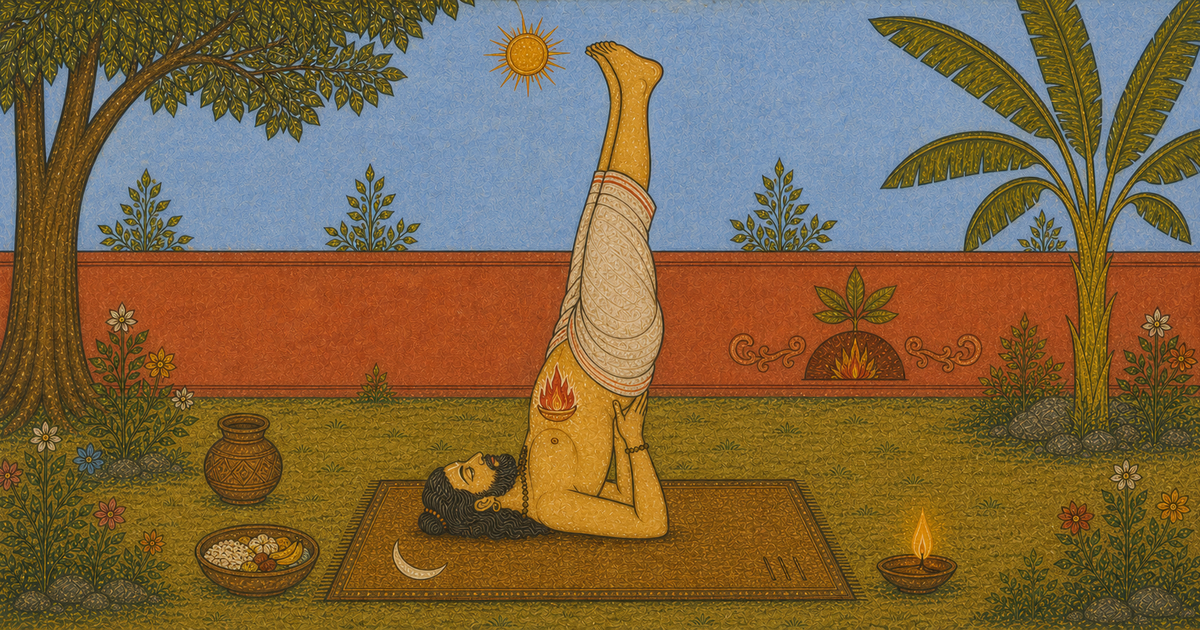
DYS 32–33: Yama and Niyama

Dattātreyayogaśāstra 32–33: Moderate Food and Nonviolence as Core Restraints

From the traditional groups of yamas and niyamas, Dattātreya singles out moderate eating and nonviolence as decisive rules for this practice.

DYS 34–38: Padmāsana

Dattātreyayogaśāstra 34–38: Lotus Pose, Breath, and the Start of Practice

Among the many seats, Padmāsana is especially effective; posture, gaze, tongue position, and slow inhalation and exhalation prepare the practice that follows.

Dattātreyayogaśāstra 34
Metre: Anuṣṭubh
Among the 8,400,000 (catur-āśīti-lakṣeṣu | loc pl) postures (āsaneṣu | loc pl), hear (śṛṇu | 2p sg act imp) the best (uttamam | acc sg n). The lotus posture (padma-āsanam | nom sg) taught (saṃproktam | nom sg n ppp) by Ādinātha (ādi-nāthena | ins sg) is described (ucyate | 3p sg pas pres) here (iha).
Dr. Ronald Steiner - 2026 - historically literal
Dattātreyayogaśāstra 35
Metre: Anuṣṭubh
Having placed (kṛtvā | abs) the upturned (uttānau | acc du m) feet (caraṇau | acc du) carefully (prayatnataḥ) on the thighs (ūru-saṃsthau | acc du m), and likewise (tathā) placed the two upturned (uttānau | acc du m) hands (pāṇī | acc du) between the thighs (ūru-madhye | loc sg), [one then directs] (tataḥ) the two eyes (dṛśau | acc du).
Dr. Ronald Steiner - 2026 - historically literal
Dattātreyayogaśāstra 36
Metre: Anuṣṭubh
One should fix [the eyes] on the tip of the nose (nāsāgre vinyaset) and raise the base of the uvula with the tongue (rāja-danta-mūlaṃ ca jihvayā uttabhya). Having placed the chin on the chest (cibukaṃ vakṣasy āsthāpya), one should [draw in] the breath slowly (pavanaṃ śanaiḥ).
Dr. Ronald Steiner - 2026 - historically literal
Dattātreyayogaśāstra 37
Metre: Anuṣṭubh
Having drawn [the breath] in according to one’s capacity (yathāśaktyā samākṛṣya | abs), one should slowly (śanaiḥ) fill (pūrayet | 3p sg act opt) the abdomen (udaram | acc sg). Afterwards (paścāt), one should exhale (recayet | 3p sg act opt) the breath (pavanam | acc sg), equally according to one’s capacity (yathāśaktyaiva), slowly (śanaiḥ).
Dr. Ronald Steiner - 2026 - historically literal
Dattātreyayogaśāstra 38
Metre: Anuṣṭubh
This is called Padmāsana (idaṃ padmāsanaṃ proktam), and it destroys all diseases (sarva-vyādhi-vināśanam). It is difficult for just anyone to attain (durlabhaṃ yena kenāpi); in this world it is attained by an intelligent person (dhīmatā labhyate bhuvi).
Dr. Ronald Steiner - 2026 - historically literal
DYS 39–42: Practice Matters

Dattātreyayogaśāstra 39–42: Success in Yoga Is Open to Every Serious Practitioner

Age, health, social position, and religious identity do not decide success: regular practice, perseverance, and confidence in the path do.

Dattātreyayogaśāstra 39
Metre: Anuṣṭubh
O Sāṃkṛti (sāṃkṛte | voc sg), listen attentively (sattvasthaḥ | nom sg) to the sequence of yoga practice (yogābhyāsa-kramam | acc sg), which I shall carefully explain (mayā prayatnena) together with all the defining features of the yogas (yogānāṃ sarva-lakṣaṇaiḥ).
Dr. Ronald Steiner - 2026 - historically literal
Dattātreyayogaśāstra 40
Metre: Anuṣṭubh
Whether young, old, or ill (yuvāvastho ’pi vṛddho vā vyādhito vā), a person gradually (śanaiḥ śanaiḥ) attains accomplishment in all yogas (sarva-yogeṣu | loc pl) through practice (abhyāsāt | abl sg), provided he is untiring (atandritaḥ | nom sg).
Dr. Ronald Steiner - 2026 - historically literal
Dattātreyayogaśāstra 41
Metre: Anuṣṭubh
Whether someone is a Brahmin (brāhmaṇaḥ | nom sg), an ascetic (śramaṇaḥ | nom sg), a Buddhist (bauddhaḥ | nom sg), a Jain (ārhataḥ | nom sg), a Kāpālika (kāpālikaḥ | nom sg), or a Cārvāka (cārvākaḥ | nom sg), [what matters is] an intelligent person (sudhīḥ | nom sg) endowed (sahitaḥ | nom sg) with faith (śraddhayā | ins sg).
Dr. Ronald Steiner - 2026 - historically literal
Dattātreyayogaśāstra 42
Metre: Anuṣṭubh
If constantly (nityam) devoted to yoga practice (yogābhyāsa-rataḥ | nom sg), one can attain (avāpnuyāt | 3p sg act opt) every accomplishment (sarva-siddhim | acc sg). Accomplishment (siddhiḥ | nom sg) may arise for one engaged in practice (kriyā-yuktasya | gen sg); how (katham) could it arise (bhavet | 3p sg act opt) for one without practice (akriyasya | gen sg)?
Dr. Ronald Steiner - 2026 - historically literal
DYS 43–49: False Yogis

Dattātreyayogaśāstra 43–49: Outer Signs Cannot Replace Practice

Clothing, hairstyle, religious speech, and public performance do not make a yogi; those who live from yoga without practising deceive others and obstruct the...

Dattātreyayogaśāstra 43
Metre: Anuṣṭubh
Accomplishment in yoga does not arise (na yoga-siddhiḥ prajāyate) merely through the study of scripture (śāstra-pāṭha-mātreṇa | ins sg), whether one has a shaven head (muṇḍitaḥ), carries a staff (daṇḍa-dhārī), or wears ochre robes (kāṣāya-vasanaḥ).
Dr. Ronald Steiner - 2026 - historically literal
Dattātreyayogaśāstra 44
Metre: Anuṣṭubh
[One may] say “Nārāyaṇa” (nārāyaṇa-vadaḥ | nom sg), wear matted hair (jaṭilaḥ | nom sg), and be smeared with ash (bhasma-lepanaḥ | nom sg); or have “Namaḥ Śivāya” as one’s utterance (namaḥ-śivāya-vākyaḥ | nom sg), or be a worshipper of external images (bāhya-arcā-pūjakaḥ | nom sg).
Dr. Ronald Steiner - 2026 - historically literal
Dattātreyayogaśāstra 45
Metre: Anuṣṭubh
[One may] be marked with Puṇḍra signs at twelve places (sthāna-dvādaśa-puṇḍraḥ | nom sg) or richly adorned (bahu-bhūṣitaḥ | nom sg) with necklaces (mālābhiḥ | ins pl). If devoid of practice (kriyā-vihīnaḥ | nom sg) or cruel (krūraḥ | nom sg), how (katham) could one attain (avāpnuyāt | 3p sg act opt) accomplishment (siddhim | acc sg)?
Dr. Ronald Steiner - 2026 - historically literal
Dattātreyayogaśāstra 46
Metre: Anuṣṭubh
Neither (na) wearing religious garb (veṣa-dhāraṇam | nom sg) nor (na ca) talk about it (tat-kathā | nom sg) is the cause (kāraṇam | nom sg) of accomplishment (siddheḥ | gen sg). Practice (kriyā | nom sg) alone (eva) is the cause (kāraṇam | nom sg) of accomplishment. This is indeed (tu) true (satyam), O Sāṃkṛti (sāṃkṛte | voc sg).
Dr. Ronald Steiner - 2026 - historically literal
Dattātreyayogaśāstra 47
Metre: Anuṣṭubh
In order to satisfy penis and belly (śiśnodarārtham), wearers of religious garb (veṣa-dhāriṇaḥ | nom pl) who are devoid of actual practice (anuṣṭhāna-vihīnāḥ | nom pl) deceive (vañcayanti | 3p pl act pres) people (janān | acc pl) by talking about yoga (yogasya kathayā).
Dr. Ronald Steiner - 2026 - historically literal
Dattātreyayogaśāstra 48
Metre: Anuṣṭubh
Malevolent men (akuśalā narāḥ | nom pl) exert themselves through all manner of deceptions (uccāvacair vipralambhaiḥ | ins pl). “We are yogins” (yogino vayam iti), say these fools (mūḍhāḥ | nom pl), wholly devoted to enjoyment (bhoga-parāyaṇāḥ | nom pl).
Dr. Ronald Steiner - 2026 - historically literal
Dattātreyayogaśāstra 49
Metre: Anuṣṭubh
Having gradually (śanaiḥ) recognized (jñātvā | abs) that such people (tathā-vidhān | acc pl) lack yoga practice (yogābhyāsa-vivarjitān | acc pl) and have achieved their purpose by words alone (kṛtārthān vacanaiḥ eva | acc pl), one should avoid (varjayet | 3p sg act opt) these wearers of religious garb (veṣa-dhāriṇaḥ | acc pl).
Dr. Ronald Steiner - 2026 - historically literal
DYS 50–53: Obstacles

Dattātreyayogaśāstra 50–53: Laziness, Bad Company, and Seductive Detours

The text names laziness, the company of rogues, magical work with mantras, alchemy, and the search for buried treasure as obstacles. Like mirages, they should...

Dattātreyayogaśāstra 50
Metre: Anuṣṭubh
Because they (yatas te) would always be obstacles to yoga practice (vighna-bhūtāḥ syur yogābhyāsasya sarvadā), one should therefore (tat), carefully (prayatnena), avoid people like them (sadṛśān varjayet), including those whom one’s own mind produces as dear (buddhi-jān priyān | acc pl).
Dr. Ronald Steiner - 2026 - historically literal
Dattātreyayogaśāstra 51
Metre: Anuṣṭubh
At the beginning of practice (prathamābhyāsa-kāle | loc sg), various (vividhāḥ | nom pl) obstacles (vighnāḥ | nom pl) arise (syuḥ | 3p pl act opt), O sage (mune | voc sg). Laziness (ālasyam | nom sg) is the first (prathamaḥ | nom sg) obstacle (vighnaḥ | nom sg); the second (dvitīyaḥ | nom sg) is now to be named (prakathyate | 3p sg pas pres).
Dr. Ronald Steiner - 2026 - historically literal
Dattātreyayogaśāstra 52
Metre: Anuṣṭubh
The previously mentioned company of rogues (pūrvokta-dhūrta-goṣṭhī | nom sg) is [the second obstacle]; the third is magic by means of mantras (mantra-sādhanam | nom sg), the fourth alchemy (dhātu-vādaḥ | nom sg), and the fifth the science of digging for buried treasure (khanya-vādakam | nom sg).
Dr. Ronald Steiner - 2026 - historically literal
Dattātreyayogaśāstra 53
Metre: Anuṣṭubh
Thus many kinds of obstacles (bahu-vidhā vighnāḥ | nom pl), like a mirage (mṛga-tṛṣṇā-samāḥ | nom pl), arise for one who is steady in posture (sthira-āsanasya | gen sg), O sage. Having recognized them (tān jñātvā), the discerning person should abandon them completely (saṃtyajet sudhīḥ).
Dr. Ronald Steiner - 2026 - historically literal
DYS 54–59: The Yogi’s Hut

Dattātreyayogaśāstra 54–59: A Protected Place for Concentrated Practice

The ideal hut has a small opening but no other holes or damaged places, is clean, free from animals and disturbance, and furnished with a suitable seat; there...

Dattātreyayogaśāstra 54
Metre: Anuṣṭubh
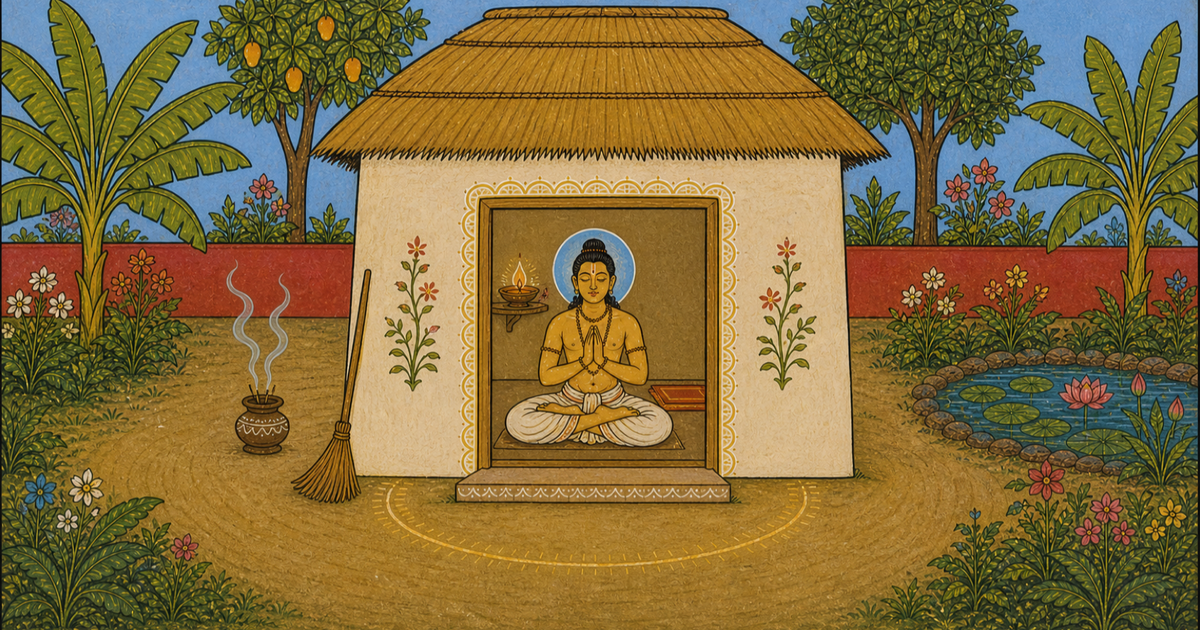
After that (tataḥ), while always seated in the lotus posture (padmāsana-gataḥ | nom sg m ppp), he should practise breath control (prāṇāyāmaṃ | acc sg). He should make (kuryāt | 3p sg act opt) a beautiful hut (suśobhanaṃ maṭham | acc sg) with a small opening (sūkṣma-dvāram | acc sg), but (tu) without holes (nirvraṇam | acc sg n).
Dr. Ronald Steiner - 2026 - historically literal
Dattātreyayogaśāstra 55
Metre: Anuṣṭubh
It should be thickly (suṣṭhu) and carefully (prayatnataḥ) smeared (liptam | acc sg n ppp) with cow dung (gomayena | ins sg) or (vā) whitewash (sudhayā | ins sg), and (ca) carefully cleared (varjitam | acc sg n ppp) of bedbugs (matkuṇaiḥ | ins pl), mosquitoes (maśakaiḥ | ins pl), and spiders (lūtaiḥ | ins pl).
Dr. Ronald Steiner - 2026 - historically literal
Dattātreyayogaśāstra 56
Metre: Anuṣṭubh
Day after day (dine dine | loc sg), the tireless practitioner (atandritaḥ | nom sg m) should also (api) keep it well swept (susaṃmṛṣṭam | acc sg n ppp) with a broom (saṃmārjanyā | ins sg), scented (vāsitam | acc sg n ppp) with fine fragrance (sugandhena | ins sg), and (ca) fumigated (dhūpitam | acc sg n ppp) with bdellium and similar substances (guggulādibhiḥ | ins pl m).
Dr. Ronald Steiner - 2026 - historically literal
Dattātreyayogaśāstra 57
Metre: Anuṣṭubh
It should be free (varjitam | acc sg n ppp) from the eighteen (aṣṭādaśabhiḥ | ins pl m) types (vargaiḥ | ins pl) [of impurity], beginning with faeces and urine (malamūtrādibhiḥ | ins pl m), and (ca) either (vā) have a door (dvāra-sampannam | acc sg n ppp) or be enclosed only (eva) by a cloth (vastrāvaraṇam | acc sg).
Dr. Ronald Steiner - 2026 - historically literal
Dattātreyayogaśāstra 58
Metre: Anuṣṭubh
It should be neither too high (nātyunnatam | acc sg n) nor too low (nātinīcam | acc sg n), and it should be free from other people’s company (parasaṃgavivarjitam | acc sg n). In that hermitage (tasmin maṭhe | loc sg), having spread [a base] (samāstīrya | abs), he should [lay down] a wrinkle-free mat (āsanaṃ nistaraṅgakam | acc sg n).
Dr. Ronald Steiner - 2026 - historically literal
Dattātreyayogaśāstra 59
Metre: Anuṣṭubh
Having sat down (upaviśya | abs) there (tatra), the wise man (medhāvī | nom sg m) should adopt the lotus posture (padmāsanasamanvitaḥ | nom sg m ppp), keep his body straight (ṛjukāyaḥ | nom sg), join his palms (prāñjaliḥ | nom sg m), and (ca) bow (praṇamet | 3p sg act opt) to his chosen deity (iṣṭadevatām | acc sg).
Dr. Ronald Steiner - 2026 - historically literal
DYS 60–66: Prāṇāyāma

Dattātreyayogaśāstra 60–66: Alternate-Nostril Breathing at Four Daily Practice Times

The breath is alternately guided and held through both nostrils; twenty rounds at dawn, midday, sunset, and midnight gradually purify the channels.

Dattātreyayogaśāstra 60
Metre: Anuṣṭubh
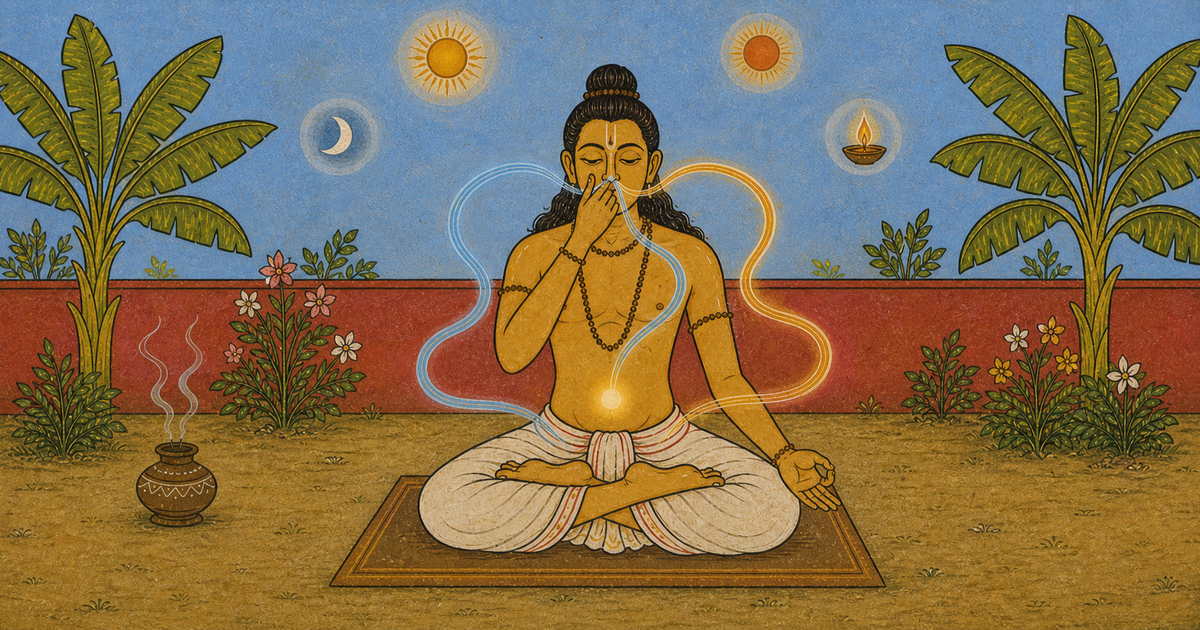
Then (tataḥ) the wise man (sudhīḥ | nom sg) should block (nirudhya | abs) the Piṅgalā channel (piṅgalām | acc sg) with the thumb (aṅguṣṭhena | ins sg) of his right hand (dakṣiṇahastasya | gen sg), and (ca) should gently (śanaiḥ) inhale (pūrayet | 3p sg act opt caus) air (vāyum | acc sg) through Iḍā (iḍayā | ins sg).
Dr. Ronald Steiner - 2026 - historically literal
Dattātreyayogaśāstra 61
Metre: Anuṣṭubh
Then (tataḥ) he should perform (kuryāt | 3p sg act opt) breath retention (kumbhakam | acc sg) according to his capacity (yathāśakti) and without discomfort (avirodhena | ins sg). Next (punar), he should exhale (tyajet | 3p sg act opt) through Piṅgalā (piṅgalayā | ins sg), gently (śanaiḥ), indeed (eva) not (na) forcefully (vegataḥ).
Dr. Ronald Steiner - 2026 - historically literal
Dattātreyayogaśāstra 62
Metre: Anuṣṭubh
Again (punaḥ), having inhaled (āpūrya | abs) through Piṅgalā (piṅgalayā | ins sg), he should gently (śanaiḥ) fill (pūrayet | 3p sg act opt caus) his abdomen (udaram | acc sg). Having held [his breath] (dhārayitvā | abs) for as long as he can (yathāśakti), he should gently (śanaiḥ) exhale (recayet | 3p sg act opt) through Iḍā (iḍayā | ins sg).
Dr. Ronald Steiner - 2026 - historically literal
Dattātreyayogaśāstra 63
Metre: Anuṣṭubh
Through whichever [channel] (yayā | ins sg f) he exhales (tyajet | 3p sg act opt), through that same one (tayā | ins sg f) he should inhale (āpūrya | abs) and hold [his breath] (dhārayet | 3p sg act opt caus) without discomfort (avirodhataḥ). In this way (evam), seated (samāsīnaḥ | nom sg m) in the morning (prātaḥ), he should perform (kuryāt | 3p sg act opt) twenty (viṃśati | acc pl) breath retentions (kumbhakān | acc pl). The breath retention (kumbhakaḥ | nom sg) is called (nāma) “accompanied” (sahitaḥ | nom sg m) and is said to be entirely free from grasping or malign influence (sarvagrahavivarjitaḥ | nom sg m ppp).
Dr. Ronald Steiner - 2026 - historically literal
Dattātreyayogaśāstra 64
Metre: Anuṣṭubh
In this way (evam), at midday (madhyāhnasamaye | loc sg), he should perform (kuryāt | 3p sg act opt) twenty (viṃśati) breath retentions (kumbhakān | acc pl). Likewise (evam), in the evening (sāyam) he should again (punar) perform (prakurvīta | 3p sg med opt) twenty (viṃśati) breath retentions (kumbhakān | acc pl).
Dr. Ronald Steiner - 2026 - historically literal
Dattātreyayogaśāstra 65
Metre: Anuṣṭubh; pāda 1: 7 rather than 8 syllables
In precisely the same way (evam eva), at midnight (ardharātre | loc sg), he should perform (kuryāt | 3p sg act opt) twenty (viṃśati) breath retentions (kumbhakān | acc pl). Every day (prativāsaram), he should practise (kurvīta | 3p sg med opt) [retentions] accompanied (sahitān | acc pl m) by exhalation and inhalation (recapūrābhyām | ins du).
Dr. Ronald Steiner - 2026 - historically literal
Dattātreyayogaśāstra 66
Metre: Anuṣṭubh
Because it is accompanied (sahitaḥ | nom sg m) by exhalation and inhalation (recapūrābhyām | ins du), it is therefore (tasmāt | abl sg n) [called] accompanied breath retention (sahitakumbhakaḥ | nom sg). Energetically (anālasyaḥ | nom sg m), he should practise (kuryāt | 3p sg act opt) it in this way (evam) four times (caturvāram | acc sg) every day (dine dine | loc sg).
Dr. Ronald Steiner - 2026 - historically literal
DYS 67–68: Fruits of Prāṇāyāma

Dattātreyayogaśāstra 67–68: Bodily Signs of Purified Breath Channels

After three months the breath channels are said to be purified. Their perceptible signs are lightness of the body, radiance, and strengthened digestive fire.

DYS 69–72: Avoid and Support

Dattātreyayogaśāstra 69–72: Unhelpful Habits and Beneficial Food

A lean body appears as a further sign. Salt, mustard, sour, hot, dry, and pungent food, overeating, sexual contact, frequent travel, tending a fire, and the...

Dattātreyayogaśāstra 69
Metre: Anuṣṭubh
Leanness (kṛśatvam | nom sg n) of the body (śarīrasya | gen sg) is then (tadā) sure (niścitam) to arise (jāyeta | 3p sg med opt). Next (tadā) I shall state (vakṣyāmi | 1p sg fut) the things to be avoided (varjyāni | acc pl n pfp), namely those that create obstacles to yoga (yogavighnakarāṇi | acc pl n).
Dr. Ronald Steiner - 2026 - historically literal
Dattātreyayogaśāstra 70
Metre: Anuṣṭubh
Salt (lavaṇam | acc sg), mustard (sarṣapaḥ | nom sg), sour food (amlam | acc sg), hot food (uṣṇam | acc sg n), dry food (rūkṣam | acc sg n), and spicy food (tīkṣṇakam | acc sg n) [are to be avoided]. Excessive (atīva) eating (bhojanam | acc sg), the company of women (strīsaṃgam | acc sg), and much travelling (gamanaṃ bahu | acc sg) are also to be avoided (tyājyam | acc sg n pfp).
Dr. Ronald Steiner - 2026 - historically literal
Dattātreyayogaśāstra 71
Metre: Anuṣṭubh
Tending a fire (agnisevā | nom sg) is to be completely abandoned (saṃtyajyā | nom sg f pfp), and (ca) he should avoid (saṃtyajet | 3p sg act opt) gatherings of rogues (dhūrtagoṣṭhīḥ | acc pl). I shall now teach (pravakṣyāmi | 1p sg fut) a means (upāyam | acc sg) for quick success in yoga (kṣiprayogaprasiddhaye | dat sg).
Dr. Ronald Steiner - 2026 - historically literal
Dattātreyayogaśāstra 72
Metre: Anuṣṭubh
Milk (kṣīram | acc sg), ghee (ghṛtam | acc sg), sweet food (miṣṭānnam | acc sg), and (ca) a measured diet (mitāhāraḥ | nom sg) are prescribed (śasyate | 3p sg pas pres). He should perform (kurvīta | 3p sg med opt) breath practice (pavanābhyāsam | acc sg) at the previously stated times (pūrvoktakāle | loc sg).
Dr. Ronald Steiner - 2026 - historically literal
DYS 73–78: Kevala Kumbhaka

Dattātreyayogaśāstra 73–78: From Assisted Retention to Spontaneous Stillness

Practice with inhalation and exhalation gives rise to a retention without either movement; as it stabilises, lightness and unusual abilities appear.

Dattātreyayogaśāstra 73
Metre: Anuṣṭubh
After that (tataḥ param), he should be (syāt | 3p sg act opt) able (śaktaḥ | nom sg m) to hold the breath (vāyudhāraṇe | loc sg) as long as he wishes (yatheṣṭam | acc sg n ppp). By holding (dhāraṇāt | abl sg) the breath (vāyoḥ | gen sg) as long as desired (yatheṣṭam | acc sg n ppp), unaccompanied breath retention (kevalakumbhakaḥ | nom sg) should be mastered (sidhyet | 3p sg act opt).
Dr. Ronald Steiner - 2026 - historically literal
Dattātreyayogaśāstra 74
Metre: Anuṣṭubh
When unaccompanied breath retention (kevale kumbhake | loc sg) has been mastered (siddhe | loc sg m ppp) and is without exhalation and inhalation (recapūravivarjite | loc sg m ppp), there does not (na) exist (vidyate | 3p sg med pres) anything (kiṃ cit | nom sg n) in the three worlds (triṣu lokeṣu | loc pl) that is difficult (durlabham | nom sg n) for him (tasya | gen sg m) to attain.
Dr. Ronald Steiner - 2026 - historically literal
Dattātreyayogaśāstra 75
Metre: Anuṣṭubh
At first (pūrvam) sweat (prasvedaḥ | nom sg) arises (jāyate | 3p sg med pres). He should have a massage (mardanam | acc sg) performed (kārayet | 3p sg act opt caus) with it (tena | ins sg m). Then (tataḥ api), as a result of the retention (dhāraṇāt | abl sg) of the breath (vāyoḥ | gen sg) being increased step by step (krameṇa | ins sg) only (eva) and very gently (śanaiḥ śanaiḥ), [the trembling named in the following verse arises].
Dr. Ronald Steiner - 2026 - historically literal
Dattātreyayogaśāstra 76
Metre: Anuṣṭubh
Trembling (kampaḥ | nom sg) arises (bhavati | 3p sg act pres) in the body (dehasya | gen sg) of the yogi (yoginaḥ | gen sg) while he is seated in his posture (āsanasthasya | gen sg m). Through a further increase in practice (adhikatarābhyāsāt | abl sg), the frog power (dardurī | nom sg) is sure (dhruvam) to arise (jāyate | 3p sg med pres).
Dr. Ronald Steiner - 2026 - historically literal
Dattātreyayogaśāstra 77
Metre: Anuṣṭubh
Just as (yathā) a frog (darduraḥ | nom sg) moves (gacchet | 3p sg act opt) across the ground (bhūtale | loc sg) by repeatedly hopping (utplutyotplutya | abs), so (tathā) the yogi (yogī | nom sg), seated in the lotus posture (padmāsanasthitaḥ | nom sg m ppp), moves (gacchati | 3p sg act pres) across the ground (bhūtale | loc sg).
Dr. Ronald Steiner - 2026 - historically literal
Dattātreyayogaśāstra 78
Metre: Anuṣṭubh
Through a further increase in practice (adhikatarābhyāsāt | abl sg), rising from the ground (bhūmityāgaḥ | nom sg) also (ca) occurs (jāyate | 3p sg med pres). Remaining in the lotus posture (padmāsanasthaḥ | nom sg m), that [yogi] (asau | nom sg m) abides (vartate | 3p sg med pres) without touching (aspṛśya | abs) the ground (bhūmim | acc sg).
Dr. Ronald Steiner - 2026 - historically literal
DYS 79–83: Power and Bhūcarasiddhi

Dattātreyayogaśāstra 79–83: Reduced Needs, Resilience, and Power over Land Animals

The yogi is said to eat little or much without distress, sleep little, and remain free from bodily impurities. As strength grows, the text attributes to him...

Dattātreyayogaśāstra 79
Metre: Anuṣṭubh
Without support (nirādhāraḥ | nom sg m), an amazing (vicitraṃ | nom sg n) capability (sāmarthyam | nom sg) then (tadā) arises (udbhavet | 3p sg act opt). Whether he has eaten (bhuktvā | abs) a little (alpam | acc sg n) or (vā) a lot (bahu | acc sg n), the yogi (yogī | nom sg) is then (tadā) not (na) troubled (vyathate | 3p sg med pres).
Dr. Ronald Steiner - 2026 - historically literal
Dattātreyayogaśāstra 80
Metre: Anuṣṭubh
He should be (syāt | 3p sg act opt) one with little urine and faeces (alpamūtrapurīṣaḥ | nom sg m), and (ca) little sleep (alpanidrā | nom sg) arises (jāyate | 3p sg med pres). Worms (krimayaḥ | nom pl), rheum (dūṣikā | nom sg), slobber (lālā | nom sg), sweat (svedaḥ | nom sg), and bad odour (durgandhatā | nom sg) of the body (tanoḥ | gen sg) [are listed as ailments].
Dr. Ronald Steiner - 2026 - historically literal
Dattātreyayogaśāstra 81
Metre: Anuṣṭubh
From then on (tataḥ param), these (etāni | nom pl n) never (na sarvadā) arise (jāyante | 3p pl med pres) for him (tasya | gen sg m). Through a further increase in practice (adhikatarābhyāsāt | abl sg), great (bhṛśam) strength (balam | nom sg) arises (utpadyate | 3p sg med pres).
Dr. Ronald Steiner - 2026 - historically literal
Dattātreyayogaśāstra 82
Metre: Anuṣṭubh
Through this (yena | ins sg n), he should gain power over animals (bhūcarasiddhiḥ | nom sg) and become capable (kṣamaḥ | nom sg m) of overcoming (jaye | loc sg) animals (bhūcarāṇām | gen pl): a tiger (vyāghraḥ | nom sg), a buffalo (lulāyaḥ | nom sg), a wild (vanyaḥ | nom sg m) gayal (gavayaḥ | nom sg), or even (eva) an elephant (gajaḥ | nom sg).
Dr. Ronald Steiner - 2026 - historically literal
Dattātreyayogaśāstra 83
Metre: Anuṣṭubh
A lion (siṃhaḥ | nom sg) too (vā) [is included]: these [animals] are killed (mriyante | 3p pl med pres), struck by the hand (hastatāḍitāḥ | nom pl m ppp) of that yogi (yoginā tena | ins sg). Just as (yathā) the appearance (rūpam | nom sg) of Kandarpa (kandarpasya | gen sg), so (tathā) is that (tasya | gen sg m) of the yogi (yoginaḥ | gen sg) too (api).
Dr. Ronald Steiner - 2026 - historically literal
DYS 84–86: Preserving Bindu

Dattātreyayogaśāstra 84–86: Sexual Restraint as Protection of Vital Power

Women are said to desire sex with the beautiful yogi; if he yields, he loses bindu, lifespan, and strength. He should therefore avoid association with women...

Dattātreyayogaśāstra 84
Metre: Anuṣṭubh
At that time (tasmin kāle | loc sg), a great obstacle (mahāvighnaḥ | nom sg) can arise (syāt | 3p sg act opt) for the yogi (yoginaḥ | gen sg) through carelessness (pramādataḥ | abl sg). Captivated by his beauty (tadrūpavaśagāḥ | nom pl f), women (nāryaḥ | nom pl) desire (kāṃkṣante | 3p pl med pres) sexual intercourse (saṃgamam | acc sg) with him (tasya | gen sg m).
Dr. Ronald Steiner - 2026 - historically literal
Dattātreyayogaśāstra 85
Metre: Anuṣṭubh
If (yadi) he has sexual intercourse (saṃgam | acc sg) in this way (evam), doing so (karoti | 3p sg act pres) causes his (tasya | gen sg m) semen (binduḥ | nom sg) to be lost (vinaśyati | 3p sg act pres). Through the loss of semen (bindunāśāt | abl sg), his lifespan is diminished (āyuḥkṣayaḥ | nom sg), and (ca) weakness (asāmarthyam | nom sg) arises (jāyate | 3p sg med pres).
Dr. Ronald Steiner - 2026 - historically literal
Dattātreyayogaśāstra 86
Metre: Anuṣṭubh
Therefore (tasmāt | abl sg n), he should carefully (ādarāt | abl sg) carry out (kuryāt | 3p sg act opt) his practice (abhyāsam | acc sg), avoiding association (saṃgavarjam | acc sg m) with women (strīṇām | gen pl). Through constant (satatam) retention of semen (bindudhāraṇāt | abl sg), a pleasant smell (sugandhaḥ | nom sg) should arise (syāt | 3p sg act opt) in the body (aṅge | loc sg) of the yogi (yoginaḥ | gen sg).
Dr. Ronald Steiner - 2026 - historically literal
DYS 87–88: Oṃ
DYS 87–88: Oṃ

Dattātreyayogaśāstra 87–88: Three-Mora Oṃ Recitation to Preserve Bindu

Because bindu must be protected with every effort, the yogi sits in a secluded place and recites Oṃ with a three-mora *pluta* extension. The recitation is...

DYS 89–93: Stages of Development

Dattātreyayogaśāstra 89–93: From Inception to the Ghaṭa Stage

Practice leads from Inception to Union: Prāṇa and Apāna, mind and breath, and the individual and supreme selves each become one. The earlier fourfold daily...

Dattātreyayogaśāstra 89
Metre: Anuṣṭubh
By engaging in practice (abhyāsayogena | ins sg) in this way (evam), mastery (siddhiḥ | nom sg) of the Commencement [Stage] arises (ārambhasaṃbhavā | nom sg f). Then (tataḥ), through practice of Oṃ (praṇavābhyāsataḥ), the Union Stage (ghaṭāvasthā | nom sg) likewise (tathā) arises (bhavet | 3p sg act opt).
Dr. Ronald Steiner - 2026 - historically literal
Dattātreyayogaśāstra 90
Metre: Anuṣṭubh
When (yadā) Prāṇa and Apāna (prāṇāpānau | nom du), mind and breath (manovāyū | nom du), and the individual and supreme selves (jīvātmaparamātmanau | nom du) join in pairs (ghaṭataḥ | 3p du med pres) as one (ekadhā), without obstruction (avirodhena | ins sg) of one another (anyonyasya | gen sg m), [the Union Stage begins].
Dr. Ronald Steiner - 2026 - historically literal
Dattātreyayogaśāstra 91
Metre: Anuṣṭubh
Then (tadā), the state called Union (ghaṭāhvayāvasthā | nom sg), famous (prasiddhā | nom sg f) among yogis (yoginām | gen pl), is said [to occur] (smṛtā | nom sg f ppp). In it (tatra), I shall describe (vakṣyāmi | 1p sg act fut) some (kāni cit | nom pl n) of the signs (cihnāni | nom pl) that (yāni | nom pl n) may arise (syuḥ | 3p pl act opt).
Dr. Ronald Steiner - 2026 - historically literal
Dattātreyayogaśāstra 92
Metre: Anuṣṭubh
He should abandon (parityajet | 3p sg act opt) that (tam | acc sg m) practice (abhyāsaḥ | nom sg), which (yaḥ | nom sg m) was previously (pūrvam) taught (kathitaḥ | nom sg m ppp) as fourfold (caturdhā). He should practise (samabhyaset | 3p sg act opt) for three hours (yāmamātram | acc sg), either by day (divā) or (vā) by night (rātrau | loc sg).
Dr. Ronald Steiner - 2026 - historically literal
Dattātreyayogaśāstra 93
Metre: Anuṣṭubh
Once (ekavāram | acc sg) every day (pratidinam), he should perform (kuryāt | 3p sg act opt) unaccompanied breath retention (kevalakumbhakam | acc sg). The withdrawal of the senses (pratyāhāraḥ | nom sg) of this (ayam | nom sg m) yogi (yoginaḥ | gen sg), acting (kartuḥ | gen sg) in this way (evam), should be (syāt | 3p sg act opt) precisely (eva) the following.
Dr. Ronald Steiner - 2026 - historically literal
DYS 94–97: Pratyāhāra

Dattātreyayogaśāstra 94–97: Withdrawing the Senses from Their Objects

Whatever the yogi sees, smells, tastes, and touches is to be contemplated as the self. This daily reflection releases the cognitive senses from their habitual...

Dattātreyayogaśāstra 94
Metre: Anuṣṭubh
When (yat) the yogi (yogī | nom sg), while undertaking (āsthāya | abs) breath retention (kumbhakam | acc sg), fully (sphuṭam) withdraws (pratyāharati | 3p sg act pres) the sense organs (indriyāṇi | acc pl) from their objects (indriyārthebhyaḥ | abl pl), it (saḥ | nom sg m) is called (ucyate | 3p sg pas pres) withdrawal (pratyāhāraḥ | nom sg).
Dr. Ronald Steiner - 2026 - historically literal
Dattātreyayogaśāstra 95
Metre: Anuṣṭubh
Whatever (yad yat | acc sg n) he sees (paśyati | 3p sg act pres) with his eyes (cakṣurbhyām | ins du), he should realise (bhāvayet | 3p sg act opt caus) each thing (tat tat | acc sg n) to be the self (ātmeti). Whatever (yad yat | acc sg n) he smells (jighrati | 3p sg act pres) through his nostrils (nāsābhyām | ins du), he should realise (bhāvayet | 3p sg act opt caus) each thing (tat tat | acc sg n) to be the self (ātmeti).
Dr. Ronald Steiner - 2026 - historically literal
Dattātreyayogaśāstra 96
Metre: Anuṣṭubh
Whatever (yat | acc sg n) he tastes (rasayati | 3p sg act pres) with his tongue (jihvayā | ins sg), he should realise (bhāvayet | 3p sg act opt caus) each thing (tat tat | acc sg n) to be the self (ātmeti). Whatever (yad yat | acc sg n) he touches (saṃspṛśati | 3p sg act pres) with his skin (tvacā | ins sg), he should realise (bhāvayet | 3p sg act opt caus) each thing (tat tat | acc sg n) to be the self (ātmeti).
Dr. Ronald Steiner - 2026 - historically literal
Dattātreyayogaśāstra 97
Metre: Anuṣṭubh
In this way (evam), reflecting on (tattatsaṃkhyān | nom sg m pca) each of his organs of knowledge (jñānendriyāṇām | gen pl), he should cultivate [this practice] (sādhayet | 3p sg act opt caus). The yogi (yogī | nom sg) should do so every day (pratidinam) for three hours (yāmamātram | acc sg), carefully (yatnāt) and tirelessly (atandritaḥ | nom sg m).
Dr. Ronald Steiner - 2026 - historically literal
DYS 98–100: Siddhis
DYS 98–100: Siddhis

Dattātreyayogaśāstra 98–100: Extraordinary Abilities of Advanced Practice

The text lists clairaudience, clairvoyance, instantaneous distant travel, speech that always comes true, shape-changing, making things invisible, alchemical...

Dattātreyayogaśāstra 98
Metre: Anuṣṭubh
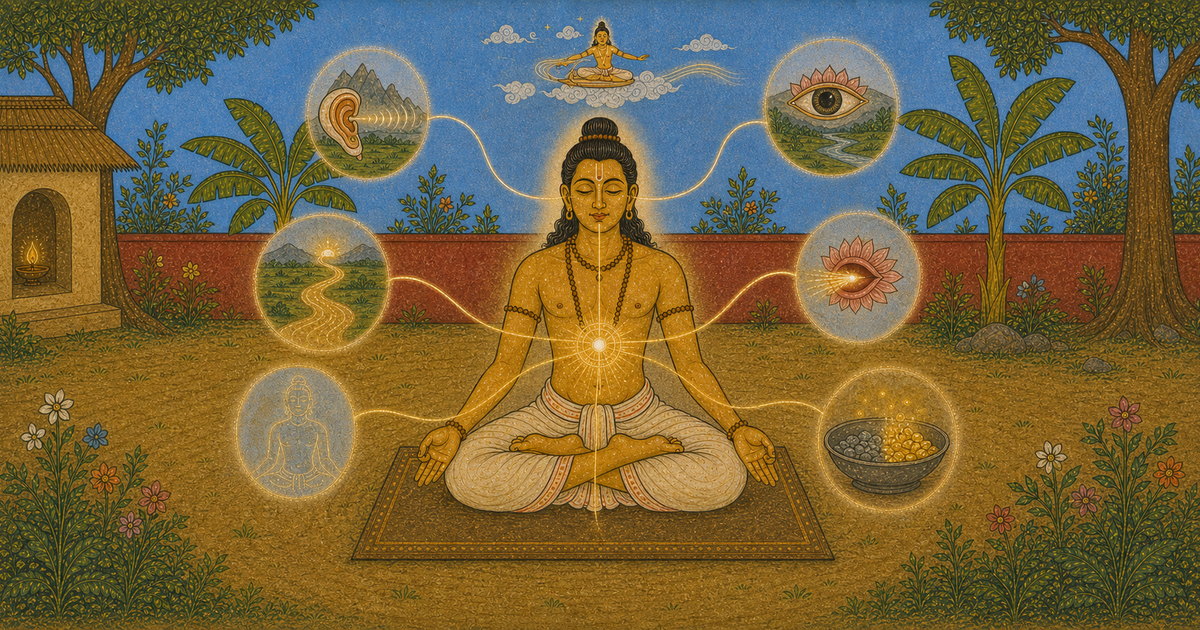
Then (tadā), the yogi (yoginaḥ | gen sg) is sure (dhruvam) to develop (jāyate | 3p sg med pres) amazing capabilities (vicitrasāmarthyam | nom sg): distant hearing (dūraśrutiḥ | nom sg), distant sight (dūradṛṣṭiḥ | nom sg), and (tathā) travelling far (dūragamaḥ | nom sg) in an instant (kṣaṇāt | abl sg).
Dr. Ronald Steiner - 2026 - historically literal
Dattātreyayogaśāstra 99
Metre: Anuṣṭubh
The power of truthful utterance (vāksiddhiḥ | nom sg), shapeshifting (kāmarūpatvam | nom sg n), and the power to make things invisible (adṛśyakaraṇam | nom sg) [arise] likewise (tathā). By smearing with faeces and urine (malamūtrapralepena | ins sg), metals (lohānām | gen pl) likewise (tathā) become gold (svarṇatā | nom sg).
Dr. Ronald Steiner - 2026 - historically literal
Dattātreyayogaśāstra 100
Metre: Anuṣṭubh
The power of moving through space (khecaratvam | nom sg n) also (ca) arises together with [the other powers] (jāyante | 3p pl med pres) through regular application of the practice (satatābhyāsayogataḥ). In this way (tathā), the wise (buddhimatā | ins sg m) yogi (yoginā | ins sg) should contemplate (bhāvyam | nom sg n pfp) in order to attain success in yoga (yogasiddhaye | dat sg).
Dr. Ronald Steiner - 2026 - historically literal
DYS 101–102: Siddhi as Obstacle

Dattātreyayogaśāstra 101–102: Do Not Display Extraordinary Powers

Because siddhis attract attention and status, the wise yogi should conceal them and continue practising without distraction.

DYS 103–105: Students as Obstacle

Dattātreyayogaśāstra 103–105: Teaching Must Not Displace One’s Own Practice

Students bring care, duties, and recognition; the yogi should prevent these responsibilities from interrupting regular practice.

Dattātreyayogaśāstra 103
Metre: Anuṣṭubh
He should behave (varteta | 3p sg med opt) in this way (tathā) among people (lokeṣu | loc pl) in order to conceal (guptaye | dat sg) his capabilities (svasāmarthyasya | gen sg). If not (no cet), many (bahavaḥ | nom pl m) disciples (śiṣyāḥ | nom pl) will certainly (eva) arise (bhavanti | 3p pl act pres); there is no (na) doubt (saṃśayaḥ | nom sg).
Dr. Ronald Steiner - 2026 - historically literal
Dattātreyayogaśāstra 104
Metre: Anuṣṭubh
They will, without (na) doubt (saṃśayaḥ | nom sg), petition (prārthayanti | 3p pl act pres) the lord among yogis (yogīndram | acc sg) about their various affairs (svasvakāryeṣu | loc pl). Preoccupied with carrying out their tasks (tatkarmakaraṇavyagraḥ | nom sg m), he will become (bhavet | 3p sg act opt) forgetful (vismṛtaḥ | nom sg m ppp) of his own practice (svābhyāse | loc sg).
Dr. Ronald Steiner - 2026 - historically literal
Dattātreyayogaśāstra 105
Metre: Anuṣṭubh
Deprived (vihīnaḥ | nom sg m ppp) of practice (abhyāsena | ins sg), he will then (tataḥ) enter (vrajet | 3p sg act opt) ordinary life (laukikatām | acc sg). Without forgetting (avismṛtya | abs) the teaching (vākyam | acc sg) of his guru (guroḥ | gen sg), he should practise (abhyaset | 3p sg act opt) it (tad | acc sg n) day and night (aharniśam).
Dr. Ronald Steiner - 2026 - historically literal
DYS 106–107: Ghaṭa and Paricaya

Dattātreyayogaśāstra 106–107: From Stable Union to Deep Accumulation

Sustained practice brings about the Ghaṭa stage; idle discussion without practice does not perfect yoga. The yogi should therefore continue with every effort...

DYS 108–111: Suṣumnā

Dattātreyayogaśāstra 108–111: The Breath Enters the Central Channel

The cultivated breath awakens Kuṇḍalī and enters Suṣumnā together with the mind; knowledge of the three times and careful practice in seclusion follow.

Dattātreyayogaśāstra 108
Metre: Anuṣṭubh
The breath (vāyuḥ | nom sg), carefully (yatnāt | abl sg) cultivated (paricitaḥ | nom sg), should, after awakening (bodhayitvā | abs) Kuṇḍalinī (kuṇḍalīm | acc sg) together (saha) with fire (agninā | ins sg), enter (praviśet | 3p sg act opt) Suṣumnā (suṣumnāyām | loc sg) without restraint (anirodhataḥ | abl sg).
Dr. Ronald Steiner - 2026 - historically literal
Dattātreyayogaśāstra 109
Metre: Anuṣṭubh
Together (saha) with the breath (vāyunā | ins sg), the mind (cittam | nom sg) too (ca) should enter (praviśet | 3p sg act opt) the great channel (mahā-patham | acc sg). The great path (mahā-patham | acc sg), the cremation ground (śmaśānam | acc sg), and (ca) Suṣumnā (suṣumnā | nom sg) too (api) are indeed (hi) just (eva) one (ekam | nom sg).
Dr. Ronald Steiner - 2026 - historically literal
Dattātreyayogaśāstra 110
Metre: Anuṣṭubh
By name (nāmnā | ins sg) there is a difference (bhedaḥ | nom sg) in other teachings (matāntare | loc sg), but no (na) difference in result (phala-bhedaḥ | nom sg) is found (vidyate | 3p sg med pres). That person (asau | nom sg) knows (vetti | 3p sg act pres) the present (vartamānam | acc sg), the future (bhaviṣyam | acc sg), and (ca) also (api) the past (bhūtārtham | acc sg).
Dr. Ronald Steiner - 2026 - historically literal
Dattātreyayogaśāstra 111
Metre: Anuṣṭubh
The yogi (yogī | nom sg) whose (yasya | gen sg) mind (cittam | nom sg), together with the breath (sa-pavanam | nom sg n), enters (praviśet | 3p sg act opt) Suṣumnā (suṣumnām | acc sg) here (iha), should, after recognising (vijñāya | abs) future misfortunes (bhāvyān anarthān | acc pl), practise carefully (yatnataḥ) in seclusion (rahasi | loc sg).
Dr. Ronald Steiner - 2026 - historically literal
DYS 112–121: Five Elements

Dattātreyayogaśāstra 112–121: Dhāraṇā on Earth, Water, Fire, Air, and Space

The breath is held successively in five bodily regions. The fixations protect against the elements and death; DYŚ also promises the yogin a wondrous capacity.

Dattātreyayogaśāstra 112
Metre: Anuṣṭubh
He should perform (kuryāt | 3p sg act opt) fixation (dhāraṇam | acc sg) in five ways (pañcadhā), removing danger from each respective element (tat-tad-bhūta-bhayāpaham | acc sg). I shall teach (vakṣye | 1p sg act fut) fixation on earth (pṛthivī-dhāraṇam | acc sg); the critical text literally calls it “danger-bringing” (bhayāvaham | acc sg) for things made of earth (pārthivebhyaḥ | dat pl).
Dr. Ronald Steiner - 2026 - historically literal
Dattātreyayogaśāstra 113
Metre: Anuṣṭubh
Below (adhas) the navel (nābheḥ | gen sg) and above (ūrdhvam | acc sg) the anus (gudasya | gen sg), he should hold (dhārayet | 3p sg act opt) the breath (vāyum | acc sg) for five ghaṭikās (ghaṭikāḥ pañca | acc pl). From this (tataḥ) he should attain (labhet | 3p sg act opt) fixation on earth (pṛthivī-dhāraṇam | acc sg), which removes danger from it (tad-bhayāpaham | acc sg).
Dr. Ronald Steiner - 2026 - historically literal
Dattātreyayogaśāstra 114
Metre: Anuṣṭubh
For this yogi (asya yoginaḥ | gen sg), no (na) death (mṛtyuḥ | nom sg) arising from earth (pṛthivī-saṃbhavaḥ | nom sg) should occur (bhavet | 3p sg act opt). Then (tataḥ) he should hold (dhārayet | 3p sg act opt) the breath (vāyum | acc sg) at the navel (nābhi-sthāne | loc sg) for five nāḍikās (pañca nāḍikāḥ | acc pl).
Dr. Ronald Steiner - 2026 - historically literal
Dattātreyayogaśāstra 115
Metre: Anuṣṭubh
Then (tataḥ) there is (asti | 3p sg act pres) no (na) danger (bhayam | nom sg n) from water (jalāt | abl sg), and no (na) death by water (jala-mṛtyuḥ | nom sg) for the yogi (yoginaḥ | gen sg). He should hold (dhārayet | 3p sg act opt) the breath (vāyum | acc sg) above the navel (nābhy-ūrdhva-maṇḍale | loc sg) for five nāḍikās (pañca nāḍikāḥ | acc pl).
Dr. Ronald Steiner - 2026 - historically literal
Dattātreyayogaśāstra 116
Metre: Anuṣṭubh
This (seyam | nom sg) is the fire fixation (āgneya-dhāraṇā | nom sg). For him (tasya | gen sg) there is no (na) death (mṛtyuḥ | nom sg) through fire (vahninā | ins sg), and (ca) the body (śarīram | nom sg n) of one who has entered (praviṣṭasya | gen sg m ppp) a fire pit (agni-kuṇḍake | loc sg) is not (na) burned (dahyate | 3p sg pas pres).
Dr. Ronald Steiner - 2026 - historically literal
Dattātreyayogaśāstra 116*1
Metre: Anuṣṭubh
The wondrous capacity (vicitra-sāmarthyam | nom sg n) of the yogin (yoginaḥ | gen sg) always (sadā) and certainly (dhruvam) arises (jāyate | 3p sg med pres).
Dr. Ronald Steiner - 2026 - historically literal
Dattātreyayogaśāstra 117
Metre: Anuṣṭubh
Between the navel, eyebrows, and nose (nābhi-bhrū-ghrāṇa-madhye | loc sg), in an area measuring three handspans (pradeśa-traya-saṃmite | loc sg), he should hold (dhārayet | 3p sg act opt) the breath (vāyum | acc sg) for five ghaṭikās (pañca ghaṭikā | acc pl). This (saiṣā | nom sg) indeed (hi) is the air fixation (vāyavī | nom sg).
Dr. Ronald Steiner - 2026 - historically literal
Dattātreyayogaśāstra 118
Metre: Anuṣṭubh
In this fixation (dhāraṇā | nom sg), no (na) danger (bhayam | nom sg) from air (vāyoḥ | gen sg) occurs (bhavati | 3p sg act pres) for the yogi (yoginaḥ | gen sg). Above (upariṣṭāt | abl sg) the midpoint of the eyebrows (bhrū-madhyāt | abl sg), he should hold [the breath] (dhārayet | 3p sg act opt) for five nāḍikās (pañca nāḍikāḥ | acc pl).
Dr. Ronald Steiner - 2026 - historically literal
Dattātreyayogaśāstra 119
Metre: Anuṣṭubh
The yogi (yogī | nom sg) should carefully (prayatnena | ins sg) [hold] the breath (vāyum | acc sg). This (seyam | nom sg) is fixation on space (ākāśa-dhāraṇā | nom sg). One who practises (kurvān | nom sg) space fixation (ākāśa-dhāraṇām | acc sg) completely (tattvataḥ) conquers (jayati | 3p sg act pres) death (mṛtyum | acc sg).
Dr. Ronald Steiner - 2026 - historically literal
Dattātreyayogaśāstra 120
Metre: Anuṣṭubh
Wherever (yatra tatra) he is (sthitaḥ | nom sg), he enjoys (aśnute | 3p sg med pres) boundless (atyantam | acc sg) happiness (sukham | acc sg). Thus (evam) the discerning yogi (yogī vicakṣaṇaḥ | nom sg) should perform (kuryāt | 3p sg act opt) the five (pañca | nom pl) fixations (dhāraṇāḥ | nom pl).
Dr. Ronald Steiner - 2026 - historically literal
Dattātreyayogaśāstra 121
Metre: Anuṣṭubh
Then (tataḥ) he becomes (syāt | 3p sg act opt) firm-bodied (dṛḍha-śarīraḥ | nom sg), and for him (tasya | gen sg) no (na) death (mṛtyuḥ | nom sg) is found (vidyate | 3p sg med pres). This is the result for one who (yaḥ | nom sg) steadily practises (samabhyaset | 3p sg act opt) fixation (dhāraṇām | acc sg) on the five elements (pañca-bhūtānām | gen pl).
Dr. Ronald Steiner - 2026 - historically literal
DYS 122–123: Dhyāna
DYS 122–123: Dhyāna

Dattātreyayogaśāstra 122–123: Meditation on a Wish-Granting Deity

After the elemental fixations, the breath is held for a full day while the yogi meditates on a wish-granting deity; this conditioned meditation is said to...

DYS 124: Samādhi
DYS 124: Samādhi

Dattātreyayogaśāstra 124: From the Unconditioned to Absorption

Meditation on the unconditioned, compared to space, leads onto the path of liberation; once it is perfected, the practice of samādhi begins.

DYS 125–130: Liberation in Life

Dattātreyayogaśāstra 125–130: Freedom While Living and Conscious Use of the Body

Samādhi is defined as the identity of the individual and highest selves. The liberated yogi may leave or retain the body and move at will through different...

Dattātreyayogaśāstra 125
Metre: Anuṣṭubh
In just (eva) twelve days (dina-dvādaśakena | ins sg), he should completely attain (samavāpnuyāt | 3p sg act opt) samādhi (samādhim | acc sg). Having restrained (nirudhya | abs) the breath (vāyum | acc sg), the wise practitioner (medhāvī | nom sg) should certainly (dhruvam) become (bhavet | 3p sg act opt) liberated while alive (jīvanmuktaḥ | nom sg).
Dr. Ronald Steiner - 2026 - historically literal
Dattātreyayogaśāstra 126
Metre: Anuṣṭubh
Samādhi (samādhiḥ | nom sg) is the state (avasthā | nom sg) of identity (samatā | nom sg) of the individual and highest selves (jīvātma-paramātmanoḥ | gen du). If (yadi) the wish (icchā | nom sg) arises to cast off (utsraṣṭum | inf) his own body (sva-deham | acc sg), and if (ced) he himself (svayam) wishes to cast it off (utsṛjet | 3p sg act opt), he may do so.
Dr. Ronald Steiner - 2026 - historically literal
Dattātreyayogaśāstra 127
Metre: Anuṣṭubh
Having abandoned (tyaktvā | abs) action (karma | acc sg), both good and bad (śubhāśubham | acc sg), he should dissolve (līyeta | 3p sg med opt) into the supreme Brahman (parabrahmani | loc sg). But if (atha no cet) he does not wish to cast off (samutsraṣṭum | inf) his own body (sva-śarīram | acc sg), if (yadi) it is dear (priyam | acc sg), he may retain it.
Dr. Ronald Steiner - 2026 - historically literal
Dattātreyayogaśāstra 128
Metre: Anuṣṭubh
Endowed with powers beginning with becoming infinitesimal (aṇimādi-guṇānvitaḥ | nom sg), he should wander (vicaret | 3p sg act opt) through all worlds (sarva-lokeṣu | loc pl). At some time (kadā cit), according to his own wish (svecchayā | ins sg), he may become (bhūtvā | abs) a god (devaḥ | nom sg) and roam (saṃcaret | 3p sg act opt) even (api) in heaven (svarge | loc sg).
Dr. Ronald Steiner - 2026 - historically literal
Dattātreyayogaśāstra 129
Metre: Anuṣṭubh
According to his own wish (svecchayā | ins sg), in an instant (kṣaṇāt | abl sg) he may become (bhavet | 3p sg act opt) a human (manuṣyaḥ | nom sg) or (vāpi) a Yakṣa (yakṣaḥ | nom sg). He may be (syāt | 3p sg act opt) a lion (siṃhaḥ), tiger (vyāghraḥ), or elephant (gajaḥ), or (vā) by choice (icchayā | ins sg) enter (vrajet | 3p sg act opt) the condition of an animal (jantutām | acc sg).
Dr. Ronald Steiner - 2026 - historically literal
Dattātreyayogaśāstra 130
Metre: Anuṣṭubh
Thus (evam) the wise (vidvān | nom sg) yogi (yogī | nom sg) may live (varteta | 3p sg act opt) as he wishes (yatheṣṭam), a great lord (maheśvaraḥ | nom sg). O Sāṃkṛti (sāṃkṛte | voc sg), this (ayam | nom sg) ancient seers’ path (kavi-mārgaḥ | nom sg) has been taught (uktaḥ | nom sg) to you (te | dat sg) as eight-limbed yoga (aṣṭāṅga-yogataḥ).
Dr. Ronald Steiner - 2026 - historically literal
DYS 131: Kapila’s Haṭha Yoga

Dattātreyayogaśāstra 131: The Teaching of the Siddhas

After the eight-limbed path, Dattātreya announces the teaching of Kapila and other Siddhas: their methods of practice differ, but their result is said to be...

DYS 132–134: Mahāmudrā

Dattātreyayogaśāstra 132–134: Heel Pressure, Extension, and Breath Restraint

The left heel is placed at the perineum, the right leg extended and held with both hands. With the chin on the chest, the breath is filled and held before the...

Dattātreyayogaśāstra 132
Metre: Anuṣṭubh
Out of respect (ādarāt | abl sg), I shall proclaim (pravakṣyāmi | 1p sg fut) the great seal (mahā-mudrām | acc sg), taught (uktam | acc sg) by Bhairava (bhairaveṇa | ins sg). He should place (niyojayet | 3p sg act opt) the heel (pārṣṇim | acc sg) of the left (vāmasya | gen sg) foot (pādasya | gen sg) at the perineum (yoni-sthāne | loc sg).
Dr. Ronald Steiner - 2026 - historically literal
Dattātreyayogaśāstra 133
Metre: Anuṣṭubh
Having extended (prasārya | abs) the right (dakṣiṇam | acc sg) foot (pādam | acc sg), he should hold (dhārayet | 3p sg act opt) it firmly (dṛḍham) with both hands (hastābhyām | ins du). Having placed (vinyasya | abs) the chin (cibukam | acc sg) on the chest (hṛdi | loc sg), he should again (punaḥ) fill himself (pūrayet | 3p sg act opt) with air (vāyunā | ins sg).
Dr. Ronald Steiner - 2026 - historically literal
Dattātreyayogaśāstra 134
Metre: Anuṣṭubh
Having held [the breath] (dhārayitvā | abs) with a retention (kumbhakena | ins sg) for as long as possible (yathā-śaktyā | ins sg), he should then (tu) exhale (recayet | 3p sg act opt). Having practised (samabhyasya | abs) on the left side (vāmāṅgena | ins sg), he should also (ca) practise (abhyaset | 3p sg act opt) on the right side (dakṣiṇāṅgena | ins sg).
Dr. Ronald Steiner - 2026 - historically literal
DYS 135: Mahābandha
DYS 135: Mahābandha

Dattātreyayogaśāstra 135: Bringing the Extended Foot onto the Thigh

For Mahābandha, the extended foot is brought onto the thigh; the terse verse instructs the practitioner to cultivate this great lock in the same way as...

DYS 136: Mahāvedha
DYS 136: Mahāvedha

Dattātreyayogaśāstra 136: Tapping the Buttocks on the Ground

While in Mahābandha, the practitioner gently taps both buttocks against the ground. The text calls this brief procedure Mahāvedha, a practice of accomplished...

DYS 137: Khecarī
DYS 137: Khecarī

Dattātreyayogaśāstra 137: Turning Tongue and Gaze Inward

For Khecarī, the tongue is turned back and inserted into the cavity of the skull while the gaze rests at the midpoint between the eyebrows.

DYS 138–140: Jālandharabandha

Dattātreyayogaśāstra 138–140: The Throat Lock that Preserves Nectar

The throat is contracted and the chin set on the chest so that nectar descending from the head does not burn in the digestive fire.

Dattātreyayogaśāstra 138
Metre: Anuṣṭubh
Having constricted (ākuñcya | abs) the throat (kaṇṭham | acc sg), he should firmly (dṛḍham) place (sthāpayet | 3p sg act opt) the chin (cibukam | acc sg) on the chest (hṛdaye | loc sg). This (eṣaḥ | nom sg) is Jālandhara (jālandharaḥ | nom sg), the lock (bandhaḥ | nom sg) that prevents loss of the nectar of immortality (amṛtāvyaya-kārakaḥ | nom sg).
Dr. Ronald Steiner - 2026 - historically literal
Dattātreyayogaśāstra 139
Metre: Anuṣṭubh
The fire at the navel (nābhi-sthāgniḥ | nom sg) of embodied beings (dehinām | gen pl) burns (jvalati | 3p sg act pres) while constantly (sarvadā) drinking (piban | nom sg m pca) all the nectar (amṛtam | acc sg n) that has dripped from the thousand-petalled lotus in the skull (kapāla-stha-sahasra-kamala-cyutam | acc sg n).
Dr. Ronald Steiner - 2026 - historically literal
Dattātreyayogaśāstra 140
Metre: Anuṣṭubh
So that (yathā) that (saḥ | nom sg) fire (agniḥ | nom sg) does not (na) drink (pibet | 3p sg act opt) that (tat | acc sg n) nectar (amṛtam | acc sg n), the yogi himself (svayam) should drink (pibet | 3p sg act opt) it (tat | acc sg n). Through constant practice (abhyāsataḥ), it always (sadā) travels in this way (evam) by the rear pathway (paścima-mārgeṇa | ins sg).
Dr. Ronald Steiner - 2026 - historically literal
DYS 141–142: Uḍḍiyāṇa

Dattātreyayogaśāstra 141–142: Drawing the Navel Upward and Back

Jālandhara is said to make the body immortal. Uḍḍiyāṇa is natural or easy, is taught by the guru, and carefully draws the navel upward and backward.

DYS 143–145: Mūlabandha

Dattātreyayogaśāstra 143–145: Raising Apāna through the Root Lock

Heel pressure and contraction of the pelvic floor carry Apāna upward and unite Prāṇa, Apāna, Nāda, and Bindu as the ground of yogic perfection.

Dattātreyayogaśāstra 143
Metre: Anuṣṭubh
If he practises (abhyaset | 3p sg act opt) for six months (ṣaṇ-māsam | acc sg), he certainly (eva) conquers (jayati | 3p sg act pres) death (mṛtyum | acc sg); there is no (na) doubt (saṃśayaḥ | nom sg). One who (yaḥ | nom sg) always (nityam) practises (abhyaset | 3p sg act opt) the root lock (mūla-bandham | acc sg) is (saḥ | nom sg) a knower of yoga (yoga-vit | nom sg).
Dr. Ronald Steiner - 2026 - historically literal
Dattātreyayogaśāstra 144
Metre: Anuṣṭubh
Having pressed (saṃpīḍya | abs) the anus (gudam | acc sg) with the heel (pārṣṇyā | ins sg), he should forcefully (balāt | abl sg) contract (ākuñcayet | 3p sg act opt) the perineum (yonim | acc sg), so that (yathā) the breath (samīraṇaḥ | nom sg) repeatedly (vāraṃ vāram | acc sg) moves upward (ūrdhvam samāyāti | 3p sg act pres).
Dr. Ronald Steiner - 2026 - historically literal
Dattātreyayogaśāstra 145
Metre: Anuṣṭubh
Through the root lock (mūla-bandhena | ins sg), Prāṇa and Apāna (prāṇāpānau | nom du), together with (ca) inner sound and bindu (nāda-bindū | nom du), reach unity (ekatām | acc sg). Having become one (gatvā | abs), they bestow (yacchataḥ | 3p du pres) complete success (saṃsiddhim | acc sg) in yoga (yogasya | gen sg); there is no (na) doubt (saṃśayaḥ | nom sg).
Dr. Ronald Steiner - 2026 - historically literal
DYS 146–149: Viparītakaraṇa

Dattātreyayogaśāstra 146–149: Reversing Sun and Moon

The inversion strengthens digestive fire and is lengthened daily; sufficient food protects the body while grey hair and wrinkles are said to disappear.

Dattātreyayogaśāstra 146
Metre: Anuṣṭubh
The technique (karaṇam | nom sg n) called the Inverter (viparītākhyam | nom sg n) destroys all diseases (sarva-vyādhi-vināśanam | nom sg n). The digestive fire (jaṭhara-agniḥ | nom sg) of one constantly (nityam) engaged in its practice (abhyāsa-yuktasya | gen sg) increases (vivardhate | 3p sg med pres).
Dr. Ronald Steiner - 2026 - historically literal
Dattātreyayogaśāstra 147
Metre: Anuṣṭubh
O Sāṃkṛti (sāṃkṛte | voc sg), abundant (bahulaḥ | nom sg) food (āhāraḥ | nom sg) must certainly (dhruvam) be provided (saṃpādyaḥ | nom sg) for him (tasya | gen sg). If (yadi) food is scant (alpa-āhāraḥ | nom sg), the fire (agniḥ | nom sg) may burn (dahet | 3p sg act opt) the body (deham | acc sg) in an instant (kṣaṇāt | abl sg).
Dr. Ronald Steiner - 2026 - historically literal
Dattātreyayogaśāstra 148
Metre: Anuṣṭubh
Listen (śṛṇu | 2p sg act imp), O Sāṃkṛti (sāṃkṛte | voc sg), to how (yathā) this (tat | acc sg) is understood: the sun (bhānuḥ | nom sg) is above (ūrdhvam), the moon (candraḥ | nom sg) below (adhaḥ). On the first day (prathame dine | loc sg), he should remain (syāt | 3p sg act opt) briefly (kṣaṇam | acc sg) with head down (adhaḥ-śiraḥ | nom sg n) and (ca) feet up (ūrdhva-pādaḥ | nom sg).
Dr. Ronald Steiner - 2026 - historically literal
Dattātreyayogaśāstra 149
Metre: Anuṣṭubh
Beginning with a moment (kṣaṇāt | abl sg), he should practise (abhyaset | 3p sg act opt) a little (kiṃ cit) longer (adhikam) day by day (dine dine | loc sg). After six months (ṣaṇ-māsordhvam), wrinkling (valitam | nom sg n) and grey hair (palitam | nom sg n) are no longer (na) seen (dṛśyate | 3p sg pas pres).
Dr. Ronald Steiner - 2026 - historically literal
DYS 150–153*3: Vajrolī: Secret Teaching

Dattātreyayogaśāstra 150–153*3: Requirements and the Alternative DYŚ Transmission

Vajrolī is introduced as a closely guarded practice; three star verses from Avasthī’s DYŚ preserve its much shorter account beside Mallinson’s main text.

Dattātreyayogaśāstra 150
Metre: Anuṣṭubh; speaker and title lines: prose
One who (yaḥ | nom sg) regularly (nityam) practises (abhyaset | 3p sg act opt) for three hours (yāmamātram | acc sg) is indeed (tu) a conqueror of Time (kāla-jit | nom sg). Now (atha) come the characteristics of Vajrolī (vajrolī-lakṣaṇam | nom sg n). I shall teach (kathayiṣyāmi | 1p sg act fut) Vajrolī (vajrolīm | acc sg), kept hidden (gopitām | acc sg f) by all yogis (sarva-yogibhiḥ | ins pl).
Dr. Ronald Steiner - 2026 - historically literal
Dattātreyayogaśāstra 151
Metre: Anuṣṭubh
This (etat | nom sg) secret teaching (rahasyam | nom sg n) is exceedingly (atīva) [guarded] and must not (na) be given (deyam | nom sg n) to just anyone (yasya kasya cit | gen sg). It should certainly (dhruvam) be taught (kathayet | 3p sg act opt) only to that person (tasyaiva | gen sg) who (yaḥ | nom sg) is (syāt | 3p sg act opt) equal (samaḥ | nom sg) to one’s own life (sva-prāṇaiḥ | ins pl).
Dr. Ronald Steiner - 2026 - historically literal
Dattātreyayogaśāstra 152
Metre: Anuṣṭubh
Even (api) if he behaves (vartamānaḥ | nom sg) according to his own will (svecchayā | ins sg), without (vinā) the rules taught in yoga (yogokta-niyamaiḥ | ins pl), the one (saḥ | nom sg) who (yaḥ | nom sg) knows (vijānāti | 3p sg act pres) Vajrolī (vajrolīm | acc sg) should become (bhavet | 3p sg act opt) a yogi (yogī | nom sg) possessed of accomplishment (siddhimān | nom sg).
Dr. Ronald Steiner - 2026 - historically literal
Dattātreyayogaśāstra 153
Metre: Anuṣṭubh
For it (tatra), I shall explain (vakṣye | 1p sg act fut) two substances (vastu-dvayam | acc sg n) that are difficult to obtain (dur-labham | acc sg n) for anyone (yena kena cit | ins sg). If (yadi) the pair is obtained (labhyate | 3p sg pas pres), success in yoga (yoga-siddhiḥ | nom sg f) is situated (sthitā | nom sg f) in that very person’s (tasyaiva | gen sg) hand (kare | loc sg).
Dr. Ronald Steiner - 2026 - historically literal
Dattātreyayogaśāstra 153*1
Metre: Anuṣṭubh
“Semen (kṣīram | acc sg n) and (ca) Āṅgīrasa (āṅgi-rasam | acc sg),” [are the two]. Of the pair (dvayoḥ | gen du), the first (ādyam | nom sg n) is obtainable (labhyate | 3p sg pas pres), but (tu) the second (dvitīyam | acc sg n) is difficult to obtain (dur-labham | acc sg n) for men (puṃsām | gen pl) and must be procured (sādhyam | acc sg n) from women (strībhyaḥ | abl pl) by a suitable means (upāyataḥ).
Dr. Ronald Steiner - 2026 - historically literal
Dattātreyayogaśāstra 153*2
Metre: Anuṣṭubh; pāda 4: 7 rather than 8 syllables
A woman (strī | nom sg) devoted to yoga practice (yogābhyāsa-ratā | nom sg) should also (ca) be obtained (sādhayet | 3p sg act opt caus) with care (yatnena | ins sg) by a man (puṃsā | ins sg). Whether a man (pumān | nom sg) or (vā) a woman (strī | nom sg), whichever [two] (yat | nom sg n) are with one another (anyonyam | acc sg), [the practice is] irrespective of female or male status (strī-puṃs-tvān-apekṣayā | ins sg).
Dr. Ronald Steiner - 2026 - historically literal
Dattātreyayogaśāstra 153*3
Metre: Anuṣṭubh
Through practice directed solely to one’s own purpose (sva-prayojana-mātraika-sādhanāt | abl sg), one may attain (āpnuyāt | 3p sg act opt) success (siddhim | acc sg). If (yadi) bindu (binduḥ | nom sg) has moved (calitaḥ | nom sg), having drawn (ākṛṣya | abs) it (tam | acc sg) upward (ūrdhvam), one should preserve it (rakṣayet | 3p sg act opt).
Dr. Ronald Steiner - 2026 - historically literal
DYS 154–167: Vajrolī for the Male Yogi

Dattātreyayogaśāstra 154–167: Sexual Ritual, Bindu, and the Preservation of Life

The expanded critical text describes prerequisites and a ritualised sexual practice whose aim is to retain or draw back bindu.

Dattātreyayogaśāstra 154
Metre: Anuṣṭubh
The one (ekam | nom sg n) is semen (kṣīram | nom sg), while (tu) the second (dvitīyam | nom sg n) is a woman (nārī | nom sg) who remains under control (vaśa-vartinī | nom sg f). If (yadi) semen (kṣīram | nom sg) should not (na) be obtainable (saṃbhavet | 3p sg act opt), I shall explain (kathayāmi | 1p sg act pres) to you (te | dat sg) something comparable to it (tat-tulyam | nom sg n).
Dr. Ronald Steiner - 2026 - historically literal
Dattātreyayogaśāstra 155
Metre: Anuṣṭubh; speaker and title lines: prose
[The yogi] should drink (pibet | 3p sg act opt) a little (kiṃ cit) Āṅgīrasa (āṅgīrasam | acc sg) if (yadi) semen (kṣīram | nom sg) is not (na) available (labhyate | 3p sg pas pres). Sāṃkṛti (sāṃkṛtiḥ | nom sg) said (uvāca | 3p sg act perf): “What (kim | nom sg n), O Lord (bhagavan | voc sg), is the substance (vastu | nom sg) called Āṅgīrasa (āṅgīrasākhyam | nom sg n)? Tell (kathayasva | 2p sg med imp) me (me | dat sg).”
Dr. Ronald Steiner - 2026 - historically literal
Dattātreyayogaśāstra 156
Metre: Anuṣṭubh; speaker and title lines: prose
Dattātreya (dattātreyaḥ | nom sg) [said]: “Women’s generative fluid (strīṇām āṅgīrasam | nom sg) arises (jāyate | 3p sg med pres) in the vagina (yonau | loc sg) through Apāna in the Iḍā (iḍā-apānāt | abl sg). The man (puruṣaḥ | nom sg) who practises [Vajrolī] (abhyāsī | nom sg m) should drink (pibet | 3p sg act opt) it (tat | acc sg n) if (yadi) semen (kṣīram | nom sg) is not (na) available (labhyate | 3p sg pas pres).”
Dr. Ronald Steiner - 2026 - historically literal
Dattātreyayogaśāstra 157
Metre: Anuṣṭubh
Even so (tathā api), at least a small measure (kiṃ cin mātram | acc sg n) of the quality of semen (tat-kṣīra-guṇam | acc sg) is certainly (dhruvam) present. The yogi, however (punar), should drink (pibet | 3p sg act opt) the woman’s essence (nārī-dhātum | acc sg) in the receptacle, the vagina (kośe | loc sg), respectfully (ādaratas) and without hesitation (bhṛśam).
Dr. Ronald Steiner - 2026 - historically literal
Dattātreyayogaśāstra 158
Metre: Anuṣṭubh
When semen is absent (kṣīra-abhāve | loc sg), that liquid (tad rasam | nom sg) would (bhavet | 3p sg act opt) certainly (dhruvam) be comparable to semen (kṣīra-tulyam | nom sg n). Listen (śṛṇu | 2p sg act imp) to the practice (abhyāsam | acc sg) of Vajrolī (vajrolyāḥ | gen sg); I shall teach (vakṣyāmi | 1p sg act fut) this most secret [method] (ati-rahasyakam | acc sg n).
Dr. Ronald Steiner - 2026 - historically literal
Dattātreyayogaśāstra 159
Metre: Anuṣṭubh
A woman (nārī | nom sg) obtains (labhate | 3p sg med pres) pleasures (sukhāni | acc pl), just as (yathā) a man (puruṣaḥ | nom sg) [obtains] success in yoga (siddhim | acc sg). In a secluded place (rahasye | loc sg), [the yogi] should now (tu) position below [him] (adhaḥ sthāpya | abs) an attractive (ramyām | acc sg f), naked woman (digambarāṃ nārīm | acc sg).
Dr. Ronald Steiner - 2026 - historically literal
Dattātreyayogaśāstra 160
Metre: Anuṣṭubh
Having become naked himself (svayaṃ digambaro bhūtvā | abs) and lying (śayānaḥ | nom sg m pca) in this way (tathā) on top (upari) of her as she lies on her back (uttānāyāḥ | gen sg f), he should perform (kuryāt | 3p sg act opt) breath retention (kumbhakam | acc sg) and remain outside [her] (bahiḥ), himself (svayam) slightly hunched (kiṃcin namraḥ | nom sg m).
Dr. Ronald Steiner - 2026 - historically literal
Dattātreyayogaśāstra 161
Metre: Anuṣṭubh
Having tightly (dṛḍham) embraced (āliṅgya | abs) one another (anyonyam | acc sg m), he should not (na) insert (arpayet | 3p sg act opt) his penis (śiśnam | acc sg) into her vagina (yonau | loc sg). They should mutually (mithas) kiss each other’s lips (adhara-pānam | acc sg) and (ca) make (kuryāt | 3p sg act opt) throaty moans and the like (gala-ravādikam | acc sg n).
Dr. Ronald Steiner - 2026 - historically literal
Dattātreyayogaśāstra 162
Metre: Anuṣṭubh
And (ca) he should roll around (viluṭhet | 3p sg act opt) with pleasure (sukhenaiva | ins sg) until (yāvat) sweat is produced (prasveda-saṃbhavaḥ | nom sg). If (yadi) semen (vīryam | nom sg) should be emitted (skhalet | 3p sg act opt) outside (bahiḥ), he should then (tataḥ) rub (mardayet | 3p sg act opt) it [into his body] with sweat (svedena | ins sg).
Dr. Ronald Steiner - 2026 - historically literal
Dattātreyayogaśāstra 163
Metre: Anuṣṭubh
The wise practitioner (budhaḥ | nom sg) should wipe up (saṃmārjya | abs) that [mixture] (tat | acc sg n) with an old cloth (jīrṇa-vastreṇa | ins sg) and preserve (rakṣayet | 3p sg act opt) the cloth (vastram | acc sg). If (yadi) the semen (binduḥ | nom sg) is not (na) emitted (skhalati | 3p sg act pres), he should instead (tu) copulate (yabhet | 3p sg act opt) roughly (niṣṭhuram) outside [the vagina] (bahiḥ).
Dr. Ronald Steiner - 2026 - historically literal
Dattātreyayogaśāstra 164
Metre: Anuṣṭubh
The penis (śiśnam | acc sg) should not (na) be inserted (arpyeta | 3p sg pas opt) into the vagina (yonau | loc sg) as long as (yāvat) semen (binduḥ | nom sg) is emitted outside (bahiḥ patet | 3p sg act opt). He should practise (kuryāt | 3p sg act opt) in this way (evam) for three days (tri-dinam | acc sg), only (eva) once (vāram | acc sg) on each [day] (ekaikam | acc sg n).
Dr. Ronald Steiner - 2026 - historically literal
Dattātreyayogaśāstra 165
Metre: Anuṣṭubh
Then (tatas), using a reed tube (śara-nālena | ins sg), he should very gently (śanaiḥ śanaiḥ) perform (prakurvīta | 3p sg med opt) a blowing action (phūt-kāram | acc sg) at the cavity of the glans (vajra-kandare | loc sg) in order to make the air move (vāyu-saṃcāra-kāraṇāt | abl sg).
Dr. Ronald Steiner - 2026 - historically literal
Dattātreyayogaśāstra 166
Metre: Anuṣṭubh
Through practice (abhyāsena | ins sg), he should draw upward (ūrdhvam āharet | 3p sg act opt) the semen (bindum | acc sg) that has fallen into her vagina (tad-bhage patitam | acc sg m ppp). And (ca), once that semen (bindum | acc sg) has moved (calitam | acc sg m ppp), he should likewise (tathā) draw it upward (ūrdhvam ākṛṣya | abs) and retain it (rakṣayet | 3p sg act opt).
Dr. Ronald Steiner - 2026 - historically literal
Dattātreyayogaśāstra 167
Metre: Anuṣṭubh
Semen preserved in this way (evaṃ ca rakṣito binduḥ | nom sg) truly (tattvataḥ) conquers (jayati | 3p sg act pres) death (mṛtyum | acc sg). Death (maraṇam | nom sg) [arises] from the fall of semen (bindu-pātena | ins sg), life (jīvanam | nom sg) from its retention (bindu-dhāraṇāt | abl sg).
Dr. Ronald Steiner - 2026 - historically literal
DYS 168–179*1: Vajrolī for the Yoginī

Dattātreyayogaśāstra 168–179*1: Preserving Rajas and Attaining Female Perfection

The yoginī is to retain rajas and practise with a knowledgeable partner; the DYŚ star verse preserves Avasthī’s brief transition to Amarolī and Sahajolī.

Dattātreyayogaśāstra 168
Metre: Anuṣṭubh
Fresh Rajas (navaṃ rajaḥ | nom sg), resembling red lead (sindūra-sadṛśam | nom sg n), is found (asti | 3p sg act pres) in women’s vaginas (strīṇāṃ yonau | loc sg). Even (api) one who has taken no vows (avrataḥ | nom sg m) may reach it (gacchet | 3p sg act opt); then (tadā) he should retain it (rakṣayet | 3p sg act opt) through practice (abhyāsena | ins sg).
Dr. Ronald Steiner - 2026 - historically literal
Dattātreyayogaśāstra 169
Metre: Anuṣṭubh
A woman (nārī | nom sg) too (ca) should practise (abhyaset | 3p sg act opt) Vajrolī (vajrolīm | acc sg), solely (eva) for the retention of Rajas (rajo-rakṣārtham | acc sg). If (yadi) a woman (nārī | nom sg) retains (rakṣet | 3p sg act opt) Rajas (rajaḥ | acc sg) by means of Vajrolī (vajrolyā | ins sg), she (sā | nom sg f) is truly (hi) a Yoginī (yoginī | nom sg).
Dr. Ronald Steiner - 2026 - historically literal
Dattātreyayogaśāstra 170
Metre: Anuṣṭubh
She knows (vetti | 3p sg act pres) the past and the future (atītānāgatam | acc sg n) and (vā) is certain (dhruvam) to become (bhavet | 3p sg act opt) a Sky-Roving Yoginī (khecarī | nom sg f). As a result of practising Vajrolī (vajroly-abhyāsa-yogataḥ), she also (ca) obtains (labhate | 3p sg med pres) perfection of the body (deha-siddhim | acc sg).
Dr. Ronald Steiner - 2026 - historically literal
Dattātreyayogaśāstra 171
Metre: Anuṣṭubh
I shall teach (vakṣye | 1p sg act fut) the sequence (kramam | acc sg) of the practice (abhyāsasya | gen sg) for women (nārīṇām | gen pl) too (ca), gradually, step by step (śanaiḥ śanaiḥ). [A woman] should copulate (yabhayet | 3p sg act opt caus) forcefully (niṣṭhuram), with a man’s penis (puṃsāṃ śiśnena | ins sg) outside [her vagina] (bahiḥ), until (yat) there is a result, ejaculation (phalam | acc sg).
Dr. Ronald Steiner - 2026 - historically literal
Dattātreyayogaśāstra 172
Metre: Anuṣṭubh
She should draw up (samāharet | 3p sg act opt) her semen filled with Rajas (rajaḥ-pūrita-vīryam | acc sg) and that semen from the penis (taṃ śiśna-vīryam | acc sg). Having pulled (ākuñcya | abs) the penis (liṅgam | acc sg) with both hands (karābhyām | ins du), she should insert (praveśayet | 3p sg act opt caus) only (mātram | acc sg n) the glans (maṇim | acc sg).
Dr. Ronald Steiner - 2026 - historically literal
Dattātreyayogaśāstra 173
Metre: Anuṣṭubh
For as long as (yāvat) the glans is inserted (maṇi-praveśaḥ | nom sg), she should continue (ācaret | 3p sg act opt) the practice (abhyāsam | acc sg) for that long (tāvat). After that (tataḥ param), if (cet) she is capable (samarthā | nom sg f), she should draw (ākuñcayet | 3p sg act opt caus) Rajas (rajaḥ | acc sg) upward (ūrdhvam).
Dr. Ronald Steiner - 2026 - historically literal
Dattātreyayogaśāstra 174
Metre: Anuṣṭubh
Then (tadā) her (tasyāḥ | gen sg f) Rajas (rajaḥ | nom sg) is not (na) lost (nāśaṃ gacchati | 3p sg act pres), without doubt (na saṃśayaḥ | nom sg). The Nāda (nādaḥ | nom sg) in her body (tasyāḥ śarīre | loc sg) instead (tu) becomes (gacchati | 3p sg act pres) entirely (eva) Bindu (bindutām | acc sg).
Dr. Ronald Steiner - 2026 - historically literal
Dattātreyayogaśāstra 175
Metre: Anuṣṭubh
When that semen (sa binduḥ | nom sg) and that Rajas (tad rajaḥ | nom sg), having become one (ekī-bhūya | abs), are situated together in their own body (sva-deha-gau | nom du m), all supernatural powers (sarva-siddhiḥ | nom sg) arise (prajāyate | 3p sg med pres) through applying the practice of Vajrolī (vajrolyābhyāsa-yogena | ins sg).
Dr. Ronald Steiner - 2026 - historically literal
Dattātreyayogaśāstra 176
Metre: Anuṣṭubh
This yoga (ayaṃ yogaḥ | nom sg) succeeds (sidhyeta | 3p sg med opt) for the meritorious (puṇyavatām | gen pl m), the fortunate (dhanyānām | gen pl m), those established in truth (tattva-śālinām | gen pl m), and those free from malice (nirmatsarāṇām | gen pl m), but not (na tu) for those established in malice (mātsarya-śālinām | gen pl m).
Dr. Ronald Steiner - 2026 - historically literal
Dattātreyayogaśāstra 177
Metre: Anuṣṭubh
[A woman], having abandoned (vihāya | abs) shame (lajjām | acc sg), should perform (kartavyaḥ | nom sg m) this kind of yoga practice (yogābhyāsas tu īdṛśaḥ | nom sg), together (sārdham) with men of her choosing (iṣṭaiḥ puruṣaiḥ | ins pl) or (athavā) with those who know yoga (yoga-vedibhiḥ | ins pl m).
Dr. Ronald Steiner - 2026 - historically literal
Dattātreyayogaśāstra 178
Metre: Anuṣṭubh
She should enter into union (sandhim ācaret | 3p sg act opt) with a [man] who knows this yoga treatise (yo vettīmaṃ yoga-śāstram | nom sg m). A woman (strī | nom sg), however (tu), should not (na) practise (abhyaset | 3p sg act opt) Vajrolī (vajrolīm | acc sg) with a [man] who does not know the yoga treatise (ajñāta-yoga-śāstreṇa | ins sg).
Dr. Ronald Steiner - 2026 - historically literal
Dattātreyayogaśāstra 179
Metre: Anuṣṭubh
Of all yogas (sarveṣām api yogānām | gen pl), this is the yoga (ayaṃ yogaḥ | nom sg) that brings pleasure (sukhaṃ-karaḥ | nom sg m). Therefore (tasmāt), this [way] now being taught (ayaṃ vakṣyamāṇaḥ | nom sg m) is enjoyment (bhogaḥ | nom sg) and (ca) yoga (yogaḥ | nom sg) and bestows liberation (muktidaḥ | nom sg m).
Dr. Ronald Steiner - 2026 - historically literal
Dattātreyayogaśāstra 179*1
Metre: Anuṣṭubh
Through the efficacy of preserving Bindu (bindu-rakṣā-prasādena | ins sg), everything (sarvam | nom sg n) succeeds (sidhyati | 3p sg act pres) for the yogin (yoginaḥ | gen sg). How (yathā) Amarolī (amaroliḥ | nom sg) might be (tat syāt | 3p sg act opt), and how (yathā) Sahajolī (sahajoliḥ | nom sg) [is] thereafter (tataḥ), [will now be explained].
Dr. Ronald Steiner - 2026 - historically literal
DYS 180–183*1: Amarolī and Sahajolī

Dattātreyayogaśāstra 180–183*1: Two Continuations of Vajrolī Practice

Amarolī involves drinking Amarī, while Sahajolī uses ash and a bodily practice; the DYŚ star passage traces the procedure to the tradition of the Siddhas.

Dattātreyayogaśāstra 180
Metre: Anuṣṭubh
Therefore (tasmāt), this yoga (ayaṃ yogaḥ | nom sg) succeeds (prasidhyati | 3p sg act pres) only (eva) for the meritorious (puṇyavatām | gen pl m). Whoever (yaḥ | nom sg m) should regularly (nityam) drink (pibet | 3p sg act opt) Amarī, that is, urine (amarīm | acc sg), while performing (kurvan | nom sg m pca) a nasal application (nasyam | acc sg) day after day (dine dine | loc sg),
Dr. Ronald Steiner - 2026 - historically literal
Dattātreyayogaśāstra 181
Metre: Anuṣṭubh
and (ca) practises (abhyaset | 3p sg act opt) Vajrolī (vajrolīm | acc sg) in this way (evam), [his practice] is called Amarolī (amarolīti kathyate | 3p sg pas pres). He should now (tu) put (prakṣipet | 3p sg act opt) the previously mentioned old cloth (pūrvokta-jīrṇa-vastram | acc sg) in a little water (mite jale | loc sg).
Dr. Ronald Steiner - 2026 - historically literal
Dattātreyayogaśāstra 182
Metre: Anuṣṭubh
Having thrown (saṃkṣipya | abs) into that water (taj-jale | loc sg) ash (bhasma | acc sg) made from burnt cow dung (dagdha-gomaya-saṃbhavam | acc sg n), [one performs] after Vajrolī intercourse (vajrolī-maithunāt | abl sg) the rubbing (aṅga-lepanam | nom sg) of the limbs of the woman and the man (strī-puṃsoḥ | gen du).
Dr. Ronald Steiner - 2026 - historically literal
Dattātreyayogaśāstra 183
Metre: Anuṣṭubh
[The rubbing is performed] while both are sitting (āsīnayoḥ | gen du m), entirely at ease (sukhenaiva | ins sg), their activity having ended (mukta-vyāpārayoḥ | gen du) a moment before (kṣaṇam | acc sg). This is called (saṃproktā | nom sg f ppp) Sahajolī (sahajolī | nom sg), and (ca) yogis (yogibhiḥ | ins pl) should always (sadā) put their trust in it (śraddheyā | nom sg f pfp).
Dr. Ronald Steiner - 2026 - historically literal
Dattātreyayogaśāstra 183*1
Metre: Anuṣṭubh
The procedure of that practice (tad-abhyāsa-kramaḥ | nom sg) should be taught (śasyaḥ | nom sg m) as it comes from the tradition (sampradāyataḥ) of the Siddhas (siddhānām | gen pl).
Dr. Ronald Steiner - 2026 - historically literal
DYS 184–187: Rāja Yoga and Perfection

Dattātreyayogaśāstra 184–187: From Sustained Practice to Niṣpatti

One reaches Rāja Yoga by practising the taught methods at the proper time, not through knowledge alone, and gains freedom of action; from this arises the...

Dattātreyayogaśāstra 184
Metre: Anuṣṭubh
[The yogi] should practise (abhyaset | 3p sg act opt) with all these taught [methods] (etaiḥ sarvaiḥ kathitaiḥ | ins pl m), each at its proper time (kāla-kālataḥ). From that (tataḥ) Royal Yoga (rāja-yogaḥ | nom sg) would arise (bhavet | 3p sg act opt); it certainly (dhruvam) does not (na) arise (bhavati | 3p sg act pres) otherwise (antarā).
Dr. Ronald Steiner - 2026 - historically literal
Dattātreyayogaśāstra 185
Metre: Anuṣṭubh
Success (siddhiḥ | nom sg) would not (na) arise (syāt | 3p sg act opt) through a mere hint (diṅ-mātreṇa | ins sg); it arises (jāyate | 3p sg med pres) only (eva) through practice (abhyāsena | ins sg). Having reached (prāpya | abs) the level of Royal Yoga (rāja-yoga-padam | acc sg), which brings all beings under his control (sarva-sattva-vaśaṃ-karam | acc sg n),
Dr. Ronald Steiner - 2026 - historically literal
Dattātreyayogaśāstra 186
Metre: Anuṣṭubh
he may do (kuryāt | 3p sg act opt) anything (sarvam | acc sg n) or (vā) not (na) do it (kuryāt | 3p sg act opt), behaving as he pleases (yathā-ruci viceṣṭitam | acc sg n). When (yadā) the yogi’s activity (yoginaḥ kriyā | nom sg) has been perfected (niṣpannā | nom sg f) through Royal Yoga (rāja-yogena | ins sg),
Dr. Ronald Steiner - 2026 - historically literal
Dattātreyayogaśāstra 187
Metre: Anuṣṭubh
then (tadā) the perfection stage (avasthā hi niṣpattiḥ | nom sg) arises (bhavet | 3p sg act opt), bestowing enjoyment and liberation (bhukti-mukti-pradā | nom sg f). Everything (sarvam | nom sg n) has been explained (kathitam | nom sg n ppp) to you (te | dat sg), O Brahmin (brahman | voc sg). Sāṃkṛti (sāṃkṛte | voc sg), practise (ācara | 2p sg act imp) yoga (yogam | acc sg)!”
Dr. Ronald Steiner - 2026 - historically literal
DYS 188: Conclusion of the Instruction

Dattātreyayogaśāstra 188: Sāṃkṛti Attains Yoga through Dattātreya’s Grace

After hearing Dattātreya’s words, Sāṃkṛti attains yoga and every accomplishment through the teacher’s grace.

DYS 189–191: Transmission

Dattātreyayogaśāstra 189–191: Study, Teach, and Practise Steadily

One who regularly studies the text and shares it with suitable people is promised gradual success; sustained yoga practice is therefore called the fruit of...

Dattātreyayogaśāstra 189
Metre: Anuṣṭubh
Whoever (yaḥ | nom sg m) regularly (nityam) studies (paṭhate | 3p sg med pres) this [work] (idam | acc sg n) and also (api) teaches it (śrāvayet | 3p sg act opt caus) to good people (sādhubhyaḥ | dat pl), his (tasya | gen sg m) yoga (yogaḥ | nom sg) surely (eva) succeeds (sidhyati | 3p sg act pres) gradually (krameṇa | ins sg); [there is] no doubt (na saṃśayaḥ | nom sg).
Dr. Ronald Steiner - 2026 - historically literal
Dattātreyayogaśāstra 190
Metre: Anuṣṭubh
Yogis (yoginaḥ | nom pl) who are engaged in practice (abhyāsa-yuktāḥ | nom pl m), whether in forests (araṇyeṣu | loc pl) or (vā) in caves (guhāsu | loc pl), have (sma) lived happily (ramante | 3p pl med pres) for a long time (bahu-kālam | acc sg), free from human company (jana-saṅga-vivarjitāḥ | nom pl m).
Dr. Ronald Steiner - 2026 - historically literal
Dattātreyayogaśāstra 191
Metre: Anuṣṭubh
Therefore (tasmāt), one should always (sadā) practise (abhyaset | 3p sg act opt) yoga (yogam | acc sg), and yoga alone (eva), with every effort (sarva-prayatnena | ins sg). The practice of yoga (yogābhyāsaḥ | nom sg) is the fruit of birth (janma-phalam | nom sg); those who do not practise in this way (tathākriyāḥ | nom pl m) are indeed (hi) without that fruit (niṣphalāḥ | nom pl m).
Dr. Ronald Steiner - 2026 - historically literal
DYS 192: Mahāmāyā
DYS 192: Mahāmāyā

Dattātreyayogaśāstra 192: All Things Are Pervaded by the Great Goddess

The text asks that all beings receive happiness through Mahāmāyā’s grace and calls for worship of her as the ground that sustains the whole.

DYS 193: Dattātreya as Viṣṇu

Dattātreyayogaśāstra 193: Taking Refuge at the Teacher’s Lotus Feet

The final verse honours Dattātreya as Viṣṇu, lord of yoga teachings, remover of affliction, and giver of yogic success.

Continue with AYI Free

Illustrations: AI-generated.

Editor

Dr. Ronald Steiner

From Ulm

The "Yoga Doc" - Dr. Ronald Steiner is the founder of the AYI method. This method links traditional Ashtanga Yoga with innovative Yogatherapy and living Philosophy. This forms a practice that is personal for each and... more ›

Nils Jacob Liersch

Meine Begeisterung für Yoga, indische Philosophie und Sanskrit führte mich zum Studium der Indologie und Religionswissenschaft an der Universität Heidelberg. Seit 2004 befinde ich mich auf meinem persönlichen Yogaweg... more ›